In today’s competitive marketplace, rail transportation stands out as a powerful option for businesses seeking cost efficiency, speed, and sustainability. With the ability to move large cargo volumes using freight containers, rail freight significantly reduces transportation costs while minimizing environmental impact, making it an ideal choice for bulk goods. This article explores the top benefits of rail freight, highlighting how it can enhance your logistics strategy and support your business goals in a greener future.
Table of Contents
Key Takeaways:
- Rail freight offers cost-effective transportation solutions for businesses by reducing transportation costs and taking advantage of economies of scale.
- In comparison to other modes of transportation, rail freight provides faster transit times with reliable and timely delivery, improving supply chain efficiency.
- Rail freight is a sustainable option for businesses, reducing their carbon footprint and utilizing energy-efficient technology, contributing to environmental preservation.
Cost Benefits of Rail Freight
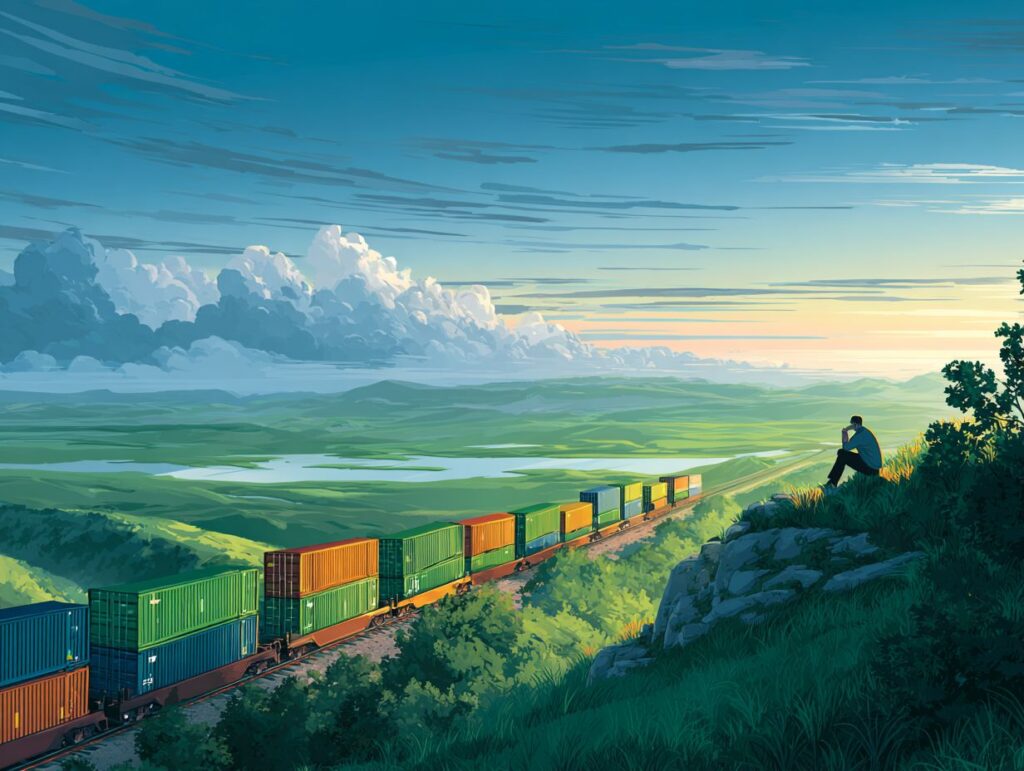
Companies can achieve substantial cost savings by utilizing rail freight, with expenses potentially reduced to as low as $0.02 per ton-mile, in contrast to $0.10 for truck transportation.
Lower Transportation Costs
The operational costs associated with rail freight are considerably lower than those of other transportation modes, particularly for the movement of large cargo over extensive distances. This cost-efficiency is primarily attributed to economies of scale, as rail systems are capable of transporting thousands of tons of freight simultaneously.
For example, BNSF Railway adopted a strategy that resulted in a 25% reduction in operating expenses by optimizing train loads and routes, showcasing the importance of technological advancements. This optimization enabled the company to transport larger quantities of goods more efficiently than traditional trucking methods. The long-haul capabilities of rail transportation further contribute to reduced fuel consumption per ton-mile, thereby enhancing overall cost savings.
By investing in advanced scheduling and logistics software, companies can capitalize on these advantages to achieve even greater operational efficiencies.
Economies of Scale
By transporting large quantities of freight containers simultaneously, rail freight offers considerable cost savings compared to trucking, which often operates at lower capacity.
For example, a standard freight train can efficiently move up to 1,000 tons of goods, while ten trucks would be required to transport the same volume, with each truck carrying only 100 tons. This capacity advantage results in reduced fuel costs and lower per-ton delivery expenses.
When examining the cost per mile, a freight train may incur approximately $0.03 per ton-mile, in contrast to trucks, which can face costs of $0.15 or more per ton-mile. Therefore, businesses can achieve significant savings on shipping costs and enhance their supply chain efficiency by opting for rail freight for bulk transportation.
Speed Advantages of Rail Freight
Rail freight provides competitive transit times that can effectively rival those of truck transport, particularly over long distances, improving overall supply chain operations.
Certain routes can achieve an average of 500 miles within a 24-hour period, enhancing the reliability and safety of deliveries.
Transit Times Compared to Other Modes
In a side-by-side comparison, rail freight demonstrates the capacity to deliver bulk goods across the country more rapidly than trucking, particularly for long-haul distances.
For instance, rail transport can move goods between Chicago and Los Angeles in approximately 48 hours, whereas trucking may take up to 72 hours due to road traffic and mandatory rest requirements.
A logistics company, XYZ Freight, experienced a 30% improvement in delivery times by reallocating a portion of its routes to rail, thereby optimizing its operations.
When speed is a critical factor, selecting rail for long-haul transport can markedly enhance efficiency, especially when integrated with strategically positioned distribution centers for last-mile delivery.
Reliability and Timeliness
Rail freight demonstrates a reliability rate of 95%, which significantly mitigates logistical delays and enhances overall supply chain performance, making it a trusted freight service provider.
This reliability directly translates into cost savings for businesses. For instance, a freight forwarder has indicated that shipping delays can cost companies upwards of $20,000 per hour due to lost sales and production inefficiencies.
Organizations utilizing rail transport have reported a substantial reduction in these costs, crediting their success to the punctuality of rail networks. One freight manager remarked, “Our shipping delays decreased by 30% after switching to rail, allowing us to serve our clients more effectively and minimize penalties associated with late deliveries.”
This data underscores the critical importance of selecting reliable freight options.
Sustainability in Rail Freight
Rail freight is increasingly acknowledged for its sustainability, demonstrating a reported reduction in carbon emissions of up to 75% when compared to road transport.
Reduced Carbon Footprint
By transitioning to rail transportation, companies can substantially reduce their carbon footprint, as one freight train can replace the need for up to 280 trucks. For example, the partnership between Walmart and Southern Railroad has led to a 65% reduction in greenhouse gas emissions from their rail shipments, addressing transportation challenges effectively. Additionally, CSX Corporation has reported annual savings of 3.4 million gallons of diesel fuel through its intermodal services.
These transitions not only enhance operational efficiency but also illustrate that switching to rail can be a significant step toward sustainability. Companies interested in adopting this method should conduct a thorough analysis of existing transportation costs, evaluate potential rail routes, and collaborate with rail providers for effective logistics planning to optimize both cost savings and environmental impact.
Energy Efficiency
Rail freight demonstrates an impressive fuel efficiency that can be up to four times greater than that of trucking, offering a compelling incentive for companies to incorporate rail into their logistics strategies.
This enhanced efficiency leads to substantial fuel savings. For example, Walmart has reported that it utilizes rail for 35% of its freight, which results in an estimated annual fuel savings of 50 million gallons.
Moreover, other companies, such as Procter & Gamble, have also transitioned toward rail-based logistics and have achieved a 10-20% reduction in transportation costs.
To leverage these advantages, businesses can collaborate with rail operators to seamlessly integrate rail transport into their existing supply chains, thereby optimizing routes and delivery schedules for enhanced efficiency.
Infrastructure and Capacity
Investment in rail infrastructure is essential for addressing transportation challenges and enhancing capacity to meet future freight demands, thus supporting the growth of intermodal transport.
Investment in Rail Networks
Recent investments exceeding $100 billion in rail networks across the United States are designed to modernize infrastructure and enhance service reliability, crucial for transporting construction materials, mining outputs, and agricultural commodities.
Significant initiatives include the Federal Railroad Administration’s allocation of $24 billion for infrastructure upgrades, alongside private sector contributions such as Norfolk Southern’s $1.4 billion plan aimed at improving yard operations and increasing track capacity.
Noteworthy case studies demonstrate the effectiveness of these investments:
- Union Pacific has implemented advanced signaling systems, resulting in a 15% increase in operational efficiency.
- BNSF Railway has expanded its multimodal facility, which has led to a 25% increase in freight capacity.
These advancements not only address the growing freight demand but also contribute to reduced delivery times, thereby enhancing the overall efficiency of the supply chain.
Checkout Freight Rail: Privately Investing $23 Billion a Year
Case Studies of Successful Rail Freight Use
A number of companies have successfully transformed their logistics operations by adopting rail freight, illustrating the advantages through measurable improvements in efficiency and cost savings.
For example, Coca-Cola effectively consolidated its distribution network by utilizing rail to transport syrup and concentrates, resulting in a 20% reduction in transportation costs and a decrease in delivery times by as much as 30%.
Similarly, Home Depot transitioned some of its long-haul deliveries to rail, which not only significantly reduced fuel costs but also enhanced customer satisfaction ratings by ensuring timely deliveries.
These strategic transitions demonstrate how businesses can effectively leverage rail freight not only for financial savings but also for improvements in service efficiency, benefiting sectors like automotive and manufacturing.

Frequently Asked Questions
What are the top benefits of rail freight for businesses?
The top benefits of rail freight for businesses are cost savings, faster transportation, and increased sustainability, making it an essential part of logistics strategies.
How does rail freight help businesses save on costs?
Rail freight is a more cost-effective option for businesses compared to road transportation. It has lower fuel and labor costs, as well as reduced maintenance and insurance expenses, helping businesses navigate customs regulations.
Can rail freight save time for businesses?
Yes, rail freight is a faster mode of transportation for businesses, making it a vital part of their overall transportation methods. Trains can carry larger loads and travel longer distances without as many stops, resulting in quicker delivery times, which is advantageous for intermodal transport.
How does rail freight benefit the environment and promote sustainability?
Rail freight is a more sustainable form of transportation compared to trucks, as trains produce significantly lower emissions and create less road congestion. This helps businesses reduce their carbon footprint and contribute to a greener future, especially when partnering with a reliable freight service provider.
Are there any additional benefits of rail freight for businesses?
Apart from cost savings, speed, and sustainability, rail freight also offers reliable and efficient service, flexible scheduling, and the ability to transport a variety of cargo, including hazardous materials and oversized loads, which is crucial for improving efficiency in global trade.
Is rail freight a suitable option for all types of businesses?
Rail freight is a great option for businesses of all sizes and industries, including manufacturing, retail, agriculture, and more. It can provide significant cost savings and efficiency for any business with transportation needs, as supported by strategic infrastructure developed by Network Rail.