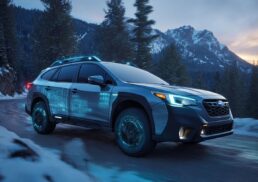
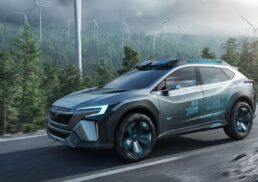
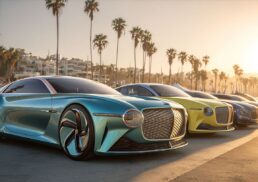
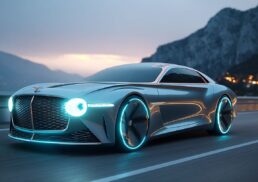
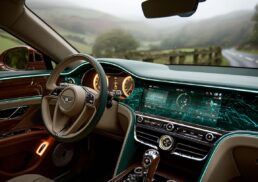
Electric supercars are revolutionizing the luxury electric car market, with the 2025 lineup, including models like the 2025 Genesis Electrified and McLaren W1 supercar, promising to redefine speed and performance. Iconic models like the 2025 Porsche Taycan, Tesla Model S, and Aston Martin Valhalla are set to impress with unmatched acceleration, handling, and comfort, exemplifying the best in luxury electric car innovation. This article explores the fastest electric supercars of 2025, delving into their groundbreaking features and the innovations driving their performance. Buckle up as we uncover the future of high-performance electric vehicles!
Table of Contents
Key Takeaways:
- Electric supercars are the future of high-performance vehicles, with advancements in battery and motor technology driving their impressive performance, as seen in models like the 2025 Dodge Charger and Mercedes-Benz CLA-Class EV.
- By 2025, top electric supercars will rival traditional gasoline models in terms of acceleration, speed, range, and charging times.
- The growth of the electric vehicle market and the focus on sustainability in the automotive industry will continue to drive the development of electric supercars in the coming years.
Overview of the Electric Vehicle Market and Electric Vehicles Rankings

The electric vehicle market is projected to attain a valuation of $800 billion by 2025, with luxury brands at the forefront, showcasing innovative electric powertrains and advanced technologies, as exemplified by models such as the 2025 Porsche Taycan, Tesla Model S, and 2025 Lucid Air.
This growth is underpinned by significant increases in sales, with luxury electric vehicles representing nearly 30% of total EV sales in 2023, a notable rise from just 15% in 2019.
Prominent players in the market, including Lucid Motors, Audi, and Rivian, are attracting consumer interest through the introduction of cutting-edge features, such as autonomous driving capabilities and high-end interiors.
Advancements in technology, particularly in battery efficiency and charging infrastructure, are transforming consumer preferences and encouraging buyers to consider electric vehicle options.
As incentives and sustainability trends continue to rise, the landscape for electric vehicles remains dynamic and promising.
Importance of Performance in Supercars
In the supercar segment, key performance metrics such as acceleration, handling, and comfort play a critical role in influencing consumer decisions and shaping brand reputations.
Electric supercars, such as the Rimac Nevera and Tesla Model S Plaid, are setting new benchmarks in the industry, achieving 0-60 mph times of under 2 seconds. Unlike traditional models that depend on internal combustion engines, these electric vehicles provide instantaneous torque and advanced regenerative braking, thereby enhancing both speed and efficiency.
For example, the Rimac Nevera delivers an impressive 1,914 horsepower, exceeding the performance of the highly regarded Bugatti Chiron. Additionally, models like the Porsche Taycan Turbo S exemplify the successful integration of luxury and performance, demonstrating that electric vehicles can compete robustly in the high-performance market while also reducing environmental impact.
Top Electric Supercars of 2025
The 2025 lineup of electric supercars presents impressive specifications and state-of-the-art features, establishing new benchmarks within the automotive industry and garnering significant attention from enthusiasts globally.
Model 1: Specifications and Features – Porsche Taycan Turbo
The 2025 Porsche Taycan Turbo features a tri-motor electric powertrain, achieving an impressive acceleration from 0 to 60 mph in just 2.4 seconds, thereby positioning it among the fastest electric vehicles available in the market. This remarkable performance is further enhanced by a dual-speed transmission, which facilitates smooth gear transitions for a heightened acceleration experience.
In terms of technology, the vehicle is equipped with an advanced infotainment system that includes a 10.9-inch touchscreen, allowing for navigation, smartphone integration, and voice command functionality.
Distinctive design elements, such as adaptive LED headlights and a sculpted body, not only improve aerodynamics but also contribute to the vehicle’s aesthetic appeal. The spacious interior, furnished with sustainable materials, significantly enhances comfort for all occupants.
Moreover, the Taycan Turbo offers a practical range of up to 280 miles, ensuring that performance does not come at the expense of usability.
Model 2: Specifications and Features – 2025 Lucid Air
The 2025 Lucid Air is engineered to impress, delivering an outstanding 1,080 horsepower and an impressive range of 503 miles, showcasing its capabilities in both performance and efficiency.
Equipped with dual electric motors, the Lucid Air provides rapid acceleration, achieving 0 to 60 mph in a mere 2.5 seconds.
The vehicle boasts a luxurious interior, featuring a meticulously designed 34-inch curved Glass Cockpit 5K display that seamlessly integrates entertainment and navigation functions.
The advanced DreamDrive technology incorporates 32 sensors, facilitating a range of sophisticated driver-assistance features that promote a safe and intuitive driving experience.
Additionally, the vehicle supports fast charging, enabling drivers to recharge up to 300 miles of range within just 20 minutes, making it an ideal choice for long-distance travel.
Model 3: Specifications and Features – 2025 BMW i7

The 2025 BMW i7 sets a new standard for luxury electric vehicles, offering a tranquil interior experience coupled with performance metrics that rival those of traditional internal combustion engines, achieving 0-60 mph in under four seconds, showcasing hybrid supercar performance.
The interior of the i7 is designed to provide an exceptional level of opulence, featuring optional leather upholstery and a panoramic glass roof. The Bowers & Wilkins Diamond Surround Sound System significantly enhances audio clarity, while the rear executive lounge is designed for the comfort and relaxation of backseat passengers.
From a technological standpoint, the i7 is equipped with the iDrive 8 system, which includes a 31-inch Theater Screen for an immersive entertainment experience. Additionally, the suite of driver assistance features, including the Active Driving Assistant, enhances both safety and convenience during extended journeys.
Technological Innovations Driving Performance
Technological advancements in battery technology and electric motors are crucial for improving the performance and efficiency of electric supercars, positioning them as formidable competitors to traditional gasoline-powered vehicles.
Battery Technology Advances in Hybrid Supercars
Recent advancements in lithium-ion battery technology have resulted in a 30% increase in energy density. This improvement enables electric supercars to achieve longer ranges and faster charging times, thereby fundamentally altering consumer expectations.
For example, Tesla’s Model S now offers a range exceeding 400 miles, while the Porsche Taycan can recharge from 5% to 80% in just 22.5 minutes, facilitated by its 800-volt architecture. The implementation of fast charging capabilities not only minimizes downtime but also enhances the overall driving experience, allowing for longer journeys with reduced planning requirements.
Furthermore, manufacturers are placing a strong emphasis on battery thermal management systems to significantly extend battery life. This focus leads to more reliable and efficient performance on the road, ensuring that electric vehicles meet the demands of modern consumers.
Motor Efficiency Improvements
The efficiency of electric motors has improved by as much as 25%, resulting in enhanced performance characteristics, including torque delivery and responsiveness, which are critical for the dynamics of supercars like the 2025 Chevy Corvette ZR1 and the Ferrari electric concept.
This advancement yields impressive metrics in electric supercars, with numerous models achieving 0-60 mph acceleration in under 3 seconds. For instance, the Rimac Nevera features an extraordinary output of 1,914 horsepower and can accelerate from 0 to 60 mph in a mere 1.85 seconds.
Furthermore, advancements in cooling systems have significantly improved heat dissipation, allowing for sustained high performance during aggressive driving scenarios. When combined with sophisticated traction control technologies, these enhancements ensure not only rapid acceleration but also precise handling, which is essential for optimizing driving dynamics on both roadways and racetracks.
Comparative Performance Metrics
Comparative performance metrics elucidate the strengths and weaknesses of leading electric supercars, offering valuable insights into key areas such as acceleration, top speed, range, and charging efficiency.
Acceleration and Speed
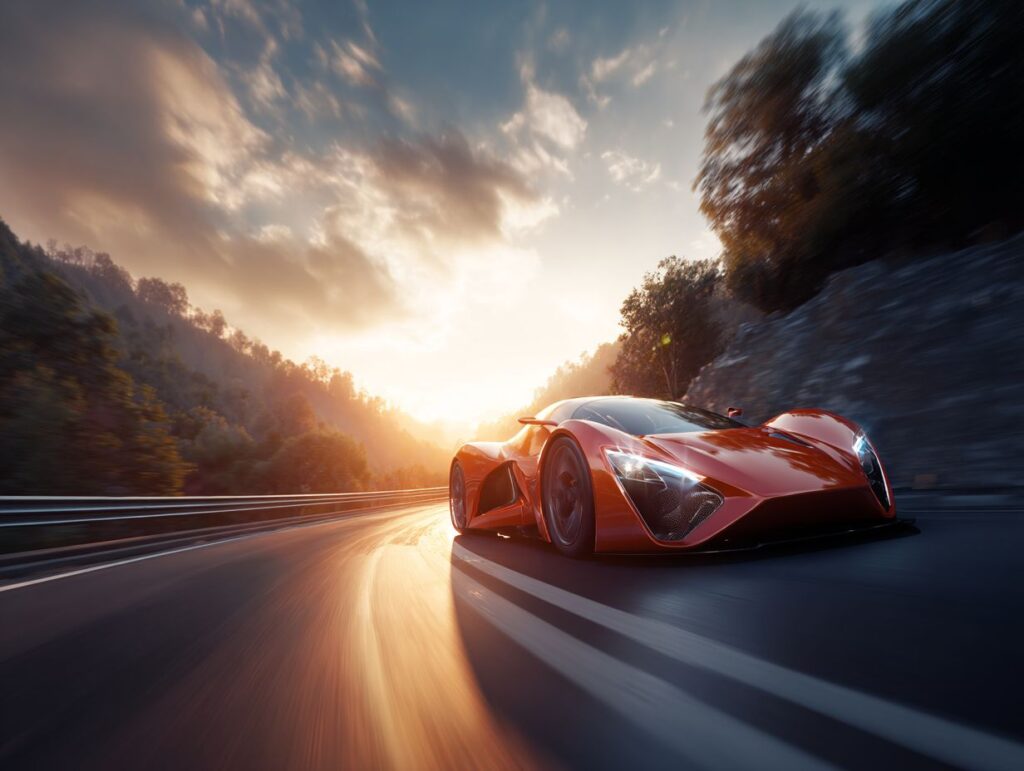
Electric supercars such as the Aston Martin Valhalla and the Tesla Model S are capable of achieving 0-60 mph times in under three seconds, thereby positioning themselves among the fastest electric vehicles currently available.
Within this elite category, the Rimac Nevera distinguishes itself by achieving an impressive 0-60 mph in just 1.85 seconds, a feat made possible by its remarkable 1,914 horsepower. Similarly, the Pininfarina Battista demonstrates exceptional performance, reaching 0-60 mph in approximately 1.9 seconds, showcasing its innovative engineering and lightweight construction.
In real-world scenarios, various factors, including traction control and battery performance, significantly influence acceleration. For enthusiasts interested in quantifying these capabilities, performance applications such as Dragy can deliver precise data, facilitating a comprehensive understanding of each vehicle’s potential on the track.
Range and Charging Times
The travel range and charging times of luxury electric cars are essential considerations, with models such as the 2025 Lucid Air and 2025 Porsche Taycan offering an impressive range of up to 503 miles on a single charge, along with ultra-fast charging capabilities.
For instance, the Tesla Model S Plaid delivers a notable range of 396 miles and can recharge from 0 to 80% in approximately 30 minutes when using a Supercharger, establishing itself as a formidable competitor alongside the Porsche Taycan Turbo in the market.
Similarly, the Rimac Nevera provides a range of 340 miles and employs a 500 kW charging system, facilitating nearly instantaneous charging at compatible stations, showcasing its advanced electric motors torque capabilities.
As the charging infrastructure continues to develop, with an increasing number of high-speed charging stations being installed along major highways, the user experience is significantly enhanced, allowing for longer journeys without the concern of depleting battery power. Brands such as Genesis and Audi are actively contributing to this development.
Future Trends in Electric Supercars
The fastest electric cars of 2025, including the 2025 BMW i7 and Lexus models, will set new benchmarks.
As the landscape of electric supercars continues to evolve, it is expected that emerging brands and sustainability initiatives will play a significant role in shaping the future of luxury performance vehicles.
Emerging Brands and Concepts
Electric powertrain hybrid systems are becoming more prevalent in emerging models.
Emerging brands such as Rimac, along with concepts like the McLaren W1 supercar and the 2025 Genesis Electrified, are redefining the landscape of electric performance through innovative designs and cutting-edge technologies.
The Rimac Nevera, for example, features an impressive 1,914 horsepower and can accelerate from 0 to 60 mph in merely 1.85 seconds, establishing a new standard for electric speed, rivaling traditional brands such as Ferrari and Lamborghini.
In parallel, the McLaren W1 is anticipated to incorporate advanced aerodynamics and a hybrid powertrain, thereby enhancing both efficiency and power. These advancements not only present challenges to established manufacturers like Ford and Jaguar but also compel them to pursue innovation actively.
Brands such as Tesla and Aston Martin may need to adapt swiftly in order to sustain their market dominance, rendering the future of electric supercars an intriguing and competitive landscape.
Sustainability and Eco-Friendliness
Sustainability in electric supercars is becoming increasingly essential, with manufacturers prioritizing the use of sustainable materials and the reduction of carbon footprints throughout the manufacturing process. The 2025 Chevy Corvette ZR1 is a key example of sustainable innovation.
Companies such as Tesla, Rimac, and Lucid Motors are leading the way in these initiatives. For example, Rimac incorporates recycled materials into the interiors of their vehicles, while Lucid Motors highlights the use of renewable energy in their manufacturing facilities. Additionally, the 2025 Dodge Charger and Mercedes-Benz CLA-Class EV are making strides in eco-friendly production.
Moreover, the adoption of techniques like 3D printing contributes to waste reduction, enabling more accurate constructions with fewer defective parts. These sustainable practices not only cater to environmentally conscious consumers but also foster brand loyalty, establishing a new benchmark in automotive innovation and corporate responsibility. Leading brands such as BMW and Maserati are pioneers in these areas.
Frequently Asked Questions
What is an electric supercar?
An electric supercar is a high-performance, luxury vehicle that runs entirely on electricity. It combines the speed and power of a traditional supercar with the environmentally-friendly technology of an electric vehicle.
How do electric supercars differ from traditional supercars?
Electric supercars differ from traditional supercars in the way they are powered. While traditional supercars run on gasoline or diesel, electric supercars run on electricity stored in large battery packs. This makes them more environmentally-friendly and cost-effective to operate.
What are the fastest electric supercar models of 2025?
The fastest electric supercar models of 2025 include the Rimac C_Two, Tesla Roadster, Pininfarina Battista, and the Lotus Evija. These models have top speeds that exceed 200 mph and can accelerate from 0 to 60 mph in less than 2 seconds.
Are electric supercars more expensive than traditional supercars?
In general, electric supercars tend to be more expensive than traditional supercars. This is due to the advanced technology and materials used in their construction. However, as the technology becomes more widespread, prices are expected to decrease.
What are the benefits of owning an electric supercar?
Owning an electric supercar comes with a variety of benefits. These include lower operating costs, reduced carbon emissions, and a unique driving experience. Additionally, many electric supercars come with advanced features such as self-driving technology and futuristic designs.
Are there any downsides to owning an electric supercar?
While there are many benefits to owning an electric supercar, there are also some downsides to consider. These include limited driving range, longer charging times, and the current lack of widespread charging infrastructure. However, as technology continues to advance, these downsides are expected to diminish.