Embarking on adventures like stargazing, birdwatching, or travel requires the right optical device to enhance your experience. Whether you’re drawn to the precision of a spotting scope from Celestron or the portability of Canon binoculars, understanding optical performance is crucial. This guide will help you choose the best binoculars or spotting scopes tailored to your unique needs, ensuring every moment spent observing the wonders of nature is unforgettable, whether you’re engaged in bird watching or stargazing.
Table of Contents
Key Takeaways:
- Consider your specific needs and activities when choosing an optical device for stargazing, birdwatching, or travel.
- Think about key features, such as magnification, field of view, and weight, when deciding on the type of optical device that is best suited for your needs.
- Don’t forget to factor in your budget and consider reputable brands when making your purchase, and be sure to properly maintain and care for your device for optimal performance.
Understanding Your Needs
Identifying specific requirements is essential when selecting optical devices, as various activities, such as bird watching and stargazing, necessitate specialized features and capabilities.
Stargazing Requirements: Exploring the Night Sky
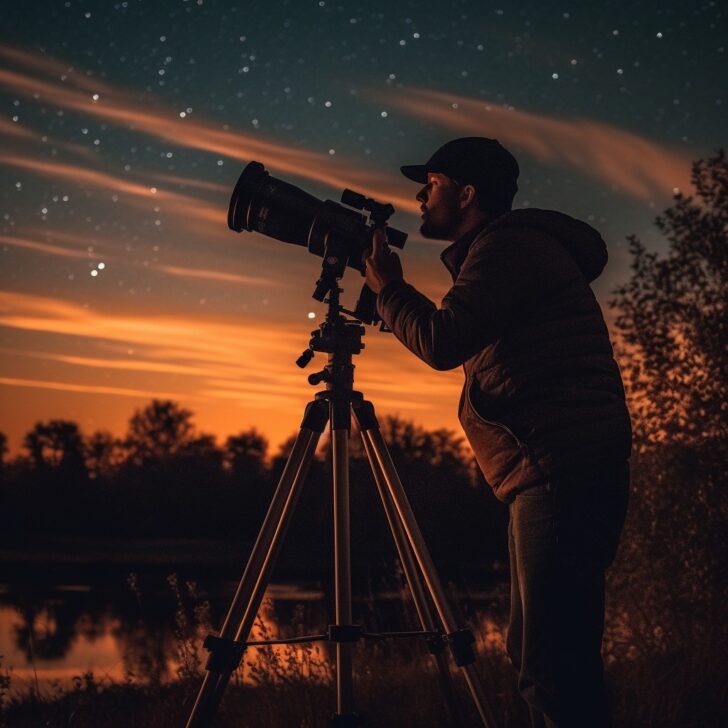
For successful stargazing, it is advisable to utilize devices that provide appropriate magnification and stability, particularly when observing celestial bodies such as the Hercules Cluster or the Summer Triangle. Consider optics with excellent optical performance for sharp images.
A good starting point is binoculars with a minimum of 10x magnification, such as the Canon 10x42L, as this significantly enhances detail in distant objects and offers superior image stabilization. It is also beneficial to select models that incorporate image stabilization features, such as the Canon 10x42L, which minimizes shake and provides a clearer view.
Portability is a crucial factor for night hikes; therefore, it is recommended to choose binoculars that weigh no more than 2 pounds. For instance, the Celestron SkyMaster 15×70 is an excellent option, offering superior optics and stability while remaining lightweight enough for easy transport, and is perfect for entry-level astronomy enthusiasts.
Birdwatching Essentials: Tips for Birders
Birdwatching enthusiasts require optical devices that emphasize clarity, lightweight construction, waterproof, and fogproof designs to endure various outdoor conditions.
A highly recommended option is the Nikon Monarch binoculars, which are esteemed for their outstanding optical quality, waterproof capabilities, and versatile use, making them suitable for a range of climates.
When selecting binoculars, it is advisable to choose lightweight models, ideally weighing under 1.5 pounds, to ensure comfort during extended observation sessions. Furthermore, selecting binoculars with a rubber armor finish provides a secure grip and facilitates easier handling.
For optimal birdwatching experiences, it is beneficial to visit locations such as the Great Salt Lake, where a diverse array of bird species can be observed, leading to memorable encounters. Additionally, it is prudent to keep a notebook readily available to record sightings, thereby enhancing the overall birdwatching experience.
Travel Considerations: Travel-Friendly Optics
When traveling, it is essential to select lightweight and compact optical devices to ensure portability without compromising optical quality, whether engaging in birdwatching in New York City or stargazing in remote locations.
Options such as the Celestron UpClose 10×42 binoculars, which weigh just over a pound and easily fit into a backpack, are highly recommended. Its magnesium alloy construction provides durability, making it suitable for various environments and ensuring reliable optical image quality.
For travelers on a budget, the Bushnell H20 10×42 binoculars deliver excellent optical performance for under $100.
To ensure the safety of these devices during transit, it is advisable to use padded cases and to store them in carry-on luggage to prevent damage. Implementing these precautions will facilitate a reliable viewing experience, regardless of the adventures that await.
Types of Optical Devices
Understanding the distinctions among various optical devices is essential for selecting the appropriate tool for outdoor excursions, whether for birdwatching or nocturnal observations.
Telescope Options: Exploring Celestial Wonders
Telescope options are diverse, with models such as the Celestron AstroMaster offering exceptional optical performance for stargazing enthusiasts at an accessible price point, providing a great entry-level experience.
For individuals who are new to astronomy, it is essential to understand the distinctions between refractor and reflector telescopes.
Refractors utilize lenses and are typically superior for producing high-contrast images of planetary bodies, whereas reflectors employ mirrors and generally provide larger apertures, making them more suitable for deep-sky observations.
Entry-level enthusiasts may consider the Celestron AstroMaster 70AZ, which is priced around $200, for its user-friendly navigation. Additionally, enhancing the experience with accessories such as a smartphone adapter can facilitate astrophotography, enabling users to capture remarkable celestial images directly from their devices.
Checkout Telescopes 2.0: the future of stargazing.
Binocular Varieties: Versatile Tools for Outdoor Enthusiasts
Binoculars are available in various configurations, each tailored for specific activities and providing premium optics for a variety of outdoor needs.
For instance, the Celestron Nature DX model is particularly renowned for its optical quality and durability, making it an excellent choice for wildlife observation.
When selecting binoculars, it is essential to consider two primary types: compact and full-sized. Compact models are lightweight and convenient, making them suitable for hiking, while full-sized models offer superior clarity and light-gathering capabilities, which are ideal for birdwatching and stargazing.
The coating of the lenses is a critical factor to consider; fully multi-coated lenses significantly enhance light transmission, resulting in brighter images.
Some popular choices in the market include:
- Nikon Monarch 5, recognized for its exceptional optical performance
- Celestron Nature DX, preferred for its ruggedness and value
Evaluating the primary intended use will greatly assist in guiding the selection process.
Monocular Uses: Compact and Convenient
Monoculars present a lightweight alternative for individuals seeking portability without compromising visual clarity, making them well-suited for quick wildlife observation or stargazing. Their compact size allows for travel-friendly use in various scenarios.
They are particularly advantageous in hiking scenarios, where the bulkiness of traditional binoculars can pose challenges.
For instance, the Celestron TrailSeeker 8×42 combines exceptional optical quality with a compact design, featuring fully multi-coated lenses that enhance light transmission. Weighing only 1.5 pounds, it conveniently fits into a side pocket of a backpack.
In contrast, while binoculars such as the Nikon Monarch 5 provide greater depth perception, their weight and size may discourage regular use. Ultimately, monoculars serve as a convenient option that does not compromise the overall viewing experience.
Key Features to Consider
When selecting an optical device, essential features such as magnification, field of view, and portability play a critical role in shaping user experience and overall satisfaction.
Magnification and Aperture: Key Optical Features
Magnification and aperture are essential specifications that significantly influence the optical performance of devices, which are vital for both entry-level astronomy and birdwatching. Proper focus wheel adjustments can enhance viewing experiences.
For birdwatching, a commonly recommended option is 10×42 binoculars, as they provide an optimal balance between magnification and light-gathering capability. These binoculars allow for sufficient detail when observing birds at distances of up to several hundred yards.
Conversely, for those focused on observing distant celestial bodies, a 15-60x spotting scope is advisable. This type of device offers superior range and definition compared to standard binoculars.
When making a selection, it is important to note that higher magnification may necessitate a steadier hand or the use of a tripod to minimize image shake, while a larger aperture size can enhance clarity in low-light conditions.
Field of View: Capturing the Wider Scene
A wide field of view significantly enhances the experience of observing wildlife, facilitating easier tracking of fast-moving subjects such as birds and other animals, minimizing lens flare effects.
The field of view, typically measured in degrees, determines the extent of the scene that is visible.
For example, Celestron’s 8×42 binoculars provide a field of view of 388 feet at a distance of 1,000 yards, whereas Nikon’s Monarch 5 8×42 offers a field of view of 330 feet. When engaged in birdwatching, the broader field provided by the Celestron model can simplify the process of spotting fast-flying birds. Conversely, the compact design of the Nikon model is advantageous for stargazing due to its lightweight construction and excellent light transmission.
It is advisable to select equipment based on the primary activity in order to maximize the overall experience.
Weight and Portability: Considerations for Comfort
Weight and portability are crucial factors to consider when selecting optical devices for outdoor activities, particularly for individuals who prioritize ease of transport during extended excursions.
For hiking purposes, one may consider compact binoculars such as the Nikon Trailblazer ATB 10×25, which weighs a mere 13.2 ounces and features a rubber armor for enhanced durability. Another commendable option is the Vortex Vanquish 8×26, recognized for its lightweight magnesium alloy construction, weighing approximately 12 ounces.
Additionally, utilizing a binocular harness that evenly distributes weight can facilitate easier carrying and provide quick access during outdoor activities such as wildlife watching at the Great Salt Lake. This thoughtful combination of lightweight design and effective carrying solutions significantly enhances the outdoor experience, making it more enjoyable and less cumbersome.
Budgeting for Your Device
Budgeting for an optical device can vary significantly, with entry-level binoculars, such as budget binoculars, available for under $50 and premium telescopes exceeding $1000, like those with advanced lens coating. This range underscores the importance of aligning features with expenditures.
Entry-level binoculars, typically priced around $100, offer essential features suitable for casual use, such as 8×42 magnification, 15-60x magnification, and lightweight designs, making them ideal for versatile use.
Mid-range telescopes, priced between $200 and $500, generally provide enhanced optics such as Nikon optics and improved durability, making them ideal for amateur astronomers exploring the moon and other celestial objects like the Hercules Cluster.
Premium models, which surpass the $1000 mark, are equipped with advanced lenses, robust tracking systems, and specialized features, including compatibility for astrophotography and observing the Summer Triangle.
To facilitate effective purchasing, it is essential to prioritize the functionalities required-whether portability, durability, or advanced capabilities-to identify the optimal choice within your budget.
Brand Recommendations
Several brands distinguish themselves in the optical device market, with Celestron, Nikon, and Canon consistently providing exceptional quality tailored to various applications in stargazing, wildlife observation, and wildlife spotting, like viewing hawks in New York City.
Celestron is recognized for its user-friendly telescopes, such as the Astromaster 70AZ, which is priced at approximately $200 and is ideal for beginners. Nikon, on the other hand, offers high-quality binoculars, including the Monarch 5, known for its excellent optics suitable for wildlife spotting, typically priced between $300 and $500.
For individuals seeking advanced photography features, Canon’s image-stabilizing binoculars, such as the Canon 10x42L, deliver remarkable clarity and stability, generally retailing around $1,200.
Each brand addresses specific needs, making it crucial for consumers to evaluate their budget and intended use when selecting the appropriate optical device.
Maintenance and Care Tips
Proper maintenance and care of optical devices are essential for ensuring longevity and optimal performance, which is critical for users who invest in high-quality equipment.
To maintain optical devices effectively, it is advisable to begin with routine cleaning. Utilizing microfiber cloths to gently wipe lenses can help avoid scratches and maintain color reproduction and performance rating.
It is also important to store the equipment in a dry, padded case to protect against moisture damage. Regular inspection of seals and gaskets for wear is necessary, as deterioration in these components can lead to fogging or misalignment.
If fogging occurs, it is recommended to allow the device to acclimate to room temperature before use. Additionally, consulting the manufacturer’s guidelines for specific troubleshooting advice can help in preventing common issues and understanding review methodology.
Frequently Asked Questions
What types of optical devices are suitable for stargazing, birdwatching, and travel?
There are three main types of optical devices that are suitable for stargazing, birdwatching, and travel: binoculars, spotting scopes, and telescopes. Each one has its own advantages and is better suited for different activities.
What features should I look for when choosing an optical device for stargazing?
When choosing an optical device for stargazing, it is important to look for high magnification, a wide field of view, and good low-light performance. You may also want to consider the size and weight of the device for ease of travel.
Can I use the same optical device for both stargazing and birdwatching?
While some optical devices may be suitable for both stargazing and birdwatching, it is recommended to have separate devices for each activity. This is because the specifications and features needed for each activity may differ.
What is the difference between magnification and field of view?
Magnification refers to how much closer an object appears compared to when viewed with the naked eye. Field of view, on the other hand, is the area that can be seen through the device at a specific magnification. A wider field of view is better for tracking fast-moving objects like birds, while higher magnification is better for observing distant objects like stars.
Do I need to invest in an expensive optical device for stargazing, birdwatching, and travel?
It is not necessary to invest in an expensive optical device, especially if you are a beginner. There are budget-friendly options available that still offer good performance. However, if you are a serious hobbyist or professional, investing in a high-quality device may be worth it for the best viewing experience.
How do I know which optical device is right for me?
The best way to choose the right optical device for you is to try out different options and see which one feels most comfortable and meets your needs. You can also read reviews and do research on the features and specifications of different devices to make an informed decision.