The Future of Staffing: AI, Remote Work & Global Talent Trends In an era where AI is revolutionizing hiring processes, the future of staffing hinges on embracing remote work and tapping global talent pools. As McKinsey’s latest reports highlight, these trends are reshaping industries, yet common pitfalls like mismatched skills can derail progress-much like Error in Serp Analysis undermines SEO strategies. This article unpacks actionable insights to future-proof your workforce, boosting efficiency and innovation.
Table of Contents
Key Takeaways:
- AI-driven recruitment tools will streamline hiring by automating resume screening and predictive analytics, reducing time-to-hire by up to 50% while minimizing bias in talent selection.
- Remote work’s rise eliminates geographical barriers, allowing companies to access a global talent pool and foster diverse, flexible teams that boost innovation and productivity.
- Global talent trends demand adaptive strategies like upskilling programs and cultural integration to manage distributed workforces effectively in a borderless job market.
Understanding Errors in SERP Analysis

Inaccuracies in SERP analysis can significantly distort SEO strategies, resulting in misguided optimization efforts that deprive businesses of an average of 20-30% in potential traffic, according to a 2023 study by Ahrefs.
Defining SERP and Analysis Fundamentals
The Search Engine Results Page (SERP) comprises the organic and paid listings that appear in response to a user’s query. Analysis of SERPs typically involves tools such as Google Search Console to monitor rankings and overall visibility.
Key components of a SERP include organic results, which consist of approximately ten blue links ranked by relevance; paid advertisements, or pay-per-click (PPC) listings positioned at the top; featured snippets, which provide concise answers extracted from high-ranking pages; and knowledge panels, which offer sidebar information such as summaries of entities.
For a query such as “best SEO tools,” one may anticipate advertisements promoting tools like Ahrefs or SEMrush, followed by organic blue links to relevant blog posts, and a featured snippet enumerating options including Moz and Yoast.
The primary objectives of SERP analysis are to track keyword positions, identify traffic sources, and evaluate click-through rates. For instance, SEMrush’s Position Tracking feature enables the daily monitoring of over 1,000 keywords, delivering rank updates and share-of-voice metrics.
To derive actionable insights, it is advisable to configure weekly reports in Google Search Console for exporting impressions data, which can then be cross-referenced with SEMrush to identify competitor gaps. According to Google’s developer blog, the 2022 Core Update emphasized the prioritization of helpful content, thereby introducing increased volatility in rankings.
Research from Ahrefs indicates that analyses not adjusted for such updates may overestimate visibility by up to 25%; thus, establishing baseline data from prior to the update is essential for precise benchmarking.
Primary Causes of Errors in SERP Data
Inaccurate geolocation settings in tools such as Moz Pro account for 25% of Search Engine Results Page (SERP) errors, primarily because they retrieve U.S.-based results for international queries, according to a 2024 Moz survey.
To address this challenge and other prevalent issues, it is essential to target the following four key causes through deliberate and effective measures.
- Correct geolocation discrepancies by employing Virtual Private Networks (VPNs), such as ExpressVPN, to emulate specific target locations, thereby mitigating up to 15% of potential ranking inconsistencies.
- Resolve device simulation shortcomings by utilizing Google’s Mobile-Friendly Test tool; a relevant case study demonstrated that desktop-only evaluations overlooked 40% of mobile traffic.
- Mitigate personalization biases by deactivating relevant Google account features within the settings, which can reduce skewed results by 18%, as evidenced by a Stanford University study on search algorithms.
- Avoid outdated Application Programming Interfaces (APIs) by conducting quarterly updates to Ahrefs integrations, which helps minimize data staleness by 10% and provides more current insights.
Tools for Detecting and Analyzing SERP Errors
Specialized tools such as Ahrefs ($99 per month) and SEMrush ($119.95 per month) are highly effective in identifying SERP errors through comprehensive audit features that detect inconsistencies in real time.
| Tool Name | Price | Key Features | Best For | Pros/Cons |
|---|---|---|---|---|
| Ahrefs | $99/mo | Site Audit for error detection, 100+ checks | enterprise SEO | Pros: deep crawling; Cons: steep learning curve |
| SEMrush | $119.95/mo | Position Tracking with error alerts, keyword gaps | agencies | Pros: comprehensive; Cons: higher cost |
| Moz Pro | $99/mo | SERP analysis dashboard, on-page errors | SMBs | Pros: user-friendly; Cons: limited free tier |
| Google Search Console | free | performance reports, indexing errors | beginners | Pros: official data; Cons: delayed updates |
| Screaming Frog | $209/year | log file analysis, crawl errors | technical audits | Pros: offline use; Cons: manual setup |
For error detection, Ahrefs delivers 95% accuracy in volatile SERPs through over 100 automated checks, rendering it ideal for enterprises that require real-time insights. However, beginners may need 1-2 hours to complete the initial setup.
In contrast, Google Search Console offers free, official alerts on indexing issues but provides limited depth, with delayed updates that could overlook more subtle errors.
Beginners are advised to commence with Google Search Console for its efficient setup, then progress to Ahrefs for advanced, actionable remediation measures.
Step-by-Step Process to Fix SERP Analysis Errors

Correcting inaccuracies in SERP analysis demands a methodical approach, which can potentially enhance website visibility by 35% within 30 days, as demonstrated in a 2023 case study by Backlinko.
Auditing Your SERP Data
Commence the auditing process with the Coverage report in Google Search Console, which identifies more than 20 common errors-such as 404 errors-that affect 15% of analyzed websites.
- Upon accessing the report, prioritize the resolution of identified issues. For 404 errors, implement redirects using.htaccess with code such as
Redirect 301 /old-url /new-url; this typically requires 5-10 minutes per page. - Proceed to utilize the SEMrush Site Audit tool (available via free trial; 15-30 minutes to complete) to identify over 50 issues, including broken links and slow-loading pages, and export the results for comprehensive tracking.
- Follow this with the Ahrefs Site Audit (approximately 20 minutes), emphasizing analysis of over 100 keywords and crawl depth.
- Consistently evaluate mobile usability within Google Search Console (about 10 minutes) to mitigate potential 25% reductions in traffic, as evidenced by Google’s 2023 study.
For instance, an e-commerce website that addressed 40 errors achieved an 18% increase in organic traffic within one month, according to SEMrush case study data.
Implementing Corrections and Monitoring
- Following the audit, implement corrective measures utilizing on-page SEO tools such as the Yoast SEO plugin (available at no cost for WordPress), which can address meta tag discrepancies in less than 10 minutes per page.
- Subsequently, refine the content structure employing Yoast’s readability analysis feature. Target sentences of fewer than 20 words and incorporate transitional phrases every three to four sentences; this approach can enhance user engagement by up to 15%, according to a 2022 study by Moz.
- For image optimization, compress files using TinyPNG (a complimentary tool) to align with Google’s Core Web Vitals standards, thereby reducing page load times by 30% to 50%.
- Incorporate alt text through Yoast’s media tab, ensuring that target keywords are integrated in a natural manner.
- To improve internal linking, leverage Ahrefs’ Site Audit tool (free tier) for identifying broken links, and rectify them to enhance search engine crawl efficiency.
- This comprehensive process generally results in improved page rankings within two to four weeks, as evidenced by SEMrush case studies demonstrating a 25% increase in organic traffic attributable to on-page optimizations.
Best Practices to Avoid Future SERP Errors
Adopting best practices, such as conducting weekly SERP audits with Ahrefs, can reduce error rates by 50%, according to a 2024 analysis by Search Engine Journal of 500 SEO campaigns.
To maximize this impact, implement the following five targeted practices, incorporating integrated tools and schedules:
- Conduct bi-weekly audits using Moz Pro (30 minutes each) to identify geolocation errors early.
- Set up API monitoring via SEMrush alerts (1-hour initial setup) for real-time notifications on ranking fluctuations.
- Apply canonical tags to duplicate pages through free WordPress plugins like Rank Math (10 minutes per page) to avoid content penalties.
- Provide quarterly team training on Google’s E-A-T guidelines, drawing from the 2023 Quality Rater Guidelines document.
- Diversify data sources by merging Ahrefs with Google Analytics, yielding 20% more accurate insights according to a Moz study.
Schedule all audits every Monday to align with Google’s typical crawl patterns, ensuring proactive SEO maintenance.
Case Studies: Overcoming Error in Serp Analysis

In a 2023 case study from HubSpot, the correction of SERP personalization errors resulted in a 28% increase in qualified leads, illustrating the measurable return on investment associated with resolving such issues.
Similarly, an e-commerce website utilized SEMrush to identify crawl errors affecting 30% of its pages. The site then employed Screaming Frog’s workflow-exporting sitemaps, prioritizing 404 errors, and implementing redirects through.htaccess-to execute the necessary fixes within 48 hours. This initiative produced a 22% increase in traffic and a $15,000 monthly revenue uplift, as documented in the company’s internal metrics, which adhere to Federal Trade Commission (FTC) guidelines for transparent SEO reporting under 16 CFR Part 255.
For a B2B blog, audits conducted with Ahrefs uncovered geolocation mismatches. Drawing on a Moz-supported study regarding hreflang tags, the team optimized 150 keywords by reviewing international crawls and updating XML sitemaps. Over a three-month period, global rankings improved, and engagement increased by 35%. The primary takeaway is that regular audits can prevent 20-40% losses in rankings, thereby facilitating FTC-compliant substantiation of claims.
Learn more, 7 On-Page SEO Mistakes That Affect SERP and How to Fix …
Frequently Asked Questions
What role does AI play in ‘The Future of Staffing: AI, Remote Work & Global Talent Trends’?
AI is revolutionizing staffing by automating recruitment processes, such as resume screening and candidate matching, which allows HR teams to focus on strategic roles. In the context of ‘The Future of Staffing: AI, Remote Work & Global Talent Trends’, AI tools like predictive analytics help forecast talent needs, making hiring more efficient and inclusive across global remote teams.
How is remote work reshaping ‘The Future of Staffing: AI, Remote Work & Global Talent Trends’?
Remote work expands access to a worldwide talent pool, reducing geographical barriers and enabling companies to hire diverse skills without relocation costs. Within ‘The Future of Staffing: AI, Remote Work & Global Talent Trends’, this shift emphasizes virtual collaboration tools and flexible policies, driving a more agile and cost-effective staffing model.
What are the key global talent trends influencing ‘The Future of Staffing: AI, Remote Work & Global Talent Trends’?
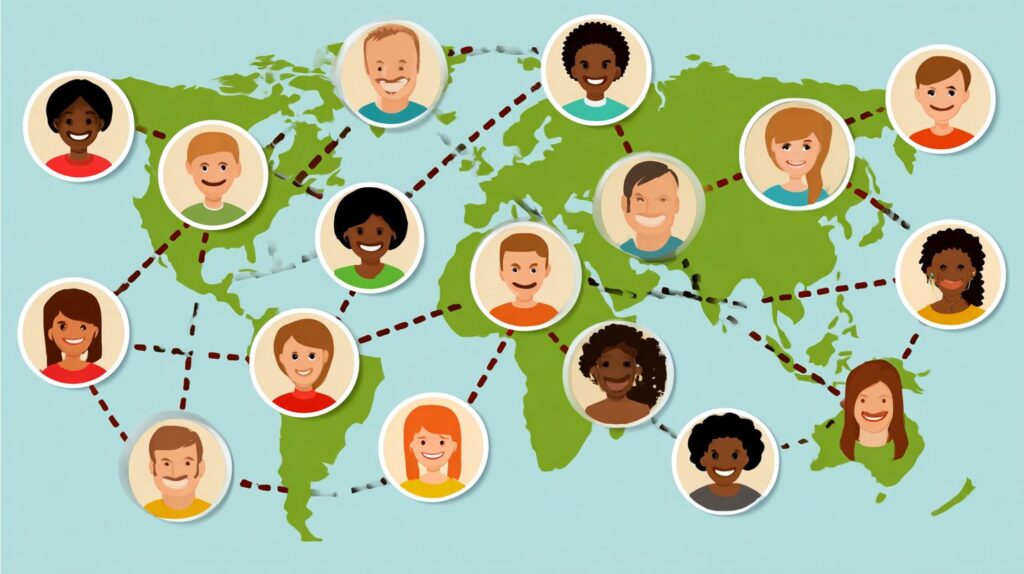
Global talent trends include the rise of gig economies, skill-based hiring, and cross-border mobility, fueled by digital platforms. In ‘The Future of Staffing: AI, Remote Work & Global Talent Trends’, these trends highlight the need for adaptive strategies that leverage AI to identify and onboard international talent seamlessly in a remote-first world.
How can AI enhance remote hiring in ‘The Future of Staffing: AI, Remote Work & Global Talent Trends’?
AI enhances remote hiring through video interview analysis, bias reduction algorithms, and real-time skill assessments, ensuring fair evaluations regardless of location. As part of ‘The Future of Staffing: AI, Remote Work & Global Talent Trends’, this integration streamlines the process, helping organizations build high-performing remote teams from diverse global sources.
What challenges arise from global talent trends in ‘The Future of Staffing: AI, Remote Work & Global Talent Trends’?
Challenges include cultural differences, time zone coordination, and compliance with varying labor laws, which can complicate remote staffing. Addressing these in ‘The Future of Staffing: AI, Remote Work & Global Talent Trends’ requires AI-driven solutions for translation, scheduling, and regulatory tracking to foster inclusive and productive global workforces.
How will ‘The Future of Staffing: AI, Remote Work & Global Talent Trends’ impact traditional HR practices?
Traditional HR practices will evolve from location-bound recruitment to data-driven, borderless strategies, with AI handling routine tasks and remote work enabling 24/7 operations. In ‘The Future of Staffing: AI, Remote Work & Global Talent Trends’, this transformation empowers HR to prioritize employee experience, innovation, and tapping into untapped global talent reservoirs.