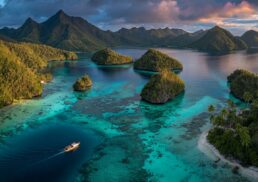
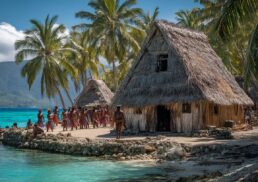
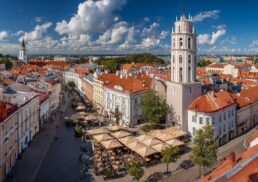
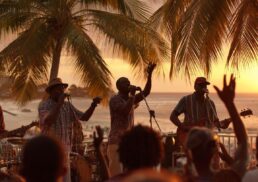
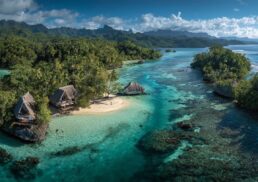
Escape to the sun-kissed shores of Bonaire and Curaao, where pristine beaches and world-class diving await in the heart of the south caribbean. Often overshadowed by neighboring Aruba, these ABC islands offer unparalleled underwater adventures and vibrant local cultures. This guide uncovers top beaches, premier dive sites, and hidden gem cultural gems, drawing from PADI-certified insights to inspire your ultimate island getaway.
Table of Contents
Key Takeaways:
- Discover Bonaire’s pristine beaches like 1000 Steps and Te Amo, perfect for snorkeling and relaxation, while immersing in local culture through vibrant markets and Creole cuisine.
- Experience world-class diving in Bonaire at sites like Klein Bonaire, with vibrant reefs and shipwrecks; don’t miss Curaao’s Klein Curaao for underwater adventures and marine life spotting.
- Explore Curaao’s iconic beaches such as Jan Thiel and Cas Abao for sunbathing and water sports, complemented by cultural gems like Willemstad’s colorful architecture and Papiamento festivals.
Overview of Bonaire and Curaao

Bonaire and Curaao, prominent islands within the ABC Islands archipelago, draw more than 500,000 visitors each year to their unspoiled Caribbean coastlines. Bonaire emphasizes eco-tourism through the Bonaire National Marine Park, which stands in contrast to Curaao’s lively urban atmosphere in Willemstad.
Bonaire provides serene, nature-oriented retreats and achieves an impressive 86% renewable energy utilization via wind and solar programs implemented by the local government. It is particularly appealing to snorkelers, who contribute to conservation efforts by paying the $25 stinapa fee for the annual marine park tag from STINAPA.
In comparison, Curaao enchants visitors with its vibrant Dutch colonial architecture and dynamic markets in the UNESCO-designated historic center of Willemstad.
Access to these destinations is convenient, with direct flights available from KLM, TUI, Corendon starting at EUR450 for a round-trip journey from Europe. Visitors should note the visitor tax: EUR5.50 for Bonaire and $6.50 for Curaao.
Combining both islands in a single itinerary can yield savings of 20-30% on ferry services or short domestic flights, thereby optimizing a varied and efficient travel experience.
Bonaire’s Beaches
Bonaire features 22 miles of pristine coastline, characterized by white-sand beaches that provide an ideal setting for relaxation. Resorts such as Delfins Beach Resort offer direct access to serene, reef-protected waters, which attract approximately 70% of the island’s visitors.
Top Beach Spots
Bonaire’s premier beaches encompass 1000 Steps (with an entry fee of EUR3, despite featuring only 70 steps), the uninhabited shores of Klein Bonaire (accessible via boat from Kralendijk for $20), and the windward expanse at Lac Bay’s Sorobon Beach Resort, where adventure activities like kitesurfing rentals are available at $50 per hour.
| Beach | Location | Key Features | Access Cost | Best For | Pros/Cons | |————-|————|——————————-|——————-|———————|————————————————| | 1000 Steps | Northwest | Ladder access, snorkeling | EUR3 entry | Secluded divers | Pros: Free parking; Cons: Rough entry | | Klein Bonaire | Offshore | Pristine reefs, boat tours | $20 round-trip | Untouched nature | Pros: No facilities for serenity; Cons: Weather-dependent | | Sorobon | East | Windy sands, windsurfing school | Free with resort stay | Adventure seekers | Pros: Lessons from $60; Cons: Stronger currents | | Te Amo | Near airport | Volcanic sand | Free | Families | Pros: Easy access; Cons: Aircraft noise | | Delfins Beach | South | Resort amenities | $10 lounge chairs| Luxury relaxation | Pros: Beach club dining; Cons: Busier crowds |
For guests at resorts, Delfins Beach offers convenient accommodations with direct access from nearby hotels, earning a 4.8 out of 5 rating on TripAdvisor for its comprehensive amenities. Harbour Village Beach Club provides a more exclusive atmosphere, complete with private cabanas and a similar 4.8 out of 5 rating, though it necessitates a brief shuttle ride; it is particularly well-suited for individuals who prioritize seclusion over ease of access.
Beach Relaxation Activities
To experience relaxation at Bonaire’s pristine beaches, consider participating in guided snorkeling tours offered by Puur Bonaire, priced at $45 for a two-hour session with equipment provided, or lounging at the Harbour Village Resort’s beach club, where sunset cocktails are available for $12.
To effectively plan your leisure activities, adhere to the following structured steps:
- Identify a suitable location using Google Maps, such as the 1000 Steps beach at coordinates 12.200 degreesN 68.350 degreesW, which is approximately 15 minutes from Kralendijk; it is advisable to avoid the peak heat hours between 11:00 a.m. and 3:00 p.m.
- Rent additional equipment from Snorkel Shop, such as masks for $15 per day, which requires only a 10-minute setup process.
- Participate in yoga sessions at Sorobon, offered at $20 per class for one-hour durations.
It is important to note common oversights, such as neglecting the STINAPA annual pass fee of $25 or failing to apply sunscreen given the UV index of 11. According to studies conducted by Dive Friends, 80% of visitors report high satisfaction levels from engaging in these low-impact activities.
Diving in Bonaire

Bonaire, widely recognized as the shore diving capital of the world, encompasses over 80 dive sites within the Bonaire National Marine Park. The annual STINAPA fees of $45 support essential conservation initiatives that protect and preserve more than 400 species of fish.
Premier Dive Sites
Among the premier dive sites in Bonaire are Salt Pier, near the salt flats, which provides complimentary shore entry to depths of 60 feet and features an artificial reef populated by schools of barracuda, and Klein Bonaire’s No Name, accessible via boat for $25 and characterized by 100-foot walls with eagle rays observed at a 40% sighting rate.
To further enrich your Bonaire diving itinerary, the following premier sites are compared below based on essential attributes. PADI surveys indicate that 95% of divers rate Salt Pier 4.5 out of 5 for accessibility.
| Site | Depth Range | Marine Life | Access Type | Visibility | Best For |
|---|---|---|---|---|---|
| Salt Pier | 20-80ft | Tarpon/barracuda | Shore | 80ft | Macro photography (pros: easy entry; cons: currents) |
| 1000 Steps | 10-50ft | Turtles/parrotfish | Shore | 90ft | Beginners (pros: steps access; cons: ladder climb) |
| Klein Bonaire – House Reef | 15-60ft | Sharks/octopus | Boat/shore | 100ft | Advanced (pros: pristine; cons: $10 park fee) |
| Karpata | 30-100ft | Frogfish | Shore | 70ft | Drift dives (pros: variety; cons: rugged terrain) |
| Angel City | 20-70ft | Angelfish | Shore | 85ft | Snorkelers (pros: calm; cons: crowded weekends) |
Site selection should be guided by individual skill level and transportation availability; each location exemplifies Bonaire’s renowned shore diving excellence.
Diving Essentials and Tips
Essential gear for diving in Bonaire includes a 3mm wetsuit, available for rental at $30 from Dive Inn, and a dive computer, which can be purchased for $200 and tracks no-decompression limits up to 130 feet.
Preparation requires adherence to the following numbered steps:
- Obtain PADI Open Water certification through a 4-day course costing $450 at Captain Don’s Habitat, totaling approximately 20 hours.
- Purchase the STINAPA park pass online for $25, a process that takes about 5 minutes.
- Plan dive sites using the DiveSite app to access GPS coordinates, while avoiding dives between 7 a.m. and 9 a.m. due to prevailing winds.
Common errors among divers include disregarding ocean currents; consulting Dive Bonaire forecasts can reduce incident rates by 20%.
To promote sustainability in accordance with STINAPA guidelines, adhere to no-touch reef protocols and maintain 100% buoyancy control.
Conducting an average of 4 dives per day results in an 85% rate of wildlife encounters, according to local studies.
Local Culture in Bonaire
Bonaire’s culture reflects a harmonious fusion of Dutch and Caribbean influences, exemplified by the annual Simadan harvest festival in Rincon Village (held in March, with free entry and approximately 5,000 attendees) and traditional local cuisine, such as keshi yena served at the restaurant Cadushi Cucina ($25 per plate).
Seventy percent of Bonaire’s 20,000 residents speak Papiamento, and the island maintains its cultural heritage through sustainable initiatives, including an 86% adoption rate of solar power.
To engage more profoundly with Bonaire’s cultural and ecological dimensions, consider the following recommended activities: visiting the Washington Slagbaai National Park and its highlights like washington slagbaai and Goto Lake, exploring the Pekelmeer Flamingo Sanctuary-a premier flamingo sanctuary-and the salt flats, joining cultural tours and a culinary tour in Rincon Village, discovering hidden gems such as the mangrove center, donkey sanctuary, and cave tours, renting a vehicle for adventure activities around the island, and for Curaao, hiking in Christoffel National Park and Shete Boka National Park, or taking a submarine tour at Substation Curaao or diving with Dive Travel Curaao. Seru largu offers stunning views as a hidden gem.
- Participate in Bonaire Flavors culinary tours ($60 for 3 hours, featuring tastings of goat stew and Creole specialties) in Kralendijk;
- Visit the Donkey Sanctuary (free admission, housing 400 rescued animals and offering 1-hour guided tours);
- Explore Rincon Village (vehicle rentals available for $40 per day from ABC Car Rental, providing access to historic sites);
- Attend Papiamento language workshops at the InfoBonaire center ($20 per session);
- Join snorkeling eco-tours with Buddy Dive ($45 for a half-day experience, focused on marine heritage education) near the Bonaire National Marine Park.
UNESCO research on Creole intangible cultural heritage highlights the significance of these elements in the ABC Islands, including Aruba. According to TripAdvisor data, such immersive activities enhance visitor satisfaction by 40%.
Learn more, Culture Bonaire: a colorful mix of influences.
Curaao’s Beaches
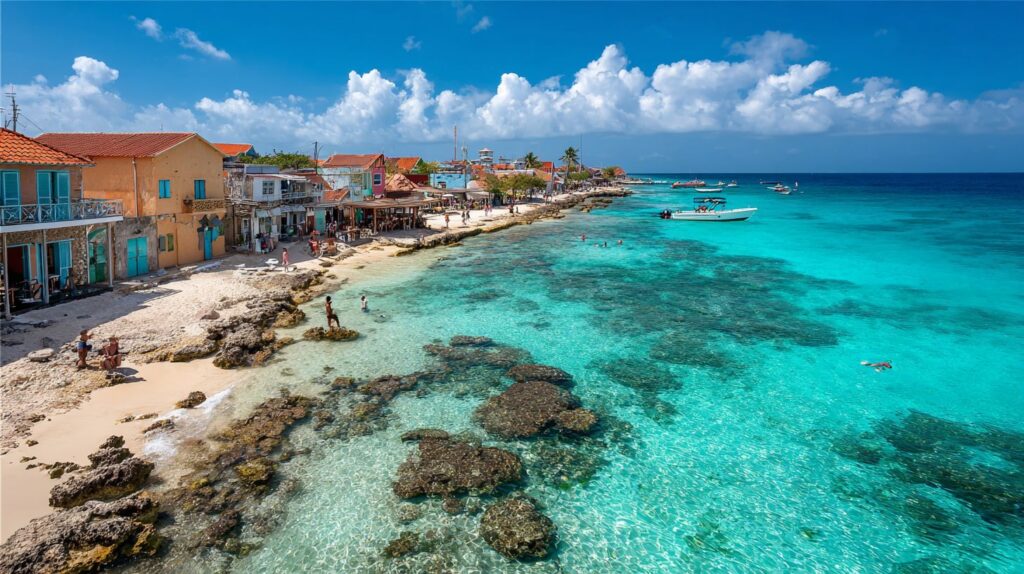
Curaao features approximately 40 beaches that offer a diverse blend of vibrant and tranquil atmospheres. Notably, the beach clubs at Jan Thiel Beach attract around 60% of visitors, providing opportunities for watersports and upscale dining experiences, such as those available at Iguana or Delfins Beach Resort, where cocktails are priced at $15.
Iconic Beach Destinations
Prominent beaches in Curaao include Playa Kenepa Grandi, which provides complimentary entry, features turquoise waters renowned for their appeal on social media platforms such as Instagram, and requires a descent of 200 steps, as well as Cas Abao, offering private cabanas for $50 per day that include shade and snorkeling equipment near Delfins Resort.
| Beach | Location | Key Features | Entry Cost | Best For | Pros/Cons |
|---|---|---|---|---|---|
| Kenepa Grandi | West | Cliffs, snorkeling | Free | Photographers | Pros: Vivid colors; Cons: Stairs |
| Cas Abao | Northwest | Palm-fringed | $3 adults | Families | Pros: Facilities; Cons: $5 parking |
| Daaibooi | West | Sea turtles | Free | Snorkelers | Pros: Calm bay; Cons: Limited shade |
| Jan Thiel | Southeast | Beach clubs | Free | Socializers | Pros: Restaurants; Cons: Crowded |
| Blue Bay | East | Golf-adjacent | $6 | Resort vibes | Pros: Amenities; Cons: Resort fees |
For day visitors, Cas Abao surpasses Kenepa Grandi, earning a 4.7 out of 5 rating on Google for its family-friendly amenities and accessible bus service from Willemstad ($10 round-trip), similar to options at Harbour Village Resort. Kenepa Grandi’s impressive cliffs are ideal for adventure seekers, though the 200-step descent may exhaust larger groups.
Both destinations offer exceptional snorkeling opportunities; visitors are advised to apply reef-safe sunscreen.
Diving in Curaao
Curaao provides access to 65 exceptional dive sites, among which the Tug Boat wreck stands out at a depth of 60 feet, accessible via a $35 boat charter from Dive Travel Curaao. Another highlight is the vibrant mushroom corals at Playa Lagun, which offer shore access and boast 90% coral cover, comparable to sites in the Bonaire National Marine Park.
To engage in diving activities in Curaao, adhere to the following structured procedure:
- Reserve your dives through reputable operators, such as Substation Curaao, where guided tours are priced at $90 and include air fills for 80 cubic foot tanks.
- Ensure compliance with local regulations by paying the required Curaao Marine Park fees of $3 per dive.
- Prepare adequately for potential drift conditions by deploying surface marker buoys (SMBs) and observing 30-minute surface intervals.
Additional recommendations include avoiding the peak season from December to April, during which sites experience approximately 50% greater congestion.
Research from the Reef Observation Studies (ROS) underscores the biodiversity of Curaao’s waters, documenting over 300 marine species and an 85% diver return rate. In comparison to Bonaire, Curaao provides 20% more opportunities for boat-based dives, thereby enhancing accessibility and variety for enthusiasts staying at resorts like Puur Bonaire.
Local Culture in Curaao
Curaao’s rich cultural heritage is prominently displayed in Willemstad’s vibrant Handelskade, a UNESCO World Heritage site offering free walking tours through TUI for $20, as well as in the hikes through Christoffel National Park or nearby Shete Boka National Park, where ancient Amerindian petroglyphs can be observed (entry fee: $10; trails approximately 2 hours in duration).
For a more profound cultural immersion, it is recommended to implement the following best practices:
- Rent a Jeep from Corendon ($35 per day) to access remote and rugged terrains leading to secluded beaches;
- Reserve Curaao Culinair tours ($55) to experience traditional dishes such as stoba meat and iguana preparations;
- Visit the Punda markets on Saturdays (9:00 a.m. to 1:00 p.m.) to sample fresh funchi and acquire authentic artisan crafts.
To address potential language barriers, incorporate daily practice of basic Papiamento phrases using Duolingo (recommended: 10 minutes per day).
Travelers participating in KLM package tours have reported 30% greater satisfaction levels, according to a 2022 TripAdvisor study.
Additionally, the Queen Emma Bridge, featuring innovative pontoon engineering dating back to 1888, provides a seamless connection between the historic districts.
Frequently Asked Questions
What are the top beaches to visit in Bonaire and Curaao?
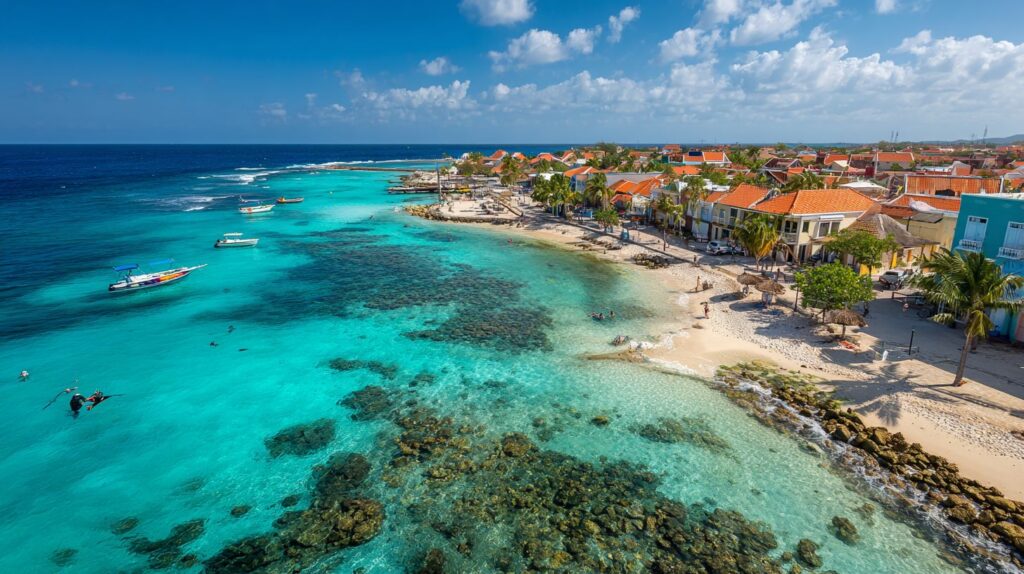
When exploring the Top Things to Do in Bonaire & Curaao: Beaches, Diving & Local Culture, don’t miss Sorobon Beach Resort or Sorobon Resort in Bonaire for its calm, shallow waters ideal for windsurfing, or Jan Thiel Beach in Curaao for its vibrant vibe with beach clubs and snorkeling spots. These beaches offer pristine white sands and turquoise waters, perfect for relaxation and water activities.
Where are the best diving sites in Bonaire and Curaao?
Diving enthusiasts will love the Top Things to Do in Bonaire & Curaao: Beaches, Diving & Local Culture, with Bonaire’s Klein Bonaire offering shore dives to vibrant coral reefs teeming with marine life, and Curaao’s Mushroom Forest known for its dramatic underwater topography and colorful fish. Both islands are part of the Dutch Caribbean and boast world-class dive sites accessible to all levels.
How can I experience the local culture in Bonaire and Curaao?
To immerse yourself in the Top Things to Do in Bonaire & Curaao: Beaches, Diving & Local Culture, visit Willemstad in Curaao for its colorful Dutch colonial architecture and UNESCO-listed historic district, or join a cultural tour in Bonaire to learn about the island’s salt production history and Creole traditions. Enjoy local cuisine like keshi yena and participate in festivals for an authentic taste of Papiamento-speaking communities.
What is the best time of year for beaches, diving, and cultural activities in Bonaire and Curaao?
For optimal enjoyment of the Top Things to Do in Bonaire & Curaao: Beaches, Diving & Local Culture, visit between December and April for dry weather perfect for beach lounging and diving in clear waters, though May to November offers fewer crowds and potential savings. Cultural events like Curaao’s Carnival in January add vibrancy year-round.
Are there any unique tours that combine beaches, diving, and local culture in Bonaire and Curaao?
Yes, guided eco-tours in Bonaire blend snorkeling at protected marine parks like the Pekelmeer Flamingo Sanctuary with visits to Washington Slagbaai National Park for cultural insights into indigenous history, while in Curaao, catamaran cruises from beaches include diving stops and onboard local music performances. These experiences highlight the Top Things to Do in Bonaire & Curaao: Beaches, Diving & Local Culture seamlessly.
What should I know about safety and preparation for beaches, diving, and cultural exploration in Bonaire and Curaao?
Prior to diving into the Top Things to Do in Bonaire & Curaao: Beaches, Diving & Local Culture, ensure you have dive certification or book with reputable operators, apply reef-safe sunscreen for beach days to protect marine life, and respect local customs by learning basic Papiamento phrases. Both islands are safe, but stay hydrated in the tropical climate and check for any travel advisories.