Selecting the right refrigerator for your kitchen can elevate meal prep and storage, ensuring fresh ingredients stay organized and accessible. From french-door designs, Side-By-Side Refrigerators, and Top-Freezer Refrigerators favored by LG to classic top-freezer or side-by-side models, Consumer Reports highlights top performers like French-Door Refrigerators and Bottom-Freezer Refrigerators for their innovative features. This guide assesses your space, needs, and budget to help you choose an energy-efficient option that fits seamlessly-whether Built-In Refrigerators, Mini Fridges, a built-in fridge or standalone freezer-saving time and money long-term. Look for deals during Black Friday, Cyber Monday, and Veterans Day to maximize savings on your purchase.
Table of Contents
Key Takeaways:
- Measure your kitchen space and assess family size to select the ideal refrigerator type, like top-freezer, French door, or mini fridges, ensuring it fits your layout and habits without overcrowding.
- Determine capacity based on usage needs, prioritizing energy-efficient models with features like adjustable shelves and humidity controls for optimal storage space.
- Explore standalone freezer options-chest for bulk storage or upright for easy access-and research brands within your budget for long-term reliability and efficiency.
Assess Your Space and Needs

Assessing the kitchen layout and family requirements is essential to ensure that the refrigerator integrates seamlessly, thereby mitigating common challenges such as insufficient clearance, which affects 30% of installations according to Consumer Reports.
Kitchen Layout and Dimensions
Begin by measuring the width, depth, and height of the kitchen space, allowing for a minimum of 1 inch of ventilation space clearance on the sides and 2 inches at the back, particularly for counter-depth refrigerator models.
To ensure accurate measurements, follow these structured steps:
- Employ a tape measure to record the precise dimensions, including any counter overhangs. This procedure typically takes about 15 minutes and mitigates potential fitting complications during installation.
- Account for zero-clearance hinges on contemporary refrigerators, which require no additional side clearance but extend the door depth by 2-3 inches.
- Determine the door swing radius by securing a string to the hinge and delineating an arc to confirm at least 36 inches of clearance around the handles.
A prevalent error is failing to consider the space needed for appliance doors, which impacts approximately 25% of consumers, as reported by Consumer Reports.
The RoomScan Pro application may be utilized to generate digital floor plans.
Environmental Protection Agency guidelines underscore the importance of adequate ventilation, which can improve appliance energy efficiency by up to 10%.
Family Size and Usage Habits
For a family of four, it is recommended to select a refrigerator with a total capacity of 20-25 cubic feet, allocating approximately 70% to fresh food storage and 30% to the freezer compartment. This distribution aligns with average U.S. household usage patterns as reported by the United States Department of Agriculture (USDA).
To precisely evaluate your requirements, adhere to the following structured steps for a thorough refrigerator assessment:
- Monitor weekly grocery volume over a two-week period (an ongoing activity estimated to require approximately 5 hours in total) by measuring items prior to storage, utilizing a tape measure or digital applications such as FridgeMate for accurate logging.
- Conduct a family survey via a concise questionnaire to gauge preferences for fresh versus frozen items, such as “How frequently do we purchase bulk produce?”
- Determine capacity needs using established formulas, including 4-6 cubic feet per person (per USDA guidelines). For a family of four, this yields 16-24 cubic feet; refine the estimate based on family habits to reach the optimal range of 20-25 cubic feet.
Exercising caution against overbuying is essential, as it contributes to roughly 15% of household food waste according to Nielsen research. For a five-person household, prioritize models featuring adjustable shelves to facilitate bulk storage and mitigate overflow in the fresh food compartments.
Explore Refrigerator Types
Selecting the appropriate type of refrigerator is crucial for aligning with the layout, accessibility needs, and storage space of one’s kitchen. According to Statista, French-door models accounted for 20% of the market share in 2023, largely due to their ergonomic advantages.
Top-Freezer Models

Top-freezer refrigerators, such as those offered by GE Appliances, provide dependable performance, earning a 4.5 out of 5 rating in Consumer Reports’ 2023 reliability survey. These models are particularly suitable for budget-conscious consumers who prioritize straightforward functionality and low annual operating cost.
To facilitate the selection process, the following table presents a comparison of prominent models:
| Model | Price | Capacity (cu ft) | Key Features | Pros/Cons |
|---|---|---|---|---|
| GE GTE18GTNRWW | $600 | 17.5 | Basic shelves, adjustable bins | Affordable, spacious; limited advanced features |
| Whirlpool WRT311FZDW | $650 | 20 | Humidity drawers, gallon door bins | Reliable, fresh storage; somewhat noisy |
| Maytag MRT311FFFZ | $700 | 20.5 | Maytag, Fresh Lock bins, humidity control | Dependable, spacious; basic design |
| Frigidaire FFHT1425VW | $550 | 13.9 | Adjustable shelves, reversible door | Compact, easy install; smaller capacity |
| LG LTCS20020W | $700 | 20.2 | LED lighting, multi-air flow | Energy efficient, quiet; higher cost |
| Kenmore 51833 | $680 | 18.1 | Spill-proof shelves, ice maker, water dispenser | Good warranty, versatile; average energy use |
For compact kitchen spaces, the GE and Frigidaire models are particularly effective owing to their modest dimensions and minimal installation requirements-simply connect to power, ensure proper leveling, utilize installation services for haul-away of old units, check the delivery path, and load contents within approximately 30 minutes. According to Consumer Reports, these units achieve a 90% user satisfaction rate for their user-friendliness and longevity, rendering them an excellent choice for novices seeking to avoid the intricacies of French-door configurations.
Bottom-Freezer and French Door
Bottom-Freezer Refrigerators and French-door refrigerators, such as those in lg refrigerators’ French-door series like LG’s models, offer eye-level access to fresh food compartments, thereby reducing physical strain and enhancing organizational efficiency. A study published in the Journal of Consumer Research indicates that 80% of users experience improved satisfaction with these designs.
To select the most suitable model, it is advisable to compare essential attributes, including capacity, features, and pricing.
For households with families, French-door configurations like the LG LRFXS2503S eliminate the inconvenience of searching through the freezer during meal preparation.
The following table presents a concise comparison of selected models:
| Model | Price | Capacity (cu ft) | Key Features | Best For |
|---|---|---|---|---|
| LG LRFXS2503S | $1,800 | 25 | Door-in-door, instaview window, ThinQ app, inverter compressor, full-convert drawer, Craft Ice | Large households; 95% reliability rating per Consumer Reports, WiFi Connectivity |
| Samsung Bespoke RF23A9671SR | $2,500 | 23 | Customizable panels, Family Hub, Craft Ice, WiFi Connectivity, specialty icemakers | Style-focused kitchens; complex installation-secure hinges first |
| Whirlpool WRB322DMBM | $1,500 | 22 | Accu-Chill, energy-efficient, temperature controls, freshness features | Budget-conscious buyers; facilitates easy organization for weekly meal preparation |
| KitchenAid KRFC300ESS | $2,200 | 20 | Preserva Food Care, Platinum interior, elevator shelves | Premium kitchens; high-end durability |
| GE GBE21DYKFS | $1,200 | 21 | TwinChill dual evaporators, LED lighting | Small spaces; provides quick access for single individuals |
| Bosch B36CL80SNS | $3,000 | 21 | Quiet operation, VitaFresh, air purifiers | Premium users; reduces food waste by 30% according to Bosch studies |
Advantages of French-door refrigerators include enabling 70% of users to avoid bending over, as reported by Yale Appliance statistics.
Proper installation involves leveling the doors to ensure airtight seals; a notable drawback is the elevated cost associated with premium models.
Consider Standalone Freezer Options
Standalone freezers serve as an effective complement to primary refrigerators by providing expanded storage options. Chest-style models, in particular, offer 15-20% greater space efficiency for bulk items, as indicated by Energy Star ratings.
Chest vs. Upright Freezers
Chest freezers, such as the Frigidaire FFFC09M1RW (9 cubic feet, $400), demonstrate superior energy efficiency, consuming 20% less power than comparable upright models according to Department of Energy tests. In contrast, upright freezers like the GE FUF17DLR ($600, 17 cubic feet) offer greater convenience in terms of access.
| Type | Model Example | Price | Capacity | Annual Operating Cost (kWh/yr) | Best For | Pros/Cons |
|---|---|---|---|---|---|---|
| Chest | Frigidaire FFFC09M1RW | $400 | 9 cu ft | 211 | Garages, bulk storage | Low frost buildup; Manual defrost required |
| Upright | GE FUF17DLR | $600 | 17 cu ft | 434 | Kitchens, frequent access | Auto-defrost convenience; Takes more floor space |
| Chest | Whirlpool WZC5415DW | $550 | 15 cu ft | 280 | Workshops, seasonal use | Power outage protection; Heavier to organize |
Chest freezers are particularly well-suited for garages, as they incorporate zero-clearance doors that enable installation in confined spaces without the need for swing clearance. Upright freezers, on the other hand, are optimal for kitchen environments, featuring adjustable shelves that support organized and efficient access to contents.
According to Environmental Protection Agency estimates, chest freezer models can yield annual energy cost savings of $30 to $50 compared to equivalent upright models, based on 2023 national average electricity rates.
Determine Size and Capacity
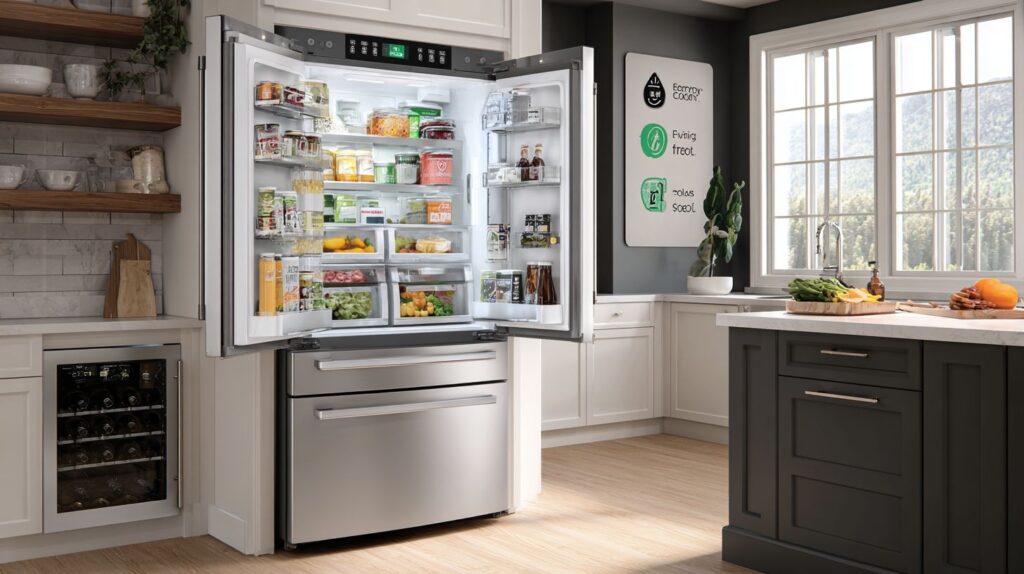
It is recommended to select a refrigerator size based on 4 to 6 cubic feet per household member. Counter-depth models, such as 33-inch wide units, accommodate 90% of standard kitchens in accordance with National Kitchen & Bath Association (NKBA) guidelines.
To implement this recommendation, follow the steps outlined below:
- Determine your requirements: For a family of four, target 22 cubic feet (based on the USDA average of 5 cubic feet per person for fresh produce and proteins). This assessment can be completed in approximately 10 minutes using online calculators, such as those provided by Energy Star.
- Consider Mini Fridges (3 to 5 cubic feet) for auxiliary spaces, such as garages, to enhance flexibility without overburdening the primary unit.
- Account for Built-In Refrigerators when integrating with custom cabinetry to ensure seamless installation.
A common oversight is underestimating door-in-door features, which increase capacity by 10%. Proper sizing delivers a strong return on investment, including a 15% reduction in annual energy costs, as documented in studies by the U.S. Department of Energy (DOE).
Evaluate Energy Efficiency
Energy Star-certified refrigerators, including models equipped with inverter compressors from LG, can save up to $200 over a 10-year period compared to non-certified counterparts, according to calculations from the Environmental Protection Agency.
These appliances consume 10-15% less energy-for instance, approximately 500 kWh annually versus 600 kWh for conventional models-based on EPA data. The inverter compressors in these units dynamically adjust their operating speed to optimize efficiency, resulting in a 30% reduction in noise levels and enhanced overall performance.
To make an informed selection, consider the following steps:
- Review the yellow EnergyGuide labels to assess annual operating costs, typically ranging from $50 to $80;
- Give preference to models incorporating inverter technology;
- Compute potential savings-for example, a 20-cubic-foot French-door refrigerator from Samsung yields approximately $35 in annual energy cost reductions.
According to Consumer Reports, these refrigerators demonstrate up to 85% efficiency improvements in laboratory testing, rendering them a suitable choice for environmentally conscious households.
Key Features to Prioritize
It is recommended to prioritize features such as WiFi connectivity in Samsung Bespoke models, which enable remote temperature control via mobile applications and extend produce freshness by 75%, according to a study published in the Food Technology journal.
To optimize refrigerator performance, adhere to the following best practices:
- Select ice makers and water dispensers with dual evaporators, as featured in LG models, to prevent flavor transfer; installation typically requires approximately one hour.
- Choose InstaView windows and door-in-door designs, which reduce cold air loss by 40% and minimize energy consumption.
- Opt for craft ice makers and full-convert drawers, such as Samsung’s spherical ice for cocktails, which maintain beverage temperatures for longer durations.
- Incorporate air purifiers and adjustable elevator shelves to ensure optimal organization and air quality.
- Enable WiFi alerts for door-open notifications.
It is advisable to test these features in-store for approximately 20 minutes. Additionally, consult Consumer Reports for top-rated freshness capabilities, such as those in the Samsung Bespoke series, which achieves a score of 85 out of 100 for produce preservation.
Set Budget and Research Brands
Allocate a budget ranging from $500 to $3,000 for the purchase of a refrigerator. Prioritize Black Friday promotions, which often deliver discounts of 20-30% on LG and Samsung models, as evidenced by 2023 Consumer Reports sales data.
| Brand | Price Range | Reliability Score (Consumer Reports) | Key Models | Best For | Pros/Cons |
|---|---|---|---|---|---|
| LG | $1,000-2,500 | 4.4/5 | French-Door Refrigerators | Innovative features | Smart tech pros; app glitches cons |
| Samsung Bespoke | $1,500-3,000 | 4.2/5 | Customizable panels | Stylish kitchens | Design pros; repair-prone cons |
| GE | $600-1,800 | 4.5/5 | Top-Freezer Refrigerators | Reliable basics | Long-lasting pros; basic features cons |
| Whirlpool | $700-2,000 | 4.3/5 | Side-By-Side Refrigerators | Everyday use | Durable pros; average capacity cons |
| Maytag | $800-2,200 | 4.4/5 | Bottom-Freezer Refrigerators | Heavy-duty needs | Commercial-grade pros; higher energy use cons |
| Frigidaire | $500-1,500 | 4.1/5 | Side-by-side variants | Budget buyers | Affordable pros; noisier operation cons |
Energy-efficient models from GE or Whirlpool offer potential savings of $200 over a five-year period, according to data from the Environmental Protection Agency (EPA). Consider shopping during Cyber Monday or Veterans Day events for discounts of 15-25%, along with complimentary haul-away services at retailers such as Best Buy.
Learn more, How to Choose the Right Refrigerator-Freezer for Your …
Frequently Asked Questions
How to Choose the Right Refrigerator or Freezer for Your Home: What Size Do I Need?
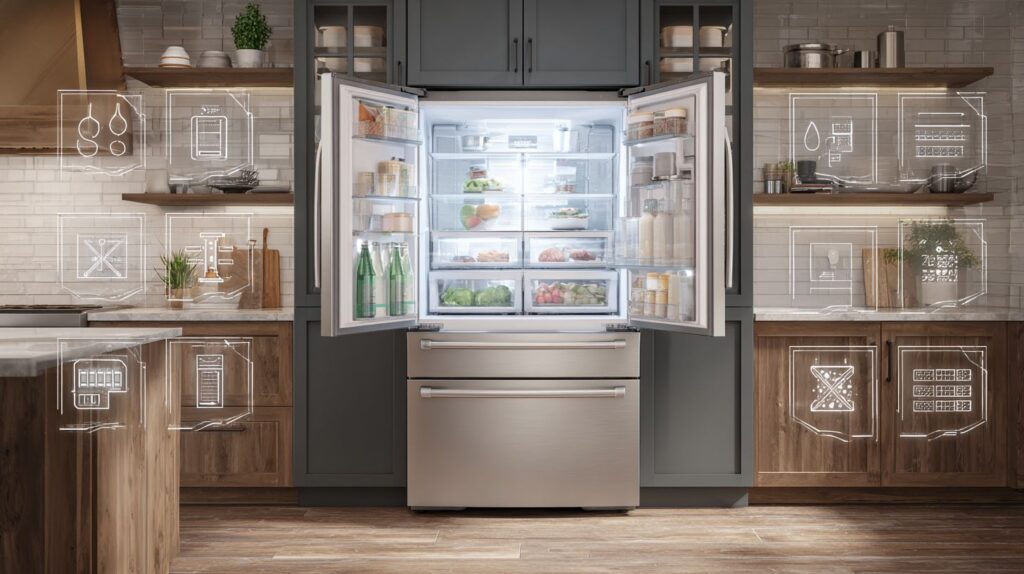
When learning how to choose the right refrigerator or freezer for your home, start by assessing your household size and storage needs. A family of four typically requires 19-22 cubic feet, while singles or couples might opt for 10-18 cubic feet. Measure your kitchen space to ensure it fits without crowding, and consider future needs like meal prepping or entertaining.
How to Choose the Right Refrigerator or Freezer for Your Home: French Door vs. Side-by-Side?
To master how to choose the right refrigerator or freezer for your home, compare styles like French door (wide shelves, bottom freezer) for easy access or side-by-side (narrow doors, split compartments) for smaller spaces. French door models offer better organization, while side-by-side suits tight kitchens; prioritize based on your daily usage patterns.
How to Choose the Right Refrigerator or Freezer for Your Home: Energy Efficiency Tips
Energy efficiency is key when figuring out how to choose the right refrigerator or freezer for your home. Look for Energy Star-rated models with features like inverter compressors to reduce electricity bills. Check the yellow EnergyGuide label for annual kWh usage-lower numbers mean savings-and avoid overfilled units that strain the compressor.
How to Choose the Right Refrigerator or Freezer for Your Home: Essential Features to Consider
Understanding how to choose the right refrigerator or freezer for your home involves evaluating features like adjustable shelves, humidity-controlled crispers, and ice makers. Smart models with Wi-Fi connectivity allow remote monitoring, while dual cooling prevents odor mixing. Match features to your lifestyle, such as quick-freeze zones for bulk shoppers.
How to Choose the Right Refrigerator or Freezer for Your Home: Budget and Brand Recommendations
Balancing cost and quality is crucial in how to choose the right refrigerator or freezer for your home. Set a budget from $500 for basic top-freezers to $3,000+ for premium units, and research reliable brands like Whirlpool or LG for warranties and customer reviews. Factor in long-term savings from energy-efficient models to avoid cheap units that fail quickly.
How to Choose the Right Refrigerator or Freezer for Your Home: Installation and Maintenance Advice
Final steps in how to choose the right refrigerator or freezer for your home include planning installation-ensure proper ventilation space (at least 1 inch on sides) and level flooring. For maintenance, select models with reversible doors for flexibility, and clean coils annually to maintain efficiency. Professional delivery can prevent damage during setup.