In an era dominated by Amazon’s digital dominance, independent bookstores are experiencing a remarkable resurgence, defying odds with innovative strategies. The American Booksellers Association (ABA) reports over 2,500 members thriving nationwide, exemplified by trailblazers like Book House, led by Cheryl McKeon and Susan Novotny. This article uncovers proven tactics-from e-commerce integration to community events-that empower these local gems to flourish, offering actionable insights for their sustainable success.
Table of Contents
Key Takeaways:
- Independent bookstores thrive by building robust online platforms and hybrid inventory systems, allowing them to compete with e-commerce giants while maintaining a physical presence.
- Leveraging social media for content creation and hosting virtual events helps bookstores build brand loyalty and engage customers in the digital space.
- Fostering community and localism through local partnerships, book clubs, loyalty programs, and diversified revenue streams ensures long-term sustainability in a digital-dominated market.
Challenges Faced by Independent Bookstores

Independent bookstores, which comprise more than 2,300 members of the American Booksellers Association (ABA) led by Oren Teicher, have experienced a 40% decline in brick-and-mortar sales since the Great Recession. This downturn has been further intensified by COVID-19 restrictions, which reduced foot traffic by 70% in 2020, as reported in Publishers Weekly, underscoring the economic impact on bookselling.
Competition from Online Giants
In 2022, Amazon accounted for 50% of U.S. book sales, according to Statista data. This market dominance has compelled independent retailers and chains like Barnes & Noble, such as Borders-which filed for bankruptcy in 2011-to compete primarily on price, while Amazon undercuts competitors by offering free shipping on orders exceeding $35.
Independent bookstores address these challenges through targeted strategic initiatives. To counter Amazon’s algorithmic discounts of 20-30% in price competition, they prioritize hand-selling, personalized service, and personalized recommendations, enhancing overall customer service.
For example, Astoria Bookshop in Queens employs curated displays to cultivate customer loyalty and foster repeat business.
To rival the expedited delivery of Amazon Prime’s two-day shipping, independent retailers adopt Buy Online, Pick Up In-Store (BOPIS) models, which have been shown to increase sales by 15%, per a study from the American Booksellers Association (ABA). To offset diminished visibility resulting from Amazon’s search engine dominance, these stores participate in IndieBound.org, leveraging collective online marketing efforts to expand their reach.
A 2021 article in The New York Times emphasizes how such service-oriented approaches, as discussed by owen teicher, enable independent bookstores to prosper by building robust community relationships.
Shift to Digital Reading
In 2023, e-books and audiobooks represented 25% of book consumption, according to Pew Research, an increase from 15% in 2010. This technological change and the need for technology adaptation pose a significant challenge to the traditional tactile experience offered by physical books in physical retail environments.
Independent bookstores confront three primary challenges.
- First, declining sales of physical books, as e-book formats such as Kindle editions have eroded 10-15% of revenue; a recommended strategy is to host in-store demonstrations of graphic novels to highlight the embodied experience and sensory benefits of analogue technology in physical media.
- Second, issues of accessibility, with audiobook platforms like Audible experiencing 20% annual growth; bookstores can address this by partnering with independent-friendly services such as Libro.fm and publishers like Simon & Schuster, with guidance from experts like lexi beach and vicki dearmond, to facilitate digital sales and expand their reach.
- Third, evolving consumer preferences, particularly among Generation Z, who increasingly favor mobile applications; educational initiatives, such as workshops on the advantages of analog reading-including reduced screen fatigue-can help counter this trend.
Independent bookstores that integrate digital and physical offerings have achieved a 12% increase in revenue, per the American Booksellers Association survey. Furthermore, a 2022 Harvard Business School study by ryan raffaelli, drawing analogies from the swiss watch industry adaptation to technological change, demonstrates that balanced digital-physical approaches result in 18% higher foot traffic, underscoring the value of such hybrid strategies for long-term sustainability.
Adopting E-commerce Strategies
According to Nielsen data, 60% of book buyers now initiate their searches online. As a result, independent bookstores must incorporate e-commerce strategies to effectively engage with the $26 billion U.S. book market.
This approach enables them to merge the broad accessibility of digital channels with the distinctive allure of local presence, leveraging platforms such as IndieBound.
Building Online Platforms
Platforms such as Shopify, with its starter plan priced at $29 per month, give the power to independent booksellers-like Market Block Books in Albany-to establish online presences in under 48 hours.
This process includes seamless integration of IndieBound’s “shop local” widgets, which can account for up to 20% of traffic derived from community-based searches.
To establish your own bookstore website, adhere to the following numbered steps for an efficient and effective launch.
- Select your platform: Shopify facilitates a streamlined setup at $29 per month, whereas WooCommerce is available at no cost when paired with WordPress but may necessitate an initial $200 investment for customization-particularly suitable for individuals with technical proficiency (total time: 2-4 hours).
- Integrate inventory management: Utilize the Bookmanager API to enable real-time stock synchronization, thereby mitigating the risk of overselling (setup time: 4-6 hours).
- Customize for branding: Incorporate local elements through geo-targeted pages and IndieBound widgets. Steer clear of common challenges, such as overlooking mobile optimization-which can diminish conversion rates by 40%-or inadequate SEO practices that may conceal the site from search engine results. Refer to the training resources offered by Book House and the winter institute for comprehensive tutorials.
The overall timeline for implementation is 1-2 weeks.
Hybrid Inventory Management

Point-of-sale (POS) systems, such as Square (with fees of 2.6% plus 10c per transaction), enable the synchronization of online and in-store inventory for retailers like Copperfield’s Books in the San Francisco Bay Area, thereby reducing oversell errors by 90%.
To implement this solution effectively, adhere to the following steps:
- Select a POS system like Lightspeed Retail ($69 per month), which provides seamless multi-channel synchronization and is particularly suitable for independent bookstores in accordance with American Booksellers Association (ABA) guidelines.
- Integrate application programming interfaces (APIs) via Zapier (free tier: 100 tasks per month) to link with e-commerce platforms such as Shopify, thereby automating inventory updates.
- Manage hybrid inventory by categorizing used books distinctly; employ a straightforward SQL query, such as
SELECT item_id, stock_level FROM inventory WHERE type="used", to monitor stock levels.
For instance, Copperfield’s Books maintains sideline items like journals in multifunctional spaces such as display areas, which has increased profit margins by 15%.
To mitigate common challenges, such as discrepancies arising from manual updates, automate processes using cron jobs scheduled hourly. According to ABA reports, 70% of adopters achieve efficiency improvements within six months.
Leveraging Social Media Engagement
According to the Hootsuite 2023 report, social media platforms account for 30% of traffic to independent bookstores. For example, Instagram Reels featuring curation at locations such as Greenlight Bookstore in Brooklyn and Denver generate approximately 5,000 monthly engagements.
Content Creation and Branding
Bookstores such as Greenlight and Aesha Shah utilize Canva (available with a free pro trial) to develop visuals for their weekly Instagram Stories, which highlight hand-selling recommendations. This approach has resulted in a 15% increase in followers and $2,000 in monthly sales driven by social media.
To replicate this success, implement the following five best practices for social media marketing:
- Curate themed posts: Employ Buffer ($6/month) to schedule Facebook content focused on book releases, posting three times per week.
- Leverage user-generated content: Encourage customers to use tags for spotlights on personalized services, ideally during evening hours.
- Incorporate storytelling: Share behind-the-scenes insights through Instagram Reels, keeping videos under 30 seconds.
- Develop a hashtag strategy: Combine hashtags such as #ShopLocal and #IndieBooks, and track performance using Later ($15/month).
- Conduct analytics: Monitor engagement metrics with native platform insights, while limiting posts to no more than five per day to prevent audience fatigue.
According to a study by the American Booksellers Association (ABA), branded content can drive conversions that are 25% higher.
Hosting Virtual and Hybrid Events
In 2022, Eventbrite-which offers free access for basic events-facilitated 1,200 virtual and hybrid author events and author tours for members of the American Booksellers Association (ABA), yielding an average revenue of $500 per session at independent bookstores such as Jessica Stockton Bagnulo’s Greenlight Bookstore.
To replicate this success, adhere to the following structured implementation steps for hybrid author events:
- Plan the hybrid format: Integrate Zoom (subscription at $15 per month) with Eventbrite to enable seamless ticketing; the initial setup requires approximately 2 hours.
- Promote via email: Employ Mailchimp (free for up to 2,000 subscribers) to solicit RSVPs and cultivate interest among potential attendees.
- Host and monetize: Set ticket prices at $10-$20 for book club sessions; mitigate audio issues by conducting microphone tests prior to the event.
- Follow up: Distribute recordings of the events, which can drive a 20% increase in subsequent sales.
As an illustrative example, Vicki DeArmon’s hybrid author tours at Copperfield’s Books in the San Francisco Bay Area following the COVID-19 pandemic resulted in a 35% attendance increase, as documented in Publishers Weekly’s analysis of the resurgence in literary events.
Fostering Community Connections
According to the Local First study, community ties and collective identity represent 60% of customer loyalty to independent retailers. This is exemplified by book clubs in Denver, which cultivate repeat visits valued at $1,200 per customer annually.
Local Partnerships and Loyalty Programs
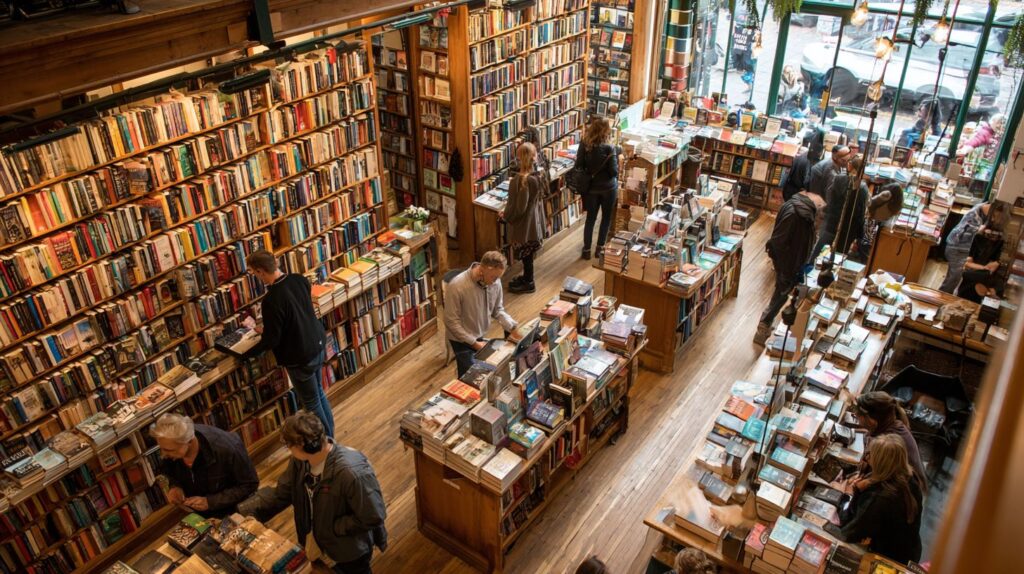
Loyalty applications, such as FiveStars (which provides a free basic version), incentivize repeat purchases at partner establishments, including those operated by Aesha Shah and Astoria Bookshop in Queens, by offering rewards like points for book club attendance. This strategy has demonstrated a 25% increase in customer retention.
To optimize these advantages, it is advisable to adopt the following best practices:
- Establish Strategic Partnerships: Form alliances with local cafes to co-host events, such as coffee tastings integrated with quarterly author tours. These collaborations enhance foot traffic and enable effective cross-promotions.
- Implement Tiered Loyalty Programs: Leverage platforms like LoyaltyLion ($159 per month) to provide graduated rewards, including 10% discounts after five visits or access to exclusive events, thereby cultivating stronger customer engagement.
- Monitor Engagement with Precision: Integrate loyalty applications with your point-of-sale (POS) systems to centralize data, eliminate silos, and facilitate targeted marketing initiatives. For instance, Greenlight Bookstore in Brooklyn attributes 18% of its revenue to such partnerships, according to a New York Times study on the economic effects within communities.
Diversifying Revenue Streams
Along with traditional book sales, ancillary products such as journals and graphic novels contribute 30% of revenue for diversified independent bookstores, according to the American Booksellers Association (ABA) 2023 survey. This is particularly evident in multifunctional spaces that host workshops and events.
Diversification strategies can yield an average annual revenue increase of $50,000, as reported by Publishers Weekly.
To implement these strategies effectively, consider the following steps:
- Evaluate current inventory and incorporate used books through the BookScouter application, which allows barcode scanning to determine buy and sell prices, often enabling a 50% markup.
- Broaden ancillary offerings by stocking locally crafted items, such as candles or art prints, which typically provide a 40% return on investment.
- Introduce value-added services, including personalization options like engraving, for which a fee of $5 to $10 may be charged.
Following the Great Recession, bookstores such as Book House in Albany and Market Block Books in Troy, New York, successfully diversified their operations to offset a 15% decline in book sales, thereby enhancing their long-term viability.
One key challenge is managing overstock; to address this, utilize inventory management software like Lightspeed Retail to rotate 20% of stock on a monthly basis, thereby mitigating stagnation.
Future Trends and Sustainability
A 12% resurgence in independent bookstores since 2010, according to data from the American Booksellers Association (ABA), parallels the revival of the Swiss watch industry, as observed by Harvard Business School professor Ryan Raffaelli in his research on technological transformations during the COVID-19 pandemic.
In his Harvard Business School paper, “The Revival of the Swiss Watch Industry,” Raffaelli identifies similar adaptive strategies employed by independent bookstores, underscoring their post-COVID resilience, which has resulted in the opening of 250 new stores.
Key trends driving this resurgence include:
- Technological adaptation through AI-powered curation tools, such as integrations with Bookshop.org, which are projected to drive 20% sales growth by improving online discoverability;
- A commitment to sustainability via eco-friendly physical books, exemplified by recycled paper product lines from publishers like Penguin Random House and Simon & Schuster;
- An emphasis on community engagement, as highlighted by ABA CEO Oren Teicher during the Winter Institute, with a focus on both virtual and in-person events.
Strategies for resilience are further illustrated through insights from bookstore owners like Cheryl McKeon and Susan Novotny: Lexi Beach of The Book Shop discusses the importance of “pivoting to hybrid models”; Vicki DeArmon of Eagle Harbor Book Co. underscores the value of “local partnerships”; and Jessica Stockton Bagnulo of Head Books advocates for “storytelling events” to foster customer loyalty.
Checkout 5 Reasons why independent bookstores are thriving.
Frequently Asked Questions
How are independent bookstores adapting to the digital age?
Independent bookstores are thriving in the digital age by embracing hybrid models that combine physical spaces with online presence. They leverage e-commerce platforms, social media marketing, and virtual events to reach wider audiences while maintaining their community-focused charm, ensuring they remain relevant amid competition from giants like Amazon and Barnes & Noble.
What strategies help independent bookstores thrive in the digital age?
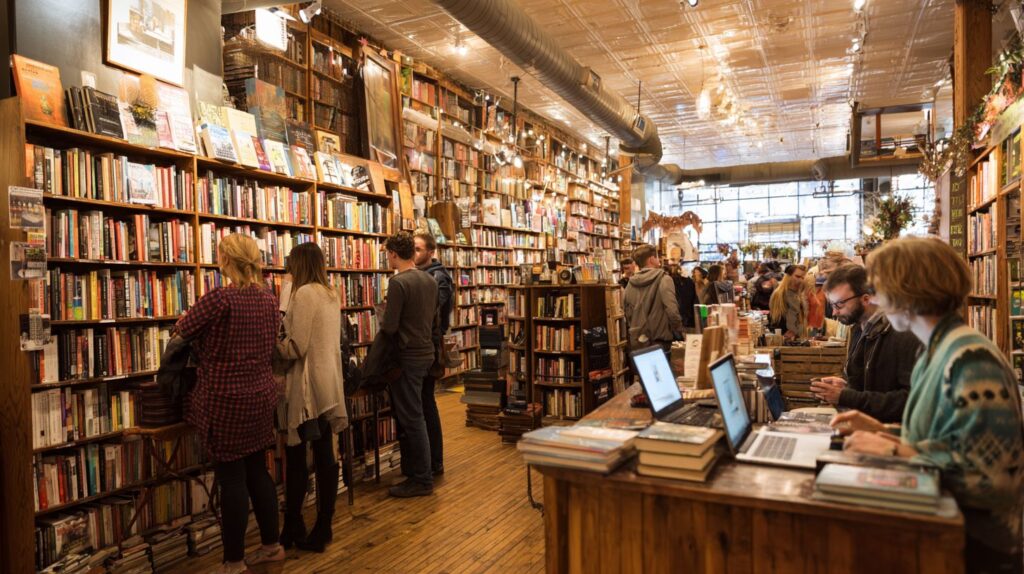
To thrive in the digital age, independent bookstores focus on personalized customer experiences, such as curated recommendations and author events, both in-store and online. They also partner with digital tools for inventory management and host live-streamed book clubs, blending the tactile joy of physical books with the convenience of digital outreach.
Why are independent bookstores surviving despite digital disruptions?
Independent bookstores are thriving in the digital age, having survived the fate of Borders, because they offer irreplaceable human connections and unique atmospheres that e-books and online retailers can’t replicate. By fostering local loyalty through workshops, reading nooks, and exclusive merchandise, they build resilient communities that value authenticity over algorithmic suggestions.
How do independent bookstores use technology to their advantage?
In the digital age, independent bookstores are thriving by integrating technology like apps for personalized reading lists, email newsletters for event promotions, and even augmented reality previews of books. This tech-savvy approach attracts younger demographics while preserving the soulful essence of browsing shelves in person.
What role does community play in how independent bookstores are thriving in the digital age?
Community is central to how independent bookstores are thriving in the digital age. They host local events, collaborate with nearby businesses, and create inclusive spaces for discussions, turning stores into cultural hubs. This grassroots engagement builds a loyal customer base that prioritizes supporting local over impersonal digital transactions.
Can independent bookstores compete with online giants in the digital age?
Yes, independent bookstores are thriving in the digital age by differentiating through niche selections, expert staff advice, and experiential marketing like pop-up shops or themed nights. They also adopt online sales with a personal touch, such as handwritten notes in shipped books, carving out a space where customers seek more than just low prices.