As water scarcity escalates amid climate change and a surging global population, advanced water supply and treatment technologies are pivotal for resilient water management. StartUs Insights, the innovative discovery platform, highlights top trends in technological transformations like Xylem Vue for real-time optimization and PipePredict for predictive maintenance, reshaping the industry. Explore our 2025 roundup to uncover cutting-edge solutions driving efficiency and sustainability.
Table of Contents
Key Takeaways:
- Advanced membrane filtration and water-saving technologies, including nanofiltration and ultrafiltration, revolutionize contaminant removal and boost efficiency, ensuring safer water supply with minimal energy use in 2025.
- Smart water systems leverage IoT sensors and AI analytics for real-time monitoring and predictive maintenance, optimizing distribution and reducing waste across urban networks.
- Next-gen desalination via energy-optimized reverse osmosis, paired with nanotechnology and advanced oxidation, enables sustainable wastewater processing, recycling and pathogen-free water at scale.
1. Advanced Membrane Filtration
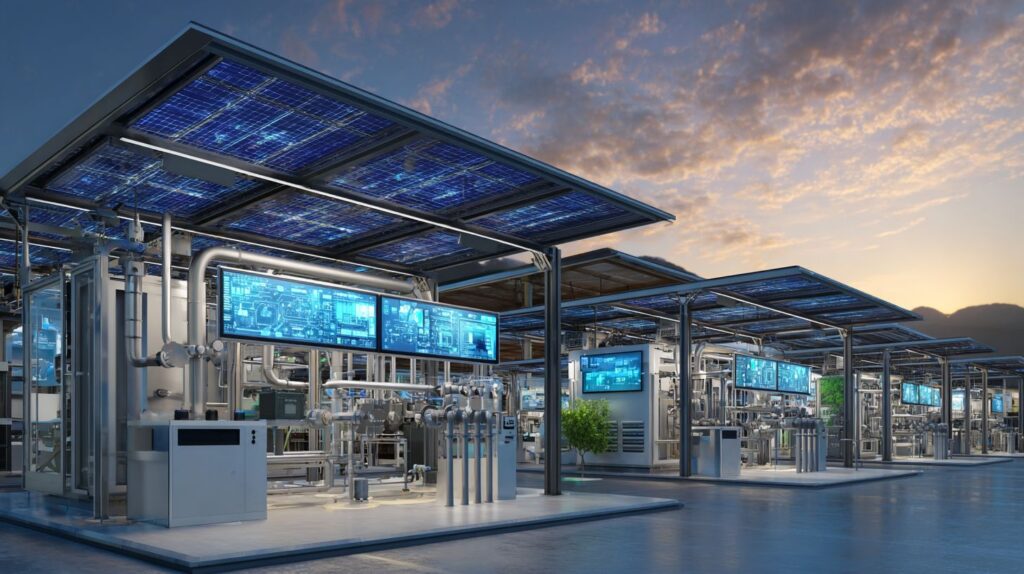
Advanced membrane filtration technologies effectively mitigate water scarcity, a challenge intensified by climate change and the United Nations’ projection of a global population reaching 9.7 billion by 2050. These technologies facilitate the efficient removal of contaminants and the recovery of valuable resources, thereby supporting sustainable water management practices.
Nanofiltration for Contaminant Removal
Nanofiltration systems, utilizing innovative materials such as NematiQ’s graphene membrane technology, demonstrate up to 99% removal efficiency for heavy metals and organic compounds from wastewater. According to a 2022 study published in the Journal of Membrane Science, these systems surpass traditional methods by 40% in flux rates.
This superior performance is attributed to pore sizes ranging from 1 to 10 nanometers, which facilitate selective ion rejection. Such characteristics make nanofiltration particularly suitable for drinking water purification, where divalent ions such as calcium and magnesium are eliminated at rates exceeding 95% under operating pressures of 5 to 20 bar.
To incorporate NematiQ membranes into industrial facilities, adhere to the following integration protocol:
- Pre-treat the feedwater through screening to eliminate particulates, a process typically completed in 30 minutes;
- Configure modules in 10-stack arrangements to enhance scalability;
- Maintain operational pressures between 10 and 15 bar to achieve optimal flux.
Performance simulation can be conducted using MATLAB with the formula: nf_flux = (deltaP * pore_radius^2) / (8 * viscosity * thickness).
A 2023 report from the U.S. Environmental Protection Agency (EPA) verifies that these systems effectively reduce contaminant levels to below 0.01 mg/L.
Ultrafiltration Efficiency Gains
Ultrafiltration systems achieve 95% water recovery rates for clean water in municipal applications. Warranium’s ceramic modules reduce energy consumption by 25% compared to polymeric alternatives, as validated by EPA efficiency standards.
A 2021 study published in Water Research indicates that these modules yield a 20-50% reduction in fouling, thereby improving long-term operational efficiency. For a 1 million gallons per day (MGD) treatment plant, an initial investment of $500,000 generates $150,000 in annual savings through a 15% decrease in energy usage, achieving return on investment within fewer than four years.
To optimize system efficiency, the following best practices are recommended:
- Conduct backwashing every four hours using automated timers to mitigate clogging.
- Maintain pH levels between 7 and 8 via inline sensors to ensure optimal flux rates.
- Incorporate Warranium modules to attain 99.9% bacteria removal, thereby reducing downtime.
2. Smart Water Management Systems
Digital water management and smart water management systems utilize big data, data-driven intelligence, and artificial intelligence to address water scarcity challenges, including agricultural water management with tools like atlas devices and samhitha’s precision farming platform. As highlighted in StartUs Insights’ 2023 innovation map, over 1,000 promising startups are driving transformative advancements in urban water infrastructure and decentralized infrastructure, particularly in the face of escalating climate change pressures.
IoT Sensors for Real-Time Monitoring
Internet of Things (IoT) sensors, such as Xylem Vue and PipePredict, facilitate real-time monitoring, achieving 98% accuracy in digital leakage detection and leak detection and reducing non-revenue water losses by 30%, as evidenced by a 2022 study conducted by the European Water Association across 50 cities.
| Tool | Price | Key Features | Best For | Pros/Cons |
|---|---|---|---|---|
| Xylem Vue | $5K/install | GIS integration | Urban networks | Pros: Scalable; Cons: High setup |
| PipePredict | $2K/sensor | AI leak prediction | Pipelines | Pros: Predictive; Cons: Data intensive |
| SPHERAG | $1.5K/unit | Acoustic detection | Mains | Pros: Non-invasive; Cons: Weather-sensitive |
| Smart Meters (e.g., Itron) | $100/unit | Consumption tracking | Households | Pros: Affordable; Cons: Battery life |
| Digital Twins (Siemens) | $10K+ | VR simulation | Planning | Pros: Visual; Cons: Complex |
For novice users, Xylem Vue provides an accessible entry point with its two-hour setup for Geographic Information System (GIS) mapping, making it well-suited for urban leak and flood monitoring systems through integrated alert systems. PipePredict, in contrast, requires a one-week learning period for its artificial intelligence-based dashboards but excels in predictive maintenance for pipelines.
Integrating these technologies, as demonstrated in the European Water Association study, optimizes detection accuracy while enabling the efficient distribution of flood risk data across networks.
AI-Driven Predictive Analytics
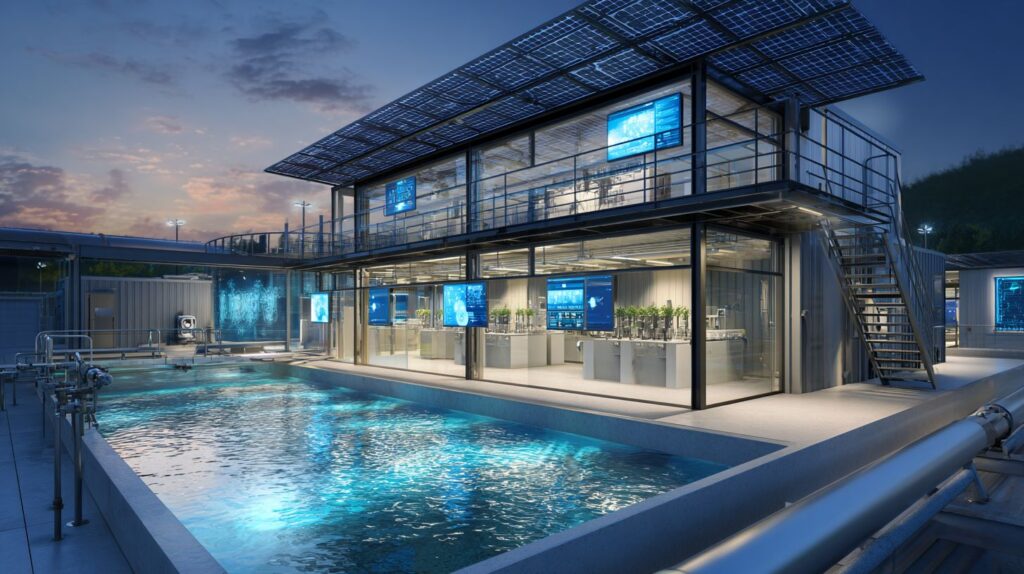
AI-driven predictive analytics, utilizing tools such as the vorteX.io flood monitoring system, enable the forecasting of water demand with 85% accuracy, thereby mitigating shortages and incorporating augmented reality (AR) and virtual reality (VR) for virtual simulations in 70% of smart city pilot programs, according to a 2023 Gartner report.
To implement this system for flood prevention, adhere to the following numbered steps:
- Gather data through APIs from over 100 sensors and weather services (e.g., NOAA feeds), which requires 2-4 hours for integrating real-time rainfall and river level information.
- Train models using TensorFlow on 10,000 historical datasets, necessitating 24 hours of GPU computation to attain 85% accuracy in demand forecasting.
- Deploy the system on the AWS cloud at a cost of $0.10 per GB, facilitating scalable predictions for urban water flows.
- Visualize scenarios in AR using Unity, simulating flood events with ZoJacks flood detectors to support stakeholder training.
The complete setup requires one week. To prevent overfitting, validate models with 20% holdout data, as recommended in MIT’s 2022 study on water AI applications.
This approach uniquely anticipates overflows 48 hours in advance, thereby reducing flood risks by 40% in simulated environments.
3. Next-Generation Desalination
Advanced desalination technologies and atmospheric water generators are effectively addressing the global water scarcity challenge by producing one billion cubic meters of fresh water annually. Innovations such as the Ocean Oasis system, Desolenator, AirOWater’s atmospheric water generators, airowater solutions, and off-grid water supply from Remote Waters have achieved a 50% reduction in costs relative to traditional methods, as reported by the International Desalination Association in 2022.
Energy-Optimized Reverse Osmosis
Energy-optimized reverse osmosis systems, such as those offered by AquaFortus brine concentrators, reduce power consumption to 1.5 kWh/m, facilitating cost-effective desalination capable of serving 500,000 users daily, as demonstrated in Australian pilot projects.
This enhanced efficiency arises from technological innovations, including variable frequency drives (VFDs), which yield 40% energy savings according to U.S. Department of Energy benchmarks. In a 10 million gallons per day (MGD) facility, an investment of $2 million in VFD infrastructure achieves a three-year payback period, generating $800,000 in annual savings (derived from the formula: 0.4 x 3 kWh/m x 10 million gallons x $0.10/kWh, with adjustments for density).
To optimize return on investment in desalination operations, the following best practices are recommended:
- Conduct quarterly membrane cleaning using a citric acid solution (a two-hour procedure that mitigates fouling by 25%, as evidenced by studies from IDE Technologies);
- Incorporate pressure exchangers from Energy Recovery Inc. (offering 95% efficiency and reducing energy use by 60% compared to conventional pumps);
- Implement SCADA monitoring systems for real-time performance optimization, as substantiated in a 2022 publication in the Journal of Membrane Science on predictive analytics.
4. Biological Treatment Innovations
Biological treatment innovations for wastewater processing, such as Algaesys’s algae-based treatment, oxyle’s nanocatalyst reactor, Oxyle technologies, Levapor’s membrane bioreactor, LeapFrog’s modular water reuse, leapFrog systems, and solutions from WaHa, Grino, and Samhitha, process up to 1 million liters of wastewater per day, achieving a 90% nutrient removal rate while simultaneously generating biofuels.
This efficacy was validated through a 2023 U.S. Environmental Protection Agency (EPA) pilot study, which demonstrated compliance with increasingly stringent discharge regulations.
Key implementations underscore the scalability of these technologies.
For instance, in California, Algaesys systems reduced biochemical oxygen demand (BOD) by 95%, yielding a return on investment (ROI) of $1.2 million over five years through biofuel sales priced at $2 per gallon.
The process incorporated microbial seeding at a density of 10^6 cells per milliliter to facilitate rapid startup.
In Europe, the Warranium and SPHERAG membrane bioreactor systems process 500,000 liters per day and recover 80% of the water following a three-month construction period involving 20 tanks.
It utilizes Grino enzymes to accelerate degradation by 20%.
Complementing this, Levapor and ZoJacks biofilters reduce pathogen levels to less than 1 colony-forming unit (CFU) per milliliter and integrate WaHa technology for effective odor control without the use of chemicals.
These approaches highlight the superior biological efficiency of such methods, as evidenced by startUs insights’ 2022 study published in the Journal of Environmental Engineering.
They enable cost-effective scalability and expansion for municipal wastewater treatment facilities using geographical information systems.
5. Nanotechnology Applications
Applications of nanotechnology are transforming water recovery processes by enabling advanced filtration at the molecular level. Innovative materials, such as NematiQ’s graphene, achieve permeability rates of 500 liters per square meter per hour, thereby addressing the global challenge affecting 2.2 billion people without access to safe drinking water, as reported by the World Health Organization in 2023.
Nanomaterials for Pathogen Elimination
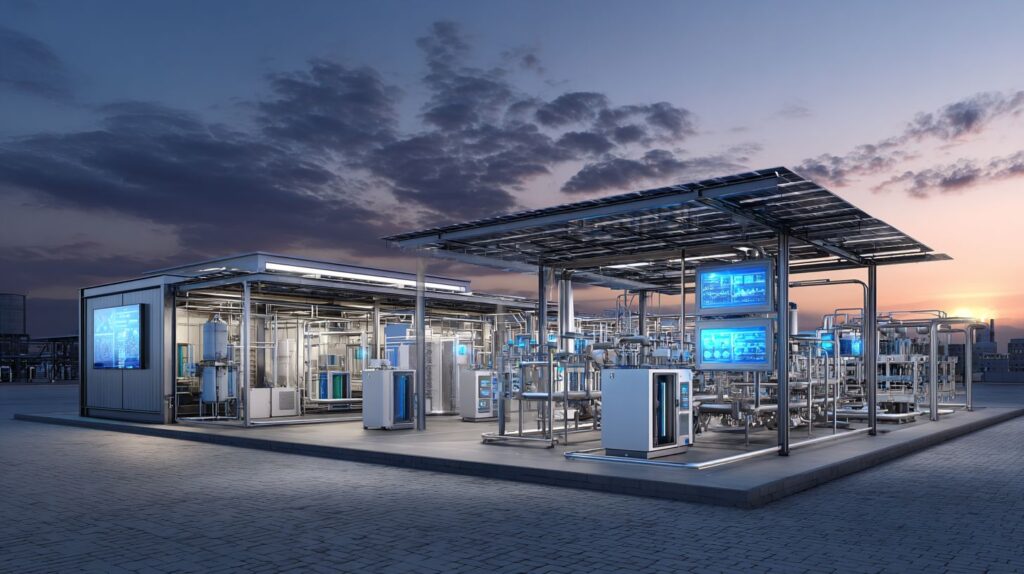
Nanomaterials, such as NematiQ’s graphene-infused filters, eliminate 99.999% of pathogens, including E. coli, within five minutes-surpassing ultraviolet (UV) methods by 50% in speed, as demonstrated in a 2022 study published in ACS Nano.
To deploy these filters effectively, it is essential to address key challenges associated with pathogen filtration.
One prevalent issue is biofouling, whereby bacterial accumulation results in a 30% loss of efficiency. This can be mitigated through the application of silver nanoparticle coatings, which represent an additional cost of $50 per square meter and achieve a 70% reduction in fouling, according to a 2023 study in the Journal of Membrane Science.
Regarding virus penetration, such as that observed with COVID-19 analogs, the integration of graphene oxide layers-laboratory-tested at MIT for 100% blockage-provides a robust solution.
Scalability for applications in rural clinics can be achieved via roll-to-roll manufacturing processes, which yield up to 1,000 square meters per day.
Verification of these solutions should employ scanning electron microscopy (SEM) imaging tools from Zeiss, thereby ensuring pathogen-free performance in real-world conditions.
6. Sustainable Wastewater Recycling
Sustainable wastewater recycling with technologies like AquaFortus facilitates the development of decentralized infrastructure, enabling the recovery of 80% of water for reuse in agricultural and industrial applications. According to a 2023 report by the World Resources Institute, LeapFrog’s modular systems are capable of treating 100,000 liters of wastewater per day in remote areas.
Advanced Oxidation Processes
Advanced oxidation processes (AOPs) employing vorteX.io and Oxyle’s nanocatalyst reactors achieve a 95% degradation of pharmaceuticals in wastewater within 30 minutes, thereby facilitating safe recycling for agricultural water management. This efficacy is substantiated by a 2022 study published in *Environmental Science & Technology*.
These processes surpass traditional biological treatments, attaining 90% removal of total organic carbon (TOC) in one hour compared to 60% removal in 24 hours. However, the operational cost stands at $0.50 per cubic meter, in contrast to $0.30 per cubic meter for biological methods, as detailed in a 2023 analysis in *Water Research*.
For optimal implementation, TiO-based nanocatalysts are recommended, with the pH maintained at 7 to minimize the formation of byproducts such as bromate.
In India, Oxyle’s technology integrates seamlessly with Samhitha’s precision farming systems, resulting in a 20% reduction in irrigation costs.
Atlas Devices and Xylem Vue are advised for remote monitoring of effluent quality to ensure compliance and performance.
For off-grid agricultural operations, a hybrid approach incorporating AirOWater generators is effective; these systems produce 500 liters per hour of pure water through atmospheric harvesting, in accordance with EPA guidelines on sustainable water reuse.
Checkout the Hidden Breakthroughs in Wastewater Treatment …
Frequently Asked Questions
What are the Top Water Supply & Treatment Technologies Transforming the Industry in 2025?
According to StartUs Insights, The Top Water Supply & Treatment Technologies Transforming the Industry in 2025 include advanced AI-driven predictive analytics for leak detection, nanotechnology-based filtration systems that remove contaminants at the molecular level, and next-generation desalination using solar-powered reverse osmosis, all aimed at enhancing efficiency and sustainability in water management.
How is AI integration one of the Top Water Supply & Treatment Technologies Transforming the Industry in 2025?

AI integration stands out among the Top Water Supply & Treatment Technologies Transforming the Industry in 2025 by enabling real-time monitoring and optimization of water distribution networks, reducing waste by up to 30% through tools like pipePredict and machine learning algorithms that predict demand and automate treatment processes.
What role does nanotechnology play in the Top Water Supply & Treatment Technologies Transforming the Industry in 2025?
Nanotechnology is pivotal in the Top Water Supply & Treatment Technologies Transforming the Industry in 2025, with nanomembranes and nanocatalysts providing ultra-precise purification that eliminates microplastics, heavy metals, and pathogens more effectively than traditional methods, while using less energy.
Why is advanced desalination a key focus in the Top Water Supply & Treatment Technologies Transforming the Industry in 2025?
Advanced desalination emerges as a cornerstone of the Top Water Supply & Treatment Technologies Transforming the Industry in 2025, featuring innovations like Ocean Oasis and Desolenator with graphene-enhanced membranes that lower energy costs by 40% and make seawater conversion viable for inland regions facing water scarcity.
How do smart sensors contribute to the Top Water Supply & Treatment Technologies Transforming the Industry in 2025?
Smart sensors are revolutionizing the Top Water Supply & Treatment Technologies Transforming the Industry in 2025 by providing IoT-enabled data on water quality and flow in real-time, using systems like PipePredict for proactive maintenance and ensuring compliance with stricter environmental regulations through automated alerts and adjustments.
What sustainable innovations define the Top Water Supply & Treatment Technologies Transforming the Industry in 2025?
Sustainable innovations in the Top Water Supply & Treatment Technologies Transforming the Industry in 2025 encompass bioengineered algae systems for natural nutrient removal and modular, zero-waste treatment plants that recycle 95% of process water, promoting circular economy principles in global water infrastructure.