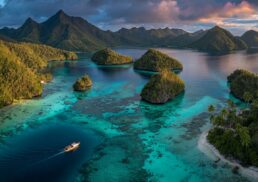
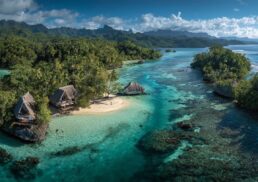
Dive into the world’s best scuba diving destinations, inspired by legends like Jacques Cousteau, where vibrant coral reefs and diverse marine life create unforgettable adventures in the underwater world. From the biodiverse Galapagos Islands, featuring Wolf Islands, Darwin Islands, and Punta Vicente Roca for sightings of red-lipped batfish and napoleon wrasse in cold water conditions, and pristine Palau to the remote wonders of Raja Ampat, these top dive sites showcase unparalleled ecosystems, as highlighted in UNESCO reports. Discover expert tips, hidden gems, and responsible practices to enhance your next expedition.
Table of Contents
Key Takeaways:
- Discover the Caribbean’s Belize Barrier Reef and Bonaire Marine Park for stunning coral formations and abundant marine life like turtles and rays.
- Experience Indo-Pacific gems like Australia’s Great Barrier Reef and Indonesia’s Raja Ampat, boasting the planet’s richest reef biodiversity.
- Explore Indian Ocean hotspots in the Maldives Atolls and Egypt’s Red Sea, featuring pristine corals and diverse species including sharks and colorful fish.
- Venture to other premier dive destinations including Socorro Islands for oceanic manta and shark diving, Fiji’s Beqa Lagoon, Anilao, Bali, Koh Tao, Oman, Kenya, Bahamas, Tobago, and Grand Cayman.
Caribbean Coral Havens
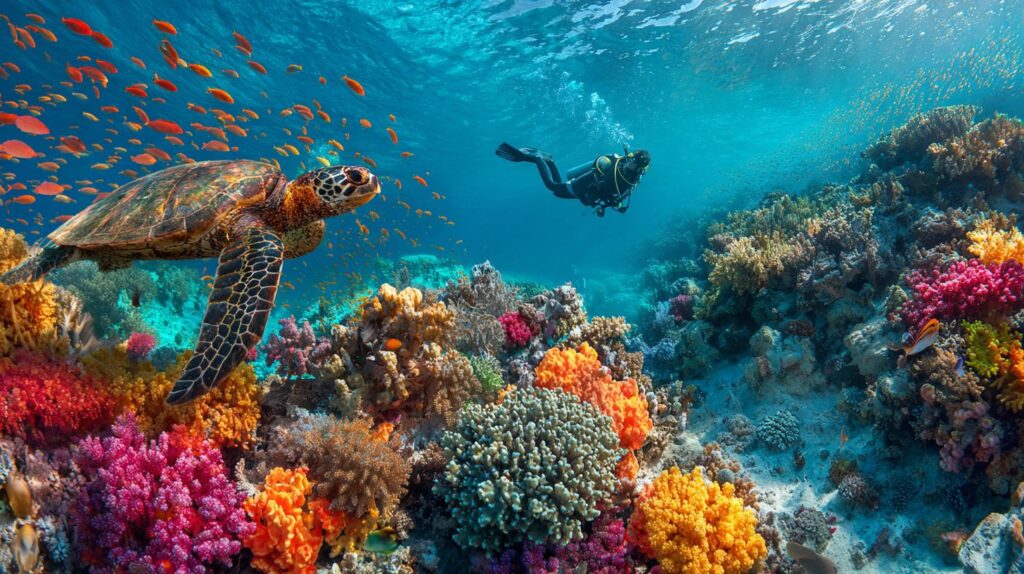
The Caribbean region’s expansive coral reefs, encompassing approximately 100,000 square kilometers, provide advanced divers with access to dynamic ecosystems teeming with over 700 species of fish. These waters, which maintain an average temperature of 80 degreesF, are well-suited for year-round exploration.
Professional liveaboard expeditions, such as those provided by Bluewater Dive Travel for exceptional bluewater travel, facilitate such immersive experiences.
Belize Barrier Reef
The Belize Barrier Reef, recognized as a 190-mile UNESCO World Heritage Site, encompasses the renowned Great Blue Hole, which reaches depths of up to 400 feet. Divers in this area frequently encounter whale sharks during the diving season from March to June, amid waters maintaining a consistent temperature of 82 degreesF.
At the Great Blue Hole, divers benefit from exceptional visibility exceeding 100 feet. Dive excursions are available for approximately $200 through Amigos del Mar, which includes all necessary equipment and professional guides.
In proximity, the Turneffe Atoll features an array of shipwrecks abundant with marine life, supporting over 500 species of fish and boasting 70% coral coverage, as documented in a 2021 study by the Smithsonian Institution.
For optimal implementation, reservations for liveaboard vessels such as those operated by the Aggressor Fleet are recommended, priced at $2,500 per week and including 18 to 20 dives along with onboard meals.
These diving experiences can be complemented by non-diving pursuits, including guided tours to the Mayan ruins at Xunantunich, with an entry fee of $50.
A representative seven-day itinerary, with a total investment of $3,000, facilitates 20 dives alongside cultural excursions, thereby efficiently maximizing opportunities for exploring the region’s rich biodiversity.
Bonaire Marine Park
The Bonaire Marine Park safeguards 6,700 acres dedicated to shore diving, featuring 89 designated sites. This protected area is home to 340 species of birds and offers reliable sightings of frogfish in waters that maintain a consistent temperature of 78 degreesF throughout the year, making it an ideal destination for macro photography enthusiasts who utilize specialized equipment such as Nauticam housings.
Visitors are encouraged to explore notable sites, including 1,000 Steps, which spans depths of 20 to 60 feet and requires a $25 entry fee, renowned for its frogfish populations, as well as Klein Bonaire, celebrated for its vibrant soft coral formations.
According to the 2023 IUCN report, the park maintains 90% reef integrity and supports over 400 species of invertebrates.
For convenient access to shore entry points, vehicle rentals such as trucks are available at a rate of $50 per day.
Macro photography, including blackwater diving, flourishes in this environment, particularly with the Olympus TG-6 camera’s 1:1 magnification capability, allowing for detailed close-up images of macro critters like nudibranchs. Employing a snoot accessory is recommended for precise light control.
For those not engaging in diving, alternative activities include guided kayaking tours through the salt flats, priced at $40 per hour.
A sample itinerary for a five-day visit estimates costs at $800 for lodging and flights, $200 for park fees and rentals, and $200 for activities, resulting in a total expenditure of $1,200 for a comprehensive and immersive eco-adventure.
Indo-Pacific Reef Wonders
The Indo-Pacific region is renowned for its extraordinary reef ecosystems, which form a vital component of the Coral Triangle. This area harbors approximately 76% of the world’s coral species and offers exceptional opportunities for drift diving and encounters with pelagic species, such as hammerhead sharks, in waters averaging 82 degreesF.
According to data from the World Travel & Tourism Council (WTTC), these sites attract approximately 2 million divers annually.
Great Barrier Reef, Australia
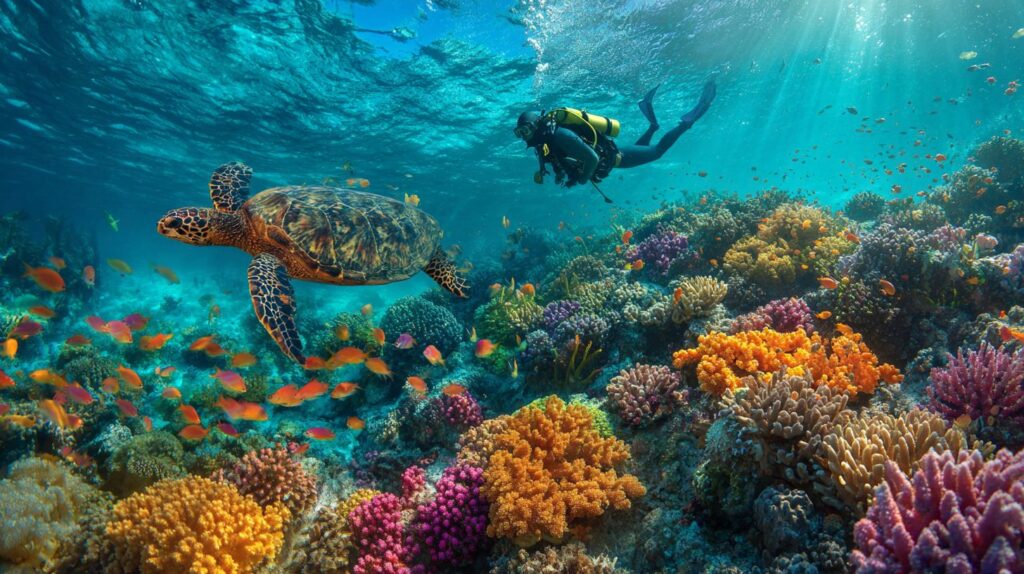
The Great Barrier Reef, extending over 1,400 miles and designated as a UNESCO site and World Heritage Site, supports more than 1,500 species of fish and features annual coral spawning events in November. Diving opportunities at Cod Hole offer exceptional visibility of up to 80 feet in waters ranging from 75 degreesF to 84 degreesF.
For immersive experiences, case studies emphasize the Ribbon Reefs, where pelagic manta rays accompany divers during expeditions on Mike Ball liveaboard vessels (approximately $300 per dive, with 10-day itineraries costing around $4,000). Adjacent to these areas, Osprey Reef provides encounters with whale sharks through snorkeling or diving, accommodating participants who are not certified divers.
According to the 2022 report from the Australian Institute of Marine Science, the reef encompasses 400 types of coral and has experienced a 20% increase in biodiversity following restoration initiatives. For optimal planning, reservations for November expeditions are recommended to witness the spawning events; such investments, involving up to 30 dives for a total expenditure of approximately $5,000, deliver enduring value through unparalleled experiences that surpass conventional leisure travel.
Raja Ampat, Indonesia
Raja Ampat, situated at the core of the Indo-Pacific Triangle, encompasses over 1,500 islands that host 75% of the world’s coral species. Notably, Cape Kri holds the global record for observing 374 fish species during a single dive in waters measuring 82 degreesF.
Divers are drawn to Misool Island for its invigorating drift dives, which utilize reef hooks to navigate walls abundant with manta rays; these excursions are priced at $250 per dive. Cape Kri is particularly renowned for its macro marine life, including pygmy seahorses, set against a backdrop of vibrant soft corals.
A 2021 study by Conservation International emphasizes the region’s remarkable biodiversity, documenting 540 shark species and 80% coral reef coverage.
For an immersive experience, reservations are recommended for liveaboard vessels such as the Dewi, which costs $3,500 for a seven-day itinerary featuring 25 dives designed to refine participants’ skills and provide an optimal return on investment for advanced techniques.
The optimal period for visitation is from October to April, when seas are calm; photographers are advised to employ Inon Z-330 strobes to capture the exquisite soft corals for exceptional underwater imagery.
Indian Ocean Biodiversity Hotspots
The Indian Ocean regions, such as the Maldives and the Red Sea, are renowned for their exceptional biodiversity, which includes over 1,000 species of fish. These areas offer year-round diving opportunities in waters ranging from 79 to 86 degrees Fahrenheit, along with pelagic encounters, including migrations of the ocean sunfish (Mola mola).
Maldives Atolls
The Maldives atolls, comprising 1,190 islands and featuring year-round water temperatures of 80 degreesF, are distinguished by their manta ray cleaning stations at Hanifaru Bay, where aggregations exceeding 200 individuals are observed from June to November.
To optimize your diving experience, consider exploring South Ari Atoll for encounters with whale sharks, available at $200 per session through Four Seasons liveaboard operations, or Vaavu Atoll for pelagic species observations.
According to the 2022 Maldives Marine Research Institute report, the nation’s waters, covering just 5% of the ocean surface, support 1,100 fish species and encompass 30% of global marine biodiversity.
A recommended 7-day itinerary, priced at $2,800, incorporates seasonal timing for optimal conditions and includes complementary non-diving activities, such as spa sessions, to provide a balanced experience.
As an illustration of return on investment, a $3,000 expenditure for 15 dives yields substantial educational and experiential value, integrating adventure with marine insights to create memorable expeditions.
Red Sea, Egypt
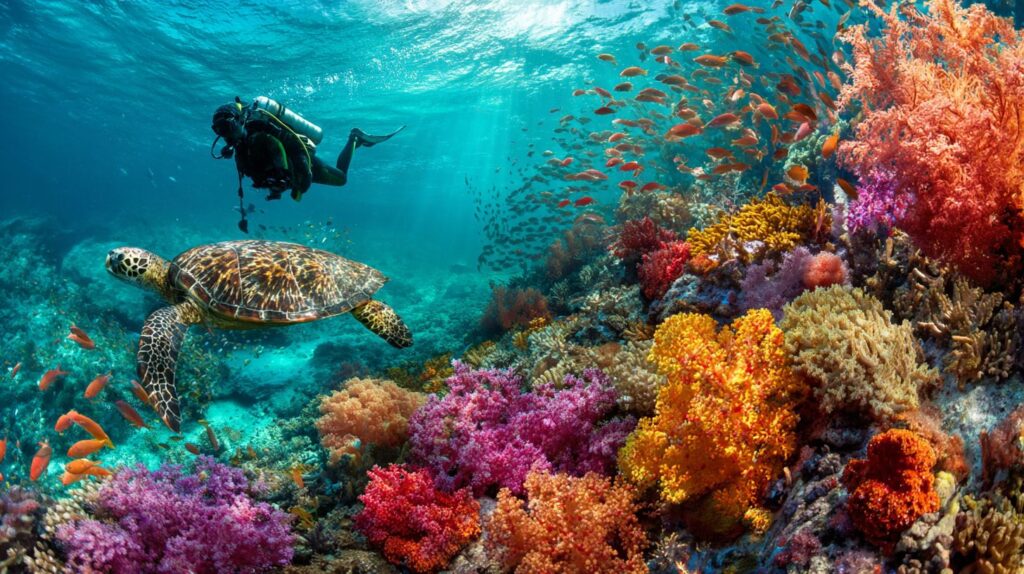
The Red Sea in Egypt, particularly around Sharm El Sheikh, provides exceptional diving opportunities with 80-90 feet of visibility during drift dives at Ras Mohammed National Park. Divers can encounter schools of hammerhead sharks in waters ranging from 77-84 degreesF, all under the protection of stringent Egyptian environmental regulations.
Experienced divers have the opportunity to explore the renowned SS Thistlegorm shipwreck at a depth of 120 feet for approximately $150 per dive.
This site reveals a trove of World War II artifacts nestled among vibrant coral formations.
Furthermore, Ras Mohammed’s dramatic underwater walls support a rich marine ecosystem, including over 1,200 species of fish and 44 types of sharks, as documented in the 2021 report by the Egyptian Environmental Affairs Agency.
For those seeking an immersive experience, the Red Sea Aggressor liveaboards offer comprehensive itineraries priced at $2,200 for a six-day trip during the peak season from May to October, encompassing 18 dives.
Non-diving participants may opt for cultural excursions, such as Bedouin desert tours, available at $100 per day.
The return on investment is particularly compelling with a $2,500 package that includes 18 dives and various shore excursions, enabling participants to maximize exposure to the region’s biodiversity while adhering to all relevant ecological regulations.
Learn more, Collapsing Marine Biodiversity of Indian Ocean.
Diving Tips for Optimal Experiences
Advanced divers can enhance their experiences by mastering drift diving techniques utilizing reef hooks, which can reduce air consumption by 20%, according to PADI’s 2023 advanced course data. These techniques are particularly suited to dive sites featuring variable water temperatures, including 70 degreesF in cold water upwellings.
To optimize diving activities, it is recommended to implement the following six best practices:
- Perform comprehensive pre-dive equipment inspections using Shearwater Peregrine dive computers (approximately 5 minutes), which can prevent up to 30% of equipment failures, as indicated by DAN studies.
- Improve buoyancy control for macro photography by employing 2-3 kg weights, with practice sessions conducted in shallow waters of 10 feet.
- Schedule dives seasonally through the DiveBooker application or travel agencies like Bluewater Dive Travel, reserving spots up to six months in advance to secure optimal conditions.
- Utilize drift diving methods with steel reef hooks (priced at approximately $20) in currents ranging from 3 to 5 knots.
- Prepare for blackwater dives by equipping night vision lights, ideally during full moon nights.
- Acclimate to colder waters using 5 mm wetsuits via progressive exposure techniques.
It is advisable to avoid overpacking; restrict luggage to a maximum of 20 kg to prevent physical fatigue, in accordance with NOAA guidelines.
Conservation and Responsible Diving
Responsible diving plays a crucial role in preserving marine biodiversity, following the legacy of explorers like Jacques Cousteau. Initiatives such as no-touch policies have been shown to reduce coral damage by 40%, according to a 2022 Reef Check study conducted across UNESCO sites and World Heritage sites.
To further support these conservation efforts, it is recommended to implement the following five best practices:
- Apply reef-safe sunscreen at least 30 minutes prior to diving, utilizing products from brands such as Stream2Sea, to minimize chemical runoff that could harm coral reefs.
- Participate in citizen science programs by documenting macroorganisms, such as seahorses, using the iNaturalist application, and uploading observations after each dive to contribute to biodiversity monitoring.
- Refrain from interfering with marine spawning events by scheduling dives outside of peak periods and complying with all applicable local regulations.
- Contribute $10 per dive to marine protected areas via organizations like Project AWARE, thereby aiding broader conservation initiatives.
- Employ buoyancy control devices (BCDs) equipped with low-impact fins and perform annual maintenance inspections to protect sensitive habitats, including those of nudibranch species.
A significant challenge in this domain is anchor-related damage to reefs. Effective mitigation strategies involve the use of designated mooring buoys, as demonstrated in the Galapagos Islands at sites like Punta Vicente Roca, where the enforcement of such guidelines resulted in a 15% recovery of reef ecosystems, per a 2023 report from the Charles Darwin Foundation.
Frequently Asked Questions
What are the world’s best diving destinations for coral reefs and marine life?
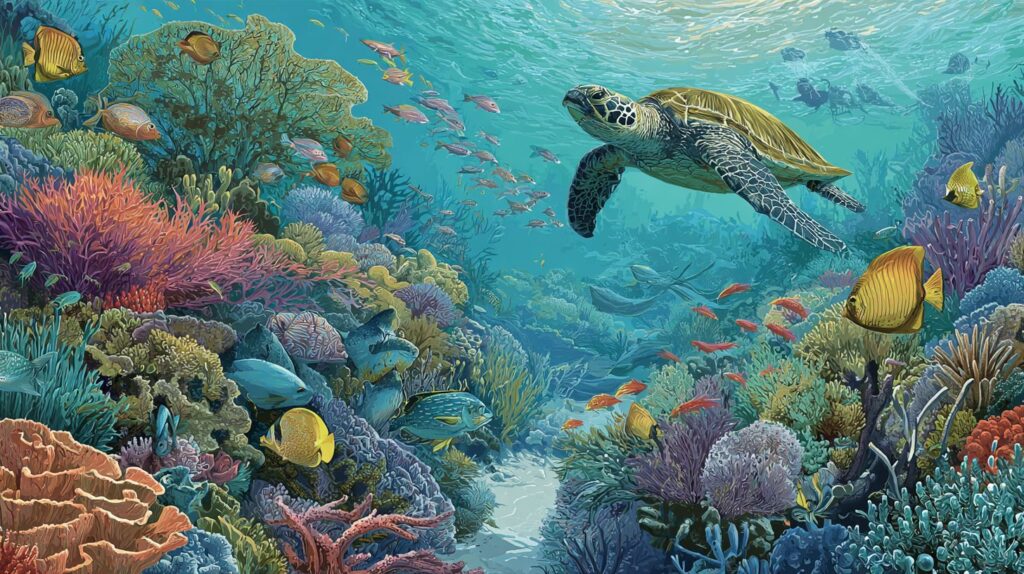
The world’s best diving destinations for coral reefs and marine life-often hailed as the world best-include the Great Barrier Reef in Australia, Raja Ampat in Indonesia, the Red Sea in Egypt including Sharm El Sheikh, the Maldives, Belize’s Barrier Reef, the Galpagos Islands in Ecuador, Palau, Fiji, Bali, Anilao in the Philippines, Socorro Islands in Mexico, Koh Tao in Thailand, Oman, Kenya, the Bahamas, Tobago, and Grand Cayman. These spots offer vibrant coral ecosystems, diverse marine species like turtles, sharks, and colorful fish, and unparalleled underwater biodiversity.
Why is the Great Barrier Reef one of the world’s best diving destinations for coral reefs and marine life?
The Great Barrier Reef stands out among the world’s best diving destinations for coral reefs and marine life due to its massive size-over 2,300 kilometers long-and incredible variety of hard and soft corals. Divers can encounter manta rays, reef sharks, and sea turtles in crystal-clear waters, making it a UNESCO World Heritage site ideal for both beginners and experts.
How does Raja Ampat rank as one of the world’s best diving destinations for coral reefs and marine life?
Raja Ampat in Papua, Indonesia, is renowned as one of the world’s best diving destinations for coral reefs and marine life because it hosts over 1,500 fish species and 75% of the world’s coral species. Its remote atolls and passages teem with pelagic species like manta rays and wobbegong sharks, offering pristine, untouched underwater paradises.
What makes the Red Sea a top choice among the world’s best diving destinations for coral reefs and marine life?
The Red Sea earns its place among the world’s best diving destinations for coral reefs and marine life with its dramatic drop-offs, thriving coral gardens, and abundant marine life including hammerhead sharks, dolphins, and vibrant nudibranchs. Sites like the SS Thistlegorm wreck add historical allure to its biodiverse reefs in warm, accessible waters.
Is the Maldives considered one of the world’s best diving destinations for coral reefs and marine life?
Yes, the Maldives is undoubtedly one of the world’s best diving destinations for coral reefs and marine life, featuring over 1,000 coral islands with thriving atolls full of eagle rays, whale sharks, and moray eels. Its clear lagoons and thilas (underwater pinnacles) provide year-round diving opportunities in a tropical paradise setting.
Why visit Belize for diving in the world’s best destinations for coral reefs and marine life?
Belize’s Barrier Reef, the second-largest in the world, positions it as one of the world’s best diving destinations for coral reefs and marine life. Divers explore the Great Blue Hole, a massive sinkhole teeming with nurse sharks and groupers, alongside lush mangroves and over 500 fish species, offering accessible and eco-friendly adventures.