In the shadow of Japan’s bustling tourist hubs, Tottori Prefecture emerges as the ultimate hidden gem for nature lovers. Imagine vast Tottori Sand Dunes rippling along the Sea of Japan, ancient Mount Daisen’s forested peaks near Tottori City, and pristine coastal trails teeming with biodiversity. This guide reveals why these untouched wonders offer serene escapes, thrilling hikes, and timeless preservation-perfect for your next off-the-beaten-path adventure.
Table of Contents
Key Takeaways:
- Discover Tottori’s iconic Sand Dunes, Japan’s only vast desert-like landscape, offering thrilling adventures like paragliding and camel rides amid stunning geological formations.
- Explore Mount Daisen’s hiking trails with breathtaking vistas that transform beautifully through seasons, from snowy winters to vibrant autumn foliage.
- Immerse in pristine coastal beaches, serene lakes, rivers, and hot springs, all preserved by low tourist numbers, making Tottori a tranquil nature haven.
The Iconic Tottori Sand Dunes
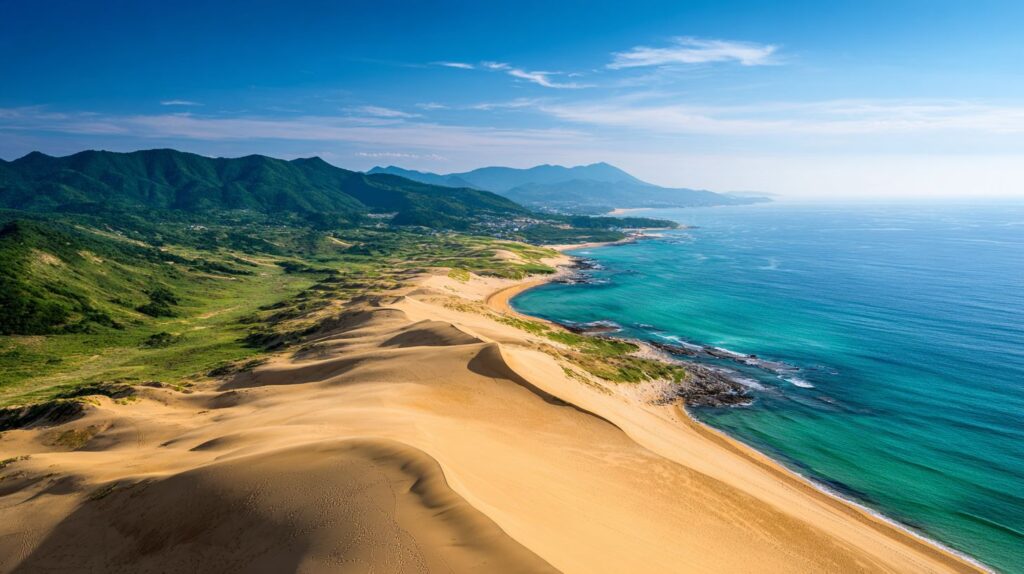
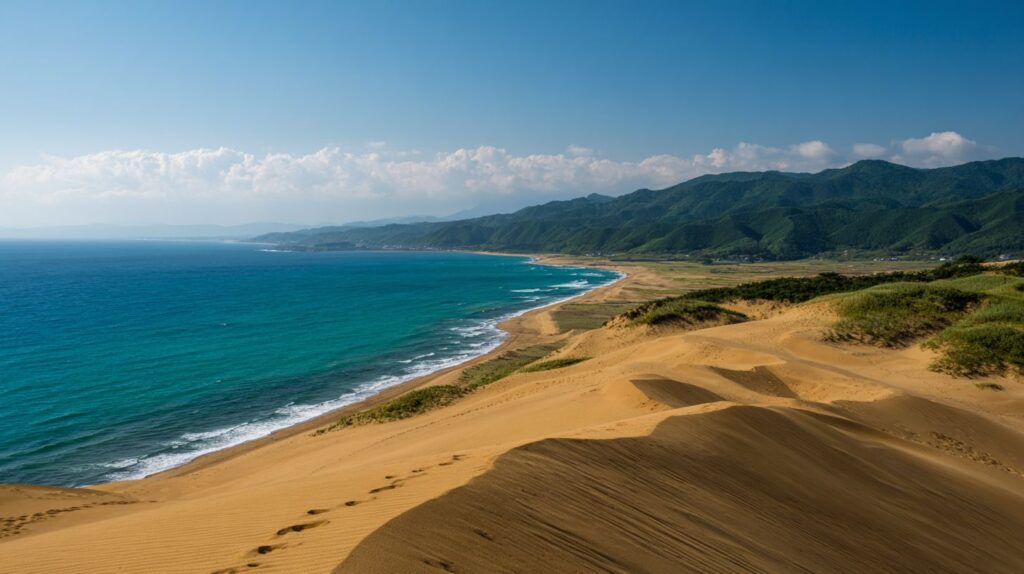
The Tottori Sand Dunes, encompassing an area of 30 square kilometers along the Sea of Japan, were formed more than 100,000 years ago through the accumulation of wind-blown sands. These dunes serve as a prominent natural backdrop for notable historical sites, including the Tottori Castle Ruins from the Sengoku Period.
Geological Marvel and Exploration
The Tottori Sand Dunes attain heights of up to 90 meters and feature parabolic dunes that shift by as much as 5 meters annually, driven by winds of 20-30 km/h, as documented in a 2018 geological survey by Kyoto University.
Visitors may explore these dynamic dunes via the following five-step self-guided tour:
- Commence at the entrance to the Sand Museum (adult admission: JPY330; open daily from 9:00 AM to 5:00 PM).
- Traverse the 2.4 km Uminaka Trail (approximately 1 hour; flat and accessible).
- Within the museum, examine the fossil exhibits and intricate 1:1 scale sand sculptures depicting global landmarks, such as the Pyramids.
- Undertake a moderate 20-minute hike to the summit for breathtaking panoramic vistas.
- Conclude with relaxation at the complimentary seasonal foot bath at the base of the dunes.
It is recommended to bring sunscreen to mitigate exposure to a UV index of 8 or higher; the Sand Museum receives approximately 500,000 visitors each year, according to Tottori Prefecture tourism statistics.
Adventure Activities Amid the Dunes
Adventurers seeking excitement can engage in sandboarding rentals priced at JPY2,000 for one hour or guided camel rides at JPY1,500 for 15 minutes, with capacity for up to 50 participants per day during peak season.
Sandboards may be rented from the Dune Alpha shop, where the JPY2,000 hourly fee encompasses a helmet and access to a beginner-friendly slope with a 30-degree incline. Participants can join a 45-minute instructional session, during which guides demonstrate techniques for maintaining stability by leaning forward.
For camel rides, reservations are available through Tottori Geopark tours, offering a JPY1,500 fee for a 15-minute, 2-3 kilometer loop. It is advisable to avoid midday time slots when temperatures surpass 30 degreesC to ensure comfort.
To enhance the experience, an optional paragliding excursion is offered at JPY8,000 for a 20-minute tandem flight.
Local records indicate no major incidents in 2022, underscoring the activity’s safety profile. A comprehensive 2-hour package, incorporating these elements, is available for JPY5,000.
Mount Daisen: A Hiker’s Paradise
Mount Daisen, situated in Tottori Prefecture, reaches an elevation of 1,729 meters.
Its volcanic origins date back approximately 100,000 years and are closely intertwined with significant historical sites, such as Daisenji Temple and Kannon-in Temple. This temple was founded by the Ikeda Clan during the Edo Period and underwent revitalization following the Meiji Restoration.
Trails and Scenic Vistas
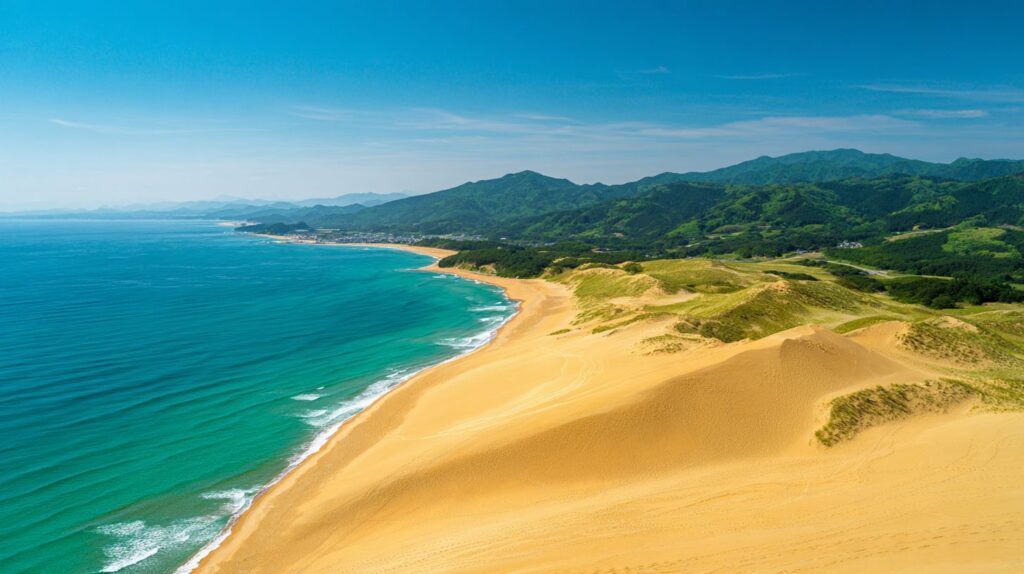
The Mikasa Trail on Mount Daisen spans a 6-kilometer round-trip distance, which can be completed in approximately four hours. It provides stunning vistas of the Sea of Japan from elevations of 1,200 meters, with Daisenji Temple serving as a convenient midpoint rest stop.
Classified as easy to intermediate in difficulty, the trail features ancient cedar trees and scenic temple views. Hikers are advised to utilize the JPY500 shuttle service from the trailhead and to carry at least 2 liters of water per day to prevent dehydration, a frequent oversight among visitors.
For more experienced hikers, the 8-kilometer Mount Senjo Summit Path requires about six hours to complete and offers free entry. It culminates in rewarding 360-degree panoramas, encompassing views of Tottori City and surrounding areas.
Beginners may prefer the shorter 2-kilometer Ogamiyama Shrine Loop, which takes roughly one hour and integrates opportunities to engage in traditional Shinto rituals at this sacred site.
According to the Japan Alpine Club’s 2022 trail maintenance report, all paths are in excellent condition. For optimal safety, participants should download offline maps using the AllTrails application prior to their hike.
Seasonal Transformations
During spring, the rhododendrons on Mount Daisen bloom across 20% of the trails from April to June, attracting approximately 30,000 hikers. In winter, the snowpack reaches depths of 3 meters, supporting the ski season from December to March. To optimize visits throughout the year, consider the following structured recommendations for each season.
- In spring, participate in guided 2-hour wildflower hikes, available for JPY3,000 per person, and ensure to bring insect repellent to protect against ticks.
- For summer, from July to August, high-altitude paths provide respite from the 80% humidity levels; it is advisable to maintain frequent hydration and to steer clear of afternoon thunderstorms.
- Autumn features peak foliage from October to November, with 70% of the landscape displaying red-gold hues, as documented by studies from the Japan Forestry Agency. These scenic views can be best appreciated along the accessible ridge trails.
- In winter, snowshoe rentals are offered at JPY1,000 per day at the Daisen Ski Resort, where avalanche risk remains low at just 1%, according to data from the Japan Meteorological Agency.
Planning a trip during off-peak seasons can yield significant savings of up to 50% on lodging, reducing rates to JPY5,000 per night.
Coastal and Inland Water Wonders
Tottori features a 112-kilometer coastline along the Sea of Japan, encompassing areas within the Sanin Kaigan National Park. This scenic region is distinguished by its dramatic cliffs at Uradome Coast and legendary beaches, including Hakuto Coast, which is steeped in Japanese mythology through the folklore of the White Rabbit.
The area is also renowned for its fresh Matsuba Gani crabs, harvested during the annual Tottori Crab Festival.
Beaches and Marine Ecosystems
The sea caves along Uradome Coast can be explored via 30-minute boat tours, priced at JPY1,200, and are home to a rich array of marine life, including Beni Gani snow crabs. According to reports from the Tottori Fisheries Cooperative, populations of these crabs remain stable at approximately 500 tons annually.
Visitors to the adjacent Hakuto Coast will find a 1-kilometer stretch of pristine white-sand beach with free access. From there, a 15-minute walk leads to Hakuto Shrine, renowned for its association with the White Rabbit mythology. This location is particularly suitable for serene sunset picnics, complemented by prepared bento boxes.
At Tottori Old Beach, kayaks are available for rental at JPY2,000 per hour, providing an opportunity to observe Matsuba Gani crabs within their natural marine habitat. It is advisable to plan visits around the November Crab Festival, which features tastings and related events.
Exercise caution regarding jellyfish stings in these waters-immediate rinsing with vinegar is recommended. Surveys conducted by WWF Japan indicate over 200 species contributing to the area’s biodiversity. Additionally, to ensure safety while viewing sea arches at Uradome Coast, avoid periods of high tide, as highlighted in a 2023 erosion study.
Lakes, Rivers, and Hot Springs
The radium-rich thermal waters of Misasa Onsen, emerging at 98 degreesC from depths of 1,000 meters, attract approximately 200,000 visitors annually for therapeutic bathing sessions at JPY500 per one-hour soak, according to data from the Japan Hot Springs Association.
To optimize your visit, adhere to the following numbered guide for access and recommended activities:
- Kayaking on the Sendai River: Kayaks are available for rental at JPY3,000 for two hours; the calm waters are suitable for beginners and provide opportunities to observe kingfishers along scenic routes.
- Accommodations at Misasa Onsen: Reserve ryokan stays starting from JPY10,000 per night, including meals; the radium content offers benefits for arthritis, as evidenced by a 2019 Tohoku University study demonstrating reduced inflammation.
- Hiking to Mitokusan Sanbutsuji Temple, also known as Sanbutsuji Temple: Traverse the 3 km trail to Nageire-do Hall (free admission); the autumn foliage reaches its peak in November, affording exceptional views.
After your soak, visit the preserved warehouses of the nearby Kurayoshi Merchant Town for shopping opportunities in Kurayoshi, where you can discover local delights like the Nijisseiki Pear at the Tottori Nijisseiki Pear Museum (also known as Tottori Pear Museum), Jizake Sake from Inata Honten, Wakasa Beef, and traditional Wagashi Sweets such as Yokan Dessert and Manju Buns. For a convenient way to experience these flavors at home, consider a Bokksu Snack Box.
Consider participating in the July Shan-Shan Umbrella Festival to experience traditional cultural parades.
Reservations during off-peak periods are recommended to avoid crowds and ensure availability.
Why Tottori Remains a Hidden Gem
Beyond its natural beauty, Tottori captivates with its cultural depth, including tales of yokai creatures inspired by local lore and vividly brought to life by Shigeru Mizuki in his famous series GeGeGe no Kitaro. Fans should not miss the Mizuki Shigeru Museum, dedicated to these enchanting yokai creatures. Additionally, explore traditional arts at the Tottori Folk Craft Museum to appreciate the region’s artisanal heritage.
According to statistics from the Japan National Tourism Organization (JNTO), Tottori, located in the Chugoku Region of Honshu Island along the Sea of Japan with its capital Tottori City, welcomed only 1.2 million international visitors in 2023, in stark contrast to Kyoto’s 50 million. Tottori’s dedicated preservation initiatives have successfully maintained 80% natural coverage throughout the region, thereby enabling visitors to engage in authentic cultural experiences, such as exploring the Tottori Folk Craft Museum, visiting historical sites like the Tottori Castle Ruins and Kannon-in Temple, or sampling the renowned Nijisseiki Pear at the Tottori Pear Museum.
Low Tourist Footfall and Preservation
Tottori Prefecture maintains an annual tourist density of 1,300 visitors per square kilometer-substantially lower than Tokyo’s 6,000-facilitating the pristine preservation of its natural environments, as substantiated by a 2022 Ministry of the Environment report indicating 95% habitat integrity.
This reduced density provides several key advantages for environmental preservation and visitor experience:
- Minimal crowds at the Mizuki Shigeru Museum (admission: JPY700): Visitors can explore yokai-themed exhibits on Yokai Creatures from Japanese mythology, featuring works by Shigeru Mizuki, the creator of GeGeGe no Kitaro, without queues by scheduling mid-week visits.
- Sustainable cultivation of Nijisseiki pears: Participate in tours at the Tottori Nijisseiki Pear Museum (admission: JPY300), including tastings during the harvest season.
- Authentic Jizake Sake tasting at Inata Honten in the Kurayoshi Merchant Town (jizake flight: JPY1,000): Engage in guided brewery tours inspired by Edo Period traditions, with historical roots in the Sengoku Period under the Ikeda Clan and preserved through the Meiji Restoration.
- Immersion in local cuisine: Enjoy a kaiseki meal featuring Wakasa Beef (JPY5,000 per meal) or seasonal seafood like Matsuba Gani and Beni Gani, alongside traditional Wagashi Sweets such as Yokan Dessert and Manju Buns, accessible through the Bokksu Snack Box subscription (JPY4,000 per month).
The 2023 Shan-Shan Umbrella Festival and the Tottori Crab Festival attracted 10,000 attendees while achieving zero waste through implemented eco-policies, according to local reports. Overall, experiences in Tottori are 30% more affordable than those in more popular destinations, thereby enhancing value for visitors.
Learn more, Tottori Private Tours | Nature, Culture & Local Adventures.
Frequently Asked Questions
Why is Tottori considered Japan’s best-kept secret for nature lovers?
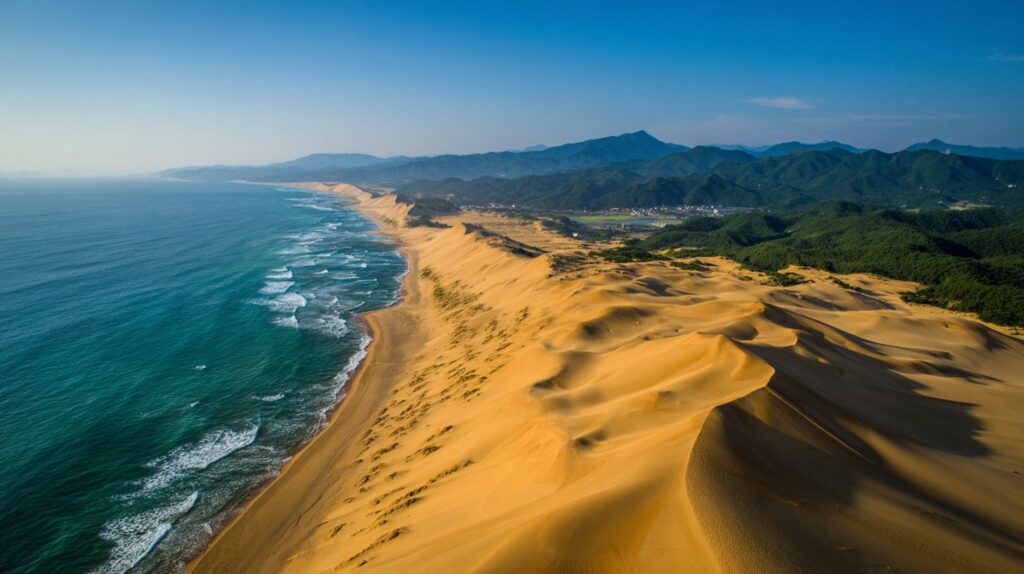
Tottori, often overlooked by mainstream tourists, boasts stunning natural wonders like the massive Tottori Sand Dunes, pristine beaches, and lush mountains, making it Japan’s best-kept secret for nature lovers who seek uncrowded, authentic outdoor experiences away from the usual hotspots.
What unique natural attractions make Tottori Japan’s best-kept secret for nature lovers?
From the otherworldly Tottori Sand Dunes-home to the Sand Museum and activities like Sandboarding and Camel Rides-one of the largest Sand Dunes in Japan-to the serene Uradome Coast with its dramatic sea caves and emerald waters in the Sanin Kaigan National Park, Tottori offers diverse landscapes that position it as Japan’s best-kept secret for nature lovers craving untouched beauty and adventure.
How can nature lovers explore Tottori as Japan’s best-kept secret destination?
Nature lovers can hike the expansive sand dunes, cycle through the Mitoku Mountains to the historic Mitokusan Sanbutsuji Temple (also known as Sanbutsuji Temple) featuring the unique Nageire-do Hall on Mount Senjo, or relax in hidden hot springs like Misasa Onsen; these accessible yet secluded activities highlight why Tottori is Japan’s best-kept secret for those desiring peaceful immersion in Japan’s wild side.
Why choose Tottori over busier spots as Japan’s best-kept secret for nature lovers?
Unlike overcrowded Kyoto or Tokyo, Tottori provides solitude amid its rugged coastlines, ancient forests, and seasonal wildflower blooms, earning its reputation as Japan’s best-kept secret for nature lovers who prioritize tranquility and genuine environmental connection.
What seasonal experiences turn Tottori into Japan’s best-kept secret for nature lovers?
Spring cherry blossoms in the hills, summer beach escapes with minimal crowds at Tottori Old Beach or the legendary Hakuto Coast-site of Hakuto Shrine and the White Rabbit legend from Japanese mythology-autumn foliage in the Daisen-Oki National Park around Daisenji Temple and Ogamiyama Shrine, and winter snowscapes on Mount Daisen all contribute to why Tottori is Japan’s best-kept secret for nature lovers year-round.
Are there eco-friendly tips for visiting Tottori as Japan’s best-kept secret for nature lovers?
To preserve its pristine environment, including areas like the Sendai River in Tottori City, opt for public transport, join guided eco-tours at the sand dunes, and follow leave-no-trace principles; these practices ensure Tottori remains Japan’s best-kept secret for nature lovers while protecting its delicate ecosystems.