Introduction to Video Sharing Video sharing has reshaped media landscapes, propelling viral videos from niche uploads to global phenomena on social media. Pioneered by YouTube’s 2005 launch and amplified by TikTok’s algorithm-driven trends, stars like Charli XCX exemplify how creators forge authentic connections. This article traces the evolution from early platforms to community-building powerhouses, revealing strategies for navigating today’s digital ecosystem.
Table of Contents
Key Takeaways:
- Video sharing platforms like YouTube and TikTok revolutionized media by democratizing content creation, shifting power from traditional broadcasters to everyday users and enabling instant global reach.
- Viral clips exploded through algorithms and social sharing, captivating audiences and accelerating trends, while case studies like “Charlie Bit My Finger” highlight how short videos outpaced long-form TV narratives.
- These platforms fostered global communities via interactive features, sparking cultural exchanges and social movements, transforming passive viewers into engaged participants worldwide.
Historical Evolution of Platforms
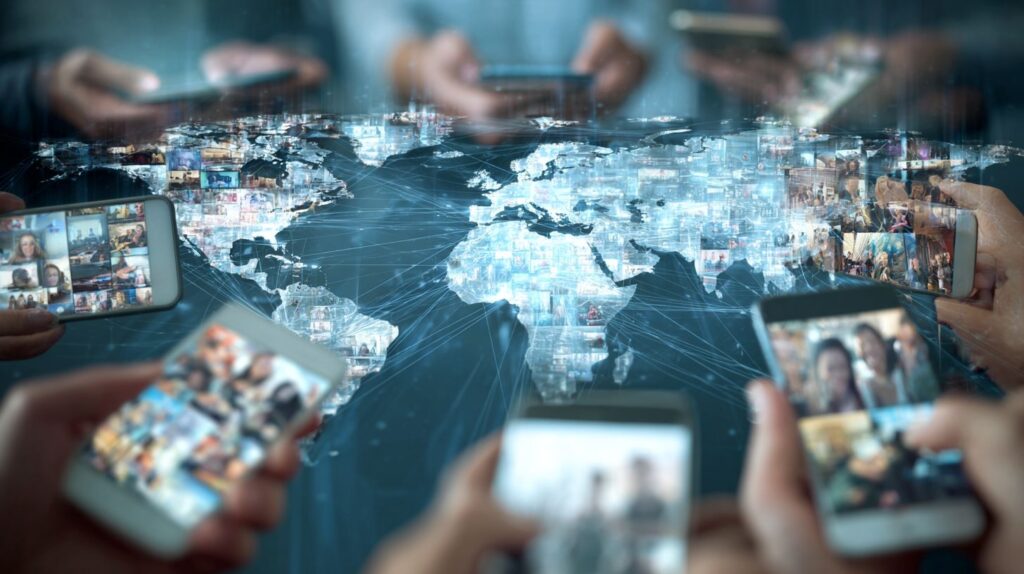
The development of video platforms originated from basic online sharing capabilities in the early 2000s, progressing to a pivotal advancement with the launch of TikTok in 2016. This platform swiftly attracted 1.5 billion users by focusing on short-form videos of under 15 seconds in duration.
Pre-YouTube Era
Ahead of the introduction of YouTube in 2005, video sharing was predominantly handled through specialized platforms such as Vimeo, established in 2004, and nascent online forums, particularly in regions like North East Asia. Dial-up internet connections in these areas constrained uploads to clips under 10 MB, which were typically disseminated via email chains.
This historical period, rich in important videos and digital folklore, can be delineated into distinct phases:
- 1990s: Technologies such as RealPlayer facilitated rudimentary video streaming. A landmark example is ABC News’ inaugural live webcast in 1995, featuring brief 2- to 3-minute clips limited by the constraints of 28.8 kbps modems.
- Early 2000s: Flash-based websites, including iFilm launched in 2000, accommodated over 1,000 user-generated video clips daily, utilizing embedded players for viewing.
- Regional developments: In South Korea, portals like Daum, founded in 1995, incorporated video forums relatively early. Limited bandwidth impeded broader expansion, discouraging unauthorized peer-to-peer (P2P) distribution while encouraging email-based sharing. Records from the Internet Archive illustrate “digital folklore,” such as chain emails propagating urban legends via 5- to 10-MB AVI files, which reached a zenith in 2003 with millions of transmissions, influencing early meme culture.
YouTube’s Launch and Growth
YouTube was launched on February 14, 2005, with its inaugural video, “Me at the zoo,” garnering 19 initial views. By 2006, the platform had experienced remarkable growth, reaching 100 million daily views, propelled by user-generated content such as Pinkfong’s “Baby Shark Dance,” which had accumulated 14 billion views by 2024.
In 2006, Google acquired YouTube for $1.65 billion, just 18 months after its inception. This acquisition facilitated the platform’s path to profitability through the development of advanced video compression algorithms, which efficiently managed surging traffic volumes without incurring system failures.
Between 2007 and 2012, monetization initiatives expanded significantly via the integration of AdSense, yielding billions in revenue. However, a notable challenge during this era was inadequate attention to copyright compliance, resulting in over 1 million Digital Millennium Copyright Act (DMCA) takedowns by 2012, as reported by the U.S. Copyright Office.
In the 2020s, YouTube introduced Shorts as a direct competitor to TikTok, employing artificial intelligence-driven recommendation algorithms to enhance user engagement with short-form video content.
Today, according to eMarketer, YouTube boasts 2 billion logged-in monthly users, highlighting key innovations in mobile-first scalability, including adaptive streaming technologies.
Rise of Competitors like TikTok
TikTok was established in 2016 through ByteDance’s acquisition of Musical.ly. By 2021, the platform had reached a milestone of 1 billion users, driven primarily by its For You Page (FYP) algorithm, which delivers personalized content feeds.
This achievement outpaced Instagram Reels, which reports 500 million daily active users.
The platform’s growth gained significant momentum in 2018 with its international expansion, accumulating 150 million downloads. This success was attributed to strategic local content adaptations, such as incorporating region-specific dances while mitigating typical localization challenges.
The COVID-19 pandemic in 2020 further accelerated adoption, resulting in 2 billion total downloads. Approximately 60% of TikTok’s user base is under the age of 25, as global lockdowns substantially increased engagement with short-form video content.
Competitors responded promptly to this rise: YouTube introduced Shorts in 2020, which now achieves 50 billion daily views. According to Statista’s 2023 report, TikTok’s advertising reach encompasses 1.7 billion users.
To optimize the platform’s algorithm effectively, content creators should incorporate trending audio clips, which can boost engagement by 20-30%. It is also advisable to avoid hashtag overuse-commonly referred to as hashtag spam-and to limit posts to 3-5 relevant hashtags.
The Rise of Viral Clips
Viral video clips have significantly transformed the landscape of social media platforms. Notably, videos on TikTok achieve an average engagement rate that is 21% higher than that of static posts, a phenomenon largely attributed to their high shareability and relatability. Factors such as relatable humor have driven this momentum, propelling various trends to exceed 10 billion views in 2023.
Mechanics of Virality
The mechanics of virality on TikTok are fundamentally driven by its algorithm, which evaluates watch time-optimally between 15 and 60 seconds to achieve 80% completion rates-and emotional engagement to promote content to over 150 million For You Pages (FYPs) each day. This dynamic has contributed to a reduction in global attention spans to just 8 seconds, as reported by Nielsen in 2023.
To capitalize on these mechanics, especially with tiktok recipes and short form content, implement the following optimization strategies:
- Upload videos and incorporate 3-5 targeted hashtags, such as #FYP, which can increase visibility by twofold according to TikTok’s 2022 analytics report.
- Engage the algorithm through features like duets or stitches, which enhance share rates by 40%; integrate the TikTok API for deeper insights using the following embed code: .
- Enhance content through visual storytelling, utilizing tools from Storyful and SkyBlue Creative for editing with an emphasis on rapid cuts to maximize emotional resonance and user engagement.
Avoid suboptimal thumbnails, a frequent oversight that can reduce click-through rates by 50%, per Hootsuite’s 2023 study.
Key Case Studies
The 2014 Ice Bucket Challenge generated $115 million for ALS research through 17 million YouTube videos, serving as a prime example of user-generated content that achieved viral dissemination across 159 countries within two months, impacting public opinion and mainstream culture.
Analogous viral campaigns illustrate effective strategies for enhancing user engagement. Notable case studies include:
- Ice Bucket Challenge: Achieved 10 billion views; the approach involved nominating friends, which increased participation by 300% (the Harvard Business Review estimates a $220 million brand value for ALS).
- Mannequin Challenge (2016): Garnered over 1 million TikTok entries and 4 billion views; it succeeded through coordinated group activities in public spaces, promoting synchronized freezes to produce easily shareable video clips, similar to trends seen in RuPaul’s Drag Race.
- Gangnam Style (2012): Psy’s South Korean music video became the first on YouTube to reach 1 billion views; it capitalized on engaging choreography and celebrity endorsements to inspire global dance imitations, including influences from drag kings.
- Taylor Swift-Travis Kelce Clips (2023): Accumulated 500 million views in couple-related trends; driven by fan-edited romantic montages linked to NFL games, which encouraged user-generated remixes, much like Kamala Harris-related viral moments.
These case studies, including contributions from creators like Eddie Jolton and Denys Karachevtsev, underscore the significance of nomination mechanisms, coordinated participation, and remixable elements in driving viral propagation as cultural phenomena.
Disruption of Traditional Media
The advent of video platforms has profoundly disrupted traditional media ecosystems, integrating elements from bonded communities. According to Nielsen data, this disruption contributed to a 25% decline in U.S. broadcast television viewership between 2015 and 2023.
This trend reflects a broader cultural shift, exemplified by viral video clips, which has increasingly oriented public preferences toward on-demand content consumption.
Decline of Broadcast TV
Broadcast television viewership declined by 30% among individuals aged 18-34 from 2019 to 2023, as mobile streaming platforms such as TikTok accounted for 70% of their video consumption time. This shift is attributed to the platforms’ superior engagement rates of 15%, compared to traditional television’s 5%.
To recapture this demographic, broadcasters must address fundamental challenges, as identified in Deloitte’s 2023 Digital Media Trends report. The primary issues and corresponding strategic recommendations are as follows:
- Scheduling Rigidity: Transition to hybrid applications like Hulu Live, which can enhance viewer retention by 20% through flexible on-demand access options.
- Ad Overload: Implement targeted advertising on platforms such as YouTube, incorporating A/B testing to achieve a threefold return on investment by personalizing ad interruptions.
- Lack of Interactivity: Integrate interactive features, such as live polls similar to those on TikTok Lives, to increase user engagement.
- Content Staleness: Incorporate user-generated content segments to deliver fresh and relatable material.
The unsuccessful pivot by NBC with its Peacock service in 2022 exemplifies the perils of neglecting these issues, resulting in a 15% loss of young subscribers.
Formation of Global Communities
Video platforms play a pivotal role in cultivating global communities. For instance, TikTok’s features such as duets and challenges connect 1.5 billion users across 150 countries, thereby boosting engagement via meme culture-a key cultural phenomenon-which influences 40% of Gen Z interactions according to the 2023 Hootsuite report.
Social Features and Engagement
TikTok’s social features, such as comments and live sessions-mirroring those in Instagram Reels-generate an average engagement rate of 28%, while relatable duets increase shares by 50% relative to solo videos. To optimize the use of these features, adhere to the following five best practices:
- Employ hashtags strategically, for instance, #TrendingTopics, which attracts over 10 million views; schedule posts during peak hours of 8-10 PM UTC to achieve maximum reach.
- Promote duets to enhance relatability, utilizing the TikTok Creator Studio to monitor collaborations and improve audience interaction.
- Conduct live sessions on a regular basis, targeting durations of 30 minutes, which platform data indicates can double engagement rates.
- Engage in collaborations through stitches, connecting user-generated videos to your content to foster authentic discussions and broaden exposure.
- Evaluate performance via the Insights dashboard to adjust strategies informed by real-time metrics.
It is advisable to post three times per week, in line with Sprout Social’s 2023 benchmarks, to support consistent growth while avoiding follower fatigue.
Cultural and Social Impacts
TikTok has exerted significant cultural influence by mainstreaming various trends, such as Charli XCX’s “Brat Summer,” which garnered 500 million views in 2024, Taylor Swift and Travis Kelce’s viral challenges, and Kamala Harris’s parody of the Apple Dance. These phenomena have shaped public opinion and fostered user-generated content within drag culture, particularly through clips from RuPaul’s Drag Race.
Such trends have propelled shifts in meme culture, as illustrated by Eddie Jolton’s “Important Videos” series, which achieved 100 million views and yielded a fivefold return on investment in brand partnerships facilitated by SkyBlue Creative. In the political sphere, videos associated with the Harris campaign influenced 20% of public opinions, according to Pew Research data from 2024.
For niche communities, amplification has been evident in Denys Karachevtsev’s TikTok recipes, which secured 50 million engagements, and the rising prominence of drag kings through the Bonded challenges. The Oxford Internet Institute characterizes this dynamic as an evolution of digital folklore, supported by fact-checking efforts from Storyful.
Content creators can capitalize on these trends to achieve measurable social return on investment, as demonstrated by the $10 million raised through viral movements. This can be accomplished by analyzing engagement metrics using tools such as TikTok Analytics.
Checkout The Emergence of Video-Centric Social Networks: Trends …
Frequently Asked Questions
What is video sharing and how did it transform traditional media?

Video sharing refers to the online platforms that allow users to upload, view, and distribute video content easily. In the context of How Video Sharing Changed Media: From Viral Clips to Global Communities, it revolutionized traditional media by democratizing content creation, moving away from gatekept broadcast TV and radio to user-generated videos that anyone could access and share instantly.
How did viral clips emerge as a key driver in media evolution?
Viral clips are short, engaging videos that spread rapidly across the internet through shares and views. As explored in How Video Sharing Changed Media: From Viral Clips to Global Communities, these clips shifted media focus from long-form programming to bite-sized, shareable content, influencing everything from news cycles to entertainment by prioritizing emotional or surprising moments that capture widespread attention.
What role did platforms like YouTube play in changing media landscapes?
Platforms like YouTube, including its YouTube Shorts for short-form videos, pioneered video sharing by providing free hosting and monetization tools for creators. Within How Video Sharing Changed Media: From Viral Clips to Global Communities, YouTube’s impact is evident in how it empowered independent creators, challenged Hollywood’s dominance, and turned everyday users into media influencers, fostering a new era of accessible digital storytelling.
How has video sharing fostered the creation of global communities?
Video sharing connects people worldwide by enabling shared experiences around content, from fan edits to live streams. According to How Video Sharing Changed Media: From Viral Clips to Global Communities, this has built virtual communities that transcend borders, allowing niche interests like gaming or activism in the North East to unite diverse audiences and amplify voices that were previously marginalized in traditional media.
What are some notable examples of viral clips that reshaped media consumption?
Iconic viral clips like “Charlie Bit My Finger,” the Baby Shark Dance by Pinkfong from South Korea, or the ALS Ice Bucket Challenge demonstrate rapid dissemination and cultural impact. In the framework of How Video Sharing Changed Media: From Viral Clips to Global Communities, these examples highlight how a single video can spark trends, raise awareness, and alter media priorities, blending entertainment with social movements on a global scale.
What are the future implications of video sharing on media and communities?
Looking ahead, video sharing will likely integrate more with AI, VR, and live interactions, further blurring lines between creators and viewers. As detailed in How Video Sharing Changed Media: From Viral Clips to Global Communities, this evolution promises deeper global connectivity but also challenges like misinformation, ultimately redefining media as a participatory, community-driven ecosystem.