In today’s busy households, selecting the right battery can prevent frustrating mid-use failures and save money long-term. Whether you’re powering clocks with durable alkaline batteries, opting for high-performance lithium batteries in demanding gadgets, or choosing eco-friendly rechargeable NiMH batteries, understanding types and traits is key. This guide breaks down options, lifespans, and ideal uses to help you make informed, efficient choices.
Table of Contents
Key Takeaways:
- Choose alkaline batteries for low-drain devices like remotes, clocks, and two-way radios due to their affordability and long shelf life, but opt for lithium for extreme temperatures or longer performance in similar uses.
- Rechargeable NiMH batteries suit high-drain items like toys and flashlights, offering 500-1000 cycles and eco-friendliness, though they cost more upfront than disposables.
- Consider storage in a cool dry place to extend lifespan; prioritize eco-friendly rechargeables for sustainability, balancing initial cost against long-term savings and reduced waste through proper disposal and recycling.
Common Types of Household Batteries
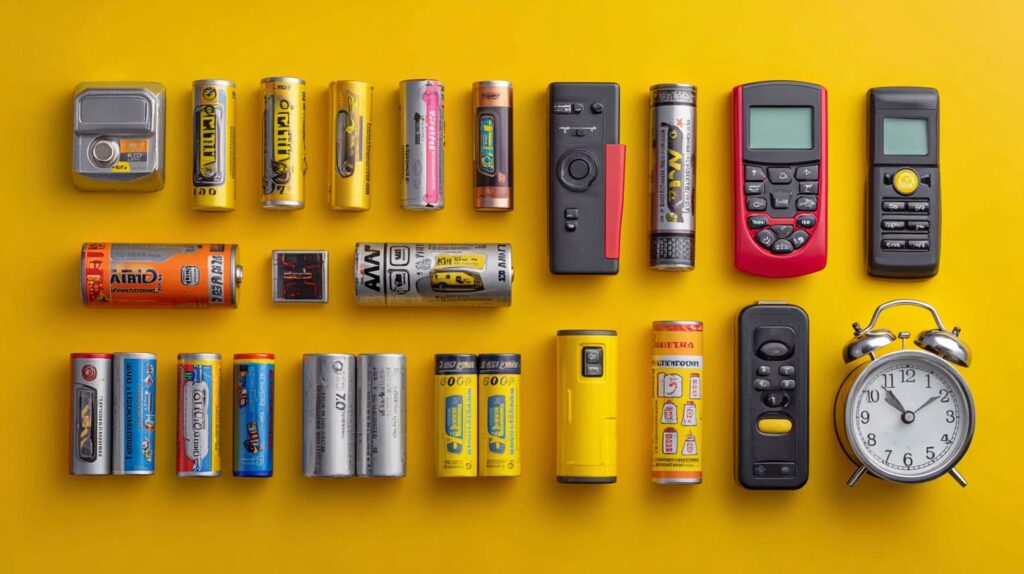
Household batteries have undergone substantial evolution, transitioning from rudimentary zinc-carbon batteries and silver-oxide batteries to sophisticated lithium-based variants. Rechargeable options, such as nickel-metal hydride (NiMH) batteries, have predominated in environmentally conscious markets since the 1990s.
Alkaline Batteries
Alkaline batteries, first conceptualized by G.N. Lewis in the early 1900s and subsequently commercialized by leading manufacturers such as Duracell, provide a nominal voltage of 1.5V and an energy density ranging from 100 to 150 Wh/kg, rendering them well-suited for disposable applications in everyday use.
These batteries operate on a zinc-manganese dioxide electrochemical system, with zinc serving as the anode and manganese dioxide as the cathode, utilizing an alkaline electrolyte such as potassium hydroxide to ensure consistent and reliable power delivery.
Advantages:
- Extended shelf life of up to 10 years
- Robust leak-resistant construction
Disadvantages:
- Non-rechargeable design
- Moderate self-discharge rate of 2-3% per month
For example, GP or Energizer AA alkaline batteries are capable of powering a television remote control for up to 18 months of continuous operation. Research published in the 2018 issue of the Journal of Power Sources underscores their operational stability across a temperature range of -18 degreesC to 55 degreesC.
Practical Recommendation: To prevent short-circuiting and maximize longevity, store alkaline batteries in their original packaging.
Lithium Batteries
Lithium batteries, first developed by Sony Corporation in 1991, offer an impressive energy density ranging from 250 to 700 Wh/kg-approximately three times that of alkaline batteries-allowing for compact and efficient power sources in devices such as digital cameras.
These batteries are available in two main types: non-rechargeable primary lithium cells, which operate at 3V and are ideal for applications requiring extended shelf life, and rechargeable Lithium Ion batteries, including Lithium Ion Polymer variants, which function at 3.7V and incorporate protection circuits to prevent overcharging.
Among their key advantages are low self-discharge rates (approximately 1% per month) and reliable performance across a wide operating temperature range, from -40 degreesC to 70 degreesC. However, they also present certain challenges, including higher costs (typically $2 to $5 per unit) and the risk of thermal runaway in the event of damage.
For instance, CR123A lithium batteries used in trail cameras can maintain functionality for up to six months under extreme cold or heat conditions.
A 2020 study published in Nature Energy demonstrated that the use of silicon-alloy anodes can extend the cycle life of these batteries to more than 1,000 charges.
To ensure safety, it is recommended to verify UL certification prior to purchasing lithium batteries.
Rechargeable Batteries (NiMH and NiCd)
Nickel Metal Hydride (NiMH) and Nickel Cadmium (NiCd) rechargeable batteries are both viable options, with NiMH providing a higher capacity of up to 2000 mAh in AA size compared to NiCd’s range of 600-1000 mAh. Both battery types typically support 300-1000 charge cycles before their capacity diminishes to 80% of the original.
NiMH batteries employ nickel-metal hydride chemistry, utilizing hydrogen storage, which delivers superior Energy density and excludes cadmium, rendering them more environmentally friendly than NiCd batteries, which rely on a cadmium-nickel oxide configuration. The latter is prone to the Memory effect, wherein partial discharges can permanently reduce capacity if the battery is not fully discharged periodically. Advances in alloy development have enhanced these technologies.
Advantages of NiMH batteries include a Self-discharge rate of 15-20% per month and the capability for fast charge in approximately one hour, although they incur a higher initial cost, typically around $10 per AA pack.
For enhanced longevity, Panasonic’s Eneloop NiMH batteries are capable of withstanding up to 2100 cycles, performing reliably in applications such as wireless mice.
The European Union’s Battery Directive 2006/66/EC mandates the phase-out of NiCd batteries due to their toxicity.
To optimize performance, it is recommended to pair NiMH batteries with an intelligent charger, such as the La Crosse BC-700, to avoid overcharging and extend cycle life. For optimal initial conditioning, charge at a 0.1C rate.
Factors Affecting Battery Lifespan
The lifespan of batteries can range from six months to ten years, depending on various factors such as their chemical composition. According to studies from the Institute of Electrical and Electronics Engineers (IEEE), improper storage conditions can accelerate degradation by as much as 40%.
Chemistry and Construction
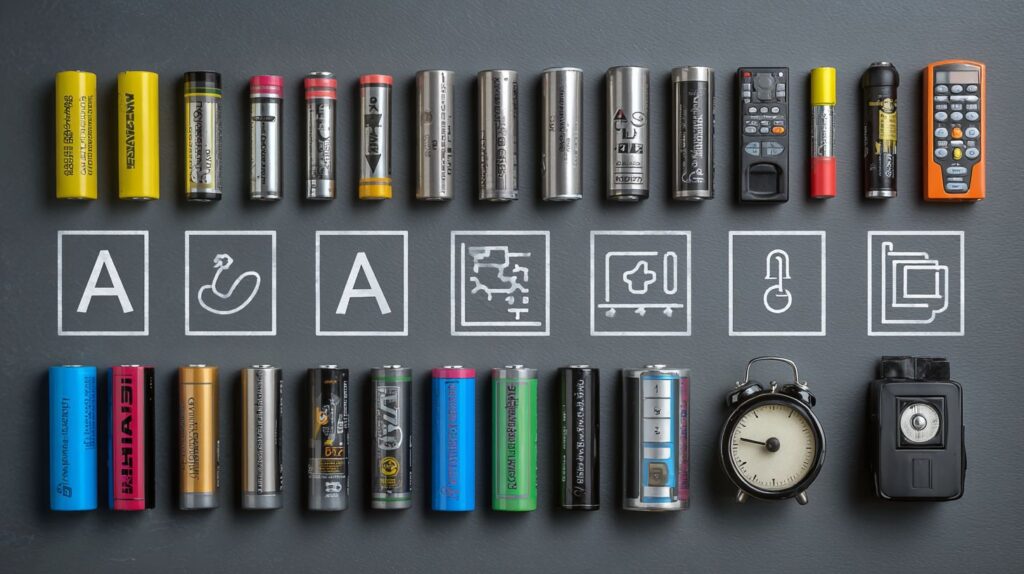
The chemistry of a battery fundamentally determines its Cycle life; for instance, nickel-metal hydride (NiMH) batteries, utilizing a metal hydride alloy, typically achieve 500 cycles, in contrast to alkaline batteries, which are designed for single use.
Additionally, construction features such as valve-regulated lead-acid (VRLA batteries, also known as SLA batteries) seals in sealed lead acid battery variants help prevent leaks.
To achieve optimal performance, it is essential to select the appropriate battery chemistry based on the intended application.
Alkaline batteries incorporate a paste electrolyte and exhibit low internal resistance (less than 0.2 ), making them suitable for high-drain devices such as flashlights; however, they are intended for disposable use.
Lithium-ion batteries employ polymer pouches equipped with integrated protection circuit to safeguard against overcharging, enabling more than 1,000 cycles and rendering them ideal for demanding applications like laptop computers, mobile phones and electric vehicles.
Lead Acid batteries, first developed by Gaston Plant in 1859, are susceptible to sulfation, which can reduce capacity by up to 50% if discharged below 50% of their rated level.
For environments involving vibration, such as power tools for commercial use, transitioning to Gelcell variants is recommended to mitigate these risks.
A 2021 study published in the Journal of The Electrochemical Society, examining grid corrosion in flooded lead-acid batteries, highlights the critical importance of regular maintenance.
For practical implementation, it is advisable to inspect battery casings quarterly for signs of bulging and to conduct monthly voltage tests using a multimeter, thereby extending overall battery life.
Storage Conditions
Storing batteries at optimal conditions of 15-25 degreesC in a cool, dry environment minimizes self-discharge to less than 2% per year, in comparison to 20% at 40 degreesC for lithium batteries.
To preserve battery health, adhere to the following procedures:
- For rechargeable batteries, maintain a charge level of 50-70%; employ a multimeter for weekly inspections lasting one hour to prevent deep discharge.
- Maintain humidity levels below 60% to inhibit corrosion; utilize silica gel packets within airtight storage containers, which is particularly suitable for backup systems in biomedical equipment. The setup process requires approximately five minutes.
Common errors include freezing NiCd batteries, which can result in a 30% loss of capacity, or exposing them to extreme conditions. Data from the National Oceanic and Atmospheric Administration (NOAA) demonstrates that such exposures accelerate degradation by 25%.
Compliance with these practices, as outlined in IEEE standards, can extend battery lifespan by up to 50%.
Typical Lifespan by Battery Type
Alkaline batteries provide a shelf life of 5 to 7 years, during which they retain approximately 80% of their original capacity. In comparison, nickel-metal hydride (NiMH) rechargeable batteries are capable of enduring 400 to 700 charge cycles while maintaining an output of 2000 milliampere-hours (mAh).
Disposable vs. Rechargeable
Disposable alkaline batteries offer a significant advantage in terms of shelf life, lasting up to 10 years, but they incur a higher cost per cycle of $0.30 to $0.50 per use. In contrast, rechargeable batteries provide a much lower cost per cycle of $0.01 to $0.05, with the potential for up to 500 uses.
For applications such as remote controls or clocks, disposable batteries are particularly suitable due to the absence of a required charger and their consistent 1.5V output, which avoids the approximately 20% initial capacity reduction commonly observed in rechargeable batteries like nickel-metal hydride (NiMH).
However, disposable batteries contribute to substantial environmental waste and typically endure only 2 to 3 years under intermittent usage conditions, lacking the long life of rechargeable options.
Rechargeable batteries achieve a return on investment within 10 to 20 cycles. For example, an $8 nickel-cadmium (NiCd) battery pack can surpass the performance of 20 alkaline batteries priced at $0.50 each (totaling $10), resulting in a $2 savings after 15 cycles.
An Energizer study demonstrates that NiMH batteries can reliably power two-way radios for up to 300 shifts.
To maximize performance, it is advisable to monitor charge cycles using applications such as Battery Logger, charge batteries to 80% capacity, and store them at room temperature to extend their longevity.
Household Uses for Different Batteries
Selecting the appropriate battery type to match the device’s power consumption-low-drain options for devices like remote controls (under 10 mA) and high-drain batteries for power-intensive applications such as toys (with surges exceeding 500 mA)-improves efficiency by up to 25%, as demonstrated by Underwriters Laboratories (UL) testing.
Low-Drain Devices (e.g., Clocks, Remotes)
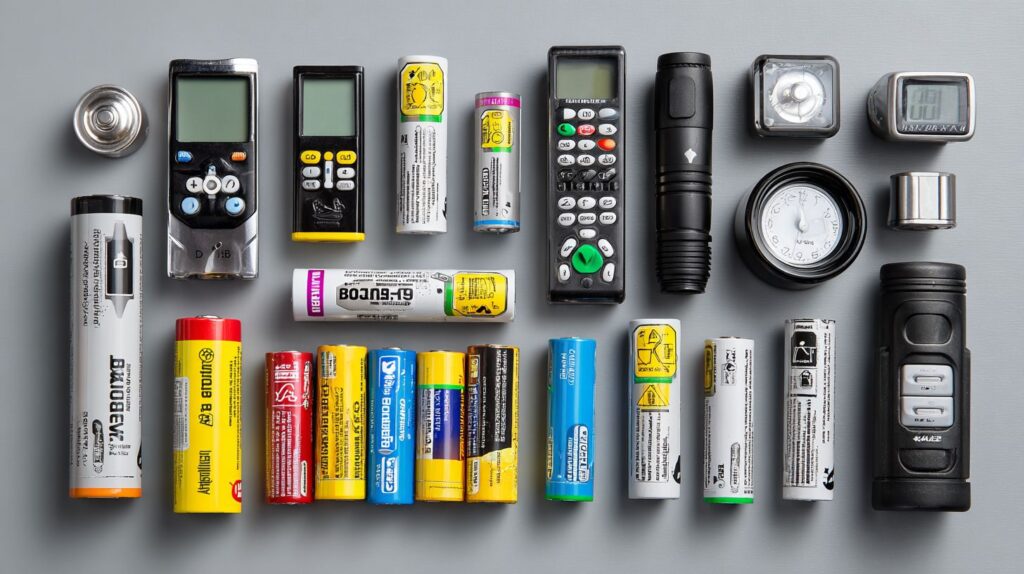
In low-drain devices, such as wall clocks that draw 1-5 mA, alkaline batteries can maintain operation for 24 to 36 months, surpassing the performance of rechargeable batteries due to their low self-discharge rates.
For optimal reliability in these applications, it is recommended to select alkaline batteries, such as GP AA models, which provide up to 2,000 hours of service in remote controls. These batteries offer the advantage of exceptional standby longevity; however, they should be replaced annually to mitigate the risk of leakage.
In critical applications, including smoke detectors, lithium batteries are advised to achieve 10-year compliance with NFPA 72 standards established by the National Fire Protection Association, thanks to innovations like those from Sony Corporation.
To verify performance, conduct monthly voltage tests using a Fluke 117 multimeter, targeting a reading above 1.3 V. This straightforward procedure enables early detection of degradation.
In standby devices, deep discharge should be avoided, as it can significantly reduce battery lifespan. During extended periods of inactivity, batteries should be removed to preserve their integrity.
High-Drain Devices (e.g., Toys, Flashlights)
High-drain devices, such as remote-controlled toys that demand peak currents of 1-2A, perform optimally with NiMH batteries, which provide approximately 80% greater runtime compared to alkaline batteries during burst operations.
For power tools, including DeWalt cordless drills, NiMH batteries deliver around 300 recharge cycles at 1.2V, while their low internal resistance minimizes heat accumulation by 15% during prolonged usage. In comparison, lithium-ion batteries are well-suited for flashlights like the Fenix PD35, offering up to 250 lumens of output for as long as 10 hours on a single charge.
Laptop computers frequently employ lithium-polymer variants to achieve dependable 8-hour operational sessions, effectively balancing portability and power requirements. According to a 2023 study published in Power Electronics, lithium-ion batteries demonstrate superior continuous discharge rates, reaching up to 20C.
To achieve optimal performance, it is essential to align the battery’s ampere-hour (Ah) rating with the specific requirements of the device-for instance, utilizing 2000mAh batteries for remote-controlled toys-to prevent suboptimal operation and uphold safety standards.
Key Considerations for Choosing Batteries
The selection of batteries depends primarily on the cost per cycle-for instance, $0.02 for NiMH compared to $0.40 for alkaline-along with considerations of performance at specific voltages and environmental impact.
Cost, Performance, and Eco-Friendliness
Lead Acid batteries, first invented by Gaston Plant in 1859 and later advanced with concepts from G.N. Lewis, come in forms like flooded lead acid and valve regulated, offering reliable storage solutions.
Nickel-metal hydride (NiMH) batteries promote environmental sustainability through a 90% recyclability rate, achieved via advanced alloy development. According to the U.S. Environmental Protection Agency (EPA) lifecycle analysis, the cost per cycle for NiMH batteries is approximately $0.015, compared to $0.45 for alkaline batteries.
To fully appreciate these advantages, it is advisable to evaluate key performance metrics.
NiMH batteries deliver a consistent 1.2V output, similar to nickel-cadmium (NiCd) batteries, but without the associated cadmium toxicity. This makes them particularly suitable for low-drain devices, where they outperform lithium batteries that feature a higher 3.7V peak voltage but less stability in such applications.
Return on investment (ROI) can be calculated with precision: a $12 NiMH battery pack endures up to 100 cycles with excellent cycle life, yielding savings of $38 relative to disposable alternatives, in contrast to $50 for alkaline batteries.
In applications such as mobile phones, transitioning to NiMH batteries can reduce electronic waste by 70%, as reported by the Battery Council International. Additional benefits include a reduced carbon footprint, with NiMH generating 2 kg of CO2 emissions compared to 5 kg for alkaline batteries.
For tailored evaluations of usage patterns and potential savings, the Battery University online calculator provides a valuable tool for analysis.
Battery Maintenance and Disposal Tips
Regular maintenance practices, including the avoidance of overcharge in nickel-cadmium (NiCd) batteries, can extend battery life by up to 50 percent. Additionally, proper recycling efforts, as reported by Call2Recycle, divert 95 percent of materials from landfills.
To optimize battery longevity, adhere to the following recommended procedures, which are specifically designed for prevalent battery types.
- For nickel-metal hydride (NiMH) batteries, employ a charging rate of 0.1C-for instance, 2.4A for a 2400mAh cell-utilizing a Maha Powerex MH-C9000 charger. This process typically requires 10 to 14 hours to achieve full capacity while minimizing heat generation.
- On a monthly basis, discharge NiCd or NiMH batteries to approximately 20 percent capacity to mitigate the memory effect. However, refrain from fully discharging flooded lead acid batteries or valve regulated ones, as this may induce sulfation.
- Store all batteries at 40 percent charge in a cool, dry environment. This maintenance regimen demands only 15 minutes every two weeks.
- For disposal, ensure compliance with Environmental Protection Agency (EPA) Resource Conservation and Recovery Act (RCRA) regulations by participating in complimentary recycling programs, such as those offered at Home Depot for lithium-ion batteries, Gelcell, VRLA batteries, and SLA batteries. Under no circumstances should batteries be incinerated due to the risk of explosion. When addressing spills from flooded lead acid batteries, always wear protective gloves for safety.
- Research conducted by Battery University validates that these methodologies can enhance operational efficiency by as much as 50 percent.
Learn more, How to Choose the Right Household Battery for Optimal …
Frequently Asked Questions
What are the main types of household batteries available?
When learning how to choose the right household battery: types, lifespan & uses, it’s essential to know the primary categories. Common types include alkaline batteries, which are non-rechargeable and widely used for everyday devices; rechargeable nickel-metal hydride (NiMH) batteries, ideal for high-drain gadgets like cameras; and lithium batteries, known for their long lifespan and use in smoke detectors or remote controls. Each type suits different needs based on power output and reusability.
How does the lifespan of different household batteries vary?
In the context of how to choose the right household battery: types, lifespan & uses, battery lifespan depends on chemistry and usage. Alkaline batteries typically last 5-10 years in storage but drain faster in high-use devices, lasting 2-3 years with regular use. NiMH rechargeables can endure 500-1000 cycles, equating to several years, while lithium batteries boast up to 10-20 years of shelf life, making them perfect for low-drain applications like clocks.
What factors should I consider when selecting a household battery for specific uses?
To effectively navigate how to choose the right household battery: types, lifespan & uses, evaluate your device’s power needs, frequency of use, and environmental impact. For intermittent uses like flashlights, opt for long-lasting lithium types. High-drain devices such as toys benefit from NiMH rechargeables to save money over time. Always match voltage (e.g., AA, AAA) and consider eco-friendly options to minimize waste.
Are rechargeable batteries a good choice for everyday household uses?
Yes, when exploring how to choose the right household battery: types, lifespan & uses, rechargeables like NiMH are excellent for frequent-use items such as wireless mice or cordless phones, offering hundreds of cycles and reducing landfill waste. They have a shorter initial shelf life than disposables but pay off long-term. Pair them with a quality charger to maximize their 3-5 year effective lifespan.
How can I extend the lifespan of household batteries in storage?
Understanding how to choose the right household battery: types, lifespan & uses includes proper storage tips. Keep batteries in a cool, dry place away from direct sunlight or extreme temperatures (ideally 15-25 degreesC) to prevent leakage. Remove them from devices when not in use, and for rechargeables, store at 40-50% charge. This can extend alkaline lifespans by years and maintain NiMH performance over multiple cycles.
What are the environmental impacts of different household battery types?
As part of how to choose the right household battery-types, lifespan, and uses-consider sustainability. Primary types include Alkaline batteries and Lithium batteries, while secondary types encompass NiMH batteries (Nickel Metal Hydride), NiCd batteries (Nickel Cadmium), Lead Acid batteries, Lithium Ion batteries, and Lithium Ion Polymer. Disposable Alkaline batteries contribute to e-waste due to non-recyclable components, though many are now recyclable. Rechargeable NiMH and lithium-ion options, such as Lithium Ion batteries, are greener, lasting longer and reducing disposal frequency. For high drain applications like power tools, opt for high drain NiMH or Lithium Ion batteries; for low drain uses like clocks, low drain Alkaline batteries suffice. Lead Acid batteries, invented by Gaston Plant, come in forms like Gelcell, VRLA batteries, and SLA batteries. NiCd batteries are prone to the Memory effect, whereas NiMH batteries offer superior Energy density and Cycle life. All batteries experience Self-discharge, but rates vary. Sony Corporation introduced the first commercial Lithium Ion batteries, and brands like GP provide reliable options. Contributions from scientists like G.N. Lewis have advanced battery technology. Always recycle used batteries at designated facilities to minimize heavy metal pollution and support eco-friendly choices.