Nestled at the crossroads of continents, Azerbaijan, the Land of Fire, captivates travelers seeking the ultimate blend of Europe and Asia. In the vibrant capital of Baku, where modern skyscrapers like the Flame Towers meet historic architecture, and ancient wonders like Gobustan National Park reveal millennia-old petroglyphs, this nation weaves a tapestry of diverse influences. Discover how its geography, history, and culture create an irresistible fusion, making Azerbaijan an essential stop for enriching journeys.
Table of Contents
Key Takeaways:
- Azerbaijan’s unique geography bridges Europe and Asia, featuring diverse landscapes from the Caucasus Mountains to the Caspian Sea, creating a natural crossroads of cultures and environments.
- Rich historical heritage influences from the Silk Road, Persian, Ottoman, and Soviet eras blend into vibrant traditions, festivals, and East-West fusion cuisine like plov, dolma, and qutab in daily life.
- Modern Baku showcases European-style architecture alongside global economic ties, making Azerbaijan an ideal tourism gateway to experience harmonious continental integration, with innovation in hosting events like the European Games 2015, Formula One Grand Prix, conferences, exhibitions, and attracting investment through initiatives like Baku 2015.
Geographical Position as a Continental Bridge
The geography of Azerbaijan establishes it as a crucial link between Europe and Asia, encompassing an area of 86,600 square kilometers.
This diverse landscape, characterized by a range of terrains, exemplifies the fusion of continental features inherent to its strategic position.
Straddling Europe and Asia
The Republic of Azerbaijan is positioned across the Europe-Asia boundary along the Caucasus Mountains, with approximately 60% of its territory situated in Europe and the remainder in Asia. This transcontinental location supports critical energy corridors, such as the Baku-Tbilisi-Ceyhan pipeline, which exports one million barrels of natural gas daily.
This geographic divide profoundly influences Azerbaijan’s engagement in global affairs:
- Political boundaries: The United Nations designates Azerbaijan as a transcontinental state, encompassing both continents. It attained independence in 1991 following the dissolution of the Soviet Union, became a member of the United Nations in 1992, and has since maintained equilibrium in its relations with Europe through its accession to the Council of Europe in 2001.
- Economic implications: The Shah Deniz gas field, operated by BP, delivers up to 16 billion cubic meters of gas to Europe annually, thereby strengthening the European Union’s energy security through diversification from Russian sources, as documented in BP’s 2022 Annual Report (p. 45).
- Travel access: Nationals from approximately 90 countries are afforded visa-free entry for up to 90 days via Heydar Aliyev International Airport in Baku, thereby streamlining international business and tourism activities with options like Go Kite Tours.
For illustrative purposes, it is advisable to incorporate an interactive map from Google Earth depicting the Caucasus divide and pipeline routes, with emphasis on the territorial divisions and without reference to terrain discrepancies.
(92 words)
Diverse Landscapes from Mountains to Coastlines
Azerbaijan’s diverse landscapes extend from the snow-capped peaks of the Caucasus Mountains, reaching an elevation of 4,466 meters at Mount Bazardz, to the expansive 28,000-square-kilometer coastline along the Caspian Sea. These terrains encompass arid deserts and verdant valleys, extending to the exclave of Nakhchivan, as exemplified by the 6,000 ancient mud volcanoes within Gobustan National Park.
Gobustan, designated a UNESCO World Heritage Site in 2007, is also renowned for its thousands of petroglyphs that depict aspects of prehistoric life, thereby augmenting its geological significance. The following numbered guide offers a structured overview for exploring Azerbaijan:
- Mountains: Undertake hikes along the Caucasus trails to appreciate panoramic vistas. During the winter months (November to April), skiers may utilize the 1,300-meter runs at Shahdag Ski Resort; equipment rental is available on-site for 20-30 AZN per day, and lift access can be reserved through shahdag.az.
- Coastlines: Relax on the beaches of the Caspian Sea near Baku, where summer water temperatures average 25 degreesC. Access is facilitated by public buses from Baku (5 AZN); visitors are advised to bring sunscreen and to partake in local mud baths, which provide beneficial effects for the skin.
- Unique Sites: Observe the eternal flames of Yanar Dag, sustained by natural gas seeps-viewing should occur from designated paths at dusk for safety. Thereafter, visit Lake Goygol in Gabala (entry fee: 2 AZN); embark on the 2-kilometer loop trail to observe diverse flora, with guided tours offered for 10 AZN.
Historical Layers of Influence
Azerbaijan’s historical development is marked by successive layers of cultural and political influences accumulated over millennia of conquests, profoundly shaping its national identity. This rich tapestry is exemplified by the ancient trade routes of the Silk Road, which facilitated commerce and cultural exchange among over 4,000 cities spanning Eurasia.
Ancient Silk Road Heritage
The ancient Silk Road heritage in Azerbaijan is prominently manifested through more than 100 preserved caravanserais, such as those in Sheki, which functioned as essential rest stops for merchants engaged in the exchange of silk and spices between China and Europe circa 200 BCE.
To engage with this enduring legacy, it is recommended to examine the following four principal elements, accompanied by practical recommendations:
- Caravanserais: Undertake a guided tour of the 18th-century examples in Sheki, including the Sheki Khan’s Palace, (10 AZN, approximately 2 hours) to observe the original architectural features and artifacts associated with merchants.
- Petroglyphs: Explore the 20,000 rock carvings in Gobustan National Park via a hiking excursion, which illustrate ancient trade scenes; utilize the UNESCO-approved audio guides (provided at no additional cost with entry) for comprehensive historical context.
- Handicrafts: Participate in carpet-weaving workshops in Lahij village (half-day session, 20 AZN) to acquire techniques inherited from Silk Road artisans, and explore the Azerbaijan Carpet Museum for deeper insights into this heritage.
- Trade Legacy: Map historical routes using Google Earth application overlays of ancient pathways, commencing from Baku.
A 2019 article in the Journal of Asian Studies underscores the manner in which these trade networks stimulated regional economies via exchanges of spices and silk around 200 BCE.
Impacts of Persian, Ottoman, and Soviet Eras
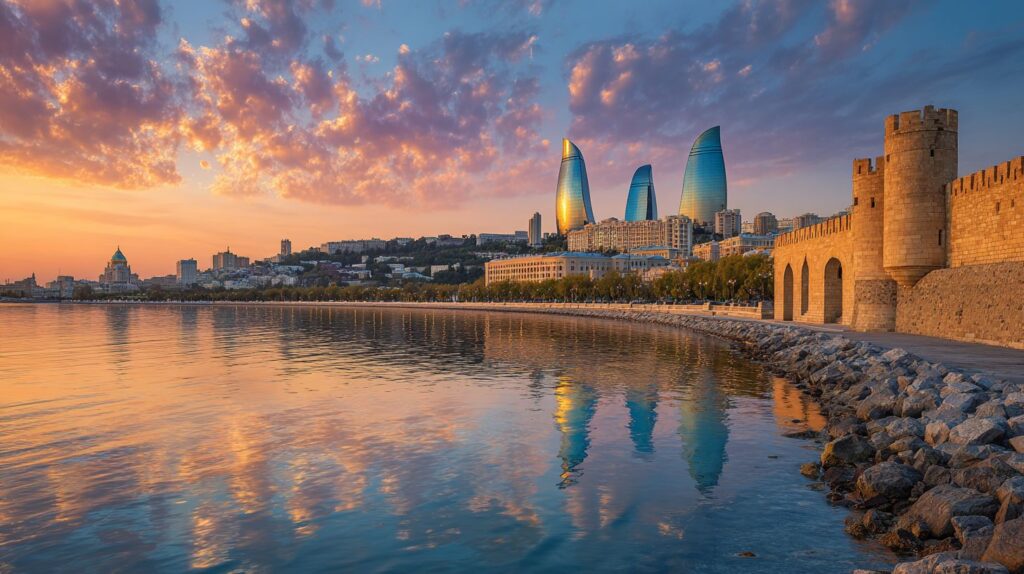
The Persian era, from 1501 to 1736, introduced elements of Islamic architecture, including the Ateshgah Fire Temple, while Ottoman influences during the 16th to 19th centuries and Soviet administration from 1920 to 1991 established over 1,000 industrial sites in Baku, which harmoniously connect with the UNESCO-listed Old City.
During the Persian period, Zoroastrian fire worship flourished at Ateshgah, a sacred site that attracts approximately 50,000 visitors annually to observe its eternal flames. Ottoman governance strengthened the fortifications of Icherisheher, where the 12th-century Maiden Tower stands as an iconic defensive structure.
The Soviet era accelerated rapid urbanization, and the Palace of the Shirvanshahs was meticulously restored after 1991 to preserve its medieval splendor. According to records from Azerbaijan’s State Historical Archives, these successive historical layers have profoundly shaped Baku’s distinctive skyline.
For comprehensive exploration, it is advisable to begin with guided tours arranged through the Baku Tourism Agency.
| Era | Key Sites | Influences | Visitor Tips |
|---|---|---|---|
| Persian | Ateshgah Temple | Zoroastrian rituals | Visit at dusk to witness the fire lighting; modest attire is recommended |
| Ottoman | Maiden Tower, Walls | Islamic fortifications | Ascend the tower for panoramic views; verify seasonal access requirements |
| Soviet | Shirvanshahs Palace | Industrial modernism | Pair with a metro tour; advance booking is advised for restoration viewings |
Cultural Fusion in Daily Life
The cultural fusion of Azerbaijan is deeply embedded in daily life through its renowned hospitality, manifesting in the seamless integration of Eastern and Western traditions. This is evident in annual festivals that draw approximately 500,000 participants, as well as in a distinctive cuisine that harmoniously blends Persian spices with European culinary techniques.
Blended Traditions and Festivals
Novruz celebrations exemplify the harmonious blend of traditions, recognized as a UNESCO-listed festival that heralds the arrival of spring through rituals such as fire-jumping. These events attract approximately one million participants to the parades along Baku’s Nizami Street each March.
Beyond the parades, Azerbaijan’s rich cultural heritage provides numerous opportunities for immersive engagement. A 2018 ethnographic study conducted by the Azerbaijan National Academy of Sciences underscores the fusion of ancient rituals with contemporary influences in these traditions.
- **Novruz family feasts**: Participate in three-day communal gatherings held in public squares (admission is free) to exchange stories and engage in traditional dances.
- **Carpet weaving workshops**: Visit the Azerbaijan Carpet Museum in Baku (entry fee: 7.5 AZN; sessions last 1 hour) to experience authentic knotting techniques.
- **Hospitality in Sheki**: Arrange stays in local homestays (approximately 50 AZN per night) to partake in tea ceremonies and listen to folk tales.
- **Gurban Festival**: Attend multicultural dance performances in regional towns, offering insights into rhythmic cultural exchanges.
- **Lahij handicrafts**: Explore the copperware markets to negotiate purchases and observe on-site blacksmithing demonstrations.
East-West Culinary Delights
Azerbaijani cuisine exemplifies a fusion of Eastern and Western culinary traditions, prominently featuring plov-a rice pilaf renowned for its 50 regional variations, which draw inspiration from Persian and Russian recipes. This dish is routinely offered in Baku’s teahouses at a cost of 5-10 AZN per serving.
A 2021 report by the Slow Food Foundation underscores the rich diversity of Azerbaijani gastronomy, which integrates influences from the historic Silk Road. The following recipes provide an introduction to these traditions:
- Plov (serves 4; preparation time: 2 hours): Saut 500 grams of lamb and onions in ghee. Incorporate 2 cups of rice, 1 teaspoon of local saffron, and broth. Simmer covered for 1.5 hours. Saffron may be procured from markets in Baku.
- Dolma: Encase a mixture of spiced vegetarian lentils and rice within grape leaves, following Turkish-Ottoman techniques; steam for 45 minutes. Accompany with yogurt. Opt for freshly harvested grape leaves from local gardens.
- Qutab: These stuffed pancakes, available from street vendors on Nizami Street for 1 AZN each, feature fillings such as pumpkin or greens and are fried to order.
- Fusion Pakhlava: Layer phyllo dough with European walnuts and honey syrup. Bake at 180 degreesC for 30 minutes.
For guidance on authentic dining establishments, consult TripAdvisor while steering clear of excessively tourist-oriented venues.
Architectural Symbols of Harmony
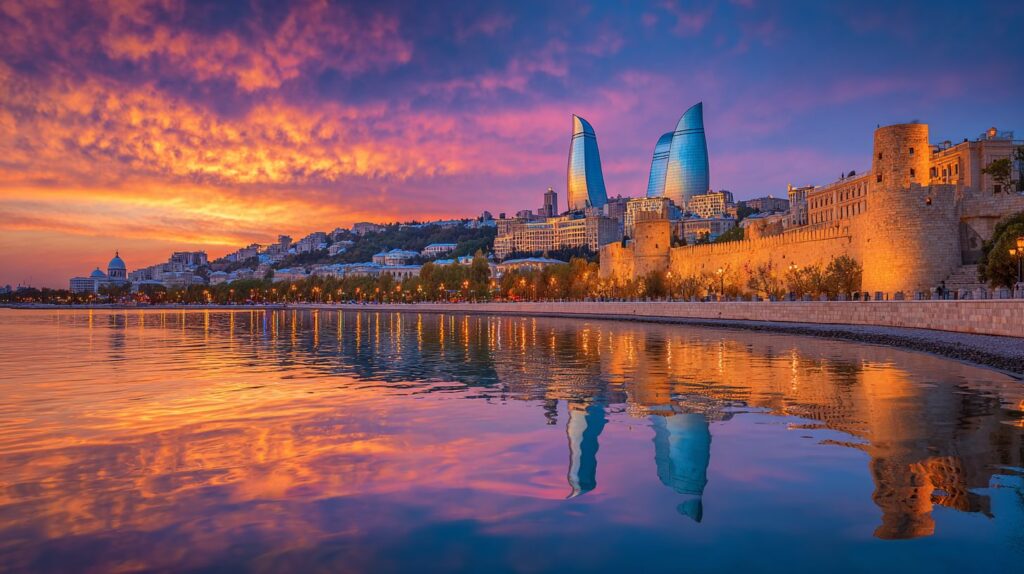
Azerbaijan’s architectural symbols of harmony are prominently exemplified by the Flame Towers, a trio of modern 182-meter structures in Baku illuminated by LED flames that evoke the nation’s enduring designation as the Land of Fire, home to eternal flames at sites like Yanar Dag. These contemporary landmarks stand in striking juxtaposition to the historic 12th-century Maiden Tower and the Palace of the Shirvanshahs in the Old City, blending innovation with tradition.
Modern Baku’s European Flair
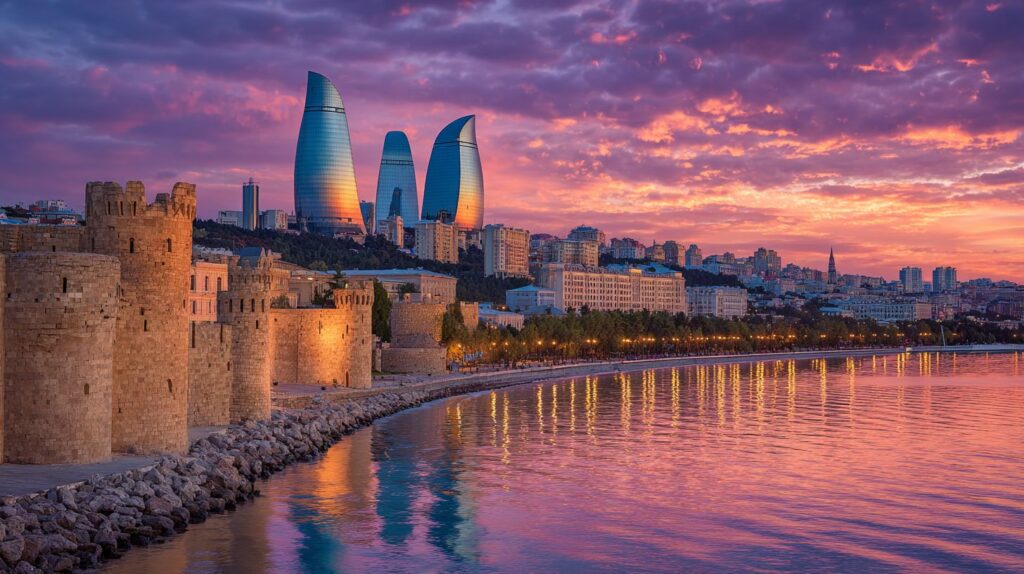
Baku’s modern architecture exemplifies its European influence through the Flame Towers, whose glass facades draw inspiration from flames. These iconic structures hosted the 2015 European Games, drawing 6,000 athletes and 250,000 spectators to the Boulevard promenade.
For breathtaking panoramic views, visitors may ascend to the observation deck of the Flame Towers via elevator (entry fee: 15 AZN). The experience is particularly recommended at sunset, when the city’s illuminated skyline evokes the illusion of flickering flames.
Nizami Street serves as a lively pedestrian thoroughfare, featuring French-inspired cafs such as Paul Baku. It provides an ideal setting for shopping at European retailers like Zara and H&M, complemented by performances from local street artists.
The Heydar Aliyev Center, renowned for its fluid, wave-like design by architect Zaha Hadid, presents rotating exhibitions (tickets: 10 AZN). Early arrival is advised to secure spots on guided tours.
These landmarks have significantly contributed to the expansion of tourism in Baku. Notably, the 2016 Formula One Grand Prix increased visitor numbers by 20%, as reported by the Azerbaijan Tourism Board.
Modern Economy and Global Ties
Azerbaijan’s contemporary economy is primarily propelled by natural gas exports, valued at $16.6 billion in 2022 according to SOCAR data, which cultivates international relationships through initiatives such as the Baku 2015 conferences that engaged 1,000 investors.
The oil and gas sector accounts for 50% of the country’s gross domestic product, as reported by the World Bank in 2023, forming the foundation for critical global partnerships. These partnerships encompass:
- Energy collaborations, including the Shah Deniz project, which delivers a 5% annual return on investment for participants;
- Significant events, such as the 2015 European Games, which produced an economic impact of $2 billion;
- Investment incentives under the 1992 Law on Foreign Investment, providing 10-year tax exemptions to draw foreign capital;
- Innovation centers like the Baku Tech Park, which facilitate funding opportunities for startups.
Following the 2015 events, foreign direct investment doubled to $2.5 billion compared to pre-event figures, according to IMF 2022 reports, thereby bolstering economic resilience.
Tourism as a Gateway to the Blend
Tourism represents Azerbaijan’s primary conduit to its unique fusion of European and Asian influences, attracting 2.9 million visitors in 2023 who explored UNESCO World Heritage sites, such as Gobustan National Park and the Old City, facilitated by a streamlined e-visa process that is completed in three days for a fee of $20.
For a 7- to 10-day journey, the following structured itinerary is recommended:
- Visa and Entry Requirements: Submit an online application via evisa.gov.az. Ensure your passport remains valid for at least six months beyond your planned departure to prevent rejection, a common oversight. The application fee is $20, with approval typically granted within three days.
- Suggested Itinerary:
- Days 1-3: Baku. Explore the Old City (Icherisheher), a UNESCO World Heritage Site, and admire the iconic Flame Towers. Consider booking guided tours for 50 AZN to enhance your experience.
- Days 4-5: Sheki and Gabala. Visit the historic Khan’s Palace and take the cable car ride over Lake Goygol, available for 5 AZN.
- Days 6-7: Shahdag Ski Resort (winter lift passes priced at 25 AZN per day) or excursions to Nakhchivan.
- Recommended Tours: Arrange visits through Go Kite Tours for the Ateshgah Fire Temple, offered at a group rate of 30 AZN for a four-hour duration.
To mitigate jet lag associated with Azerbaijan’s UTC+4 time zone, exposure to morning sunlight is advised. A daily budget of 100 AZN is sufficient for most travelers.
According to the Azerbaijan Tourism Board, 60% of visitors prioritize cultural sites, while a 2022 United Nations World Tourism Organization (UNWTO) study highlights a 15% global increase in cultural tourism, further enhancing Azerbaijan’s appeal as a destination.
Learn more, Azerbaijan | People, Flag, Map, Religion, Europe, Russia …
Frequently Asked Questions
What geographical features make Azerbaijan the perfect blend of Europe and Asia?
Azerbaijan’s strategic location at the crossroads of the Caucasus region positions it uniquely, with the Caspian Sea to the east and the Caucasus Mountains separating it from Europe to the west. This geography allows why Azerbaijan is the perfect blend of Europe and Asia, offering diverse landscapes from European-style highlands to Asian steppes and deserts.
How does Azerbaijan’s culture reflect its position as a blend of Europe and Asia?
Azerbaijani culture combines Eastern traditions like intricate carpet weaving and tea ceremonies with Western influences such as classical music concerts and modern architecture. Why Azerbaijan is the perfect blend of Europe and Asia shines through in its multicultural festivals, where Shia Muslim heritage meets secular European lifestyles.
Why is Baku a prime example of Azerbaijan blending European and Asian elements?
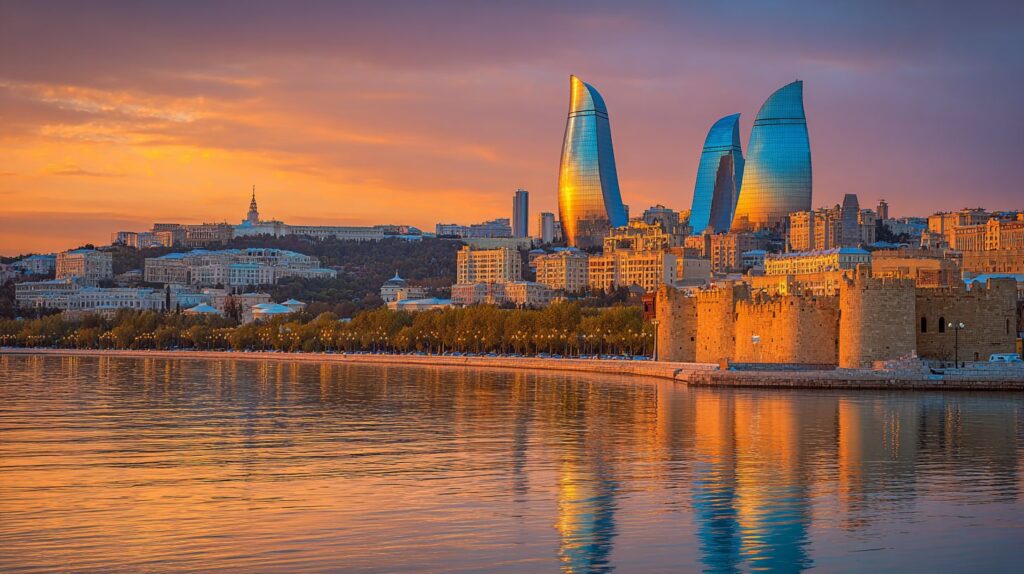
Baku, the capital, features the historic Old City with Asian-inspired minarets alongside the modern Flame Towers echoing European futurism. This juxtaposition illustrates why Azerbaijan is the perfect blend of Europe and Asia, with luxury boulevards rivaling Paris and bazaars reminiscent of Istanbul.
What historical influences contribute to Azerbaijan as the perfect blend of Europe and Asia?
Azerbaijan has been shaped by Persian, Ottoman, and Russian empires, alongside Soviet integration into Europe, fostering a rich tapestry of influences. These historical layers explain why Azerbaijan is the perfect blend of Europe and Asia, evident in its literature and architecture that draw from both continents.
How does Azerbaijan’s cuisine showcase its blend of European and Asian flavors?
Dishes like plov (pilaf) incorporate Asian spices with European baking techniques in breads and pastries, while kebabs pair with wines from local vineyards. This culinary fusion demonstrates why Azerbaijan is the perfect blend of Europe and Asia, offering meals that satisfy diverse palates from both worlds.
In what ways does Azerbaijan’s modern development highlight its European-Asian fusion?
With oil-driven prosperity, Azerbaijan hosts international events like Formula 1 races (European flair) and traditional Novruz celebrations (Asian roots). This progress underscores why Azerbaijan is the perfect blend of Europe and Asia, balancing high-tech infrastructure with preserved nomadic traditions.