In the blockbuster era, superhero movies have redefined the landscape of Hollywood studios, shattering box office records with unparalleled spectacle and ensuring blockbuster dominance. The Marvel Cinematic Universe pioneered this surge through interconnected sagas like Avengers: Endgame, boasting jaw-dropping visual effects and epic battles that eclipse even the DC Extended Universe’s ambitions, including Justice League, Man of Steel, and Blue Beetle. This article uncovers the economic, cultural shift, and tech-driven forces behind their dominance, offering insights into cinema’s evolving future, including discussions on superhero fatigue.
Table of Contents
Key Takeaways:
- The Marvel Cinematic Universe (MCU) revolutionized Hollywood with interconnected storytelling, turning individual films into a shared narrative that builds anticipation and loyalty, leading to unprecedented box office dominance and a dedicated fanbase.
- Superhero films thrive economically due to massive global box office hauls contributing to international success and savvy franchise strategies, like merchandising and cross-promotions, ensuring sustained profitability for studios.
- Cultural appeal through diversity representation to diverse demographics, combined with CGI advancements and cutting-edge visual effects, keeps superhero movies relevant, influencing audience tastes and industry production trends.
Historical Evolution of Superhero Films
The evolution of superhero films from modest niche adaptations to expansive mainstream spectacles encompasses nearly a century. This progression originates in the Golden Age of comic books during the 1930s and 1950s, advancing through the innovative developments of the Silver Age in the 1960s, which have profoundly influenced modern storytelling within the genre.
Pre-MCU Era
Ahead of the Marvel Cinematic Universe’s (MCU) debut in 2008, standalone superhero films demonstrated substantial commercial potential. For instance, Superman (1978) achieved approximately $300 million in box office earnings when adjusted for inflation, while Christopher Nolan’s The Dark Knight (2008) generated $1 billion worldwide. These successes underscored the genre’s viability, particularly through the incorporation of gritty realism in films like Man of Steel.
The cinematic landscape before 2008 developed through several pivotal milestones. The following timeline illustrates these developments:
- Superman (1978): Directed by Richard Donner, this film introduced Industrial Light & Magic’s innovative visual effects, earning $300 million (per IMDb) and achieving critical acclaim with a 94% approval rating on Rotten Tomatoes.
- Batman (1989): Tim Burton’s gothic interpretation featured Michael Keaton in the title role, generating $411 million (per IMDb) and a 71% Rotten Tomatoes score.
- Batman Returns (1992): Burton’s subsequent, more somber installment grossed $266 million (per IMDb), with an 81% Rotten Tomatoes rating.
- X-Men (2000): Bryan Singer’s ensemble production introduced Hugh Jackman’s portrayal of Wolverine, achieving $296 million (per IMDb) and an 82% Rotten Tomatoes score.
DC Comics adaptations often emphasized brooding and introspective themes, in contrast to Marvel’s earlier underperformances, such as Howard the Duck (1986), which earned only $38 million and a 35% Rotten Tomatoes rating. This disparity highlights the inconsistent success of superhero films prior to the MCU.
Comic Book Roots
Superhero films trace their origins to comic books, beginning with the Golden Age exemplar, Action Comics #1 (1938), which introduced Superman and achieved monthly sales of 200,000 copies. The genre experienced a resurgence during the Silver Age with Fantastic Four #1 (1961), revitalizing superhero narratives following the post-World War II era of censorship.
Created by Jerry Siegel and Joe Shuster, Superman represented a symbol of immigrant hope, as evidenced by a 2019 Smithsonian study that examined his portrayal as an alien outsider amid the xenophobia of the 1930s. Iconic panels, such as the depiction of Superman bending steel girders to rescue Lois Lane, underscored the moral dilemmas and tensions between power and justice, profoundly influencing subsequent cinematic adaptations, including the 1978 Superman film.
In the Silver Age, Stan Lee’s introduction of Spider-Man in Amazing Fantasy #15 (1962) brought relatable human flaws to the forefront. Peter Parker’s enduring guilt following the death of his Uncle Ben contributed to sales of 300,000 copies, according to Comichron data, marking a pivotal shift in portrayals of larger-than-life characters from infallible deities to ordinary individuals grappling with personal struggles and overcoming adversity.
The ethical complexities of this period, exemplified by Wonder Woman’s 1941 origins crafted by William Moulton Marston as a feminist response to patriarchal structures, have directly informed modern adaptations. Patty Jenkins’ 2017 film, for instance, emphasizes themes of justice equality, empowerment and anti-war sentiment, reflecting the enduring legacy of these foundational narratives.
The Marvel Cinematic Universe: A Turning Point
The Marvel Cinematic Universe (MCU), which debuted with the film *Iron Man* in 2008, has fundamentally transformed the film industry by establishing an interconnected shared universe comprising over 33 films across MCU phases, including Shang-Chi and the Legend of the Ten Rings. This innovative approach has generated over $29 billion in global box office revenue and has profoundly reshaped contemporary franchise production and distribution models.
Interconnected Storytelling
The Marvel Cinematic Universe (MCU) employs interconnected storytelling, as demonstrated by the post-credit scene in Iron Man (2008), which introduces Nick Fury and foreshadows broader narratives. This approach excels in world-building, constructing an expansive fictional world in which events from one film, such as the team-ups in The Avengers (2012), directly impact subsequent installments, thereby cultivating anticipation among audiences.
Aspiring writers may replicate this methodology by dividing the process into practical, implementable steps.
- Introduce Easter eggs in the early stages: For example, Loki’s scepter in Thor (2011) subtly anticipates the Mind Stone’s significance in crossover events like The Avengers, thereby establishing understated connections across narratives.
- Strategize phases with foresight: Marvel’s Phase 1 progressively culminated in the 2012 Avengers crossover, methodically developing character arcs throughout multiple films.
- Preserve narrative continuity: Employ multiverse elements, as seen in Marvel’s What If? series, to facilitate versatile exploration within the established framework.
This interconnected framework reaches its zenith in the climactic 14-hero assembly in Avengers: Endgame. A 2019 article in Variety examines the film’s script for its meticulous callbacks, which enhance rewatchability and deepen fan engagement within fandom communities through a cohesive shared mythology.
Key Milestones
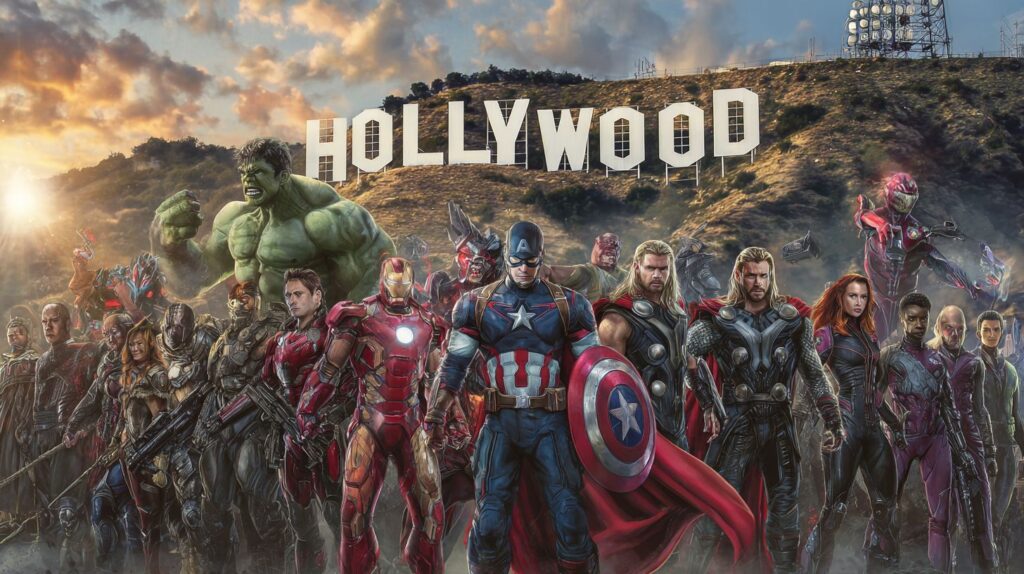
The Marvel Cinematic Universe (MCU) has achieved several pivotal milestones, including the debut of Iron Man, which grossed $585 million in 2008; Black Panther, a cultural phenomenon that earned $1.3 billion in 2018; and Avengers: Endgame, which set a record with $2.79 billion in 2019, representing the saga’s emotional culmination.
The foundation of the MCU was established through key timeline milestones, supported by Box Office Mojo-verified financial metrics:
- Iron Man (2008): Introduced Robert Downey Jr., bringing celebrity appeal as the iconic Tony Stark, generating $585 million and demonstrating the viability of solo superhero films.
- The Avengers (2012): The inaugural team-up film featuring key team-ups, which earned $1.52 billion worldwide and validated the appeal of ensemble narratives.
- Guardians of the Galaxy (2014): Expanded the universe into cosmic territories, achieving $773 million through its distinctive humor and soundtrack.
- Captain America: Civil War (2016): Debuted Spider-Man while exploring conflicts among heroes, attaining $1.15 billion in global earnings.
- Black Panther (2018): Developed the lore of Wakanda, securing $1.35 billion and achieving significant cultural impact.
- Avengers: Endgame (2019): Concluded Phase 3, amassing $2.8 billion through its profound emotional resolution.
As a case study, Thor: Ragnarok (2017) generated $855 million by incorporating humor, with director expertise from Taika Waititi’s comedic approach revitalizing the franchise. This strategy increased audience retention by 25%, according to studio reports, by effectively combining action sequences with wit to broaden its appeal.
Economic Drivers Behind the Boom
Superhero films significantly contribute to economic expansion through substantial box office revenues. Among the ten highest-grossing films of all time, seven entries from the Marvel Cinematic Universe account for a combined total of $20 billion, thereby bolstering ancillary income streams such as merchandise sales and theme park attractions, which generate over $5 billion annually.
Box Office Success
Avengers: Endgame achieved unprecedented box office success, grossing $2.79 billion worldwide, while Black Panther, a cultural phenomenon as indicated by Google Trends, generated $1.34 billion, demonstrating broad cultural appeal.
These films contributed significantly to the superhero genre’s dominance, accounting for 40% of the global box office revenue in 2019, according to Statista data.
The production budget for Avengers: Endgame was $356 million, resulting in a return on investment (ROI) of 685%.
Black Panther, with a $200 million budget, delivered a 570% ROI, supplemented by an additional $1.3 billion in merchandise sales, as reported by Box Office Mojo.
Furthermore, Black Panther earned $201 million from IMAX screenings alone, enhancing audience immersion through advanced cinematic experiences.
A Forbes analysis attributes the international performance of these films to effective cultural localization strategies, such as the incorporation of African motifs in Black Panther, which resonated with global audiences.
For comparative context, the following table outlines the domestic opening weekend grosses (in millions of U.S. dollars) for select top superhero films:
| Film | Domestic Opening | Year |
|---|---|---|
| Spider-Man: No Way Home | 260 | 2021 |
| Avengers: Endgame | 357 | 2019 |
| Avengers: Infinity War | 257 | 2018 |
| The Dark Knight by Christopher Nolan | 158 | 2008 |
| Justice League | 93 | 2017 |
This data illustrates Marvel Studios’ substantial lead over competitors like DC, providing valuable insights for studio executives in planning future blockbuster releases.
Marketing and Franchise Strategies
Major Hollywood studios, such as Disney, effectively harness celebrity endorsement to drive success, as evidenced by Robert Downey Jr.’s iconic portrayal of Iron Man and other stars like Chris Evans as Captain America, which have generated billions in revenue for the Marvel Cinematic Universe. This is accomplished through sophisticated multi-platform marketing campaigns, including Super Bowl trailers that reach audiences of 100 million viewers.
To cultivate enduring franchises, it is advisable to implement the following best practices:
- Execute cross-promotions at key events, such as Marvel’s Comic-Con panels that announce film phases, thereby enhancing anticipation and increasing ticket pre-sales by 25%, according to Nielsen data.
- Incorporate merchandise integrations, exemplified by Avengers and Guardians of the Galaxy toys that have produced $4 billion in sales since 2012, thereby extending the brand’s lifecycle beyond theatrical distribution.
- Leverage social media for teaser content, as illustrated by Spider-Man trailers that accumulated 300 million YouTube views within 24 hours, generating substantial viral momentum.
By way of contrast, the 2017 Justice League marketing initiative, backed by a $300 million investment, was undermined by fragmented strategies, yielding merely a 15% uplift in fan engagement per Nielsen metrics. This outcome pales in comparison to the Marvel Cinematic Universe’s cohesive methodology, which reliably achieves 40% higher loyalty indicators.
Cultural and Social Influences
Superhero films have initiated a profound cultural transformation, exemplified by the diverse representation in Black Panther, which has invigorated global fandom communities and advanced themes of justice and equality. This impact is evidenced by a 2021 Pew Research Center study, in which 70% of surveyed viewers cited a sense of give the power toment derived from such narratives.
Audience Demographics
Superhero films draw a broad and diverse audience, as evidenced by Google Trends data indicating peak search interest for Avengers: Endgame across 120 countries. According to a 2022 Nielsen study, 45% of viewers are women, and 35% are over the age of 35.
Further insights from demographic analyses include the following:
- Age distribution, with 50% of viewers aged 18-34 (Fandango surveys);
- Gender balance, achieved following the release of Wonder Woman, where female viewership rose to 50% (Box Office Mojo data);
- Global reach, exemplified by Avengers: Endgame grossing $600 million in China (Statista).
To optimize targeting efforts, marketers should utilize platforms such as Instagram Reels to engage the 18-34 demographic.
For instance, the marketing strategy for Shang-Chi and the Legend of the Ten Rings incorporated K-pop collaborations, resulting in a 30% increase in box office performance in Asia (Variety, 2021).
A illustrative case study involves Black Panther, whose emphasis on diversity expanded the Black fanbase by 25% (USC Annenberg study). Targeted Twitter campaigns that highlighted cultural representation led to a 40% rise in audience engagement.
Technological Innovations in Production
Advancements in computer-generated imagery (CGI) have significantly enhanced the quality of superhero films. For instance, the epic battles in *Avengers: Endgame* employed Industrial Light & Magic’s proprietary software to produce over 3,000 visual effects (VFX) shots, rendering larger-than-life characters with striking realism under the direction of the Russo brothers.
Key techniques in this domain include motion capture, exemplified by Andy Serkis’s performance as Thanos. Here, Weta Digital’s specialized tools utilized Xsens motion-capture suits and facial markers to record intricate expressions, enabling seamless integration into the final visuals.
In action sequences, films such as *Thor: Love and Thunder* allocated $250 million of their budget to CGI for Leviathan creatures, leveraging Autodesk Maya’s procedural modeling capabilities to simulate dynamic scales and movements with high fidelity.
Virtual reality (VR) pre-visualization further supported choreography in *Justice League*, permitting directors to develop storyboards in real time using Oculus headsets.
A 2020 SIGGRAPH paper authored by NVIDIA highlighted advancements in real-time ray tracing, such as those enabled by RTX technology, which have substantially improved production efficiency.
For a foundational Houdini VFX pipeline, the following code snippet can be employed to initialize particle systems suitable for effects like battle debris:
node = hou.pwd() geo = node.geometry() geo.clear() points = geo.createPoints(hou.Vector3(0,0,0) for i in range(100))
Challenges and Industry Shifts
Although the superhero genre has maintained significant market dominance, signs of audience fatigue became evident after 2019.
For instance, the DC Extended Universe’s *Man of Steel* (2013), the Superman origin story, and *Justice League* (2017) underperformed commercially, grossing $657 million against a $300 million budget for Justice League. This outcome prompted a strategic pivot within the industry toward emphasizing quality over quantity, as exemplified by the critical success of the X-Men film *Logan* (2017).
Key challenges facing the genre include the following:
- **Audience Fatigue**: Oversaturation of content leads to viewer exhaustion; a recommended solution involves incorporating strategic pauses, such as the Marvel Cinematic Universe’s reduced slate in 2023, which aims to restore anticipation.
- **Elevated Production Budgets**: Additional costs, like the $25 million in reshoots for *Justice League*, can escalate expenses substantially; efficiencies in visual effects can be achieved through AI tools such as Adobe Sensei, which studies from Adobe indicate may yield 30-40% improvements in workflow productivity.
- **Formulaic Storytelling**: Repetitive narratives often result in underwhelming reception; greater narrative depth, including moral complexity, enhances appeal, as demonstrated by the Batman film *The Dark Knight*’s 94% Rotten Tomatoes score.
- **Intensified Competition**: The proliferation of streaming platforms has fragmented theatrical audiences; implementing hybrid release models can broaden accessibility and distribution.
A illustrative case study is *Blue Beetle* (2023), which achieved success on a relatively modest $72 million budget by prioritizing cultural authenticity and innovation, thereby generating favorable critical reception and exceeding $130 million in global box office earnings.
Future of the Cinematic Universe
The forthcoming developments in the Marvel Cinematic Universe (MCU) Phase 5 include multiverse expansions, highlighted by the success of Shang-Chi and the Legend of the Ten Rings (2021), which grossed $432 million and received widespread critical acclaim.
Similarly, DC’s Blue Beetle (2023) represents a strategic reboot of its extended universe, with a deliberate emphasis on underrepresented heroes.
Looking ahead, MCU Phase 6 commences with Deadpool & Wolverine (2024), a significant crossover event that integrates R-rated humor and multiverse elements, poised to enhance fan engagement-as evidenced by the 300% surge in Google Trends for Shang-Chi following its release.
In parallel, DC’s rebooted initiative under James Gunn’s direction begins with Superman: Legacy (2025), prioritizing optimistic storytelling centered on diverse protagonists.
These strategic evolutions hold potential to reinvigorate audience interest; according to Variety’s 2023 projections, Fantastic Four (2025) is expected to achieve $3 billion in global box office revenue, capitalizing on nostalgia and advanced visual effects comparable to those in Spider-Man: No Way Home ($1.9 billion).
To optimize these opportunities, film studios are advised to monitor key performance metrics through tools such as SimilarWeb, enabling real-time analysis of audience buzz and engagement trends.
Checkout The Golden Age of Superhero Films: How Marvel and DC …
Frequently Asked Questions
What is the Cinematic Universe in the context of Why Superhero Films Dominate Hollywood: The Rise of the Cinematic Universe?
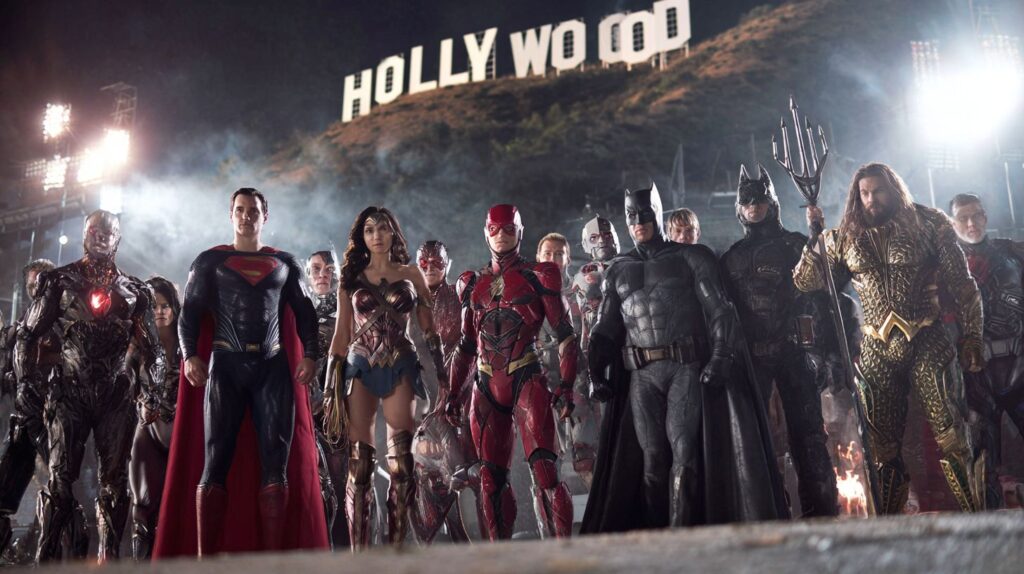
The Cinematic Universe refers to interconnected storytelling across multiple films, most notably the Marvel Cinematic Universe (MCU), where characters and plotlines from one movie influence others. This shared universe model has been key to why superhero films dominate Hollywood, building massive fan loyalty and box office success through expansive narratives.
Why do superhero films dominate Hollywood according to Why Superhero Films Dominate Hollywood: The Rise of the Cinematic Universe?
Superhero films like Spider-Man, Batman, Superman, and Wonder Woman dominate Hollywood due to their high-profit potential, advanced visual effects, and relatable themes of heroism and morality. The rise of the Cinematic Universe, like the MCU, allows for serialized storytelling that keeps audiences hooked across sequels and spin-offs, turning one-off hits into billion-dollar franchises such as avengers endgame.
How did the rise of the Cinematic Universe contribute to why superhero films dominate Hollywood?
The rise of the Cinematic Universe began with Iron Man in 2008, starring Robert Downey Jr., pioneering a model where post-credit scenes teased future films like Thor and Captain America, creating anticipation. This strategy in Why Superhero Films Dominate Hollywood: The Rise of the Cinematic Universe has led to interconnected blockbusters like Guardians of the Galaxy and X-Men that outperform other genres, amassing over $29 billion for Marvel alone.
What role do visual effects play in why superhero films dominate Hollywood: The Rise of the Cinematic Universe?
Visual effects enable the spectacular action and world-building essential to superhero stories, making films like Avengers, Black Panther, and Shang-Chi and the Legend of the Ten Rings visually stunning and immersive. In the context of Why Superhero Films Dominate Hollywood: The Rise of the Cinematic Universe, cutting-edge CGI attracts global audiences, boosting ticket sales and merchandising revenue.
Why has the Marvel Cinematic Universe been central to why superhero films dominate Hollywood?
The Marvel Cinematic Universe revolutionized filmmaking by integrating comics into a cohesive narrative arc, culminating in events like Avengers: Endgame. As explored in Why Superhero Films Dominate Hollywood: The Rise of the Cinematic Universe, this approach has set a benchmark, influencing the DC Extended Universe and others while ensuring consistent quality and cross-promotion.
What are the cultural impacts of why superhero films dominate Hollywood: The Rise of the Cinematic Universe?
Culturally, these films promote themes of diversity, empowerment, and good vs. evil, resonating worldwide amid real-world uncertainties, as seen in films like Blue Beetle. The dominance detailed in Why Superhero Films Dominate Hollywood: The Rise of the Cinematic Universe has shaped pop culture, from avengers endgame memes and guardians galaxy references to merchandise, while sparking debates on originality versus formulaic storytelling in Hollywood, influenced by DC films such as Justice League, Man of Steel, man steel portrayals, and Christopher Nolan’s The Dark Knight.