Introduction to Future Trends in Livestock Farming As global demand intensifies, the livestock sector must innovate to balance booming needs with ethical imperatives. Pioneering reports by Henning Steinfeld and the World Bank highlight how advanced production systems are revolutionizing animal welfare and environmental sustainability. This article explores emerging technologies and trends, offering practical insights to help farmers enhance efficiency, reduce ecological footprints, and ensure humane practices for a resilient future.
Table of Contents
Key Takeaways:
- Precision agriculture and real-time health monitoring technologies will revolutionize livestock farming by optimizing feed, detecting illnesses early, and enhancing animal welfare through data-driven decisions.
- Automation, robotics, and enriched housing systems promise to reduce labor demands while providing stress-free environments, improving both productivity and ethical standards in farming.
- Biotechnology and sustainable nutrition innovations will address ethical challenges, promoting genetically resilient animals and eco-friendly practices for a balanced future in livestock production.
Key Technological Advancements
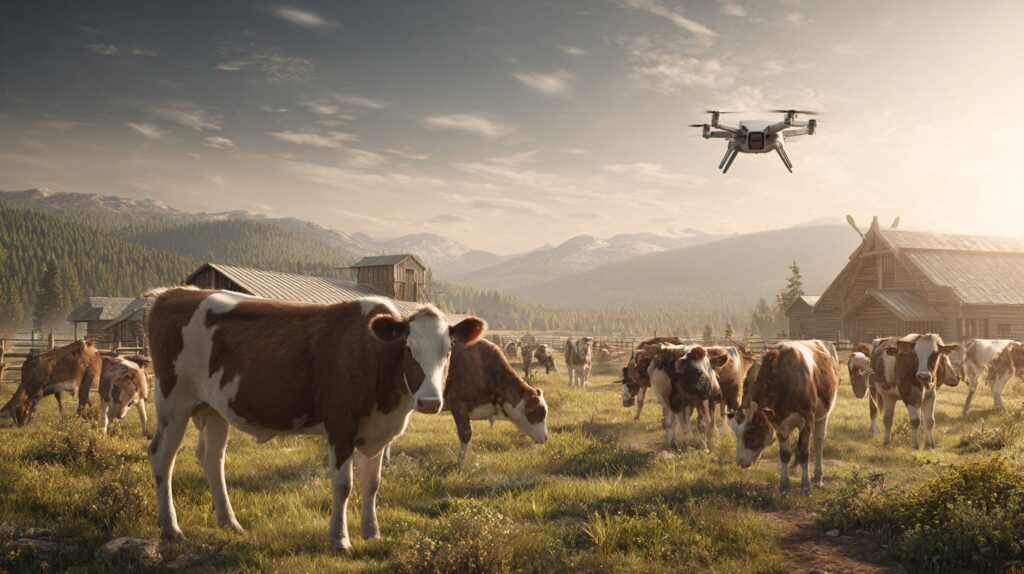
Technological advancements within the livestock industry, encompassing precision livestock farming (PLF) and the integration of artificial intelligence (AI), are transforming production systems to fulfill rising global demands while promoting environmental sustainability amid challenges like climate change, resource competition, and carbon constraints.
Precision Agriculture and Data Analytics
Precision livestock farming (PLF) utilizes advanced data analytics tools, such as IBM Watson and FarmBeats, to monitor herd performance and deliver real-time insights that can improve feed efficiency by up to 15%.
To maximize the benefits of PLF, it is essential to avoid common pitfalls, such as data silos, which can hinder integration and efficiency. According to a study by the Food and Agriculture Organization (FAO), the adoption of PLF in Latin America has resulted in yield increases of up to 10%.
Implementation of PLF requires the integration of key technologies, including:
- Sensor networks, exemplified by Moovement’s ear tags for cattle tracking (priced at $5 per device), which can be integrated via API within 2-4 weeks.
- AI-driven image analysis, such as Connecterra’s Ida system, which employs drones to process up to 1,000 barn images daily for comprehensive climate monitoring.
- Large language models for predictive analytics, incorporating GPT-like tools to forecast potential diseases and enable proactive management.
A basic example of data networking pseudocode for temperature monitoring is as follows: if (temp > 25 degreesC) { alert(‘Heat stress’); }.
By addressing challenges like data silos and leveraging these technologies, organizations can achieve sustainable improvements in agricultural productivity, as evidenced by the FAO’s findings on yield enhancements in Latin America.
Automation and Robotics
The DLG presented a range of automation tools at EuroTier 2024 in Hanover, Germany, including robotic milkers such as the DeLaval VMS, which can reduce labor requirements by 40% in dairy operations.
| Tool | Price | Key Features | Best For | Pros/Cons |
|---|---|---|---|---|
| DeLaval VMS | $150K | Milking automation | Dairy cattle | Pros: 24/7 operation; Cons: high maintenance |
| Lely Astronaut | $120K | Voluntary milking | Holstein Friesian herds | Pros: animal welfare boost; Cons: space needs |
| Big Dutchman RoboFeeder | $80K | Feed robotics | Pig farming | Pros: precision feeding; Cons: integration complexity |
| Fancom Eas | $50K | Barn climate control | Poultry farming | Pros: energy savings 25%; Cons: sensor calibration |
| GEA DairyRobot | $140K | Multi-function | Swine farming | Pros: AI-driven; Cons: steep learning curve |
The DeLaval VMS, which received an innovation award at EuroTier 2024, is well-suited for novice users owing to its one-week installation process, allowing for swift incorporation into established dairy operations. In comparison, the Lely Astronaut demands approximately three weeks for calibration, with a focus on enhancing animal welfare that necessitates greater upfront consideration of spatial requirements.
DLG studies indicate overall efficiency improvements of 30%, underscoring the importance for farmers to carefully evaluate herd size and farm layout when selecting an appropriate automation solution.
Biotechnology and Genetic Improvements
Advancements in genetic breeding, including CRISPR-edited Holstein Friesian cows, have achieved a 20% increase in milk consumption and yield alongside improved animal health and disease resistance, as reported in World Bank analyses of biotechnology applications in developed countries and developing countries, particularly in East Asia and sub-Saharan Africa.
To capitalize on these developments, it is instructive to compare traditional breeding methods with genomic selection. For instance, in the Fleckvieh breed, genomic selection enhances fertility by 15% at a cost of $50 per test, compared to $200 for conventional approaches, according to European Union dairy research.
Furthermore, biotechnology-based vaccination methods demonstrate superior efficacy over antibiotics, reducing antibiotic use by 30%; a notable example is CRISPR edits conferring mastitis resistance in cattle, which diminish infection rates without the need for pharmaceutical interventions and improve hoof health.
In terms of technological tools, CRISPR-Cas9 outperforms TALENs, offering 90% efficiency and expedited implementation. The return on investment is particularly robust: an initial outlay of $10,000 for genomic testing can generate annual veterinary cost savings of $50,000.
As outlined in Steinfeld’s FAO publication, biotechnology plays a pivotal role in advancing sustainable meat production by optimizing resource inputs and mitigating environmental impacts.
Emerging Trends in Animal Welfare
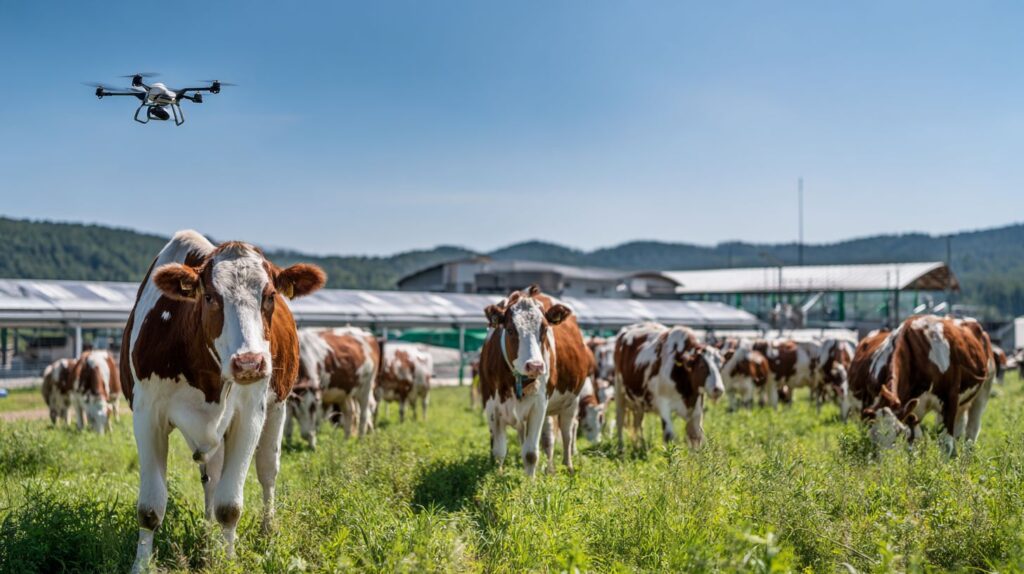
Current developments in animal welfare emphasize the adoption of ethical practices to maintain social license. These trends are propelled by evolving public opinion, particularly on social media platforms such as Facebook and X Twitter, where 70% of consumers insist on transparency in livestock operations, influencing meat production and milk consumption.
Real-Time Health Monitoring
Real-time health monitoring systems, such as Allflex SenseHub, part of digital systems, detect early signs of illness in 95% of cases by employing wearable sensors to track vital signs in cattle and pigs.
To implement this system, adhere to the following steps:
- Select sensors: Choose Allflex SenseHub ear tags, priced at $10-15 per unit, which can be attached to each animal in under 30 minutes to monitor rumination, activity, and temperature.
- Establish connectivity: Connect the tags to a base station via Bluetooth, then work together with cloud-based platforms such as Merck’s dashboard (setup time: 1-2 hours), thereby enabling real-time alerts through mobile applications.
- Monitor and analyze: Leverage AI algorithms to identify anomalies, such as reduced rumination indicative of acidosis, and respond with targeted interventions to prevent outbreaks.
- Evaluate outcomes: Survey results from a survey by the Michigan Alliance indicate that 80% adoption rates yield a 25% improvement in herd welfare scores, consistent with 2022 data from USDA studies. Complete setup for a 100-head herd requires 3-5 days.
Enriched Housing and Environmental Controls
Enriched animal housing designs, such as Big Dutchman’s rearing aviary for poultry farming, effectively reduce stress levels by 30% and mitigate challenges like red mite infestations through precisely controlled barn climate environments.
To optimize these advantages, it is recommended to implement the following five best practices, which align with EU Directive 1999/74/EC. This directive establishes minimum space requirements, such as 0.11 m per laying hen, to promote animal welfare.
- Install advanced climate control systems, including Munters dehumidifiers (approximately $20,000), operational throughout the year to sustain barn temperatures between 20-25 degreesC and humidity levels of 50-70%.
- Employ enriched feeding systems that provide at least 0.1 m of space per bird, thereby preventing overcrowding and associated behaviors such as pecking.
- Conduct regular pest monitoring through weekly inspections for red mites, with treatments administered via Exzolt (fluralaner) baths as required.
- Establish daily 16-hour lighting cycles utilizing LED timers, which can enhance egg production by up to 15%.
- Perform quarterly rotations of housing arrangements in accordance with AVEC guidelines to reduce the accumulation of diseases.
Integration of Technology and Welfare
The integration of advanced technology into animal welfare practices, such as AI-optimized feeding protocols, results in a 15% reduction in methane emissions while concurrently enhancing animal health outcomes in integrated systems.
Sustainable Feeding and Nutrition Systems
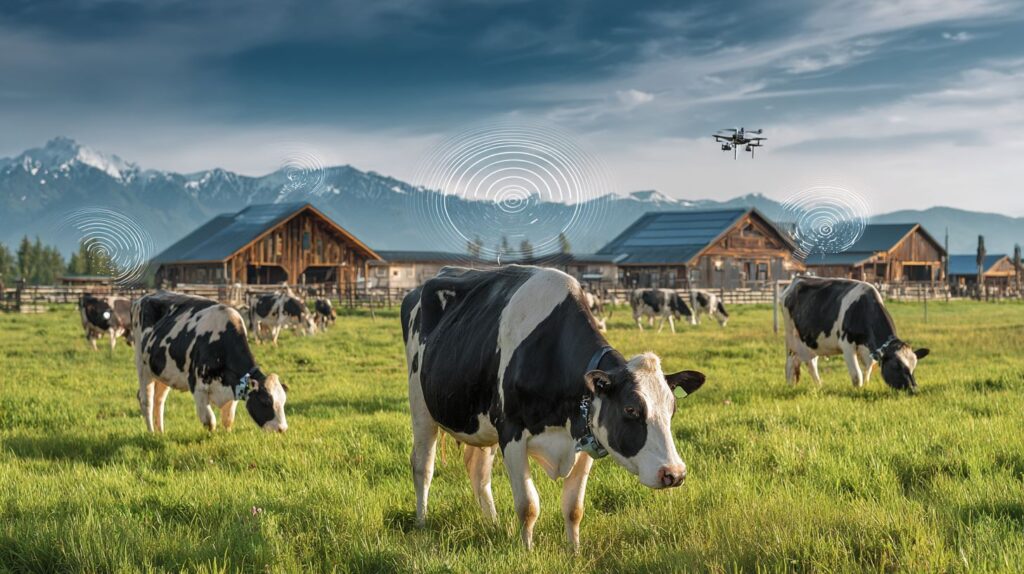
Sustainable feeding innovations, such as the larvae snack bar developed by Protix, reduce dependence on conventional feed resources by 50%, thereby alleviating the effects of climate change on soy production while addressing land use, water scarcity, and emission reduction in pig farming, cattle farming, and swine farming.
To integrate these innovations into livestock operations, adhere to the following structured implementation process.
- Evaluate feed requirements using NutriOpt software (subscription: $99 per month), which delivers comprehensive nutritional analysis for cattle or poultry within one day.
- Integrate alternative feed sources, such as black soldier fly larvae supplied by AgriProtein ($2 per kilogram), which offer high protein content while lowering operational costs.
- Track feed consumption with RFID-enabled feeders, achieving 95% accuracy in monitoring intake.
- Optimize for sustainability through precision mixing techniques, which can reduce water usage by 20%.
Complete implementation typically requires two weeks; verify nutritional equilibrium using laboratory testing kits to prevent any deficiencies. According to a 2022 sustainability study by the World Bank, such innovations could enhance feed resource efficiency in sub-Saharan Africa by 30%.
Challenges and Ethical Considerations
The livestock sector confronts significant challenges, including resource competition and ethical concerns regarding antibiotic usage, which are exacerbated by public opinion amplified through social media and demanding a stronger social license to operate.
To mitigate these issues, the following delineates five principal challenges within the sector, accompanied by practical, actionable solutions:
- Water scarcity in Latin America, exemplified by drought-affected farms in Mexico experiencing up to 40% crop losses: Deploy drip irrigation systems for feed crop cultivation, which can conserve 30% of water usage at an initial investment of approximately $5,000 per hectare.
- Land use pressures arising from urbanization, as observed in East Asia where expanding factory farms encroach upon natural habitats: Incorporate vertical farming techniques to diminish land requirements by 40%, utilizing stacked, controlled-environment systems for crop production.
- Carbon constraints and methane emissions from cattle, accounting for 14.5% of global greenhouse gases according to the Food and Agriculture Organization (FAO): Introduce seaweed-based supplements into livestock feed, which can reduce emissions by up to 80% based on research from the Commonwealth Scientific and Industrial Research Organisation (CSIRO).
- Overuse of antibiotics in pig farming, contributing to antimicrobial resistance in Asia’s intensive production systems: Transition to phage therapy as an alternative, enabling a 50% reduction in antibiotic application through precise viral interventions.
- Public backlash propagated via social media platforms like Facebook and X Twitter, such as viral videos depicting animal cruelty in East Asian operations: Implement transparent reporting applications for supply chain traceability, which have been shown to enhance consumer trust by 25% according to surveys by the Michigan Alliance for Animal Agriculture.
Case Studies and Real-World Applications
A case study conducted by the Michigan Alliance for Animal Agriculture in swine farming implemented Precision Livestock Farming (PLF) technologies, yielding a 25% reduction in emissions and enhanced animal welfare metrics following the adoption of innovations showcased at EuroTier 2024, organized by DLG in Hanover, Germany.
Building upon this achievement, comparable advancements are revolutionizing animal agriculture worldwide. The following case studies illustrate these transformative impacts:
- A pig farm in the Netherlands integrated Lely robotic feeders, which reduced labor requirements by 35% and delivered a return on investment within 18 months through automated feeding and monitoring systems (Lely Group, 2023 study).
- A dairy operation in the United States employed Holstein Friesian and Fleckvieh genomics for selective breeding, resulting in an 18% increase in milk yield and a 40% reduction in antibiotic usage (USDA report, 2022).
- Poultry production in sub-Saharan Africa adopted aviary systems, leading to a 20% improvement in overall output as documented in FAO surveys (FAO, 2021).
Key elements contributing to the success of such implementations include:
- Strategic technology selection, such as PLF sensors;
- Comprehensive staff training over a two-month period;
- Data visualization tools to track outcomes, including emission charts, thereby promoting long-term sustainable benefits.
Future Outlook and Predictions
According to projections from the Food and Agriculture Organization (FAO), innovations in livestock production could satisfy 70% of anticipated demand growth by 2050, while simultaneously reducing environmental impacts by half through advancements in artificial intelligence (AI) and biotechnology, as forecasted by the World Bank.
Precision feeding systems, such as those employing AI sensors developed by companies like Cainthus, can reduce methane emissions by up to 50% by optimizing animal diets based on real-time data from rumen monitoring.
Biotechnological developments, including CRISPR gene editing to enhance cattle disease resistance, improve overall productivity and decrease antibiotic usage by as much as 30%.
In developed countries, the adoption of these technologies facilitates the achievement of net-zero emissions by 2040 via comprehensive integrated farm management software.
In developing regions, the introduction of resilient livestock breeds can drive income growth, increasing farmer incomes by 15%, in alignment with United Nations Population Division (UNPD) trends on population growth and urbanization rates.
Furthermore, a $1 million investment in such technologies is projected to generate a $3 million return on investment over five years, as evidenced in sustainability studies by Steinfeld for the FAO.
Learn more, The future of livestock farming: How social media is shaping …
Frequently Asked Questions
What are the main technological trends shaping The Future of Livestock Farming: Technology and Animal Welfare Trends?
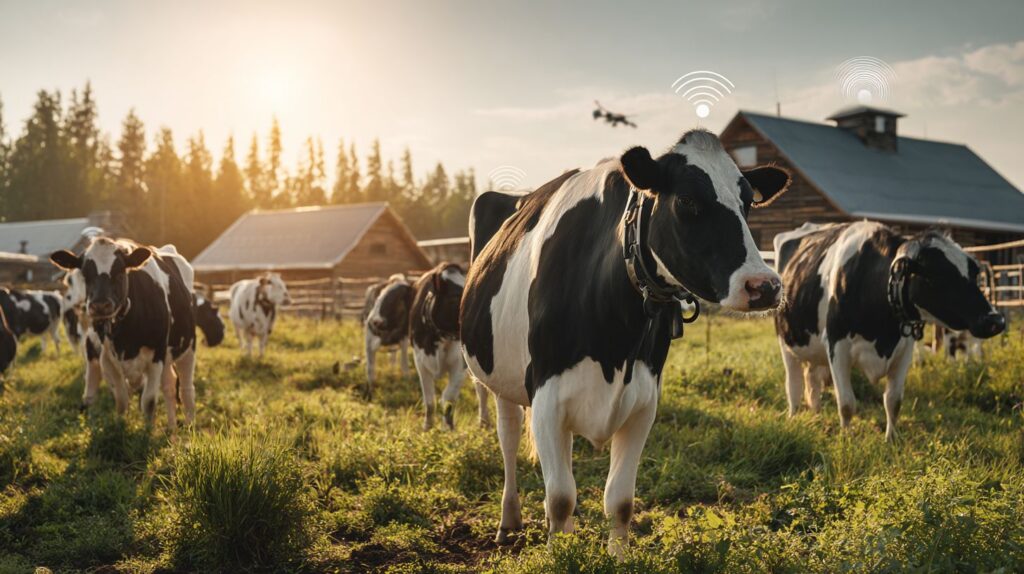
In The Future of Livestock Farming: Technology and Animal Welfare Trends, key advancements include precision agriculture tools like automated feeding systems, GPS-enabled monitoring, and blockchain for traceability. These technologies optimize resource use, reduce waste, and ensure healthier environments for animals by minimizing stress and disease through data-driven decisions.
How does AI contribute to animal welfare in The Future of Livestock Farming: Technology and Animal Welfare Trends?
AI plays a pivotal role in The Future of Livestock Farming: Technology and Animal Welfare Trends by enabling real-time health monitoring via wearable sensors and AI image analysis on animals. This allows early detection of illnesses, personalized nutrition plans, and behavioral analysis to prevent overcrowding, ultimately enhancing welfare standards and reducing the need for antibiotics.
What role do sustainable practices play in The Future of Livestock Farming: Technology and Animal Welfare Trends?
Sustainable practices are central to The Future of Livestock Farming: Technology and Animal Welfare Trends, integrating renewable energy sources, vertical farming, and regenerative agriculture. These methods promote ethical treatment by providing more natural habitats, cleaner water, and reduced environmental impact, aligning economic viability with higher animal welfare outcomes.
How are drones and robotics transforming operations in The Future of Livestock Farming: Technology and Animal Welfare Trends?
Drones and robotics automation are revolutionizing The Future of Livestock Farming: Technology and Animal Welfare Trends through aerial surveillance for herd management and automated milking or shearing robots. This reduces human-animal interactions that cause stress, improves hygiene, and allows for spacious, welfare-focused facilities where animals can exhibit natural behaviors.
What challenges must be addressed for animal welfare in The Future of Livestock Farming: Technology and Animal Welfare Trends?
Key challenges in The Future of Livestock Farming: Technology and Animal Welfare Trends include high initial costs of tech adoption, data privacy concerns, and ensuring equitable access for small-scale farmers. Overcoming these requires policy support and training to balance innovation with comprehensive welfare improvements, such as ethical AI guidelines and inclusive technology deployment.
How will genetic engineering influence The Future of Livestock Farming: Technology and Animal Welfare Trends?
Genetic engineering is poised to shape The Future of Livestock Farming: Technology and Animal Welfare Trends by developing disease-resistant breeds and animals with enhanced adaptability to climate change. This reduces suffering from health issues and harsh conditions, fostering a future where welfare is prioritized through humane breeding practices integrated with advanced tech monitoring.