Dreaming of turning your passion for animals into a profitable cattle farm? Starting a livestock business demands strategic insight to thrive amid challenges like market fluctuations and regulations. This guide equips beginners with essential tips on developing a robust business plan, optimizing livestock management, prioritizing herd health, and enhancing farm operations. Drawing from USDA standards and innovative tools like Cattlytics, you’ll discover proven steps to launch and scale successfully.
Table of Contents
Key Takeaways:
- Conduct thorough market research by assessing local demand and competitors to identify profitable livestock opportunities tailored to your area.
- Choose beginner-friendly livestock like chickens or goats, considering factors such as climate, available space, and your resources before developing a detailed business plan.
- Secure necessary permits, zoning approvals, and insurance while budgeting for farm infrastructure and startup finances to ensure legal compliance and sustainability.
Understanding the Livestock Business Basics

The livestock industry, particularly Cattle Farm ing, contributes over $80 billion annually to the U.S. economy, as reported by the United States Department of Agriculture ( USDA). This sector includes Beef Cattle production and Dairy Farming operations, with a primary emphasis on maintaining Herd Health and providing consistent daily care.
To achieve success, individuals new to the field should adhere to the following essential steps:
- Establish clear management responsibilities: Utilize applications such as Cattlytics to monitor feeding schedules and breeding cycles, allocating approximately two hours daily to ensure nutritional balance and minimize waste.
- Conduct comprehensive operational needs oversight: Employ digital tools like FarmLogs to track productivity increase metrics, potentially yielding up to 20% improvements in efficiency, as evidenced by the USDA‘s 2023 Livestock Report, which highlights increasing trends in beef consumption.
- Prioritize herd health management: Maintain detailed health records and vaccination history using platforms such as Herdwatch to reduce disease risks by up to 30%, including parasite control.
Initial implementation of these practices typically requires a significant time commitment of 10 to 15 hours per week. It is advisable to avoid prevalent beginner mistakes, such as inadequate record-keeping, which can result in regulatory compliance violations and financial losses. Using cattle management software can aid in decision-making.
Conducting Market Research
Conducting effective market research is essential for cattle farm s, as it facilitates the identification of key demand patterns and target markets, such as the 25% increase in beef consumption reported by the United States Department of Agriculture ( USDA) from 2020 to 2023.
Assessing Local Demand
- Begin by analyzing local beef consumption patterns utilizing USDA data from the United States Department of Agriculture’s ( USDA) National Agricultural Statistics Service. This resource highlights regional regulations disparities, such as an annual per capita consumption of 65 pounds in Texas compared to 55 pounds in Kansas.
- Subsequently, administer a targeted survey involving 50 to 100 prospective buyers. This can be conducted at farmers’ markets or through online platforms such as Google Forms to assess preferences. The process typically requires 1 to 2 days and incurs no cost.
- Employ Google Trends to monitor fluctuations in searches for “grass-fed beef,” with the objective of projecting a 10-15% increase in demand. Such projections should be informed by recent USDA reports.
- Refer to studies from Cooperative Extension services affiliated with land-grant universities, including Kansas State University’s 2022 analysis, which demonstrates that climate factors contribute to approximately 20% variability in yield outcomes.
The entire process is estimated to take 5 to 7 days.
To mitigate potential risks, cross-reference all findings with applicable state agricultural regulations to ensure full compliance.
This methodical, data-driven methodology enables precise refinement of market forecasts.
Identifying Competitors
To effectively map competitors, visit Local Auctions in regions such as Nebraska, where more than 200 cattle sales take place annually. This approach allows for benchmarking pricing against potential direct sales strategies and other sales channels.
Observe the following four key competitor types:
- Small beef cattle operations that rely on auctions, achieving an average price of $1.50 per pound ( USDA, 2023);
- Mid-size dairy farming farms utilizing online platforms like FarmFlip, which yield 10-15% higher margins;
- Large feedlot herds secured through direct contracts at $1.80 per pound;
- Niche grass-fed sellers on marketplaces such as Craigslist, commanding premiums of up to $2.20 per pound.
To proceed actionably:
- Record observed prices using a spreadsheet application such as Microsoft Excel, documenting relevant factors including breed and weight.
- Subsequently, apply the SWOT analysis template from the University of Nebraska Cooperative Extension to identify market gaps. Emphasize disease-free certifications to substantiate premiums for direct sales, thereby mitigating the volatility associated with auctions.
Choosing Your Livestock Type
Choosing the appropriate livestock cattle breeds, such as Angus for beef cattle production or Holsteins for dairy farming operations, can enhance productivity by 20-30%, contingent upon the breed’s suitability to the specific agricultural objectives. Consider artificial insemination for better genetics.
Popular Options for Beginners

For novice farmers, the Angus and Hereford beef cattle breeds represent suitable initial choices. According to USDA records, Angus achieves 15% higher weaning weights, typically ranging from 600 to 700 pounds.
| Breed | Startup Costs | Yield Metrics | Best For | Pros/Cons |
|---|---|---|---|---|
| Angus | $1,200/head | 1,200 lbs beef | Beginners | Pros: Disease-resistant; Cons: Higher feed needs |
| Hereford | $1,000/head | 1,100 lbs beef | Low-maintenance | Pros: Hardy in rough terrain; Cons: Slower growth |
| Charolais | $1,500/head | 1,400 lbs beef | High yield | Pros: Fast growth; Cons: Larger size requires more space |
| Simmental | $1,300/head | 1,300 lbs beef | Dual-purpose | Pros: Good milk/beef; Cons: Prone to calving issues |
The Angus breed is particularly well-suited for operations requiring minimal time investment, outperforming Hereford in part-time farming scenarios. Its superior feed conversion efficiency reduces the frequency of daily inspections, with USDA studies demonstrating a 20% decrease in overall labor demands and cost saving.
The Hereford breed demonstrates strong performance in extensive grazing systems, though it necessitates more rigorous health monitoring.
Novice farmers often fail to maintain comprehensive health records, which can lead to substantial veterinary costs. It is imperative to verify vaccination protocols through state agricultural extension services to mitigate the risk of expensive disease outbreaks.
Factors Like Climate and Space
Evaluate climate and space requirements by initiating a land assessment in regions such as Texas, which features arid conditions requiring 2-5 acres per cow, in comparison to Nebraska‘s temperate zones, which necessitate 1-2 acres per cow. Include fencing needs and shelter placement in your planning.
Adhere to the following best practices for conducting a comprehensive pre-purchase assessment, ideally completed within one month to synchronize with seasonal planning.
- Conduct soil quality testing through USDA NRCS laboratories ($20 per sample), targeting a pH range of 6.0-7.0 to optimize pasture management growth, as arid soils in Texas often require lime amendments.
- Assess water availability using USGS data tools, ensuring a supply of 10-15 gallons per cow daily- Nebraska‘s river systems provide reliable sources, unlike the droughts experienced in Texas.
- Plan space requirements for a 50-head herd (minimum 20-50 acres), incorporating Pasture Rotation strategies.
A 2022 Kansas State University study indicates that Kansas farms implementing these methods achieved 25% cost saving through efficient land placement, resulting in a 30% increase in forage yield. Consult Cooperative Extension for guidance.
Developing a Business Plan
A comprehensive Business Plan for a cattle farm operation delineates initial startup costs ranging from $50,000 to $200,000 and anticipates annual revenue between $20,000 and $100,000, contingent upon the size of the herd. Include income projections and financial planning.
The development of such a plan entails the following structured procedures: Focus on farm finances, infrastructure setup, and traceability records. For funding, consider Farm Credit. Engage a Certified Public Accountant for financial planning and an Insurance Agent for coverage. Maintain veterinary records and ensure disease-free cattle through rigorous health monitoring. Implement Artificial Insemination for breeding, and prioritize Pasture Management alongside Pasture Rotation. Track vaccination history and health records using cattle breeds-specific software. Explore breeding cycles, parasite control, and fencing needs for shelter placement. Avoid beginner mistakes in decision-making for sustainable growth.
Obtain complimentary templates from Farm Credit Services (available at farmcredit.com), which typically requires 4 to 6 hours for initial configuration.These templates address key areas including operations, risk management, and marketing strategies specifically designed for livestock enterprises.
Conduct financial projections utilizing Microsoft Excel (at no cost) or QuickBooks (subscription fee of $25 per month).Incorporate essential expenses, such as feed costs amounting to $5,000 annually for a 50-head herd, and estimate a return on investment of 10 to 15 percent from beef sales.Ensure precision by referencing United States Department of Agriculture (USDA) market data.
Establish quantifiable objectives, for instance, expanding the herd to 100 head within three years through incremental acquisitions.Mitigate potential errors, such as overly optimistic revenue projections, by aligning with the Small Business Administration’s (SBA) resources for beginning farmers and ranchers (accessible at sba.gov).These guidelines indicate a 20 to 30 percent decrease in operational failure rates for meticulously planned ventures.
The aggregate time investment required to formulate a thorough business plan is estimated at 20 to 30 hours.
Navigating Legal Requirements
It is imperative for cattle farms to adhere to regional regulations, as non-compliance can result in fines of up to $10,000 per enforcement case imposed by the USDA.
Permits and Zoning Laws
To establish a compliant cattle operation in Kansas, it is essential to secure the requisite permits, including livestock zoning approvals. State regulations stipulate a minimum of 5-10 acres for such operations.
Compliance begins with contacting the local county zoning office, as mandated by the Kansas Department of Agriculture. This initial step requires a comprehensive site assessment to evaluate soil runoff and water access.
Subsequently, submit an application for a USDA Animal and Plant Health Inspection Service (APHIS) permit through their online ePermits portal. Processing typically requires 2-4 weeks and facilitates traceability records essential for disease control.
For operations involving herds exceeding 50 head, an environmental impact statement must be prepared, consistent with analogous provisions in Nebraska under NE Rev Stat 81-2,285.
Adhering to the following checklist is critical to mitigate risks, such as the $5,000 fines imposed on Texas farms for unauthorized expansions, as reported by the Texas Animal Health Commission:
- Conduct a site assessment: Ensure fencing complies with Kansas fence law (KS Stat Ann 29-301) and that drainage systems meet regulatory standards.
- Submit the zoning application: Provide plat maps and notifications to neighboring properties; associated fees generally range from $100 to $500.
- File USDA documentation: Register a premises identification number at no cost via the USDA’s Animal Disease Traceability website.
- Engage Cooperative Extension services: Kansas State University provides complimentary workshops on regulatory compliance. Initiating the process early can prevent delays of 6-12 months, thereby facilitating a seamless operational launch.
Insurance Essentials

Essential insurance coverage for cattle farms typically includes liability protection and livestock mortality insurance. Policies offered by providers such as Farm Bureau commence at approximately $1,500 annually for herds of 50 head.
According to United States Department of Agriculture (USDA) data, these policies can mitigate financial losses by 40-60% in the event of disease outbreaks affecting herd health.
Key benefits encompass the following:
- Liability coverage for accidents, with a recommended minimum limit of $500,000 to safeguard against claims arising from third-party injuries.
- Livestock mortality insurance addressing perils such as theft or illness, generally providing reimbursement for 75-90% of the market value per animal.
- Optional endorsements for equipment and property damage coverage.
To evaluate return on investment (ROI), consider that an annual premium of $2,000 could potentially offset up to $20,000 in claim payouts.
For example, a dairy farm in Nebraska successfully recovered $15,000 following storm-related damages through its policy.
It is advisable to consult with an insurance agent to evaluate herd size and associated risks, thereby tailoring coverage to specific operational needs.
Setting Up Your Farm Infrastructure
The infrastructure for establishing a cattle farm encompasses essential fencing requirements, such as high-tensile wire priced at $1.50 per foot, along with strategic shelter placement to facilitate effective pasture rotation.
To implement these components efficiently, the following steps are recommended:
- Initiate the process with a 5-strand electric fencing system, which can enclose 10 acres at an approximate cost of $5,000 and requires 1 to 2 weeks for installation. This setup effectively prevents cattle escapes while enabling rotational grazing practices.
- Subsequently, site shelters, such as pole barns providing 100 square feet per cow, in areas susceptible to wind, like those in Kansas, to ensure adequate shade and protection from environmental elements.
- For pasture rotation, subdivide fields into four paddocks utilizing the complimentary John Deere Operations Center GPS application. Relocate the herd every seven days to enhance soil health and promote grass regrowth, in accordance with the Natural Resources Conservation Service (NRCS) guidelines for sustainable grazing management.
Managing Startup Finances
To effectively manage the finances of a cattle farming startup, allocate a budget of $10,000 to $50,000 for the initial herd, obtained at local auctions and financed through loans from Farm Credit. Implement cattle management software such as Cattlytics, priced at $99 per year, to ensure precise tracking and oversight.
Key challenges in initiating a cattle farming operation can be systematically addressed through targeted strategies, as follows:
- High startup costs: Pursue grants from the USDA’s Beginning Farmer and Rancher Development Program, which can yield savings of up to 20% on equipment acquisitions.
- Cash flow management: Utilize Cattlytics for real-time financial monitoring, a practice that, based on Iowa State University research, can improve productivity by 15%.
- Limited expertise: Enroll in complimentary courses provided by the Extension Service of land-grant universities to build foundational knowledge, including techniques like artificial insemination.
- Inventory management: Deploy RFID tags integrated with Cattlytics to decrease losses by 10%.
The integration of digital tools such as these typically results in overall cost reductions of 25% over a two-year period, supporting scalable operations. It is recommended to engage a Certified Public Accountant for guidance on eligible tax deductions under IRS Section 179.
A case study from a Texas Angus farm illustrates the scalability of such approaches, projecting an annual income of $75,000 by the third year of operation.
Checkout, How to Start a Profitable Cattle Farm – A Beginner’s Guide.
Frequently Asked Questions
What are the first steps in how to start a livestock business: essential tips for beginners?
The initial steps in how to start a livestock business: essential tips for beginners include conducting thorough market research to identify demand for specific livestock like cattle or poultry, assessing your available resources such as land and capital, and creating a detailed business plan that outlines your goals, budget, and timeline. Beginners should also consult local agricultural experts to understand regional opportunities.
How do I choose the right type of livestock when learning how to start a livestock business: essential tips for beginners?
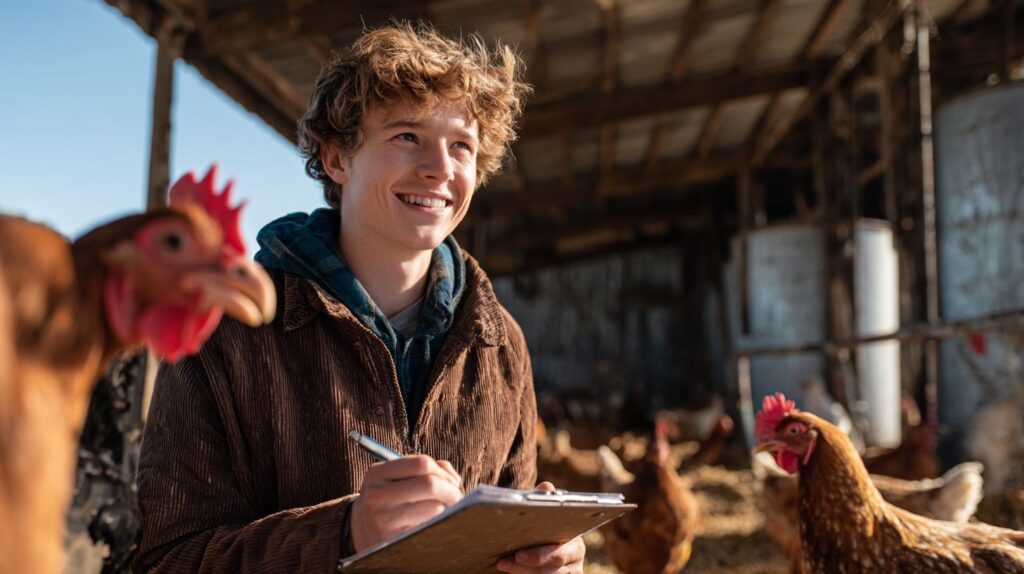
Choosing the right type of livestock in how to start a livestock business: essential tips for beginners depends on your climate, market needs, and expertise level. Start with hardy options like chickens or goats if you’re new, as they require less space and investment. For Beef Cattle or Dairy Farming, research breeds like Angus and Hereford that thrive locally and align with your goals, such as meat production or dairy, to ensure profitability and sustainability.
What legal requirements should beginners know for how to start a livestock business: essential tips for beginners?
Key legal requirements in how to start a livestock business: essential tips for beginners involve obtaining necessary permits, such as zoning approvals for your land, business licenses, and health certifications for animals. Comply with animal welfare regulations and environmental laws to avoid fines. Consulting a local attorney or agricultural extension service early on is crucial to navigate these hurdles smoothly.
How much capital is needed to begin how to start a livestock business: essential tips for beginners?
Capital needs for how to start a livestock business: essential tips for beginners can range from $5,000 to $50,000 depending on scale and livestock type. Factor in costs for purchasing animals, fencing, feed, and equipment. Beginners should start small to minimize risk, seek grants or loans from agricultural programs, and build a budget that includes ongoing expenses like veterinary care.
What are the best practices for animal care in how to start a livestock business: essential tips for beginners?
Best practices for animal care when following how to start a livestock business: essential tips for Beginning Farmer emphasize providing clean water, balanced nutrition, and regular Herd Health check-ups to prevent diseases, as per USDA data. Ensure adequate shelter from weather extremes and monitor for signs of illness in your Cattle Farm. Beginners can benefit from joining Cooperative Extension for advice on vaccination schedules and sustainable feeding strategies like Pasture Rotation.
How can Beginning Farmer market their products in how to start a livestock business: essential tips for beginners?
Marketing products effectively in how to start a livestock business: essential tips for Beginning Farmer involves building relationships with local buyers like restaurants or markets through Local Auctions, using social media to showcase your Beef Cattle or Dairy Farming operations, and obtaining USDA certifications for organic or humane practices to attract premium prices. Start by attending farmers’ markets to gain visibility and feedback, gradually expanding to online sales platforms for broader reach. Develop a solid Business Plan and consult a Certified Public Accountant and Insurance Agent for financial advice. For breeds like Angus and Hereford, consider Artificial Insemination techniques. In states like Texas, Nebraska, and Kansas, leverage Farm Credit options and tools like Cattlytics for management.