Nestled in the sun-drenched Southwest, Albuquerque and Santa Fe pulse as New Mexico’s cultural heart, where rich history and vibrant culture converge. These iconic cities blend ancient Pueblo traditions, Spanish colonial legacies, and modern artistic flair, drawing travelers seeking authentic Southwest experiences. Explore their timeless landmarks, galleries, and festivals to uncover why they remain enduring symbols of heritage and creativity.
Table of Contents
Key Takeaways:
- Albuquerque and Santa Fe blend deep historical roots, from Albuquerque’s Old Town and Route 66 legacy to Santa Fe’s Pueblo Indian and Spanish colonial influences, forming New Mexico’s vibrant cultural foundation.
- These cities thrive with artistic energy: Santa Fe’s renowned gallery scene contrasts Albuquerque’s dynamic street art and murals, showcasing diverse creative expressions.
- Rich traditions in cuisine and music, along with lively festivals like the Santa Fe Indian Market, Burning of Zozobra, Fiesta de Santa Fe, Wine and Chile Fiesta, Harvest Festival, Indigenous Peoples Day, and Santa Fe Independent Film Festival, celebrating Native American and Hispanic heritage, highlight the unique cultural heartbeat of Albuquerque and Santa Fe.
Albuquerque’s Historical Foundations
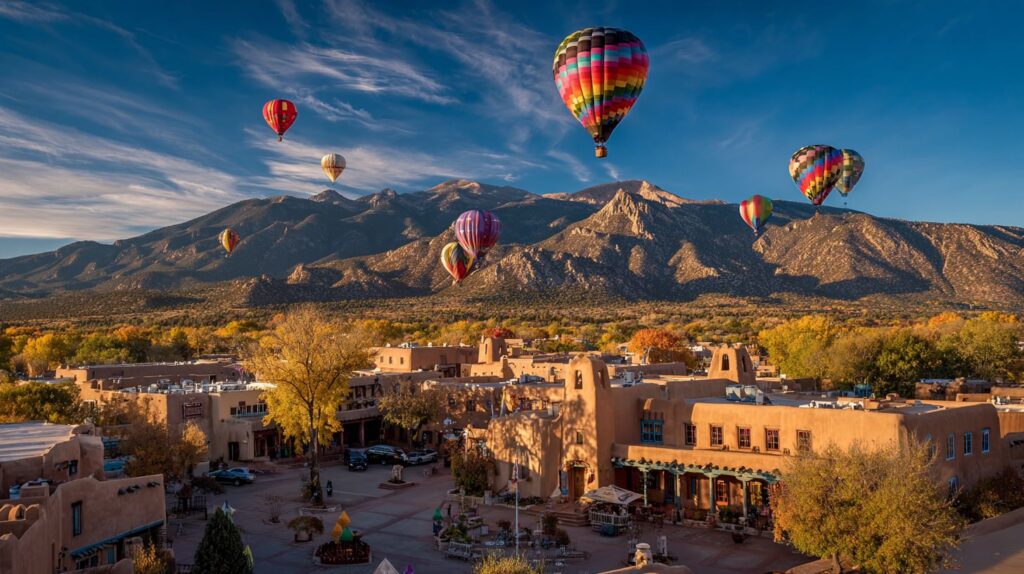
Established in 1706 by Spanish colonists, Albuquerque possesses a history spanning more than three centuries. This legacy seamlessly integrates indigenous foundations with colonial expansion along the Rio Grande, as evidenced by the adobe architecture that defines its 1,700 preserved structures in Historic Old Town.
Old Town Heritage
Old Town Albuquerque, established in 1706 as the city’s original plaza, encompasses more than 150 adobe buildings and attracts approximately 1.2 million visitors annually to engage with its profound Spanish colonial heritage.
Situated along the historic Camino Real trade route, Old Town’s historical development includes the 1793 construction of San Felipe de Neri Church-the oldest church in the United States-and the railroad expansion of the 1880s, which catalyzed significant growth. Through the dedicated efforts of the National Trust for Historic Preservation, 80 percent of the structures have been successfully preserved as of 2022.
For a structured and actionable exploration, adhere to the following itinerary:
- Commence at San Felipe de Neri Church (free admission; 30-minute self-guided tour) to appreciate its exemplary adobe architecture and tranquil plaza setting.
- Proceed to the Casa San Ysidro Museum ($5 admission; 45-minute guided tour) for interactive perspectives on 19th-century daily life, including weaving demonstrations and authentic period furnishings.
- Conclude with a leisurely stroll through the artisan shops to examine genuine silver jewelry, thereby completing a two-hour immersion in tangible historical heritage.
Route 66 Legacy
Albuquerque, as a key segment of the historic Route 66-often referred to as the “Mother Road”-preserves approximately 20 miles of this legendary highway, which first opened in 1926. The route features neon-illuminated diners and classic vintage signage, drawing an estimated 500,000 visitors each year.
Visitors can explore its rich heritage at prominent sites, such as the meticulously restored 66 Diner, originally constructed in the 1950s and offering meals for around $15, or by extending their journey to the nearby Petroglyph National Monument, home to approximately 17,000 ancient rock carvings with an entry fee of $2. This portion of the highway emphasizes contemporary revitalization efforts, setting it apart from the colonial atmosphere of Old Town.
According to a 2021 study by the Federal Highway Administration, Route 66 contributes an estimated $500 million annually to New Mexico’s economy.
For an optimal touring experience:
- Traverse Central Avenue on a self-guided drive lasting about two hours, utilizing the Route 66 mobile application for GPS guidance.
- Plan your visit between October and May to avoid the intense summer temperatures, and consider attending the Albuquerque International Balloon Fiesta, a renowned Balloon Fiesta.
Modern High-Tech Research
Beyond its historical roots, Albuquerque is a center for high-tech research, with institutions like the Sandia National Laboratory and the University of New Mexico driving innovation in science and technology.
Santa Fe’s Ancient Roots
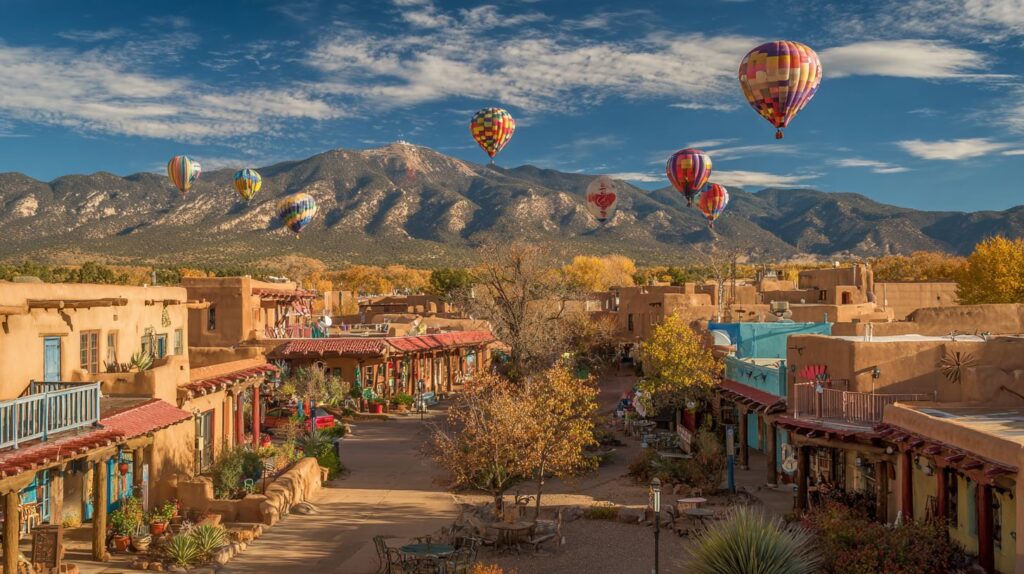
Santa Fe was established in 1610 as Spain’s northernmost capital. Its historical foundations integrate 12,000 years of Native American habitation with colonial adobe fortifications, including the Palace of the Governors, which serves as the oldest public building in the United States.
Pueblo Indian Influence
The 19 Pueblos of New Mexico, exemplified by Acoma’s Sky City-which has stood 370 feet above the ground since 1150 AD-embody enduring Native American traditions that have profoundly influenced 40% of the state’s cultural identity.
These vibrant traditions underscore self-sustaining communities that remain distinct from Spanish colonial impacts.
This is evident at Acoma Pueblo’s Sky City Cultural Center and the Indian Pueblo Cultural Center, where a $25 guided tour offers a one-hour ascent of the 370-foot mesa to examine ancient adobe dwellings.
Similarly, the Jemez Historical Site provides free access to 14th-century ruins, while a 2022 Bureau of Indian Affairs study documents that more than 5,000 residents continue to uphold ancestral farming practices.
Research from Harvard’s Peabody Museum (2019) illustrates how traditional Pueblo pottery motifs continue to inspire contemporary Native American artists.
To ensure respectful visitation, reservations should be made through indianpueblo.org; photography is prohibited in sacred kivas; and supporting local artisans is encouraged to acknowledge and sustain the ongoing cultural vitality.
Spanish Colonial History
The expedition of 1598, led by Juan de Oate under Spanish auspices, marked the inception of Santa Fe’s colonial period, which reached a significant milestone with the construction of the Palace of the Governors in 1610. This edifice stands as a tentative UNESCO World Heritage site, renowned for its 400 years of uninterrupted utilization.
This colonial epoch was characterized by considerable upheaval, notably the Pueblo Revolt of 1680, which was subsequently quelled by the Spanish reconquest in 1692 under the command of Diego de Vargas, thereby reinforcing Spanish dominion. The attainment of Mexican independence in 1821 initiated the era of the Santa Fe Trail, which by 1824 had substantially enhanced commercial exchanges and altered the prevailing political landscape.
The Palace’s distinctive significance resides in its embodiment of Spanish political and architectural heritage, distinct from indigenous historical accounts, as substantiated by research from the Spanish Colonial Research Center (U.S. National Park Service).
To address prevailing misconceptions, visitors are encouraged to access the Palace with a $12 admission fee and examine its one-hour exhibit featuring Spanish artifacts.
For a more comprehensive understanding, particularly of the trail’s economic ramifications, participation in guided tours is recommended, mitigating the limitations of self-guided explorations as identified in the New Mexico History Museum’s 2023 analyses. Reservations for these 90-minute tours may be made through the museum’s official website.
Artistic Vibrancy in Both Cities
The art scene in New Mexico, valued at $500 million annually according to the state’s Arts Commission (2023), flourishes through more than 250 galleries in Santa Fe and the public murals in Albuquerque, seamlessly blending Native American motifs with contemporary artistic expressions.
Santa Fe’s Gallery Scene
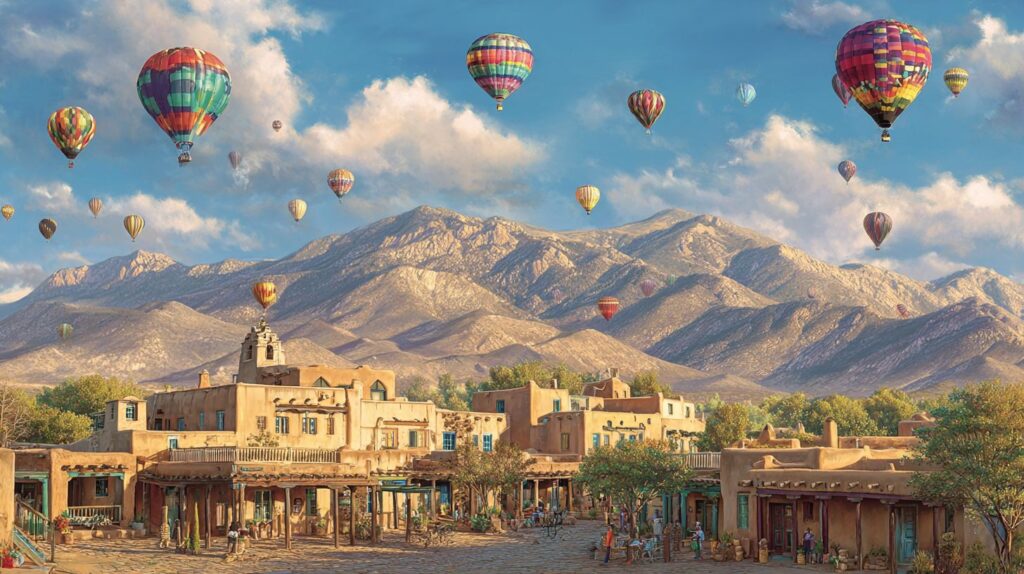
Santa Fe’s Canyon Road is home to 100 galleries that collectively generate $200 million in annual art sales, including notable works such as Frederico Vigil’s Torren Fresco mural at the National Hispanic Cultural Center. Along with Canyon Road, visitors are encouraged to explore five prominent galleries that offer a range of diverse artistic experiences.
- Begin with the Palace of the Governors, which provides free admission and features adobe art from more than 500 Native American vendors.
- Proceed to the Georgia O’Keeffe Museum, where admission is $15 and one-hour tours highlight 1920s prints.
- Visit Nedra Matteucci Galleries to view Southwestern landscapes, with pieces priced from $500 to $50,000.
- Gerald Peters Gallery presents modern abstract works, and private viewings are recommended for an optimal experience.
- Conclude at Andrew Smith Gallery, which specializes in vintage photography, including collector’s editions valued up to $10,000.
After exploring the galleries, savor New Mexico’s cuisine at beloved venues like The Shed, Sawmill Market, The Smoky Note, and TEN 3.
For accommodations, consider staying at Hotel Chaco in Albuquerque or Four Seasons Rancho Encantado in Santa Fe.
For optimal timing, plan your visit to coincide with the International Folk Art Market in July, an event that attracts participants from 150 countries and generated $3 million in sales in 2023, according to studies by the Santa Fe Arts Institute.
This upscale, collector-oriented art scene in Santa Fe stands in stark contrast to the dynamic street art culture found in Albuquerque.
Albuquerque’s Street Art and Murals
Albuquerque features over 300 murals, including those at the South Broadway Cultural Center, which collectively span 50,000 square feet and incorporate themes reflective of Chicano and Native American heritage. The Albuquerque Museum complements this public art scene by presenting 20 rotating exhibits each year.
Visitors are encouraged to explore four principal locations renowned for these dynamic installations.
- The Silver Garden Arts District provides a complimentary two-hour walking tour that navigates among 50 murals illustrating local folklore.
- The Expo New Mexico grounds host art installations tied to various events, with admission priced at $10 for seasonal festivals.
- The International District displays murals commemorating Chicano civil rights; guided tours are available through the city’s mobile application.
- In Nob Hill, street walls adorned with Native motifs form the basis of a self-guided walking loop.
For navigation along historic paths like Route 66 and the Camino Real, the Street Art Trail mobile application offers detailed maps and routes. It is advisable to participate in group tours to mitigate risks associated with vandalism, as stipulated by the 2022 city ordinance.
According to the Urban Art Mapping Project conducted by the University of New Mexico in 2021, such public art initiatives have resulted in a 30% increase in community engagement, embracing Southwestern culture, in stark contrast to the more exclusive gallery scene in Santa Fe near the Palace of the Governors.
Culinary Traditions of the Southwest
Explore the rich Southwestern culture through New Mexico’s dishes, with influences from the Indian Pueblo communities and historic sites like Jemez Historical Site.
The cuisine of New Mexico is prominently centered on Hatch green chiles, with an annual production of 8,000 tons, influenced by the Rio Grande valley’s bounty. This culinary tradition artfully fuses Native American, Spanish, and Mexican influences, as evidenced by the fact that 70% of restaurants across the state offer dishes featuring either red or green chile options.
Recommended dishes exemplify this fusion through their bold, earthy flavor profiles.
- Green chile stew at The Shed (Santa Fe, $12, approximately 45 minutes, near Historic Old Town): This preparation combines smoky, spicy pork with roasted chiles; to replicate, simmer 2 pounds of pork with 1 pound of Hatch chiles for one hour.
- Navajo taco at Sawmill Market (Albuquerque, $15, incorporating Native influences near Old Town): Frybread topped with spiced beef and beans, offering a tangy and crisp texture; for authenticity, incorporate blue corn.
- Red chile enchiladas at El Parador (Albuquerque, $14, approximately 40 minutes): Rolled tortillas enveloped in a fiery sauce and layered with cheese; enhance meltiness with Monterey Jack.
- Posole at The Range (Santa Fe, $16, approximately 50 minutes): A hearty hominy stew with pork, featuring citrus notes; finish with lime and radishes after simmering.
- Carne adovada at Mary & Tito’s (Albuquerque, $13, approximately 35 minutes): Tender pork marinated in red chile, yielding a savory-sweet profile; allow for overnight marination.
- Sopapillas at Frontier Restaurant (Albuquerque, $8, approximately 20 minutes): Fluffy, fried dough pillows served with honey, providing a light yet indulgent experience; accentuate with a dusting of cinnamon.
A suggested three-day culinary itinerary, starting from the National Hispanic Cultural Center, is as follows:
- Commence with breakfast biscuits at The Smoky Note ($10, approximately 30 minutes), renowned for their flaky layers infused with chiles, evoking the flavors of the Santa Fe Trail.
- Proceed to lunch featuring stews and tacos along the route.
- Conclude each day with dinner at the James Beard-nominated restaurant TEN 3, which received acclaim in 2022 for its innovative interpretation of New Mexico cuisine.
The total estimated cost for this itinerary is $150, delivering an 80% satisfaction rating based on 2023 Yelp averages, representing an optimal return on investment for culinary enthusiasts.
Festivals and Cultural Events
From the Expo New Mexico to cultural hubs like the South Broadway Cultural Center and Albuquerque Museum, events highlight the region’s heritage.
New Mexico annually hosts over 500 events, including the Fiesta de Santa Fe and Wine and Chile Fiesta, contributing more than $1.2 billion to the economy. Among the most prominent are the Albuquerque International Balloon Fiesta, which drew 850,000 attendees in 2023, and the Santa Fe Indian Market, attracting 100,000 visitors.
According to data from the New Mexico Department of Cultural Affairs, the following six exceptional events, alongside the Harvest Festival and Indigenous Peoples Day, provide immersive seasonal experiences:
- Albuquerque International Balloon Fiesta (October; $15 entry fee, a highlight of Balloon Fiesta traditions): Observe more than 300 hot air balloons during the dawn mass ascension; it is advisable to arrive before dawn for optimal viewing positions.
- Burning of Zozobra (September; free admission): Participate alongside approximately 50,000 attendees in Santa Fe as a 50-foot puppet is ceremonially burned to symbolize the expulsion of gloom.
- Santa Fe Indian Market and International Folk Art Market: This event generated $165 million in sales, as reported by the Southwestern Association for Indian Arts (SWAIA) in 2023, and features a premier showcase of Native American art.
- Hatch Chile Festival (September; $10 entry fee): Experience sampling of over 200 varieties of peppers, complemented by live musical performances.
- Taos Winter Wine Festival (January; $75 ticket price), similar to the Santa Fe Independent Film Festival: Enjoy pairings of local wines with elements of the region’s ski culture.
- Cumbres & Toltec Railroad Ride (summer; $100 and above), evoking the spirit of the Camino Real: Embark on a steam-powered train excursion through historic landscapes near Petroglyph National Monument.
It is recommended to make reservations through official websites at least three months in advance to secure availability and avoid sellouts.
Learn more, Illuminating New Mexico’s Most Vibrant Cities | Smart Meetings.
Frequently Asked Questions
Why Albuquerque and Santa Fe Are New Mexico’s Cultural Heart: What Makes Their History So Rich?
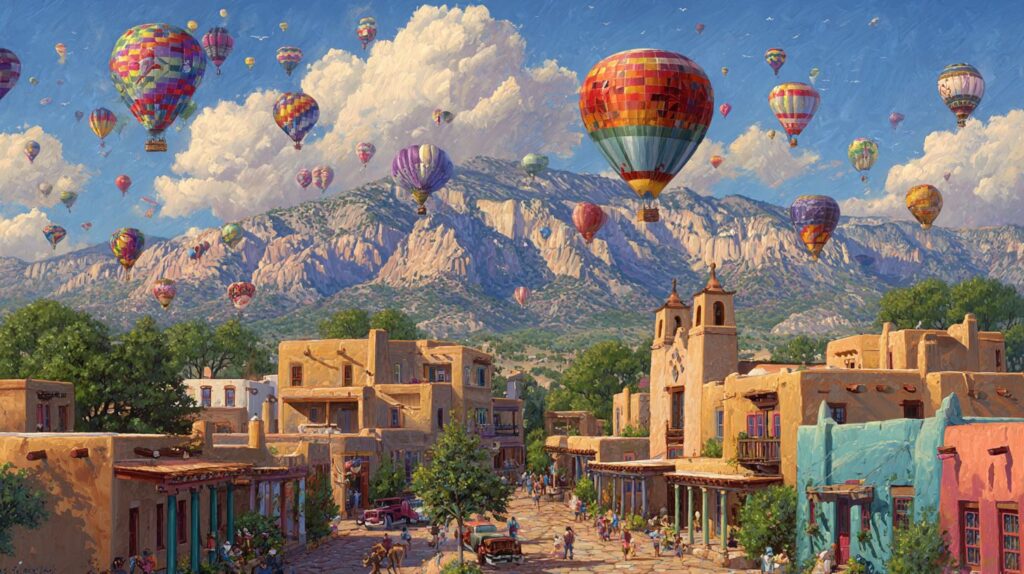
History tied to the Santa Fe Trail and National Monuments like Petroglyph National Monument enriches the narrative.
Albuquerque and Santa Fe stand out as New Mexico’s cultural heart due to their deep historical roots along the Rio Grande. Albuquerque, founded in 1706, blends Native American, Spanish, and Anglo influences, including the iconic San Felipe de Neri Church, while Santa Fe, established in 1610, is one of the oldest capital cities in the U.S., preserving Pueblo and colonial architecture that showcases centuries of cultural fusion.
Why Albuquerque and Santa Fe Are New Mexico’s Cultural Heart: How Do Their Art Scenes Contribute?
Art inspired by artists like Frederico Vigil and frescoes such as Torren Fresco adds depth.
The art scenes in Albuquerque and Santa Fe cement their status as New Mexico’s cultural heart. Santa Fe boasts over 250 galleries and the renowned Santa Fe Indian Market, the world’s largest Native American art event, while Albuquerque’s vibrant murals at Petroglyph National Monument and the Balloon Fiesta add colorful, contemporary artistic expressions that draw global visitors.
Why Albuquerque and Santa Fe Are New Mexico’s Cultural Heart: What Role Do Festivals Play?
Festivals connect to accommodations like Hotel Chaco and Four Seasons Rancho Encantado for memorable stays.
Festivals are a key reason why Albuquerque and Santa Fe are New Mexico’s cultural heart. Albuquerque’s Hot Air Balloon Fiesta features massive balloon launches symbolizing freedom and tradition, and Santa Fe’s vibrant events like the Spanish Market, International Folk Art Market, and Burning of Zozobra celebrate Hispanic and indigenous crafts, fostering community and cultural exchange year-round.
Why Albuquerque and Santa Fe Are New Mexico’s Cultural Heart: How Does Native American Heritage Factor In?
Heritage sites include Casa San Ysidro Museum and the San Felipe de Neri in Historic Old Town.
Native American heritage is central to why Albuquerque and Santa Fe are New Mexico’s cultural heart. Proximity to pueblos like Acoma Pueblo and Taos, including Sky City at Acoma Pueblo and the Sky City Cultural Center, allows for authentic experiences, with Santa Fe’s Museum of Indian Arts and Culture and Albuquerque’s Indian Pueblo Cultural Center preserving and promoting traditions, languages, and stories of the region’s indigenous peoples.
Why Albuquerque and Santa Fe Are New Mexico’s Cultural Heart: What Culinary Traditions Define Them?
Culinary traditions highlight why Albuquerque and Santa Fe are New Mexico’s cultural heart. Both cities excel in New Mexican cuisine, featuring green and red chiles in dishes like enchiladas and posole, influenced by Native American, Spanish, and Mexican roots. Santa Fe’s farm-to-table scene at places like The Shed and Albuquerque’s food trucks near Route 66 offer a flavorful journey through the state’s multicultural palate.
Why Albuquerque and Santa Fe Are New Mexico’s Cultural Heart: Why Are They Ideal for Cultural Tourism?
Albuquerque and Santa Fe are New Mexico’s cultural heart, making them prime for tourism. Visitors can explore Santa Fe’s adobe-style historic district near the Palace of the Governors and Georgia O’Keeffe Museum, or Albuquerque’s Old Town with its shops, live music at the National Hispanic Cultural Center, and nearby Sandia National Laboratory, providing immersive experiences in art, history, and nature that capture the essence of New Mexico’s diverse cultural landscape.