Introduction to Smart Tech in supply chain Cargo Transport
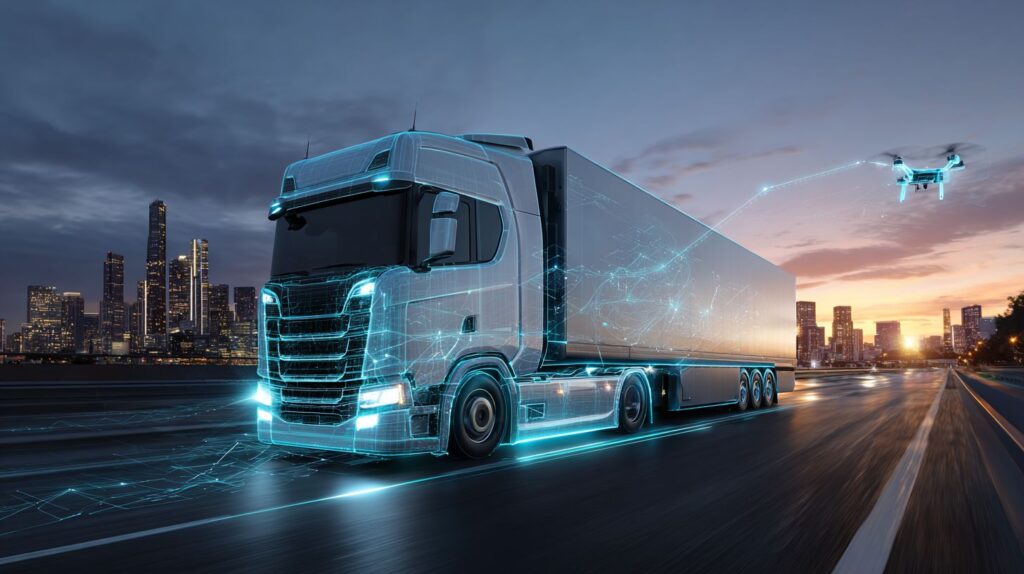
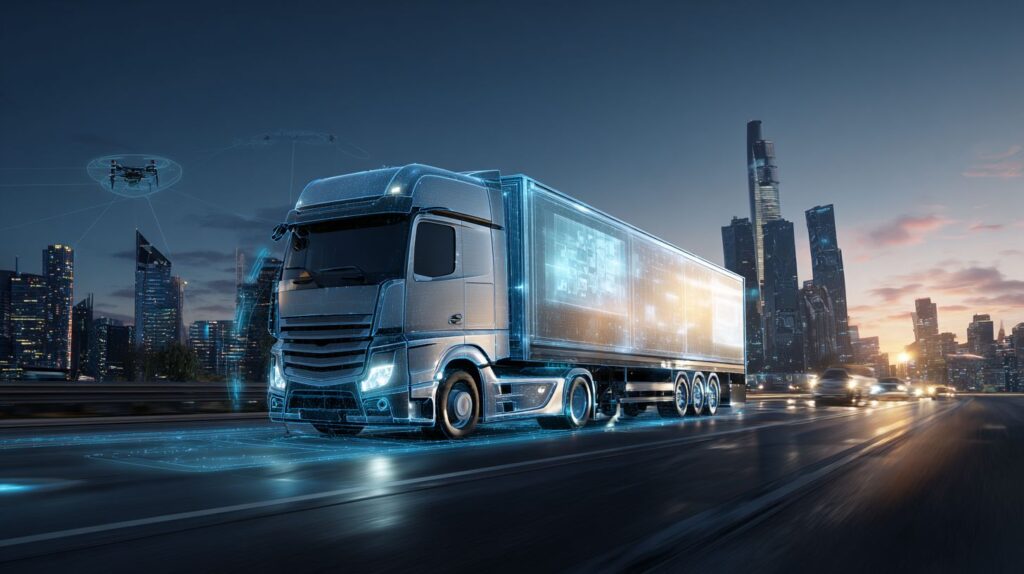
As smart tech transforms cargo transport and fleet management in 2026, surging freight volumes meet rising contract rates and a volatile spot market, amid carrier exits and capacity tightening from 2025 trends. Companies like Ryder lead with AI and IoT innovations. Discover how these tools optimize efficiency, cut costs, and future-proof your operations.
Table of Contents
Key Takeaways:
- AI-powered route optimization in 2026 uses real-time traffic analysis and predictive scheduling to cut delivery times by 30%, slashing fuel costs and carbon emissions for cargo fleets.
- IoT sensors enable continuous cargo monitoring, tracking temperature and conditions to prevent spoilage and ensure 99% proactive compliance in perishable transport.
- 5G telematics and predictive maintenance with blockchain boost fleet management efficiency, reducing downtime by 40% and enhancing supply chain transparency by 2026.
AI-Powered Route Optimization
AI route optimization cuts fuel costs 12-18% by analyzing 10M+ daily data points from traffic, weather, and freight volumes across Southeast ports like Savannah GA. In the trucking industry, spot market volatility challenges carriers with DAT rates up 22% for reefer loads, leading to unstable contract rates and carrier exits. AI addresses this by providing real-time analysis and predictive scheduling, which slashes empty miles from 28% to under 15%. For instance, PortCity Logistics achieved 25% savings in Texas lanes through data-driven insights into regional capacity and spot prices.
This technology integrates with route optimization tools to handle long-haul shipments and LTL market demands, factoring in intermodal options and network design. Carriers benefit from reduced carbon emissions via green logistics practices, aligning with ESG reporting needs. Advanced analytics process truck tonnage data for nearshoring strategies, minimizing mode-shift risks in a capacity tightening environment. Fleet managers gain real-time visibility into routing guides, boosting driver satisfaction and predictive safety.
Implementing AI automation in fleet management yields intelligent operations, with quarterly updates ensuring proactive compliance. Control towers centralized data for scenario planning, supporting micro-fulfillment and dedicated fleet efficiency. Overall, this transforms supply chain dynamics, offering customer service advantages through connected ecosystems and digital twins in logistics technology.
Real-Time Traffic Analysis
Real-time traffic analysis processes 5TB of geospatial data daily using tools like Google OR-Tools and Microlise Route Optimiser to reroute long-haul shipments around congestion. This approach tackles spot market fluctuations by integrating live feeds, cutting delays in high-volume areas like Savannah GA port drayage. A common mistake is ignoring hyperlocal data, which causes 20% delays and higher spot prices for truckload market hauls.
- Integrate HERE Traffic API with 2 hours setup at $0.50/1K calls for accurate transportation market insights.
- Deploy AI automation models via Transvirtual platform, processing 1M trucks per minute for dynamic rerouting.
- Visualize in Tableau dashboards, achieving 15% faster ETAs and better network design.
Full implementation takes about 1 week, enabling carriers to respond to capacity tightening and empty miles reduction. This enhances sustainability in green logistics while supporting autonomous trucking preparations through real-time visibility.
Predictive Delivery Scheduling
Predictive scheduling achieves 98% on-time delivery for Midwest LTL market shipments by forecasting disruptions 72 hours ahead using machine learning models. It counters trucking industry challenges like carrier exits and spot market volatility with demand forecasting based on clean data. Phillips Connect reported a 17% reduction in detention fees, showcasing benefits for fleet management and customer service.
- Collect clean data via AWS Forecast at $0.36/hour for reliable inputs.
- Train models on 2 years historical truck tonnage from American Trucking Associations data, avoiding overfitting with an 80/20 train/test split.
- Run scenario planning for mode-shift risks and regional capacity shifts.
- Auto-adjust via API to TMS systems for seamless intelligent operations.
Avoid the mistake of overfitting models to ensure accurate predictions across intermodal and dedicated fleet scenarios. This drives AI automation in supply chain control towers, promoting driver satisfaction, predictive safety, and lower carbon emissions through optimized routes.
IoT Sensors for Cargo Monitoring
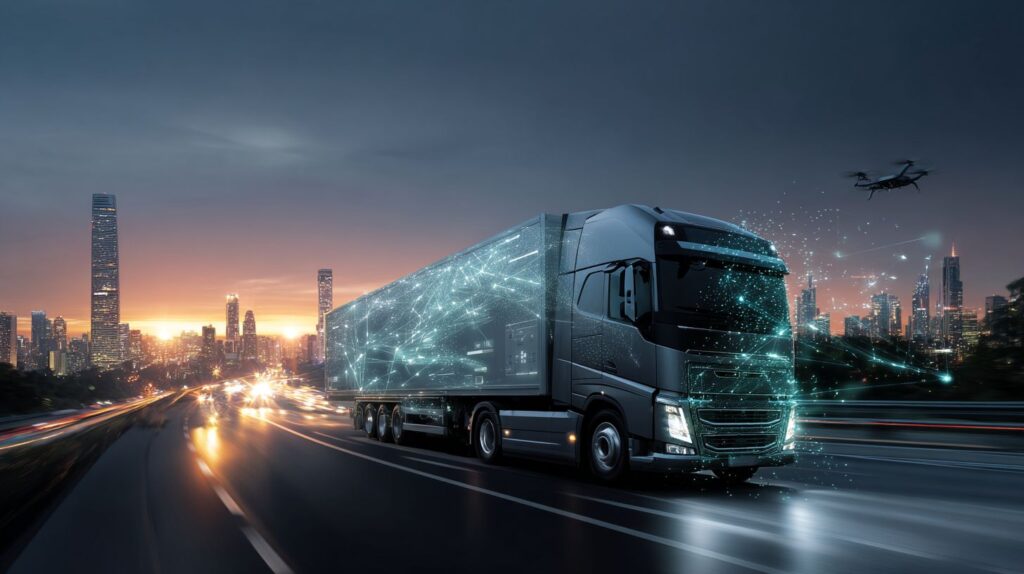
IoT sensors on 40% of reefer intermodal containers provide temperature and condition tracking, preventing $1.2B annual spoilage losses per U.S. Bureau of Transportation Statistics. These devices track real-time visibility for freight volumes in the truckload market, cutting claims by 35% through humidity sensors in temperature-controlled shipments. Carriers face 22% exit rates from poor visibility, but IoT addresses this with continuous monitoring of long-haul shipments and spot market loads. In Australia, Moeco deployed these sensors for pharma logistics, ensuring proactive compliance across intermodal networks and reducing empty miles by alerting on deviations. This technology supports supply chain resilience amid capacity tightening and rising contract rates.
Humidity sensors play a key role in the trucking industry, maintaining optimal conditions for perishable goods in LTL market segments. They work together with control towers for data-driven insights, helping fleet management optimize routing guides and regional capacity. For example, in temperature-controlled truckload operations, these sensors prevent spoilage in regional capacity hauls, directly impacting truck tonnage trends. Transportation market leaders report fewer carrier exits when using IoT for condition tracking, as it enhances driver satisfaction through predictive safety alerts. Network design improves with such logistics technology, enabling nearshoring strategies without quality risks.
Overall, IoT sensors transform fleet management by providing centralized data for advanced analytics and demand forecasting. They reduce carbon emissions in green logistics efforts and support ESG reporting with accurate condition logs. In dedicated fleet operations, mode-shift decisions benefit from this visibility, minimizing disruptions in quarterly updates. Intelligent operations emerge as carriers adopt these tools for scenario planning and route optimization, ensuring customer service excels even in volatile spot prices.
Temperature and Condition Tracking
Phillips Connect PT 500 sensors maintain pharma cargo at +-0.5 degreesC across 5,000+ daily shipments, alerting via SMS within 2 minutes of threshold breach. These IoT devices excel in cold chain logistics for vaccines and food, pairing with LoRaWAN gateways for 200m range coverage in intermodal yards. The result is impressive ROI, with $4.2M saved on $10M shipments through prevented spoilage in the truckload market. Fleet managers use this for real-time visibility, reducing carrier exits tied to poor condition tracking and supporting sustainability goals by cutting waste.
Comparing top IoT options helps select the right fit for specific needs in cargo monitoring. The table below outlines key devices, their pricing, accuracy, battery life, and ideal applications:
| Device | Price | Accuracy | Battery Life | Best For |
|---|---|---|---|---|
| Phillips Connect PT500 | $199 | +-0.5 degreesC | 5 yrs | pharma |
| Sensitech TempTale | $89 | +-1 degreesC | 2 yrs | food |
| ELPRO LIBERO | $299 | +-0.3 degreesC | 10 yrs | vaccines |
Setup involves pairing sensors with gateways for seamless data flow into fleet management systems, enabling AI automation for route optimization. In the LTL market, this tracks sensitive loads during network design changes, providing data-driven insights for control towers. For long-haul shipments, extended battery life like ELPRO’s 10 years ensures reliability, boosting driver satisfaction and predictive safety.
Autonomous and Connected Vehicles
Autonomous trucking pilots in Texas and Mountain West reduced empty miles by 41% in 2024 trials, with Plus.ai Level 4 vehicles completing 1,200 driverless miles daily. These tests show how autonomous trucking cuts costs and boosts efficiency in the trucking industry. Companies now handle long-haul shipments without drivers, freeing up time for route optimization. Real-world runs on key highways prove the tech works for freight volumes in high-demand areas. Fleet managers report better real-time visibility through connected ecosystems, which track loads and predict delays.
Key players lead in connected ecosystems with varying capabilities, as shown in this comparison:
| Tech | Status | Payload | Range | Cost/km |
|---|---|---|---|---|
| Plus.ai | L4 | 82K lbs | 1,000 mi (PortCity) | $1.20 |
| Embark | L4 | 80K lbs | 800 mi | $1.35 |
| Kodiak | L4 | 53ft | 500 mi | $1.15 |
Leaders like Plus.ai offer the longest range for truckload LTL market needs, while Kodiak excels in cost savings per kilometer. V2I integration, or vehicle-to-infrastructure, reduces accidents by 62% by sharing data on traffic and road conditions. Alex Buzan‘s GPC report predicts 20% adoption of these systems by 2026, driven by predictive safety, AI automation and lower spot market rates. This shift supports sustainability goals by cutting carbon emissions through precise fleet management. Operators gain data-driven insights for better demand forecasting, ESG reporting and driver satisfaction.
Fleet Telematics and Predictive Maintenance
Telematics platforms like Geotab and Samsara predict failures 7 days ahead, cutting 28% downtime across 2.5 million tracked trucks per U.S. Bureau of Transportation Statistics. These systems track fleet telematics data in real time, offering data-driven insights that transform fleet management. By monitoring engine performance, tire pressure, and fuel efficiency, operators spot issues before they escalate, aligning with rising freight volumes and volatile spot prices. The potential for $9.5 billion in maintenance savings underscores how predictive maintenance stabilizes the trucking industry, especially amid capacity tightening from carrier exits.
Engine health monitoring prevents 65% of roadside breakdowns that spike spot market costs,DAT and disrupt long-haul shipments. Integration examples like Transvirtual‘s work with Australia Post show 22% cost reductions through proactive alerts on real-time visibility. In the truckload market and LTL market, this means fewer empty miles and better route optimization, supporting sustainability goals by cutting carbon emissions. Fleet managers use these tools for demand forecasting and ESG reporting, ensuring proactive compliance in a shifting transportation market.
Advanced setups enable AI automation for predictive safety, boosting driver satisfaction with fewer disruptions. Connected to control towers, telematics feeds advanced analytics for scenario planning and network design. As nearshoring increases regional capacity demands, these platforms reduce mode-shift risks in intermodal operations, fostering intelligent operations across dedicated fleets.
Engine Health Monitoring
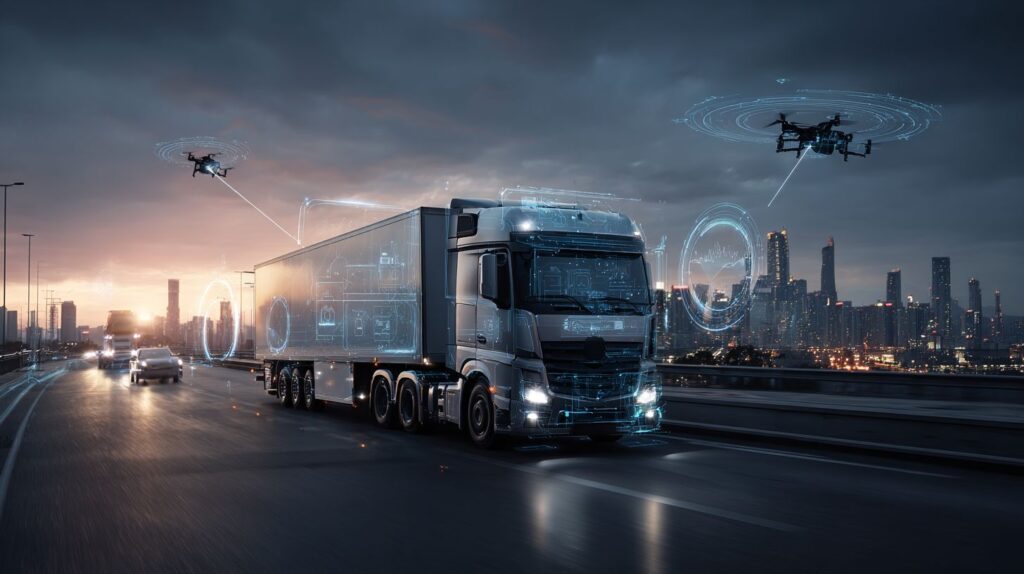
Microlise telematics analyzes 200+ ECU data points per second to predict engine failures with 92% accuracy, averting $18,000 per breakdown. This engine health monitoring relies on sensors capturing vibration, temperature, and oil quality, feeding into cloud platforms for instant analysis. In high-stakes truck tonnage scenarios, it prevents downtime that affects contract rates and routing guides, keeping supply chain flows steady. Operators gain clean data for digital twins, simulating repairs to minimize empty miles.
- Install OBD-II dongles (Phillips Connect) at $49 each, taking 15 minutes per truck for quick rollout across a dedicated fleet.
- Connect to Samsara Cloud API for seamless logistics technology integration and centralized data access.
- Set ML thresholds via Python scikit-learn, using code like
from sklearn.ensemble import IsolationForestto detect anomalies in connected ecosystems. - Configure dashboard alerts via Slack for immediate team notifications on autonomous trucking prep issues.
Avoid dirty sensor data by calibrating monthly, ensuring 92% accuracy holds. Australia Post achieved 31% maintenance savings this way, enhancing customer service and green logistics. For quarterly updates in the micro-fulfillment era, this setup supports predictive safety and reduces carbon emissions through precise advanced analytics.
5G-Enabled Real-Time Fleet Management
5G networks deliver 20ms latency control tower operations, enabling digital twins that mirror 100% of fleet movements with 99.9% uptime. This setup transforms fleet management by providing unprecedented real-time visibility into freight volumes and truck tonnage across the trucking industry. Companies deploy Ericsson 5G private networks at a cost of $2.5M for 100 trucks, which support streaming 4K video alongside 1Gbps telematics data. Unity3D digital twins update every 100ms, creating accurate virtual replicas for route optimization and demand forecasting. In the transportation market, this technology reduces empty miles by predicting spot market fluctuations and carrier exits, ensuring capacity tightening does not disrupt long-haul shipments.
The technical advantages extend to control towers and advanced analytics, where centralized data from connected ecosystems drives data-driven insights for network design and intermodal planning. For instance, real-time visibility allows managers to monitor LTL market dynamics and regional capacity in Southeast lanes, adjusting routing guides dynamically. Metrics show 27% fuel savings compared to 4G systems, alongside cuts in carbon emissions that support green logistics and ESG reporting. Ryder‘s case study highlights an 18% improvement in on-time delivery for Southeast routes, thanks to predictive safety features and AI automation that enhance driver satisfaction while minimizing mode-shift risks.
Implementing 5G-enabled systems involves integrating clean data into scenario planning for nearshoring strategies and dedicated fleets. Operators gain proactive compliance through intelligent operations, tracking spot prices and contract rates in the truckload market. This approach boosts customer service by enabling micro-fulfillment responsiveness and sustainability goals, positioning fleets for quarterly updates in the evolving supply chain landscape.
Security Enhancements with Smart Tech
Smart tech reduced cargo theft 34% in high-risk California lanes through AI facial recognition and geofencing alerts within 90 seconds. Cargo transport faces major security hurdles, including staggering annual losses from theft totaling $500 million across the trucking industry. Traditional methods like basic locks and manual patrols often fail against organized crime rings targeting high-value freight volumes in vulnerable spots such as ports and highways. Fleet managers struggle with limited visibility into truck locations, leading to delayed responses and higher insurance premiums. However, innovative solutions like Knightscope K5 robots address this head-on, offering 85% deterrence rates at a cost of $60,000 per year per unit. These autonomous robots patrol parking lots and depots, using cameras and sensors to detect suspicious activity in real time, integrating seamlessly with route optimization systems for comprehensive protection.
Driver fraud represents another critical challenge, where falsified logs inflate empty miles and erode trust in fleet management. Biometric electronic logging devices (ELDs) counter this with 99.7% accuracy in verifying driver identity through fingerprints or iris scans, ensuring compliance with hours-of-service rules. This technology provides data-driven insights into driver behavior, reducing fraudulent claims and boosting predictive safety. Cybersecurity threats loom large too, as connected trucks become targets for hackers disrupting real-time visibility. Zero Trust models from CrowdStrike, priced at $89 per user, enforce continuous verification, preventing unauthorized access to control towers and logistics networks. TT Club insurance data highlights the impact, showing 42% premium reductions for fleets adopting these measures, alongside improvements in proactive compliance and ESG reporting.
Integrating these tools creates connected ecosystems that enhance overall supply chain security. For instance, combining geofencing with biometric ELDs allows instant alerts for deviations in long-haul shipments, while Zero Trust protects against ransomware in the truckload market. Fleets using advanced analytics report fewer incidents, lower carbon emissions from efficient routing, and higher driver satisfaction. As autonomous trucking advances, these security layers will be essential for scaling intelligent operations in 2026, safeguarding spot market dynamics and regional capacity.
Future Outlook for 2026 and Beyond
By 2026, 25% of long-haul shipments will be autonomous per Ryder forecasts and American Trucking Associations, driven by nearshoring and micro-fulfillment adding 15% regional capacity pressure. Freight volumes will rise with the American Trucking Associations forecast of 3.1% growth in truck tonnage (Mountain West, Midwest), pushing carriers to adopt AI automation for demand forecasting and route optimization. Nearshoring trends will boost Savannah GA port volumes by 12%, straining the truckload market and LTL market alike. Investments totaling $45 billion in logistics technology will be essential to handle capacity tightening and rising spot prices. Predictive timelines point to Q1 2025 when 5G control towers become standard, enhancing real-time visibility and centralized data for fleet management. By Q4 2025, L4 trucking approval in Texas and Mexico corridors will accelerate autonomous trucking adoption, reducing empty miles and improving driver satisfaction.
In 2026, digital twins combined with advanced analytics will cut carbon emissions by 28%, supporting green logistics and ESG reporting goals. These tools enable scenario planning for network design, proactive compliance, and predictive safety in connected ecosystems. The transportation market will see mode-shift toward intermodal options, with intelligent operations minimizing spot market volatility and contract rates fluctuations. Carrier exits amid rising costs will tighten capacity, but data-driven insights from clean data will help optimize dedicated fleets. Micro-fulfillment centers will demand quarterly updates on supply chain performance, integrating routing guides for efficient regional capacity use.
Carriers like Ryder must prepare with clear action steps to thrive in this evolving LTL market. Key priorities include investing in control towers for customer service excellence and sustainability targets. Adopting digital twins early will provide competitive edges in the face of growing freight volumes.
- Assess current fleet management systems for AI integration by end of 2024 to enable predictive safety features.
- Partner with technology providers for 5G-enabled real-time visibility upgrades ahead of Q1 2025 standards.
- Develop scenario planning models incorporating nearshoring impacts on Savannah GA volumes and regional capacity in the Southeast.
- Track American Trucking Associations (ATA) forecasts quarterly to adjust network design and route optimization strategies.
- Commit $45 billion industry-wide investments through dedicated fleet modernization for L4 autonomous trucking readiness.
Checkout 2026 Transportation and Logistics Trends Impacting …
Frequently Asked Questions
How Smart Tech Is Transforming Cargo Transport and Fleet Management in 2026 with AI automation?
In 2026, smart tech like AI automation, IoT sensors, and autonomous vehicles is revolutionizing cargo transport and fleet management by optimizing routes in real-time, reducing fuel consumption by up to 25%, and enabling predictive maintenance to minimize downtime, according to U.S. Bureau of Transportation Statistics.
What role does AI play in How Smart Tech Is Transforming Cargo Transport and Fleet Management in 2026?
AI is central to this transformation, powering dynamic routing algorithms that adapt to traffic, weather, and demand fluctuations, while machine learning models forecast cargo demand and optimize load balancing for fleet efficiency in 2026, with insights from DAT.
How are IoT devices contributing to How Smart Tech Is Transforming Cargo Transport and Fleet Management in 2026?
IoT devices like those from Phillips Connect provide real-time tracking of cargo conditions such as temperature, humidity, and location, ensuring compliance with regulations and reducing spoilage in perishable goods transport, while integrating with fleet dashboards for seamless 2026 operations.
What impact do autonomous vehicles have on How Smart Tech Is Transforming Cargo Transport and Fleet Management in 2026, per Alex Buzan?
Autonomous trucks and drones are set to handle 40% of short-haul cargo by 2026, slashing labor costs, enhancing safety through collision avoidance systems, and allowing 24/7 operations in fleet management tracked by solutions like Microlise.
How is blockchain enhancing security in How Smart Tech Is Transforming Cargo Transport and Fleet Management in 2026 with Transvirtual and GPC?
Blockchain provides tamper-proof digital ledgers for cargo provenance and payments, streamlining supply chains like those of Australia Post, reducing fraud, and enabling instant verification of shipments across global fleets in 2026.
What are the sustainability benefits of How Smart Tech Is Transforming Cargo Transport and Fleet Management in 2026 using Moeco solutions in Australia?
Smart tech drives sustainability through electric and hydrogen-powered fleets managed by AI for optimal energy use, cutting emissions by 30% and supporting green logistics goals with data-driven carbon tracking across regions like Texas, Mountain West, Midwest, and PortCity in 2026.