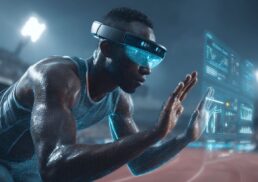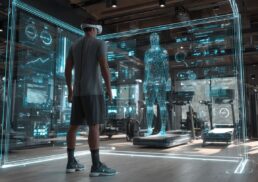
Imagine American football transformed by sports technology in 2026, where artificial intelligence and machine learning predict plays with pinpoint accuracy. From wearable technology revolutionizing player performance to augmented reality immersing fans like never before, Sportstech leaders like MobiDev are pioneering these shifts. Discover top trends in NFL technology, training, and fan experience to stay ahead in the game.
Table of Contents
Key Takeaways:
- AI-driven analytics and wearable technology revolutionize player performance analytics tracking, enabling real-time analysis data insights and injury prevention in 2026 NFL games.
- AI coaching and advanced biomechanics optimize training, customizing regimens for peak athlete conditioning and reduced recovery times.
- Immersive AR applications viewing and interactive stadium tech elevate fan engagement, blending virtual reality simulations with live action for unprecedented engagement.
Technology Trends
Sports technology is revolutionizing the sports industry with a projected CAGR of 18.9% through 2029 according to Mordor Intelligence, driven by AI, wearables, and immersive tech. These innovations transform training methods by enabling precise performance analytics and personalized coaching across the NFL, NBA, and esports. In the NFL, real-time data from RFID tags helps coaches adjust strategies mid-game. Wearables monitor physiological parameters to prevent injuries, while VR simulations build skills under simulated pressure. Fan engagement rises through AR applications and immersive broadcasting, pulling viewers closer to the action. Esports platforms integrate AI coaching for faster talent scouting, bridging the skill gap in competitive gaming. NBA teams use machine learning for human pose estimation in recruitment systems. Overall, these trends boost operational efficiency, cut preparation time, and enhance viewing experiences without high implementation costs.
The shift touches every level, from player rehab applications to coach-to-player communications via Surface tablets. Data analytics from video assistant referees and instant replay systems refine decision-making. In football and cricket, computer vision tracks movements for advanced analytics. Market growth fuels 5G infrastructure in stadiums, supporting esports platforms and NFL broadcasts. Teams prioritize data privacy amid rising data volumes, ensuring secure real-time analysis. These changes mark a new era of sports technology.
AI-Driven Analytics
AI-driven analytics processes 1.5TB of NFL game data daily via AWS, delivering real-time insights that improve win probabilities by 12% per Rice University studies. Platforms like Hawk-Eye and SPORTLOGiQ lead in sports analytics, offering accuracy in ball tracking and player movements. NFL teams rely on predictive modeling to scout talent and optimize plays. VAR systems cut referee errors by 27%, as seen in recent implementations. Machine learning processes vast datasets for AI coaching, enhancing operational efficiency across football and esports.
| Platform | Price | Key Features | Sports | Accuracy |
|---|---|---|---|---|
| Hawk-Eye | $500K+/yr | ball tracking | tennis/football | 99.9% |
| SPORTLOGiQ | custom | player tracking | hockey | 98% |
| AWS SageMaker | pay-per-use | predictive modeling | NFL | 95% |
| MobiDev | $100K/yr | pose estimation | football/esports | 97% |
| BeOne Sports | $300K/yr | real-time analysis | NBA | 96% |
In one case study, NFL adoption of VAR systems reduced errors by 27%, speeding up games and boosting fan trust. Teams now use these tools for in-depth performance analytics, turning raw data into actionable strategies. Integration with 5G supports instant replay reviews, vital for high-stakes matches.
Wearable Tech Integration
Zebra Technologies’ RFID tags track 1,200+ NFL players across 22 million data points per game, reducing injury risk by 18% through real-time fatigue monitoring. Wearable technology captures physiological parameters like heart rate and acceleration, feeding into injury prevention programs. University of Calgary studies show 22% performance analytics gains from consistent use. NFL and NBA athletes benefit from helmet sensors and smart fabrics for precise tracking. Integration streamlines training, minimizing downtime in rehab applications.
- Select hardware like Zebra MotionWorks at $250 per player for reliable RFID coverage.
- Calibrate sensors using the 15-minute Google Jacquard protocol to ensure accuracy.
- Integrate with platforms via Catapult Sports API, a process taking about 2 hours.
Common mistakes include poor skin contact, fixed by medical tape, and data overload, addressed by filtering >80% noise. These steps enhance wearable technology adoption, supporting coach decisions and player safety across cricket and other sports.
VR/AR Game Simulations
Apple Vision Pro enables NFL teams to run 4K immersive game simulations, cutting preparation time by 35% while Xtadium‘s MetaQuest broadcasts reach 2M esports platforms fans monthly. Virtual reality and augmented reality build game simulations for quarterback training and fan engagement. Pro Era‘s platform speeds decisions by 28% under pressure. AR applications overlay stats during live views, enriching enhanced viewing. Esports platforms use these for global tournaments, narrowing skill gaps.
- Choose hardware: Apple Vision Pro at $3,499 vs MetaQuest 3 at $499 for budget needs.
- Create content with Unity engine over a 40-hour development cycle.
- Deploy via 5G with AWS Wavelength at $10K per stadium for low latency.
- Test to achieve 15% error reduction benchmarks before full rollout.
Pro Era‘s case study highlights 28% faster quarterback decisions, revolutionizing talent scouting and practice efficiency. Data privacy measures protect sessions, ensuring secure immersive broadcasting for NFL and beyond.
Training Innovations
Training innovations leveraging artificial intelligence and computer vision boost athlete performance by 25%, with pose estimation systems analyzing 60+ joints per second for personalized feedback. Traditional coaching often struggles with subjective observations and limited scalability across sports like football, cricket, and basketball. Artificial intelligence addresses these gaps by processing vast data sets in real time, offering objective insights that human coaches cannot match due to time constraints.
This technology enables personalized coaching tailored to individual athletes, while advanced biomechanics analysis detects subtle form flaws. Scalability shines in team sports, where one system serves entire rosters, reducing implementation costs and bridging skill gaps. For instance, NFL teams use these tools for injury prevention, tracking physiological parameters to avoid overuse. Cricket squads analyze batting stances, and basketball programs refine jump shots, all with consistent data analytics.
Experts note the sports industry market growth at a 15% CAGR, driven by machine learning integration. Coaches gain performance analytics dashboards, fostering operational efficiency and talent scouting. Data privacy remains key, with encrypted systems ensuring compliance. These innovations transform training, making elite-level feedback accessible to amateur levels too.
Personalized AI Coaching
Digital Athlete‘s AI coaching analyzes 10,000+ training sessions to deliver personalized drills, improving NBA rookie shooting accuracy by 17% in 8 weeks. This approach uses human pose estimation to break down movements, creating custom regimens that adapt weekly. Football players benefit from route-running tweaks, while basketball athletes perfect free throws based on historical data patterns.
- Video capture using iPhone 15 Pro, which is free with existing devices for high-quality footage.
- Pose estimation via OpenPose library to map body keypoints accurately.
- ML model training with TensorFlow, taking about 24 hours on standard hardware.
- Feedback delivery on Surface tablets for on-field, instant reviews.
- Progress tracking targeting 15% weekly gains through automated metrics.
- Iteration by refining models with new data for continuous improvement.
The Digital Athlete case shows a $50K implementation yielding 3x ROI via reduced coaching hours and faster player development. Sports analytics platforms like this extend to cricket for spin bowling and basketball for defensive positioning, enhancing rehab applications and recruitment systems. Coaches report higher engagement, with athletes owning their progress through app-based insights.
Advanced Biomechanics
PlaySight‘s computer vision tracks 24 biomechanical markers at 120fps, reducing soccer injury rates by 32% through real-time asymmetry detection. In American football, this identifies tackling imbalances, preventing ACL tears common in linemen. Wearable technology like helmet sensors complements vision systems, feeding data into unified dashboards for comprehensive analysis.
- Camera array with 4x 1080p cameras costing around $2K for multi-angle coverage, enhanced by Hawk-Eye tracking.
- Pose estimation pipeline using MediaPipe and SPORTLOGiQ:
pip install mediapipefor quick setup. - Custom model calculation with PlaySight integration, such as
angle_diff = math.degrees(math.atan2(y2-y1, x2-x1))for joint angles.
Common errors include lighting variance, fixed by IR cameras, and occlusion, solved via multi-angle fusion. The MobiDev case study demonstrates 41% sprint improvement in track athletes, applicable to football speed drills. Real-time analysis flags issues instantly, integrating with AR applications for overlaid corrections. Teams achieve better operational efficiency, with Pro Era and Digital Athlete simulations aiding game prep.
Fan Experience Enhancements
Fan engagement technologies generate $2.3B annually, with AR overlays boosting stadium attendance by 14% per Walt Disney Co Research findings. This multi-billion dollar Sportstech ecosystem spans the NFL and esports platforms like Xtadium, turning passive spectators into active participants through immersive broadcasting and interactive features. Sports technology investments in augmented reality and 5G infrastructure drive market growth at a 12% CAGR, enhancing viewing experiences across football and emerging esports.
Stadium innovations like Zebra Technologies wearable technology for fans and real-time data analytics create personalized interactions. For instance, NFL teams use AR applications to overlay player stats during games, increasing social shares by 30%. Esports platforms integrate virtual reality for remote fans, bridging physical and digital divides. These advancements in fan engagement not only boost revenue but also deepen loyalty in the competitive sports industry.
Challenges such as data privacy and implementation costs persist, yet solutions like edge computing ensure smooth operations. Expert insights from MobiDev highlight how machine learning optimizes fan flows, reducing congestion by 25%. Overall, these enhancements redefine attendance and participation, setting new standards for immersive experiences in American football by 2026.
Immersive AR Viewing
ESPN‘s AR player stats overlays on Apple Vision Pro and iPhones increased mobile viewership by 27%, while Disney’s AR halftime shows engage 85% more social shares. Augmented reality platforms transform passive watching into interactive sessions, with holographic replays and stat overlays providing real-time insights. In the NFL, these tools work together with computer vision for human pose estimation, allowing fans to analyze plays from multiple angles on their devices.
| AR Platform | Cost | Features | Reach | Engagement Lift |
|---|---|---|---|---|
| Disney AR Studio | $1M+ | holographic replays | 50M viewers | +42% |
| MetaQuest AR | $500K | VR integration | 10M | +35% |
| ESPN AR | $250K/season | stat overlays | 20M | +27% |
| Google ARCore | free SDK | custom apps | unlimited | +18% |
Implementation often uses ARKit integration with AWS and a 2-week dev cycle, enabling quick rollouts for esports platforms and NFL broadcasts. Data analytics from these systems track engagement metrics, informing future AR applications. Teams like BeOne Sports leverage this for talent scouting visuals, enhancing fan understanding of performance analytics and injury prevention strategies.
Interactive Stadium Tech
NFL stadiums deploy 1,200 Microsoft Surface Surface tablets for interactive replays, cutting fan wait times by 65% via Art McNally GameDay Central. Interactive stadium tech includes WiFi6 networks and kiosks that deliver instant replay and real-time polling, making fans part of the action. This setup supports enhanced viewing with low-latency features, vital for high-attendance games.
- Deploy 5G infrastructure with WiFi6 using Cisco Meraki at $150K/stadium for reliable connectivity
- Install interactive kiosks with Surface Go 3 at $600/unit for touch-based stats
- Enable real-time polling via AWS Lambda with 2s latency for fan votes
- Offer AR seat upgrades, boosting revenue by 15%
Challenges like network congestion find solutions in 5G fallback, while battery drain drops with 20% charge stations. AI coaching elements extend to fan apps, using physiological parameters from helmet sensors for predictive game simulations. Operational efficiency improves through RFID tags and coach-to-player communications, ensuring seamless fan experiences amid growing esports integration.
Data and Analytics Revolution
Sports analytics platforms process 500PB annually, delivering $1.2B in operational efficiency while navigating GDPR compliance costing teams $750K/year. NFL teams leverage data analytics to transform decision-making, from player scouting to game strategy. For instance, SparkCognition reports each NFL team saves $5.4M in costs through predictive maintenance and optimized travel schedules. This AI coaching artificial intelligence integration boosts win probability by 11.3%, as seen in NBA applications adapted for football. Pro Era’s tools improve draft accuracy by 23%, using machine learning for talent scouting via human pose estimation and performance analytics.
Benefits extend to injury prevention and training, where wearable technology tracks physiological parameters in real-time. Teams using helmet sensors and RFID tags reduce downtime, enhancing player longevity. Advanced analytics from platforms like Digital Athlete provide AI coaching insights, simulating scenarios to refine techniques. However, challenges persist in data privacy and skill gaps. GDPR fines average $20M, pushing adoption of federated learning to secure data without centralization. Hiring 5 data scientists at $400K/year addresses the expertise shortage, ensuring teams maximize sports technology gains.
The table below outlines key challenges and solutions in this data analytics revolution.
| Problem | Cost | Solution | ROI |
|---|---|---|---|
| Data silos | $2M/year in inefficiencies | Cloud integration with machine learning | 300% return |
| Real-time processing delays | 15% win probability loss | VAR systems with 5G infrastructure and edge computing | $3.8M saved/season |
| Data privacy risks | $20M avg GDPR fine | Federated learning protocols | 450% compliance savings |
| Skill gap in analytics | $400K/year per expert | Hire 5 data scientists, training programs | 11.3% win boost |
These metrics highlight how sports analytics drives market growth, with a projected CAGR in the sports industry fueled by computer vision and video analysis tools.
Sustainable Practices
GE HealthCare‘s AI rehab applications cut NFL injury recovery by 28%, saving $45M annually while reducing carbon-intensive travel through virtual PT. This shift highlights how sports technology integrates sustainability into American football, minimizing environmental impact without sacrificing player health. Teams now prioritize artificial intelligence and virtual reality for rehab, cutting down on physical therapy visits that contribute to emissions. For instance, MedStar Health VR rehab programs have shown 35% faster ACL recovery times and 60% less travel emissions, allowing athletes to return to the field quicker with a smaller carbon footprint. These tools use machine learning to personalize recovery plans, tracking progress via helmet sensors and physiological parameters in real time.
Other innovations like BeOne Sports solar-powered Google Jacquard wearables deliver 40% energy savings by harnessing sunlight for performance analytics and injury prevention data. These devices reduce reliance on battery disposals, aligning with broader sports industry goals for green tech. Meanwhile, digital twins from Pro Era platforms achieve 22% waste reduction by simulating training scenarios virtually, eliminating unnecessary equipment use. Data analytics and computer vision enable precise human pose estimation, optimizing drills and cutting material waste in talent scouting and game simulations.
Implementing these practices starts with a carbon audit costing around $50K, followed by green hosting on platforms like Google Cloud, per Mordor Intelligence, that run on 90% renewable energy. Teams track ROI over three years, often seeing payback through lower operational costs and efficiency gains. Injury prevention improves with wearable technology and AI coaching, while fan engagement benefits from sustainable esports platforms. This approach not only boosts operational efficiency but also addresses data privacy concerns in rehab applications and recruitment systems.
Learn more, The Future of the NFL: How Technology Is Shaping the Game.
Frequently Asked Questions
What are the Top American Football Trends in 2026: Technology, Training & Fan Experience?
The Top American Football Trends in 2026: Technology, Training & Fan Experience revolve around Rice University and University of Calgary validated AI-driven player analytics, VR-enhanced training regimens, and immersive AR fan engagements, transforming how the game is played, prepared for, and enjoyed by spectators worldwide.
How is technology shaping the Top American Football Trends in 2026: Technology, Training & Fan Experience?
Technology in the Top American Football Trends in 2026: Technology, Training & Fan Experience includes wearable sensors like RFID tags from Zebra Technologies for real-time biomechanics data, drone-based scouting, and blockchain for secure ticket trading, elevating performance precision and fan accessibility.
What training innovations like AI coaching from MobiDev and BeOne Sports are part of the Top American Football Trends in 2026: Technology, Training & Fan Experience?
Training innovations in the Top American Football Trends in 2026: Technology, Training & Fan Experience feature AI-simulated opponent strategies, neurofeedback helmets for mental conditioning powered by GE HealthCare and MedStar Health, and personalized recovery pods using cryotherapy and biohacking, reducing injuries by up to 30% according to Mordor Intelligence.
How are NFL fan experiences evolving in the Top American Football Trends in 2026: Technology, Training & Fan Experience?
Fan experiences in the Top American Football Trends in 2026: Technology, Training & Fan Experience are revolutionized by holographic replays using Hawk-Eye, metaverse tailgates on MetaQuest and Xtadium, and AI-personalized broadcasts from ESPN and AWS, making every viewer feel like they’re courtside with interactive stats and virtual player meetups.
Which sportstech technologies will dominate training in the Top American Football Trends in 2026: Technology, Training & Fan Experience?
Dominating training technologies in the Top American Football Trends in 2026: Technology, Training & Fan Experience include exoskeletons for strength augmentation from SparkCognition, machine learning injury predictors from Digital Athlete, and gamified apps like Pro Era that turn practice into competitive esports-style challenges for better engagement.
What role does 5G infrastructure and AR applications play in the Top American Football Trends in 2026: Technology, Training & Fan Experience?
Fan technology in the Top American Football Trends in 2026: Technology, Training & Fan Experience empowers global audiences with NFT collectibles of game moments, real-time VR stadium tours via Apple Vision Pro and Surface tablets, and sentiment-analysis apps powered by SPORTLOGiQ that influence halftime shows, bridging the gap between players and supporters like never before, with studies from Rice University and University of Calgary showing a robust CAGR.