You’re keeping an eye on the energy transition as it picks up speed, right? In 2026, renewable energy sees big steps forward in solar PV, wind, and green tech that make clean power more practical and widespread.
Here’s a clear look at the top trends shaping it all.
Table of Contents
Key Takeaways: sustainability trends for 2026 outlook
- Solar power surges with perovskite cells achieving solar efficiency over 30%+ and 50% cost cuts, making rooftop and utility-scale deployments ubiquitous by 2026.
- Offshore wind floating wind farms unlock deep-water sites, boosting global capacity by 40% with scalable, storm-resistant turbines.
- AI integration optimizes smart grids, green hydrogen scales via efficient electrolyzer costs, and advanced battery storage like BESS enable 24/7 renewable reliability.
Top Renewable Energy Trends in 2026
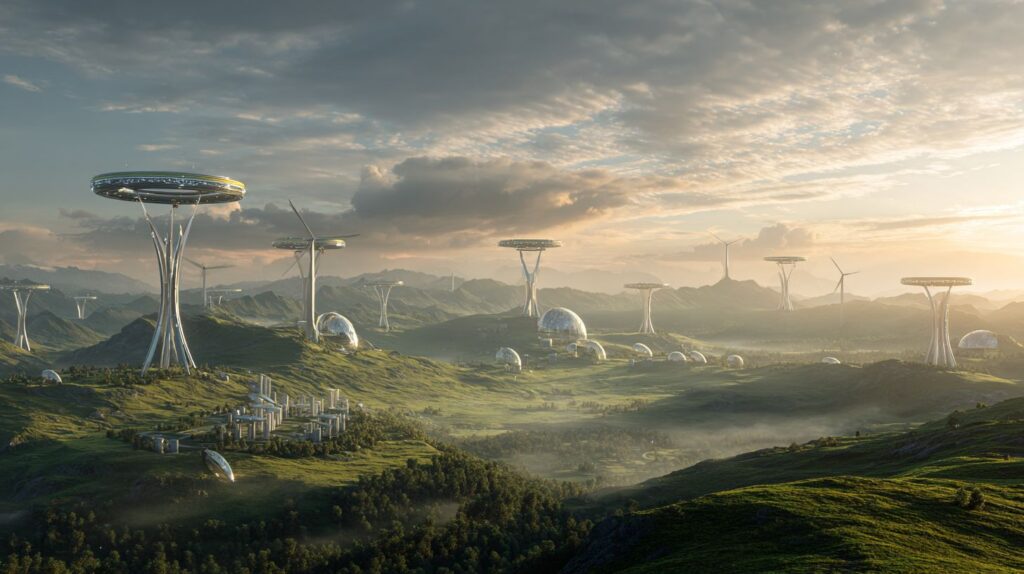
As the energy transition accelerates toward 2026, renewable energy trends are reshaping global capacity and driving the shift to net-zero emissions.
Insights from IEA and Ember reports highlight how renewable energy sources like solar PV and wind power meet rising electricity demand from data centres and electrification. These trends support decarbonisation efforts aligned with the Paris Agreement and 1.5 degreesC goals. Policy frameworks and corporate sustainability initiatives further boost deployment.
Advancements in energy storage and grid integration address intermittency challenges. Green hydrogen and AI-driven optimisation emerge as key enablers for energy security amid geopolitical tensions. Expect lower wholesale prices and more power purchase agreements as clean energy scales.
Overall, the 2026 outlook points to renewables dominating new capacity additions. This shift reduces carbon emissions and enhances energy independence for nations pursuing ESG targets. Practical steps include investing in hybrid systems and regulatory support for rapid rollout.
Solar Power Advancements
Solar PV continues to lead renewable energy growth through innovations in efficiency and deployment flexibility.
Tandem perovskite-silicon cells push solar efficiency boundaries, enabling higher output from limited space. These cells integrate well with existing silicon panels for gradual upgrades. Experts recommend testing them in pilot projects to validate long-term performance.
Floating solar on reservoirs suits land-scarce regions like India, combining water conservation with power generation. Hybrid systems pair solar PV with battery storage or sodium-ion batteries for reliable output. Deploy these on industrial rooftops to cut electricity prices and support corporate sustainability.
- Integrate with smart grids for real-time demand balancing.
- Use BESS to store excess daytime power for evening peaks.
- Combine with waste-to-energy for diversified clean energy portfolios.
Wind Energy Innovations
Wind power innovations are expanding capacity with larger turbines and optimized onshore-offshore hybrids.
Larger rotor diameters improve capacity factors by capturing more wind at higher altitudes. Repowering existing onshore sites extends asset life without new land needs. This approach maximises yield in mature markets.
Offshore wind projects in Europe and U.S. pair with grid storage to handle variable generation. Regulatory frameworks streamline approvals and incentivise local supply chains. Practical examples include floating platforms in deep waters for untapped potential.
- Adopt digital transformation tools like AI integration for predictive maintenance.
- Secure long-term power purchase agreements to fund expansions.
- Integrate with green hydrogen electrolysers for fuel production.
Perovskite Solar Cells Revolution
Perovskite solar cells are set to transform solar PV by overcoming traditional silicon limitations in 2026. These cells enable tandem architectures that layer perovskite materials over silicon, capturing a broader spectrum of sunlight for higher overall efficiency. This breakthrough positions them as a cornerstone of solar efficiency gains in the energy transition.
By stacking layers, tandem perovskite cells address silicon’s bandgap constraints, allowing more effective light absorption. Manufacturers can now push beyond single-junction limits, driving down costs through better energy yields per panel area. This innovation supports the global shift toward renewable energy with scalable production methods.
Stability has improved with advanced encapsulation, making perovskites viable for real-world deployment. They promise significant LCOE reductions, aiding decarbonisation efforts and net-zero emissions goals. Experts recommend focusing on these cells to meet rising electricity demand from data centres and electrification.
In the 2026 outlook, perovskite adoption accelerates the energy transition, complementing wind power and battery storage. Hybrid systems pairing perovskites with grid storage enhance reliability, fostering energy security amid geopolitical tensions.
Higher Efficiency and Cost Reductions
Perovskite cells promise lab efficiencies over 30% in tandem configurations, far surpassing conventional silicon panels per Wood Mackenzie forecasts.
This edge comes from pairing perovskites with silicon bases, optimizing photon capture across wavelengths. Such gains directly lower the levelized cost of energy (LCOE) for solar PV projects.
Scalable vapor deposition manufacturing streamlines production by depositing thin perovskite layers uniformly on large substrates. This method cuts material use and boosts throughput, making mass production feasible. Companies can integrate it into existing silicon lines for quick scaling.
- Develop stable formulations with additives to resist moisture and heat.
- Apply encapsulation techniques like barrier films for long-term durability.
- Test tandem modules in field trials to validate performance.
- Scale via vapor deposition for commercial volumes, guided by forecasts like those from Wood Mackenzie.
Stability improvements via encapsulation techniques extend operational life, reducing degradation rates. Projected LCOE drops make perovskites competitive with fossil fuels, supporting clean energy adoption and climate action. For instance, developers can target utility-scale farms with these panels to meet ESG targets and power purchase agreements.
Offshore Floating Wind Farms
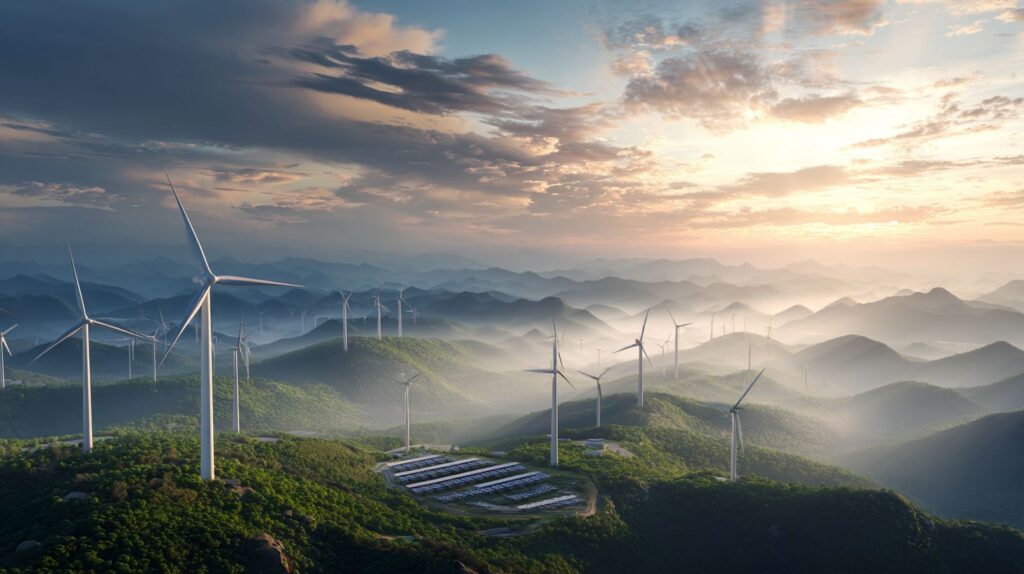
Offshore floating wind farms unlock vast deep-water sites previously inaccessible to fixed-bottom turbines. These innovative platforms use buoyant foundations to support turbines in waters too deep for traditional setups. Regions like the U.S. West Coast and Europe lead this shift, tapping into stronger, more consistent winds.
Floating designs drive global capacity expansion in renewable energy. They enhance energy security by diversifying power sources amid geopolitical tensions. This technology supports the energy transition toward net-zero emissions.
Projects work together with hybrid systems combining wind power and solar PV for steady output. Experts recommend scaling supply chains for mooring and anchors to meet demand. These farms reduce reliance on fossil fuels, aiding decarbonisation efforts.
Deployment aligns with regulatory frameworks and energy policy support for clean energy. Floating wind contributes to electricity demand from data centres and electrification. It positions offshore wind as a cornerstone of 2026 sustainability trends.
Deep-Water Expansion Potential
Floating platforms like semisubmersibles and spar-buoys allow turbines in water depths over 60 meters. These DNV-certified designs withstand harsh ocean conditions while maximizing energy capture. They open new areas for offshore wind development previously off-limits.
Key projects include Hywind Scotland and U.S. West Coast initiatives using proven mooring systems. Supply chains focus on durable anchors and dynamic cables to secure platforms. Integration with high-voltage direct current (HVDC) cables enables efficient power transmission to shore, lowering electricity prices and even enabling negative prices.
Deployment steps start with site assessments, followed by foundation fabrication and turbine installation.
- Conduct environmental surveys.
- Assemble floating bases onshore.
- Tow to site and connect moorings.
- Commission turbines and HVDC links.
Cost trajectories improve through scaled manufacturing and serial production.
Synergies with hybrid systems pair floating wind with battery storage or green hydrogen for baseload power. This boosts energy security and supports ESG targets. Experts highlight potential for grid storage integration to manage variable output.
Green Hydrogen Breakthroughs
Green hydrogen breakthroughs hinge on cheaper electrolyzers and expanded production for hard-to-abate sectors. This clean energy carrier plays a key role in decarbonisation beyond electrification, targeting industries like steel and chemicals that cannot easily switch to batteries or heat pumps. It supports the energy transition by storing excess renewable energy from solar PV and wind power.
Plans like REPowerEU aim to boost Europe‘s energy security amid geopolitical tensions, reducing reliance on imported fossil fuels. The Carbon Border Adjustment Mechanism (CBAM) adds pressure on high-emission imports, pushing firms toward green hydrogen to meet ESG targets and avoid tariffs, driving CO reductions. These policies drive investment in production for net-zero emissions.
Hard-to-abate sectors benefit from hydrogen’s versatility in blending with natural gas or direct use in fuel cells, aligning with ESG targets. Experts recommend pairing it with power purchase agreements to lock in low-cost renewables. This approach aligns with climate action under the Paris Agreement, cutting CO reductions in heavy industry.
By 2026, expect wider adoption in shipping and aviation, enhancing corporate sustainability, from U.S. to China, Europe, and India. Green hydrogen bridges gaps in the power sector, supporting sustainability trends like grid storage integration.
Electrolyzer Scalability and Storage
PEM and alkaline electrolyzers are scaling to gigawatt factories, slashing electrolyzer costs through modular designs, alongside bioenergy systems. The IEA notes ongoing cost declines as production ramps up, making green hydrogen competitive with gray alternatives. This scalability supports renewable trends in the 2026 outlook, as noted by IEA and Wood Mackenzie.
Integrate electrolyzers with solar PV and wind power using these steps: first, secure power purchase agreements for dedicated renewable output at stable prices. Next, site facilities near high-capacity farms to minimize grid upgrades. Finally, monitor output with AI integration for optimal hydrogen yield during peak generation.
- Match electrolyzer capacity to variable wind power via flexible modular units.
- Pair with solar PV in sunny regions like Spain for steady daytime production.
- Use hybrid systems combining both sources to balance intermittency.
Underground salt cavern storage offers low-cost, large-scale solutions for seasonal buffering, vital amid potential policy reversal risks.
In Spain, projects target exports to Central Europe via pipelines, easing electricity demand from data centres. This boosts energy independence and counters wholesale price swings.
Energy Storage Enhancements
Energy storage enhancements address intermittency, enabling firm clean energy dispatch amid rising electricity demand. Battery energy storage systems (BESS) pair with solar PV and wind power to stabilize grids. These systems support data centres and industrial loads during peak hours.
Emerging alternatives like flow batteries extend storage beyond daily cycles. They ensure grid stability as renewable energy scales. Procurement focuses on modular designs for quick deployment.
Safety protocols include advanced cooling and fire suppression. AI integration optimizes charge-discharge cycles in real time. This drives the energy transition toward net-zero emissions.
Hybrid systems combine BESS with waste-to-energy for reliable power. Experts recommend site assessments for terrain and climate. These enhancements bolster energy security amid geopolitical tensions.
Advanced Batteries and Long-Duration Solutions
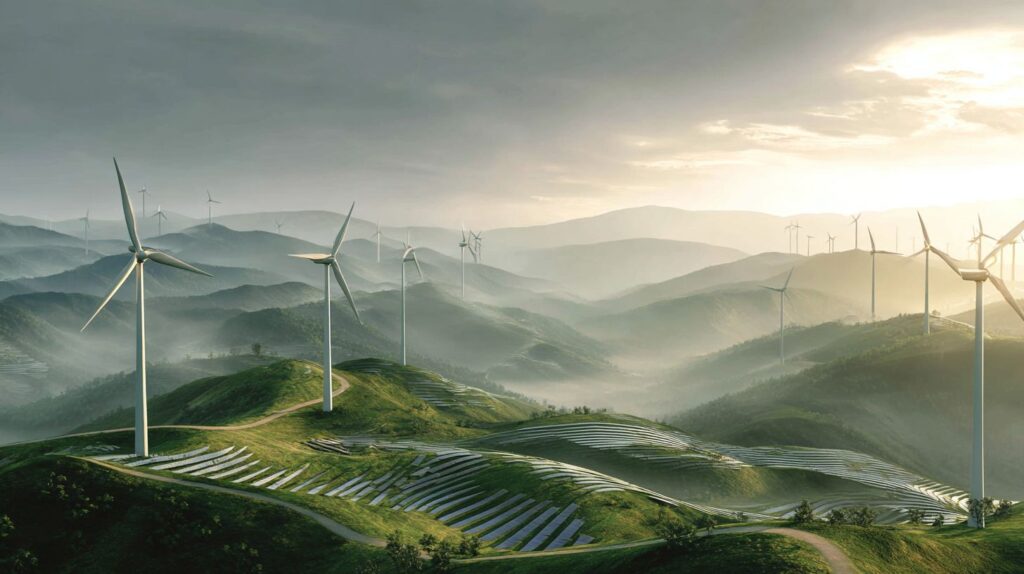
Lithium-iron-phosphate (LFP) dominates BESS while sodium-ion batteries emerge for cost-sensitive grid storage in the power sector. LFP offers 4-hour duration ideal for daily cycling with solar and wind. Sodium-ion provides safer, abundant materials for large-scale projects.
Flow batteries and iron-air systems target 100+ hour durations for seasonal needs. These long-duration solutions handle extended low-output periods from renewables. Hybrid systems integrate them with waste-to-energy for continuous dispatch.
- Procure modular BESS for scalable capacity matching electricity demand.
- Implement safety protocols like inert gas suppression and thermal monitoring.
- Integrate AI for predictive maintenance and optimal dispatch in smart grids.
Real-world examples include data centres using LFP for backup during outages, as highlighted by DNV. Experts recommend power purchase agreements for financing. This supports decarbonisation and corporate sustainability goals.
AI-Driven Energy Optimization
AI integration optimizes renewable energy portfolios, predicting output and balancing smart grids in real-time. This approach enhances wind power and solar PV efficiency by analyzing weather patterns and grid loads. Operators gain precise control over energy flows.
Machine learning models enable wake steering in wind farms. Turbines adjust angles to minimize wake effects, improving overall yield. This step-by-step process starts with data collection from sensors, followed by model training on historical winds.
Implementation involves integrating AI with existing controls. First, gather turbine data. Then, train models to predict wakes. Finally, deploy real-time adjustments for smoother operations in the energy transition.
AI also manages demand response for data centres and detects anomalies in BESS. Tools like adapted Google DeepMind models forecast peaks, shifting loads to off-peak times. This supports decarbonisation and grid stability amid rising electricity demand.
Step-by-Step Implementation for Wind Farm Wake Steering
Begin with sensor installation on turbines to capture wind speed and direction. Use machine learning to process this data, identifying wake patterns. This leads to automated steering for better airflow.
Next, simulate scenarios with AI to test adjustments without risk. Train models on site-specific data for accuracy. Deploy via software updates to turbine controllers.
Monitor results continuously, refining algorithms with new data. Experts recommend starting small, scaling to full farms. This boosts wind power output reliably.
Regulatory frameworks encourage this digital transformation. Policies support AI in renewable trends, aligning with net-zero goals. Operators see gains in energy security.
AI Demand Response for Data Centres
Data centres consume vast power, straining grids. AI predicts usage spikes from workloads, shifting non-critical tasks. This integrates with energy storage for peak shaving.
Steps include installing smart meters and AI software. Analyze historical loads, then automate responses to price signals. Pair with battery storage for flexibility.
Benefits extend to corporate sustainability and ESG targets. Centres reduce costs while aiding grid storage balance. Real-time bidding optimizes wholesale prices.
Anomaly Detection in Battery Energy Storage Systems (BESS)
BESS faces risks like overheating or faults. AI scans sensor data for irregularities, alerting before failures. This protects investments in hybrid systems.
Implementation: Collect voltage, temperature data. Train models to spot deviations from norms. Integrate alerts into control systems for quick action.
2026 outlook, potentially impacted by Trump presidency and 2025 shifts, includes AI handling negative prices. Systems store excess power during lows, discharge at highs. This manages volatility from surging clean energy.
Regulatory frameworks evolve for AI safety in power sector. Guidelines ensure secure data use, fostering climate action. AI drives efficiency in the path to 1.5 degreesC limits, echoing UN Secretary-General Antnio Guterres.
Frequently Asked Questions
What are the Top Renewable & Alternative Energy Trends in 2026: Solar, Wind & Green Innovation, shaped by REPowerEU and Carbon Border Adjustment Mechanism (CBAM)?
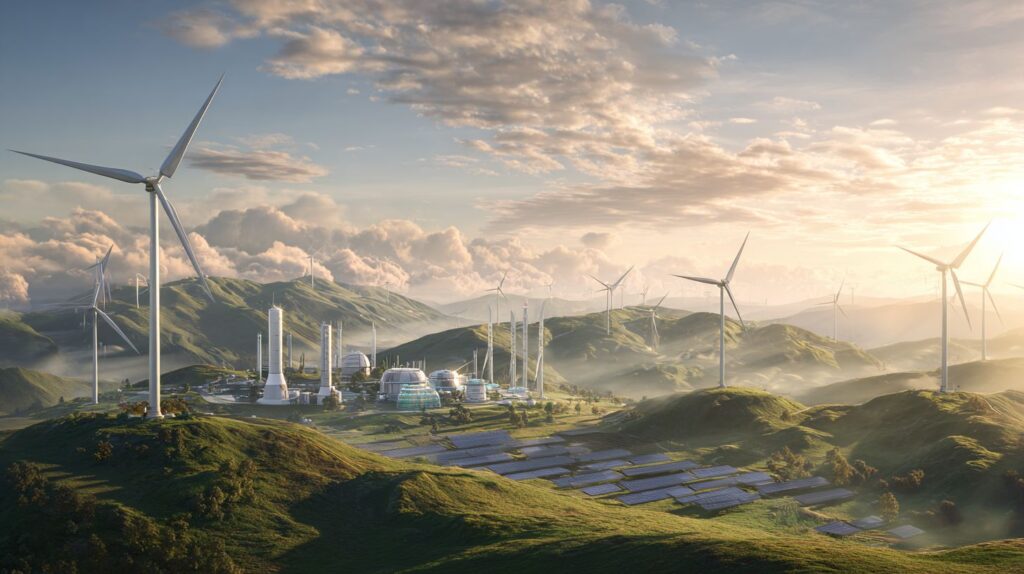
The Top Renewable & Alternative Energy Trends in 2026: Solar, Wind & Green Innovation highlight advancements like perovskite-enhanced solar panels achieving over 30% efficiency, floating offshore wind farms scaling globally, and green innovations such as AI-optimized energy storage and hydrogen production from renewables, driving a projected 25% increase in clean energy adoption worldwide.
How is solar power leading the Top Renewable & Alternative Energy Trends in 2026: Solar, Wind & Green Innovation?
Solar power is at the forefront of Top Renewable & Alternative Energy Trends in 2026: Solar, Wind & Green Innovation with bifacial panels and tandem cell technologies reducing costs by 20%, alongside agrivoltaics integrating farming with solar farms, making it the cheapest electricity source in over 80% of global markets.
What role does wind energy play in Top Renewable & Alternative Energy Trends in 2026: Solar, Wind & Green Innovation?
Wind energy is pivotal in Top Renewable & Alternative Energy Trends in 2026: Solar, Wind & Green Innovation, featuring larger 20MW turbines and airborne wind systems that harness high-altitude winds, with offshore installations expected to supply 15% of Europe’s electricity by 2026.
What green innovations are shaping Top Renewable & Alternative Energy Trends in 2026: Solar, Wind & Green Innovation?
Green innovations in Top Renewable & Alternative Energy Trends in 2026: Solar, Wind & Green Innovation include solid-state batteries for longer solar and wind storage, green hydrogen electrolyzers powered by excess renewables, and blockchain for peer-to-peer energy trading, accelerating decarbonization across industries.
Why are Top Renewable & Alternative Energy Trends in 2026: Solar, Wind & Green Innovation crucial for climate goals?
Top Renewable & Alternative Energy Trends in 2026: Solar, Wind & Green Innovation are crucial for meeting Paris Agreement targets and COP30, even amid Russia tensions and Greenland ice sheet melt warnings, as solar and wind capacities are set to double, cutting global CO2 emissions by 10 gigatons annually and enabling net-zero pathways for cities and nations.
How can businesses adopt Top Renewable & Alternative Energy Trends in 2026: Solar, Wind & Green Innovation?
Businesses can adopt Top Renewable & Alternative Energy Trends in 2026: Solar, Wind & Green Innovation by investing in rooftop solar with battery backups, partnering for corporate wind PPAs, and leveraging green innovation tax credits, potentially slashing energy costs by 40% while enhancing sustainability credentials.