Ever wonder how your go-to operating system like Windows or Linux will stack up by 2026? This look ahead covers the latest evolutions in Windows, macOS, Linux distros, and rising platforms like HarmonyOS.
We’ll break down key features, from AI boosts to security upgrades, so users can see what’s coming for your setup.
Table of Contents
Key Takeaways:
- Windows 2026 advances with Copilot 3.0 AI and zero-trust security, boosting productivity and protection in enterprise environments.
- macOS 2026 merges Apple Intelligence and VisionOS for spatial computing, prioritizing privacy across a seamless ecosystem.
- Linux matures on desktop s via Ubuntu/Fedora, dominates servers/cloud s, while HarmonyOS and Fuchsia drive modular, cross-platform innovation.
Windows 2026: Evolution and Features
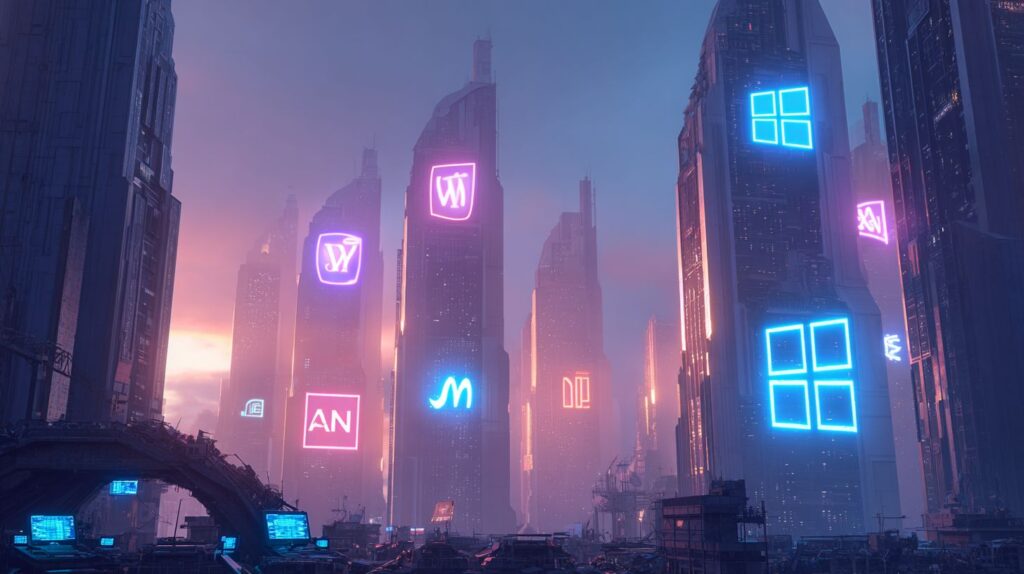
Windows in 2026 builds on Microsoft‘s ecosystem with deeper AI integration and robust security, appealing to enterprise users and gaming fans alike. It evolves from current versions through enhanced kernel stability and smoother GUI improvements. These changes ensure better performance across desktop s and laptops.
The operating system maintains strong hardware compatibility, supporting a wide range of devices from Intel to ARM processors. Software updates continue seamlessly via Windows Update, delivering patches for security and features. Users benefit from continuity in applications like Office and Edge browser.
GUI enhancements include refined taskbar customization and window snapping for multi-tasking. Kernel improvements reduce crashes in gaming and productivity work. Enterprise tools work together with Azure for cloud management.
Gamers enjoy optimized drivers for DirectX, while professionals gain from better virtualization support. This evolution keeps Windows as a versatile choice in the desktop environment, balancing work and play.
AI Integration and Copilot 3.0
Copilot 3.0 transforms daily workflows by embedding advanced AI directly into the Windows desktop environment. It offers real-time code assistance in VS Code, suggesting completions as developers type. Natural language app launching lets users say “open Excel and create a chart” for instant action.
Predictive multi-tasking anticipates needs, like pulling up email drafts during meetings. Compared to current versions, it boosts productivity by handling repetitive tasks. For example, a marketer can dictate campaign ideas into automated slides.
To enable Copilot 3.0, follow these steps:
- Open Settings > AI Features.
- Toggle Copilot 3.0 on.
- Customize prompts for your workflow, taking about 2 minutes.
Customize further by setting voice commands or integrating with Teams. This setup enhances productivity in enterprise scenarios, freeing time for creative work.
Security and Zero-Trust Architecture
Windows 2026 adopts zero-trust principles natively, verifying every access request regardless of network location. It integrates with Group Policy and Intune for enterprise control. This reduces breach risks by assuming no inherent trust.
Common pitfalls include overlooking legacy app compatibility, which zero-trust can block. Solutions involve whitelisting trusted applications via policies. Another issue is incomplete MFA rollout, solved by device-wide enforcement.
Set up zero-trust with these steps:
- Configure Intune policies for your organization.
- Enable MFA everywhere in account settings.
- Audit logs via Event Viewer, taking about 10 minutes.
For enterprises, this shrinks breach surfaces, as seen in protected remote work setups. Privacy improves with granular permissions, while gamers face minimal impact on performance.
macOS 2026: Apple Intelligence Era
macOS 2026 ushers in the Apple Intelligence era, seamlessly blending on-device AI with hardware-optimized experiences. Apple‘s closed ecosystem delivers top performance and stability for users who value smooth workflows. This setup shines in creative and productivity tasks on Apple Silicon machine s.
GUI refinements make interactions more intuitive, with subtle animations and gesture controls enhancing daily use. App compatibility remains strong across the macOS lineup, supporting seamless updates for professional software. Users notice fewer crashes and faster load times in demanding applications.
Focus on user-centric evolutions includes smarter search and predictive text tailored to individual habits. Hardware-software synergy powers features like real-time photo editing without cloud reliance. This approach keeps macOS ahead for artists and developers seeking reliable desktops.
Stability comes from tight integration, reducing driver issues common in open systems. Everyday tasks feel effortless, from browsing to multi-tasking in browsers. Apple’s commitment ensures performance evolves with each update.
Spatial Computing and VisionOS Convergence
macOS 2026 converges with VisionOS, enabling fluid transitions between desktop and spatial interfaces on Apple Silicon machines. This synergy boosts productivity for creative pros through immersive multi-tasking. Users can extend their workspace into three dimensions effortlessly.
To start spatial workflows, follow these steps:
- Connect your Vision Pro headset via Continuity.
- Enter Continuity mode from the menu bar.
- Drag apps directly into the spatial view for setup in about five minutes.
This process integrates macOS applications like Final Cut Pro into virtual environments seamlessly.
Unique value lies in hardware synergy, where spatial views handle complex scenes without lag. Creative pros edit videos or model 3D assets while referencing desktop tools. Multi-tasking becomes truly immersive, floating windows around the user.
UX improvements include gesture-based navigation for precise control. Professionals gain efficiency in fields like design and engineering. This feature positions macOS as a leader in blended reality desktops.
Privacy-First Ecosystem Enhancements
Apple doubles down on privacy with granular permissions extending across its hardware and software ecosystem. On-device processing keeps data local, offering users peace of mind. This differs from cloud-heavy approaches by prioritizing personal control.
Conduct a quick permission audit with these steps:
- Open System Settings and select Privacy & Security.
- Review app trackers and data access requests.
- Set app-specific rules, taking about three minutes total.
Regular checks like this maintain security without hassle.
Emotional benefits include confidence in handling sensitive information, like health apps or financial tools. Users feel secure knowing permissions stay under their control. This fosters trust in the entire Apple ecosystem.
Enhancements extend to features like app quarantines and intelligent alerts for unusual access. macOS stability pairs with these tools for a worry-free experience. Experts recommend routine audits to maximize data protection.
Linux Distributions in 2026

Linux distros in 2026 showcase unmatched flexibility and performance across desktop, server, and cloud environments. Open-source advantages shine in customization options and zero licensing costs, letting users tailor every aspect from kernels to GUIs.
Unlike proprietary systems like Windows or macOS, Linux avoids vendors lock-in and forced updates. Users gain full control over privacy settings and security patches, fostering a vibrant ecosystem of applications.
Maturity gains in 2026 bring polished experiences without repeating specific distro details. This contrasts sharply with the rigid structures of Microsoft and Apple platforms, giving the power to diverse hardware compatibility.
Experts recommend Linux for those seeking long-term stability in work and productivity tasks. Its open-source nature supports multi-tasking across desktops, servers, and emerging IoT devices.
Desktop Linux Maturity (Ubuntu, Fedora)
Ubuntu and Fedora lead desktop Linux maturity with polished GUIs and broad hardware support. These distros offer seamless compatibility for everyday users transitioning from Windows or macOS.
| Criteria | Ubuntu | Fedora |
|---|---|---|
| Ease-of-Use | Beginner-friendly installer, vast software repositories | Modern interface, quick updates |
| Performance Tweaks | Solid out-of-box drivers | Latest kernel for optimized hardware |
| Gaming Support | Proton for Steam compatibility | Strong Wayland integration |
| Stability | LTS releases for work | Balanced cutting-edge features |
For Ubuntu installation, follow these steps:
- Download the ISO from the official site.
- Create a bootable USB with tools like Rufus.
- Boot from USB, select drivers during setup, and complete in about 15 minutes.
This process ensures quick setup for gaming or productivity.
Gaming thrives via Proton layers, running titles smoothly on NVIDIA or AMD hardware. For daily work, these distros provide superior customization, from desktop environments to application permissions.
Server and Cloud Dominance
Linux commands server and cloud markets through reliable distros like Red Hat and Debian derivatives. These platforms excel in scalability, outpacing proprietary options in enterprise environments.
Best practices for deployment include:
- Choose immutable OS like Fedora CoreOS for consistency.
- Automate patches with Ansible scripts.
- Monitor via Prometheus for alerts, with setup taking about 20 minutes.
This approach boosts uptime for critical workloads.
Differing from desktop use, server Linux emphasizes vendor-neutral control and flexibility. It handles massive multi-tasking in clouds, supporting containers and Kubernetes without licensing fees.
Enterprises value security features like SELinux and precise permissions. This dominance ensures robust performance for databases, web servers, and AI applications in 2026.
Emerging Platforms Overview
Emerging platforms challenge traditional OS with innovative architectures tailored for IoT, mobile, and beyond. These systems push beyond Windows, macOS, and Linux by enabling seamless operation across diverse hardware like smartwatches, cars, and home devices.
They matter for future-proofing work and personal machines because cross-device continuity keeps data and tasks flowing without interruptions. Users gain flexibility in managing productivity on desktops, tablets, or ChromeOS gadgets, reducing reliance on single-vendor ecosystems.
For developers, these platforms offer customization and security features that adapt to evolving hardware. Experimenting now prepares workflows for cloud-integrated environments and multi-tasking across devices.
Practical shifts include syncing applications and permissions effortlessly, ensuring stability in mixed setups with Android or ChromeOS elements.
HarmonyOS and Android Super OS
HarmonyOS evolves Android into a unified super OS spanning phones, tablets, and IoT devices. It creates a distributed ecosystem where apps run smoothly across hardware from various vendors, enhancing multi-tasking and productivity.
To migrate practically, follow these steps:
- Install HarmonyOS apps via Petal Store for core software needs.
- Sync data across devices using built-in cloud features.
- Test multi-device continuity, which takes about 10 minutes to verify seamless handoffs.
This setup boosts flexibility for users switching between work desktops and personal mobiles.
| Feature | HarmonyOS | iOS |
|---|---|---|
| Seamless Ecosystem | Strong cross-device sync for IoT and Android hardware | Locked to Apple devices, excels in tight integration |
| App Availability | Growing library with open Android compatibility | Vast, polished App Store with strict controls |
| Flexibility | High customization across vendors | Limited to Apple ecosystem |
HarmonyOS shines for those seeking device flexibility, offering better control over privacy and updates compared to siloed systems like iOS.
Fuchsia and Modular OS Architectures
Google’s Fuchsia introduces modular OS design, replacing Linux kernel in select products for enhanced security. Its architecture uses Zircon microkernel, allowing independent components to update without full system reboots, ideal for future ChromeOS and IoT stability.
Benefits include better performance isolation, where a crashed app does not affect the GUI or drivers. Developers appreciate sandboxed permissions, reducing vulnerabilities in servers or desktop environments. This modular approach supports long-term hardware compatibility and quick patches.
Imagine a diagram showing stacked modules: Zircon at the base handles core functions, with layers for drivers, apps, and UI stacked above, each isolatable for testing. This visual highlights how it future-proofs against evolving threats.
To experiment on ChromeOS, enable Developer Mode, flash a Fuchsia image, and test components, a process taking about 30 minutes with a caution for data wipe. Focus on customization for developers building open-source apps or enterprise tools.
Cross-Platform Trends and Convergence

Cross-platform tools and cloud services drive OS convergence, letting users work seamlessly across Windows, Linux, macOS, Android, and iOS.
These trends reduce reliance on single operating systems. Users gain flexibility with apps that sync data effortlessly. For example, start editing a document on your phone and finish on a desktop.
Adopt browser-based apps like Proton Mail for email across devices. Use cloud sync services such as OneDrive or iCloud to keep files updated everywhere. Standardize Linux apps with Flatpak or Snap for better compatibility.
These steps enhance productivity and cut compatibility issues. They fit enterprise needs and personal workflows alike. Experts recommend them for future-proof setups.
Actionable Recommendations
Start with browser-based apps to avoid OS-specific limits. Tools like Proton Mail work on any device with a browser. They prioritize privacy and run smoothly on ChromeOS or Ubuntu.
Implement cloud sync for files and settings. OneDrive pairs well with Windows, while iCloud suits macOS and iOS. This keeps your work accessible on Linux distros like Fedora or Mint.
For Linux users, rely on Flatpak and Snap packages. These deliver universal apps that install easily across distros like Mint. They ensure security updates and hardware compatibility without vendor lock-in.
Benefits Through Real-World Examples
Imagine drafting a report in a cloud-synced editor on Android during commute. Switch to your Windows desktop to add charts without missing a beat. This seamless flow boosts multi-tasking.
On macOS, access the same files via iCloud for final reviews. Linux users on Fedora pull them down instantly with Flatpak apps. Gaming setups benefit too, with cross-platform tools for configs.
Enterprise teams edit docs on desktops, review on tablets. Privacy-focused options like Proton Mail keep data secure across ecosystems. These examples show gains in stability and performance.
Ecosystem Comparison
| Ecosystem | Key Strengths | Cross-Platform Tools | Best For |
|---|---|---|---|
| Windows | Enterprise support, gaming | OneDrive, Microsoft apps | Productivity, hardware drivers |
| macOS | Stability, Apple integration | iCloud, browser apps | Creative work, iOS sync |
| Linux (Ubuntu, Fedora) | Customization, open-source | Flatpak, Snap, cloud | Servers, flexibility |
| ChromeOS/Android/iOS | Mobile-first, security | Browser tools, sync services | IoT, daily tasks |
This table highlights ecosystem overlaps. Windows excels in enterprise with strong Microsoft backing. Linux offers control via kernels and GUIs.
Future-Proof Strategies
Learn containerization like Docker for universal app compatibility. It runs software identically on any OS, from desktops to servers. This skill future-proofs your workflow amid updates.
Combine it with cloud services for full coverage. Test on Linux distros before enterprise rollout. Focus on open-source tools for long-term security and patches.
Users gain control and flexibility across platforms. Stay ahead by practicing these in daily tasks. They adapt to emerging features in Windows, macOS, and beyond.
Frequently Asked Questions
What are the key features of Operating Systems in 2026: Windows, macOS, Linux & Emerging Platforms?

In 2026, Operating Systems in 2026: Windows, macOS, Linux & Emerging Platforms emphasize AI integration, enhanced security, and sustainability. Windows 13 introduces Copilot++ for predictive computing, macOS 17 (Ventura successor) focuses on seamless Apple ecosystem synergy with AR/VR, Linux distributions like Ubuntu 26.04 offer modular kernels for edge computing, and emerging platforms like HarmonyOS Next and Fuchsia gain traction with cross-device continuity and privacy-first designs.
How does Windows evolve in Operating Systems in 2026: Windows, macOS, Linux & Emerging Platforms?
Windows in 2026, as part of Operating Systems in 2026: Windows, macOS, Linux & Emerging Platforms, features Windows 13 with holographic interfaces, zero-trust security baked in via Group Policy and Intune, and quantum-resistant encryption. It supports hybrid work with advanced virtualization for Arm and x86, making it a leader in enterprise adaptability.
What improvements are seen in macOS within Operating Systems in 2026: Windows, macOS, Linux & Emerging Platforms?
macOS in 2026, highlighted in Operating Systems in 2026: Windows, macOS, Linux & Emerging Platforms, releases macOS 17 with deeper Apple Silicon optimization, real-time collaborative editing via iCloud Fusion, and energy-efficient modes for M-series chips, prioritizing creative professionals and privacy through on-device AI processing.
Why is Linux prominent in Operating Systems in 2026: Windows, macOS, Linux & Emerging Platforms?
Linux thrives alongside Ubuntu, Mint, and Red Hat in Operating Systems in 2026: Windows, macOS, Linux & Emerging Platforms due to its fragmentation into specialized distros like Fedora Quantum for HPC and Debian Edge for IoT. It boasts unmatched customization, open-source AI toolchains, and dominance in cloud and supercomputing with kernel 6.10+ enhancements for real-time performance.
What are the Emerging Platforms in Operating Systems in 2026: Windows, macOS, Linux & Emerging Platforms?
Emerging Platforms like ChromeOS, Bazzite, and CachyOS in Operating Systems in 2026: Windows, macOS, Linux & Emerging Platforms include Huawei’s HarmonyOS Next for global IoT ecosystems, Google’s Fuchsia for modular device support, and Tesla’s custom OS for automotive integration. These platforms challenge incumbents Microsoft and Apple with vendor-neutral standards and blockchain-based updates.
How do Operating Systems in 2026: Windows, macOS, Linux & Emerging Platforms compare in security with tools like Group Policy, Intune, Active Directory and Proton?
Security in Operating Systems in 2026: Windows, macOS, Linux & Emerging Platforms like Android and iOS varies: Windows leads with AI-driven threat hunting, macOS excels in hardware enclaves, Linux offers auditable kernels via SELinux evolutions, and emerging platforms innovate with decentralized identity models, collectively raising the bar against quantum threats and ransomware via community poll s.