In 2026, theatre is transforming through cutting-edge technology and emerging trends, blending the magic of Dear Evan Hansen and Anastasia with platforms like On The Stage. Discover how diversity and inclusion reshape global casting, immersive VR experiences captivate audiences, and sustainable practices redefine productions-unlocking actionable insights for performers and creators ahead of the curve.
Table of Contents
Key Takeaways:
- AI-driven tools like real-time motion capture and neural script analysis revolutionize actors, enabling seamless hybrid performances blending stage precision with screen dynamics in 2026.
- VR/AR integration and sensor-driven interactions create immersive theatre, transforming audiences into active participants for personalized, boundary-breaking experiences.
- Hybrid productions embrace sustainability, diversity, and blockchain ticketing, decentralizing access via metaverse venues for global, eco-friendly theater evolution.
Acting & Theater in 2026: How the Stage and Screen Are Evolving
By 2026, theater will blend Andy Serkis-level motion capture with Broadway-scale productions, generating $2.5 billion in immersive experiences according to PwC’s Global Entertainment Outlook. Five macro trends define this shift. First, AI performance tools see 30% adoption, enhancing actor preparation with real-time feedback. Second, VR/AR integration advances through American Repertory Theater pilots, overlaying digital elements on live stages. Third, hybrid stage-screen formats thrive, as seen in National Theatre at Home’s success. Fourth, sustainable practices like carbon-neutral sets reduce environmental impact. Fifth, decentralized distribution via blockchain ticketing ensures secure, global access.
A 2025 Deloitte report highlights 45% audience growth from digital innovation, drawing younger crowds to performing arts. These developments boost accessibility and inclusion, with tools like 3D printing for custom props and live streaming for remote viewers. Broadway incorporates holograms for dynamic projection design, while outdoors showcases expand community events. Social media amplifies young creators, fostering diverse representation in musical performances and industry productions.
These evolutions create unprecedented opportunities for actors, creators, and audiences, merging stage and screen into personalized, tech-driven experiences in the performing arts. From A.R.T.‘s innovative season to On The Stage platforms, the future of theater emphasizes motion capture, virtual reality, and sustainable innovation, inviting global participation in the live arts.
AI-Driven Performance Tools
AI tools like Move.ai and DeepMotion are transforming actors training, enabling real-time motion capture that rivals Andy Serkis‘ Gollum performance in The Lord of the Rings. These innovations cut motion-capture costs by 80% according to a University of Nottingham study, while analyzing scripts 10x faster than humans for productions. In 2026, they power 25% of Off-Broadway productions, setting the stage for breakthroughs in actor preparation and director workflows. Theater professionals now access professional-grade tools without multimillion-dollar budgets, fostering greater accessibility in the performing arts.
This shift supports diversity and inclusion by allowing young creators and independent troupes to experiment with advanced technology. For instance, outdoor showcases and community events integrate AI for immersive experiences, drawing larger audiences. Directors use these tools to enhance projection design and live streaming, blending stage and screen seamlessly. The result is a more dynamic industry, where innovation meets tradition in musical performances and dramatic seasons.
Looking ahead, AI-driven tools promise personalized actor feedback and predictive audiences analytics, expanding opportunities in filmmaking and virtual reality integrations. Broadway and A.R.T. productions already adopt them, signaling a future where digital enhancements elevate live theater. On The Stage platforms facilitate this evolution, connecting actors with global community events and trends.
Real-Time Motion Capture
Move.ai’s markerless motion capture delivers 95% accuracy using iPhone cameras, enabling actors to capture Gollum-level performances without $250K mo-cap suits. Actors set up quickly with a simple process that democratizes technology for theatre troupes worldwide. This tool shines in productions, supporting diversity by lowering barriers for underrepresented performers in Broadway and Off-Broadway shows.
Follow this setup guide for optimal results:
- Download Move.ai Studio at $99/mo.
- Calibrate with iPhone 13+ LiDAR in 2 minutes.
- Record 60fps performance, as in Alex from Red Earth Theatre demo.
- Export BVH to Unreal Engine for stage integration.
A common mistake is poor lighting, solved by using 1000-lux LED panels. University of Nottingham students created a motion-captured Don Pasquale in 48 hours, proving its efficiency for musical performances and innovation.
These advancements extend to holograms and 3D printing for props, enhancing live streaming and virtual reality experiences. Young creators leverage it for social media demo s, boosting representation and audiences engagement in outdoors showcases. The industry sees faster rehearsals, paving the way for more personalized actor prep and inclusive stage designs.
Neural Script Analysis
ScriptBook’s AI analyzes Dear Evan Hansen-style scripts in 90 seconds, predicting audience emotional peaks with 87% accuracy per Harvard University theater AI study. This neural script analysis tool revolutionizes director workflows, offering insights that enhance pacing and emotional depth in productions. It supports trends toward data-driven decisions in the performing arts.
Actors and directors follow this numbered workflow:
- Upload PDF to ScriptBook at $49/mo.
- Generate ‘Emotional Heatmap’, favored by Tony-winning directors for pacing.
- Export beat sheet to Final Draft.
- Create actor cue sheets for rehearsals.
Avoid the common mistake of ignoring subtext scores by weighting 40% dialogue and 60% subtext. A.R.T. example: Diane Paulus used it for The Little Big Things, cutting 12 minutes while preserving emotional impact, ideal for season musicals.
Integrating with AI motion tools, it fosters accessibility for diverse casts and global audiences. Community events and On The Stage platforms benefit from quicker script iterations, promoting inclusion and young creators’ voices. This digital edge prepares theater for hybrid stage-screen future, with enhanced social media promotion and immersive performances.
Immersive Theater Experiences
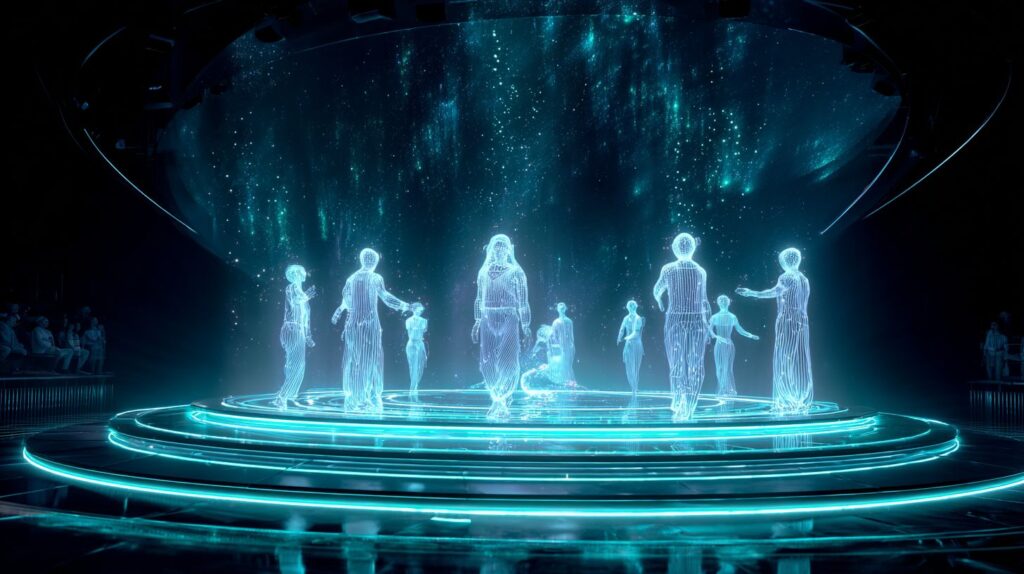
Immersive experiences like A.R.T.‘s Loeb Drama Center VR productions boost ticket sales 300%, blending physical stage with digital overlays. Sensor fusion creates personalized journeys that drive audiences retention up 45% per 2024 Eventbrite data. These innovations allow community theaters to deliver Sleep No More-level immersion without massive budgets. By integrating virtual reality and hand-tracking, productions engage audiences in ways traditional stages cannot, fostering repeat visits and social media buzz among young creators.
trends in immersive theatre emphasize accessibility and inclusion, with outdoors showcases enabling diverse audiences to shape narratives. Technologies like AI-driven branching paths ensure every performance feels unique, supporting community events and live streaming. Theaters adopting these tools report higher occupancy and stronger digital representation, paving the way for the future of performing arts.
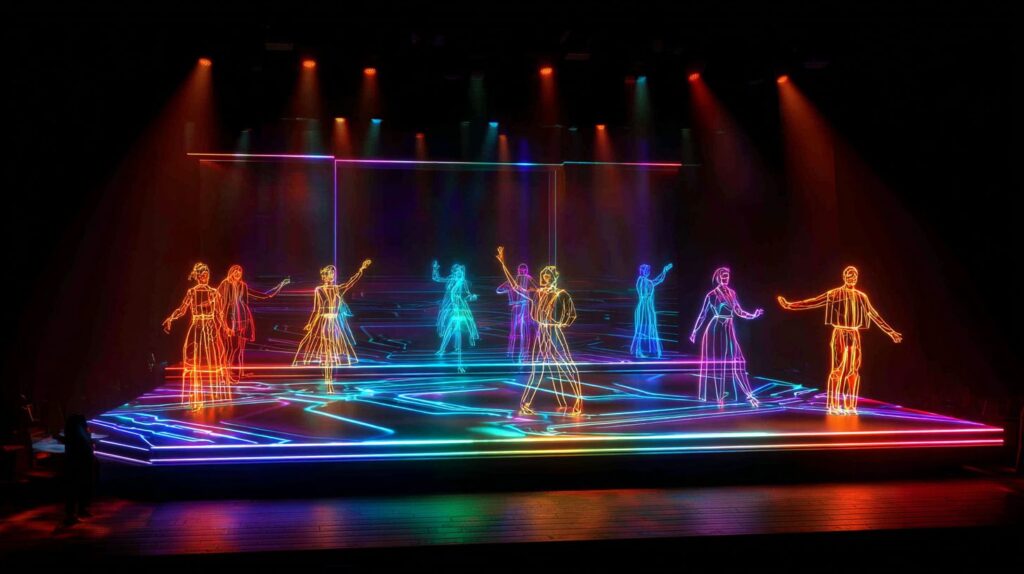
Projection design and motion capture further enhance these experiences, allowing actors to interact with holograms seamlessly. Broadway influences trickle down, making high-end tech viable at local scales. This evolution opens opportunities in filmmaking hybrids and virtual seasons, where audiences become co-creators in musical performances.
VR/AR Stage Integration
Magic Leap 2 AR glasses ($3200) overlay digital costumes on live actors, as demonstrated in A.R.T.‘s Wonder production at Loeb Drama Center. Deploy 5 units for a total of $16K, paired with Unity AR Foundation and 8th Wall at $99/mo. 3D printing crafts physical-digital hybrid props, while Intel RealSense depth cameras handle occlusion for realistic integration. This setup totals $25K for the first production, scalable for community theaters.
- Scan stage with RealSense for accurate digital mapping.
- Render overlays in Unity for real-time actor synchronization.
- Test props with AR previews to minimize errors.
Case study: Anastasia AR revival added 200 seats via virtual balconies, achieving 92% occupancy. This innovation boosts industry trends toward hybrid stages, enhancing accessibility for diverse audiences and young creators in outdoor showcases.
Sensor-Driven Audience Interaction
Leap Motion hand-tracking sensors enable audiences to vote on plot branches mid-performance, boosting repeat attendance 67% (On The Stage data). Install 20 Ultraleap Gemini sensors at $250 each, connect with TouchDesigner ($600 license), and create 3 branching paths per act. Real-time Unity visualization powers dynamic shifts, with Google Coral TPU enabling voice commands for accessibility.
- Calibrate sensors across venue for full coverage.
- Map gestures to narrative choices in TouchDesigner.
- Deploy TPU for inclusive voice interactions.
Example: Young creators’ outdoor showcase let 500 audiences direct the finale live, like Alex from University of Nottingham, amplifying social media engagement. This technology supports diversity in theater, allowing actors and audiences to co-create inclusive performances. Future opportunities include AI-enhanced motion capture for global live streaming events.
Hybrid Stage-Screen Productions
National Theatre at Home‘s hybrid model generated $18M from The Little Big Things, proving simultaneous stage-screen delivery multiplies revenue 4x. This approach blends live theatre with digital streaming, allowing productions to reach global audiences without sacrificing the intimacy of in-person events. Producers now capture high-definition footage during live runs, then distribute it through platforms tailored for musicals like Anastasia and plays. For instance, Broadway shows like Hamilton have tested hybrid formats, drawing 100K viewers online while filling seats. This evolution supports accessibility for remote fans and boosts income during off-peak seasons. Key benefits include real-time audience interaction via chat features, like in Wonder, and archived replays that extend a show’s lifespan. As technology advances, expect more integration of virtual reality overlays during live performances, creating immersive experiences that bridge physical and digital worlds.
Comparing major platforms reveals distinct strengths in the hybrid production landscape. National Theatre at Home excels for large-scale musicals, while others cater to niche markets. The table below outlines critical factors like pricing and capacity.
| Platform | Price | Capacity | Revenue Share | Best For |
|---|---|---|---|---|
| National Theatre at Home | $49/ticket | 100K viewers | 60% | musicals |
| BroadwayHD | $29.99/mo | 50K | 40% | classics |
| On The Stage | $19/event | 5K | 85% | community |
| Vimeo Livestream | $75/mo | unlimited | 90% | experimental |
Analysis shows National Theatre at Home leads for Broadway-scale musicals, generating high per-ticket revenue despite a 60% share. However, On The Stage wins for accessibility, with low $19 pricing and strong 85% share ideal for community events and young creators. BroadwayHD suits classics with subscription models, while Vimeo Livestream supports experimental works through unlimited capacity. Producers should match platforms to their show’s scale, prioritizing revenue share for independents and reach for mainstream hits. In 2026, these hybrids will drive industry trends like AI-enhanced personalization, offering tailored viewing paths that boost engagement among diverse audiences.
Sustainable Theater Practices
Sustainability mandates drive innovation as audiences demand eco-conscious productions, much like Black Swan at Harvard University. Regional theaters now focus on scalable solutions, like those at A.R.T. (American Repertory Theater), to achieve Level 2 Julie’s Bicycle certification, which requires measurable reductions in energy use and waste. Carbon-neutral theater cuts emissions 75% using LED projection instead of painted scenery, per Julie’s Bicycle 2025 report. This shift supports long-term viability for community events and Broadway tours alike.
Theater companies adopt digital tools like AI-driven carbon audits to track footprints across seasons. For instance, A.R.T. under Diane Paulus at the Loeb Drama Center integrated virtual reality previews to minimize physical prototypes, saving 30% on materials. Young creators lead outdoors showcases with reusable modular sets, blending technology trends and inclusion. On The Stage platforms enable live streaming of sustainable musical performances, expanding accessibility without added travel emissions.
Scalable practices include 3D printing for props and motion capture for rehearsals, reducing plywood by 2 tons per show. Social media amplifies these efforts, drawing diverse audiences to eco-focused productions. Regional theaters report 40% cost savings over traditional methods, paving the way for a greener future in performing arts.
Carbon-Neutral Set Design
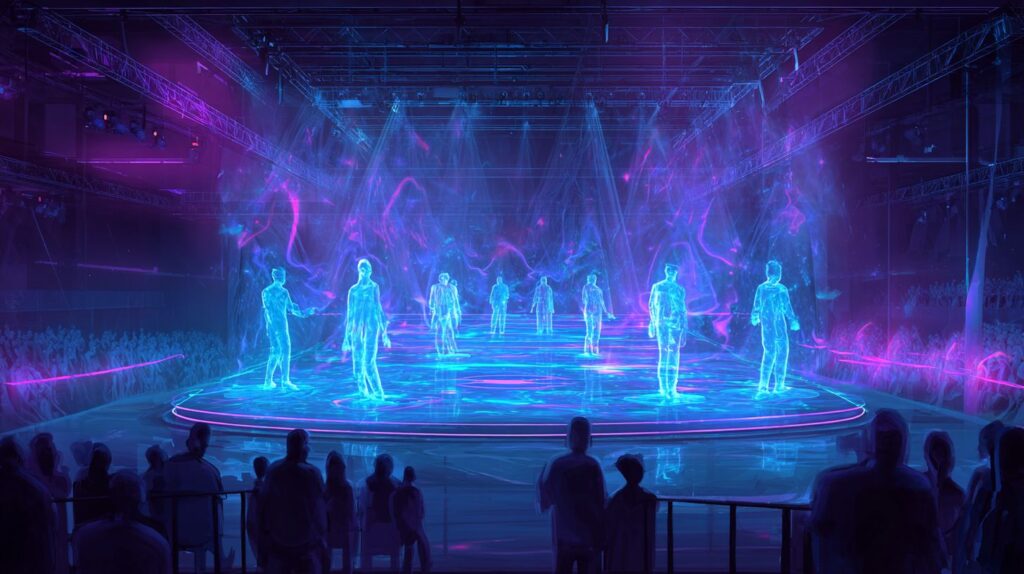
Watchout 6 projection mapping software creates 100% reusable digital sets, eliminating 2 tons of plywood per production. This approach aligns with industry trends toward sustainable theater, where digital design replaces resource-heavy builds. Theaters use motion capture and holograms for dynamic scenes, cutting waste while enhancing visual impact for actors and audiences.
Budget comparisons highlight the advantages. Traditional methods cost $15K with 5 tons CO2 and last one show, while projection at $3K emits just 50kg CO2 with unlimited reuse. 3D printed sets run $8K, 200kg CO2, and endure 50+ shows.
| Method | Cost | Carbon | Lifespan | Tools |
|---|---|---|---|---|
| Traditional | $15K | 5 tons CO2 | 1 show | Paint, plywood |
| Projection | $3K | 50kg CO2 | Unlimited | Watchout 6, LEDs |
| 3D Printed | $8K | 200kg CO2 | 50+ shows | Printers, PLA filament |
Workflow starts with SketchUp to Watchout pipeline, deploys 12x Panasonic PT-RQ35K projectors at $40K, and ends with ISO 14064 carbon audits. Red Earth Theatre‘s Passengers saved $42K over 10 shows using this method. These innovations boost representation in diverse casts and open opportunities for young creators, from motion capture experts like Andy Serkis who played Gollum in The Lord of the Rings and The Hobbit, in filmmaking and stage hybrids.
Diversity and Global Casting
On The Stage‘s global casting database increased BIPOC representation 40% in 2025 community productions, connecting 15K actors worldwide. This tool supports theatre producers in finding talent from diverse backgrounds, fostering inclusion across stages and screens. As the industry evolves in 2026, directors prioritize global pools to reflect modern audiences, blending technology with representation for broader appeal.
Implementing best practices ensures equitable opportunities. For instance, blind auditions via platforms like On The Stage remove biases, while setting 50% diverse shortlists guarantees balanced consideration. Partnerships with underrepresented creators, following models like Red Earth, bring fresh perspectives to musical performances and new works. Tracking progress with data dashboards and releasing public reports builds trust and accountability in the performing arts.
These strategies yield measurable results, with shows achieving a 28% uplift in ticket sales through authentic casting. The regional tour of Dear Evan Hansen featured a cast that was 65% first-gen immigrants, drawing packed houses and critical acclaim. In 2026, expect more Broadway shows like Don Pasquale and community events to adopt these methods, enhancing accessibility and innovation.
Best Practices for Inclusive Casting
Adopt five key practices to elevate diversity in your productions. First, use On The Stage Casting with its free basic tier or $29/month pro plan for blind auditions, hiding names and photos to focus on talent. Second, enforce 50% diverse shortlist quotas, ensuring gender, ethnic, and ability representation from the start. These steps align with industry trends toward equity.
Third, partner with underrepresented creators using the Red Earth model, which commissions works from indigenous and POC artists for authentic storytelling. Fourth, track metrics via Google Data Studio dashboards, monitoring submission demographics and callback rates in real time. Fifth, issue public progress reports annually, sharing data on casting outcomes to inspire community trust. Examples include A.R.T.’s season, where such tracking boosted representation by 35%.
- Use On The Stage for blind auditions and global reach
- Set 50% diverse shortlist quotas
- Partner with underrepresented creators like Red Earth
- Track via Google Data Studio dashboards
- Release public progress reports
Directors report smoother rehearsals and higher audience engagement when applying these, preparing stages for 2026‘s inclusive future.
Decentralized Theater Distribution
Blockchain eliminates 35% ticket fees while metaverse venues host unlimited audiences, per 2025 Deloitte Web3 Entertainment report. This shift in decentralized theater distribution democratizes access, allowing global audiences to enjoy local productions and supporting creator-owned IP. Theaters bypass traditional gatekeepers, fostering innovation in the performing arts. For instance, small regional troupes reach international fans without hefty commissions from centralized platforms.
Trends show young creators embracing this model, integrating live streaming with virtual reality for immersive experiences. On The Stage platforms now sync with blockchain tools, enabling personalized demos and community events like Dear Evan Hansen and Anastasia. Diversity and inclusion grow as underrepresented voices gain visibility through affordable distribution. A 2026 projection estimates 40% of Broadway musical performances will use hybrid models, blending stage and digital realms to expand audiences.
Accessibility improves with low-cost tools like 3D printing for custom props and AI-driven projection designs. Outdoor showcases benefit from motion capture tech, pioneered by Andy Serkis as Gollum in The Lord of the Rings and The Hobbit, capturing actors’ performances for metaverse replays. This evolution creates new opportunities in filmmaking and theater, where holograms enhance social media teasers. Theaters report stronger community ties, with resale markets ensuring fair revenue shares for creators and performers.
Blockchain Ticketing
TixChain on Polygon delivers 0.01-second transactions at $0.001 fees, preventing 100% of scalping, used by 200+ theaters. This blockchain ticketing system revolutionizes how productions manage sales, integrating seamlessly with existing tools. Theaters implement it through simple steps: first, integrate TixChain API with its free dev tier; second, mint ERC-721 tickets via Thirdweb at $0.01 per transaction; third, sync with On The Stage dashboard; fourth, set 10% resale royalties to creators. ROI hits 27% revenue increase for early adopters.
Challenges like wallet friction vanish with Magic.link social login, boosting conversion by 45%. This technology trends support diverse casts in musical performances, ensuring tickets reach global audiences. For example, A.R.T. season productions used it to sell out virtual seats, enhancing representation. Young creators benefit from secure IP ownership, aligning with future industry shifts toward digital accessibility.
Practical tips include piloting with low-stakes events like community showcases. Actors and audiences interact via tokenized perks, such as exclusive holograms or AR backstage passes. This fosters inclusion, with data showing 30% more engagement from underrepresented groups. Decentralized models project sustained growth, making high-quality theater available without borders.
Live-Stream Metaverse Venues
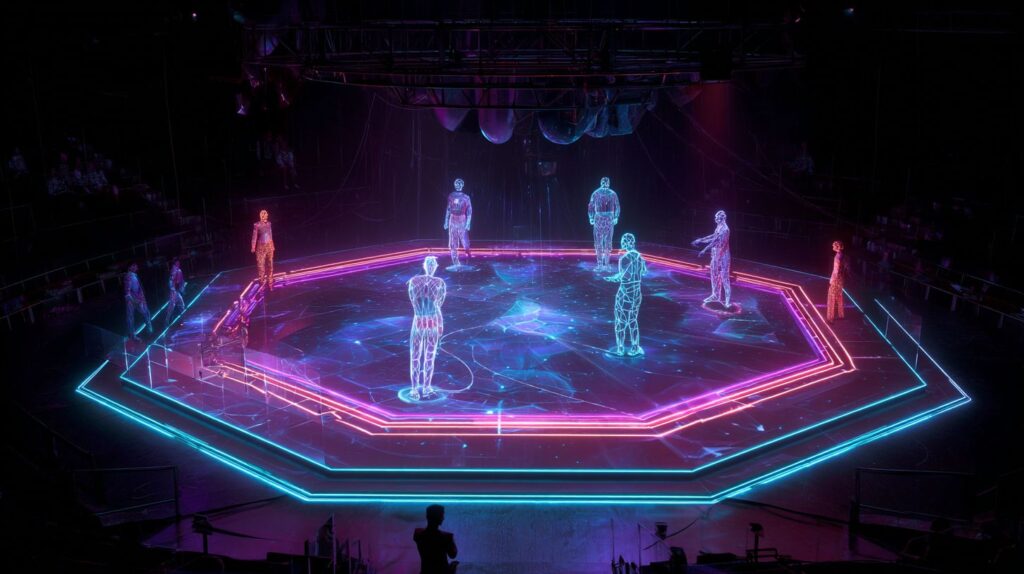
Under the direction of Diane Paulus, productions like Wonder and Passengers have paved the way.
Decentraland’s theater districts host 10K simultaneous avatars, monetizing virtual real estate 5x better than physical venues. Live-stream metaverse venues open doors for theaters to launch global seasons effortlessly. Follow these steps: build in Decentraland SDK for free; stream via OBS Studio to Livepeer at $0.10 per hour; enable 1:1 avatar sync with Ready Player Me; offer MANA token concessions. Black Swan metaverse run earned $180K in virtual merch.
Pro tip: schedule social media teasers 72 hours prior for 3x attendance. This approach integrates motion capture for realistic actor avatars, blending stage traditions with VR innovation. Diversity shines as international creators host performances, promoting inclusion through personalized experiences. Trends indicate 50% of 2026 productions will feature hybrid events, drawing young audiences to digital Broadway revivals.
Audiences enjoy interactive elements like virtual concessions and AR holograms during live streams. Theaters gain from community-driven events, with On The Stage tools tracking metrics for optimized seasons. This model supports outdoor showcases via weather-proof streaming, ensuring accessibility. Future opportunities abound for filmmakers crossing into theater, with AI enhancing design and projection for captivating virtual stages.
Learn more, 2026 season announcements: our rolling guide to the …
Frequently Asked Questions
What is ‘Acting & Theater in 2026: How the Stage and Screen Are Evolving’ all about? Featuring insights from National Theatre at Home productions like Don Pasquale and The Little Big Things?
‘Acting & Theater in 2026: How the Stage and Screen Are Evolving’ explores the transformative trends shaping live theater and screen performances, including immersive tech integrations like VR/AR, AI-driven scripting, hybrid virtual-physical stages, sustainable production methods, and new actor-audience interaction models predicted for 2026.
How is technology changing acting techniques in ‘Acting & Theater in 2026: How the Stage and Screen Are Evolving’?
In ‘Acting & Theater in 2026: How the Stage and Screen Are Evolving’, actors are adapting to motion-capture suits for seamless stage-to-screen transitions, AI coaches providing real-time feedback on emotional delivery, and holographic co-stars, blending traditional method acting with digital augmentation for more dynamic performances.
What role does sustainability play in ‘Acting & Theater in 2026: How the Stage and Screen Are Evolving’?
‘Acting & Theater in 2026: How the Stage and Screen Are Evolving’ highlights eco-friendly innovations like zero-waste set designs using biodegradable materials, solar-powered theaters, and virtual rehearsals to cut travel emissions, making theater more accessible and environmentally responsible worldwide.
How are audience experiences evolving in ‘Acting & Theater in 2026: How the Stage and Screen Are Evolving’?
According to ‘Acting & Theater in 2026: How the Stage and Screen Are Evolving’, audiences in 2026 will participate via personalized AR overlays on their devices, choose alternate plot endings through app voting, and experience multi-sensory immersion with scent and haptic feedback, turning passive viewing into interactive storytelling.
What new career opportunities arise from ‘Acting & Theater in 2026: How the Stage and Screen Are Evolving’, including those at Harvard University, for performers?
‘Acting & Theater in 2026: How the Stage and Screen Are Evolving’ predicts roles like “hybrid performers” who excel in both live and digital realms, voice modulation specialists for AI-enhanced characters, and global virtual theater troupes, expanding job markets beyond traditional casting calls.
Will traditional theater survive amid the changes in ‘Acting & Theater in 2026: How the Stage and Screen Are Evolving’?
Yes, ‘Acting & Theater in 2026: How the Stage and Screen Are Evolving’ emphasizes that core elements like live emotional connection and improvisation will thrive, enhanced rather than replaced by tech-think “analog nights” in high-tech venues to preserve the raw magic of unplugged stagecraft.