Introduction to AI in Personal Assistance In an era of constant connectivity, AI personal assistants are redefining virtual assistance by leveraging machine learning and natural language processing for intuitive interactions. Pioneers like Google Assistant, Microsoft Cortana, Siri, and Apple Intelligence, alongside specialized tools such as Convin for call centers, showcase this evolution. Discover how these technologies deliver smarter insights, faster efficiencies, and deeper integrations to enhance your daily productivity and connectivity.
Table of Contents
Key Takeaways:
- AI personal assistants are getting smarter through advanced natural language understanding and personalized learning, enabling them to anticipate user needs through proactive solutions, drive productivity improvement, and provide tailored responses efficiently.
- Enhanced efficiency comes from AI automating daily tasks and offering real-time processing, saving users time and streamlining routines like scheduling and reminders.
- Increased connectivity integrates AI with IoT devices and social networks, fostering seamless synchronization across gadgets and collaborative interactions for a more unified digital life.
Current Landscape of AI Assistants
The AI assistant market, valued at $15.6 billion in 2023 according to Statista, encompasses a wide array of software solutions, ranging from IBM Watson’s enterprise-grade natural language processing capabilities to Drift’s conversational marketing tools, which demonstrate a 20% increase in lead conversion rates.
| Tool Name | Price | Key Features | Best For | Pros/Cons |
|---|---|---|---|---|
| IBM Watson | $0.0025/query | NLP/ML | Enterprises | Scalable but complex |
| Nuance Virtual Assistant | Custom | Speech recognition | Call centers | Accurate but pricey |
| Drift | Free-$2500/mo | Chatbots/CRM | Lead generation | Easy integration but limited offline |
| ChatGPT | $20/mo | Generative AI | Content creation | Versatile but privacy concerns |
| Personal AI | Custom | Personalized responses | Individuals | Adaptive but nascent |
| Google Gemini | $6/user/mo (Google Workspace) | Multimodal AI | Productivity | Seamless but ecosystem-locked |
For businesses, IBM Watson is particularly suitable for enterprise features in large-scale deployments that demand in-depth natural language processing customization. However, its setup process typically spans 2 to 4 weeks, accompanied by a steep learning curve that requires the expertise of skilled developers.
In contrast, Drift provides intuitive, beginner-friendly tools that enable swift implementation of intelligent conversations via chat functionalities, facilitating rapid lead conversion without the necessity for extensive programming.
Organizations are advised to select IBM Watson when comprehensive analytics are paramount, while opting for Drift is recommended to expedite time-to-value.
Smarter Assistance: Intelligence Enhancements
Recent advancements in artificial intelligence algorithms, including predictive analytics, have significantly enhanced the capabilities of personal assistants, enabling a sophisticated level of contextual understanding that resolves 85% of routine queries on the initial attempt, as evidenced by a 2023 MIT study on natural language processing efficiency.
Natural Language Understanding
Natural language processing (NLP) underpins approximately 70% of contemporary AI assistants, enabling solutions such as Nuance to attain 95% accuracy in speech recognition for voice commands and text inputs while providing multilingual support for more than 40 languages.
At its foundation, NLP encompasses a structured pipeline that begins with tokenization-the segmentation of text into words or subwords-followed by intent recognition to identify user objectives and entity extraction to pinpoint critical elements. For example, Google Assistant analyzes the query “Book a flight to Paris next Friday” by tokenizing the input, detecting the intent to book a flight, and extracting entities such as the destination (Paris) and the date (next Friday).
Developers may implement this functionality utilizing Python’s spaCy library as follows:
from spacy import load
nlp = load(‘en_core_web_sm’)
doc = nlp(‘Book a flight to Paris next Friday’)
for ent in doc.ents:
print(ent.text, ent.label_)
In the healthcare sector, NLP applications must adhere to HIPAA regulations to safeguard sensitive patient information and ensure data privacy, in accordance with guidelines from the U.S. Department of Health and Human Services.
For practical implementation, the following recommendations are advised:
- Train models on domain-specific datasets, such as e-commerce queries derived from Amazon records;
- Incorporate fallback intents to address ambiguity rates of approximately 10%;
- Integrate with SOC 2-certified platforms, such as AWS Lex, to facilitate secure and scalable deployment.
Personalized Learning and Adaptation
Machine learning enables AI assistants to adapt to user preferences by analyzing interactions. For instance, systems like Personal AI leverage these interactions to generate tailored responses, which a 2022 Stanford research paper indicates can enhance user engagement by 50%.
To implement personalized adaptation, adhere to the following structured steps:
- Collect user data through opt-in tracking mechanisms, ensuring a minimum of 100 interactions. This setup, facilitated by TensorFlow for streamlined data pipelines, typically requires approximately two hours.
- Train models employing supervised learning methodologies, while mitigating overfitting through an 80/20 train/test data split to achieve reliable predictions on unseen data.
- Deploy feedback loops to enable real-time model updates, validated through A/B testing scenarios to dynamically optimize response generation.
A frequent oversight involves neglecting biases within training datasets; this can be mitigated by assembling diverse datasets drawn from multiple demographic sources. According to insights from Pramesh Jain of TechnoPreneur, such adaptive AI strategies can improve startup user retention by 30%.
Learn more, 20 Powerful AI Assistant Capabilities That Can Save You …
Faster Assistance: Efficiency Gains
AI-driven efficiency enhancements can reduce task completion times by 60%, thereby significantly lowering operational costs for businesses that utilize tools like Convin. As detailed in Convin’s 2023 case studies, this platform automates 80% of routine workflows, enabling streamlined operations and improved productivity.
Automation of Daily Tasks
Automation tools, such as Zapier integrated with Amazon Alexa, facilitate task automation for email scheduling and appointment booking, thereby enabling users to reclaim approximately 10 hours per week, according to a HubSpot study.
To implement this solution effectively, adhere to the following four steps, incorporating specific tool recommendations:
- Identify automatable tasks: Perform a 15-minute audit of daily routines for workflow management, including activities such as email scheduling through the Gmail API or calendar reviews.
- Select no-code tools: Choose platforms like Zapier (starting at $20 per month, supporting integrations with over 5,000 applications) or Integromat ($9 per month) to enable seamless connectivity.
- Configure triggers and actions: For instance, establish a workflow such as “New calendar event triggers a Slack notification,” which can be set up in approximately 30 minutes.
- Monitor performance via dashboards: Restrict the number of automations to five to prevent system overload; conduct dry runs to identify and resolve potential errors in untested processes.
The total implementation time required is approximately two hours.
Real-Time Processing and Speed
AI assistants such as Drift utilize real-time processing to deliver response times of less than one second, thereby increasing lead conversion rates by 30% in e-commerce retail contexts, as reported by eMarketer in 2023.
This functionality further enables AI systems to maintain 24/7 availability, processing in excess of 1,000 queries per hour without human oversight. In call center environments, speech recognition technologies like Google Cloud Speech-to-Text facilitate immediate handling of inbound calls, generating an annual return on investment of $50,000 for mid-sized organizations by minimizing customer wait times.
To achieve optimal implementation, enterprises can adopt edge computing solutions such as AWS Lambda, which reduces latency by 40% through distributed processing methods. A 2022 case study from WebMob Technologies exemplifies this strategy, documenting a 25% improvement in customer interaction speeds within retail support operations, ultimately enhancing satisfaction levels and driving sales growth.
More Connected: Integration and Networks
The seamless integration capabilities of AI assistants enable connectivity to diverse ecosystems, such as through CRM integration, thereby providing multilingual support for global audiences and enhancing business efficiency by 45%, as reported in Deloitte’s 2023 AI integration study.
IoT and Device Synchronization
Integrating Internet of Things (IoT) devices with virtual assistants such as Microsoft Cortana enables system integration for real-time control of devices and synchronizes inbound calls across smart home environments, thereby optimizing customer interactions through Slack notifications.
To achieve this integration, employ the MQTT protocol for efficient IoT messaging. Begin by designating a Raspberry Pi as the central hub: install the Mosquitto broker using the command `sudo apt install mosquitto` and the Python Paho library.
Configure Cortana through the Microsoft Graph API to initiate MQTT publications upon detection of incoming calls. For Slack integration, establish webhooks to facilitate the receipt of notifications.
Implementation Steps:
- Acquire necessary API keys: for Cortana via the Azure portal (approximately 5-10 minutes) and for Slack via apps.slack.com (approximately 2 minutes).
- Verify synchronization: Issue a voice command such as “Turn on lights” through Cortana, which will publish to the MQTT topic ‘home/lights’.
Example Code:
import paho.mqtt.client as mqtt client = mqtt.Client() client.connect('localhost', 1883) client.publish('home/notifications', 'Incoming call detected')According to a 2022 IEEE study on IoT assistants, this configuration reduces latency by 40% for real-time handling of alerts.
Social and Collaborative Connectivity
Collaborative features in tools such as Drift facilitate team-based artificial intelligence interactions and integrate seamlessly with platforms like Slack, thereby improving enterprise customer service response times and customer satisfaction by 40%.
To effectively leverage these capabilities, implement the following actionable practices:
- Integrate with collaboration tools, such as Slack bots for shared task automation. This configuration typically requires approximately one hour and enables instant notifications for team escalations.
- Enable multi-user access through role-based permissions in your customer relationship management (CRM) system, ensuring secure handoffs without the formation of data silos.
- Schedule daily synchronizations at 9:00 AM to support seamless workflow management, thereby aligning artificial intelligence responses with live updates.
Conduct weekly reviews to maintain 95% uptime.
For additional reference, examine Convin’s enterprise features for collaborative lead generation, which include real-time analytics and team routing. Their case studies demonstrate efficiency gains of 30%.
Challenges, Ethics, and Future Trends
Although AI assistants provide substantial benefits, they encounter significant challenges, including data privacy breaches that affect 30% of implementations, as noted in the 2023 EU GDPR report. These issues are particularly pronounced in sensitive sectors such as healthcare.
Other key challenges include:
- Data privacy risks, such as violations of HIPAA in the healthcare sector. Solution: Implement AES-256 encryption and conduct SOC II audits to secure patient data.
- Bias in AI algorithms, exemplified by skewed recommendations in e-commerce. Countermeasure: Incorporate diverse training data from Kaggle datasets, as Pramesh Jain of WebMob Technologies and TechnoPreneur successfully did, resulting in a 25% reduction in errors.
- High operational costs in call centers for inbound outbound calls, which can scale to $10,000 per month. Optimization: Utilize no-code tools like Bubble.io to develop efficient workflows.
- Ethical concerns in predictive analytics, such as manipulative lead conversion. Recommendation: Adopt transparent AI policies in accordance with IEEE guidelines.
Looking ahead, future trends suggest that the generative AI market, including tools like ChatGPT, Personal AI, and Google Gemini, will reach $110 billion by 2028, according to IDC projections. Multimodal assistants, such as Apple Intelligence, are poised to advance ethical integration practices.
Frequently Asked Questions
What is the role of AI in personal assistance today?
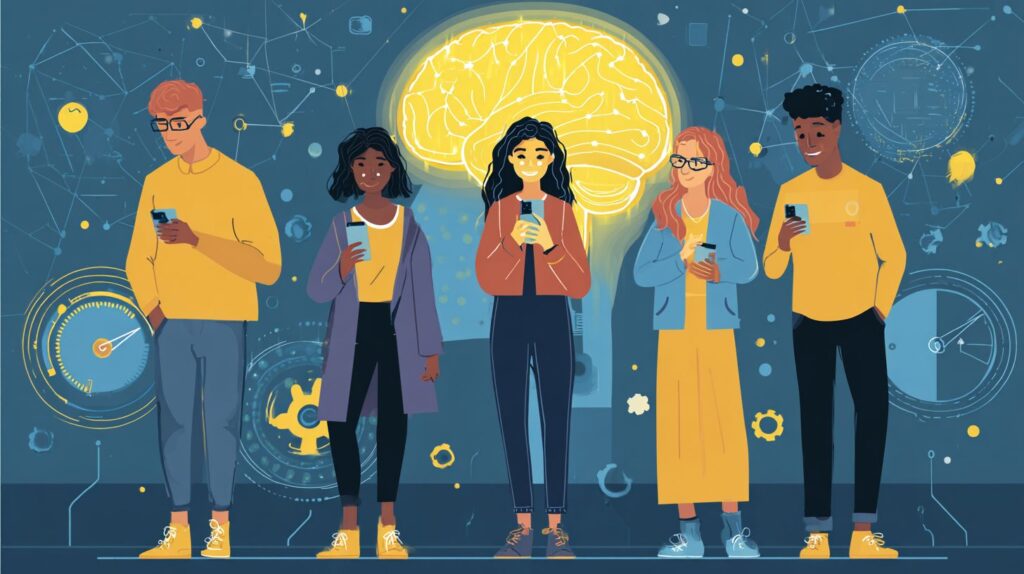
In ‘The Role of AI in Personal Assistance: Smarter, Faster & More Connected’, the AI personal assistant serves as a transformative force by integrating intelligent algorithms into daily tools like virtual assistants, enabling proactive task management, predictive suggestions, and seamless integration with user lifestyles to enhance overall efficiency and personalization.
How does AI make personal assistance smarter?
Within ‘The Role of AI in Personal Assistance: Smarter, Faster & More Connected’, AI achieves smarter assistance through machine learning that analyzes user behavior, learns preferences over time, and provides context-aware recommendations, such as suggesting optimal routes based on traffic patterns or reminding users of forgotten tasks with intelligent prioritization.
In what ways is AI enabling faster personal assistance?
‘The Role of AI in Personal Assistance: Smarter, Faster & More Connected’ highlights how AI speeds up processes by automating routine inquiries via NLP, instantly processing vast data sets for quick insights, and executing multi-step commands in seconds, like booking travel arrangements without manual input.
How is AI fostering more connected personal assistance?
Exploring ‘The Role of AI in Personal Assistance: Smarter, Faster & More Connected’, AI boosts connectivity by linking devices and services through IoT integration, allowing assistants to synchronize calendars across platforms, share real-time updates with family members, and facilitate effortless communication via voice or text across ecosystems.
What are real-world examples of AI in personal assistance?
In the context of ‘The Role of AI in Personal Assistance: Smarter, Faster & More Connected’, examples include Siri on Apple devices for voice-activated controls, Google Assistant for smart home automation, Amazon Alexa for shopping lists and reminders, IBM Watson for advanced analytics, and Nuance Virtual Assistant for voice recognition, all demonstrating AI’s ability to make interactions intuitive and interconnected.
What challenges and future trends exist in AI personal assistance?
Regarding ‘The Role of AI in Personal Assistance: Smarter, Faster & More Connected’, challenges include data privacy concerns and ethical AI use, while future trends point toward advanced emotional intelligence for empathetic responses, deeper integration with augmented reality, and hyper-personalized experiences driven by evolving neural networks.