As immersive technologies rapidly evolve, 2025 promises to be a pivotal year for augmented reality (AR) and virtual reality (VR). The integration of these innovations is reshaping industries, from healthcare to entertainment, and revolutionizing how we interact with the world. This exploration delves into the key trends driving AR and VR advancements, their transformative applications, and the challenges that accompany this technological shift. Prepare to uncover how these dynamic tools are redefining our daily lives and the future of work.
Table of Contents
Defining Immersive Technologies
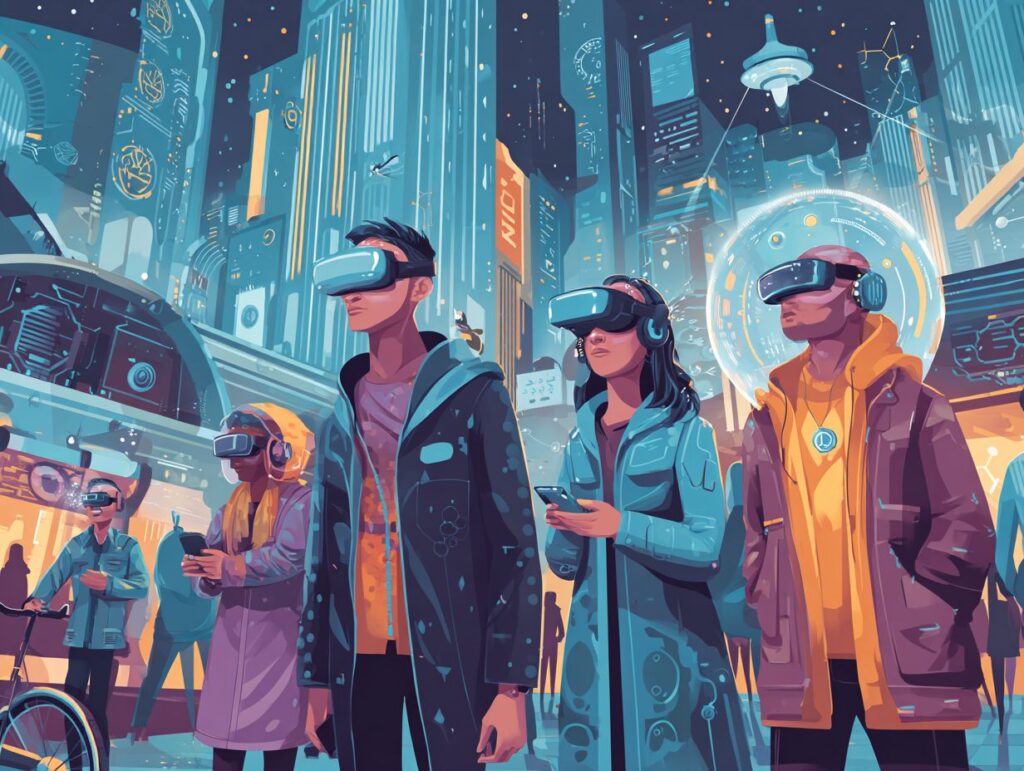
Immersive technologies include augmented reality (AR), virtual reality (VR), and mixed reality, all of which create experiences that simulate physical presence within digital environments.
Virtual reality systems, such as the Oculus Rift, provide fully immersive gaming and educational experiences by transporting users into alternate realities. In contrast, augmented reality devices, like the Microsoft HoloLens, overlay digital information onto the real world, thereby enhancing training and facilitating remote collaboration.
Businesses are increasingly utilizing these technologies; for example, architects employ VR to conduct virtual walkthroughs of their projects, while industries such as medicine leverage AR in training simulations to deliver real-time data during procedures.
With ongoing advancements in these fields, the integration of immersive technologies has the potential to significantly enhance engagement and improve learning outcomes.
Historical Context and Evolution
From the inception of virtual reality in the 1960s to the advanced applications observed in 2023, augmented reality (AR) and virtual reality (VR) have undergone significant evolution, leading to transformative impacts on various industries, including gaming and education.
In 1982, the introduction of the first arcade VR game, ‘Maze War,’ marked a pivotal moment in the development of immersive gaming experiences. Fast forward to 2016, when the launch of the Oculus Rift brought high-quality VR technology to consumers, igniting a renewed interest in this field.
By 2017, augmented reality gained considerable traction with the release of ‘Pokmon GO,’ which effectively integrated real-world interactions with digital characters, propelling AR into the mainstream.
Presently, virtual reality is employed in training simulations across diverse sectors such as healthcare and aviation, underscoring its increasing relevance and versatility in contemporary applications and daily life.
Key Trends Shaping AR & VR
The landscape of augmented reality (AR) and virtual reality (VR) is in a state of continuous evolution, propelled by advancements in hardware and innovative software platforms that are redefining user interactions.
Advancements in Hardware
The introduction of new hardware such as the Meta Quest Pro and Apple Vision Pro is significantly advancing the capabilities of augmented reality (AR) and virtual reality (VR) technologies by incorporating features such as eye tracking, haptic feedback, and spatial audio.
The Meta Quest Pro, priced at $999, is equipped with advanced eye tracking technology that enhances user interactivity by anticipating the user’s gaze, thereby creating a more immersive experience.
In contrast, the Apple Vision Pro, which is expected to be priced around $3,499, incorporates spatial audio functionalities to deliver dynamic soundscapes that adapt to head movements.
Additionally, the Pico 5, available at approximately $429, presents competitive specifications, including a 4K display and a wide field of view.
For professionals, the decision often depends on budget considerations and specific functionality requirements, with Meta appealing to developers and Apple focusing on high-end creative applications.
Software Innovations and Platforms
Software platforms such as Unity and Unreal Engine are fundamentally transforming the landscape of augmented reality (AR) and virtual reality (VR) content creation, allowing developers to construct immersive experiences across a variety of industries.
Unity is frequently preferred for mobile AR applications due to its extensive asset store and user-friendly interface, which renders it particularly suitable for developers who are new to this domain. Conversely, Unreal Engine is distinguished by its ability to create photorealistic visual experiences, making it a favored choice for high-end VR gaming applications.
Prominent examples of successful implementations include:
- IKEA Place, which utilizes AR technology to assist users in visualizing furniture within their homes, developed using Unity.
- Beat Saber, a VR game constructed on Unreal Engine that has attracted millions of players owing to its engaging gameplay.
Both platforms offer comprehensive documentation and robust community support, thereby facilitating the development process for creators.
Applications of AR & VR Across Industries
Augmented Reality (AR) and Virtual Reality (VR) are being employed across various sectors, significantly enhancing user engagement, improving training efficiency, and enriching entertainment experiences through immersive storytelling and social interaction.
Healthcare and Medical Training

In the field of healthcare, virtual reality (VR) is revolutionizing medical training by offering realistic simulations for surgical procedures, thereby decreasing the reliance on cadavers.
VR simulations enable trainees to practice complex surgeries in a safe environment and to repeat these procedures as necessary. Research indicates that residents utilizing VR for laparoscopic training exhibit a performance improvement of 230% in real-life scenarios when compared to traditional training methods.
Platforms such as Osso VR and Touch Surgery provide immersive environments where practitioners can enhance their skills while receiving immediate feedback. This leads to increased confidence and competence, with practitioners reporting a 25% greater preparedness for actual surgical operations.
These advancements not only improve educational outcomes but also substantially mitigate patient risk during surgical procedures.
Education and Remote Learning
Educational institutions are increasingly utilizing augmented reality (AR) and virtual reality (VR) technologies to develop immersive learning experiences that significantly enhance student engagement and improve retention rates. Programs such as Google Expeditions enable students to explore historical sites or examine human anatomy in three dimensions, thereby promoting a deeper understanding of the material.
A study conducted at Case Western Reserve University indicated that students who engaged in anatomy learning through VR experienced a 30% increase in exam scores compared to those who employed traditional learning methods. Similarly, schools that implemented zSpace reported that 76% of teachers observed enhanced engagement within the classroom environment.
By incorporating tools such as Oculus Rift for virtual simulations, educators can address diverse learning styles and provide real-time feedback, ultimately improving the overall effectiveness of the educational process.
Entertainment and Gaming
The gaming industry is leading the way in the application of augmented reality (AR) and virtual reality (VR), with titles such as Beat Saber and Pokmon GO attracting millions of users into immersive experiences, leveraging gamification and user experience to enhance engagement.
Games like Beat Saber, which are renowned for their rhythm-based mechanics and full-body engagement, have transformed the way players interact with music and movement.
On the other hand, Pokmon GO’s innovative implementation of location-based AR has not only cultivated a sense of community among players but has also produced remarkable user engagement metrics, with players averaging 25 minutes of gameplay per session.
These examples illustrate how immersive experiences can effectively capture users’ attention, thereby enhancing player retention and fostering social interaction. This evolution is ultimately reshaping gaming into a more dynamic and participative form of entertainment.
Learn more, Exploring the orientation towards metaverse gaming.
Impact on Daily Life and Work
Augmented Reality (AR) and Virtual Reality (VR) are poised to transform the dynamics of remote collaboration and reshape consumer interactions in daily life.
Enhancing Remote Collaboration
Tools such as Spatial and Gather are leveraging augmented reality (AR) and virtual reality (VR) to enhance remote collaboration, creating virtual office environments that facilitate real-time interaction through spatial computing and cloud computing technologies.
Spatial enables teams to design customizable virtual spaces in which avatars represent users, fostering a sense of presence among team members. Gather builds upon this concept by incorporating video calls, allowing users to navigate freely within a shared environment.
Research indicates that organizations utilizing these tools experience a 25% increase in employee satisfaction and a 15% enhancement in productivity as a result of more engaging meetings, illustrating the impact of productivity tools and collaboration tools on workplace collaboration.
To successfully implement these solutions, it is advisable to begin by clearly defining your team’s specific collaboration needs and to take advantage of free trials to determine the most suitable option.
Changing Consumer Experiences
Brands are increasingly utilizing augmented reality (AR) and virtual reality (VR) to enhance consumer experiences, with applications that range from virtual try-ons to immersive storytelling and augmented commerce, reshaping marketing strategies and consumer engagement.
For example, L’Oreal’s AR application allows users to virtually apply makeup, resulting in a reported 20% increase in online sales.
Similarly, IKEA’s Place app utilizes immersive technology to enable customers to visualize furniture within their homes prior to making a purchase, thereby enhancing their confidence in decision-making.
These technologies not only promote engagement but also cultivate a deeper emotional connection with the brand, ultimately leading to elevated conversion rates. The adoption of AR and VR has the potential to significantly improve the user experience, rendering shopping both interactive and informative.
Challenges and Considerations
Despite the potential of augmented reality (AR) and virtual reality (VR), numerous challenges, such as privacy concerns and cybersecurity in AR/VR, must be addressed to ensure their ethical and responsible application within society.
Privacy and Security Concerns
Privacy issues in augmented reality (AR) and virtual reality (VR) stem from data collection practices and user tracking, which raise significant concerns regarding user consent and data security. AR and VR platforms gather extensive amounts of personal data, resulting in heightened vulnerabilities. For example, a 2021 study indicated that 82% of AR applications were found to possess critical privacy flaws.
To address these challenges, developers should implement a strict data minimization principle, collecting only the information necessary for the functionality of their applications. The use of encryption tools, such as SSL/TLS, is essential for securing user data during transmission.
Additionally, conducting regular security audits and establishing user consent frameworks are paramount. These measures ensure transparency and provide users with greater control over their data. By adopting these practices, developers can significantly enhance trust and security within immersive technologies.
Accessibility and Inclusivity Issues
Ensuring that augmented reality (AR) and virtual reality (VR) technologies are accessible to all users, including individuals with disabilities, presents a significant challenge for developers.
To enhance accessibility within AR and VR environments, developers can implement features such as:
- Voice recognition for navigation
- Haptic feedback for tactile experiences
- Customizable user interfaces
For instance, Microsoft’s HoloLens utilizes voice commands, enabling users with limited mobility to interact seamlessly with the technology. Additionally, AR accessibility tools like Aira allow visually impaired users to receive real-time assistance while navigating virtual spaces.
By prioritizing the implementation of these technologies, developers can create more inclusive experiences that serve a broader audience, ultimately enhancing user engagement and satisfaction.
Future Outlook and Predictions
Looking beyond 2025, augmented reality (AR) and virtual reality (VR) are anticipated to become integral components of daily life, significantly influencing communication, entertainment, and education.
Potential Developments Beyond 2025
Emerging technologies, including AI integration and haptic feedback, are expected to significantly enhance augmented reality (AR) and virtual reality (VR) experiences, paving the way for innovative applications.
For example, artificial intelligence can facilitate the creation of more responsive environments, enabling virtual characters to adapt to user behavior, thereby enhancing immersion.
Companies such as Oculus are actively incorporating machine learning to improve real-time user interaction, while developers utilize tools like Unity to harness these AI capabilities.
Haptic feedback, in contrast, provides tactile sensations that simulate interactions, contributing to a more authentic experience. This technology is being integrated into VR gloves and controllers, allowing users to “feel” virtual objects.
Collectively, these advancements have the potential to redefine training simulations, gaming, and remote collaboration.
Long-term Impact on Society
As augmented reality (AR) and virtual reality (VR) become increasingly integrated into daily life, their long-term societal impact is expected to manifest in notable shifts in social interaction and consumer behavior, driven by advancements in AI integration and machine learning.
For example, AR has the potential to enhance real-world interactions by providing contextual information, such as sharing digital business cards or accessing real-time data related to a product. However, these enhancements may lead to a decrease in face-to-face communication as individuals increasingly rely on digital overlays.
Conversely, VR offers immersive shopping experiences that allow consumers to virtually try on products or explore various environments, fundamentally transforming traditional retail dynamics through virtual marketplaces and personalized experiences.
Moreover, communities may evolve as virtual spaces facilitate connections that transcend geographical boundaries. This development raises important questions regarding identity and belonging, as well as ethical concerns related to data privacy and digital surveillance.

Frequently Asked Questions
What are the top AR & VR trends to watch out for in 2025, including digital twins and industry applications?
In 2025, we can expect to see a rise in augmented and virtual reality technologies that are more immersive and user-friendly. This includes advancements in haptic feedback, eye-tracking, and gesture recognition.
How will immersive tech change the way we interact with the world in 2025?
With the continued development of AR and VR, we can expect to see a shift towards more interactive and intuitive experiences. This will allow us to seamlessly blend the digital and physical worlds, creating a truly immersive experience.
What industries will be most impacted by these AR & VR trends in 2025?
The possibilities of AR and VR are endless, and we will see a significant impact in industries such as healthcare, education, entertainment, and retail. These technologies will revolutionize the way we approach learning, entertainment, and even shopping.
How will AR & VR change the way we work in 2025?
In 2025, we can expect to see an increase in remote work and virtual collaboration through the use of AR and VR. This will allow for more efficient and effective communication and teamwork, regardless of geographical barriers.
What challenges do you anticipate for the widespread adoption of AR & VR in 2025?
As with any new technology, there will be challenges in terms of accessibility, affordability, and potential ethical concerns. It will be crucial for companies to address these issues in order to ensure a smooth and ethical integration of AR and VR in our daily lives.
What potential benefits can AR & VR bring to society in 2025?
The use of AR and VR technologies in fields such as healthcare and education has the potential to greatly improve access to quality care and education for all. These technologies also have the power to enhance empathy, understanding, and inclusivity in society.