As digital landscapes evolve, the lines between augmented reality (AR) and virtual reality (VR) blur, presenting unique opportunities across various sectors, particularly in immersive technology. Understanding their distinct characteristics is crucial for navigating their applications in 2025, from healthcare applications to immersive gaming experiences. This exploration delves into the key differences between AR and VR, their specific uses, and future trends, illuminating how these technologies are reshaping our interaction with the world. Discover how each medium redefines reality in this transformative era of digital overlays and real-world integration.
Table of Contents
Definition of Augmented Reality (AR)

Augmented Reality in Digital Twins
Augmented Reality (AR) integrates digital information with the real world, thereby enhancing user interaction through devices such as smartphones and AR glasses, and promoting sensory engagement.
This technology significantly transforms everyday experiences, exemplified by widely used applications like Pokmon GO, which overlays virtual creatures onto real-world locations, thereby encouraging users to explore their surroundings.
Similarly, Snapchat filters employ AR to enhance selfies through animated effects and facial overlays, offering immersive storytelling and augmented shopping experiences.
To implement AR effectively, developers can utilize platforms such as ARKit for iOS and ARCore for Android, both of which provide essential tools for creating immersive experiences and integrating IoT.
Engaging users through interactive elements not only captures attention but also promotes longer interaction times, establishing AR as a powerful tool in both marketing strategies and entertainment sectors.
Definition of Virtual Reality (VR)
Virtual Reality in Telepresence
Virtual Reality (VR) immerses users in a fully simulated environment, employing headsets such as the Oculus Quest 2 and HTC Vive to facilitate a completely interactive experience, leveraging haptic feedback for enhanced sensory immersion.
These headsets necessitate a compatible gaming PC or console, along with additional accessories like motion controllers to ensure comprehensive engagement.
In the realm of gaming, VR platforms like Beat Saber and Half-Life: Alyx provide exhilarating experiences that enable players to physically interact with their virtual surroundings. However, the applications of VR extend beyond entertainment. It has proven to be invaluable in training simulations for complex tasks, such as medical procedures and aircraft piloting, where a high degree of realism is essential.
Utilizing applications like Oculus for Business, organizations can develop customized training environments that enhance learning outcomes while simultaneously reducing training costs.
Key Differences Between AR and VR
Mixed Reality as a Bridge
Augmented Reality (AR) enhances the real world by integrating digital elements, whereas Virtual Reality (VR) provides a fully immersive experience, showcasing the key differences in their applications and sensory engagement.
This fundamental difference results in varied applications and user interactions for each technology.
Immersion Levels
Spatial Awareness in AR and VR
Immersion levels vary significantly between augmented reality (AR) and virtual reality (VR). AR facilitates interaction with the real world while simultaneously integrating digital content, whereas VR fully immerses users in a virtual environment, both offering unique user experiences.
For example, retailers are employing AR to enhance the shopping experience by enabling customers to visualize how furniture may appear in their homes prior to making a purchase. Applications such as IKEA Place allow users to scan their rooms and position 3D models of furniture within their space.
Conversely, VR is predominantly utilized in training programs, such as medical simulations, where trainees can practice surgical procedures in a controlled and immersive environment without any associated risks.
Both technologies serve to elevate user engagement but cater to distinctly different experiences: AR supplements reality, whereas VR constructs an entirely new one.
Hardware Requirements
Augmented Reality (AR) typically requires devices such as smartphones or AR glasses, whereas Virtual Reality (VR) necessitates dedicated head-mounted displays, including options like the Oculus Rift or Valve Index, which can affect overall accessibility.
Among AR devices, the Microsoft HoloLens, priced at approximately $3,500, provides immersive experiences but comes at a significant cost. Conversely, smartphones equipped with AR capabilities, such as the iPhone 13 or Samsung Galaxy S21, are considerably more accessible, generally priced between $800 and $1,200.
In the realm of VR, the Oculus Quest 2 is notable for being a cost-effective headset at around $299, while high-end alternatives like the Valve Index can exceed $999, necessitating a powerful personal computer for optimal performance.
It is advisable to assess both your budget and technical requirements prior to selecting the appropriate device.
Applications of Augmented Reality in 2025
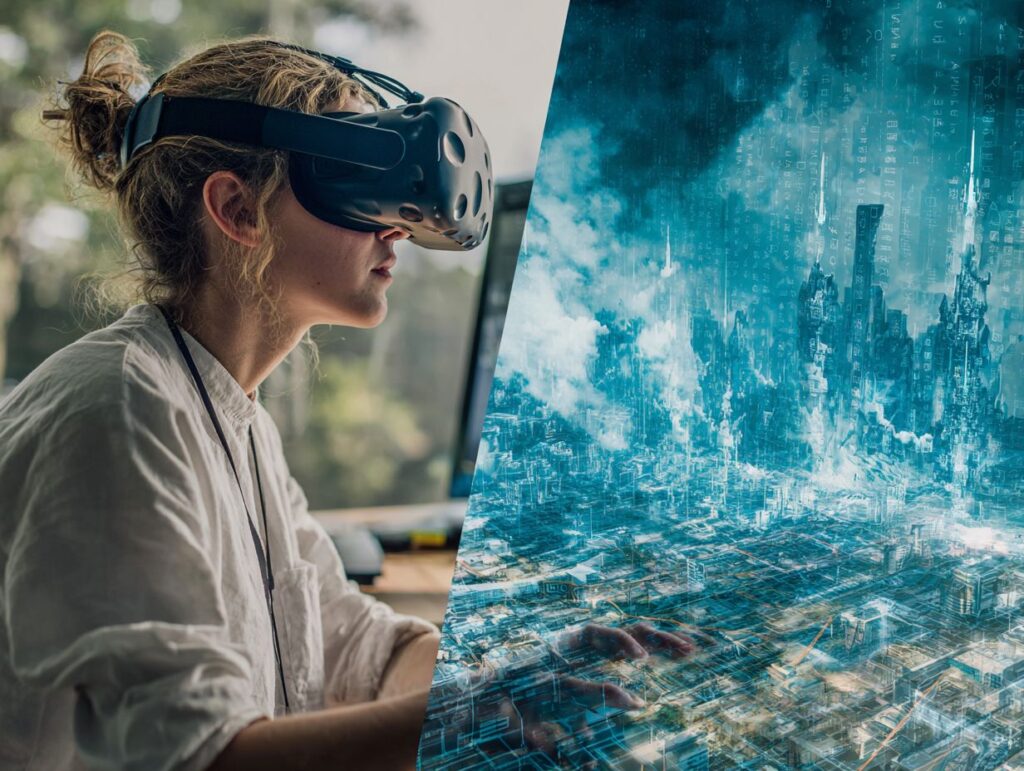
By the year 2025, Augmented Reality is anticipated to significantly transform various industries, particularly in the fields of healthcare and education, by improving experiential learning and enhancing patient care.
Healthcare Innovations
Training Simulations for Enhanced Skills
Augmented Reality (AR) is positioned to significantly enhance healthcare through applications such as surgical visualization and patient education, with the potential to reduce procedure errors by as much as 30%.
For example, the Microsoft HoloLens enables surgeons to view three-dimensional representations of patient anatomy during procedures, thereby enhancing precision.
In the area of training, AR applications provide medical students with the opportunity to simulate surgeries in a risk-free environment, thereby improving their skills and cognitive training prior to operating on actual patients.
Furthermore, patient education can be transformed through the use of AR; physicians can use this technology to demonstrate to patients what to expect during a procedure, thereby increasing understanding and compliance.
The implementation of these technologies could result in shorter recovery times and improved overall patient satisfaction.
Education and Training
Applying Augmented Reality in Skill Development
In the field of education, augmented reality (AR) facilitates immersive learning experiences. Tools such as Google Expeditions provide virtual field trips that can enhance student engagement by over 50%.
Educators can further utilize AR through applications like Merge Cube, which enables students to explore three-dimensional models in subjects such as biology and history. By integrating AR into educational lessons, research has demonstrated a significant increase in retention rates, with some studies indicating rates as high as 80%.
Platforms like Nearpod offer interactive AR features that allow students to collaborate on projects in real-time. These tools not only enhance the overall learning experience but also deliver measurable improvements in understanding and motivation among learners.
Learn more, Augmented Reality in Education: Use Cases and Benefits
Applications of Virtual Reality in 2025
Integration in Remote Collaboration
As we approach 2025, Virtual Reality is expected to broaden its influence across various industries, including gaming and real estate, thereby delivering exceptional user engagement and experience.
Entertainment and Gaming
Exploring Augmented Gaming
The gaming industry is projected to reach a valuation of $200 billion by 2025, with virtual reality (VR) offering fully immersive environments that significantly enhance user experiences and engagement, demonstrating remarkable growth in entertainment.
Virtual reality is rapidly transforming the gaming landscape, as demonstrated by successful titles such as Beat Saber, which has sold over 4 million copies. Players engaging with VR technology exhibit a 25% increase in engagement compared to traditional gaming, with VR users spending an average of two additional hours per week in immersive environments.
The adoption of standalone headsets, such as the Meta Quest 2, has lowered barriers to entry, resulting in sales surpassing 10 million units. As more developers invest in creating unique VR experiences, it is anticipated that user retention and the overall market growth will likewise increase.
Real Estate and Virtual Tours
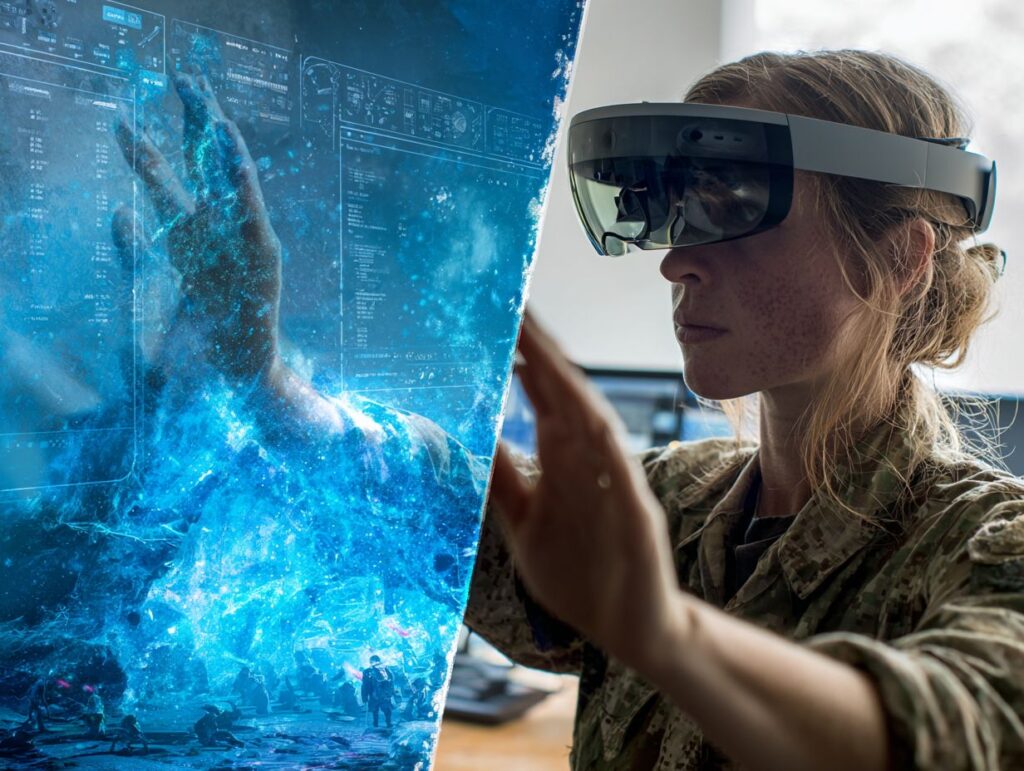
Virtual reality (VR) is revolutionizing the real estate industry, with projections indicating that virtual tours may increase buyer engagement by as much as 40%, thereby streamlining the property viewing process.
Real estate firms are increasingly utilizing VR technology to create immersive experiences, allowing prospective buyers to explore properties remotely.
For example, Matterport provides 3D virtual tour services that present property listings in remarkable detail, thereby enhancing buyer confidence. Additionally, developers such as Zillow have incorporated VR tours that enable users to navigate homes as if they were physically present.
This technology not only optimizes time efficiency but also expands market reach, as clients located in distant areas can effectively assess properties. Consequently, this can lead to expedited sales and, in many cases, higher closing prices.
Future Trends in AR and VR
Industry Applications and Market Opportunities
The integration of artificial intelligence with augmented reality and virtual reality technologies is expected to transform user experiences and applications across multiple sectors by the year 2025, influencing psychological effects and cognitive load.
Integration with AI Technologies
The integration of artificial intelligence (AI) will significantly enhance augmented reality (AR) and virtual reality (VR) by delivering personalized experiences, predictive analytics, and real-time user interactions within immersive environments.
For example, AI can analyze user behavior in real time to customize content, such as recommending virtual environments tailored to user preferences. Tools like Unity and Unreal Engine are utilizing AI to enhance character interactions, resulting in more realistic non-playable character (NPC) behaviors.
AI-driven analytics and machine learning integration have the capability to predict which elements users may find engaging, enabling developers to continually optimize experiences. By employing machine learning algorithms and user feedback, developers can refine user experiences based on feedback, ensuring that virtual settings remain innovative and compelling, ultimately enhancing user retention and satisfaction, while addressing ethical considerations in user interface design.
Potential for Social Interaction
Future applications of augmented reality (AR) and virtual reality (VR) are expected to prioritize social interaction and audience engagement, with platforms such as Spatial enabling users to collaborate within virtual interactive environments and potentially increasing engagement by as much as 60%, as part of the broader innovation trends.
For example, tools like Rec Room and VRChat create immersive settings where users can construct, socialize, and even host event experiences. These platforms offer customizable avatars that enhance personal expression and promote deeper connections among participants, leveraging consumer behavior insights.
By incorporating features such as virtual meeting rooms or collaborative games, users can partake in shared experiences and explore application diversity, thereby reinforcing community bonds and boosting user adoption and engagement.
As AR and VR technologies continue to advance, their ability to simulate in-person interactions with AR glasses and VR headsets is likely to improve user experiences, ultimately driving both retention and attraction to these digital environments through technological advancements and software ecosystems.
Frequently Asked Questions
What is the difference between augmented and virtual reality?
Augmented reality is the integration of digital elements into the user’s real-world environment, while virtual reality creates a completely simulated environment for the user to interact with.
How are augmented and virtual reality used in 2025?
In 2025, it is expected that augmented and virtual reality will be used in a variety of industries, from entertainment and gaming to education technology and training effectiveness, as well as in healthcare, architecture design, and marketing, supported by data visualization and remote assistance capabilities.
What are the main benefits of using augmented reality?
The key benefits of using augmented reality include enhanced user experience, increased productivity, and improved decision making through the integration of real-time data and digital elements into the user’s environment, fostering business solutions and educational outcomes.
How does virtual reality differ from augmented reality in terms of user experience?
Virtual reality provides a more immersive experience as it completely replaces the user’s real-world environment, while augmented reality enhances the user’s current environment with digital elements and visualization tools, contributing to architecture design and e-commerce applications.
What are some potential applications of augmented and virtual reality in the future?
Plus their current uses, augmented and virtual reality have the potential to be used in areas such as telecommuting, remote collaboration, and virtual tourism applications in the future, as part of future developments in audience engagement and industry standards.
What are the limitations of using augmented and virtual reality?
Some limitations of augmented and virtual reality include the need for advanced technology as seen in hardware evolution, potential health risks such as motion sickness influencing user safety, and the potential for addiction and disconnection from the physical world, impacting user demographics and competitive landscape.