The automotive supply chain constitutes a complex network that connects manufacturers, suppliers, and distributors, facilitating the production of the vehicles that are essential to our daily lives. This guide examines the key participants in the automotive industry sector, outlines the progression of materials from raw components to finished products, and highlights the critical role that technology plays in enhancing operational efficiency and supply chain management. Additionally, it addresses the current challenges and opportunities confronting the industry and presents strategies for achieving success and fostering growth in the face of evolving industry trends. Whether one is new to the subject or seeking to deepen their understanding, this article encompasses all necessary information to comprehend the intricacies of the automotive supply chain and its management practices.
Table of Contents
Key Takeaways:
- Understand the key players in the automotive supply chain – manufacturers, suppliers, and distributors – and their roles in the process.
- From the flow of materials to the role of technology, grasp the intricacies of how raw materials are transformed into finished products in the automotive supply chain.
- Stay ahead of the game by recognizing challenges, leveraging opportunities, and implementing effective strategies for success and growth in the automotive supply chain.
What is the Automotive Supply Chain?
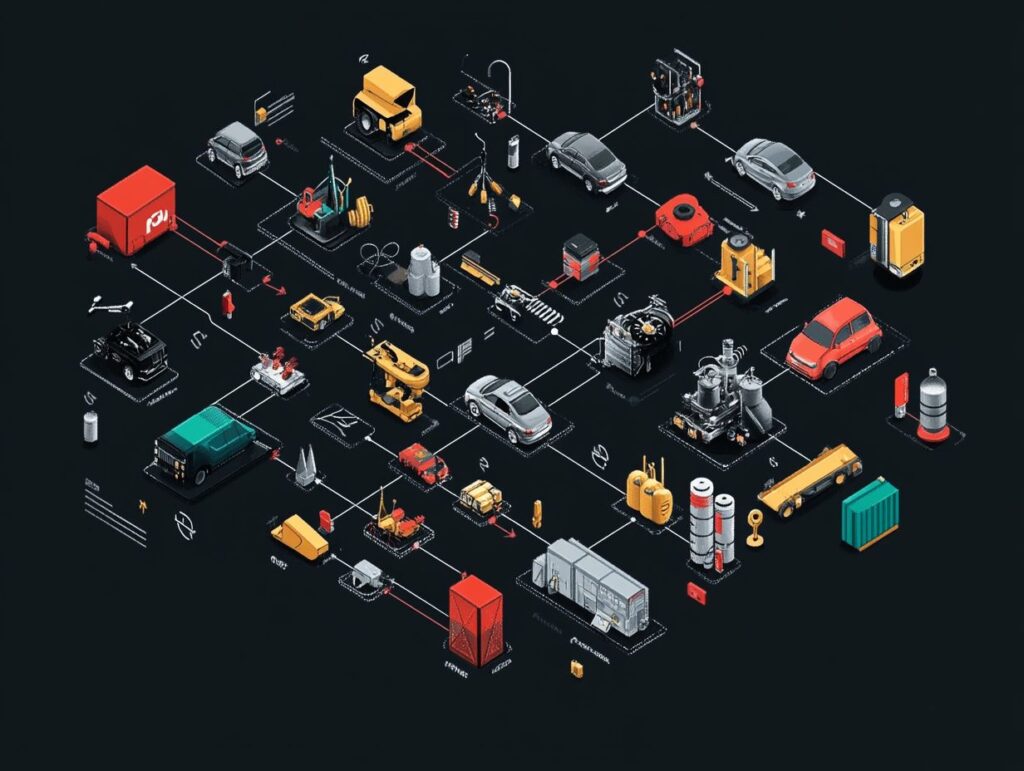
The automotive supply chain represents a complex network that encompasses all processes involved in the production and distribution of vehicles. This includes the sourcing of raw materials, manufacturing of parts, logistics management, and the delivery of finished products to customers.
Such an intricate system necessitates collaboration among various stakeholders, including manufacturers, suppliers, and distributors, to ensure operational efficiency, effectiveness, and transparency in supply chain management. Enhanced visibility and transparency throughout this supply chain are critical for optimizing operations, reducing costs, and managing risks associated with disruptions, such as the semiconductor chip shortage, all while prioritizing sustainability practices within the automotive industry, supported by digital transformation.
The importance of this supply chain cannot be overstated, as it serves as the backbone of the automotive sector, directly influencing the quality and availability of vehicles in the market. Efficiency within the supply chain ensures that products are manufactured and delivered in a timely manner, thereby meeting consumer demand and satisfaction.
Logistical processes play a vital role in managing inventory levels, transportation, and ensuring effective systems integration. Additionally, the integration of technology and digital transformation facilitates real-time data exchange and predictive analytics. For those interested in a comprehensive overview, this analysis by IBM covers the full spectrum of implications of supply chain management.
This technological advancement not only streamlines operations but also enhances decision-making capabilities, allowing companies to respond swiftly to market changes and mitigate potential disruptions. Such attributes are essential for fostering a resilient automotive supply chain.
Key Players in the Automotive Supply Chain
In the automotive supply chain, various key stakeholders contribute to the efficient flow of operations, including manufacturers, suppliers, and distributors. Each of these players plays an essential role in delivering high-quality vehicles to consumers.
Manufacturers, particularly Original Equipment Manufacturers (OEMs), are tasked with the production of vehicles and their components, while suppliers provide the requisite parts and materials. As Investopedia explains in their detailed discussion on OEMs, these manufacturers are critical in shaping industry standards and innovation.
Distributors and logistics partners ensure that these products are delivered to the market efficiently, frequently collaborating with prominent companies such as Proctor & Gamble to enhance their supply chain strategies and logistics systems.
Manufacturers, Suppliers, and Distributors
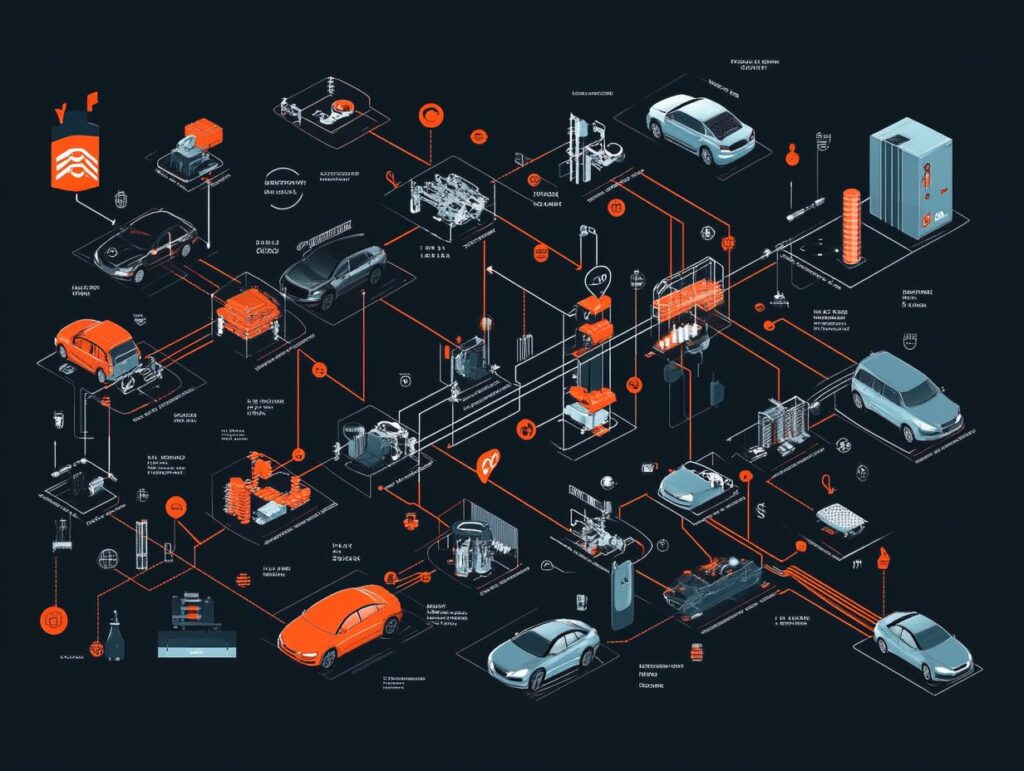
Manufacturers, suppliers, and distributors constitute the fundamental framework of the automotive supply chain, each playing a distinct and vital role in the production and delivery of vehicles and components.
These entities collaborate closely to ensure that every part, ranging from intricate electronics to basic fasteners, is sourced, produced, and delivered in an efficient manner. Manufacturers take the lead in designing and assembling vehicles, relying significantly on suppliers for the essential components needed in the production process. In turn, suppliers engage with multiple manufacturers to provide high-quality materials while optimizing costs and delivery timelines.
Distributors are instrumental in managing logistics and inventory, ensuring that completed vehicles are delivered to retailers and, ultimately, to end consumers. This complex relationship underscores the importance of collaboration and communication, facilitating a smoother flow of goods and minimizing delays, which is critical in today’s rapidly evolving automotive market.
The Flow of Materials in the Automotive Supply Chain
The flow of materials within the automotive supply chain represents a vital process that begins with the sourcing of raw materials and concludes with the delivery of finished products to customers.
This process is essential for ensuring a consistent supply of vehicles and components in the market. It encompasses complex logistics and transportation strategies that enable manufacturers to manage inventory effectively, adhere to production schedules, and satisfy customer demand while simultaneously minimizing costs and maximizing efficiency. The approach, which Harvard Business Review describes as ‘transformative,’ highlights the critical role logistics plays in strategic planning.
The effective integration of logistics systems is crucial for achieving transparency and optimizing processes throughout the supply chain.
From Raw Materials to Finished Products
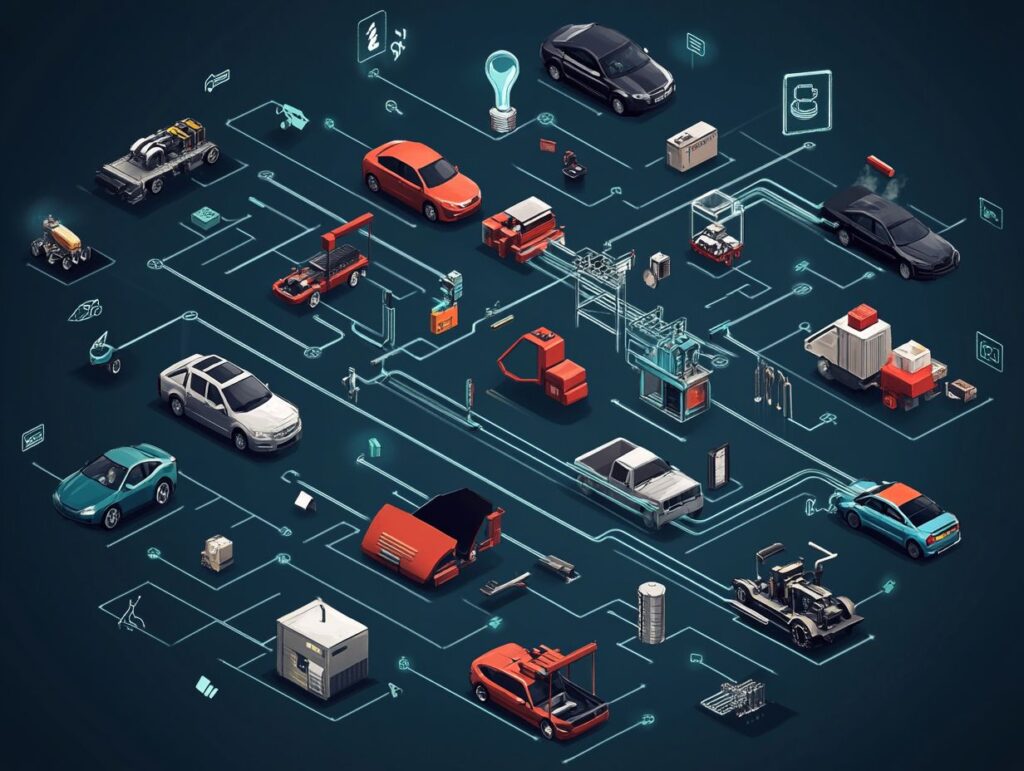
The transformation of raw materials into finished products within the automotive supply chain entails a series of manufacturing processes that convert basic materials into high-quality vehicles and components.
This process commences with the meticulous selection of raw materials, such as steel, plastics, and rubber, which are subsequently processed through various stages, including cutting, stamping, and molding. Each phase is carefully designed to enhance efficiency and minimize waste, thereby underscoring the critical importance of logistics in managing inventory and reducing delays.
Following these stages, the processed materials are directed to assembly lines where skilled workers and advanced robotics work in tandem to produce intricate subassemblies and, ultimately, complete vehicles. This interconnected process not only illustrates the complexity of automotive manufacturing but also emphasizes the essential role of supply chain strategies in ensuring timely delivery and optimal performance of the final products.
The Role of Technology in the Automotive Supply Chain
Technology plays a crucial role in enhancing the efficiency of the automotive supply chain. Advancements such as artificial intelligence, automation, and cloud-based solutions facilitate improved processes and decision-making at every stage.
By leveraging digital transformation tools to optimize logistics and inventory management, as well as employing innovative forecasting strategies, technology has substantially increased the visibility, transparency, and operational efficiency of supply chain operations.
The integration of these technological solutions enables automotive manufacturers and suppliers to reduce costs, mitigate risks, and effectively respond to challenges within the industry.
Innovations and Advancements
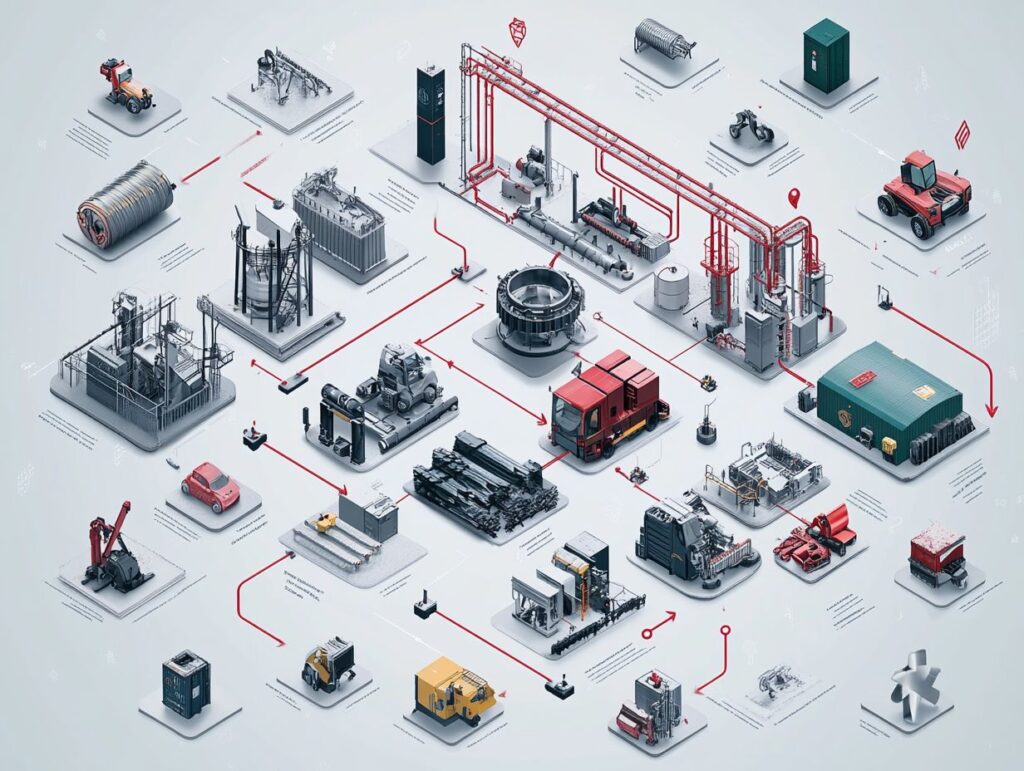
Innovations and advancements in technology are fundamentally transforming the automotive supply chain, with tools such as artificial intelligence (AI) and robotics being integrated into various operations to enhance efficiency and productivity.
These technologies are instrumental in streamlining logistics, improving inventory management, reducing lead times, and enhancing parts production processes. For example, AI algorithms can analyze vast amounts of data to forecast demand with greater accuracy, enabling manufacturers to optimize their production schedules. Concurrently, robotics automates routine tasks on assembly lines, significantly reducing human error and increasing output.
As companies undertake digital transformation initiatives, they are also implementing Internet of Things (IoT) solutions that offer real-time visibility into supply chain processes. This level of interconnectedness not only enhances decision-making capabilities but also promotes collaboration among suppliers and manufacturers, thereby fostering the development of a smarter and more resilient supply chain.
Challenges and Opportunities in the Automotive Supply Chain Management
The automotive supply chain encounters a variety of challenges and opportunities that can considerably affect its efficiency and effectiveness, especially in light of recent disruptions such as the semiconductor chip shortage.
These challenges underscore the need for innovative strategies in risk management and sustainability, prompting industry stakeholders to reassess and refine their approaches to supply chain management.
By capitalizing on emerging opportunities, companies can enhance their resilience and drive growth within an increasingly competitive automotive market.
Current Issues and Future Trends
Current issues impacting the automotive supply chain include supply disruptions, primarily driven by the semiconductor chip shortage, as well as a growing emphasis on sustainability practices within the industry, requiring adaptation through innovative solutions and partnerships.
These challenges have compelled organizations to reevaluate their supply chain strategies and invest in more resilient infrastructures. The swift transition toward electric vehicles adds another layer of complexity, as companies must navigate the intricacies of sourcing new materials and services while ensuring that their operations adhere to environmentally responsible practices.
In response to these evolving demands, automotive manufacturers are increasingly adopting advanced technologies such as artificial intelligence, AI, and blockchain to enhance transparency and efficiency. By embracing these innovations, companies aim to not only mitigate risks associated with traditional supply chains but also align with consumer expectations for sustainable practices and enhance customer satisfaction.
How to Succeed in the Automotive Supply Chain
To achieve success in the automotive supply chain, it is essential for companies to implement effective strategies that emphasize optimization, collaboration, and the utilization of AI technology.
These approaches will enhance operational efficiency and facilitate sustainable growth.
Strategies for Success and Growth
Strategies for success and growth within the automotive supply chain necessitate a multifaceted approach that emphasizes collaboration among manufacturers, suppliers, and distributors while effectively leveraging optimization techniques and advanced technology.
To attain these objectives, companies may implement just-in-time inventory systems, which serve to minimize waste and reduce holding costs, thereby enhancing overall operational efficiency and revenue.
Moreover, the integration of advanced analytics provided by platforms like Infor enables businesses to forecast demand fluctuations accurately, ensuring that supply aligns with market requirements without leading to excess inventory.
Investing in cloud-based platforms can facilitate real-time communication among all stakeholders, thereby fostering a culture of collaboration that is vital for prompt decision-making, similar to practices seen in companies like Proctor & Gamble.
Furthermore, establishing strategic partnerships with logistics providers and OEM partners can optimize transportation processes with the help of third-party logistics vendors, resulting in increased flexibility and reduced lead times.
Ultimately, these strategies, grounded in collaboration and technological innovation, have the potential to significantly enhance supply chain performance and achieve continuous growth.