Imagine descending into vibrant underwater world teeming with marine life-that’s the allure of scuba diving for beginners. Our beginners guide demystifies open water exploration, from earning dive certification through trusted programs like PADI, SSI, or BSAC, to selecting essential gear and mastering safety tips. Unlock the confidence to dive safely at beginner-friendly dive sites, turning your first plunge into an unforgettable adventure.
Table of Contents
Key Takeaways:
- Essential diving equipment for beginners includes a dive mask for clear vision, fins for propulsion, a regulator for breathing, BCD for buoyancy control, and an air tank for air supply-rent or buy quality items and get fitted properly.
- Prioritize safety by obtaining certification, checking medical fitness, diving with a buddy, planning dives meticulously, and using hand signals for communication while equalizing ears to avoid injury.
- Top beginner dive destinations like Australia’s Great Barrier Reef offer vibrant marine life and calm waters, while Mexico’s Cozumel provides accessible coral reefs and shipwrecks and warm conditions ideal for new divers. Other dive destinations include Thailand, the Maldives, the Caribbean, the Red Sea, and the British Virgin Islands. These spots are perfect for guided dives and liveaboard diving.
Understanding the Basics
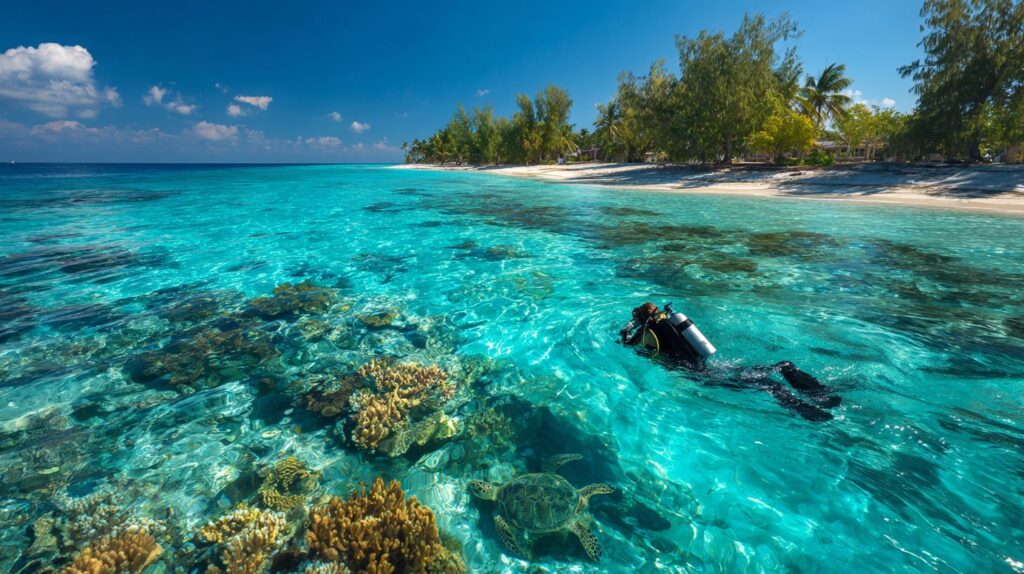
Mastery of the fundamental principles of scuba diving entails a thorough comprehension of key concepts, such as buoyancy control via a Buoyancy Control Device (BCD) and the essential rule to never hold breath, which averts lung overexpansion injuries in accordance with safety protocols and research from the Divers Alert Network (DAN).
The history of scuba diving traces back to visionaries like Leonardo Da Vinci, who sketched early diving suits, and modern pioneers Jacques Cousteau and mile Gagnan, who developed the Aqua-Lung regulator.
To attain proficiency in these essentials, adhere to the following five structured steps:
- Acquire knowledge of pressure physics: Pressure escalates by 1 atmosphere (atm) for every 10 meters of depth; devote 15-20 minutes to examining diagrams that depict the impact on air volumes.
- Develop expertise in BCD-mediated buoyancy control: Conduct inflation and deflation exercises to establish neutral buoyancy at 5 meters; dedicate 30 minutes to pool-based practice, while mitigating risks of over-inflation.
- Refine steady breathing proficiency: Emulate diving conditions by inhaling through a regulator; engage in 20 minutes of daily drills to cultivate this discipline, as supported by DAN’s investigations into barotrauma prevention.
- Internalize ascent protocols: Proceed to ascend slowly at a controlled rate of 9 meters per minute to preclude decompression sickness; consult British Sub-Aqua Club (BSAC) guidelines for optimal dive profiles.
- Perform rigorous equipment inspections: Examine the BCD and regulator before each dive; allocate 10 minutes per session to this procedure, thereby averting failures as delineated in Professional Association of Diving Instructors (PADI) standards.
Training and Certification for Beginners
The Professional Association of Diving Instructors (PADI) offers the Open Water Diver course, which stands as the most widely recognized certification program, with more than 27 million graduates worldwide. This course integrates an eLearning platform with in-person classes to equip novice divers for both confined water training and open water dives, typically completed within 3 to 4 days.
Upon completion, divers can advance to become an advanced diver and enroll in specialty programs like wreck diving, night diving, and underwater photography.
| Agency | Cost | Duration | Key Features | Best For |
|---|---|---|---|---|
| PADI | $475 | 4 days | eLearning + 4 open water dives | Beginners |
| SSI | $400 | Flexible | App-based, self-paced | Self-paced learners |
| BSAC | $350 | Varies | UK-focused, in-person emphasis | Technical divers |
PADI certification provides global recognition, making it particularly suitable for individuals planning overseas trips and international travel.
In comparison, the Scuba Schools International (SSI) program offers greater affordability, yielding average savings of approximately 15%.
For beginners, PADI surpasses SSI due to its standardized training methodology, which enhances confidence across diverse diving environments.
According to the Diving Equipment & Marketing Association (DEMA) 2022 report, all three agencies achieve completion rates of 95 percent. Furthermore, PADI demonstrates a leadership position in employability opportunities for professional dive instructors (source: DEMA Show data).
Checkout Beginner’s Guide to Dive Safety
Essential Gear Overview
Essential scuba diving equipment, ranging from dive masks and dive computers to wetsuits, drysuits, and scuba tanks, is vital for ensuring diver safety and comfort. As recommended by the Professional Association of Diving Instructors (PADI), the investment required for basic gear typically begins at $500, while a comprehensive personal equipment kit may cost up to $2,000.
Mask, Snorkel, and Fins
Selecting a properly fitted dive mask featuring tempered glass and a silicone skirt, such as the Cressi Big Eyes ($60), effectively prevents fogging and leaks. Likewise, open-heel fins like the Mares Avanti Quattro ($150) deliver efficient propulsion, making them ideal for novice divers.
| Item | Price | Key Features | Best For | Pros/Cons |
|---|---|---|---|---|
| Mask: Cressi Big Eyes | $60 | Low-volume, tempered glass, silicone skirt, anti-fog | Beginners | Pros: Comfortable fit, prevents leaks; Cons: Limited field of view |
| Snorkel: Tusa Platina | $25 | Purge valve, flexible silicone mouthpiece | Surface snorkeling | Pros: Easy breathing, clears water quickly; Cons: Not for deep dives |
| Fins: Mares Avanti Quattro | $150 | Open-heel, short blade, bungee strap | Beginners | Pros: Efficient propulsion, adjustable; Cons: Requires booties |
| BCD: Aqualung Wave | $300 | Rear inflation, integrated weights, multiple D-rings | Recreational divers | Pros: Balanced buoyancy, user-friendly; Cons: Slightly bulky |
| Regulator: Scubapro MK25/S600 | $700 | Balanced piston, air-balanced second stage | All levels | Pros: Reliable breathing, smooth flow; Cons: High cost |
To verify proper mask fitting, utilize the soapy water test: Apply a small amount of dish soap to the interior surface of the lens, rinse it lightly with water, and position the mask on the face without engaging the straps. If the mask maintains a seal for 10 to 15 seconds, it demonstrates an effective fit.
For determining the appropriate size of fins for beginners, measure the foot length and incorporate an additional 1 to 2 centimeters to accommodate booties, which helps prevent blisters.
It is recommended to test the fins while wearing neoprene socks to confirm a secure yet non-restrictive fit. Compliance with proper sizing standards, in accordance with PADI guidelines, promotes enhanced safety and overall comfort during use.
Regulator, BCD, and Tank
The regulator, exemplified by the Scubapro MK25 model (priced at $400), supplies air from a 12-liter scuba tank at ambient pressure. Meanwhile, a buoyancy control device (BCD), such as the Aqualung Wave ($300), facilitates buoyancy management during dives reaching depths of up to 18 meters.
To assemble the regulator, attach the first stage to the tank’s DIN valve and connect the second stage to the diver’s mouthpiece. Subsequently, verify breathing resistance at 10 psi using a tank simulator, a procedure that typically requires 20 minutes in accordance with PADI’s equipment manual.
To prevent free-flow malfunctions, thoroughly rinse all components in fresh water after each dive.
For BCD inflation, utilize compressed air rather than CO2 cartridges, and calibrate the power inflator to provide a 5 kg lift capacity, thereby achieving neutral buoyancy at a depth of 5 meters.
The AL80 aluminum tank offers a capacity of 80 cubic feet at 3,000 psi and weighs 30 pounds when filled. These tanks must undergo annual pressure testing in compliance with NIST standards to mitigate the risk of structural failure.
Safety Tips: Pre-Dive Preparation
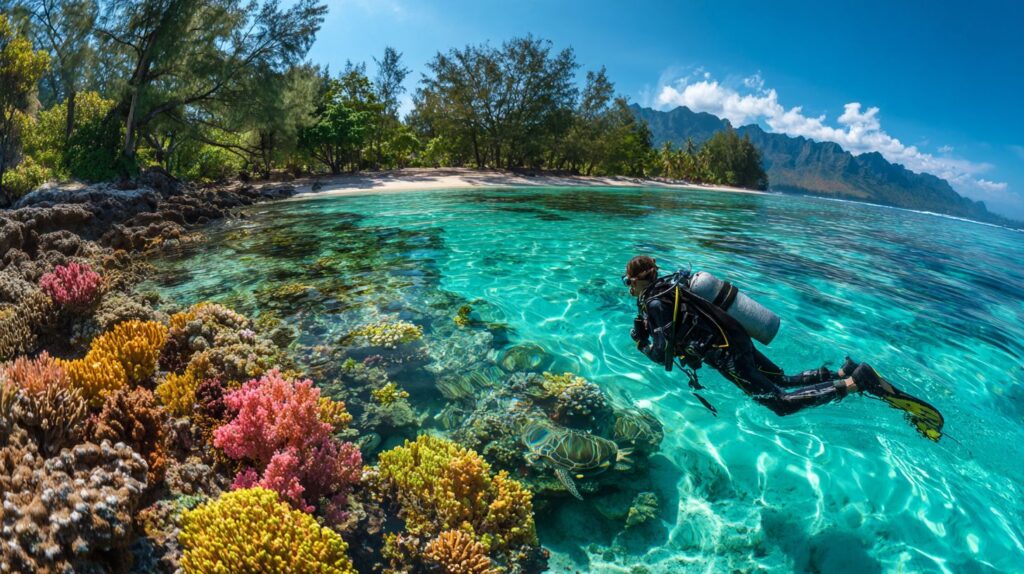
Research from the Divers Alert Network (DAN) demonstrates that thorough pre-dive preparation, with an emphasis on maintaining optimal health fitness while adhering to the buddy system, can reduce diving risks by 70%. This structured approach ensures that divers are fully prepared to engage in safe and responsible underwater activities.
Medical Fitness and Buddy System
Health fitness for diving necessitates the completion of an RSTC questionnaire to screen for conditions such as asthma, with PADI data indicating that approximately 90% of applicants are cleared. Additionally, the buddy system requires pairing with a certified dive instructor or an experienced peer to facilitate mutual monitoring and enhance safety.
To promote safe diving practices, adhere to the following guidelines:
- Complete the medical questionnaire within 15 minutes, and consult a physician if you have cardiovascular conditions or are pregnant, in accordance with World Health Organization (WHO) guidelines on diving-related health risks, which emphasize the cardiovascular demands of the activity.
- Select a dive buddy whose experience level aligns with your own, and employ standardized hand signals for communication; the Divers Alert Network (DAN) advises conducting pre-dive briefings to establish clear expectations and protocols.
- Build physical fitness through a 200-meter non-stop swim and a 10-minute water tread test; utilize DAN’s fitness tracking application to monitor progress over several weeks.
- Inspect the emergency oxygen kit, surface marker buoy, finger reel, and bolt snap clip at least 24 hours prior to the dive, ensuring proper tank pressure and mask fit in line with PADI standards. Also, prepare your dive logbook for recording the dive.
- Maintain a dive logbook to record all dives and track experiences.
Implementing these measures significantly reduces risks, as the WHO reports that 80% of diving incidents can be prevented through thorough preparation.
Dive Planning Essentials
Utilizing a dive computer such as the Suunto Zoop, priced at $250, for effective dive planning establishes no-decompression limits, which, according to studies by the Undersea and Hyperbaric Medical Society (UHMS), prevent decompression sickness in 80% of cases.
To enhance safety, adhere to the following six-step procedure, which requires approximately 45 minutes:
- Examine weather conditions and Notices to Air Missions (NOTAMs) using the Windy application (10 minutes), ensuring wind speeds do not exceed 15 knots.
- Compute No-Decompression Limits (NDLs) using your Suunto Zoop or NOAA dive tables, restricting dives to a maximum depth of 30 meters for novice divers.
- Prepare a surface marker buoy (SMB) and finger reel, deploying the SMB at a depth of 5 meters during ascent.
- Assess gas reserves, confirming a minimum starting pressure of 200 bar.
- Configure bolt snap clips on regulators and buoyancy control devices (BCD) to facilitate quick release.
- Record pertinent details in your dive logbook prior to commencing the dive.
It is advisable to avoid the common error of disregarding currents; instead, incorporate a 20% safety margin to No-Decompression Limits (NDLs), as recommended by the Divers Alert Network (DAN) guidelines.
In-Water Safety Protocols
Agencies such as Scuba Schools International (SSI) and BSAC enforce stringent in-water safety protocols, including the prohibition against breath-holding and a controlled ascent rate of no more than 18 meters per minute. These measures are implemented to minimize the risks of barotrauma.
This protocol is substantiated by a 2021 study published in *Undersea Biomedical Research*, which indicates that adherence rates of 95 percent significantly reduce the occurrence of related incidents.
Equalization and Communication
Proper equalization, achieved through the Valsalva maneuver every 1-2 meters of descent, is essential to prevent ear squeeze-a condition that affects approximately 30% of novice divers according to Divers Alert Network (DAN) reports.
Additionally, the use of standardized hand signals facilitates effective communication, thereby enhancing the reliability of the buddy system during underwater activities.
Divers encounter several critical challenges that must be addressed to ensure safety and success.
- Ear Equalization Failure: This issue commonly results in discomfort or pain beginning at depths of around 5 meters. To mitigate it, divers should employ alternative techniques such as the swallow method or the Toynbee maneuver (which involves pinching the nose closed while swallowing). Proficiency can be developed through regular practice of PADI’s 10-minute confined water exercises in a controlled pool environment to increase equalization frequency.
- Communication Breakdowns: Situations such as separation from a buddy necessitate the use of established hand signals. The five standard signals include:
- OK: Forming a circle with the thumb and index finger.
- Question: Wiggling the hand from side to side.
- Ascend/Descend: Pointing the thumb upward or downward.
- Out of Air: Slicing the hand across the throat.
- Surface: Placing a flat hand palm-down and moving it horizontally.
- Panic Signals: Indicators of distress, such as rapid waving, require an immediate response, including the deployment of a surface marker buoy (SMB) to indicate the diver’s position in accordance with PADI Open Water Diver protocols. This measure helps prevent uncontrolled ascents and associated risks.
Best Beginner Dive Locations
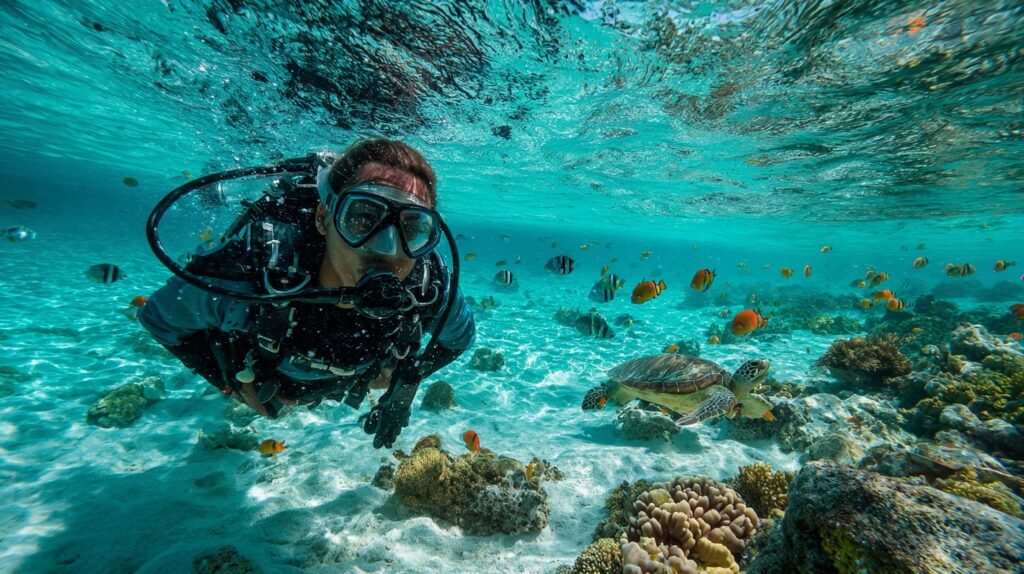
Beginner-friendly dive sites, such as the Great Barrier Reef, offer guided dives with visibility extending up to 30 meters, rendering them particularly suitable for individuals’ initial open water experiences. Liveaboard options in destinations like Thailand and the Maldives cater to approximately 70% of novice divers, according to surveys conducted by Dive Magazine.
Great Barrier Reef, Australia
The Great Barrier Reef, designated as a UNESCO World Heritage site and encompassing 344,400 square kilometers, offers guided introductory dives for beginners at locations such as Agincourt Reef, where participants can observe more than 20 marine species. Each dive is priced at $150, inclusive of equipment.
Examine this case study of a PADI-certified beginner dive trip offered by Cairns Dive Adventures.
The three-day itinerary comprises the following:
- Day 1: Orientation session followed by a shallow reef dive (water temperature of 25 degreesC and visibility of 20 meters);
- Day 2: Two introductory dives, during which participants may encounter turtles and clownfish;
- Day 3: An advanced beginner wreck dive at the nearby SS Yongala site, including buoyancy control techniques such as controlled breathing to navigate currents.
The total cost is $1,200, covering certification and equipment rental.
Performance metrics indicate a 90% satisfaction rate on TripAdvisor, with a strong return on investment realized through the acquisition of lifelong skills that support continued participation in eco-tourism activities.
According to research from the Australian Institute of Marine Science, the health of the reef sustains approximately 1,500 species of fish, underscoring the importance of sustainable practices, including no-touch protocols.
Cozumel, Mexico
Cozumel, located in the Caribbean, provides an excellent destination for beginner divers, featuring drift dives at Palancar Reef with depths reaching up to 12 meters. It also offers shipwreck explorations suitable for novices, such as the 100-meter-long Felipe Xit, with guided tours priced at $120 that include comprehensive drift safety protocols.
Beginner divers stand to benefit significantly from Cozumel’s impressive 98% safety record, as documented by local operators and aligned with Professional Association of Diving Instructors (PADI) standards, rendering it an optimal choice for first-time participants.
For family excursions, the return on investment is particularly compelling: a budget of $800 covers two dives per day over four days, enabling participants to observe turtles, eels, and vibrant coral reefs while progressively building confidence toward advanced certification levels.
In comparison to the British Virgin Islands, where currents can reach up to 2 knots, Cozumel’s milder drifts of 0.5 to 1 knot make it far more suitable for novice divers.
According to Diving Equipment and Marketing Association (DEMA) data, the Caribbean region attracts 40% of its visitors as beginners, owing to its consistently warm waters at 28 degreesC and exceptional visibility exceeding 30 meters, which together ensure a thrilling yet secure diving experience.
Frequently Asked Questions
What is a Beginner’s Guide to Scuba Diving: Safety Tips, Gear & Best Locations all about?
A Beginner’s Guide to Scuba Diving: Safety Tips, Gear & Best Locations introduces newcomers to the underwater world, inspired by visionaries like Leonardo Da Vinci, Jacques Cousteau, and mile Gagnan, by covering essential safety practices to prevent accidents, must-have gear like masks, fins, and regulators, and top beginner-friendly spots such as shallow reefs in the Caribbean or Hawaii where marine life is abundant and currents are mild.
What essential gear do beginners need in a Beginner’s Guide to Scuba Diving: Safety Tips, Gear & Best Locations?
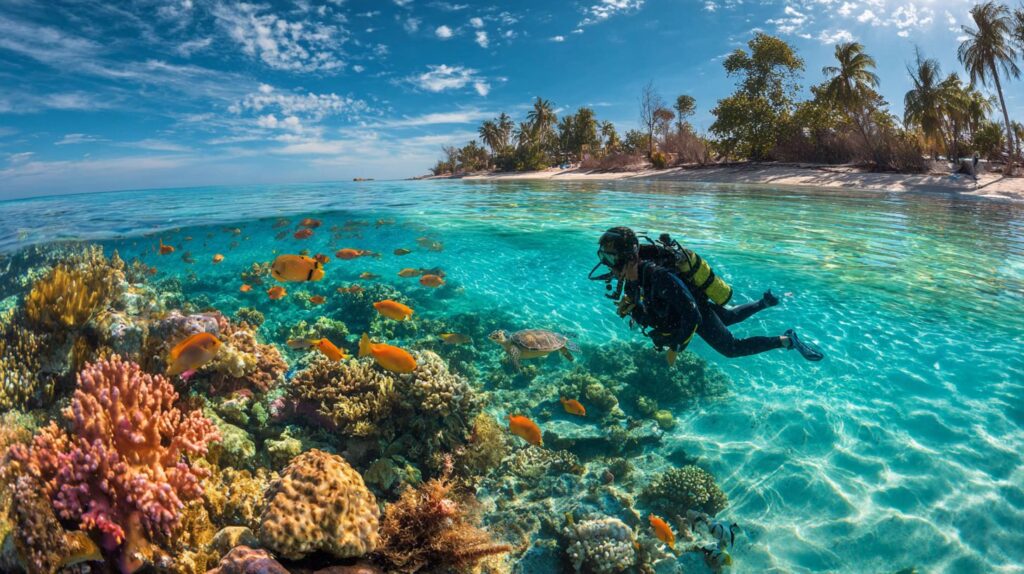
In a Beginner’s Guide to Scuba Diving: Safety Tips, Gear & Best Locations, key gear includes a well-fitted dive mask for clear vision, snorkel for surface breathing, fins for efficient swimming, a Buoyancy Control Device (BCD) to maintain depth, a regulator to breathe compressed air from the scuba tank, and a wetsuit or drysuit for thermal protection-always rent or buy from certified sources to ensure quality and fit.
What are the primary safety tips highlighted in a Beginner’s Guide to Scuba Diving: Safety Tips, Gear & Best Locations?
A Beginner’s Guide to Scuba Diving: Safety Tips, Gear & Best Locations emphasizes safety tips like always diving with a buddy, completing proper certification training such as PADI Open Water, checking equipment before each dive, monitoring air supply to avoid running out, ascending slowly to prevent decompression sickness, and never diving alone or under the influence of alcohol or drugs.
Where are the best locations for beginners according to a Beginner’s Guide to Scuba Diving: Safety Tips, Gear & Best Locations?
The Beginner’s Guide to Scuba Diving: Safety Tips, Gear & Best Locations recommends beginner spots like the Great Barrier Reef in Australia for its calm, shallow sites; Cozumel, Mexico, for vibrant coral walls; the Red Sea for its pristine reefs; or Bonaire in the Caribbean, known for easy shore entries and diverse fish-choose certified dive operators to ensure guided, safe experiences tailored to novices.
How can beginners prepare for their first dive using a Beginner’s Guide to Scuba Diving: Safety Tips, Gear & Best Locations?
Following a Beginner’s Guide to Scuba Diving: Safety Tips, Gear & Best Locations, beginners should start with a certification course on an eLearning platform, practice swimming and breath-holding in a pool, learn about marine life to avoid hazards like jellyfish, pack sunscreen and motion sickness remedies, and choose dives in warm, clear waters to build confidence gradually.
Why is certification important in a Beginner’s Guide to Scuba Diving: Safety Tips, Gear & Best Locations?
From the visionary designs of Leonardo Da Vinci to the revolutionary Aqua-Lung invented by Jacques Cousteau and mile Gagnan, in a Beginner’s Guide to Scuba Diving: Safety Tips, Gear & Best Locations, Open Water Diver certification from organizations like PADI, SSI, BSAC or NAUI is crucial as it teaches vital skills, often via an eLearning platform, in controlled environments, covers emergency procedures like equalizing pressure and handling equipment malfunctions such as issues with your Regulator, BCD (Buoyancy Control Device), Scuba Tank, Dive Mask, or Fins, and ensures you’re legally and safely equipped with essential gear like Wetsuit or Drysuit to explore recommended locations like Thailand, the Maldives, the Caribbean, the Great Barrier Reef, the Red Sea, and the British Virgin Islands without risking your life or others.