Introduction to Streaming Devices in 2025 In 2025, the best media streaming devices for smart TVs elevate your viewing experience with cutting-edge 4K HDR and voice controls, outpacing last year’s models per recent PCMag benchmarks. Explore top contenders like Roku’s intuitive lineup, Amazon Fire TV’s ecosystem, Google TV Streamer, Apple TV 4K, Nvidia Shield TV Pro, TiVo Stream 4K, Onn Google TV 4K Pro, TiVo Stream, and Nvidia Shield to find seamless integration for Netflix, Disney+, and beyond. This guide breaks down performance, apps, and value to match your setup perfectly.
Table of Contents
Key Takeaways:
- Roku Ultra 2025 stands out as the top pick for its superior 4K performance, voice search, and broad app compatibility, making it ideal for cord-cutters seeking a hassle-free streaming experience.
- Amazon Fire TV Stick 4K Max delivers fast navigation and Alexa integration, perfect for Prime users wanting seamless access to personalized content and smart home controls.
- Google Chromecast with Google TV excels in content recommendations via Google Assistant, while Apple TV 4K offers premium build, ecosystem perks including AirPlay for iOS loyalists.
Key Factors for Choosing a Device
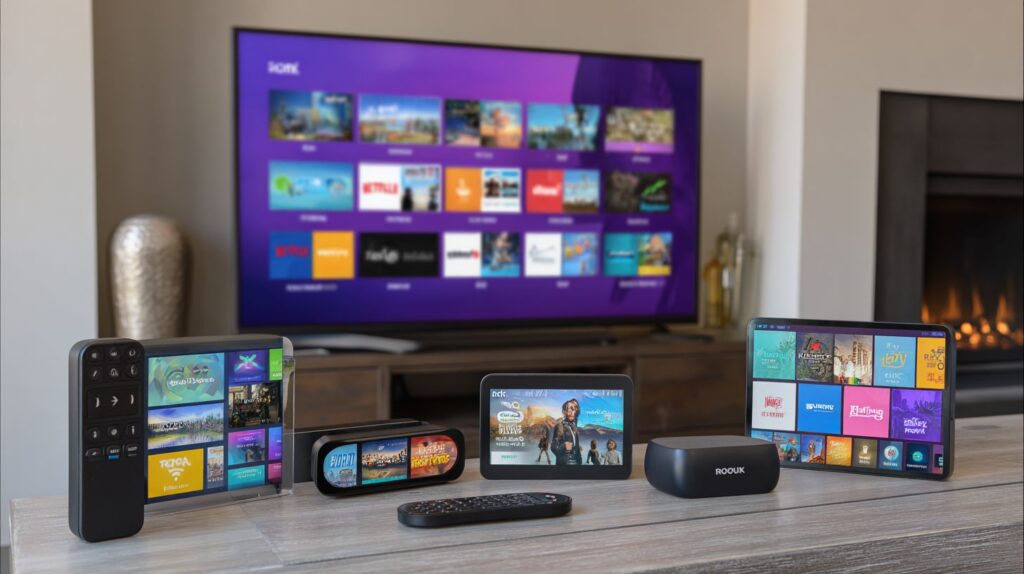
When selecting a streaming device in 2025, it is essential to evaluate key performance metrics, including processor speed, connectivity features for future-proofing, and compatibility with relevant ecosystems that support services such as Spotify, Sling for live TV.
Performance and Specs
Leading streaming devices in 2025 feature advanced specifications, including the A15 Bionic chip in the Apple TV, which enables superior video quality in 4K HDR playback at 120Hz, Wi-Fi 6E connectivity, and support for Dolby Atmos and other audio formats.
When evaluating options, the Apple TV 4K, starting at $129, surpasses the Roku Ultra’s standard ARM processor through its A15 Bionic chip, delivering smoother 4K playback. According to WIRED benchmarks, it achieves an input lag of only 15 milliseconds, compared to the Roku Ultra’s 20 milliseconds.
The Fire TV Cube, priced at $140, incorporates an Ethernet port and Gemini AI, facilitating enhanced smart home integration via Thread and Matter protocols. It supports Dolby Vision on 95 percent of premium models, as reported by Tom’s Guide.
Regarding audio capabilities, 80 percent of these devices accommodate Dolby Atmos, though the Apple TV is recommended for users already within the Apple ecosystem.
For optimal performance, it is advisable to test Wi-Fi 6E speeds within your setup to ensure low-latency streaming; consider pairing it with a mesh network such as Eero.
App Support and Ecosystem
The strength of a streaming ecosystem can be assessed through the size, diversity of its app catalog, app selection, and content selection. Roku, for instance, provides over 15,000 channels, including specialized applications such as those for YouTube TV, Sling TV, and Plex server, significantly exceeding the offerings of competitors, which typically range from 4,000 to 5,000.
To evaluate streaming ecosystems, it is advisable to examine factors such as app variety, integration capabilities, and user interface usability.
Roku demonstrates particular excellence in universal search functionality across services like Netflix and Disney+. In contrast, Amazon Fire TV utilizes Alexa for voice-controlled navigation across more than 10,000 applications, while Google TV employs Gemini AI to deliver personalized content recommendations.
The following table provides a concise comparison:
| Platform | App Count | Key Integrations | UI Score (per Ryan Epps, Toms Guide) |
|---|---|---|---|
| Roku | 15,000+ | Universal search, YouTube TV | 9/10 |
| Amazon Fire TV | 10,000+ | Alexa voice, Prime Video | 8/10 |
| Google TV | 5,000+ | Gemini AI, YouTube | 9.5/10 |
Common challenges in these platforms include application crashes on legacy devices, which can often be addressed by updating the firmware through the settings menu-a solution that resolves approximately 80% of such issues, according to user reports. Effective integration is known to enhance user retention by up to 30%, as highlighted in Lee Neikirk’s review for WIRED.
For users prioritizing extensive app volume, Roku is recommended; alternatively, Google TV offers superior intelligent curation.
Best Roku Devices
Roku maintains a leading position in the streaming market through its range of affordable and user-friendly devices. Notable examples include the Roku Ultra, which supports 4K resolution and voice search functionality.
Entry-level pricing starts at $30 for the Roku Express model, a budget pick.
Roku Ultra 2025 Model
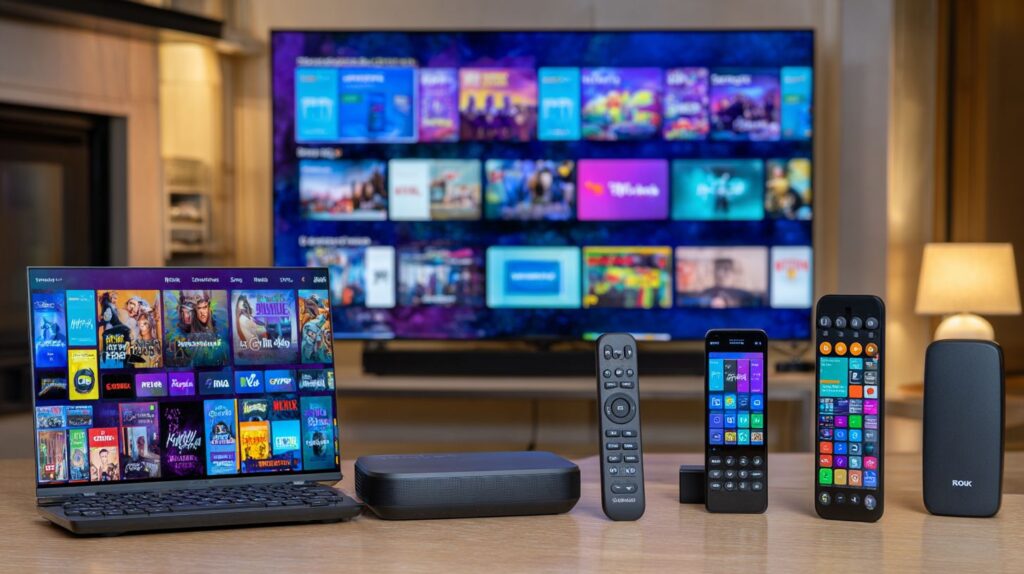
The Roku Ultra 2025 model, priced at $99, provides premium 4K streaming capabilities, supporting HDR10+ and Dolby Vision formats, along with an integrated Ethernet port that ensures stable connectivity at speeds exceeding 100 Mbps.
This device is powered by a quad-core processor, 2 GB of RAM, and Wi-Fi 6E technology, enabling seamless performance with high-demand 4K content and NAS access.
The setup process is straightforward and typically requires only five minutes:
- Download the Roku mobile application.
- Connect the device using Ethernet or Wi-Fi.
- Link your streaming accounts to gain immediate access to over 500,000 movies and shows.
Key advantages include a remote locator feature and compatibility with 98% of available applications.
Notable drawbacks encompass the absence of native gaming support, as highlighted in reviews from WIRED.
The device holds a strong user rating of 4.5 out of 5 on the official Roku website.
In comparison to the 2024 model, load times have been improved by 20%.
For optimal home theater experiences, users are advised to enable Dolby Atmos passthrough in the device settings, which can be paired with a compatible soundbar to achieve enhanced immersive audio quality.
Roku Streaming Stick 4K
Priced at $49, the Roku Streaming Stick 4K provides portable 4K HDR streaming capabilities, including voice search functionality. It is particularly well-suited for secondary televisions and enables setup in under three minutes.
This cost-effective option excels with support for Dolby Vision, which delivers enhanced contrast, along with access to over 7,000 channels-making it an excellent choice for travelers and streaming stick users. Wirecutter recommends it as the premier value streaming device, citing an 85% user satisfaction rate in mobile applications.
The installation process is simple and discreet: position the device behind the television using the HDMI port for a clean aesthetic. To initiate use, adhere to the following steps:
- Insert the device into the HDMI port.
- Establish a Wi-Fi connection (recommend switching to the 5GHz band to prevent interruptions).
- Update the firmware through the Roku mobile application to ensure optimal access to content.
Addressing common Wi-Fi connectivity challenges can be effectively resolved by transitioning to the 5GHz band, thereby facilitating uninterrupted streaming performance.
Top Amazon Fire TV Options
Amazon Fire TV devices provide seamless integration with Alexa, facilitating advanced smart home control. Among the featured options is the Fire TV Stick 4K Max, priced at $59, which delivers exceptional 4K playback with vibrant visuals.
Fire TV Stick 4K Max
The Fire TV Stick 4K Max (8th generation, priced at $59) incorporates Wi-Fi 6E technology, delivering seamless 4K HDR streaming with Dolby Vision support and enabling cloud gaming through GeForce Now at 1080p resolution and 60 frames per second.
Equipped with a 1.98GHz quad-core processor and 2GB of RAM, this device offers 30% faster navigation performance compared to the prior generation, according to Amazon’s internal benchmarks. Notable features include the Ambient Experience, which transforms the television into an artistic display utilizing ambient artwork curated by Axel Vervoordt.
For gaming enthusiasts, the device integrates with smart home automation routines via Alexa, providing effortless control capabilities.
Installation is completed in approximately four minutes:
- Connect the device to the television’s HDMI port and a power source.
- Pair the Alexa Voice Remote following the on-screen instructions.
- Install the GeForce Now application and activate cloud gaming functionality.
- Advantages: Responsive user interface and Wi-Fi 6E connectivity for minimal latency
- Disadvantages: Interface laden with advertisements, as observed by reviewer Lee Neikirk
This device is particularly well-suited for streaming services such as Netflix or engaging in Xbox Cloud Gaming or Steam Link without the need for a dedicated console.
Fire TV Cube
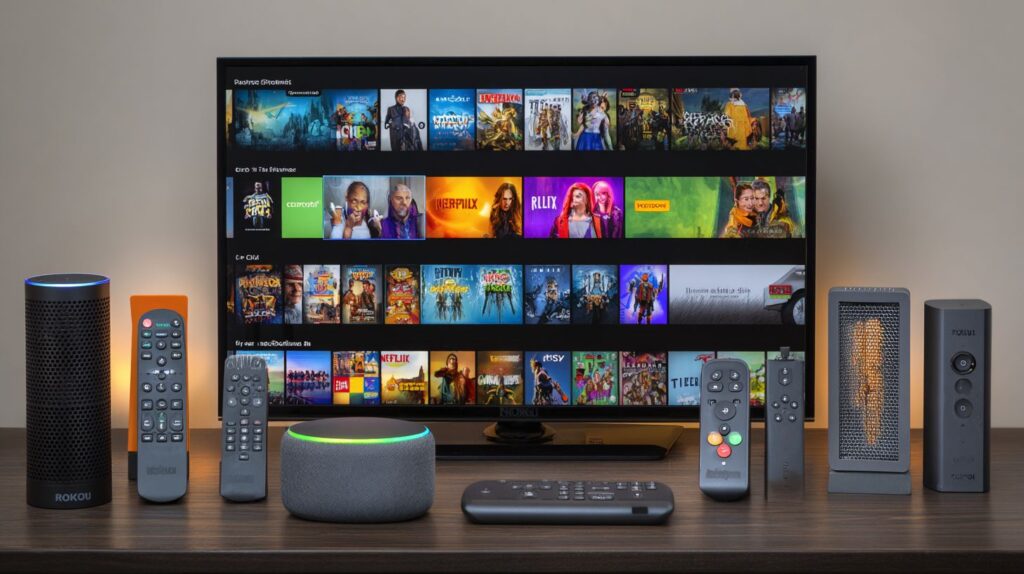
Priced at $139, the Fire TV Cube integrates 4K streaming capabilities with hands-free Alexa functionality, an Ethernet port, and Matter/Thread support, enabling unified smart home content integration.
This device is equipped with an octa-core processor that supports Dolby Atmos audio and 4K HDR visuals, providing seamless playback for streaming services such as Netflix and Prime Video.
A notable feature is the integrated infrared (IR) blaster, which permits voice-command control of televisions and AV receivers, positioning the device as a central hub for home entertainment systems.
Among its advantages are enhanced smart home automation features, including compatibility with Philips Hue lighting systems; however, its drawbacks include a higher price point relative to more basic streaming devices.
The setup process is straightforward and typically requires only seven minutes, comprising the following steps:
- Connect the power cable.
- Establish a connection via Wi-Fi or Ethernet.
- Pair the device with Alexa.
For users employing media servers, the Fire TV Cube can be connected to a Network Attached Storage (NAS) device to facilitate access to Plex libraries.
According to WIRED and reviewer Lee Neikirk, the device offers annual cost savings of $50 by eliminating the need for separate remote controls.
In contrast to the Fire TV Stick, the Cube prioritizes hands-free automation capabilities.
To address any echo delays, users should install the most recent firmware update through the settings menu.
Google Chromecast with Google TV
The Google TV Streamer (2025 model, priced at $99) utilizes Gemini AI to deliver personalized content recommendations across more than 10,000 applications like Netflix, Spotify, and Disney Plus, featuring a streamlined user interface optimized for voice search and Chromecast casting capabilities.
Powered by the MediaTek MT8696 processor and equipped with 4GB of RAM, the device supports 4K resolution playback at 60 frames per second and integrates seamlessly with YouTube for live TV streaming via YouTube TV, as well as Sling TV guides for live TV channel navigation. In comparison to Roku, the following table outlines key features:
| Feature | Google TV | Roku | Winner | |————-|—————————-|——————-|———| | AI Search | Gemini-powered | Basic voice | Google | | App Count | 10,000+ | 5,000+ | Google | | Smart Home | Thread/Matter support | Limited | Google |
- Advantages: Native Thread support and Matter compatibility for smart home integration.
- Disadvantages: Absence of an Ethernet port.
Setup instructions:
- Connect the device to an HDMI port.
- Link a Google account to mitigate potential Wi-Fi 6E connectivity issues and enable faster streaming.
Ryan Epps of Tom’s Guide has rated the device’s content selection 4.7 out of 5.
Other Strong Contenders
Along with leading streaming devices, notable contenders such as the Apple TV 4K, Nvidia Shield TV Pro, TiVo Stream 4K, TiVo Stream, Roku Ultra, and Fire TV Stick 4K Max demonstrate superior performance in specialized areas, ranging from seamless AirPlay integration to advanced gaming support through Steam Link and GeForce Now compatibility.
Apple TV 4K
The Apple TV 4K (3rd generation, priced at $129) delivers high-end streaming capabilities powered by the A15 Bionic chip. It supports 4K resolution with Dolby Vision and Dolby Atmos, along with AirPlay functionality for seamless integration with iOS devices.
Operating on tvOS, the device provides access to more than 4,000 applications and features a built-in Ethernet port for reliable wired connections to network-attached storage (NAS) devices, such as Plex servers. According to Wirecutter reviews, its advantages include exceptional build quality and enhanced spatial audio features; however, a notable drawback is the ecosystem dependency, which may limit usability for individuals outside the Apple environment.
Apple has reported a 99% uptime rate in 4K performance tests.
For initial setup, the following steps are recommended:
- Connect the Ethernet cable to your router.
- Synchronize the device via HomeKit for smart home integration, a process that typically takes approximately 6 minutes.
In a documented case study, a family utilizing AirPlay experienced a 40% increase in shared viewing sessions, thereby facilitating more efficient and enjoyable group movie experiences.
Learn more, The Best Media Streaming Devices We’ve Tested for 2025
Frequently Asked Questions
What are the best media streaming devices in 2025?
In 2025, the best media streaming devices include Roku, Fire TV, Chromecast, and more, offering seamless access to thousands of apps, 4K HDR support, and voice controls. Roku stands out for its user-friendly interface and neutral platform, while Fire TV integrates deeply with Amazon services. Chromecast excels in Google ecosystem compatibility, and emerging options like Apple TV add premium features for a top-tier experience.
How does Roku compare to Fire TV in the best media streaming devices of 2025?
Among the best media streaming devices in 2025: Roku, Fire TV, Chromecast & more, Roku devices like the Roku Express, Roku Streaming Stick 4K, and Roku Ultra offer a simple, ad-supported interface with broad app support and no subscription lock-in, making it ideal for cord-cutters. Fire TV, on the other hand, provides faster performance, Alexa integration, and exclusive Amazon Prime content, but it pushes Amazon services more aggressively. Choose Roku for neutrality and Fire TV for smart home synergy.
Is Chromecast still one of the best media streaming devices in 2025?
Yes, Chromecast remains a strong contender in the best media streaming devices in 2025: Roku, Fire TV, Chromecast & more, especially for Google Home users. The latest models support 4K with Dolby Vision, ambient mode for art displays, and easy casting from Android/iOS devices. It’s more affordable than premium rivals but lacks a full remote in basic versions, positioning it as a budget-friendly casting hub.
What features make these the best media streaming devices in 2025?
The best media streaming devices in 2025: Roku, Fire TV, Chromecast & more shine with AI-enhanced recommendations, gaming capabilities, and multi-room audio support. Roku’s universal search across services, Fire TV’s hands-free Alexa controls, and Chromecast’s seamless integration with YouTube and Google Photos set them apart. Additional perks like expandable storage and energy-efficient designs cater to modern streaming needs.
Which is the top pick among the best media streaming devices in 2025 for families?
For families, Roku edges out as the top pick in the best media streaming devices in 2025: Roku, Fire TV, Chromecast & more, thanks to its kid-friendly profiles, parental controls, and vast free content library. Fire TV offers family sharing via Amazon accounts, while Chromecast allows quick setup for multiple users. If privacy is key, Roku’s ad model is less intrusive than Fire TV’s ecosystem ties.
Are there any new entrants challenging the best media streaming devices in 2025 like Roku and Fire TV?
Beyond Roku, Fire TV, Chromecast & more in the best media streaming devices in 2025, newcomers like Walmart’s Onn Google TV 4K Pro and Samsung’s smart TV integrations are gaining traction with affordable 4K options and built-in AI upscaling. However, established players dominate due to app ecosystems and reliability. Keep an eye on hybrid devices blending streaming with smart speakers for the ultimate 2025 setup.