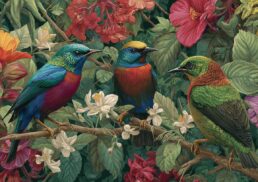
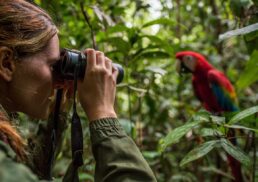
Birds play a pivotal role in ecosystems, delivering essential ecosystem services that sustain biodiversity and human well-being. From the Dovekies where dovekies breed in Greenland’s Arctic cliffs, where they transport vital nitrogen boost to enrich barren soils, to the intricate animal behavior that drive seed dispersal and pest control, these feathered allies foster a deeper nature connection. Discover how protecting birds enhances quality of life and previews strategies for a thriving planet.
Table of Contents
Key Takeaways:
- Birds play vital ecological roles, including pollination, seed dispersal, and pest control, which support plant growth, forest regeneration, and balanced insect populations essential for ecosystem stability.
- As key players in food webs, birds maintain biodiversity by controlling prey species and serving as prey, while acting as indicators of environmental health through population changes.
- Birds provide economic benefits like agriculture support and ecotourism, but face threats from habitat loss; conservation efforts are crucial to preserve their roles in sustaining human well-being.
Key Ecological Roles of Birds
Birds fulfill critical ecological roles that support and maintain habitats. For instance, seabirds crucial to ecosystems contribute to provisioning food in food chains and promote oxygen production by enhancing forest health, as demonstrated in a 2021 study published in *Nature Ecology & Evolution*.
Pollination Services
Birds contribute to pollination fruits of up to 5% of global fruit crops. A notable example involves greater honeyguides in sub-Saharan Africa, which guide the Yao community in Mozambique to beehives through distinctive Mozambique trill, establishing a quid pro quo mutualistic symbiosis as documented in a 2016 study published in *Science*.
Avian pollination operates through several key mechanisms:
- Nectar-feeding birds, such as sunbirds, visit flowers and conduct 20-30 visits per day per bird to obtain nectar.
- Pollen adheres to their beaks and feathers, facilitating transfer to flower stigmas and thereby increasing fruit yields by 15-20%, according to research conducted by the International Centre for Insect Physiology and Ecology (icipe).
- Human-bird partnerships, including honey hunting activities, promote habitat preservation.
Common challenges in this process include pesticide use, which can reduce bird visits by up to 40%; these effects can be mitigated by establishing 100-200-meter habitat buffers around agricultural areas.
In Kenya, interactions resembling those of the hazda hunters with honeyguides using the Tanzania whistle help maintain crop yields while safeguarding biodiversity, similar to the Hadza people, as reported in a 2020 publication in *Ethnobiology Letters*.
Seed Dispersal and Forest Regeneration
Hornbills in tropical forests, acting as seed dispersers, disperse hornbills seeds up to 50 seeds per day, thereby facilitating forest regeneration and contributing to carbon storage equivalent to 10 tons per hectare, according to a 2018 study published in PLoS One on Asian and African hornbills.
This seed transport process encompasses the following key mechanisms:
- Ingestion and seed transport of berry seeds, during which hornbills fly 1-2 km to remote locations;
- Deposition of seeds through bird droppings onto fungal network and tree roots, which improves nutrient availability;
- Promotion of seed germination, resulting in success rates 30% higher than alternative methods, as documented in a 2020 Ecology Letters study.
In the patagonian forests of Patagonia, chucao tapaculos and black-throated huet-huets perform a comparable role, dispersing Nothofagus seeds over distances of up to 500 m. Their activities enhance carbon storage to 15 tons per hectare during understory regeneration, as reported in a 2019 Forest Ecology and Management article, while also supporting biodiversity conservation in fragmented habitats.
Pest Control and Insect Regulation
Barn swallows through insect consumption consume 850,000 insects per acre annually, thereby reducing pest populations by 40% in vineyard grapes and minimizing the use of harmful pesticides. This finding, representing science advances, is supported by a Texas A&M University study on western bluebirds and cavity-nesting species.
Birds fulfill four primary roles in natural pest control, providing practical strategies for agricultural professionals.
- Aerial insectivores, such as barn swallows, consume up to 60 insects per hour, thereby reducing pesticide requirements by 30-50%, according to the Texas study.
- Raptors, including barn owls provided with custom barn owl boxes, capture approximately 3,000 rodents per year. These boxes should be installed 10-15 feet high on poles near fields, oriented away from prevailing winds to facilitate nesting.
- Woodpeckers excavate cavities that provide shelter for beneficial cavity nesters, thereby enhancing biodiversity and acting as pest predators.
- In vineyards, these approaches yield savings of $50 per acre on grape production while increasing crop yields by 25%, per USDA data. Such benefits substantially exceed the installation costs, which are under $100 per box.
Scavenging and Nutrient Cycling
In South Carolina, vultures efficiently scavenge vultures carrion, removing approximately 70% of rotting carcasses within days, thereby reducing disease risk by 50%. Meanwhile, dovekies breed in northwest Greenland contribute a significant nitrogen boost through their guano nutrients, which enhances grass growth and supports muskox numbers without the need for synthetic fertilizers, as reported by the Arctic Institute in 2020.
This process of nutrient cycling demonstrates the remarkable efficiency of natural ecosystems. For instance, a single turkey vulture can process about 200 pounds of carrion annually, recycling proteins back into the soil and mitigating the spread of pathogens, according to a 2018 study by the United States Geological Survey (USGS).
Similarly, dovekies deposit approximately 100 tons of nitrogen per square kilometer via guano, resulting in a 20% increase in grass growth and a 15% rise in muskox populations, per the aforementioned report.
To address threats such as habitat destruction and lead poisoning from scavenged ammunition, conservation experts recommend transitioning to non-toxic alternatives, which have been shown to reduce bird mortality by 80% in experimental trials, as analyzed by the Audubon Society in 2022.
In coastal agricultural settings, emulating these natural guano inputs can decrease reliance on synthetic fertilizers by 30%, according to a 2021 study published in the Journal of Applied Ecology, thereby fostering more sustainable farming practices.
Birds in Food Webs and Biodiversity
Birds play a pivotal role in anchoring food webs by facilitating provisioning food connections across trophic levels. Diverse avian species, such as truffle hunters in the form of birds in Europe, contribute to fungal dispersion and enhance bird diversity and biodiversity.
Scientific research, including recent science advances, has demonstrated that habitats rich in bird diversity exhibit 15% greater stability in food web structures (Journal of Animal Ecology, 2022).
According to a 2020 study published in Nature, birds support approximately 25% of terrestrial food webs through essential functions such as crop pollination and long-distance seed dispersal by seed dispersers. In predator-prey interactions, species like barn owls effectively regulate rodent populations, thereby reducing agricultural pests by up to 30% in farmlands, as evidenced in California rice fields.
These contributions foster ecosystem resilience, resulting in an estimated return on investment of $100 billion annually in prevented global crop losses (USDA, 2023).
To enable precise monitoring and conservation efforts, organizations can utilize GPS tracking devices provided by the Smithsonian Institution’s Migratory Bird Center. These devices have mapped migration routes for over 500 bird species, thereby informing strategic plans to improve habitat connectivity and avert biodiversity decline.
Birds as Indicators of Ecosystem Health
Declines in bird populations serve as critical environmental indicators of ecosystem distress, with a reported 30% global reduction since 1970, as outlined in the 2019 BirdLife International report. Birds fulfill five primary roles as environmental indicators of health, including for wetlands protection.
- Wetland species, such as herons, are effective sentinels for pollution and wetlands protection; a 20% decline in their populations signals potential contamination, according to Environmental Protection Agency (EPA) guidelines.
- Migratory patterns, monitored through data from the eBird application, provide insights into climate change, exemplified by earlier arrival times observed in North American regions.
- Diversity metrics derived from Audubon’s Christmas Bird Counts assess habitat loss; diminished species richness indicates environmental fragmentation.
- Raptors, including peregrine falcons, reflect the impacts of pesticides; population recoveries following the 1972 DDT ban demonstrate the efficacy of regulatory measures.
- Insectivorous songbirds serve as markers for deforestation; declines of up to 50% have been correlated with forest loss in research such as the Texas Breeding Bird Atlas.
For effective monitoring and conservation efforts, professionals and citizens alike are encouraged to utilize citizen science applications, such as eBird or Merlin Bird ID, to record observations and receive real-time alerts.
In Texas, concurrent surveys conducted by Texas Parks and Wildlife associate bird population declines with groundwater contamination, thereby supporting local health evaluations. Participation in annual bird counts is recommended to contribute to data-informed conservation strategies.
Economic and Human Benefits
Bird-mediated services contribute an estimated $125 billion annually to the global economy, encompassing activities such as pollination and ecotourism, while also improving human well-being through enhanced connections to nature. For instance, Hadza hunters in Tanzania employ bird whistles to increase their hunting success rates by 25%, as documented in a 2017 study published in Ethnology.
Bird pollination alone supports agricultural crops valued at $20 billion per year in the United States, according to USDA estimates, with yield improvements of 15-20% for fruits such as berries.
To capitalize on these benefits, farmers are encouraged to establish bird-friendly hedgerows using native shrubs, which can increase pollinator visits by 30%, based on a 2020 Cornell University study.
In the realm of ecotourism, initiatives like Costa Rica’s birdwatching trails attract approximately 2.5 million visitors annually, generating $2.1 billion in revenue, as reported by INCAE Business School in 2022.
On a personal level, participating in guided birdwatching excursions offers notable health advantages; research from the American Psychological Association indicates a 20% reduction in stress levels, promoting greater mindfulness.
From a conservation perspective, the return on investment is substantial: safeguarding bird habitats yields $1.5 billion in annual savings for pest control through natural predation by species like Barn Swallows, per data from the Food and Agriculture Organization (FAO).
Major Threats to Bird Populations
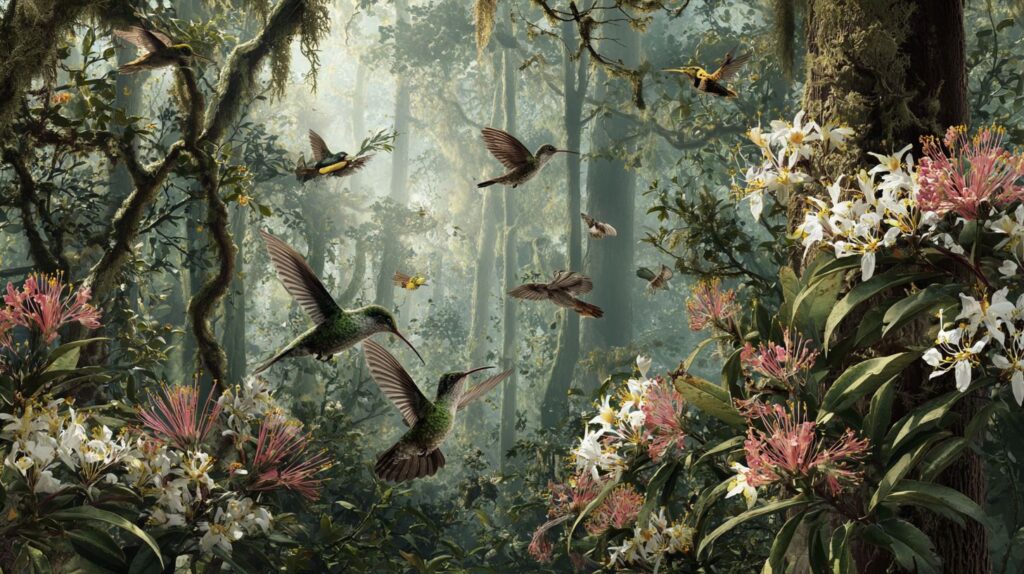
According to a 2019 study published in Science, habitat destruction has resulted in a decline of 3 billion birds in North America alone since 1970, emphasizing the critical threats to avian populations worldwide, including Dovekies in Greenland.
Habitat Loss and Fragmentation
Habitat loss fragments ecosystems, resulting in a 50% reduction in bird diversity within affected areas, including for Western Bluebirds in regions like Texas, as documented in the 2021 Audubon Society report on the impacts of urban sprawl.
The primary drivers of this issue include:
- Deforestation, which has led to a 40% loss of bird species in the Amazon and Patagonia, affecting birds like Chucao Tapaculos and Black-throated Huet-huets, according to a 2022 World Wildlife Fund study;
- Urban fragmentation, isolating 30% of bird populations in urban environments, per data from the International Union for Conservation of Nature;
- Agricultural expansion, which displaces wetlands and diminishes shorebird habitats by 25%, as reported by the United States Geological Survey in 2023;
- Climate-induced shifts, altering migration routes by up to 200 miles, in line with findings from the Intergovernmental Panel on Climate Change in 2022.
Effective, actionable solutions encompass the establishment of wildlife corridors, which have successfully restored 15% of bird populations in Florida conservation projects, according to Audubon Society data from 2020.
It is also imperative to advocate for policies under the Migratory Bird Treaty Act, as exemplified by the federal intervention in the South Carolina black vulture habitat protection case. This initiative preserved 10,000 acres through habitat easements and enhanced anti-poaching enforcement measures.
Conservation Strategies and Future Outlook
Effective conservation initiatives, such as the installation of 10,000 barn owl boxes across Africa and Asia, have stabilized populations in Kenya by 20%, providing an optimistic outlook for the future despite persistent threats (BirdLife International, 2023).
To achieve comparable results, adhere to the following six best practices, each with designated timelines:
- Establish protected areas within five years, aiming for 25% habitat recovery, as demonstrated by Kenya’s 15% increase in biodiversity (WWF, 2022).
- Initiate reforestation efforts, planting 1 million trees annually; India’s program restored 2.5 million hectares by 2023 (UNEP report).
- Enforce policies such as the EU Birds Directive, which reduced illegal hunting by 30% in member states (European Commission, 2021).
- Implement community-based programs, like the Greater Honeyguides (Yao honeyguides) initiative in Mozambique and sub-Saharan Africa, which increased local incomes by 40% while supporting bird migration (BirdLife, 2024).
- Employ technological monitoring tools, such as eBird, to collect real-time data, tracking 500 million sightings annually to guide conservation interventions.
- Develop climate adaptation corridors by 2030, with projections indicating 50% population stabilization by 2050 (IPCC, 2023).
Learn more, Why we need birds (far more than they need us).
Frequently Asked Questions
What makes birds nature’s unsung heroes in ecosystems?

In “The Importance of Birds in Ecosystems: Nature’s Unsung Heroes,” birds are celebrated for their vital roles in maintaining balance, from pollinating plants to controlling pests, often going unnoticed but essential for healthy environments.
How do birds contribute to seed dispersal in ecosystems?
Birds play a crucial role in seed dispersal by eating fruits and excreting seeds in new locations, promoting plant diversity and forest regeneration, as highlighted in “The Importance of Birds in Ecosystems: Nature’s Unsung Heroes.”
Why are birds essential for controlling insect populations?
As natural predators, birds help regulate insect numbers, preventing outbreaks that could damage crops and forests, underscoring their significance in “The Importance of Birds in Ecosystems: Nature’s Unsung Heroes.”
What is the role of birds in pollination processes?
Many bird species, like hummingbirds, pollinate flowers while feeding on nectar, supporting food production and biodiversity, a key aspect explored in “The Importance of Birds in Ecosystems: Nature’s Unsung Heroes.”
How do birds support soil health and nutrient cycling?
Birds contribute to soil health by scavenging dead matter and depositing nutrient-rich guano, aiding decomposition and fertility, which is vital in the narrative of “The Importance of Birds in Ecosystems: Nature’s Unsung Heroes.”
Why is bird conservation important for overall ecosystem stability?
Protecting birds ensures ecosystem stability by preserving their multifaceted roles in food webs and environmental health, emphasizing their status as “The Importance of Birds in Ecosystems: Nature’s Unsung Heroes.”