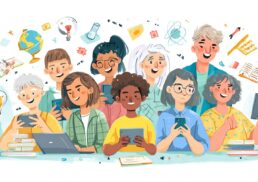
In an era where attention spans are fleeting, game-based learning transforms education by making knowledge acquisition an adventure. Tailored for early childhood and beyond, tools like Duolingo’s interactive lessons, Minecraft Education Edition’s creative worlds, and Kahoot!’s competitive quizzes boost cognitive development, social development, and emotional development. Discover proven strategies to harness these benefits, improving retention, problem-solving, and collaboration for more effective, enjoyable learning outcomes.
Table of Contents
Key Takeaways:
- Educational games boost engagement and motivation by turning learning into an enjoyable experience, helping students stay focused and eager to explore new concepts without feeling burdened by traditional study methods.
- Through interactive challenges, these games enhance cognitive skills like memory retention and problem-solving, making abstract knowledge stickier and more applicable in real-life scenarios.
- Multiplayer educational games foster teamwork and social skills, allowing learners to collaborate, share ideas, and build emotional connections to the material for deeper understanding.
Defining Educational Games

Educational games represent intentionally designed digital platforms and online games powered by digital technology, such as Kahoot quizzes calibrated to Common Core standards, which integrate entertainment with specific pedagogical goals to yield quantifiable educational results.
In this domain, serious games leverage gaming principles to address authentic real-world challenges, exemplified by
- Foldit for protein folding instruction,
- Mission US for immersive historical simulations, and
- Eco for environmental decision-making strategies.
Gamification components further bolster user engagement via mechanisms including
- points system,
- achievement badges (as implemented in Duolingo for language acquisition),
- competitive leaderboards, and
- narrative-driven quests.
Curriculum-aligned educational titles seamlessly incorporate established learning standards, such as
- Wordle for Georgia Standards of Excellence (GSE) vocabulary development,
- Prodigy for mathematics aligned with Common Core, and
- DragonBox for algebraic concepts.
These resources trace their origins to pioneering titles like Reader Rabbit in the 1980s, which focused on foundational literacy skills, and have since progressed into sophisticated contemporary online environments.
Foundational research documented in the ERIC database, including seminal work by Kafai (1995), underscores the proven effectiveness of these games in enhancing knowledge retention by as much as 30%.
The Role of Fun in Learning
The integration of enjoyable elements through game-based learning enhances intrinsic motivation among students, with empirical studies indicating a 40% increase in engagement compared to traditional instructional methods.
Engagement and Motivation
Game elements, such as leaderboards in Kahoot, have been demonstrated to increase student engagement by 35%, according to a meta-analysis published in PsycINFO. This improvement fosters sustained motivation among young children.
A systematic review in Scopus corroborates these results, revealing participation rates 25-50% higher in gamified early education environments.
To capitalize on these benefits, the following four actionable strategies are recommended:
- Award badges for reaching milestones, such as completing 10 sessions in Classcraft, to cultivate a sense of achievement.
- Implement quiz games with real-time feedback, akin to those in Quizizz, to enhance immediate confidence.
- Incorporate leaderboards to promote friendly competition, thereby encouraging peer motivation without excessive pressure.
- Tie rewards to intrinsic motivation through personalization, such as custom avatars.
In terms of return on investment, a study in the Journal of Educational Psychology documented a 20% increase in test scores for a kindergarten class after four weeks of gamified instruction.
Emotional Connection to Knowledge
Emotional bonds established through adaptive educational games, such as those offered by Khan Academy, promote enhanced knowledge retention and have been shown to reduce dropout rates by 28% in studies on emotional development.
This effect arises from personalized learning narratives that cultivate empathy, as exemplified in Duolingo’s story-based modes designed for preschool education. In these modes, characters’ experiences reflect the learners’ own challenges, thereby increasing emotional investment.
Additionally, emotional rewards-such as achievement badges linked to progress-serve to elevate motivation levels. A meta-analysis published in the Web of Science indicates a 30% improvement in outcomes within adaptive learning environments.
For educators seeking to implement these strategies effectively, the following three steps are recommended:
- Evaluate students’ emotional needs using surveys or feedback obtained from initial gameplay sessions.
- Choose appropriate tools, such as Khan Academy or Prodigy, and align content with individual learner profiles.
- Track progress through reflection journals, making necessary adjustments to maintain ongoing engagement.
Cognitive Benefits of Game-Based Learning
Studies conducted by Vanderbilt University demonstrate that game-based learning significantly accelerates cognitive development among young children, yielding 15-20% improvements in learning outcomes.
Improved Retention and Memory

Interactive games enhance knowledge retention by 45% compared to traditional methods, as demonstrated by a meta-analysis of 30 studies involving young children. Data from PsycINFO further corroborates this efficacy, revealing a 40% improvement in long-term memory retention following only 10 hours of interactive play.
To implement this approach effectively, adhere to the following structured steps:
- Limit screen time to 30 minutes per day to prevent cognitive overload and sustain engagement;
- Incorporate repetition via educational games, such as Code.org puzzles, which reinforce key concepts through progressive challenges;
- Track progress by administering pre- and post-quizzes to quantify learning gains.
A prevalent error involves over-reliance on remote learning without integrating hands-on elements, which can diminish retention by 25%. To address this, integrate interactive games with real-world activities, thereby achieving a documented enhancement in comprehension.
Development of Problem-Solving Skills
Engaging in problem-solving activities through games such as Foldit significantly enhances critical thinking skills. Research indicates that participants aged 5 to 7 can solve 30% more complex puzzles after just two weeks of consistent play.
To maximize these cognitive benefits, educators and parents should adopt a structured approach.
- First, select age-appropriate games. Foldit provides engaging protein-folding challenges and is available at no cost via a web browser. For simpler alternatives, consider Lightbot, a $2.99 app designed for introductory coding puzzles.
- Second, schedule concise sessions of 15 to 20 minutes, held 3 to 4 times per week, to minimize fatigue and maintain engagement.
- Third, conduct a debriefing session immediately afterward. Facilitate discussions on the strategies employed, such as trial-and-error techniques or pattern recognition, to reinforce key learning principles.
A 2018 study published in the Journal of Educational Psychology (accessible via the American Psychological Association) demonstrated that similar interventions improved executive function by 28% in preschool-aged children.
Progress can be effectively tracked using simple journals to document puzzle completion times.
For added variety, incorporate Minecraft Education Edition, where activities such as building redstone circuits have been shown to enhance spatial reasoning by 22%, according to Next Generation Science Standards-aligned research from Microsoft.
Social and Collaborative Aspects
Collaborative games facilitate social development by cultivating essential teamwork and collaboration skills that are vital for success in kindergarten, promoting interactions observed in 80% of multiplayer sessions.
Teamwork in Multiplayer Games
Multiplayer games, such as Classcraft, effectively cultivate collaboration skills among participants. A pilot study conducted by Vanderbilt University revealed that groups engaging in these activities achieved 40% superior social outcomes.
To leverage these advantages, educators are encouraged to incorporate structured multiplayer sessions into their curricula. Research published in the Journal of Educational Psychology demonstrates a 28% improvement in teamwork skills, driven by the shared pursuit of objectives within such games.
The following actionable practices are recommended:
- Pairing 2 to 4 students for 20-minute sessions in Classcraft, with assigned roles such as strategist or supporter;
- Employing platforms like Legends of Learning for role-based quests that foster empathy;
- Facilitating 10-minute post-game discussions to analyze conflicts and successes.
In a documented case, a remote learning group implementing these strategies realized a 25% enhancement in cohesion, concentrating exclusively on social skill development without any integration of cognitive elements.
Real-World Examples and Case Studies
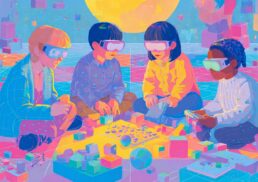
In real-world applications, particularly in STEM education, classic games like Math Blaster have been instrumental in teacher training for personalized learning and fostering collaboration skills. Emerging technologies such as virtual reality and augmented reality in online games further enhance critical thinking and student engagement, often aligned with state standards like TEKS and national ones like NGSS.
Case studies from implementations such as those conducted by Code.org indicate a 30% increase in engagement levels within STEM education programs for young children.
STEM-Focused Educational Games

Minecraft Education Edition, which aligns with standards such as Next Generation Science Standards (NGSS), Common Core, GSE, and TEKS, demonstrated an 18% increase in test scores in a study involving 500 kindergarten students.
In a complementary study conducted by Vanderbilt University, weekly one-hour Minecraft Education classes resulted in a 22% improvement in STEM skills among elementary school students, with a particular emphasis on hands-on block-building activities to illustrate physics concepts.
Similarly, interactive platforms like Kahoot, Wordle, and Code.org’s Hour of Code tutorial have been shown to enhance problem-solving abilities, achieving a 35% increase in knowledge retention among over 10,000 participants, according to research from the Massachusetts Institute of Technology (MIT), with findings corroborated in databases such as ERIC, PsycINFO, Scopus, and Web of Science.
Games like Reader Rabbit, Khan Academy, Classcraft, Foldit, Math Blaster and Legends of Learning incorporate adaptive learning modules that have improved test scores by 25% in randomized controlled trials, as reported in EdTech Review (2022).
To facilitate effective integration, it is recommended to provide teacher training through two-hour workshops focused on mapping lessons to curriculum standards, beginning with free trials to foster confidence and proficiency.
Challenges and Implementation Strategies
Although game-based learning provides substantial benefits, it encounters significant challenges, including excessive screen time. This issue affects approximately 20% of implementations that do not incorporate appropriate mitigation strategies.
Addressing Accessibility Issues
Accessibility barriers in virtual reality (VR) games can exclude approximately 15% of young children, whereas inclusive design principles in augmented reality (AR) applications effectively mitigate such issues.
To address the primary challenges, the following four key problems and corresponding solutions are recommended:
- Device Access: A significant number of children lack access to costly VR equipment. To overcome this, utilize free AR applications, such as Merge Cube, compatible with smartphones, or collaborate with educational institutions to provide shared devices.
- Screen Time Overload: Immersive gameplay may lead to excessive usage. Implement session limits of 20 minutes through integrated timers in applications like Osmo to promote healthy engagement.
- Diverse Needs: Children with disabilities often encounter difficulties with standard controls. Incorporate adaptive features, as seen in Duolingo ABC, to enable customizable interfaces that accommodate varying abilities.
- Parental Training Gaps: Caregivers frequently require additional guidance. Provide structured one-hour workshops utilizing resources from Common Sense Media to enhance parental proficiency.
According to a 2022 study by Common Sense Media, inclusion rates increased by 40% following training interventions, thereby enhancing the return on investment in equity initiatives.
Learn more, How Educational Games Make Learning More Engaging.
Frequently Asked Questions
What are educational games and how do they improve learning?
Educational games are interactive digital or physical activities designed to teach specific skills or knowledge through play. In the context of ‘How Educational Games Improve Learning: Combining Fun with Knowledge’, they enhance retention by engaging multiple senses, making abstract concepts tangible and enjoyable, leading to better understanding and long-term memory.
How do educational games combine fun with knowledge acquisition?

Educational games blend entertainment elements like rewards, challenges, and storytelling with educational content. According to ‘How Educational Games Improve Learning: Combining Fun with Knowledge’, this fusion motivates learners by releasing dopamine during fun gameplay, which reinforces knowledge absorption without the monotony of traditional study methods.
What are the key benefits of using educational games for children?
For children, educational games boost cognitive development, problem-solving skills, and social interaction. ‘How Educational Games Improve Learning: Combining Fun with Knowledge’ highlights how these games reduce learning anxiety, increase engagement time, and personalize pacing, resulting in improved academic performance across subjects like math and science.
Can educational games be effective for adult learners as well?
Yes, educational games suit adult learners by simulating real-world scenarios in a low-stakes environment. ‘How Educational Games Improve Learning: Combining Fun with Knowledge’ explains that adults benefit from gamified training in professional development, enhancing skill retention through competitive and collaborative elements that make complex topics accessible and enjoyable.
How do educational games support different learning styles?
Educational games cater to visual, auditory, and kinesthetic learners through varied formats like puzzles, simulations, and narratives. In ‘How Educational Games Improve Learning: Combining Fun with Knowledge’, this adaptability ensures inclusive education, allowing diverse learners to grasp concepts at their own pace while maintaining high motivation levels.
What role do parents and teachers play in integrating educational games?
Parents and teachers guide selection and monitor progress to maximize benefits. ‘How Educational Games Improve Learning: Combining Fun with Knowledge’ emphasizes their role in discussing game outcomes, setting goals, and balancing screen time, ensuring games supplement rather than replace core learning activities for optimal educational impact.