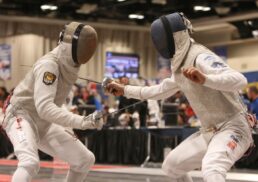
Introduction to Fencing in 2026: Technique, Strategy & the Evolution of the Sport
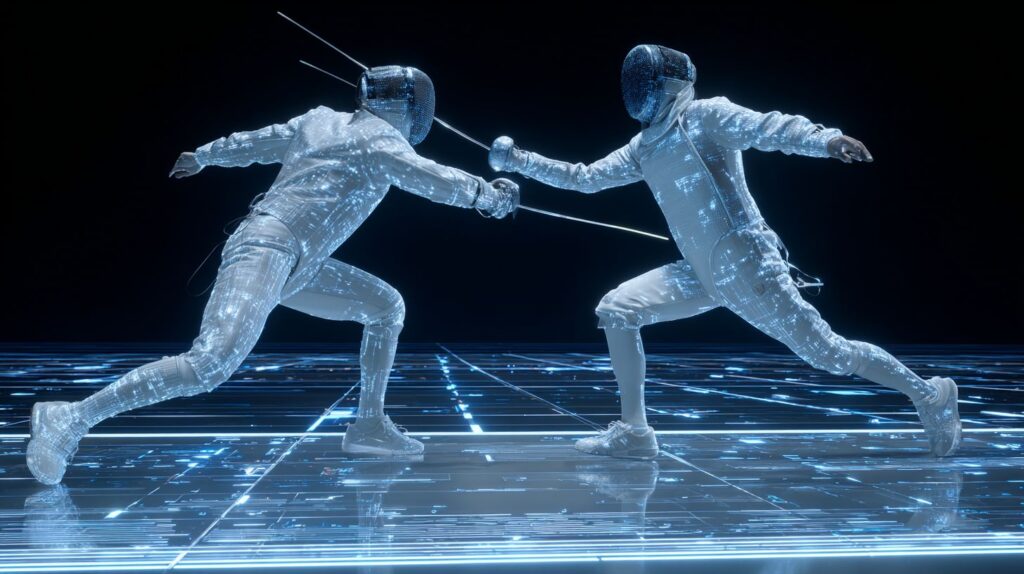
Ever wonder how fencing in 2026 is blending classic moves with cutting-edge tech? This guide breaks down Technique, Strategy & the Evolution of the Sport, from refined foil and pe skills to sabre’s bold attacks. You’ll see exactly how top fencers adapt footwork, blade control, and tactics for the modern piste.
Table of Contents
Key Takeaways:
- Fencing in 2026 emphasizes refined core techniques: foil’s precision targeting, pe’s tactical patience, and sabre’s explosive aggression, blending tradition with modern blade control innovations.
- Strategic evolution features advanced bout analysis, psychological tactics, and adaptive footwork, enabling fencers to outmaneuver opponents in high-stakes competitions.
- Technological transformations and updated training methodologies propel the sport toward the 2028 Olympics, enhancing performance through data-driven strategies and immersive simulations.
Core Techniques by Weapon
Mastering core techniques remains the foundation of success in fencing in 2026, with each weapon demanding distinct skills in timing, distance, and control. Foil prioritizes torso strikes under right-of-way rules, pe covers the whole body without such privileges, and sabre focuses on cuts above the waist.
Shared pillars include blade control and footwork precision across all weapons. Fencers build these through daily drills that sharpen reflexes and build endurance for modern bouts.
In 2026, evolving training tech refines these basics. Virtual reality setups help perfect distance judgment before live sparring.
Understanding each weapon’s rules sets the stage for specialized mastery. This foundation supports strategy in competitive fencing today.
Foil Fundamentals
Foil emphasizes precision attacks to the torso, where right-of-way rules reward the fencer’s initiative and defensive parries. Only touches on this limited target area count, demanding sharp focus and timing.
Practice the lunge sequence for control. Start in en garde stance, extend the arm fully, then step forward into the lunge, holding each rep for two to three seconds.
Discover Fencing in 2026: Technique, Strategy & the Evolution of the Sport with this guide on foil fundamentals:
- En garde with knees bent and blade pointed at opponent’s chest.
- Extend arm while keeping the back foot planted.
- Step forward and lunge, driving off the back leg.
Master fleche attacks by running forward after extension, and chain parry-riposte combos like a parry 4 into riposte. A common mistake is overextending without blade control, leaving you open to counters.
Visualize pointes position with the blade tip aligned straight ahead, guard tilted slightly upward. Regular stance checks prevent sloppy form in foil bouts.
pe Precision
pe demands unflinching accuracy across the entire body, turning every bout into a high-stakes game of anticipation without right-of-way protections. Time-based scoring adds pressure, as double touches often score for both.
Key actions include remises, renewing attacks on a stopped blade, and binds to take control of the opponent’s steel. These shine in close exchanges.
Drill distance management with this sequence: advance to measure, retreat to reset, feint high then thrust low, in five-minute sets. Strong wrist snaps avoid flicks, keeping points valid.
Unlike foil, whole-body targeting forces constant vigilance. Practice against a partner holding a target randomly across their silhouette to build adaptability for 2026 competitions.
Sabre Aggression
Sabre thrives on explosive cuts and slashes above the waist, where speed and aggression dominate in continuous, high-intensity exchanges. Cutting actions score, contrasting point weapons like foil and pe.
Break down the guard to attack transition in under one second.
- Raise blade to head height.
- Pivot wrist for edge alignment.
- Commit to the cut with hip drive.
Master molinello with circular cuts from the wrist, and head voltes to loop around parries. Avoid telegraphing through shoulder tension, which tips off opponents.
Recovery footwork sets sabre apart, with quick retreats after cuts to reset. Emphasize edge alignment in drills, slicing newsprint targets cleanly to hone technique for fast-paced 2026 sabre.
Advanced Technical Innovations
Fencing in 2026 showcases advanced technical innovations that refine footwork and blade control, pushing human limits through biomechanics and materials science.
Elite fencers leverage evolved training aids like sensor-embedded floors and AI-driven video apps to perfect their movements. These tools provide instant feedback on balance and speed during drills.
Grip technology has advanced with flexible neo-grips that adapt to wrist pressure, reducing fatigue in long bouts. Combined with weighted blades, they build endurance for sustained precision.
These innovations elevate performance by integrating data analytics into daily practice. Fencers analyze sessions to adjust techniques, gaining edges in competitive fencing in 2026.
Footwork Evolution

Footwork evolution in 2026 integrates plyometric drills and sensor feedback, enabling fencers to cover ground faster while maintaining balance.
Cross-over steps allow quick lateral shifts, while 45-degree pivot lunges suit sabre for evading feints. Practice evasion patterns by mirroring an opponent’s fake attacks with rapid pivots.
Follow this 4-week progression for gains:
- Week 1: Basic lunges on marked lines, focus on depth and recovery.
- Week 2: Add cross-overs, 10 reps per side for fluidity.
- Week 3: Incorporate feint dodges with partner shadows.
- Week 4: Timed circuits covering 20m in 5 seconds using full evasion sequences.
Use Bosch video analysis apps to review form, spotting imbalances in real time. This builds agile footwork essential for strategy in modern fencing.
Blade Control Advances
Blade control advances feature flexible Italian grips and weighted training blades, sharpening pronation and opposition for decisive touches.
Master wrist and shoulder integration with daily figure-8 swings, keeping elbows tucked for control. These weapon-agnostic exercises prepare for any bout scenario.
Perform this step-by-step pronation drill for precision:
- Start with neutral grip, blade pointed forward.
- Rotate wrist to opposition, supinating fully.
- Thrust sharply, 10 reps per arm, then switch.
Compare grips in this table:
| Grip Type | Pros | Cons |
|---|---|---|
| French Grip | Traditional feel, good for finesse | Less wrist mobility |
| Neo-Grip | Adaptive flex, fatigue reduction | Higher initial cost |
These methods enhance blade prep routines, ensuring touches land with power and accuracy in fencing in 2026.
Strategic Frameworks
Strategic frameworks in 2026 elevate fencing beyond reflexes, employing bout analysis and psychological tactics to outmaneuver opponents systematically. Unlike raw technique, this chess-like planning anticipates moves ahead. Fencers in 2026 treat each bout as a board game of positions and predictions.
Coaches emphasize pre-bout mapping to identify opponent weaknesses. Review past footage to spot recurring patterns in attacks or retreats. This preparation shifts focus from reaction to calculated dominance.
During the piste, adapt frameworks with quick mental notes on tempo shifts. Integrate analysis tools for real-time edges. In Fencing in 2026: Technique, Strategy & the Evolution of the Sport, these methods define elite competitors.
Practice blending strategy across sessions. Simulate scenarios to build fluid decision-making. Over time, this creates unbeatable mental architectures.
Bout Analysis Tactics
Bout analysis tactics dissect opponent patterns using video software, revealing exploitable habits in distance and timing. Free tools like Hudl Technique enable slow-motion review for precise breakdowns. Fencers capture every nuance post-match.
Follow this numbered process for a 15-minute post-bout review:
- Log all touches with timestamps and types.
- Map distances at each engagement using grid overlays.
- Predict next actions based on observed rhythms.
Adapt mid-bout via mental cues like “short lunge incoming”. This keeps analysis dynamic, not static. Epee specialists use it to counter parry-riposte chains effectively.
Track patterns in a simple table to visualize trends.
| Attack Type | Counter Pattern | Success Rate Insight |
|---|---|---|
| Direct lunge | Yield then riposte | Exploits overcommitment |
| Feint to bind | Disengage early | Breaks blade control |
| Flick to wrist | Cover high, counter low | Anticipates arc |
Sabre fencers refine these for speed bouts. Consistent use sharpens predictive edges in 2026 competitions.
Psychological Warfare
Psychological warfare deploys feints and tempo changes to provoke errors, turning mental pressure into tangible points. Distinct from bout analysis, it thrives in real-time mind games. Fencers build resilience through targeted exercises.
Practice mirror drills to read tells like eye flicks or breath holds. Stand opposite a partner mimicking opponents. Note subtle cues that signal incoming actions.
Run scenarios such as baiting aggressive sabreurs with false retreats. Draw them forward, then punish with precise counters. This exploits impatience common in high-stakes bouts.
Adopt a 4-7-8 breathing protocol pre-touch: inhale for 4 counts, hold 7, exhale 8. It resets focus amid chaos. Foil experts pair it with visualization of victory sequences for unbreakable calm.
Build resilience with daily mental reps. Simulate crowd noise or fatigue to toughen the mind. In Fencing in 2026, these tactics evolve the sport’s mental frontier.
Technological Transformations
Technological transformations redefine fencing in 2026, from AI-driven scoring to wearable sensors enhancing training precision. Updated FIE video replay systems now allow instant reviews of touches during competitions. This ensures fairer outcomes in high-stakes bouts.
Fencers benefit from ChronoPod timing devices in practice sessions. These tools target reaction times under 200 milliseconds for drills. Athletes use them to sharpen responses against fast opponents.
The MyFencing app supports virtual sparring from anywhere. Pair it with a sensor-equipped mask for realistic feedback on timing and distance. This integrates seamlessly into daily routines for strategy refinement.
| Traditional Piste | Tech-Enhanced Piste | |
|---|---|---|
| Pros | Builds instinct through feel | Provides instant data feedback |
| Low cost, simple setup | Tracks progress over time | |
| Cons | No objective metrics | High initial investment |
| Subjective error risks | Reliance on tech maintenance |
These advancements evolve the sport without overshadowing core technique and strategy. Fencers blend tech with traditional skills for a competitive edge in 2026.
Training Methodologies
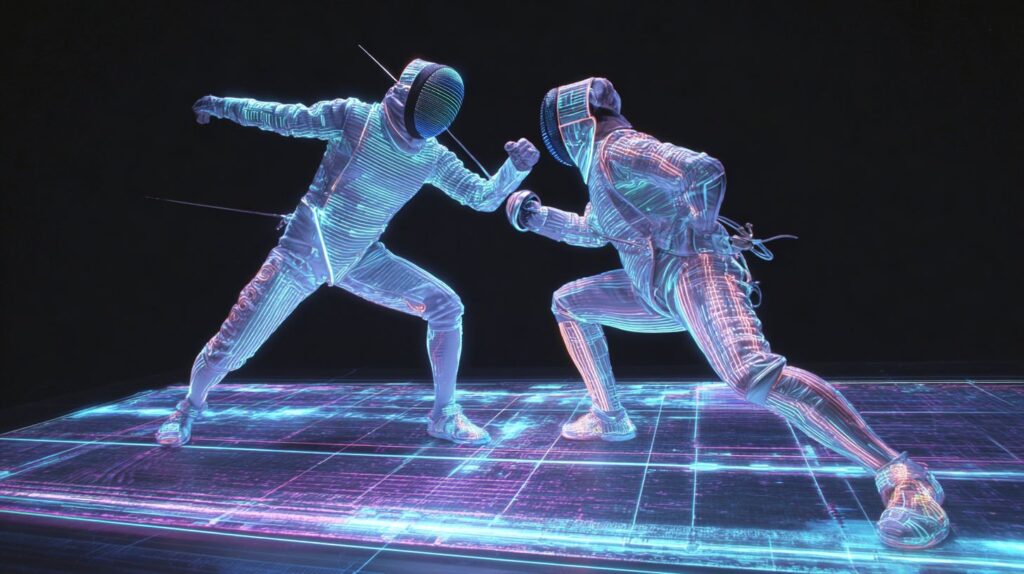
Training methodologies in 2026 blend high-intensity interval training (HIIT) with recovery protocols, building endurance for 15-touch marathons. Fencers focus on balanced regimens that enhance technique and strategy without burnout. This approach supports the evolution of the sport by prioritizing long-term performance.
An 8-week sample plan structures sessions effectively. Train footwork three times per week, run strategy simulations twice, and dedicate one day to recovery yoga. Adjust intensity weekly to track progress and avoid plateaus.
Key tools include assault bikes for cardio bursts that mimic bout pacing. Use foam rolling post-session to release muscle tension and improve flexibility. Tailor plans by weapon, with epee fencers emphasizing distance control and sabre athletes honing explosive starts.
Common pitfalls involve neglecting cool-downs, which lead to soreness and injury. Avoid technique duplication by focusing on holistic regimens that integrate physical, mental, and tactical growth. Experts recommend logging sessions to refine personal strategies.
Footwork Drills
Footwork forms the foundation of fencing in 2026, demanding precision and speed. Dedicate three weekly sessions to drills like lunges and pivots on marked grids. These build the agility needed for dynamic bouts.
Incorporate assault bike intervals for endurance, alternating 30-second sprints with recovery jogs. Pair with shadow fencing to link movement to attacks. Progress by adding resistance bands for stronger advances.
Fencers often overlook lateral shuffles, yet they counter side threats effectively. Practice in 20-minute circuits to simulate pressure. Track improvements through timed runs across the piste.
Strategy Simulations
Strategy sims twice weekly sharpen decision-making under fatigue. Use video analysis of recent bouts to recreate scenarios against partners. This hones parry-riposte sequences tailored to opponent styles.
Simulate 15-touch marathons with rotating roles, focusing on scoring patterns like feints into binds. Epee users practice patient probes, while foil demands zone control. Debrief after each to note tactical shifts.
Integrate mental cues, such as visualizing touches before action. Tools like timed buzzers add realism. This method evolves with the sport’s strategic depth.
Recovery and Mobility
One weekly recovery yoga session restores balance after intense training. Poses like downward dog target hamstrings strained by lunges. Breathe deeply to reduce stress from competitive fencing.
Foam rolling post-session prevents tightness in calves and quads. Spend five minutes per muscle group, using slow rolls for best effect. Hydrate and stretch to aid muscle repair.
Avoid overtraining by monitoring fatigue signs like poor sleep. Holistic recovery supports technique refinement. Tailor yoga flows by weapon for targeted relief.
Tailoring by Weapon
Customize regimens to weapon specifics in fencing in 2026. Epee plans stress endurance footwork for long ranges. Sabre routines emphasize rapid accelerations and cuts.
Foil fencers blend precision drills with validation rules practice. Use weapon-specific sims to avoid overlap. This ensures holistic development without redundancy.
Monitor progress with bout logs, adjusting for strengths. Experts recommend periodic assessments every four weeks. Balanced tailoring boosts overall strategy.
Future Olympic Outlook
The future Olympic outlook for fencing promises expanded team events and immersive VR training, amplifying the sport’s global allure. These changes build on Fencing in 2026: Technique, Strategy & the Evolution of the Sport by blending classic skills with modern tech. Fans can expect more dynamic competitions that draw larger crowds.
Mixed gender relays may debut in 2028, fostering teamwork across disciplines like foil and epee. This format encourages adaptive strategies, where pairs switch seamlessly to exploit opponent weaknesses. It ties into evolving techniques, making events faster and more inclusive.
AR overlays for viewers will enhance broadcasts, showing real-time thrust trajectories and scoring zones. Spectators gain deeper insights into complex footwork and parries. Such innovations make fencing accessible, boosting participation worldwide.
Rising stars from FIE rankings, such as young sabre prodigies, spotlight the sport’s bright future. These athletes master hybrid training methods, combining VR simulations with live bouts. Aspiring fencers should focus on consistent practice to climb those ranks.
Prep Tips for Olympic Qualifiers

To prepare for Olympic qualifiers, prioritize daily technique drills like precise lunges and retreats. Build endurance with interval sprints mimicking bout pacing. Track progress through video analysis of your sessions.
Develop match strategies by studying opponents’ habits, such as favoring attacks on the inside line. Practice countering with feints in foil, epee, or sabre. Join club scrimmages to simulate high-pressure qualifiers.
- Refine footwork with ladder drills for quicker advances.
- Master mental focus via visualization before each touch.
- Seek coaching feedback on blade control and timing.
- Compete in regional events to build qualifier experience.
Embrace the evolution by incorporating VR for scenario training. Consistent effort in these areas positions you for success. Stay dedicated to technique and strategy for the Olympic path.
Checkout 8 Things You Didn’t Know About Fencing Classes in New …
Frequently Asked Questions
What is the focus of ‘Fencing in 2026: Technique, Strategy & the Evolution of the Sport’?
‘Fencing in 2026: Technique, Strategy & the Evolution of the Sport’ explores the latest advancements in fencing techniques, innovative strategies, and how the sport is evolving by 2026, including technological integrations and rule changes shaping competitive play.
How have fencing techniques evolved leading up to 2026?
In ‘Fencing in 2026: Technique, Strategy & the Evolution of the Sport’, techniques have shifted towards hybrid styles blending classical precision with AI-assisted footwork analysis, emphasizing fluid parries and faster blade recoveries for modern electronic scoring systems.
What new strategies are highlighted in ‘Fencing in 2026: Technique, Strategy & the Evolution of the Sport’?
‘Fencing in 2026: Technique, Strategy & the Evolution of the Sport’ discusses strategies like data-driven bout preparation using VR simulations and adaptive targeting based on opponent biometrics, moving beyond traditional intuition to predictive analytics.
How is technology influencing the evolution of fencing by 2026?
According to ‘Fencing in 2026: Technique, Strategy & the Evolution of the Sport’, technology drives evolution through wearable sensors for real-time technique feedback, augmented reality training masks, and refined video review protocols enhancing strategic decision-making.
What role does mental strategy play in fencing in 2026?
‘Fencing in 2026: Technique, Strategy & the Evolution of the Sport’ emphasizes mental strategies incorporating neurofeedback training and psychological profiling to counter feints, integrating mindfulness with tactical foresight for superior bout control.
What future changes are predicted for fencing in ‘Fencing in 2026: Technique, Strategy & the Evolution of the Sport’?
‘Fencing in 2026: Technique, Strategy & the Evolution of the Sport’ predicts the sport’s evolution towards inclusivity with mixed-gender team events, sustainable equipment materials, and global e-fencing leagues, revolutionizing technique and strategy worldwide.