As wireless networking reshapes our world and drives digital transformation, the future of networking hinges on breakthroughs like Wi-Fi 7 and 6G technology, extending the reach of robust 5G networks. This article explores AI-driven network optimization and smart infrastructure trends, from edge computing to sustainable services and green networks. Gain actionable insights from industry research, like Gartner reports and Forbes Technology Council, including contributions from Alexander Britkin, Pramod Gummaraj, Guharajan Sivakumar, and Mark Goodburn, to future-proof your connectivity strategies and drive innovation.
Table of Contents
Key Takeaways:
- Advancements in 5G and 6G, combined with satellite networks, will enable ultra-fast, global connectivity, revolutionizing remote access and real-time data transmission for industries worldwide.
- The growth of IoT and edge computing will drive scalable smart infrastructure, enhancing device interoperability and reducing latency for efficient urban and industrial applications.
- AI-driven automation, zero-trust cybersecurity, and sustainable practices will shape secure, eco-friendly networks, powering smart cities and addressing global connectivity challenges.
Evolving Connectivity Technologies
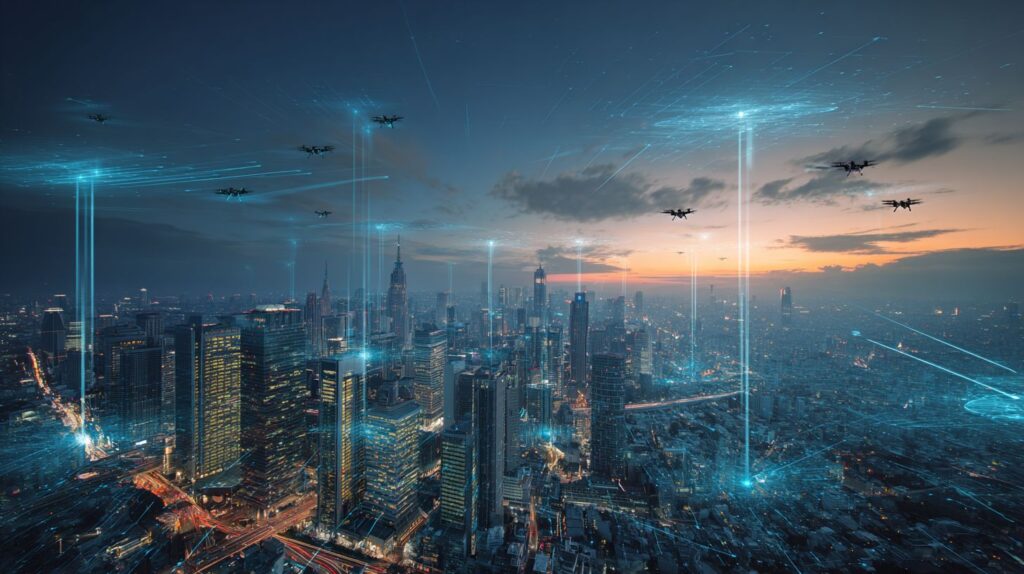
Connectivity technologies are advancing at a rapid pace. Wi-Fi 7 delivers speeds of up to 46 Gbps, a substantial improvement over Wi-Fi 6E’s 9.6 Gbps, thereby facilitating seamless hybrid 5G/6G integrations for public Wi-Fi and enterprise networks to support programmable 5G applications.
5G and 6G Advancements
Current 5G networks provide speeds of up to 20 Gbps; however, 6G technology is projected to achieve terabit-per-second rates by 2030, as demonstrated at the Connect(X) 2025 event in Chicago through hybrid 5G/6G prototypes.
To compare 5G and 6G, the following key metrics should be considered:
| Aspect | 5G | 6G |
|---|---|---|
| Latency | 1 ms | 0.1 ms |
| Use Cases | Enhanced mobile broadband | Holographic communications |
| Adoption | GSMA: 85% world population by 2025 | Projected 50% coverage by 2030 |
| Spectrum | Sub-6 GHz and mmWave (ITU-R M.2083) | Terahertz bands (ITU-R ongoing) |
Research from the ITU-R underscores the allocation of terahertz bands for 6G to support ultra-high speeds. Notable examples include Ericsson’s programmable 5G network slicing, which enables AR/VR applications along with use cases like autonomous vehicles and automated manufacturing with a 50% reduction in rendering time; Nokia’s 2023 white paper on 6G, which details the integration of artificial intelligence for predictive networking capabilities; and Verizon’s 5G deployment, which, as outlined in a 2024 case study, reduced urban latency by 40% and thereby improved the efficiency of telemedicine services such as remote surgery.
Satellite and Low-Earth Orbit Networks
Satellite communication through low-Earth orbit (LEO) networks, such as Starlink, delivers broadband coverage to rural areas, attaining speeds of up to 150 Mbps in areas where conventional infrastructure like fiber-to-the-home and distributed antenna systems, including cellular DAS, is inadequate. This approach is exemplified by India’s BharatNet initiative, which aims to connect 250,000 villages.
The integration of LEO systems can be accomplished through the following structured process:
- Evaluate coverage deficiencies utilizing NSR’s Satellite Coverage Analyzer (available in a complimentary tier), a process typically requiring 2-4 weeks to identify gaps in rural areas.
- Select a suitable provider, such as SpaceX (with a terminal cost of $499), and integrate it via application programming interfaces (APIs) with existing ground stations to ensure uninterrupted connectivity.
- Conduct latency testing to achieve performance below 50 milliseconds using tools like iPerf, concurrently obtaining necessary approvals from the Telecom Regulatory Authority of India (TRAI) to prevent implementation delays.
A notable case study is BharatNet’s Phase III, which provides 100 Mbps connectivity to remote locations via LEO technology. According to the 2023 Indian Space Research Organisation (ISRO) report, this method yields approximately 20% cost reductions compared to traditional fiber optic deployments.
Expansion of Internet of Things (IoT)
The expansion of the Internet of Things (IoT) is advancing rapidly, with Gartner projecting that the number of connected IoT devices will reach 25 billion by 2025. This proliferation is fundamentally transforming industries by fostering interconnected ecosystems that enhance efficiency and innovation.
Device Interoperability and Scaling

Achieving device interoperability in scaling Internet of Things (IoT) networks, including IoT devices, requires the adoption of IPv6 adoption, which has attained 40% global adoption according to Google statistics. This adoption enables network virtualization through Network Function Virtualization (NFV) solutions, such as NFWare’s vCPE platform and WZC Networking tools for enhanced connectivity.
To ensure effective implementation, adhere to the following best practices:
- Adopt IPv6 to address the exhaustion of IPv4 addresses. Employ Hurricane Electric’s tunnel broker to enable a seamless transition within one to two months, thereby mitigating challenges such as Carrier Grade Network Address Translation (CGNAT) overloads in IPv4 environments, which can fragment IoT networks.
- Deploy NFV utilizing NFWare’s vCPE solution ($500 per server), which reduces hardware requirements by 50%. An ETSI study demonstrates that NFV can lower deployment costs by 30%.
- Standardize interoperability through the Matter 1.0 protocol to ensure compatibility across more than 1,000 devices from prominent brands, including Apple and Google.
- Orchestrate scaling with the open-source Kubernetes platform, which efficiently manages up to 10,000 nodes.
- Implement monitoring with the open-source Prometheus tool, configuring alerts for latency spikes exceeding 5% to uphold system reliability.
These practices will optimize IoT ecosystems for sustainable growth.
Edge Computing in Smart Infrastructure
Edge computing within smart infrastructure enables local data processing, thereby reducing latency to below 5 milliseconds for real-time decision-making in high-density environments. This is demonstrated by AWS Outposts deployments, which manage up to 1 petabyte of data daily.
This methodology delivers substantial advantages, such as a 60% decrease in bandwidth expenses, as outlined in Forrester’s 2023 Edge Computing Report.
Real-world applications underscore its effectiveness:
- In smart buildings, Akamai Edge Workers reduce data transmission by 90%, enhancing energy efficiency through the minimization of cloud roundtrips.
- In industrial IoT contexts, an initial investment of $10,000 in AWS Outposts yields $50,000 in annual cost savings via 40% accelerated processing speeds, according to Gartner analyses.
For optimal integration using tools like Sitetracker, adhere to the following three steps:
- First, evaluate data volume utilizing Azure Edge Zones, priced at $0.10 per GB processed.
- Second, implement deployment through Kubernetes for efficient orchestration.
- Third, conduct monitoring with Prometheus to maintain latency under 5 milliseconds, thereby guaranteeing scalable performance.
AI and Automation in Network Management
AI-driven network optimization enables automated management through self-optimizing networks that employ agentic AI to predict 95% of service disruptions by analyzing traffic patterns and ensuring timely firmware updates, thereby enhancing customer experience. This approach is exemplified by Aprecomm’s AI-driven NaaS platform, which is available at a cost of $99 per month per site.
| Tool | Price | Key Features | Best For | Pros/Cons |
|---|---|---|---|---|
| Aprecomm | $99/mo | AI analytics, self-optimizing networks | Enterprises | Pros: 30% efficiency gain; Cons: steep learning |
| Cisco DNA Center | $10K/year | Automation scripting | Large-scale | Pros: integrates 1,000+ devices; Cons: complex setup |
| Juniper Mist | $50/device | Generative AI insights | Wi-Fi optimization, SMBs | Pros: real-time; Cons: limited to wireless |
| Nokia AVA | $5K/mo | Agentic AI, predictive maintenance | Telcos | Pros: 99% uptime; Cons: vendor lock-in |
| VMware NSX | $2K/server | Network-as-a-Service, virtualization | Cloud | Pros: scalable; Cons: high cost |
For users new to these technologies, Aprecomm provides a more streamlined one-week setup process compared to the one-month rollout required for Juniper Mist, thereby offering greater accessibility for initial evaluations of AI-enhanced network solutions.
Juniper Mist, in turn, delivers more advanced real-time Wi-Fi analytics, which proves particularly advantageous for small and medium-sized businesses (SMBs) seeking to scale their operations after deployment.
According to the 2023 Gartner Magic Quadrant report, the adoption of AI in network management yields a 25% improvement in return on investment, highlighting the critical role of these tools in facilitating proactive prediction and prevention of service disruptions.
Cybersecurity Challenges and Solutions
The cybersecurity challenges confronting enterprise networks are escalating, as cyber threats impose substantial financial burdens on network security. According to IBM’s 2023 report, the average cost of a data breach reaches $4.45 million, highlighting the critical imperative for implementing robust network security solutions, including network segmentation, multi-factor authentication, and quantum encryption, to mitigate these risks.
Zero-Trust Architectures

Zero-trust architecture further strengthens defenses in public Wi-Fi and other vulnerable environments by assuming no implicit trust and continuously verifying access.
Zero-trust architectures entail the verification of every access request, which, according to NIST SP 800-207, reduces the impact of breaches by 50 percent. These architectures incorporate multi-factor authentication and quantum encryption to facilitate effective network segmentation.
Despite these advantages, the implementation of zero-trust models presents several significant challenges:
- Perimeter breaches remain a persistent risk, particularly in public Wi-Fi environments with Wi-Fi 6E and the upcoming Wi-Fi 7, as evidenced by the 2023 Starbucks incident that exposed the data of one million users. To mitigate this, organizations can deploy Okta’s multi-factor authentication solution, priced at $2 per user per month, which enforces rigorous device verification.
- Insider threats continue to erode the foundational principles of trust. Zscaler’s zero-trust platform, featuring micro-segmentation and available at $10 per user, isolates network traffic by 90 percent, thereby restricting lateral movement and containing potential compromises.
- Emerging quantum vulnerabilities pose a substantial threat to traditional encryption methods. IBM’s Quantum Safe cryptography, offered with free trials, employs 256-bit keys to provide robust post-quantum security.
- Gaps in legacy systems often result in visibility blind spots. Palo Alto Networks’ Prisma solution, integrated with NFV solutions from NFWare, at $100 per device, automates segmentation processes to effectively address these vulnerabilities.
The adoption of zero-trust principles by NIST has resulted in a 40 percent reduction in security incidents, demonstrating the model’s scalability and efficacy across federal networks.
Sustainable and Green Networking Practices
Sustainable and green networking practices can reduce energy consumption by 30%, as outlined in the European Union’s Green Deal, through the implementation of efficient hardware and software optimizations in data centers.
Adopting best practices can yield even greater efficiencies. Key actions include:
- Utilizing low-power chips, such as Intel Xeon processors and Aprecomm’s networking solutions, which reduce energy usage by 20%, supplemented by quarterly audits;
- Deploying green networking solutions via Cisco’s EnergyWise tool (a complimentary resource) to schedule usage during off-peak periods, with monthly reviews;
- Optimizing routing protocols through open-source Software-Defined Networking (SDN) controllers like OpenDaylight, thereby reducing traffic by 25% via bi-annual updates;
- Recycling electronic waste in accordance with the Waste Electrical and Electronic Equipment (WEEE) Directive, in partnership with organizations such as Dell for annual compliance;
- Monitoring carbon footprints with tools like Schneider Electric’s EcoStruxure (approximately $500 per site), which provides real-time dashboards;
- Adopting Power over Ethernet (PoE) for Internet of Things (IoT) devices, achieving 15% power savings during firmware updates.
A 2023 Greenpeace study demonstrates that telecommunications companies have achieved 40% reductions in emissions by employing these methodologies.
Applications in Smart Cities
Applications in smart cities utilize cellular DAS in 5G networks to provide seamless coverage, facilitating the navigation of autonomous vehicles with 99.9% uptime. This approach has been successfully implemented by Sitetracker under the leadership of Pramod Gummaraj.
To illustrate these applications, the following case studies are drawn from the GSMA’s 2023 smart city report:
- In Singapore, smart buildings incorporate cellular DAS through Sitetracker’s SaaS platform (at a cost of $10,000 per year), resulting in 50% faster deployment times and $2 million in cost savings.
- Dubai integrates AR/VR for traffic management, achieving 99% accuracy in real-time decisions and a 20% reduction in congestion.
- Barcelona’s programmable 5G edge computing infrastructure, leveraging hybrid 5G/6G, supports remote surgery with latency under 10 milliseconds, enabling over 100 procedures in collaboration with the Mayo Clinic.
- In Germany, Siemens’ automated manufacturing systems manage 1,000 Internet of Things (IoT) devices, enhancing productivity by 30%.
For effective implementation, integrate DAS with edge computing to support scalable urban technologies.
Future Outlook and Global Implications
The future of networking anticipates widespread IPv6 adoption and the integration of 6G technology to address the shortages of IPv4 addresses, with Carrier-Grade Network Address Translation (CGNAT) workarounds expected to decline as fiber-to-the-home penetration reaches 50% in urban India by 2030, according to insights from WZC Networking by Alexander Britkin.
To navigate this transition, network engineers are advised to prioritize IPv6 adoption, utilizing tools such as Hurricane Electric’s complimentary tunnel broker for testing purposes and attending events like Connect(X) 2025 in Chicago. The following table compares the current and future states:
| Aspect | Current State | Future State | Data/Source |
|---|---|---|---|
| IPv4 Exhaustion | 3.7B addresses used, CGNAT costs $1M/yr for ISPs | IPv6’s 340 undecillion addresses enable seamless scaling | IANA reports |
| Public Wi-Fi | 80% outage-prone due to legacy hardware | Firmware updates via Aruba Central reduce disruptions by 70% ($200/site) | Aruba studies |
| Traffic Patterns | Manual forecasting with low accuracy | AI predicts 95% accuracy for optimization | Guharajan Sivakumar & Mark Goodburn collaborations |
On a global scale, India’s BharatNet initiative connects 600,000 villages with 40 Gbps fiber optic infrastructure using AI-driven Network-as-a-Service (NaaS) models, which is projected to contribute to a 25% increase in GDP according to the World Bank’s 2023 report and Forbes Technology Council insights, notwithstanding a 20% gap in rural coverage.
Learn more, The Future of Network Design: Emerging Trends and …
Frequently Asked Questions
What is ‘The Future of Networking: Trends in Connectivity and Smart Infrastructure’?

‘The Future of Networking: Trends in Connectivity and Smart Infrastructure’ refers to the evolving landscape of digital communication systems, emphasizing advancements in high-speed internet, IoT integration, and intelligent urban systems. This field explores how seamless connectivity will power smart cities, enabling real-time data exchange and automated infrastructure management for efficiency and sustainability.
How will 5G and beyond shape trends in connectivity within ‘The Future of Networking: Trends in Connectivity and Smart Infrastructure’?
In ‘The Future of Networking: Trends in Connectivity and Smart Infrastructure’, 5G networks and emerging 6G technology will revolutionize connectivity by offering ultra-low latency, massive device support, and enhanced bandwidth. This will enable applications like autonomous vehicles and remote surgeries, transforming smart infrastructure into responsive, interconnected ecosystems that optimize resource use and reduce environmental impact.
What role does AI play in ‘The Future of Networking: Trends in Connectivity and Smart Infrastructure’?
Generative AI and agentic AI are cornerstones of ‘The Future of Networking: Trends in Connectivity and Smart Infrastructure’, driving AI-driven predictive analytics for network optimization, automated threat detection, and self-healing systems. By analyzing vast data flows, AI ensures reliable connectivity in smart infrastructure, from traffic management in smart cities to energy-efficient grids, enhancing overall performance and security.
How is edge computing influencing ‘The Future of Networking: Trends in Connectivity and Smart Infrastructure’?
Edge computing is pivotal in ‘The Future of Networking: Trends in Connectivity and Smart Infrastructure’ as it processes data closer to the source, reducing latency and bandwidth demands on central networks. This trend supports real-time decision-making in smart infrastructure, such as instant sensor responses in industrial IoT or augmented reality in urban environments, fostering more agile and scalable connectivity solutions.
What challenges arise in implementing ‘The Future of Networking: Trends in Connectivity and Smart Infrastructure’?
Implementing ‘The Future of Networking: Trends in Connectivity and Smart Infrastructure’ faces challenges like cybersecurity vulnerabilities, interoperability between diverse devices, and the digital divide in access. Addressing these requires robust encryption, standardized protocols, and inclusive policies to ensure that trends in connectivity benefit all, while smart infrastructure evolves securely and equitably.
What opportunities does ‘The Future of Networking: Trends in Connectivity and Smart Infrastructure’ offer for sustainability?
‘The Future of Networking: Trends in Connectivity and Smart Infrastructure’ presents significant opportunities for sustainability by enabling energy-efficient networks and intelligent resource allocation. Trends like green data centers and IoT-driven waste management in smart cities can reduce carbon footprints, promoting eco-friendly connectivity that supports global goals for a low-emission, resilient infrastructure.