The evolution of home video has transformed the way we experience motion pictures and capture memories, from the humble beginnings of VHS tapes and the birth of home video recording to today’s cutting-edge streaming recorders. Pioneered by innovations like the Ampex Corporation’s VRX-1000 and the U-matic format, which laid the foundation for home recording technology has made personal video recording accessible for everyone. This article explores the remarkable journey of video recording and video technology, examining its impact on entertainment ever and how it shapes our viewing habits today. Join us as we delve into the past, present, and future of home video.
Table of Contents
Key Takeaways:
- VHS revolutionized the way we consumed home video content, with VHS rentals becoming popular, but eventually gave way to newer technologies like the DVD format and streaming recorders.
- The rise of digital video recorders (DVRs) allowed viewers to have more control over their viewing habits and video playback, leading to a shift in the traditional TV landscape.
- The emergence of digital streaming services has completely transformed the home video market, with more and more consumers opting for on-demand content over traditional cable or DVD purchases.
Definition and Importance
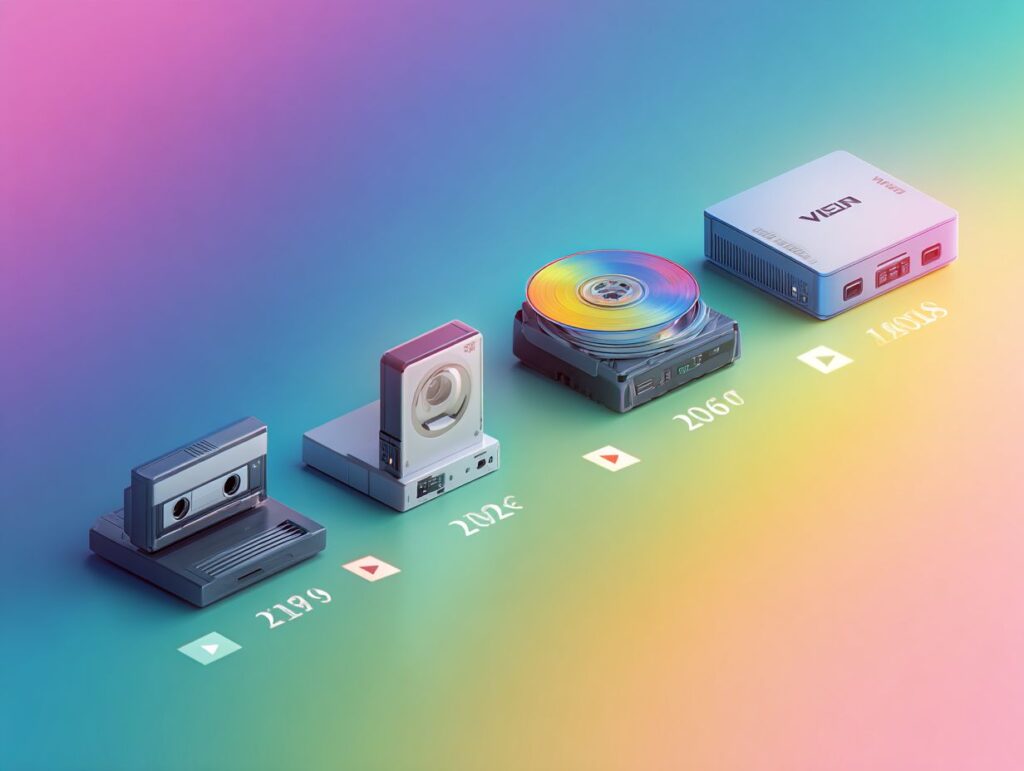
Home video refers to the recording of personal events for both entertainment and preservation purposes, enabling families to document significant moments in their history. This medium holds considerable emotional significance, allowing families to relive cherished memories such as birthdays, weddings, and everyday experiences.
Historically, families have transitioned from traditional photo albums to video and film transfers, capturing the nuances of life with greater vividness. Early adopters frequently utilized camcorders, such as the widely recognized Sony Handycam, which revolutionized personal filming and home video recording.
As technology has advanced over the years, smartphones have become essential tools for video recording, enhancing video quality. This shift has not only made documentation more accessible but has also enriched family narratives, fostering deeper connections across generations as these videos evolve into treasured keepsakes.
The Rise of VHS
The VHS format, introduced by JVC in the 1970s, significantly transformed the landscape of home entertainment and consumer-grade video formats and established itself as the leading format in the home video market for several decades.
History and Development
The history of VHS commenced with the development of the U-matic format by Ampex Corporation, which featured magnetic tape technology, which laid the foundation for consumer-grade video formats and ultimately led to the prevalence of VHS over Betamax. In 1976, JVC introduced the first VHS VCR, marking a significant milestone in home entertainment.
By 1980, VHS began to surpass Betamax, primarily due to its longer recording capabilities-VHS offered up to 6 hours of recording time compared to Betamax’s 1 to 2 hours of recording time. By 1985, VHS had secured approximately 75% of the market share, supported by the introduction of popular films on VHS cassettes and the emergence of rental services.
By 1990, VHS sales escalated dramatically, resulting in over 100 million units sold globally, thereby solidifying its status as the preeminent home video format.
Market Impact and Popularity
The VHS format significantly transformed the home entertainment market, leading to the emergence of video rental stores and altering the release strategies employed by Hollywood studios.
By the early 1990s, annual video rentals surpassed 1 billion, indicating a notable shift towards home viewing experiences. This trend necessitated adaptations in Hollywood’s distribution approaches, resulting in simultaneous or even earlier video releases.
Families increasingly embraced the capability to record personal memories, resulting in the creation of home movies that fostered shared experiences. The nostalgia associated with VHS also contributed to the revival of classic films.
Importantly, studios began producing special editions of films to meet the rising consumer demand for home entertainment that resonated with family-friendly narratives.
The Transition to DVD
The introduction of the DVD format in the late 1990s, offering higher-quality video and better sound, represented a substantial advancement in video quality and storage capacity, significantly transforming the home video landscape once more.
Technological Advancements
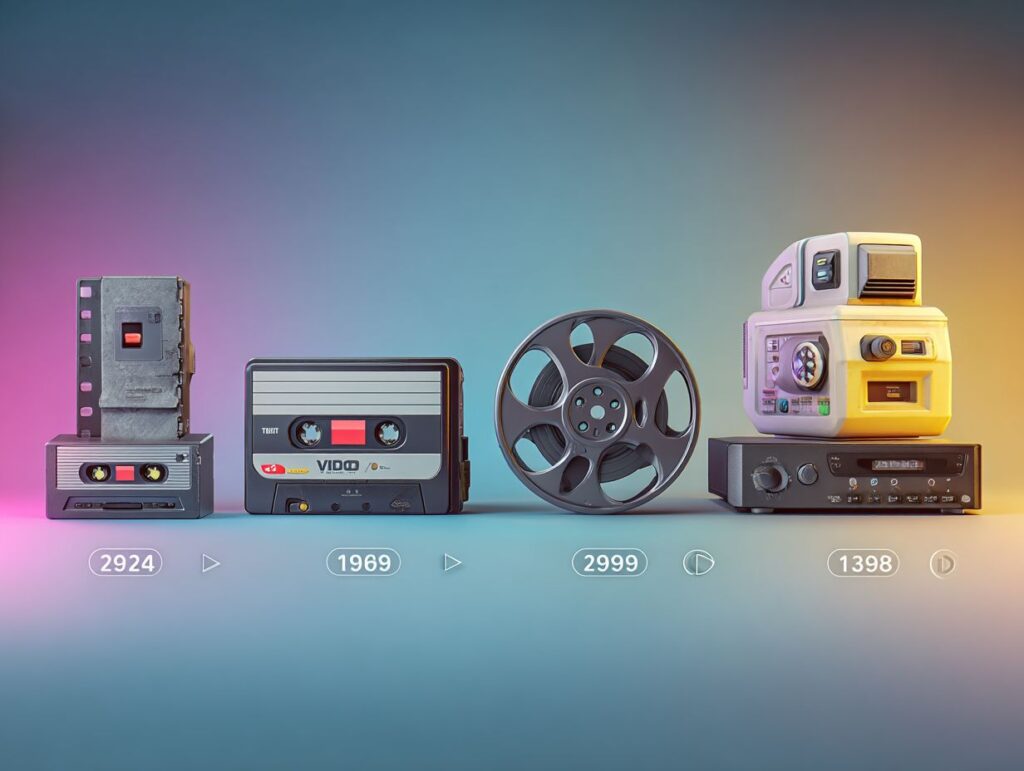
Technological advancements in DVD technology have provided superior video quality, better sound, and extended recording times, which have garnered significant interest from consumers seeking enhanced home entertainment experiences.
The transition from VHS to DVD has introduced numerous benefits. By utilizing optical disc technology, DVDs deliver sharper images than the VHS format and improved color depth, achieving a resolution of up to 720×480 pixels, in contrast to VHS’s approximate resolution of 240 lines.
Additionally, DVDs can accommodate up to 8 hours of video on a single disc, markedly increasing storage capacity and enabling the viewing of longer films without the necessity of multiple tapes. This evolution has also incorporated digital features such as scene selection and subtitles, thereby offering a more interactive viewing experience.
Consumer Adoption
Consumer adoption of DVD technology experienced significant growth, with sales reaching 70 million units by 2002, as families increasingly embraced the format for home movies and entertainment.
To facilitate this transition, households upgraded their video equipment, often replacing VCRs with DVD players and preservation services. Many families also invested in home theater systems, which enhanced the viewing experience through surround sound speakers and larger televisions.
This shift not only improved the enjoyment of movie nights but also encouraged families to amass extensive DVD collections of popular way films. The ability to skip directly to favorite scenes and the enhanced picture quality were considerable attractions.
By 2005, the average household owned over 50 DVDs, illustrating a rapid adaptation to this emerging entertainment medium.
The Emergence of Digital Video Recorders (DVRs)
The advent of Digital Video Recorders (DVRs) and content producers. has profoundly transformed viewing habits by enabling users to record live television broadcasts and view them at their convenience.
How DVRs Changed Viewing Habits
Digital Video Recorders (DVRs) have enabled viewers to bypass commercials and establish personalized viewing schedules, thereby fundamentally altering consumer habits within the home entertainment sector.
Between 2004 and 2010, the adoption of DVR technology increased by approximately 10% annually, reflecting a rapid acceptance of this innovation. Viewers increasingly gravitated towards binge-watching, frequently consuming multiple episodes in a single sitting, which disrupted traditional weekly programming schedules.
This shift in audience engagement has been notable; while live sports and events continued to attract substantial viewership, scripted shows experienced declines in live audiences. According to Nielsen, nearly 40% of viewers expressed a preference for time-shifted viewing.
This trend necessitated a reevaluation of advertising strategies, prompting advertisers to consider alternatives such as integrating sponsored content and photo scanning or product placements into programs to ensure continued visibility.
Learn more, How the Digital Video Recorder (DVR) Changes …
The Streaming Revolution
The streaming revolution, led by platforms such as Netflix and Amazon Prime Video, has initiated a new era in home video consumption, emphasizing instant access over traditional physical media.
Major Players in the Streaming Market

Major players in the streaming market, such as Netflix and Amazon Prime Video, have significantly influenced entertainment consumption habits globally. As of 2023, Netflix has over 230 million subscribers and provides an extensive library that features original series like “Stranger Things” alongside a variety of licensed content.
In contrast, Amazon Prime Video has approximately 220 million subscribers, showcasing exclusive films and popular series, including “The Marvelous Mrs. Maisel.” Disney+ has also achieved notable success, surpassing 150 million subscribers with its family-friendly offerings, which include classic Disney animations and the Star Wars franchise.
The distinct content strategies employed by each platform are vital in attracting and retaining subscribers.
Impact on Traditional Media
The emergence of streaming services has significantly impacted traditional media outlets, resulting in the decline of video rental stores and necessitating changes in the release strategies of Hollywood studios.
Between 2015 and 2020, the video rental industry experienced a remarkable 60% decrease, as consumers increasingly turned to platforms such as Netflix and Hulu, which provide immediate access to extensive libraries without the burden of late fees.
Consequently, studios are now prioritizing digital-first strategies, releasing films directly on streaming services, often in conjunction with theatrical releases. A notable example of this shift is Disney’s decision to premiere “Mulan” on Disney+, which underscores this transformation.
These adaptations not only enhance subscription numbers but also generate new revenue streams, highlighting the imperative for traditional media to innovate in order to thrive in the digital era.
The Future of Home Video Technology in Movie Theaters
As technology continues to advance, the future of home video technology is poised to offer enhanced digital experiences and greater integration with smart home systems.
Trends and Predictions
Future trends indicate a significant shift towards immersive experiences characterized by advancements in video quality, the emergence of potential holographic displays, and the development of more sophisticated content delivery systems.
Companies such as Sony and Samsung are making substantial investments in 8K resolution and High Dynamic Range (HDR) technology, thereby pushing the boundaries of video clarity. Concurrently, organizations like Magic Leap are actively exploring holographic displays, which have the potential to transform content consumption methods significantly.
Moreover, smart content delivery systems are set to leverage artificial intelligence to personalize viewing experiences, allowing for more accurate predictions of user preferences. Market analysts project that by 2025, over 50% of households will adopt these innovations, with virtual reality (VR) and augmented reality (AR) viewing becoming mainstream, thus creating new opportunities for content creators.
Frequently Asked Questions
1. What is the evolution of home video history and how did it change over the years?

The evolution of home video refers to the development and advancement of technology used to record, store, and play movies and TV shows in a home setting. It began with the introduction of VHS tapes in the 1970s, followed by DVD players in the 1990s, and now streaming recorders in the digital age.
2. How did VHS tapes become the dominant form of home video in the 1980s?
VHS tapes became the dominant form of home video due to their affordability and accessibility. They were cheaper to produce and purchase compared to other formats like Betamax, and they were widely available in rental stores. This led to the rise of VHS as the go-to option for home entertainment.
3. When did DVD players enter the market and what advantages did they offer over VHS tapes?
DVD players entered the market in the late 1990s and quickly gained popularity due to their superior quality and convenience. DVDs had better picture and sound quality, and they were more compact and durable than VHS tapes.
4. How have streaming recorders like Netflix changed the way we watch movies and TV shows at home?
Streaming recorders, such as Netflix and Hulu, have revolutionized the home video industry. They offer a vast library of content that can be accessed instantly with an internet connection. This has made traditional video formats like VHS and DVDs almost obsolete.
5. What are the benefits of streaming recorders over traditional home video formats?
Streaming recorders offer several advantages over traditional home video formats. They provide a wider range of content, on-demand viewing, and the ability to watch on multiple devices. They also eliminate the need for physical storage and are more environmentally friendly.
6. Will streaming recorders eventually replace physical home video formats like the VHS format altogether?
It is likely that streaming recorders will eventually replace physical home video formats, as they continue to dominate the market and offer more convenience to consumers. However, there may always be a niche market for physical collectors and enthusiasts who prefer to have tangible copies of their favorite movies and TV shows.