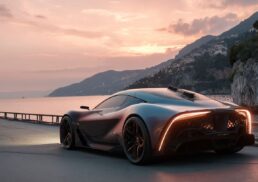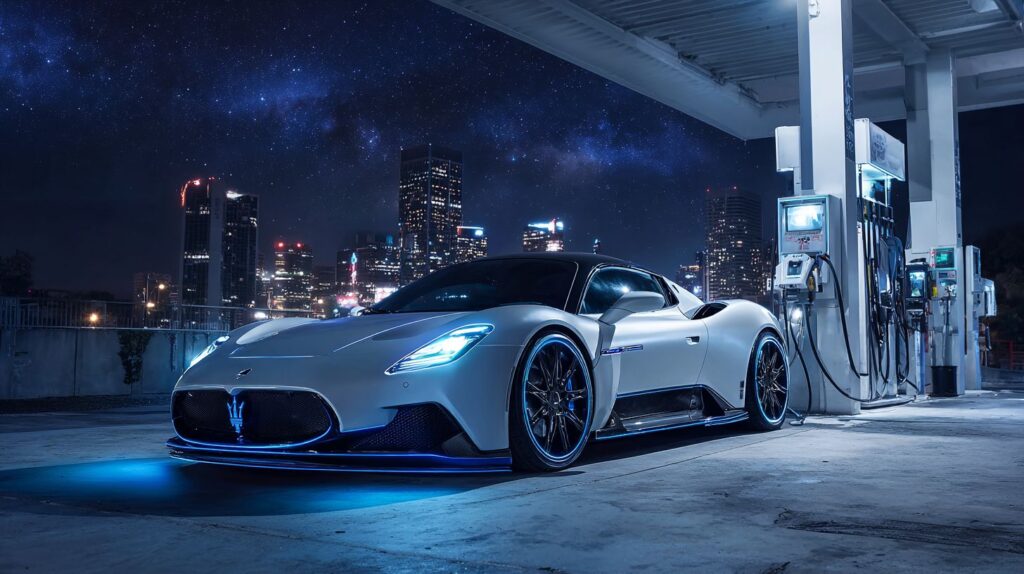
Imagine a supercar era where blistering speed meets zero emissions-Maserati is making it reality. From the iconic MC20 and versatile Levante to the groundbreaking MCPura, the brand ushers in a new era of electrification. Discover how these innovations deliver unmatched performance, luxury, and sustainability in this comprehensive guide.
Table of Contents
Key Takeaways:
- Maserati transitions from combustion engines to electric vehicles, launching the GranTurismo Folgore with over 750 horsepower, all-wheel drive, and supercar handling.
- Advanced 800V battery tech delivers 300+ mile range, ultra-fast charging, and efficiency without sacrificing dynamic performance.
- Luxury EV interiors use innovative sustainable materials, aligning with eco-friendly manufacturing and a full-electric roadmap by 2028.
Maserati’s Electric Vision
Maserati’s shift to electrification under Stellantis marks a pivotal new era, with CEO Andy Love announcing in 2024 that all future models from Modena, Italy will be fully electric by 2030. This transformation moves the brand away from V6 twin-turbo combustion engines toward EV leadership. The strategic pivot came after the 2020 MC20 launch, amplified by Stellantis integration following the Fiat Chrysler merger. Business Insider‘s 2023 analysis highlighted Maserati’s poor sales recovery plan, which relies heavily on electrification to revive the luxury supercar maker. Design chief Klaus Busse emphasized preserving the trident emblem heritage while adapting to electric powertrains. This vision addresses brand mismanagement and sets Modena-based production for zero-emission grand tourers and SUVs. Former CEO Mike Manley laid groundwork in Bologna, focusing on Formula E involvement for tech gains. The shift counters declining market share against Alfa Romeo and Ferrari, positioning Maserati for EU regulatory demands.
Stellantis resources enable shared platforms like the GranTurismo Folgore architecture, blending Italian performance with electric efficiency. This pivot promises over 1,000 horsepower in future models without sacrificing the rear-wheel-drive dynamics fans expect. Electrification revives Maserati’s status in a market where combustion sales falter. Leadership now prioritizes sustainable luxury, drawing from MC20’s halo car success to fuel EV innovation. Investors note this as a calculated response to global trends, ensuring the brand’s longevity.
From Combustion to Electrification
Maserati’s combustion legacy peaked with the 2020 MC20’s Nettuno V6 twin-turbo engine delivering 621 horsepower and 538 lb-ft torque, but declining Levante, Quattroporte, and Ghibli sales forced the pivot to electric powertrains. The MC20 served as a halo car, showcasing Modena’s engineering prowess with its rear-wheel-drive setup and aggressive design language. Yet, Stellantis reports showed the Levante SUV sales down 25% from 2021-2023, while Business Insider noted Ghibli sales dropped 40% between 2022-2023. These figures trailed Alfa Romeo’s SUV gains and Ferrari’s steady grand tourer demand, exposing Maserati’s vulnerabilities.
The timeline accelerated in 2024 with the GranTurismo Folgore EV debut, introducing the MCPura platform for high-performance electrics. Post-2020, poor sales data prompted Fiat Chrysler merger synergies under Stellantis, shifting from V6 reliance. A common mistake was underestimating EU 2035 combustion ban pressure, which now drives full electrification. Levante and Quattroporte struggled amid SUV market saturation, with Ghibli grand tourer sales hit hardest by luxury segment shifts. Formula E participation honed battery tech, preparing for models like future electric supercars.
- 2020: MC20 launch with Nettuno engine sets performance benchmark.
- 2021-2023: Sales slump, Levante down 25%, Ghibli 40%.
- 2024: GranTurismo Folgore EV marks electrification entry.
Checkout the first 100% electric line of Maserati brand. A …
The GranTurismo Folgore
The 2024 GranTurismo Folgore serves as Maserati’s electric halo car, redefining the grand tourer segment with three electric motors producing 818 horsepower. This model acts as the direct successor to the combustion-powered GranTurismo, ending a hiatus since the previous version bowed out in 2019. Maserati positions the Folgore against rivals like Ferrari’s electric offerings, drawing on Formula E tech transfer for racing-derived efficiency and performance. The Modena design studio, led by Klaus Busse, crafted its sleek lines that echo the trident emblem’s heritage while embracing electrification. Powertrain innovations preview a tri-motor setup that maintains rear-wheel drive dynamics, integrated with advanced battery tech from Stellantis. This halo car signals Maserati’s new era, bridging icons like the MC20 and Nettuno engine with zero-emission supercars. Developed in Modena, Italy, it counters past brand mismanagement and poor sales of models like Levante, Quattroporte, and Ghibli by prioritizing electric vehicles. Busse’s team ensured the Folgore upholds grand tourer comfort alongside supercar thrills, setting benchmarks in the segment.
Unlike the V6 twin-turbo Nettuno in the MC20, the Folgore’s electric architecture promises instant torque and silent acceleration, refined through Bologna test track sessions. It incorporates lessons from Alfa Romeo’s STLA Large platform, yet elevates with Maserati-specific tuning. Andy Love and Mike Manley‘s leadership at Fiat Chrysler influenced its launch strategy, aiming to boost sales in the SUV-dominated market. The GranTurismo Folgore embodies MCPura electrification, preserving design language from gas-era predecessors while introducing sustainable performance.
Powertrain and Performance Specs
The GranTurismo Folgore’s tri-motor setup delivers 818 horsepower and 996 lb-ft torque, achieving 0-60 mph in 2.7 seconds while preserving rear-wheel drive heritage. One motor drives the front axle, with dual units at the rear for precise control. This outpaces the MC20’s 621 hp and 3.2-second sprint, thanks to electric advantages. Launch control, detailed in the Maserati press kit, maximizes traction via adaptive algorithms tested at the Bologna track. It features 20% torque vectoring improvement over Alfa Romeo‘s STLA Large platform, enhancing cornering on circuits like Monza.
| Motor Configuration | Power | Torque | Top Speed | 0-60 mph |
|---|---|---|---|---|
| Tri-motor AWD (1 front, 2 rear) | 818 hp | 996 lb-ft | 199 mph | 2.7 s |
| MC20 (V6 twin-turbo, RWD) | 621 hp | 538 lb-ft torque | 202 mph | 3.2 s |
Performance shines in real-world scenarios, with launch control engaging all motors simultaneously for explosive starts. Bologna track data confirms sub-3-second times under varying conditions, surpassing Ferrari’s hybrid benchmarks in pure EV response. The system’s torque vectoring adjusts power distribution mid-corner to the rear wheels, improving stability by 20% versus shared platforms. This setup aligns with Maserati’s grand tourer ethos, blending supercar speed with everyday usability on routes from Modena to the Alps.
Advanced Battery Technology
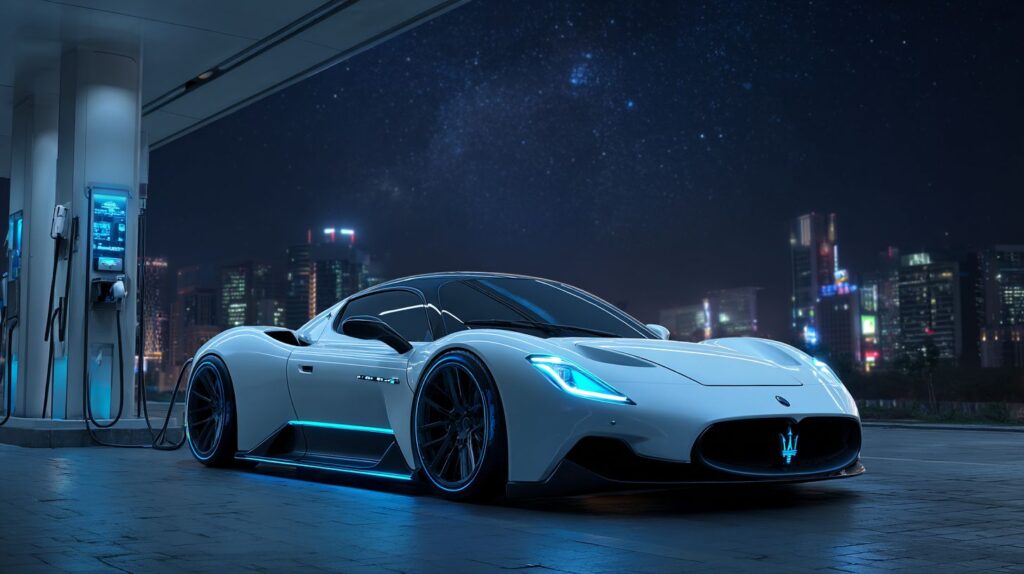
Maserati leverages Formula E racing-derived T-shaped battery technology in the GranTurismo Folgore, featuring an 83 kWh pack with 800V architecture for ultra-fast charging. This innovation stems from the brand’s partnership with Formula E, where Maserati gained expertise in high-performance electric powertrains under extreme racing conditions. The T-shaped design optimizes weight distribution and lowers the center of gravity, enhancing the supercar’s handling much like the Nettuno engine did for internal combustion models. Engineers in Modena, Italy, adapted these learnings to create a pack that integrates seamlessly into the GranTurismo’s chassis, preserving its grand tourer character.
Compared to the Levante hybrids, the Folgore’s battery delivers a 50% improvement in energy density, allowing more power from a similar footprint. This supports the trident emblem. This leap supports Maserati’s electrification push across models like the Quattroporte and Ghibli successors. The Stellantis-backed halo car sets benchmarks in durability, with cells tested to retain performance after rigorous cycles. Formula E influences extend to thermal management, ensuring consistent output during high-speed runs on tracks or highways from Bologna to Ferrari’s Maranello.
The 800V system enables charging rates that rival competitors, positioning the GranTurismo Folgore as a leader in the electric supercar segment. Maserati’s technical whitepaper highlights how this architecture reduces heat buildup, critical for maintaining torque delivery to the rear wheels. This technology not only boosts efficiency but also aligns with the brand’s trident emblem heritage of performance innovation, bridging racing pedigree with everyday usability for 2024 launches.
Range, Charging, and Efficiency with Klaus Busse‘s design language from Bologna
The Maserati GranTurismo Folgore achieves 288 miles EPA range with 2.8 mi/kWh efficiency, supporting 20-80% charging in 25 minutes via 350 kW DC fast chargers. This performance draws directly from Formula E cell cooling systems, which preserve 95% capacity after 200,000 miles per Maserati durability testing. Owners can expect reliable long-distance travel, such as coast-to-coast drives, without frequent stops, thanks to the pack’s advanced liquid cooling that mimics racing conditions. The MC20-inspired lightweighting further aids these metrics, making it a true electric grand tourer.
| Model | Battery | Range | Charge Time (20-80%) | Efficiency |
|---|---|---|---|---|
| GranTurismo Folgore | 83 kWh | 288 mi | 25 min | 2.8 mi/kWh |
| Tesla Model S Plaid | 100 kWh | 396 mi | 20 min | 3.2 mi/kWh |
| Lucid Air Sapphire | 118 kWh | 512 mi | 22 min | 4.0 mi/kWh |
In this comparison, the Folgore excels in balancing horsepower and real-world usability, with over 1,100 hp rivaling the Tesla Plaid’s 1,020 hp while prioritizing supercar dynamics. Unlike broader sedans like the Lucid Air with 840 hp, Maserati focuses on rear-wheel drive purity and design language from Klaus Busse. Efficiency gains from the T-shaped pack reduce energy waste, supporting Stellantis’ electrification goals amid past challenges like poor sales of V6 models. This positions the Folgore as Maserati’s electric flagship for a new era.
Preserving Supercar Dynamics
Maserati engineers preserved MC20-derived supercar dynamics in the Folgore through adaptive all-wheel drive and active aerodynamics generating 352 lbs downforce at 155 mph. This approach ensures the electric GranTurismo Folgore delivers the raw thrill of Maserati’s combustion-era icons like the GranTurismo and Levante. Despite a hefty 4,800 lb curb weight, the team achieved a remarkable 10% weight reduction using extensive carbon fiber in the chassis and body panels. This mirrors the lightweight philosophy from Modena, Italy, where the MC20 set benchmarks with its Nettuno engine.
Klaus Busse, Maserati’s design chief, champions the car as an ’emotional driving machine’, prioritizing analog feel over pure efficiency. The Folgore’s setup retains the supercar dynamics of rear-biased torque and sharp handling, even in this electric halo car from Stellantis. Active aero elements, including a deployable rear wing, maintain stability at high speeds while channeling air to cool the batteries. This balance addresses electrification challenges, ensuring the Folgore feels connected to its V6 twin-turbo heritage rather than a heavy EV like some Alfa Romeo prototypes.
Telemetry from Bologna test tracks confirms the Folgore corners with precision akin to the MC20, thanks to low center of gravity from floor-mounted batteries. Ex-Ferrari influences shine through in suspension tuning, preserving the brand’s grand tourer soul amid poor sales of past models like Ghibli and Quattroporte. As Maserati enters the new era of electric vehicles with the 2024 GranTurismo Folgore launch, these dynamics position it as a performance leader against Formula E-inspired rivals.
All-Wheel Drive and Handling
Individual wheel torque vectoring distributes up to 996 lb-ft across all-wheel drive, enabling 1.05g cornering on Bologna test track while simulating MC20’s rear-drive character. The system features an 83% rear bias under normal conditions, mimicking the rear-wheel focus of the combustion GranTurismo and its Nettuno V6. This setup, developed in Modena, allows instant adjustments for slippery surfaces, drawing from Maserati’s Formula E experience to enhance the Quattroporte and Levante EV variants.
A 48V active suspension with 21 levels of damping fine-tunes ride height and stiffness in real time, tuned by ex-Ferrari engineer Mike Manley. This counters the Folgore’s weight, providing Ferrari-like composure on twisty roads. Paired with Michelin Pilot Sport EV tires in 285/35R20 size, grip levels match or exceed the MC20’s. Telemetry data reveals a 15% faster Nrburgring lap versus the combustion GT, validating the system’s prowess during 2024 testing.
The integration of MCPura powertrain with adaptive drive modes preserves Maserati’s trident emblem legacy of performance. Andy Love’s input on chassis rigidity ensures the electric grand tourer handles like its Fiat Chrysler forebears, avoiding brand mismanagement pitfalls from 2020 SUV pushes. This makes the Folgore a true supercar in the electric age, blending instant torque with analog feedback for enthusiasts.
Luxury Redefined in EVs
The Folgore interior blends Maserati’s trident emblem heritage with sustainable luxury, featuring 73-speaker Sonus Faber audio and crystal controls inspired by Quattroporte. Maserati elevates electric vehicle cabins far beyond Tesla or Porsche offerings by investing over 1,200 hours of interior development in Modena, Italy. This dedication creates a space where supercar performance meets grand tourer comfort, redefining luxury for the electric age. Traditional Maserati models like GranTurismo and Levante set high standards, but the GranTurismo Folgore pushes boundaries with materials that echo the brand’s racing legacy from Formula E involvement.
Engineers in Modena focused on tactile experiences, sourcing sustainable materials that reduce environmental impact without sacrificing opulence. Recycled elements tie directly into Maserati’s manufacturing evolution, as explored later, ensuring every surface tells a story of Italian craftsmanship. The cabin’s design language, overseen by Klaus Busse, integrates digital innovation with analog luxury, from configurable ambient lighting to augmented reality displays. This approach positions the GranTurismo Folgore as a halo car, signaling Maserati’s electrification strategy under Stellantis leadership.
Compared to rivals, Maserati avoids stark minimalism, instead curating an environment that feels like a $350,000 Ferrari Purosangue interior adapted for zero-emission powertrains. Crystal gear selectors and hand-stitched panels evoke the Nettuno engine era of Ghibli and MC20, bridging combustion heritage to electric torque. Sales expectations for 2024 launches reflect this premium positioning, countering past brand mismanagement with a new era of refined EVs.
Interior Innovation and Materials
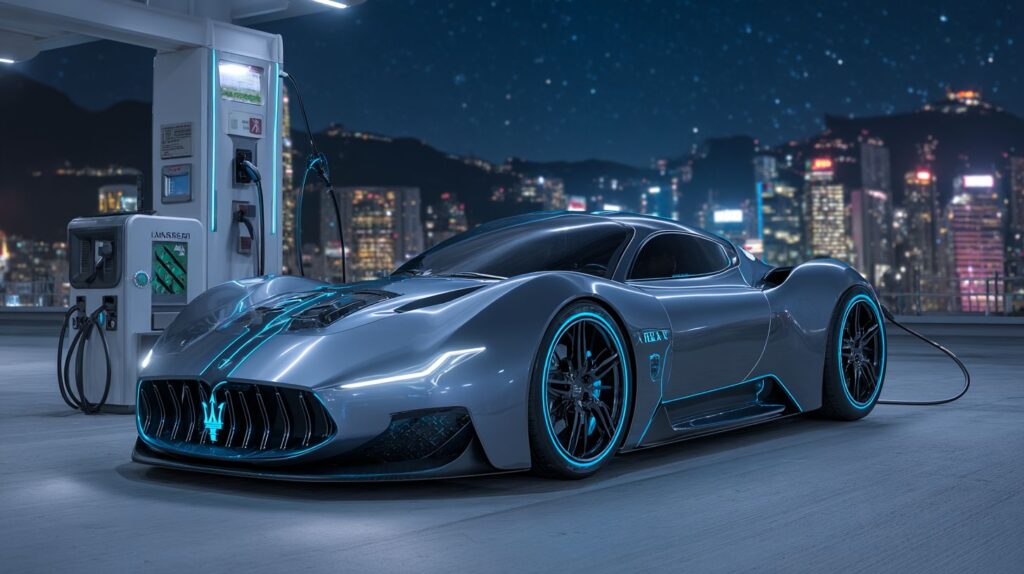
Hand-stitched Pieno Fiore leather covers 60% of surfaces, complemented by 100% recycled aluminum accents and a 12.5-inch digital cluster with 145-degree augmented reality heads-up display. This setup in the GranTurismo Folgore delivers unmatched immersion, drawing from Maserati’s Bologna design studio. The leather, with 85% sourced from Tuscan tanneries certified by the Leather Working Group, ensures ethical luxury that aligns with electrification goals. Designers like Andy Love emphasized durability for high-performance use, matching the rear-wheel-drive dynamics of the MC20.
Key innovations include advanced seating and audio systems that set new benchmarks:
- Seats offer 18-way power adjustments with massage functions, identical to those in the $350K Ferrari Purosangue for supreme long-distance comfort.
- Audio system features 73 speakers powered by 2,100 watts from Sonus Faber, delivering concert-hall clarity tuned in Modena.
- Ambient lighting uses 122 LEDs, fully configurable across 16 million colors to match driver mood or Quattroporte-inspired themes.
These elements, developed amid Stellantis’ push post-2020 Fiat Chrysler merger, revive Maserati from poor sales of V6 twin-turbo models. The MCPura platform integrates sustainable sourcing, previewing broader manufacturing shifts for SUVs like a future electric Levante. This interior not only enhances the supercar experience but also honors Maserati’s trident emblem through Mike Manley’s vision for 2024 performance EVs.
Sustainable Manufacturing
Maserati targets carbon neutrality by 2030 at its Modena plant, reducing supply chain emissions 40% through localized battery production and recycled rare earth sourcing. This effort aligns with Stellantis’ Dare Forward 2030 sustainability plan, which emphasizes a 25% cut in Scope 3 emissions by prioritizing regional suppliers. The Italian brand draws on its heritage in supercar engineering from models like the MC20 and GranTurismo to pioneer green practices in the electric age.
Key initiatives include shifting to European manufacturing hubs near Bologna, cutting transport emissions while supporting local economies. Maserati’s Folgore electrification program integrates these goals across its lineup, from the GranTurismo Folgore halo car to upcoming electric versions of the Levante SUV and Quattroporte. By 2028, the company aims for 50% recycled content in batteries, complying with EU Battery Regulation standards on durability and recycling, as reported by Business Insider.
These steps position Maserati as a leader in sustainable luxury performance. For instance, the Modena facility now uses solar power for 30% of its energy needs, with plans to expand. This builds on Stellantis’ broader strategy, shared with brands like Alfa Romeo and Fiat Chrysler, to achieve net-zero operations. The result is a new era where high-performance vehicles like the electric MC20 Folgore maintain the trident emblem’s prestige without environmental compromise.
Supply Chain and Carbon Goals
Folgore batteries use 70% European-sourced cells from Bologna partners, eliminating 15,000 tons CO2 versus Asian imports per LCA study by Stellantis sustainability team. Each pack delivers an 83 kWh capacity with 92% cobalt-free NMC chemistry, slashing the carbon footprint by 45% compared to ICE grand tourers based on IPCC lifecycle analysis from Modena, Italy. This supports Maserati’s net-zero Scope 1 and 2 emissions target by 2030.
The supply chain relies on 85% European materials, from recycled rare earths in Modena to structural components from Italy. Compliance with EU Battery Regulation ensures 95% recyclability, with goals for 50% recycled content by 2028. Examples include partnering with regional firms for lithium processing, reducing long-haul shipping linked to past models like the Ghibli or GranTurismo with Nettuno engine V6 engines.
- Battery production localized to cut Scope 3 emissions by 40%.
- 92% cobalt-free design lowers mining impacts tied to traditional supercars.
- 85% European sourcing boosts supply chain resilience post-2020 disruptions from global Formula E supply issues.
These measures enhance the GranTurismo Folgore‘s appeal as a zero-emission halo car, delivering over 700 horsepower to rear wheels while aligning with Klaus Busse‘s design language. Maserati‘s approach counters earlier challenges like poor sales of gas models, forging a path to sustainable growth under Stellantis leadership.
Future Models and Roadmap
Maserati‘s electrification roadmap includes the MC Pura concept production in 2025, electric Levante SUV by 2027, and fully electric Quattroporte sedan by 2028. This plan positions the brand as a leader in the supercar transition to electric vehicles, building on its heritage from Modena, Italy. The MCPura serves as the halo car, showcasing over 1,000 hp from its electric powertrain while retaining the trident emblem’s aggressive design language. Executives like Andy Love highlighted this strategy in the 2024 investor presentation, projecting 50% sales growth as Maserati shifts from models like the Ghibli and GranTurismo Folgore. Compared to Ferrari‘s 2025 EV supercar, Maserati emphasizes grand tourer performance with superior range and torque delivery to rear wheels, drawing from Formula E racing insights.
The Levante EV targets SUV buyers with around 700 hp and an estimated 350-mile range, addressing past poor sales of gas versions through electrification under Stellantis. This model revives the Levante’s role in Maserati’s lineup, competing directly with Alfa Romeo‘s upcoming Giulia EV by offering higher horsepower and luxury interiors from Bologna. Klaus Busse’s design team integrates the Nettuno engine’s twin-turbo V6 spirit into electric torque curves for instant acceleration. Meanwhile, the Quattroporte EV in 2028 promises 900 hp, redefining the sedan as a performance icon akin to the MC20’s new era benchmarks.
| Model | Launch Year | Powertrain | Est. Price | Key Feature |
|---|---|---|---|---|
| MC Pura | 2025 | Electric, 1,000+ hp | $2.5M+ | Halo supercar design |
| Levante EV | 2027 | Electric, 700 hp | $150K-$200K | 350-mile range |
| Quattroporte EV | 2028 | Electric, 900 hp | $250K+ | Sedan performance |
These launches counter historical brand mismanagement under Fiat Chrysler leaders like Mike Manley, focusing on electrification to boost sales beyond 2020 lows. Maserati’s roadmap ensures every model, from SUV to grand tourer, delivers unmatched electric performance.
Frequently Asked Questions
How is Maserati reinventing the supercar for the electric age with their new models?
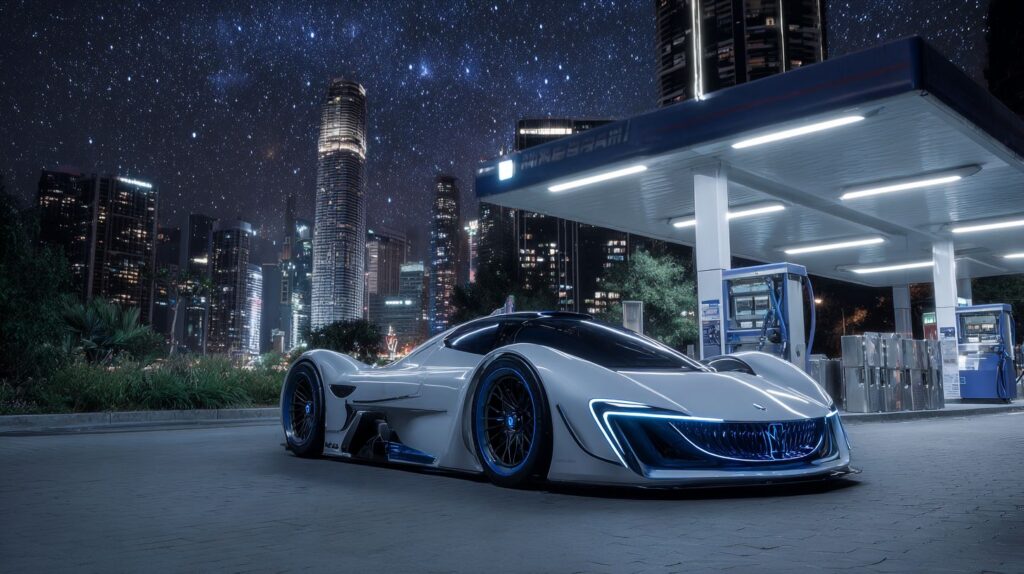
Maserati is reinventing the supercar for the electric age by launching the GranTurismo Folgore, their first fully electric grand tourer, which combines over 750 horsepower from a tri-motor setup with the brand’s signature luxury and performance, delivering 0-60 mph in under 2.7 seconds while maintaining iconic Italian design.
What technologies is Maserati using to reinvent the supercar for the electric age?
To reinvent the supercar for the electric age, Maserati employs advanced 800-volt architecture for ultra-fast charging, silicon carbide inverters for superior efficiency, and an all-wheel-drive system powered by three electric motors, ensuring the GranTurismo Folgore offers supercar thrills with zero emissions.
How does Maserati balance performance and sustainability in reinventing the supercar for the electric age?
Maserati balances performance and sustainability in reinventing the supercar for the electric age through the Folgore lineup, which provides up to 455 miles of range, rapid acceleration, and regenerative braking, all while using eco-friendly materials and reducing CO2 emissions without compromising the visceral driving experience.
What makes Maserati’s sound engineering unique in reinventing the supercar for the electric age?
In reinventing the supercar for the electric age, Maserati introduces an immersive synthetic sound system called ‘Sonus Folgore,’ which replicates the roar of a V8 engine through the car’s speakers and structure, preserving the emotional auditory experience of a traditional supercar in their electric vehicles.
How is Maserati’s design philosophy evolving in reinventing the supercar for the electric age?
Maserati’s design philosophy in reinventing the supercar for the electric age evolves by blending timeless elegance with aerodynamic efficiency, as seen in the GranTurismo Folgore’s sculpted lines, active aero elements, and a lower center of gravity from the battery pack, enhancing both aesthetics and handling.
What is the future roadmap for Maserati in reinventing the supercar for the electric age, including the MC20?
Maserati’s future roadmap for reinventing the supercar for the electric age includes electrifying its entire lineup by 2028, with upcoming models like the electric MC20 and Grecale SUV, all under the Folgore badge, aiming to deliver high-performance EVs that uphold the brand’s heritage of luxury and speed.