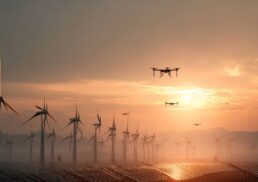
By 2026, the energy transition is picking up real speed, with renewable energy sources like solar PV leading the charge toward cleaner clean power grids. You’ll see how innovations in solar cells and wind power turbines are scaling up efficiently worldwide. It’s practical progress that’s making sustainability feel within reach.
Table of Contents
Key Takeaways:
- Solar power surges in 2026 with perovskite cells hitting 30% efficiency and floating farms harnessing oceans, slashing costs and expanding access worldwide amid rising electricity demand.
- Wind power innovations like offshore floating turbines and AI-optimized farms boost global capacity by 40%, stabilizing grids in remote areas.
- Global renewable deployment, including green hydrogen and enhanced geothermal, drives emissions reductions 25% by 2026, paving way for a net-zero targets future.
Solar Power Advancements
Solar PV continues to lead renewable energy growth, with innovations pushing efficiency and deployment to new heights. In Europe solar markets, rapid expansion drives down electricity prices through scale and supports power sector decarbonisation.
Global capacity increases lead to trends like negative prices from oversupply, aiding the energy transition. These shifts reduce reliance on fossil fuels and enhance energy security.
Europe’s projects highlight solar PV’s role in meeting net-zero targets and cutting carbon emissions amid climate change. This sets the stage for spotlighting unique technologies like perovskite cells and floating farms.
Experts recommend focusing on storage systems alongside solar PV to manage wholesale prices fluctuations and negative prices. Such pairings boost clean energy integration into grids facing rising electricity demand from data centres.
Perovskite Solar Cells
Perovskite solar cells promise to revolutionize solar PV by achieving higher efficiencies at lower costs. Tandem perovskite-silicon cells reach lab efficiencies over 30 percent, combining layers for better light capture and electricity generation.
Commercialization follows clear steps: first, refine lab prototypes for stability. Next, build pilot lines to test manufacturing, then scale to full production with supply chain partners.
Real-world pilots in Europe solar projects demonstrate viability, like those integrating perovskites into existing solar modules. Experts recommend monitoring tools like Wood Mackenzie reports for market insights on scalability.
| Aspect | Perovskite Cells | Traditional Silicon |
|---|---|---|
| Cost per Watt | Lower material use enables reductions | Higher due to pure silicon needs |
| Stability | Improving with encapsulation | Proven long-term performance |
This comparison shows perovskites’ edge in cost, aiding decarbonisation. Focus on durability fixes positions them for widespread electricity generation.
Floating Solar Farms
Floating solar farms unlock vast potential on water bodies, bypassing land constraints for solar PV deployment. They suit land-scarce regions like Spain, maximizing renewable energy output and promoting energy independence.
Installation involves these steps:
- Conduct site assessment for water depth and wind exposure.
- Install mooring systems with robust anchoring.
- Deploy panel flotation platforms and connect to grid.
Common pitfalls include wave resistance and algae growth. Solutions feature anti-biofouling coatings and flexible designs, as IEA insights note for hybrid floating solar-hydro projects.
| Aspect | Floating Solar | Fixed Solar |
|---|---|---|
| Yield per Acre | Higher cooling boosts efficiency | Standard land-based output |
| Maintenance Costs | Access challenges raise some expenses | Easier ground access lowers costs |
Floating systems enhance energy independence and support climate change goals by pairing with hydro for steady supply.
Wind Energy Innovations
Wind power innovations, especially from China wind leaders, are scaling global capacity with smarter, larger-scale designs. These advances drive growth in electricity generation amid rising demand from data centres and electrification. They address geopolitical tensions through supply chain diversification, reducing reliance on single sources for turbines and components.
China’s dominance in wind power manufacturing supports the energy transition worldwide. Offshore advancements enhance energy security by tapping vast ocean resources. This shift bolsters renewable energy integration, cutting carbon emissions from the power sector.
Experts recommend focusing on offshore wind to meet net-zero targets and Paris Agreement goals. Innovations like larger rotors improve efficiency in variable conditions. Combined with battery storage, they stabilize grids facing climate change impacts.
Supply chain agility from diverse partners ensures project timelines. This approach supports decarbonisation efforts, lowering wholesale prices over time. Wind power thus powers economic growth and energy independence.
Offshore Floating Turbines

Offshore floating turbines expand wind power to deep waters, tapping stronger winds inaccessible to fixed foundations. They unlock sites with depths over 60 meters, ideal for high-wind zones. This boosts clean energy output in regions like Europe and Asia.
Start with site selection using DNV wind resource models to assess wind speeds and sea conditions. Next, choose platform designs such as spar or semi-submersible for stability. Then integrate turbines, aiming for 2-3 years total development time.
China wind farms address typhoon resilience with reinforced moorings and dynamic cables. These solutions ensure uptime in harsh weather. Floating designs enhance energy security by diversifying from fossil fuels.
| Aspect | Fixed Offshore | Floating Offshore |
|---|---|---|
| Water Depth Suitability | Shallow, up to 60m | Deep, over 60m |
| LCOE Trends | Lower in shallows | Improving with scale |
| Installation Sites | Limited by seabed | Flexible globally |
AI-Optimized Wind Farms
AI optimization transforms wind farms by predicting weather and adjusting turbine operations in real-time. Sensors and algorithms maximize output amid fluctuating winds. This supports the power sector‘s shift to renewables amid AI demand.
Deploy AI sensors on blades to monitor vibrations and icing. Integrate with SCADA systems for centralized control. Apply machine learning for wake steering, where experts note yield improvements through better turbine spacing and sustainability ROI.
- Avoid data silos by unifying platforms across farms.
- Train models on local weather patterns for accuracy.
- Regularly update software to incorporate new data.
- Partner with AI firms for custom wake models.
These practices enhance electricity generation efficiency and reduce downtime. They align with emissions reductions goals, aiding grid stability with storage systems. AI drives sustainability ROI in the energy transition.
Other Key Renewables
Beyond solar PV and wind power, battery storage, hydrogen, and geothermal fill critical gaps in the clean energy mix. These diverse renewables support the energy transition by providing reliable clean power when solar and wind vary. They help stabilize grids amid rising electricity demand from data centres and AI demand growth.
Storage systems like lithium batteries store excess renewable energy for peak times. This counters volatility in wholesale prices and negative prices during high solar output. Experts recommend pairing them with solar PV for grid resilience.
Hydrogen and geothermal offer baseload options to cut carbon emissions from fossil fuels. They boost energy security amid geopolitical tensions. Together, these technologies drive progress toward net-zero targets and the Paris Agreement.
With policy support like RPS standards, these renewables enhance decarbonisation in the power sector. They ensure clean energy meets growing needs without policy reversal risks.
Hydrogen and Green Fuels
Green hydrogen emerges as a versatile clean energy carrier for hard-to-decarbonize sectors like heavy industry. It supports emissions reductions where electrification falls short. Production starts with electrolysis using renewable electricity from solar PV or wind power.
The process continues with storage in salt caverns for long-term holding. From there, hydrogen fuels applications like steelmaking, replacing coal-based methods. This cuts reliance on fossil fuels in high-heat processes.
- Run electrolysis with clean power to split water into hydrogen and oxygen.
- Store the gas securely to match supply with demand.
- Apply it in industry for direct fuel use or fuel cells.
Supply chain challenges arise from raw material needs and transport. Experts recommend hybrid PPAs for cost stability against fluctuating electricity prices. Agile sourcing, like regional partnerships, builds supply chain agility for steady green fuel access.
Geothermal Enhancements
Geothermal enhancements support the energy transition with baseload clean power, backed by energy policy like RPS standards in Europe, U.S., and China, aiming to stay below 1.5 degreesC as per the Paris Agreement and avoiding policy reversal or tipping points.
Enhanced geothermal systems (EGS) expand access to reliable baseload renewable energy worldwide. They tap heat from deep Earth layers beyond traditional hot springs. This provides constant electricity generation to complement intermittent solar PV and wind power.
Implementation begins by fracturing hot rock formations with precise drilling. Water then circulates through cracks to absorb heat and create steam. A binary cycle uses that heat to drive turbines without direct steam venting.
- Fracture rocks to open pathways for fluid flow.
- Circulate water to generate high-temperature steam.
- Employ binary cycle plants for efficient power output.
| EGS Pros | EGS Cons | Traditional Hydro Pros | Traditional Hydro Cons | |
|---|---|---|---|---|
| Capacity factor | High baseload reliability | High upfront costs | Proven large-scale output | Site-dependent dams |
| Environmental impact | Minimal land use | Potential induced seismicity | Low emissions | Ecosystem disruption |
| Flexibility | Works in most locations | Requires deep drilling tech | Storage via reservoirs | Water availability risks |
Common mistakes include overlooking seismic monitoring. Solutions involve real-time sensors and adaptive injection rates. Experts recommend site assessments to avoid such issues and maximize sustainability ROI.
Global Deployment and Impact

Global renewable energy deployment surges, led by China, Europe, U.S., and India, slashing carbon emissions across the power sector. These regions drive the energy transition through massive expansions in solar PV and wind power. Leaders like China wind dominance and Europe’s REPowerEU plan set the pace for global capacity growth.
IEA and Ember reports highlight regional frontrunners on maps, showing Europe solar accelerating solar PV installations and China wind commanding wind power projects. The U.S. boosts clean energy via policy support, while India scales up to meet rising electricity demand. This deployment fosters energy security amid geopolitical tensions.
Key impacts include falling wholesale prices and even negative prices in high-renewable grids, making electricity generation more affordable. Data centres, fueled by AI demand, spike electricity demand, pushing reliance on battery storage and hybrid PPAs. These shifts aid decarbonisation in the power sector.
Linking to the 1.5 degreesC pathway and net-zero targets, rapid rollout counters climate change and reduces fossil fuel dependence. Policies like RPS standards ensure steady progress toward Paris Agreement goals. Strategic investments now yield long-term sustainability ROI.
| Region | Key Policy Driver | Focus Area |
|---|---|---|
| European Union | REPowerEU & CBAM | Solar PV expansion, emissions reductions |
| China | National wind targets | Wind power dominance, supply chain agility |
| U.S. | RPS standards & OBBBA bill | Clean power growth, battery storage |
| India | Renewable purchase obligations | Solar modules, energy independence |
Challenges and Solutions
Despite momentum, renewable energy faces policy reversals, supply chain strains, and grid integration hurdles. These issues threaten the energy transition toward net-zero targets. Leaders must address them to sustain progress in solar PV, wind power, and battery storage.
U.S. policy shifts, like the OBBBA bill and FEOC restrictions, create uncertainty for clean energy projects. Developers face tighter rules on incentives and foreign entity involvement. This slows deployment of storage systems and clean power infrastructure.
Geopolitical tensions disrupt supply chains for solar modules and lithium batteries. Rising electricity demand from data centres and AI adds pressure on wholesale prices. Solutions focus on agility and innovation to maintain energy security.
Addressing U.S. Policy Shifts
U.S. policy reversals challenge RPS standards and incentives for renewables. The OBBBA bill limits funding, while FEOC restrictions block certain investments. Projects in solar PV and wind power risk delays amid these changes.
One key solution is VPP enrollment, where virtual power plants aggregate distributed energy resources. This helps utilities meet demand without heavy reliance on fossil fuels. Homeowners and businesses can participate for grid stability, according to reports from Wood Mackenzie and DNV.
hybrid PPAs combine fixed and variable pricing to hedge against policy risks. They pair renewables with storage for reliable electricity generation. Companies pursuing SBTi-validated goals use these to cut carbon emissions effectively.
Navigating Geopolitical Tensions
Geopolitical tensions strain global supply chains for Europe solar and China wind components. Disruptions raise costs for solar modules and raise concerns over energy independence. The power sector must adapt for decarbonisation.
Strategic M&A builds supply chain agility through targeted acquisitions. Firms acquire local manufacturers to secure lithium batteries and components. This reduces exposure to international volatility and supports economic growth.
These moves enhance capital efficiency and resilience against tipping points in climate change. Experts recommend diversifying sources to align with Paris Agreement commitments. Clean energy adoption accelerates despite external pressures.
Risk Mitigation Steps for Energy Security
Prioritize battery storage to counter intermittency in renewables amid surging AI demand. These systems store excess solar PV and wind power for peak demand. They stabilize grids amid rising electricity prices and policy reversal.
- Assess current grid vulnerabilities and map high-risk areas for integration hurdles.
- Invest in modular storage systems paired with hybrid PPAs for flexibility.
- Enroll in VPP programs to distribute risk across aggregated resources.
- Pursue strategic M&A to localize supply chains and boost energy security.
Follow these steps to achieve emissions reductions and support the 1.5 degreesC pathway. Battery storage plays a central role in energy independence and sustainability ROI. This approach counters fossil fuels and powers a cleaner future.
The Sustainable Future Ahead

A renewable-powered future promises energy independence, economic growth, and progress toward 1.5 degreesC limits. Companies can lead this shift by setting SBTi-validated goals that align emissions reductions with science-based targets. These steps build credibility in the energy transition.
Corporations should calculate sustainability ROI through improved capital efficiency. For instance, investing in battery storage and solar PV lowers long-term costs amid rising electricity demand from data centres. This approach turns clean energy into a profit driver.
UN Secretary-General Antnio Guterres warns of the urgency ahead of COP30, stating we must accelerate the shift from fossil fuels to avoid climate tipping points. Experts recommend actionable corporate steps like procuring hybrid PPAs for reliable clean power. Such moves enhance energy security amid geopolitical tensions.
- Assess RPS standards compliance to meet renewable standards in your region.
- Explore clean power procurement options like virtual power purchase agreements and hybrid PPAs.
- Enroll in VPP programs to optimize storage systems and grid stability.
Frequently Asked Questions
How is renewable energy powering a sustainable future in 2026?
In 2026, renewable energy is powering a sustainable future through massive scaling of solar, wind, and hydroelectric sources, which now account for over 50% of global electricity generation. Advanced battery storage and smart grids ensure reliable power, reducing carbon emissions by 40% compared to 2020 levels and driving capital efficiency via green jobs.
What role does solar power play in how renewable energy is powering a sustainable future in 2026?
Solar power is central to how renewable energy is powering a sustainable future in 2026, with perovskite-silicon tandem panels achieving efficiencies above 30%. Floating solar farms and agrivoltaics integrate energy production with agriculture, powering cities and industries while minimizing land use and fostering energy independence.
How are wind turbines contributing to renewable energy powering a sustainable future in 2026?
Wind turbines are key to how renewable energy is powering a sustainable future in 2026, featuring massive offshore installations with 20MW capacities. Floating wind farms in deep waters and AI-optimized turbine designs boost output by 25%, supplying clean energy to coastal regions and stabilizing grids against fossil fuel volatility.
What advancements in energy storage support how renewable energy is powering a sustainable future in 2026?
Energy storage advancements, like solid-state and flow batteries, underpin how renewable energy is powering a sustainable future in 2026 by storing excess solar and wind power for 24/7 availability. Costs have dropped 70% since 2020, enabling microgrids in remote areas and preventing blackouts during peak demand.
How is renewable energy integration into transportation, boosted by strategic M&A, powering a sustainable future in 2026?
Renewable energy is powering a sustainable future in 2026 by electrifying transportation, with 60% of new vehicles being EVs charged via solar PV and China wind. Hydrogen fuel from electrolysis powers heavy transport, cutting oil dependence by 50% and slashing urban air pollution for healthier communities, aligning with the Paris Agreement and 1.5 degreesC targets.
What economic impacts does renewable energy have in powering a sustainable future in 2026, per IEA and Wood Mackenzie forecasts?
The economic impacts of how renewable energy is powering a sustainable future in 2026 include 15 million new jobs worldwide in manufacturing, installation, and maintenance, driven by U.S. policy, Europe solar, and REPowerEU. Falling costs make renewables cheaper than coal, spurring investments over $2 trillion annually and boosting GDP in developing nations like India and Spain through affordable, local energy access, supported by hybrid PPAs, SBTi-validated goals, and sustainability ROI.