In today’s competitive market, transforming a product idea into a tangible prototype requires a deep understanding of the industrial design process and product development. Companies like Interwoven Design and Pivot International leverage advanced tools such as CAD and prototyping software to streamline development. This article delves into the intricacies of modern design, highlighting how effective strategies can elevate your concepts from mere sketches to functional prototypes, ensuring your innovations stand out in the competitive marketplace.
Table of Contents
Key Takeaways:
- Understanding user needs and defining the problem are crucial steps in the design thinking process for creating successful industrial designs.
- Brainstorming and sketching are popular ideation techniques used to generate and visualize design concepts.
- Prototyping, user testing, and iterating are essential steps in the industrial design process to refine and finalize the design before production.
Definition, Importance, and Requirements

Industrial design effectively combines user experience and aesthetics to improve product development and meet consumer requirements, enhancing market competitiveness. Designers play a critical role in researching and identifying consumer needs, utilizing methods such as surveys and focus groups to gather feedback for competitive analysis.
For example, when developing a new technological device, designers may employ tools such as Sketch or Adobe XD for prototyping and user testing. By iterating designs based on user feedback, they are able to create products that not only possess visual appeal but also address practical challenges through risk assessment.
This alignment with consumer expectations can substantially influence market trends, ensuring that products are both functional and emotionally resonant with users.
Historical Context
The evolution of industrial design has been significantly influenced by technological advancements and changing consumer demands since the onset of the Industrial Revolution.
Key milestones in this progression include the introduction of mass production techniques, which enhanced product accessibility, and the emergence of notable movements such as Bauhaus in the early 20th century, which emphasized functionality and simplicity.
Designers like Charles and Ray Eames played a crucial role in pioneering modern furniture design, with a focus on user experience and aesthetic appeal.
Additionally, the late 20th century marked a pronounced emphasis on product usability, driven by advancements in materials and manufacturing processes that prioritize consumer needs while ensuring functionality.
The Design Thinking Process and Market Research
The design thinking process is a user-centered methodology that significantly improves the effectiveness of product development by emphasizing the understanding and resolution of consumer challenges.
Empathize: Understanding User Needs
Empathizing with users necessitates the conduct of interviews and ethnographic studies to acquire comprehensive insights into their needs and behaviors.
To effectively gather user data, it is advisable to utilize tools such as UserTesting for remote interviews and SurveyMonkey for the creation and distribution of surveys.
Begin by formulating open-ended questions that promote detailed responses. In the context of ethnographic studies, it is beneficial to observe users in their natural environments, as this approach may uncover pain points that are frequently overlooked in formal interviews.
The analysis of this qualitative data plays a crucial role in developing user personas that accurately reflect authentic customer experiences, thereby informing product design and features to better align with user needs.
Define: Framing the Problem
Defining the problem is imperative, as it establishes the foundation for the design process and enables designers to articulate user needs with clarity.
A valuable approach for framing design challenges is the ‘How Might We’ statement, which fosters open-ended thinking and enhances collaboration. For instance, if the challenge is to enhance user engagement on a website, one might pose the question, “How might we make the navigation more intuitive?”
This methodology emphasizes possibilities rather than limitations. Utilizing tools such as Miro for visual brainstorming or Trello for organizing ideas into actionable tasks can significantly enhance collaboration.
Employing these tools during team sessions allows for the refinement of ideas and ensures that all perspectives are duly considered.
Ideation Techniques and Creative Ideas
Ideation techniques play a crucial role in generating innovative solutions and fostering collaboration within design teams through methods such as brainstorming and sketching.
Brainstorming Methods
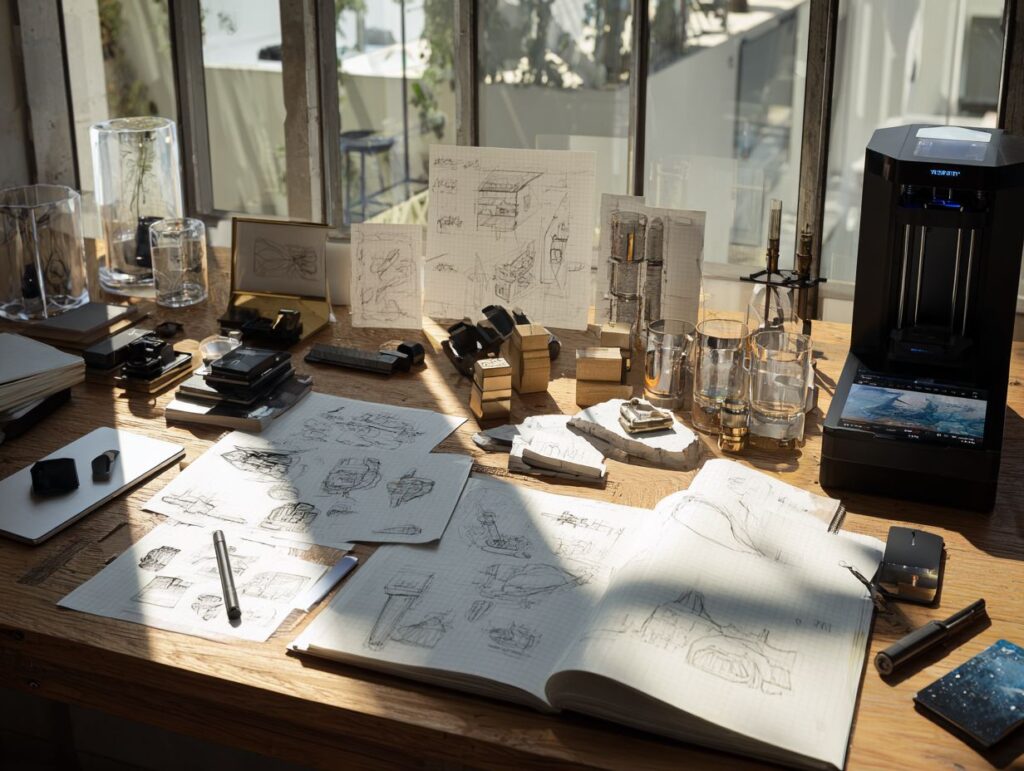
Effective brainstorming methods, such as mind mapping and role-playing, have the potential to unlock creative ideas and enhance team collaboration. Traditional brainstorming sessions promote the open exchange of ideas.
For example, in a product design context, team members can utilize whiteboards to visually capture and organize their thoughts.
Alternatively, brainwriting enables individuals to generate ideas in silence, allowing them to pass their contributions around for feedback and consumer analysis, thereby giving a voice to those who may be more reserved.
A significant application of the SCAMPER method-substituting, combining, adapting, modifying, putting to another use, eliminating, and rearranging-can improve product features.
A case study involving a technology startup demonstrated that the application of the SCAMPER method resulted in an innovative redesign of their app interface, leading to a noteworthy 30% increase in user engagement.
Sketching and Concept Visualization
Sketching and concept visualization play a crucial role in illustrating ideas and facilitating effective communication among stakeholders in the design process. Utilizing tools such as SketchBook for quick hand-drawn sketches or Adobe XD for digital wireframes can significantly enhance workflow efficiency.
It is advisable to begin by creating rough sketches to brainstorm ideas, with a focus on functionality, layout, and hierarchy. An effective practice involves refining these sketches iteratively, gradually incorporating details to enhance clarity.
Once the concepts are well-defined, transitioning to CAD software such as AutoCAD or SolidWorks allows for the development of 3D models.
This progression from 2D sketches to 3D representations not only clarifies the design vision but also supports collaborative discussions with team members, ensuring a cohesive approach to the project.
Prototyping Essentials for Product Design
Prototyping is an essential component of the design process, enabling designers to evaluate concepts and refine them based on user feedback prior to proceeding to final production and ensuring manufacturability.
Types of Prototypes
Prototypes can vary in fidelity, with low-fidelity models supporting rapid feedback and high-fidelity prototypes providing a simulation of the final product experience.
Low-fidelity prototypes, such as paper sketches or basic digital wireframes, are particularly effective during brainstorming sessions and early-stage testing. They enable teams to gather constructive feedback quickly, making them ideal for exploring initial design concepts.
Conversely, high-fidelity prototypes leverage advanced technologies, such as 3D printing or interactive mockups, to closely mimic the final product. These prototypes are advantageous for usability testing, as they offer a realistic user experience.
For example, a team may begin with paper prototypes to refine their ideas before progressing to 3D printed models to test the product’s ergonomics and functionality.
Tools and Materials
A diverse range of tools and materials is employed in the prototyping process, including CAD software such as SolidWorks and physical materials like foam and 3D printing filament.
For efficient prototyping, it is advisable to consider essential tools such as Fusion 360 for digital modeling, which provides a free trial and subscription plans starting at $495 annually. Materials such as PLA filament for 3D printing, typically priced around $25 per kilogram, are recommended due to their ease of use and environmentally friendly characteristics. Additionally, foam boards and card stock, both readily available at a modest cost, are effective for creating quick, tactile models.
Each material offers distinct advantages:
- PLA is known for its durability and lightweight nature.
- Foam is easily shaped; however, it may lack precision.
User Testing, Feedback, and Usability
User testing is a crucial phase that offers valuable insights into prototypes, aiding in the identification of usability issues and opportunities for enhancement.
Gathering Insights
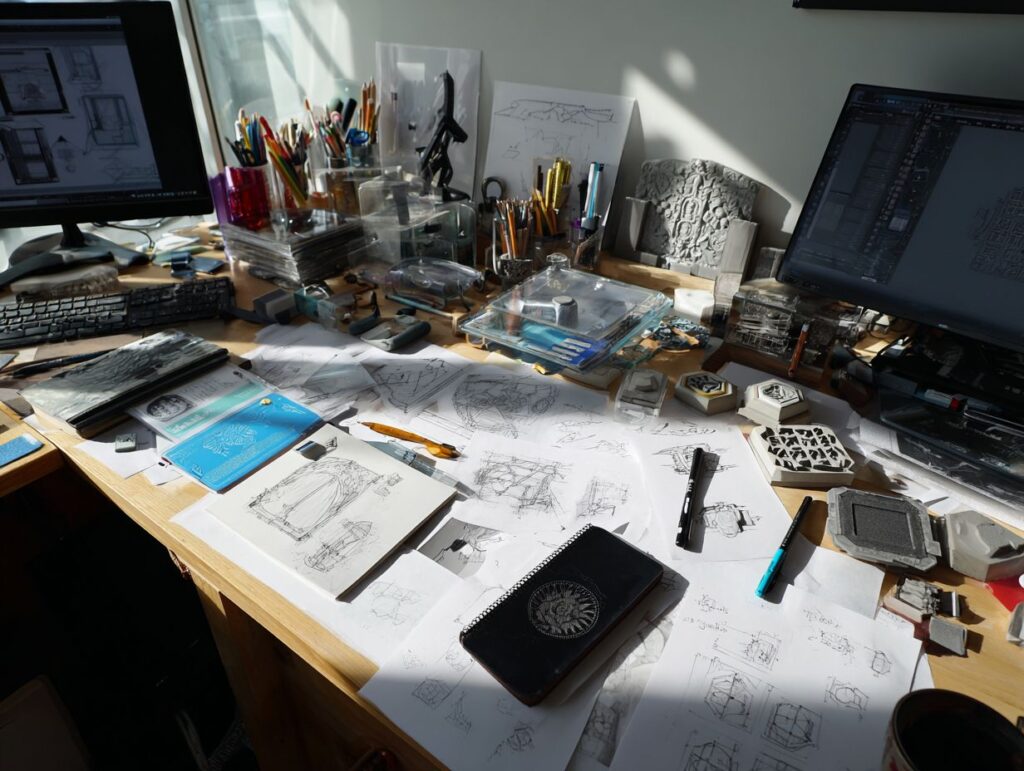
Gathering insights from user testing requires a thorough analysis of feedback to inform design decisions, ensuring that the final product effectively addresses customer needs.
To collect feedback in a systematic manner, it is advisable to employ methods such as user interviews and observational studies.
For example, conducting interviews can yield in-depth insights into user experiences; utilizing tools like Zoom or Google Meet can facilitate remote sessions.
Observational studies provide the opportunity to observe users in real-time, uncovering potential pain points. Once this data has been collected, it is essential to synthesize the findings by identifying recurring themes or issues for technical documentation.
This process can be efficiently conducted using affinity diagrams or digital collaboration tools like Miro.
Subsequently, translating these insights into actionable design improvements is crucial for ensuring that the product evolves in alignment with user needs.
Iterating on Designs and Prototype Testing
Iterating on designs based on user feedback results in refined prototypes, including 3D models, that more effectively align with user expectations and enhance usability.
To implement meaningful changes, it is advisable to utilize tools such as InVision or Figma for prototyping revisions. The process should begin with the collection of user feedback through usability tests or surveys, with a particular emphasis on identifying specific pain points.
Subsequently, prioritize the most impactful changes and develop new iterations of your designs within the selected tool.
Employ version control features to monitor design changes and facilitate collaboration with team members. Following the updates to your prototype, it is essential to conduct another round of testing to ensure that the refinements adequately address user needs.
This cyclical approach, often used by firms like Interwoven Design and Pivot International, promotes continuous improvement and enhances user satisfaction.
Finalizing the Design and Visual Design Considerations
Finalizing the design is a critical step that ensures all aspects of the product are adequately prepared for production and subsequent market introduction.
Preparing for Production
Preparing for production necessitates meticulous planning, which includes the sourcing of materials and a comprehensive understanding of manufacturing processes to ensure optimal efficiency.
A robust plan should commence with the selection of high-quality materials that align with the specifications of the product. It is advisable to research suppliers on platforms such as Alibaba, where one can find and compare offers from a wide array of manufacturers.
Clear communication regarding requirements, including material properties and order quantities, is essential. Once potential suppliers have been shortlisted, it is prudent to request samples to evaluate the quality before proceeding with bulk orders.
Furthermore, it is important to establish a timeline for the entire process, accounting for lead times in sourcing, production, and delivery to ensure that the project remains on schedule. Effective organization in these areas can significantly enhance overall production efficiency.
Future Trends in Industrial Design
Future trends in industrial design emphasize the importance of sustainability and innovative strategies to address the evolving market demands of consumers and the challenges present in the market.
The use of eco-friendly materials, such as bioplastics and recycled metals, is being prioritized to mitigate environmental impact. For instance, companies like IKEA are increasingly incorporating sustainable wood sources and renewable materials into their product lines.

Furthermore, the integration of smart technologies, driven by the Internet of Things (IoT), allows designers to develop intelligent products that enhance user experiences. This transition necessitates that design processes encompass software considerations alongside traditional aesthetic elements.
Ultimately, consumers are seeking products that are not only functional but also environmentally responsible and technologically advanced, resulting in a notable shift in purchasing behavior.
Learn more, Industrial Design Trends for 2025 – Gembah.
Frequently Asked Questions
What is the modern industrial design process?
The modern industrial design process is a step-by-step method used to develop a new product, from initial concept to a physical prototype. It involves research, ideation, prototyping, and testing to create a final design that meets the needs of the target market.
Why is it important to have a design process?
A design process is important because it provides structure and direction for the development of a new product. It helps designers stay organized, identify potential issues, and make informed decisions throughout the design process, leading to a more successful end result.
What are the key steps in the modern industrial design process, including Conceptualization?
The key steps in the modern industrial design process include research, ideation, concept development, prototyping, testing, and refinement. These steps may vary slightly depending on the specific project, but they generally follow this sequence to bring a product from concept to prototype.
What tools and techniques are used in the industrial design process?
The industrial design process utilizes a variety of tools and techniques, including sketching, 3D modeling software, prototyping equipment, user testing, market research, and collaboration with other designers and stakeholders. These tools and techniques help designers visualize and refine their ideas, as well as gather feedback from potential users.
How does the modern industrial design process incorporate user feedback and Market Demands?
User feedback is an integral part of the modern industrial design process. User testing and market research are often conducted during the prototyping stage to gather feedback and make necessary improvements to the design. This helps ensure that the final product is user-friendly and meets the needs and preferences of its target audience.
What are the benefits of following a modern industrial design process?
Following a modern industrial design process can lead to a more successful end product by ensuring that all aspects of the design are thoroughly and systematically explored. It also helps minimize potential issues and improves the overall quality and user-friendliness of the final product.