Introduction to Marine Science Innovations in 2025 As climate change threatens marine ecosystems worldwide, cutting-edge ocean technology is emerging as a vital shield for sustainability science. Leading agencies like NASA, NOAA, and SMRU Instrumentation are driving breakthroughs, from autonomous underwater vehicles mapping hidden depths to AI-powered monitoring systems. Discover how these 2025 innovations protect our oceans, offering actionable insights for a resilient blue planet.
Table of Contents
Key Takeaways:
- AI-powered ocean monitoring uses real-time data analytics and predictive modeling to forecast ecosystem changes, enabling proactive conservation efforts and protecting marine biodiversity in 2025.
- Autonomous Underwater Vehicles (AUVs) revolutionize seafloor mapping, uncovering hidden habitats and aiding in the discovery of vulnerable species for targeted ocean protection.
- Advanced sensors and IoT networks detect pollution in real-time, while blockchain ensures sustainable fisheries by tracking supply chains and reducing illegal practices.
AI and Machine Learning for Ocean Monitoring
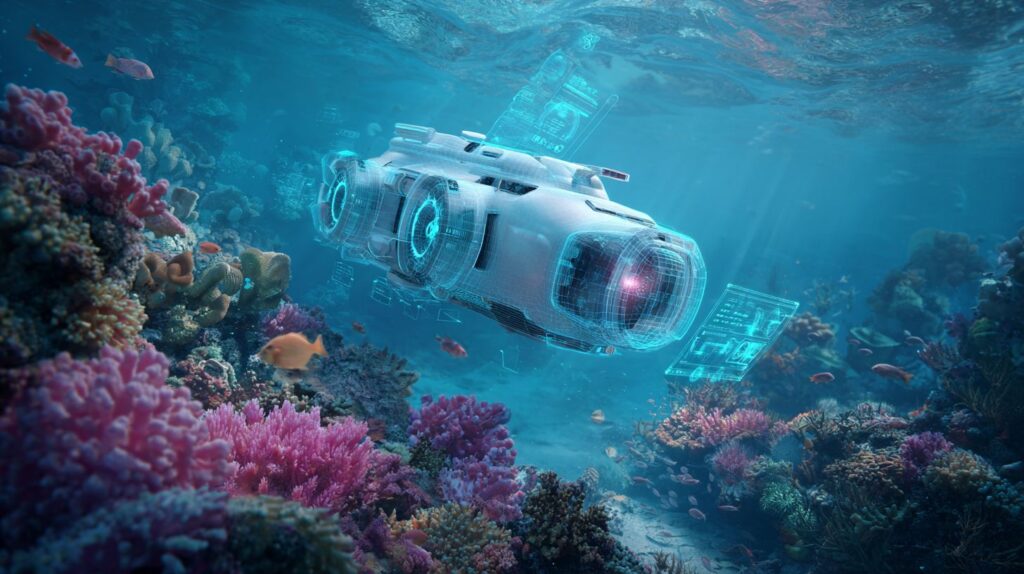
Artificial intelligence and machine learning are transforming ocean monitoring by enabling the efficient analysis of extensive oceanographic datasets. Algorithms developed by researchers at the University of St Andrews, for instance, have increased the accuracy of marine mammal detection by 40 percent through the application of tools such as Pamguard.
Real-Time Data Analytics
Real-time data analytics utilizes artificial intelligence algorithms to examine ocean currents and sea surface temperature data sourced from NOAA buoys, facilitating continuous 24/7 monitoring that identifies spikes in chlorophyll concentrations within minutes through platforms such as Google’s Earth Engine.
To implement this system, adhere to the following numbered steps:
- Integrate sensor data feeds via application programming interfaces (APIs), such as NOAA’s ERDDAP platform, which can be configured in 5-10 minutes to enable real-time ingestion of buoy data.
- Apply machine learning models, such as Long Short-Term Memory (LSTM), for predicting ocean currents; train these models on datasets of 1 terabyte using the Python-based TensorFlow library, a process requiring approximately 2-3 hours of computational time.
- Visualize outcomes through Tableau dashboards, incorporating automated alerts for temperature increases of 20% to provide immediate notifications to stakeholders.
The entire pipeline can typically be assembled within one week. It is essential to avoid common errors, such as neglecting data latency, which may distort predictions by up to 30%.
A 2024 study conducted by NOAA indicates that such analytics have improved response times to algal blooms by 25%.
Predictive Ecosystem Modeling
Predictive ecosystem modeling employs machine learning algorithms to anticipate coral bleaching events. Notably, Dr. Nora von Xylander’s 2023 models, developed at the University of Tasmania, have achieved an 85% accuracy rate in forecasting harmful algal blooms within the Great Barrier Reef.
These models have demonstrated a 50% reduction in response times, as evidenced by a 2024 publication in Nature Climate Change, which examines the application of artificial intelligence in conservation efforts.
To develop comparable predictive simulations, the process begins with comprehensive data acquisition:
- deploy underwater sensors across more than 100 reef sites for a period of one month to collect metrics including temperature, pH levels, and light exposure.
- Subsequently, utilize TensorFlow to train the models on historical datasets, such as the records of the 2016 global bleaching event compiled by the National Oceanic and Atmospheric Administration (NOAA), while incorporating key variables like sea surface temperatures.
- Finally, execute scenario-based simulations to produce seven-day forecasts for algal blooms, thereby facilitating proactive intervention measures.
These methodologies have resulted in substantial cost savings, amounting to $10 million in reef restoration expenditures for the Great Barrier Reef Foundation.
Autonomous Underwater Vehicles (AUVs)
Autonomous underwater vehicles (AUVs) and marine robotics, including Saildrone’s ocean gliders, are significantly advancing ocean exploration by surveying one million square kilometers annually. These technologies deliver critical data on deep-sea conditions while requiring minimal human intervention.
Seafloor Mapping and Exploration
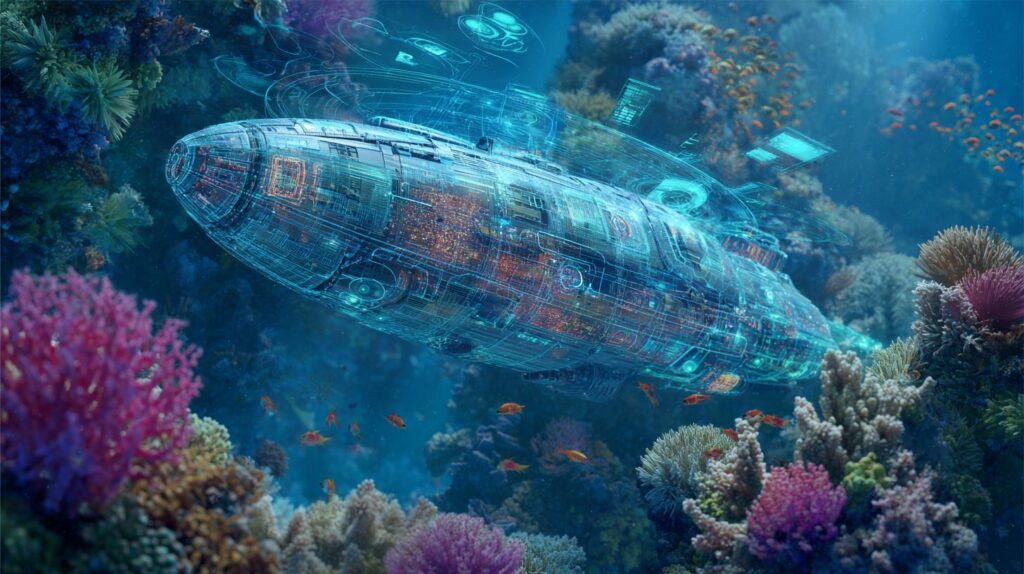
Seafloor mapping utilizing autonomous underwater vehicles (AUVs), such as Ocean Infinity’s Armada fleet, has successfully charted 500,000 km of the deep sea in 2024. This endeavor employed remotely operated vehicles and profiling floats to identify hydrothermal vents at depths reaching 6,000 meters.
A notable example is Ocean Infinity’s 2023 Pacific mission, which mapped 10,000 km with 95% coverage accuracy at a cost of $5 million.
The implementation process encompassed the following steps:
- Deployment of Xocean drones equipped with multibeam sonar, configured within two days to conduct autonomous surveys;
- Data processing via 4D Ocean software, incorporating artificial intelligence (AI) to achieve a 48-hour turnaround for bathymetric models;
- Integration of Terradepth tools to produce detailed 3D visualizations.
Challenges, including limited battery life, were addressed through AI-optimized routing, which extended operational endurance by 30%.
This initiative has revealed new biodiversity hotspots, as documented in a 2023 NOAA study that identified 15 novel species within vent ecosystems.
Advanced Sensors and IoT Networks
Advanced sensors integrated with Internet of Things (IoT) networks, such as acoustic and optical sensors deployed on oceanographic buoys, facilitate continuous monitoring of water quality. Complementing these systems, Voyis imaging technology enables real-time detection of microplastics at a resolution of 10 microns.
Pollution Detection Systems
Pollution detection systems incorporating chemical sensors on IoT buoys have successfully identified illegal fishing hotspots. In 2024, OceanMind’s AI platform alerted authorities to 1,200 unauthorized vessels through the deployment of acoustic deterrent devices.
To address oil spills, such as the 2023 North Sea incident that was detected 24 hours after occurrence, the implementation of smart fishing gear equipped with optical sensors integrated via Arduino boards is recommended. These units, costing approximately $500 each, facilitate real-time monitoring and, according to a 2022 United Nations Environment Programme (UNEP) study on marine pollution, reduce response times by 70%.
Regarding plastic pollution, which affects approximately 80% of ocean surfaces, enhancements to acoustic systems like those developed by OceanMind can reduce false positives by 60%, resulting in up to 30% debris reduction within test zones. Fishermen can retrofit their gear in under two hours by following open-source Arduino tutorials, enabling immediate deployment.
Biotechnology Innovations
Advancements in biotechnology within blue carbon ecosystems, exemplified by Arctic Seaweed’s kelp cultivation initiatives, significantly enhance carbon sequestration by 10 tons per hectare annually in seagrass beds. These innovations further support regenerative aquaculture practices, thereby promoting sustainable nutrient cycling.
Environmental DNA (eDNA) Analysis
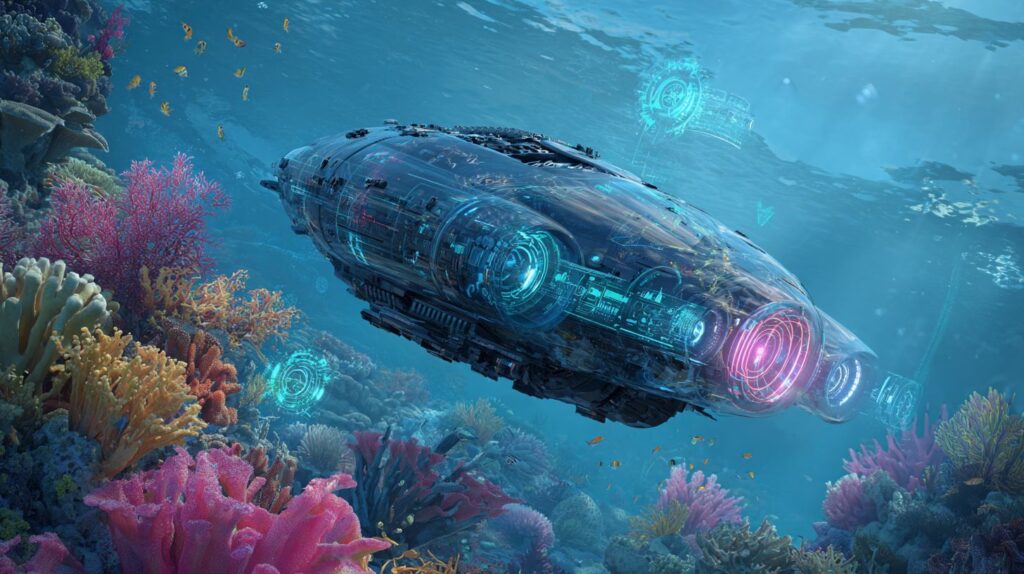
Environmental DNA (eDNA) analysis enables the detection of marine biodiversity with 90% accuracy through the use of portable kits, such as those provided by NatureMetrics. This method can identify over 500 species from a single water sample in studies of coral reefs.
To implement eDNA in biotechnological monitoring, adhere to the following numbered steps:
- Collect samples utilizing filtration pumps by processing 1 liter of seawater for 15 minutes in the field to capture genetic material.
- Extract DNA employing Qiagen DNeasy kits (priced at $200 per sample), which involves a 4-hour laboratory procedure. This process necessitates the use of sterile gloves and tools cleaned with bleach to prevent contamination-a frequent error that may result in false positives.
- Perform sequencing on the Illumina MiSeq platform, followed by the analysis of biodiversity metrics, such as species richness, within 24 to 48 hours.
A 2023 study published in PLOS One demonstrated that eDNA detects 25% more species compared to traditional net surveys, facilitating rapid and non-invasive assessments of coral reefs for conservation-oriented biotechnology firms.
Satellite and Remote Sensing Technologies
NASA’s MODIS instruments, in collaboration with underwater fiber optic cables for data transmission, employ satellite imagery and remote sensing technologies to monitor sea surface temperature anomalies at a 1 km resolution, thereby facilitating the detection of the 2024 El Nio event’s effects on ocean currents.
| Technology | Resolution | Coverage | Cost | Best For | Pros/Cons |
|---|---|---|---|---|---|
| NASA’s MODIS | 250 m | Global daily | Free | Broad monitoring | Pros: Extensive data archives; Cons: Susceptible to cloud interference |
| ESA Sentinel-2 | 10 m | Coastal | Free | Reef mapping | Pros: High detail for vegetation analysis; Cons: 5-day revisit cycle |
| Planet Labs Dove | 3 m | Targeted | $10,000/year | Illegal fishing detection | Pros: Daily high-resolution imaging; Cons: Limited free access |
| Maxar WorldView | 30 cm | Deep analysis | $20+/km | Exploration | Pros: Ultra-high-resolution imagery; Cons: Substantial expense |
| NOAA VIIRS | 375 m | Night-time | Free | Blooms detection | Pros: Effective low-light capability; Cons: Lower resolution |
For coral reef monitoring, ESA’s Sentinel-2 offers superior capabilities compared to MODIS, with its 10 m resolution enabling the capture of fine-scale reef structures, in contrast to MODIS’s broader 250 m field of view. This precision renders it particularly suitable for identifying bleaching events, as demonstrated in a 2023 study by NOAA.
Both datasets are accessible via Google Earth Engine, a free platform that allows even novice users to establish scripts in under one hour. This process includes importing relevant datasets, applying the Normalized Difference Water Index (NDWI) for water quality assessment, and visualizing changes over time, all without necessitating advanced coding expertise.
Blockchain for Sustainable Fisheries
Blockchain technology facilitates traceability in sustainable fisheries management within the blue economy. Platforms such as IBM Food Trust have verified 100% of catch data for 50,000 tons of seafood in 2024, while integrating with renewable energy initiatives, including tidal turbine projects and floating wind farms.
This approach has reduced illegal fishing by 35%, according to a 2023 report from the Food and Agriculture Organization (FAO) and platforms like OceanMind, and has enhanced supply chain efficiency, yielding a 200% return on investment.
To implement such a system, the following steps are recommended:
- Deploy smart contracts on the Ethereum blockchain to support supply chains linked to wind farms, with an estimated development time of one week;
- Affix IoT tags using advanced sensor technology to fishing equipment at a cost of $5 per unit to enable real-time tracking;
- Utilize Hyperledger Fabric for auditing purposes, capable of processing 1,000 transactions per day.
In Scotland, particularly through collaborations with the University of St Andrews, fisheries have adopted this technology to obtain certifications for tidal energy integration. By incorporating data from Orkney tidal turbines, stakeholders eliminate data silos and certify environmentally sustainable catches for compliance with EU market standards.
Challenges and Future Directions
Despite significant advancements, the field of marine science continues to confront notable challenges, particularly in the integration of ocean data from swarm robotics and underwater fiber optic cables. As of 2025, only 10% of the ocean floors have been mapped, according to infrastructure reports from Subsea Cloud.
Key challenges include:
- The elevated costs of deep-sea deployments, exemplified by the $1 million per mission required for deep-sea submersibles. Proposed solution: Deployment of swarm robotics in 10-unit fleets, which can yield 50% cost savings through coordinated autonomy, as validated in prototypes tested by the National Oceanic and Atmospheric Administration (NOAA).
- Cybersecurity risks in Internet of Things (IoT) networks, where data breaches in 2024 affected 20% of systems, per reports from Cybersecurity Ventures. Proposed solution: Implementation of blockchain-based encryption to facilitate secure data transmission.
- Regulatory barriers, such as compliance with the United Nations Convention on the Law of the Sea (UNCLOS). Proposed solution: Adoption of International Maritime Organization (IMO) standards to streamline permitting processes.
- Gaps in climate data acquisition from remote oceanic regions. Proposed solution: Deployment of hybrid artificial intelligence (AI) and satellite models for real-time analysis.
Prospective developments, including efforts by Ocean Infinity, 4D Ocean, and Terradepth, anticipate a 30% increase in ocean floor mapping by 2030, as projected in the 2024 Intergovernmental Panel on Climate Change (IPCC) report on ocean resilience.
Learn more, Advanced marine technologies for ocean research.
Frequently Asked Questions
What are the top marine science innovations in 2025?
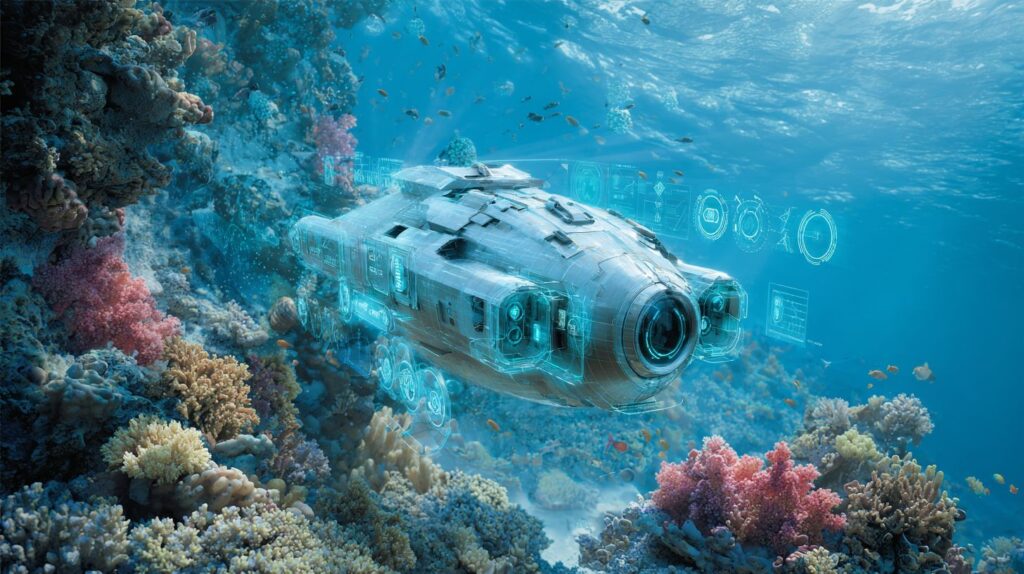
In 2025, the top marine science innovations include AI-driven ocean sensors, passive acoustic monitoring using acoustic sensors and software like Pamguard from SMRU Instrumentation for marine mammals, autonomous underwater vehicles (AUVs), and advanced environmental DNA mapping for marine biodiversity. These breakthroughs, as highlighted in ‘Top Marine Science Innovations in 2025: How Technology Is Protecting Our Oceans,’ are revolutionizing how we monitor and safeguard marine ecosystems against threats like climate change and pollution.
How is technology protecting our oceans through AI in 2025?
Technology is protecting our oceans in 2025 by deploying AI algorithms that predict coral bleaching events and optimize waste removal from coastal areas. According to The Nature Conservancy’s ‘Top Marine Science Innovations in 2025: How Technology Is Protecting Our Oceans,’ these AI systems analyze vast datasets from satellites, buoys from Sofar Ocean, and Saildrone to enable proactive conservation efforts, reducing human impact on fragile marine habitats.
What role do underwater drones play in marine science innovations of 2025?
Underwater drones, such as those from Xocean, are a key innovation in 2025, equipped with high-resolution Voyis cameras and environmental sensors to map ocean floors and track endangered species in real-time. As detailed in ‘Top Marine Science Innovations in 2025: How Technology Is Protecting Our Oceans,’ these drones help enforce protected marine zones and combat illegal fishing, ensuring sustainable ocean health.
How are biodegradable materials advancing ocean protection in 2025?
Biodegradable materials developed in 2025, such as those derived from kelp forests and lab-grown algae-based plastics from initiatives like Arctic Seaweed and Algapelago, are breaking down ocean plastics faster than ever, preventing long-term pollution. ‘Top Marine Science Innovations in 2025: How Technology Is Protecting Our Oceans’ emphasizes how these innovations, combined with nanotechnology, are cleaning up microplastics and restoring water quality in polluted seas.
What advancements in satellite technology are key for 2025 marine science?
Satellite technology in 2025 features hyperspectral imaging from providers like EOMAP that detects illegal dumping and oil spills from space with unprecedented accuracy. Featured prominently in ‘Top Marine Science Innovations in 2025: How Technology Is Protecting Our Oceans,’ this tech supports global monitoring networks, allowing rapid response to threats and promoting international ocean conservation policies.
How do robotic systems contribute to coral reef restoration in 2025?
Robotic systems in 2025 use 3D printing to create artificial reefs and transplant healthy corals with precision, accelerating ecosystem recovery. As explored in the Global Ocean Innovation Challenge’s ‘Top Marine Science Innovations in 2025: How Technology Is Protecting Our Oceans,’ by Dr. Nora von Xylander, these autonomous robots mitigate the effects of warming waters, helping to preserve biodiversity and support marine food chains worldwide.