Introduction to Water and Marine Sciences The ocean, Earth’s vast blue expanse, drives global climate patterns while sustaining unparalleled marine biodiversity. Events like the Deepwater Horizon disaster underscore human threats, as highlighted by NOAA’s National Ocean Service research and experts such as marine biologist Steve Kibler, Kasey Jo Wright, Bruckner Chase, Doug Helton, Lisa DiPinto, Derek van Westrum, and Sophie Maginnes, whose studies and podcasts address harmful algal blooms. This exploration delves into oceanic structures, ecosystems, climate adaptation, and ecosystem-based adaptation, revealing conservation strategies to protect our planet’s lifeblood for future generations.
Table of Contents
Key Takeaways:
- Oceans regulate global climate by absorbing heat and CO2, but climate change causes rising sea levels, ocean acidification, and coral bleaching, threatening marine life and coastal communities.
- Marine ecosystems like coral reefs and kelp forests support vast biodiversity, providing habitats, food, and coastal protection, yet face risks from pollution and overfishing.
- Conservation efforts, including Ecosystem-based Management, marine protected areas, sustainable fishing management, and supportive policy, combined with advanced research methods, nature-based solutions, and governance synergies, aim to preserve ocean health and address human impacts for future sustainability.
The Physical Structure of Oceans
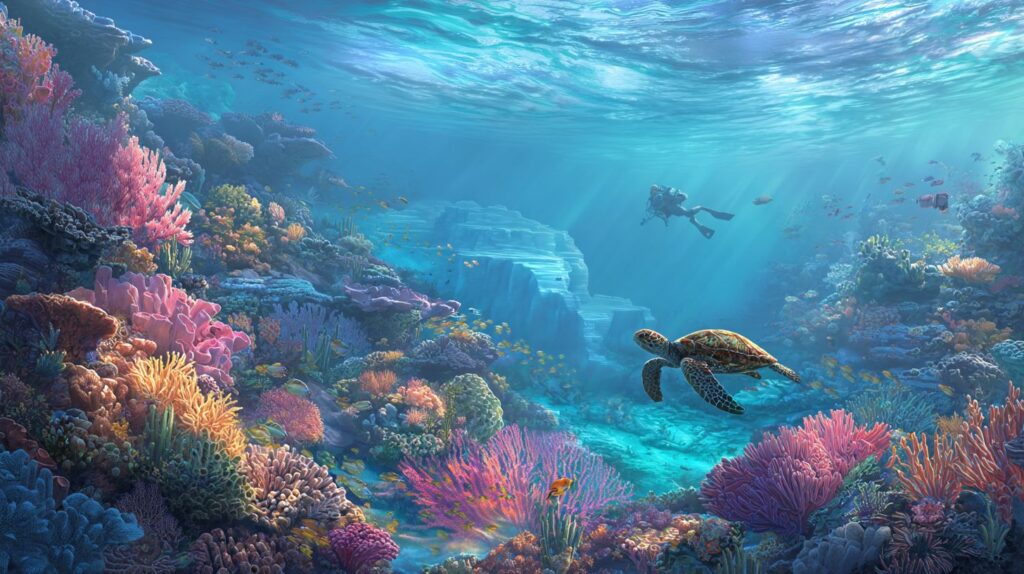
The physical structure of the oceans, as delineated through advanced mapping tools such as those provided by NOAA’s National Geodetic Survey spatial reference systems and coastal science, exhibits a highly intricate configuration, with average depths reaching approximately 3,700 meters across its five principal basins.
Ocean Basins and Layers
The Earth’s oceans are divided into five principal basins, in contrast to terrestrial features like the Fourteeners. The Atlantic Ocean, for instance, covers approximately 106 million square kilometers and exhibits stratified structures ranging from the sunlit epipelagic zone (0-200 meters) to abyssal depths surpassing 4,000 meters.
These oceanic basins are formed through the process of plate tectonics, wherein diverging tectonic plates give rise to mid-ocean ridges. The Mid-Atlantic Ridge, extending over 16,000 kilometers, serves as a prominent example, as it gradually separates continents at a rate of 2-5 centimeters per year.
The vertical stratification of the ocean, comprising distinct zones, is as follows:
- Epipelagic zone (0-200 meters): Light penetrates this layer, with temperatures ranging from 0-30 degreesC;
- Mesopelagic zone (200-1,000 meters): Characterized by twilight conditions and temperatures of 4-20 degreesC;
- Bathypelagic zone (1,000-4,000 meters): Marked by perpetual darkness, near-constant temperatures of approximately 4 degreesC, and pressures reaching about 400 atmospheres;
- Abyssopelagic zone (4,000-6,000 meters): Defined by extreme cold with temperatures of 2-4 degreesC;
- Hadalpelagic zone (greater than 6,000 meters): Subject to pressures up to 1,000 atmospheres at depths of 10,000 meters.
A vertical profile diagram effectively illustrates the progressive decrease in light and temperature with increasing depth.
The National Oceanic and Atmospheric Administration’s (NOAA) World Ocean Database provides empirical validation of these zonal profiles, thereby supporting advanced research into marine ecosystems.
Currents and Circulation
Ocean currents, exemplified by the Gulf Stream in the Atlantic Ocean that transports 30 million cubic meters of water per second, constitute a global conveyor belt responsible for regulating climate patterns and nutrient distribution.
This conveyor belt is propelled by thermohaline circulation, a process comprising the following key stages:
- Surface currents, driven by winds and influenced by the Coriolis effect, convey warm water toward the poles.
- At high latitudes, cooling and evaporation elevate water density (with salinity levels of 34-37 parts per thousand), leading to sinking and the formation of deep currents.
- These dynamics establish a global loop, circulating water around the planet over an approximate period of 1,000 years.
For forecasting purposes, the National Oceanic and Atmospheric Administration’s (NOAA) HYCOM model is recommended to predict disruptions, such as Ekman transport, which represents a frequent analytical oversight. A notable case study is the 1997-98 El Nio event, which disrupted Pacific Ocean currents, severely affecting Peruvian fisheries by curtailing nutrient upwelling and diminishing fish stocks by up to 90% (as documented in NOAA studies).
Marine Ecosystems and Biodiversity
Marine ecosystems are essential, sustaining 80% of global biodiversity and delivering ecosystem services valued at $2.5 trillion annually. These services encompass a wide array, ranging from the coral habitats of the Mediterranean to the fisheries of the Baltic Sea.
Coral Reefs and Kelp Forests
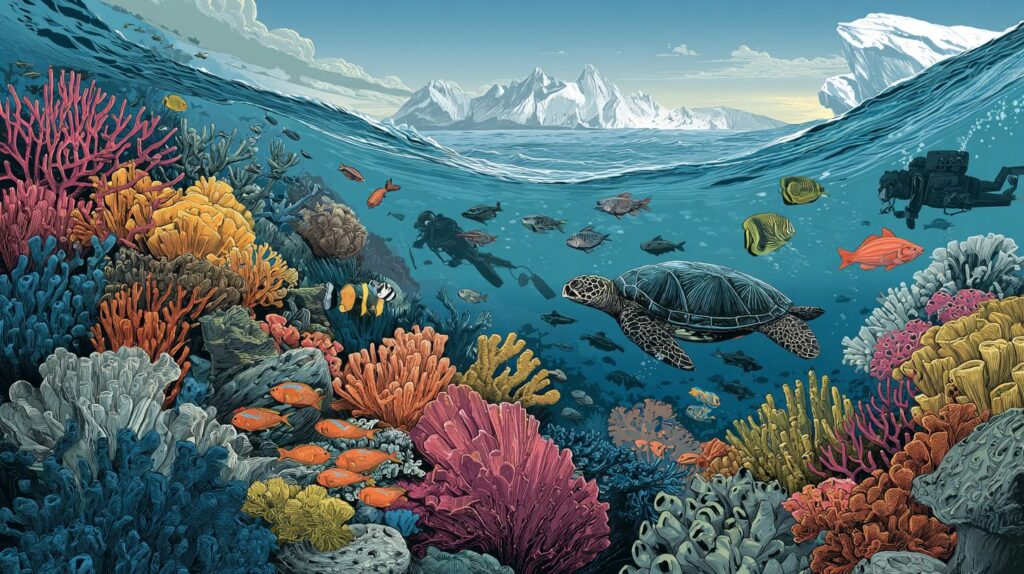
Coral reefs, such as those in the Mediterranean’s Tavolara Marine Protected Area, support 25% of marine species while occupying less than 1% of the ocean floor. In comparison, kelp forests in the North Sea sequester approximately 600 million tons of carbon dioxide annually.
To compare these essential ecosystems, the following attributes are presented for consideration:
| Ecosystem | Location | Species Count | Ecosystem Services | Threats | Conservation Metrics |
|---|---|---|---|---|---|
| Coral Reefs | Tropical/subtropical oceans (e.g., Great Barrier Reef) | ~25,000 | Biodiversity hub; $36B annual tourism (UNEP data) | Coral bleaching from warming waters | 50% live coral loss since 1950s (AIMS study); 1M coral larvae deployed in 2020 restoration trials |
| Kelp Forests | Temperate coasts (e.g., North Sea) | 100+ macroalgae species | CO2 sequestration; fisheries habitat supporting $1B industry | Urchin overgrazing, warming | 20% global decline (IUCN); reforestation via kelp seeding in California pilots, restoring 10,000 sq km |
For effective conservation measures, monitoring should be conducted using NOAA satellite tools, and support should be provided to Marine Protected Areas such as Tavolara, which has achieved a 30% increase in fish stocks since 1997.
Oceans and Global Climate
The oceans absorb 25% of anthropogenic CO2 emissions and 90% of excess heat, thereby fulfilling a critical function in regulating the global climate system. Nevertheless, they confront intensifying environmental pressures, including an annual sea-level rise of 3.7 millimeters, as documented by satellite measurements from the National Oceanic and Atmospheric Administration (NOAA).
Role in Climate Regulation
Oceans play a critical role in regulating global climate through the process of blue carbon sequestration. Notably, seagrass beds and mangroves in the North Sea sequester 18% of coastal blue carbon, despite occupying only 0.1% of the ocean’s surface area.
This remarkable efficiency underscores their substantial potential for climate mitigation, as the world’s oceans absorb approximately 2.5 gigatons of CO2 annually (NOAA, 2023).
To safeguard these vital ecosystems, restoration efforts using Nature-based Solutions should be prioritized. For seagrass, implementing hydroseeding techniques in degraded beds can restore 1-2 tons of carbon per hectare each year, according to a 2021 study published in Frontiers in Marine Science.
In the case of mangroves, community-led initiatives, such as those undertaken by The Nature Conservancy, generate up to $10,000 per hectare in annual carbon credits through verified sequestration processes.
For comprehensive data on carbon fluxes, refer to Friedlingstein et al. (2022) in Earth System Science Data.
Practical measures to advance conservation include utilizing geographic information system (GIS) tools, such as ArcGIS, for site mapping, and establishing no-dredging zones in accordance with the EU Marine Strategy Framework Directive and EU Biodiversity Strategy. These actions enhance biodiversity and bolster ecosystem resilience against algal blooms, which account for 50% of primary production in marine environments.
Impacts of Climate Change
Climate change is driving ocean acidification, with the pH level declining from 8.2 to 8.1 since 1750, alongside a 50-fold increase in marine heat waves since 1982. These phenomena are intensifying hypoxia in more than 500 coastal dead zones.
Such environmental shifts exacerbate other challenges, including sea-level rise, which is projected to displace 1 billion people by 2050.
Ocean acidification adversely affects shellfish by dissolving their calcium carbonate shells, as evidenced by the decline in oyster populations. Mitigation strategies include reducing carbon dioxide emissions in accordance with the Paris Agreement targets, with the goal of achieving net-zero emissions by 2050.
Marine heat waves contribute to coral bleaching events, which resulted in the loss of 30% of Hawaiian reefs in 2016. Effective monitoring can be achieved through NOAA’s Coral Reef Watch satellite data, enabling early warning systems.
Sea-level rise is eroding coastlines, a problem that can be addressed through the restoration of wetlands to serve as natural buffers against flooding, as demonstrated by Louisiana’s $50 billion Coastal Master Plan.
Helmuth et al. (2023), in a study published in Nature, underscore the importance of ecological forecasting tools for facilitating proactive adaptation measures.
Human Impacts on Marine Environments
Human activities annually produce between 8 and 14 million tons of marine debris, as addressed by the National Ocean Service’s Marine Debris Program, and contribute to harmful algal blooms that impact 60% of coastlines in Europe, as exemplified by the 2010 Deepwater Horizon oil spill, which released 4.9 million barrels of oil. These threats extend to regions like Alaska, where Indigenous communities, including the Kodiak Area Native Association, depend on shellfish harvesting amid beach hazards.
To address these environmental threats effectively, the following targeted measures are recommended:
- Marine Debris: Comprising 80% plastics, this issue can be mitigated through implementation of the European Union’s Single-Use Plastics Directive, which has prohibited 10 single-use items-such as straws and cutlery-since 2021. This policy has resulted in reductions of up to 30% in beach litter within pilot regions.
- Oil Spills: The cleanup efforts following the Deepwater Horizon incident incurred costs of $65 billion. Prevention strategies include the enforcement of mandatory double-hull tankers, which, according to U.S. Coast Guard data, reduce spill risks by 90%.
- Harmful Algal Blooms (HABs): Research by NOAA scientist Steve Kibler on ciguatera underscores the role of nutrient pollution. Mitigation efforts should focus on reducing agricultural runoff by 50% through the use of buffer strips and precision fertilization techniques.
- Hypoxia: The persistent 5,000-square-mile dead zone in the Gulf of Mexico requires intervention via the restoration of coastal wetlands, which act as natural filters for nutrients and can increase oxygen levels by 20-40%, based on EPA modeling.
A post-Deepwater Horizon case study illustrates the recovery of Louisiana marshes, where vegetation rebounded by 70% by 2020 through replanting initiatives and oil removal operations, as documented in USGS monitoring reports.
Conservation and Sustainability Efforts
Conservation efforts in Europe, directed by the European Union’s Biodiversity Strategy with the objective of establishing 30% marine protected areas by 2030 in regions like the Mediterranean, Baltic Sea, North Sea, and Atlantic Ocean, employ nature-based solutions such as mangrove restoration to bolster resilience among Indigenous communities, including shellfish harvesting sites managed by Alaska’s Kodiak Area Native Association.
Key best practices encompass the following:
- Ecosystem-based management utilizing Geographic Information System (GIS) tools, such as ArcGIS and National Geodetic Survey resources, for spatial planning and conducting annual reviews to track habitat alterations;
- Nature-based interventions, including the restoration of 1,000 hectares of reefs via coral nurseries implemented on five-year cycles;
- Policy alignment with the Marine Strategy Framework Directive, achieved through quarterly compliance audits;
- Community governance frameworks that engage Indigenous groups in co-management arrangements, exemplified by Alaska’s allocation of 20% harvest quotas to support sustainable shellfish yields.
These initiatives foster synergies within blue carbon projects, delivering a tenfold return on investment in coastal protection, as underscored in the United Nations Environment Programme’s (UNEP) 2022 State of the Ocean report.
Research Methods and Future Directions
Marine research utilizes advanced methodologies, such as satellite remote sensing-which enables coverage of 90% of the world’s oceans through NOAA’s Suomi NPP satellite-and genomic sequencing, to predict environmental trends. Experts, including Kasey Jo Wright, Bruckner Chase, Lisa DiPinto, and Sophie Maginnes-who specialize in areas such as harmful algal blooms-provide critical insights to inform future restoration efforts.
Professionals can apply these techniques through systematic and structured frameworks.
Principal research methods encompass the following:
- Field sampling, exemplified by CTD casts to assess water quality (deployments lasting 2-4 hours to evaluate parameters such as salinity and dissolved oxygen);
- Computational modeling using ROMS software for forecasting hypoxia events (simulations running for 48 hours to anticipate the formation of dead zones);
- Citizen science initiatives, including applications like the Marine Debris Tracker, which facilitate crowdsourced data collection on beach hazards.
Emerging directions in the field emphasize AI-enhanced predictions of sea-level rise and its broader climate impacts, including on elevated terrains like the Fourteeners, with a goal of achieving 95% accuracy by 2030.
A pertinent case study from NOAA’s National Ocean Service Marine Debris Program podcast highlights the insights of Doug Helton regarding the 2023 cleanup operation in Alaska, which removed 1.5 million pounds of debris.
It is advisable to circumvent common errors, such as the omission of Indigenous knowledge in shellfish research, as highlighted in the 2023 publication by Derek van Westrum et al. on spatial reference systems.
Learn more, Exploring the Depths: Advances in Marine Sciences
Frequently Asked Questions
What is marine science and why is it important?
In Exploring Water & Marine Sciences: Understanding Oceans, Climate & Conservation, marine science is the study of ocean ecosystems, marine organisms, and the physical and chemical processes of the sea. It’s crucial because oceans cover over 70% of Earth’s surface, influencing global climate, providing food and resources, and supporting biodiversity. Understanding these sciences helps address challenges like pollution and overfishing.
How do oceans influence global climate patterns?
Exploring Water & Marine Sciences: Understanding Oceans, Climate & Conservation reveals that oceans act as heat reservoirs, absorbing and redistributing solar energy through currents like the Gulf Stream. They also store vast amounts of carbon dioxide, mitigating climate change, but rising temperatures are causing sea level rise and ocean acidification, which disrupts weather patterns worldwide.
What are the main threats to ocean conservation?
Within Exploring Water & Marine Sciences: Understanding Oceans, Climate & Conservation, key threats include plastic pollution, habitat destruction from coastal development, overfishing, and climate-induced coral bleaching. These issues endanger marine biodiversity and the ocean’s ability to regulate climate, emphasizing the need for international policies like marine protected areas to safeguard ecosystems.
How does climate change impact marine life?
Exploring Water & Marine Sciences: Understanding Oceans, Climate & Conservation highlights that climate change warms oceans, leading to species migration, loss of habitats like polar ice for seals, and harmful algal blooms. Acidification from absorbed CO2 harms shellfish and coral reefs, disrupting food chains and threatening the livelihoods of communities dependent on fisheries.
What role does water play in environmental conservation efforts?
In the context of Exploring Water & Marine Sciences: Understanding Oceans, Climate & Conservation, water is central to conservation as it forms the basis of aquatic ecosystems. Protecting freshwater sources and marine waters involves reducing pollution, restoring wetlands, and sustainable water use to preserve biodiversity and maintain the planet’s hydrological cycle against climate pressures.
How can individuals contribute to ocean and climate conservation?
Exploring Water & Marine Sciences: Understanding Oceans, Climate & Conservation encourages personal actions like reducing plastic use, supporting sustainable seafood choices, participating in beach cleanups, and advocating for policies that cut carbon emissions. Educating others and volunteering with marine organizations amplify efforts to protect oceans and stabilize global climate.