Is paid parking worth it? This question ignites a critical debate around urban accessibility, where free parking options and off-street parking requirements are often weighed against the principles of a free market. Urban planners like Randal O’Toole and Jason Kuznicki, featured in Cato Unbound, argue about the impact of on-street parking regulations and minimum parking mandates on city life. This article dives into the complexities of paid versus free parking, exploring its implications for accessibility and offering insights for policymakers.
Table of Contents
Key Takeaways:
- Paid parking can generate parking revenue for cities and help manage traffic congested areas, but it may have negative impacts on low-income residents and accessibility.
- Cities have seen both successes and failures with paid parking, highlighting the need for a balance between urban needs.
- Alternatives to paid parking, such as free parking initiatives and improved public transportation, can help alleviate the negative effects while still addressing urban accessibility.
Definition and Purpose

Paid parking refers to the practice of imposing fees for the use of parking spaces, with the objective of regulating demand and enhancing the availability of public services. The effective implementation of paid parking as a market-oriented policy involves several critical steps.
- Initially, municipalities should conduct a thorough analysis of parking demand in various areas to establish appropriate pricing structures. For instance, higher fees during peak hours can effectively deter congestion. A notable example of this is San Francisco’s SFPark program, which utilizes dynamic pricing based on real-time occupancy data.
- Subsequently, the provision of clear signage and the implementation of convenient payment methods, such as mobile applications, can significantly improve the user experience.
- Furthermore, the revenues generated from paid parking can be reinvested into public transportation and infrastructure, thus ensuring the efficient allocation of resources.
This approach not only alleviates congestion but also promotes the use of public transit and supports environmental impact reduction.
Historical Context
The evolution of paid parking and parking reform can be traced back to the 1930s, when cities began implementing parking meters to address the growing issue of vehicle ownership. The first parking meter was installed in Oklahoma City in 1935, with the objective of alleviating congestion and increasing turnover rates in downtown areas.
Over the decades, zoning ordinances have played a crucial role in establishing parking requirements for new developments. By the 1950s, municipalities increasingly relied on regulations to ensure sufficient off-street parking spaces. The 1990s marked the introduction of advanced technology, notably with the emergence of pay-and-display machines.
In the present day, applications such as ParkMobile and SpotHero illustrate how technology has significantly transformed the paid parking landscape, including curbside parking spaces, providing users with enhanced convenience and efficiency.
The Pros of Paid Parking and Parking Management
Paid parking systems offer a variety of advantages, including substantial revenue generation that municipalities can reinvest in public infrastructure and services.
Revenue Generation for Cities
Cities such as San Francisco and New York City generate substantial parking revenue annually, utilizing these funds to enhance public services, affordable housing units, and infrastructure.
In San Francisco, for example, the city collected approximately $145 million from parking in 2022, which financed essential projects including street repairs and improvements to public transit. Conversely, New York City amassed over $550 million in parking revenue, with a significant portion dedicated to affordable housing initiatives and park enhancements.
These revenues play a critical role in advancing urban sustainability, illustrating how effective parking management can positively impact the overall economic health and livability of urban environments.
Traffic Management and Reduction through Parking Policy
Paid parking has the potential to reduce traffic congestion by approximately 15-20%, as drivers are less inclined to circle for available parking spaces, thus enhancing overall urban mobility and neighborhood walkability.
Research indicates that cities that implement paid parking systems not only experience decreased congestion but also improved turnover rates in parking spaces. For example, San Francisco’s SFpark initiative resulted in a 30% increase in the availability of parking spots.
Dynamic pricing models, which adjust rates based on demand, can further optimize traffic flow. Cities such as New York utilize these systems to ensure that prices vary during peak hours, encouraging drivers to explore alternative transportation options, thereby alleviating street-level congestion.
The Cons of Paid Parking
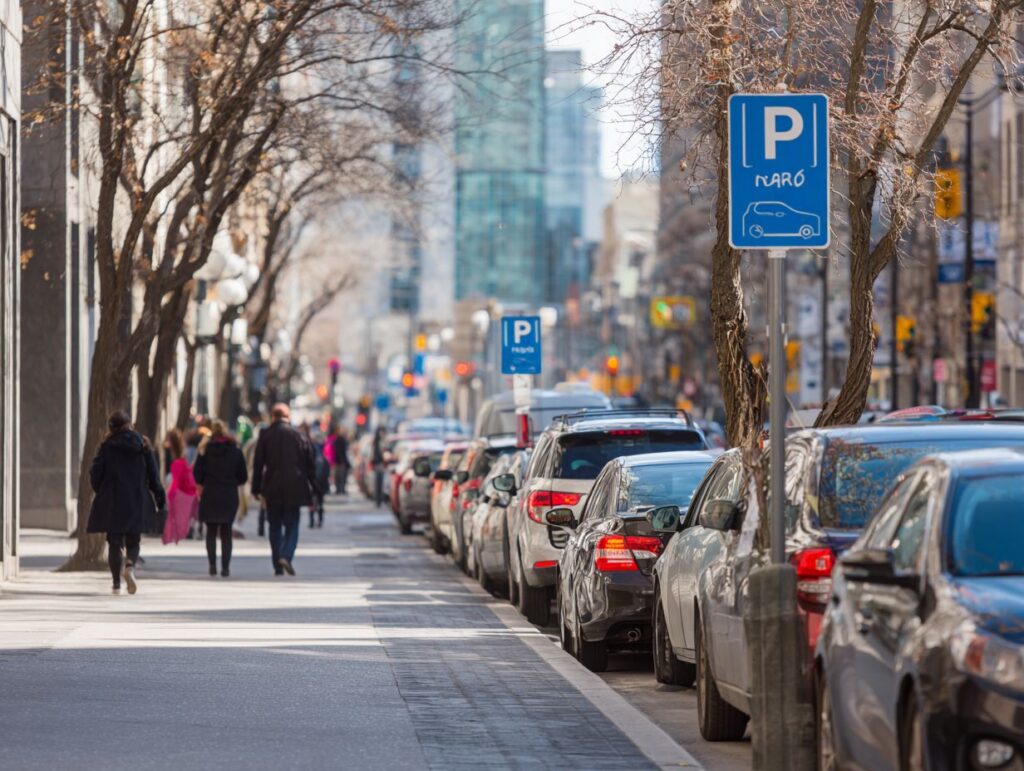
While paid parking offers various advantages, it also presents several drawbacks that can disproportionately affect low-income residents and influence overall accessibility and economic consequences in urban environments.
Impact on Low-Income Residents and Economic Burden
Paid parking can create an economic burden for low-income residents, who frequently struggle to manage parking costs alongside other essential living costs. A 2022 study indicates that low-income households may allocate over 20% of their monthly income to parking fees, which can significantly impact their overall financial stability.
For instance, a family requiring parking near essential services, such as grocery stores or healthcare facilities, may incur monthly parking expenses of up to $200. This financial barrier often compels individuals to forgo necessary trips or rely on less accessible public transportation options.
Advocating for reduced parking rates or the establishment of free parking zones in low-income neighborhoods could help alleviate some of this financial strain and enhance access to vital services.
Potential for Reduced Accessibility
Increased parking fees may deter visitors and reduce accessibility, which can influence transportation decisions and potentially harm local businesses due to parking mandates.
For instance, neighborhoods such as downtown San Francisco have experienced a decline in foot traffic due to elevated parking costs, resulting in a 15% decrease in sales for local shops. Similarly, in Brooklyn, rising parking fees have compelled residents to reconsider their shopping options, adversely affecting market attendance.
To address these challenges, local governments could consider implementing tiered parking rates based on demand or providing transit subsidies, employer-paid parking solutions, and parking cash out options to encourage the use of public transportation.
Such measures would not only enhance accessibility but also contribute to the economic stability of the community.
Learn more, Exploring the Challenges and Benefits of Paid Parking in Downtown Areas.
Case Studies on Parking Requirements
A thorough examination of real-world applications of paid parking reveals instances of both successful implementations and notable failures that have generated significant community backlash.
Success Stories
Cities such as Philadelphia have achieved notable success with paid parking systems, generating over $40 million annually to finance improvements in public transportation.
Similarly, cities like San Francisco and Washington, D.C., have implemented effective paid parking initiatives. The SFpark program in San Francisco has resulted in a 15% increase in parking space availability and has reduced the time required to search for parking, thereby improving overall traffic flow.
In Washington, D.C., the introduction of paid parking yielded a revenue increase of $17 million in its first year, which was directly allocated to local infrastructure projects. These examples illustrate that well-planned paid parking initiatives not only generate substantial revenue but also contribute to urban development and sustainability efforts.
Failures and Backlash in Planning Regulations
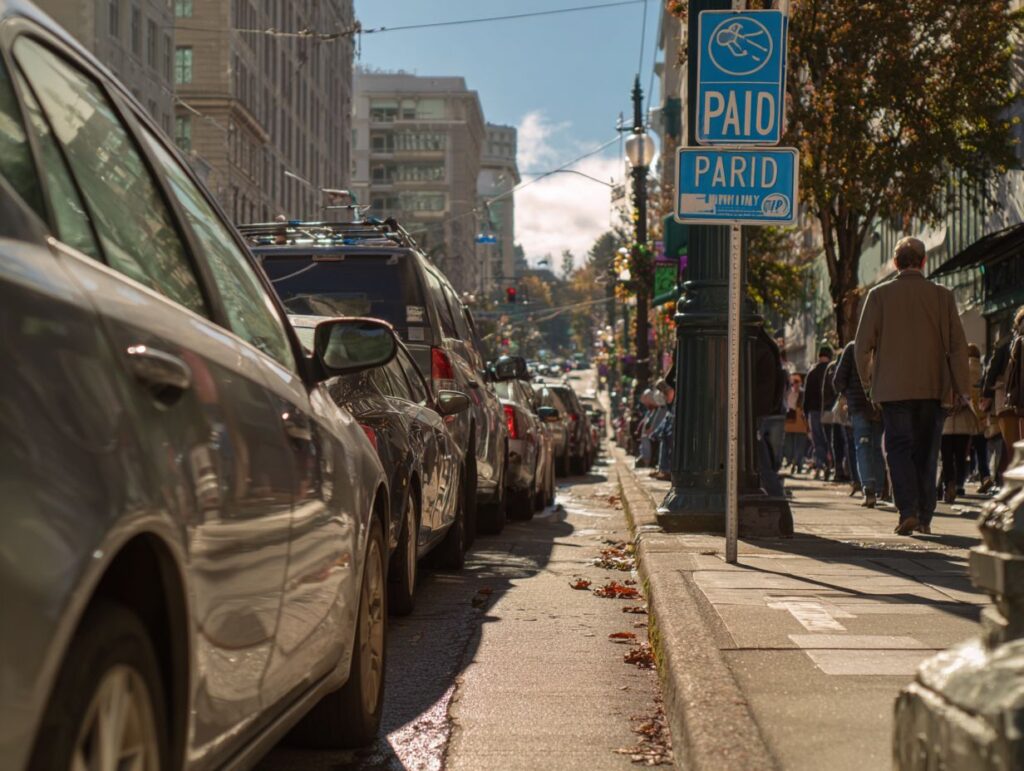
In Austin, a failed paid parking initiative resulted in community protests and the subsequent rollback of fees due to public dissent regarding accessibility issues.
The backlash was primarily a consequence of insufficient consultation with residents, underscoring the critical need for transparent communication. To prevent similar failures in the future, municipalities should prioritize community input through surveys or public forums prior to implementation.
For example, residents could be invited to participate in planning sessions or focus groups to discuss potential impacts and concerns. Utilizing tools such as online polling platforms (e.g., SurveyMonkey) can effectively gauge public sentiment and collect actionable feedback.
Implementing such proactive measures can foster trust and ensure that the needs of the community are adequately addressed.
Alternatives to Paid Parking
As cities investigate alternatives to paid parking, initiatives that promote free parking, parking incentives, and improve public transit options are increasingly gaining support.
Free Parking Initiatives and Zoning Guidelines
Cities such as Montgomery County have implemented free parking initiatives aimed at providing incentives to promote local shopping and enhance neighborhood economies.
Similarly, cities like San Francisco and Seattle have adopted comparable programs that allow residents and visitors to park at no charge during designated hours or special events, increasing curb parking availability. These initiatives not only increase foot traffic to local businesses but also promote community engagement.
For example, a pilot program in San Francisco’s Union Square resulted in a 20% increase in sales for nearby retail establishments.
Local governments frequently promote these programs through various channels, including social media, community events, and signage, to maximize visibility and participation, thereby fostering a dynamic marketplace environment, influenced by government regulation and market prices.
Public Transportation Improvements
Investing in improvements to public transportation can serve as a viable alternative to paid parking, enhancing accessibility and reducing dependence on personal vehicles, while considering parking minimums and subsidies.
Cities such as San Francisco, New York City, and Portland have effectively increased public transit ridership by investing in their infrastructure, addressing commuter parking issues.
For example, San Francisco expanded its Muni service by adding new lines and increasing frequency, which resulted in a 15% increase in ridership over a three-year period.
Similarly, Portland implemented dedicated bus lanes and improved scheduling, leading to a 10% rise in commuters utilizing public transit. These initiatives not only alleviate parking pressures but also contribute to fostering a more sustainable urban environment.
Future of Urban Accessibility
The future of urban accessibility is significantly dependent on innovative solutions to parking challenges, including adaptive policies that address community needs.
One notable trend is the integration of smart parking technologies. Cities are increasingly implementing applications such as ParkMobile and SpotHero, which enable users to locate available parking spaces in real time and reserve them in advance.
Regulatory changes, such as dynamic pricing, allow for the adjustment of parking fees based on demand, thereby encouraging turnover and mitigating congestion.
Furthermore, the incorporation of bike-sharing stations in proximity to parking facilities enhances multi-modal transport options, promoting a sustainable approach to urban mobility in public spaces.
Collectively, these advancements not only improve accessibility but address political feasibility and contribute to a more efficient urban environment.
Recommendations for Policymakers: Insights from experts like Randal O’Toole and Jason Kuznicki

Policymakers should adopt a multifaceted approach to parking regulations that effectively balances revenue generation with the needs of diverse communities.
Engagement with stakeholders is essential in this process. It is advisable to initiate community meetings to solicit input from residents, local businesses, and advocacy groups.
Employing data analysis tools, such as GIS mapping, can aid in identifying high-demand parking areas, thereby facilitating targeted solutions, including dynamic pricing, maximum parking capacity, or the issuance of additional parking permits.
Regular monitoring of community feedback through surveys or open forums is crucial for evaluating the impact of implemented regulations. This iterative approach ensures that policies remain responsive to evolving community needs while fostering transparency and trust among all stakeholders.
Frequently Asked Questions
Is paid parking worth it in cities like Houston and Washington D.C.?
It depends on your individual needs and circumstances. Some people may find the convenience of paid parking worth the cost, while others may prefer alternative modes of transportation.
What is the debate around urban accessibility?
The debate centers around the impact of paid parking on the accessibility of urban areas for different demographics, such as low-income individuals and families, elderly or disabled individuals, and those without access to a personal vehicle.
Does paid parking improve urban accessibility?
Some argue that paid parking can help reduce traffic congestion and increase turnover of parking spaces, which can improve accessibility for those needing to park for short periods of time. However, others argue that it can create a financial barrier for those who cannot afford to pay for parking.
What are some alternatives to paid parking?
Some alternatives to paid parking include public transportation, walking, biking, carpooling, and ride-sharing services. These options may be more affordable and accessible for certain demographics.
How does paid parking affect the local economy, particularly in areas like San Francisco and Philadelphia?
Some studies have shown that paid parking can generate revenue for local governments and businesses, while others argue that it can discourage people from visiting certain areas and hurt small businesses.
Is there a middle ground in the debate over paid parking?
Some cities have implemented programs such as discounted or free parking for certain groups, such as low-income individuals or electric vehicle owners, to address the concerns of both sides. Other solutions include implementing a sliding scale for parking fees based on income or offering free parking during certain times of the day.