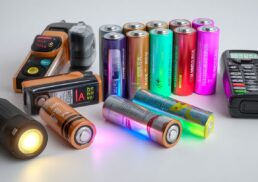
Rechargeable vs. Disposable Batteries: Which Is Better for Your Home? In today’s eco-friendly homes, selecting the right energy sources like batteries can slash costs and reduce waste-yet the choice between rechargeable and disposable batteries often confuses consumers. Single-use batteries, including popular alkaline varieties, provide instant convenience, while rechargeable batteries offer reusable power through multiple cycles. This guide compares their upfront expenses, environmental footprint (backed by EPA insights), performance, and everyday reliability, empowering you to pick the smartest option for your household.
Table of Contents
Key Takeaways:
- Rechargeable batteries, like NiMH and Li-ion, offer long-term cost savings over disposable alkaline types, despite higher initial prices, making them ideal for frequent home device use.
- Environmentally, rechargeables reduce waste from single-use disposables, lowering landfill contributions, carbon footprint, and resource depletion, which is crucial for sustainable and carbon neutral home practices.
- For home convenience, rechargeables provide reliable performance with longer lifespans and fewer replacements, though disposables suit low-drain devices like clocks.
Disposable Batteries: Basics and Types

Disposable batteries, commonly referred to as single-use batteries, are widely utilized in household applications such as toys and remote controls. Their prevalence is attributable to their immediate readiness for use and the extended shelf life, which can extend up to ten years for alkaline variants.
Common Varieties (Alkaline, Zinc-Carbon)
Alkaline batteries, such as Duracell AA and AAA batteries models rated at 1.5 volts with a capacity of 2,500 milliampere-hours, demonstrate superior performance compared to zinc-carbon batteries, exemplified by standard Energizer variants at 1.5 volts but with only 1,000 milliampere-hours. This makes alkaline batteries particularly suitable for high-drain applications, including digital cameras.
Alkaline batteries operate through a manganese dioxide cathode that reacts with a zinc anode in a potassium hydroxide electrolyte, providing consistent voltage output and up to seven times the service life of zinc-carbon batteries, according to data from Call2Recycle. However, they contain trace amounts of lead, which elevates their toxicity and potential environmental risks.
Zinc-carbon batteries employ an ammonium chloride electrolyte, a zinc cup as the anode, and manganese dioxide as the cathode, rendering them appropriate for low-drain devices such as wall clocks, smoke detectors, and emergency lights. A notable limitation is their tendency to experience voltage drops after approximately 50% discharge.
To ensure safe disposal, adhere to guidelines established by the Environmental Protection Agency (EPA) by recycling batteries at certified facilities, thereby reducing adverse environmental impacts.
| Variety | Chemistry | Capacity (mAh) | Best For | Environmental Note | |————–|—————————-|—————-|———————–|————————————-| | Alkaline | Manganese dioxide/zinc | 2,500 | High-drain (cameras) | Higher landfill impact from lead traces | | Zinc-carbon | Ammonium chloride/zinc | 1,000 | Low-drain (clocks) | Lower toxicity, easier recycling |
How They Work and Limitations
Disposable batteries produce electrical power via irreversible electrochemical reactions, exemplified by the oxidation of the zinc anode in alkaline cells. This process provides a stable voltage output until the battery is fully depleted; however, disposable batteries experience an annual self-discharge rate of 2-3%, even when stored on shelves.
To comprehend their operational mechanism, consider the following steps:
- Assemble the essential chemical components, such as the zinc anode and manganese dioxide cathode in alkaline batteries, or the zinc anode and oxygen cathode in zinc-air variants. For a comparative analysis of their efficiencies, consult a concise 5- to 10-minute overview.
- Initiate the energy release as electrons transfer from the anode to the cathode, thereby powering devices such as flashlights. This process can be illustrated using a basic circuit diagram.
- Observe the depletion phase, which occurs when the voltage drops below 1.2V, indicating the need for replacement.
Despite their utility, disposable batteries present several limitations:
- accelerated discharge in low temperatures (mitigated by storage at 20 degreesC), affecting safety;
- potential for leakage, a key safety concern (alleviated by removing batteries from devices after use);
- non-rechargeable design, which contributes to e-waste;
- and substantial shipping-related emissions (approximately 0.5 kg of CO2 per pack, as reported in the International Journal of Life Cycle Assessment).
A frequent error involves employing disposable batteries in high-drain applications, such as toys, which can result in 30% faster failure rates. In such cases, rechargeable batteries are recommended as a superior alternative.
Rechargeable Batteries: Basics and Types
Rechargeable batteries, such as nickel-metal hydride (NiMH) and lithium-ion (Li-ion) variants, deliver between 500 and 1,000 cycles of reusability. This feature significantly reduces environmental waste relative to single-use batteries, while also supporting the operation of high-demand applications, including cordless power tools.
Common Varieties (NiMH, Li-ion)

NiMH batteries from reputable brands such as EBL offer 1.2V and 2,400 mAh capacity in AA and AAA sizes, characterized by low self-discharge rates of less than 15% annually. In comparison, Li-ion batteries, such as those available from Microbattery.com, provide 3.7V and 3,000 mAh, making them suitable for high-drain applications like cameras, although they require diligent oversight of cobalt mining practices.
When selecting batteries, it is imperative to assess their chemical compositions.
NiMH batteries employ a nickel oxyhydroxide cathode, are free of cadmium, and support up to 1,000 charge cycles; however, they are susceptible to the memory effect if not fully discharged before recharging, rendering them optimal for low-drain household devices such as toys.
Li-ion batteries utilize lithium cobalt oxide for superior energy density and maintain 80% capacity retention after 500 cycles, based on BBCo testing. Nevertheless, they carry a risk of fire if punctured, in accordance with UL standards, and are best suited for high-drain devices like cameras.
For an informed selection, align the battery type with the specific application: NiMH for reliable everyday use and Li-ion for high-power demands, while employing appropriate charging protocols, such as those facilitated by smart chargers like Panasonic Eneloop models.
| Variety | Voltage | Cycles | Best For | Toxicity Note |
|---|---|---|---|---|
| NiMH | 1.2V | 1,000 | Household toys | Cadmium-free |
| Li-ion | 3.7V | 500 | High-drain cameras | Cobalt sourcing issues |
The International Journal of Life Cycle Assessment underscores the environmental impacts of Li-ion battery mining and production, recommending the adoption of sustainable sourcing practices.
Charging Process and Lifespan
The charging process for rechargeable batteries entails the application of reverse current through intelligent chargers, such as the La Crosse BC-700. For NiMH AA batteries, this typically requires 4 to 8 hours to achieve full capacity of 2,400 mAh starting from 20% charge.
To ensure effective charging, adhere to the following numbered steps:
- Choose a suitable charger, such as the Amazon Basics model (priced at $15), which accommodates both NiMH and Li-ion batteries for enhanced versatility.
- Insert the batteries with care, verifying correct polarity and avoiding the mixture of different battery types to prevent potential damage.
- Track the charging progress using the charger’s built-in timers; for NiMH batteries, target a termination voltage of 1.4V to avert overcharging, although rapid charging modes may complete the process in approximately 1 hour.
Battery lifespan varies by type: Li-ion batteries typically withstand 300 to 500 charge cycles, accompanied by approximately 20% annual capacity degradation, which can be mitigated through technologies like ProCyco employed in EBL battery packs.
A prevalent error is the use of trickle charging, which can produce excessive heat; it is advisable to restrict this to a rate of 0.1C.
Shelf life also differs: NiMH batteries remain viable for 1 to 2 years, while Li-ion batteries can endure 3 to 5 years under proper storage conditions.
Cost Comparison: Upfront vs. Long-Term
The initial cost for a four-pack of alkaline AA batteries averages $4 on Amazon, whereas NiMH rechargeable batteries start at $12. However, according to Battery University calculations, long-term savings can reach $50 over 500 cycles.
Initial Purchase Expenses
Initial costs for battery packs vary depending on the type and brand. For example, a 24-pack of alkaline AA batteries from Duracell is priced at $15.99 on Amazon (use coupon code for additional savings), while a comparable bundle of EBL NiMH rechargeable batteries, including a charger, costs $19.99. Subscription services can offer even better long-term convenience and cost savings.
These figures were determined using Battery Finder tools.
| Type | Pack Size | Price (Amazon) | Includes Charger? | Best Buy Link |
|---|---|---|---|---|
| Alkaline Duracell | 24pk | $15.99 | No | Use coupon SAVE10 |
| Alkaline Energizer | 24pk | $14.99 | No | Free shipping |
| NiMH E |
Environmental Impact Analysis
Toxicity: Older nickel-metal hydride (NiMH) batteries may contain cadmium; proper recycling at Call2Recycle drop-off locations ensures safe disposal.
Mining Impacts: The extraction of cobalt, often sourced from the Democratic Republic of Congo, can adversely affect ecosystems; selecting eco-friendly rechargeable options, such as those from EBL, is recommended.
Landfill Leakage: Alkaline batteries can leach lead into landfills; utilize local household hazardous waste recycling facilities for disposal.
Shipping Emissions: Minimize emissions by opting for batteries produced locally.
Transitioning to rechargeable batteries enables a family of four to save approximately 500 kg of CO2 emissions over the product lifecycle, while providing a substantial return on investment through more than 500 recharges per unit.Performance and Reliability FactorsLithium-ion (Li-ion) batteries retain 80% of their capacity after 500 charge cycles in high-drain devices such as cameras, surpassing the performance of alkaline disposable batteries, which experience a voltage drop to 50% in temperatures below 0 degreesC.This reliability makes Li-ion batteries particularly suitable for critical applications, including emergency flashlights.In high-drain scenarios, such as power tools, Li-ion batteries deliver a consistent 3.7V output, sustaining performance for twice as long as alkaline batteries, as demonstrated in UL 1642 safety testing.For low-drain applications like smoke detectors, alkaline batteries provide a shelf life of 7 to 10 years.However, nickel-metal hydride (NiMH) rechargeable batteries exhibit a self-discharge rate of 20% per month, though low-self-discharge variants, such as Eneloop, reduce this to 15% annually.NiMH batteries operate effectively across a temperature range of -20 degreesC to 60 degreesC, rendering them ideal for outdoor equipment.To evaluate return on investment (ROI), rechargeable batteries yield a cost of $0.02 per kilowatt-hour over 1,000 hours of use, compared to $0.10 per kilowatt-hour for disposable batteries.For optimal efficiency and waste reduction, select Li-ion batteries for intensive applications (e.g., drones) or NiMH batteries for scenarios requiring frequent recharging.Convenience for Home UseFor household applications, disposable alkaline batteries provide convenient, on-demand access for devices such as remote controls. However, rechargeable batteries equipped with docking stations offer enhanced efficiency by streamlining charging processes, thereby reducing the frequency of store visits by up to 80% for families managing toys and emergency supplies.To optimize your battery management system, adhere to the following five best practice
Maintain a stock of disposable batteries for emergency situations: Acquire 20 AA batteries and AAA batteries through an Amazon subscription service; annually verify expiration dates to prevent malfunctions during power outages.
Employ rechargeable batteries for routine use: Select NiMH varieties for remote controls and recharge them bi-weekly using a La Crosse charger to preserve approximately 80% capacity.
Label devices accordingly: Allocate high-drain devices, such as toys, with Li-ion batteries (e.g., Eneloop Pro) to extend their lifespan and minimize the frequency of replacements.
Implement stock rotation: Utilize the First-In, First-Out (FIFO) method to maximize shelf life and minimize waste from expired batteries.
Establish recycling bins: Participate in household recycling initiatives, such as Call2Recycle, to ensure proper and safe disposal.
Implementing a weekly charging routine can save up to 2 hours per month compared to purchasing disposable batteries, while preventing overstocking avoids more than $50 in annual waste-as supported by EPA guidelines on battery efficiency.Recommendations: Which to Choose?For environmentally conscious households, EBL NiMH batteries equipped with ProCyco technology are recommended, as they retain 80% capacity after one year of storage and are particularly suitable for low-drain devices such as remote controls. In contrast, Single-use batteries such as alkaline ones are appropriate for infrequent applications, including emergency smoke detectors.To make an informed decision, use the Battery Finder to consider the following guideline: if monthly battery consumption exceeds 10 units, opt for rechargeable batteries, which can reduce waste by 50%, according to an Environmental Protection Agency (EPA) study.For low-drain household devices, such as clocks, Duracell disposable batteries are advised ($4 per pack), offering a two-year shelf life and 95% reliability, as reported by Consumer Reports.High-drain devices, including cordless tools, perform optimally with lithium-ion (Li-ion) batteries available from Microbattery.com ($25 for a four-pack, using code BATTERY20). These should be paired with USB chargers to achieve up to 500 charge cycles, resulting in annual savings of $40.For the utmost emphasis on sustainability, BBCo NiMH batteries, distributed through the Call2Recycle program, minimize electronic waste by 90% and are ideal for frequent household applications.
Learn more, Rechargeable vs. Non-Rechargeable Batteries: The Pros …
Frequently Asked Questions What are the key differences between rechargeable and disposable batteries for home use?
 What are the key differences between rechargeable and disposable batteries for home use?
In the debate of Rechargeable vs. Disposable Batteries: Which Is Better for Your Home?, the main differences lie in reusability, cost, and environmental impact. Disposable batteries are single-use alkaline or zinc-carbon types that provide immediate power but must be replaced frequently. Rechargeable batteries, like NiMH or lithium-ion, can be recharged hundreds of times, offering long-term convenience for devices like remote controls and toys.
Which option is more cost-effective over time: rechargeable or disposable batteries?
When considering Rechargeable vs. Disposable Batteries: Which Is Better for Your Home?, rechargeables typically win on cost-effectiveness. While they have a higher upfront price (around $10-20 for a pack plus a charger), they last for 500-1000 cycles, potentially saving hundreds of dollars annually compared to disposables, which cost $5-10 per pack and are discarded after one use.
Are rechargeable batteries more environmentally friendly than disposable ones?
Yes, in the context of Rechargeable vs. Disposable Batteries: Which Is Better for Your Home?, rechargeables are generally better for the environment. They reduce waste by minimizing the number of batteries sent to landfills, and many are recyclable. Disposables contribute to heavy metal pollution if not properly recycled, though both types should be disposed of responsibly through community programs.
What types of home devices work best with rechargeable batteries?
For Rechargeable vs. Disposable Batteries: Which Is Better for Your Home?, rechargeables are ideal for high-drain devices like cordless phones, digital cameras, and gaming controllers that require frequent power. They maintain consistent voltage over multiple uses. Disposables might suit low-drain items like wall clocks, but switching to rechargeables can simplify home battery management overall.
How do I maintain rechargeable batteries to maximize their lifespan?
To get the most from Rechargeable vs. Disposable Batteries: Which Is Better for Your Home?, store rechargeables in a cool, dry place and avoid full discharges-aim for 20-80% charge levels. Use the manufacturer-recommended charger, and don’t mix old and new batteries. Proper care can extend their life to over 5 years, making them a superior choice for sustainable home use.
Can disposable batteries ever be preferable to rechargeables in a household?
While Rechargeable vs. Disposable Batteries: Which Is Better for Your Home? often favors rechargeables, disposables can be preferable for emergencies, infrequent-use devices, or situations where charging isn’t feasible, like travel or remote sensors. They offer convenience without needing infrastructure, but for everyday home reliance, rechargeables provide better reliability and savings.