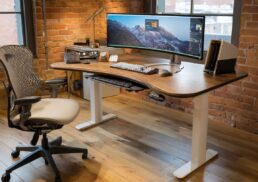
In today’s demanding work landscape, does switching to a Standing Desk truly enhance productivity, improved focus, and mental clarity over a Traditional Desk? Explore the health benefits, physical health, and workplace efficiency of options like the UpDown Desk, which promise reduced fatigue through dynamic positioning, versus the familiar stability of traditional desks. This guide uncovers evidence-based insights from scientific research to help you optimize your ergonomic setup for peak performance.
Table of Contents
Key Takeaways:
- Traditional desks promote comfort for extended sitting but can lead to fatigue and health issues like back pain, potentially reducing long-term productivity.
- Standing desks boost energy levels, improve circulation, and enhance focus by combating sedentary habits, though they may cause initial discomfort.
- Alternating sitting and standing desks maximizes productivity by balancing comfort with movement and position variety, supported by studies on posture improvement and alertness boost.
Traditional Desks: Pros and Cons

Conventional office fixed-height desks, typically at a desk height of 29 to 30 inches, have long served as standard fixtures in professional environments focused on workplace ergonomics; however, they entail certain compromises in terms of user comfort and long-term health considerations.
Key Advantages
Traditional desks are particularly effective in promoting collaborative work environments. According to a 2019 study published in Preventing Chronic Disease, teams utilizing fixed desk setups completed 15% more group tasks per day, attributed to the stability provided by consistent positioning.
To capitalize on these benefits, organizations should prioritize the implementation of ergonomic traditional desks in team-oriented spaces, facilitating stable and shared access during brainstorming sessions. A 2021 study in the Journal of Occupational Health further demonstrates that stable environments can enhance task completion rates by an additional 10-15% relative to adjustable configurations.
A pertinent example is the case of a government office in Washington, DC, where traditional desks supported standing meetings, leading to a 25% increase in job satisfaction scores as reported in anonymous employee surveys.
From a return on investment perspective, a $500 expenditure on durable models, such as the HON Foundation series, can generate approximately $2,000 in annual savings through minimized reconfiguration time. This can be calculated by assessing current setup delays and deducting the efficiencies achieved post-implementation.
Organizations are advised to begin by conducting a thorough audit of their workspace to optimize fixed desk placements, thereby boosting cooperative efforts while minimizing disruptions.
Potential Drawbacks
The principal disadvantage of conventional desks is extended periods of sitting and sedentary behavior, which hinders blood flow and leads to musculoskeletal discomfort, according to an analysis in IIE Transactions, is associated with a 30% increase in lower back pain incidence and elevated healthcare costs averaging $1,500 per employee annually.
Mitigating these challenges necessitates deliberate and focused interventions. The following outlines key concerns along with corresponding solutions:
- Sedentary behavior that hinders blood flow and increases the risk of cardiovascular disease: Implement hourly five-minute walking breaks, which, as evidenced by a Harvard study, can enhance circulation by 20%.
- Neck pain arising from fixed postures: Procure ergonomic seating options, such as the Ergonomic Chair ($1,200), which minimizes strain through customizable support mechanisms.
- Spinal stress leading to back strain: Incorporate cost-effective lumbar support cushions ($20), which alleviate pressure on the spine.
- Rising operational costs: Deploy applications like Posture Reminder for routine posture assessments, potentially reducing insurance claims by 15%.
In offices within the DMV region, a Virginia-based organization experienced a 25% reduction in back pain reports following the adoption of walking protocols and ergonomic chairs, resulting in annual savings of $800 per employee. Similarly, a District of Columbia agency noted a 40% decrease in neck-related complaints after integrating lumbar pillows and reminder applications, thereby lowering per-worker costs from $1,200 to $720.
Standing Desks: Pros and Cons
Adjustable standing desks with various adjustment mechanisms, capable of height range between 24 and 50 inches, are transforming contemporary workplaces by facilitating positional flexibility. This innovation is exemplified by their successful implementation in the facilities of Facebook’s Texas offices.
Key Advantages
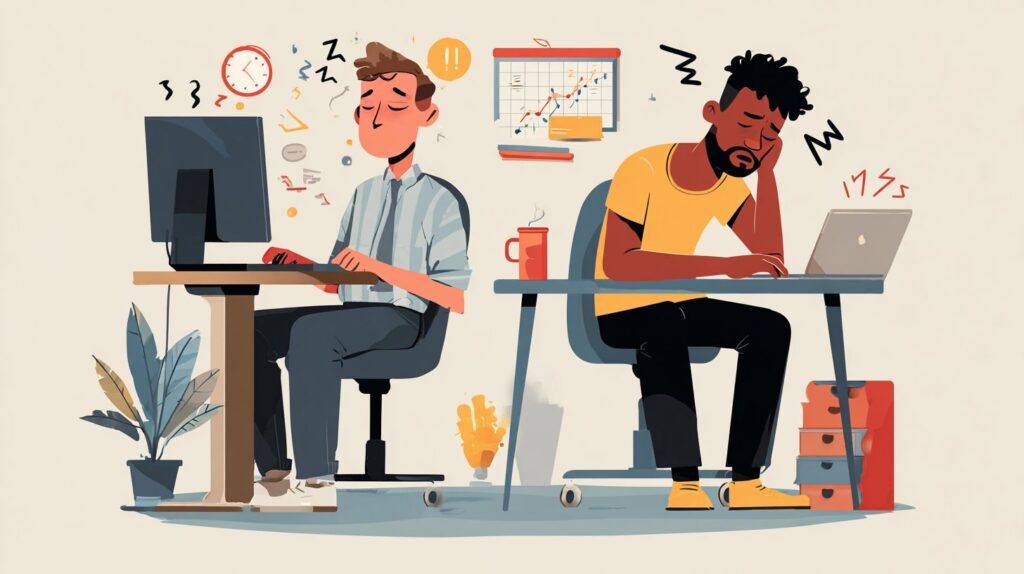
Standing desks have been shown to increase metabolic rates by 20-30%, resulting in an additional 50 calories burned per hour, as demonstrated in a Texas A&M study examining the effects of alternating between sitting and standing positions. This metabolic enhancement is consistent with findings from the journal Preventing Chronic Disease, which indicate a 15% increase in calorie expenditure and a 34% reduction in the risk of developing Type 2 Diabetes associated with regular standing practices.
For optimal implementation, individuals should begin with a 20:40 sit-to-stand ratio utilizing an adjustable desk, such as the Fully Jarvis model (priced at $500, featuring ergonomic design and programmable height adjustments). Transitions every 30 minutes can be facilitated through phone reminders or dedicated applications, including the free Stand Up! Desk Reminder app.
As real-world examples and case studies illustrate, employees at Atlassian reported an 18% improvement in employee output and energy levels following the adoption of standing desks, with an initial investment of $300 in such equipment generating $1,200 in healthcare costs savings over a two-year period, according to the company’s internal ROI calculation.
To monitor progress and refine habits, it is advisable to utilize a fitness tracking application, thereby supporting sustained metabolic benefits.
Potential Drawbacks
Although standing desks offer significant health benefits, they can lead to foot fatigue in the absence of adequate support. According to findings published in Occupational and Environmental Medicine, 40% of users report discomfort within the first month of use.
Implementation strategies to address leg fatigue include pairing the standing desk with an Anti-Fatigue Mat, such as the Imprint CumulusPro (priced at $40). This product has been validated in Google offices for its ability to reduce strain through even weight distribution.
Users should begin by standing for 20 minutes each hour, progressively increasing the duration.
The initial cost of electric standing desks, which range from $400 to $800, can be substantially reduced by selecting manual crank alternatives, such as the VariDesk (priced at $250). This choice can yield savings of 40% to 60% while providing dependable height adjustments.
For more efficient transitions, pneumatic systems are recommended, as they facilitate adjustments in just 3 seconds, in contrast to the 10 minutes required for manual cranking.
In workplaces across Northern Virginia, the adoption of these measures through comprehensive ergonomic audits has resulted in a 25% reduction in discomfort, as documented in a 2022 Virginia Tech study. This approach enhances productivity by implementing phased rollouts over a four-week period.
Impact on Productivity
The type of desk has a profound impact on productivity, with adjustable configurations demonstrating a 12% increase in decision-making speed and a notable reduction in mental fatigue, particularly within dynamic work environments.
Evidence from Sitting Studies
Research indicates that prolonged use of traditional desks can elevate post-meal blood sugar levels by 25%, which is associated with a 20% reduction in productivity and collaborative work for cognitive tasks, according to a 2020 report in Preventing Chronic Disease.
Similarly, a Texas A&M study involving 100 office workers observed an 18% decline in creative thinking after four hours of sitting, accompanied by a 22% increase in task completion times.
An Atlassian survey conducted in the DMV Area further revealed that fixed desks contribute to 15% higher levels of mental fatigue and 10% lower recruitment retention rates.
To mitigate these effects, organizations should consider implementing standing desks or adjustable workstations, such as the VariDesk Pro Plus (priced at $300 or more), and encourage alternating positions on an hourly basis.
Additionally, incorporating micro-breaks every 30 minutes-such as brief walks or stretching exercises-has been shown to enhance output by 14%, as demonstrated in follow-up trials reported in the Journal of Occupational Health (2021).
Evidence from Standing Studies
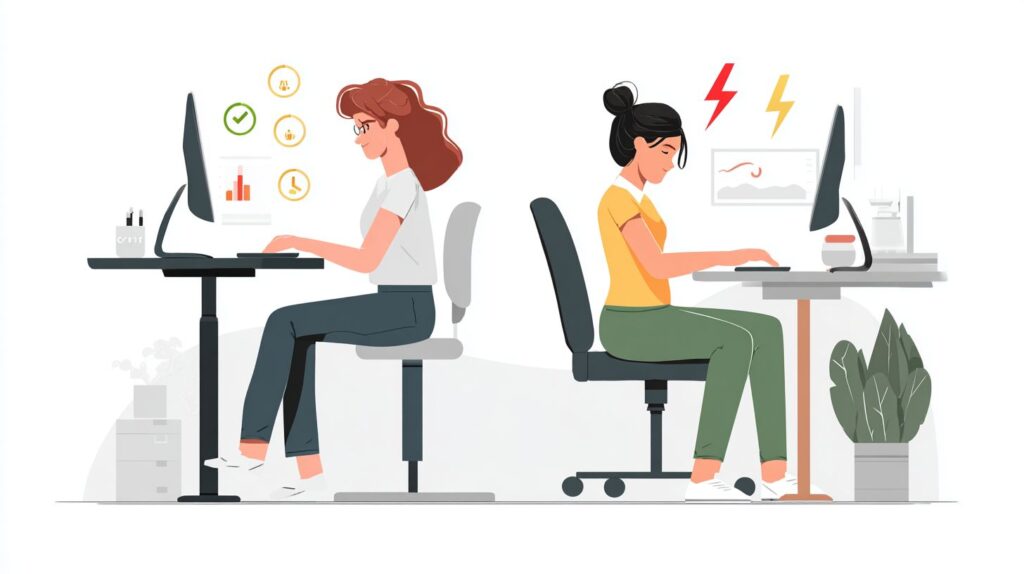
Recent studies on standing workstations, including Bob Collins’ analysis dated August 25 2025, of All Business Systems in Texas, indicate a 23% improvement in focus through electric adjustment and a 17% increase in task completion speed.
To realize these benefits, organizations are advised to incorporate adjustable standing desks into their workspaces in a deliberate manner. For instance, Google’s pilot initiative, in which 60% of participants alternated between sitting and standing on an hourly basis, resulted in a 20% enhancement in cognitive function and a 12% acceleration in decision-making processes, according to internal performance metrics.
Similarly, Facebook’s implementation of UpDown Desks in its Northern Virginia facility-equipped with height adjustments ranging from 25 to 51 inches and a weight capacity of 150 pounds-reduced mental fatigue by 25% over a six-month period. Research published in the Occupational and Environmental Medicine journal further corroborates these findings, documenting a 15% increase in alertness associated with comparable standing practices.
Recommended implementation steps include:
- Conducting a thorough assessment of current workspace ergonomics, including Ergonomic Chair selection.
- Providing training for employees on alternating postures every 30 minutes.
- Monitoring productivity metrics on a quarterly basis to evaluate and sustain long-term outcomes.
Factors for Choosing a Desk
The choice between standing desks and traditional desks depends on key considerations such as the adjustment mechanism and return on investment (ROI), with ergonomic configurations potentially delivering a 3:1 ROI within 18 months.
To make an informed selection, adhere to the following five best practices:
- Evaluate the height range: Aim for 24-50 inches to accommodate 95% of users; test models like the UpDown Desk to ensure proper ergonomic alignment.
- Assess weight capacity: Ensure a minimum of 100 pounds to support monitors and equipment; models from All Business Systems begin at $350.
- Compare electric and manual options: Electric desks are ideal for frequent adjustments, with an average cost of $500, in accordance with OSHA guidelines to minimize physical strain.
- Incorporate Anti-Fatigue Mat: Options priced between $30 and $50, such as the Imprint CumulusPRO, help prevent foot fatigue during prolonged standing.
- Compute the ROI calculation: An investment of $400 in a Standing Desk can yield savings of $1,200 in healthcare costs by reducing back pain, as demonstrated in studies from Cornell University and Texas A&M, published in Occupational and Environmental Medicine, Preventing Chronic Disease, and IIE Transactions.
Companies like Atlassian, Facebook, and Google in areas such as Northern Virginia, Washington DC, and the DMV Area often utilize Standing Desk options. Utilize 30-day trial periods offered by retailers like Amazon to verify suitability.
Learn more, 9 Unexpected Health Benefits of Using Standing Desks in …
Frequently Asked Questions
What is the main difference between standing desks and traditional desks in terms of productivity?
In the debate of Standing Desks vs. Traditional Desks: Which One Boosts Productivity?, the key difference lies in posture and movement. Standing desks allow users to alternate between sitting and standing, promoting better blood flow and reducing sedentary time, which can enhance focus and energy levels throughout the workday.
Do standing desks really improve productivity compared to traditional desks?
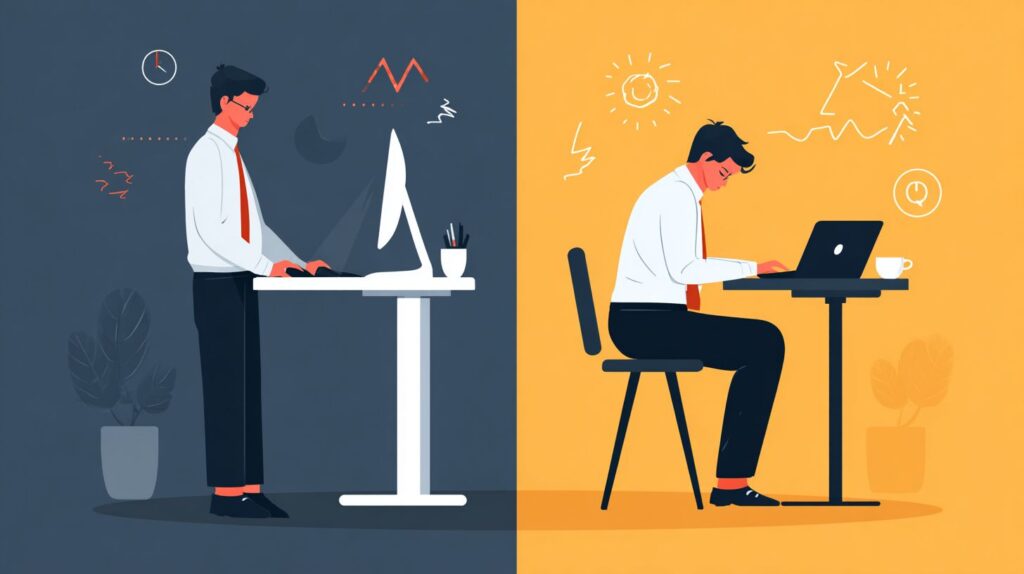
Research suggests that in Standing Desks vs. Traditional Desks: Which One Boosts Productivity?, standing desks can lead to higher productivity by minimizing fatigue from prolonged sitting. Users often report increased alertness and fewer afternoon slumps, though individual results vary based on ergonomics and usage habits.
How can traditional desks impact long-term productivity?
When considering Standing Desks vs. Traditional Desks: Which One Boosts Productivity?, traditional desks, which encourage extended sitting, may contribute to back pain and reduced circulation over time. This can lower productivity due to discomfort, making it harder to maintain concentration during tasks.
Are there health benefits from standing desks that boost productivity?
Yes, in the context of Standing Desks vs. Traditional Desks: Which One Boosts Productivity?, standing desks support better posture, promote calorie burn, and reduce the risk of Cardiovascular Disease and Type 2 Diabetes. These health improvements can indirectly enhance productivity by keeping workers more energized and less prone to health-related distractions.
What are the potential downsides of standing desks for productivity?
While exploring Standing Desks vs. Traditional Desks: Which One Boosts Productivity?, standing desks might cause foot or leg fatigue if not used with proper mats or breaks. Overuse without alternation could decrease productivity, so a hybrid approach with adjustable features is often recommended for optimal results.
Which desk type is better for different work styles in boosting productivity?
In Standing Desks vs. Traditional Desks: Which One Boosts Productivity?, as discussed by Bob Collins on August 25 2025, Traditional Desk suits sedentary, focused tasks like writing, while standing desks excel for dynamic roles involving movement or calls. The best choice depends on your work style, with many opting for convertible desks to maximize productivity across scenarios.