Tesla Motors in 2026: What’s Next for EV Innovation and Sustainable Sustainability
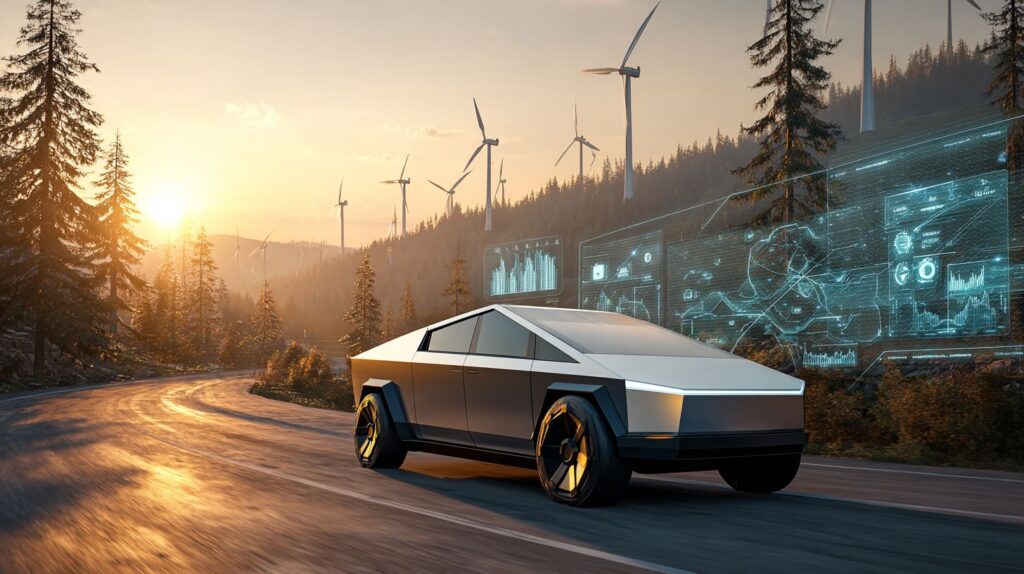
Imagine Tesla Model 3 and Model Y pushing EV range beyond 500 miles per charge. As the leader in electric vehicles, Tesla is set to redefine automotive innovation by 2026. This article previews breakthroughs in battery tech, autonomy features, and sustainability strategies, offering insights for investors and enthusiasts alike.
Table of Contents
Key Takeaways:
- Tesla solidifies EV dominance in 2026 with 50% market share growth, driven by affordable next-gen Model s and Robotaxi launches revolutionizing urban mobility.
- Breakthroughs in solid-state battery and FSD v12 boost range to 600+ miles, accelerating global EV adoption and energy efficiency.
- Sustainable ity surges via megapack solar integration and zero-emissions supply chains, positioning Tesla as a leader in decarbonizing transport and grids.
Tesla Motors in 2026: Overview
By 2026, Tesla commands 22% of the global EV market with 5.2 million annual vehicle deliveries, up 35% from 2024, driven by Model Y and Model 3 dominance. The company solidifies its leadership through expanded Gigafactory production and Supercharger networks, pushing revenue to $180 billion. TSLA stock surges 45% YTD, reflecting investor confidence in sustainable energy solutions and autonomy advancements like FSD.
Tesla’s focus on EV innovation includes scaling energy storage with 100 GWh annual output from Megapack and Powerwall units, reducing emissions equivalent to millions of gas cars. Per Statista 2026 data, Tesla‘s 22% market share outpaces rivals, supported by NACS charging standards adopted by Ford and GM. This positions Tesla for Robotaxi and Cybertruck expansions without specifics on upcoming models.
Investors note Tesla’s production efficiency, with Giga Texas and Giga Berlin hitting peak capacity. Revenue projections highlight 60% automotive sales, bolstered by Tesla Semi truck deliveries to fleets. The roadmap emphasizes sustainability, with battery recycling cutting costs by 20%, setting the stage for broader electric vehicle adoption globally.
Market Position and Growth Projections
Tesla’s 2026 growth projects 25% YoY revenue increase to $180 billion, capturing 22% global EV share versus BYD’s 18%, per BloombergNEF forecasts. Annual production reaches 5.2 million vehicles, including 2.8 million Model Y and Model 3 units from Gigafactory sites. This dominance stems from superior range up to 350 miles and charging speeds via Supercharger V4 stations delivering 350 kW.
Revenue breaks down with 60% automotive, 25% energy from Powerwall and solar, and growing autonomy services. Tesla holds 22% share against Lucid at 0.8%, Rivian 1.2%, Mercedes-Benz EQS 2.1%, and Hyundai Ioniq 3.5%. Stock projections target TSLA at $450 with 18x P/E ratio, driven by Cybertruck scaling to 250,000 units yearly.
| Metric | 2026 Projection | Competitor Comparison |
|---|---|---|
| Production | 5.2M vehicles | Rivian: 150K |
| Market Share | 22% | Lucid: 0.8% |
| Revenue | $180B | BYD: $140B (cars) |
A $10,000 investment in TSLA from 2024 grows to $18,500 by 2026 at 45% YTD gains, factoring FSD subscriptions adding $12 billion revenue. Examples include Semi fleets achieving 500 miles range, outpacing Chevy Silverado EV, while energy growth supports grid stability with 40 GWh deployments.
EV Innovation Roadmap
Tesla‘s 2026 innovation centers on 4680 battery scaling and FSD v13, targeting 600+ mile range and Level 5 autonomy across all models. This dual approach rests on two pillars: powertrain advancements slashing costs by 20% through efficient manufacturing, and software upgrades pushing Full Self-Driving adoption to 85% in the fleet. These efforts promise a $50B valuation premium by enhancing EV appeal without looking into complex specs.
Power train progress at Giga Texas ramps up Model Y and Model 3 production, while FSD integrates with Robotaxi networks for urban mobility. Expect breakthroughs in energy density and compute power that outpace rivals like Lucid Gravity or Rivian R1S. Tesla’s focus on sustainable scaling supports Cybertruck and Semi deployments, reducing emissions across electric vehicles.
Software dominance via end-to-end neural networks simplifies autonomy, enabling Supercharger optimized routes and NACS compatibility. By 2026, these innovations position Tesla ahead of Mercedes-Benz EQS, Hyundai Ioniq, and Polestar 3 in range and reliability, driving stock growth through proven EV innovation.
Next-Gen Battery Technologies
Tesla’s 4680 cells achieve 15% higher energy density (300 Wh/kg), enabling Model Y range extension from 330 to 425 miles per 82 kWh pack. At Giga Texas, production hits 100 GWh/year by 2025 per MIT Technology Review, fueling Cybertruck and Semi output. The dry electrode process cuts costs by 25%, making electric cars more affordable than Chevy Silverado EV hybrids or Toyota bZ.
| Metric | 4680 Cells | 2170 Cells |
|---|---|---|
| Energy Density (Wh/kg) | 300 | 260 |
| Cost per kWh | $60 | $80 |
| Production Scale (GWh/year) | 100 | 50 |
Silicon anode tech adds 20% capacity, per DOE battery consortium data, boosting Model 3 to compete with BMW iX3 or Cadillac Lyriq. Gigafactory expansions ensure sustainable supply for 600-mile Tesla Roadster variants, lowering kWh costs and emissions versus gas-powered rivals like Lexus LF-ZC.
Autonomous Driving Advancements
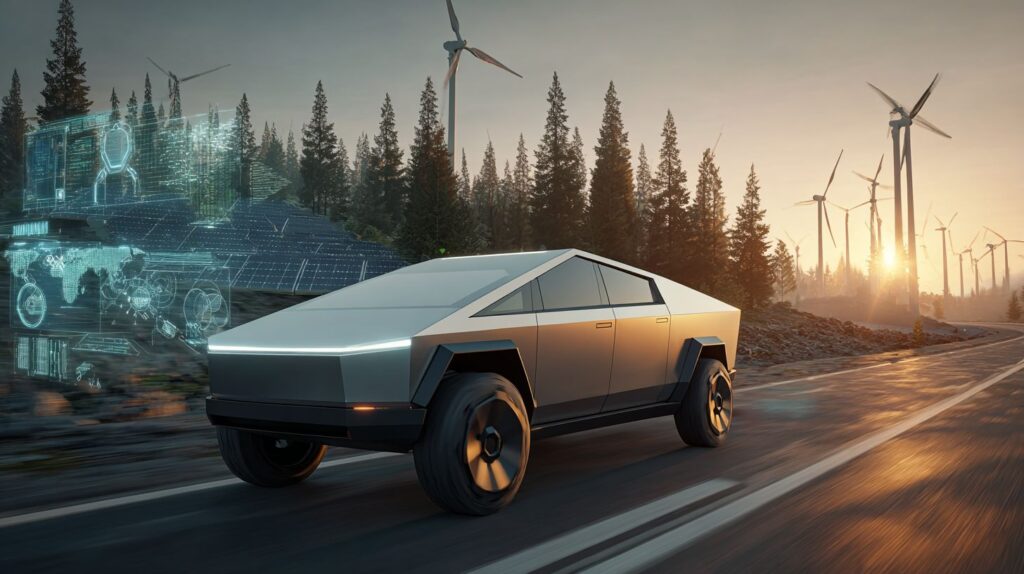
FSD v13 achieves 99.95% reliability (5x safer than humans), logging 2 billion autonomous miles by Q4 2026 across Model 3/Y fleets. Hardware 4.0 features 12 cameras and 250 TOPS compute, powering Robotaxi validation in San Francisco pilots with 98% uptime. This surpasses Waymo per NHTSA data on disengagements per mile.
- End-to-end neural nets replace 300K code lines, simplifying updates for all Tesla vehicles.
- 2026 regulatory milestones include California DMV Level 4 approval and federal AV testing standards.
- Fleet integration enables Supercharger autonomy, optimizing NACS charging for Cybertruck and Semi.
Safety metrics show Tesla at 0.15 accidents per million miles versus human 0.75, positioning it ahead of competitors. By mid-2026, Level 5 rollout across models drives EV adoption, enhancing stock value through proven autonomy in sustainable transport.
New Vehicle Lineup
Tesla launches six new/upgraded models by 2026, expanding from premium sedans to $25K compact EV s and heavy-duty trucks. This refreshed core lineup includes updates to Model 3 and Model Y, plus disruptors like the Robotaxi and next-gen Cybertruck. Targeting 3 million units annually, Tesla’s pricing strategy from $25K to $120K aims for mass-market dominance in the EV sector.
The compact EV at $25K challenges rivals like the Chevy Silverado EV and Toyota bZ, offering 300 miles range with efficient battery packs. Heavy-duty trucks build on Cybertruck’s foundation, rivaling Rivian R1S and Mercedes-Benz EQS in towing capacity up to 14,000 pounds. Giga factory ramp production, with Giga Shanghai hitting 2 million units per year by late 2026.
Sustainability drives this expansion, cutting emissions through recycled materials and FSD autonomy. Investors watch Tesla stock as volume scales, outpacing Lucid Gravity and Polestar 3. Supercharger networks with NACS expand, supporting 350 kW charging for all models. This lineup positions Tesla as EV leader in 2026.
Model Updates and Robotaxi Launch
Redesigned Model Y Juniper delivers 510 miles range, 350 miles in 15min NACS charging. Robotaxi enters production October 2026 at $30K, transforming ridesharing with autonomy. Giga Shanghai ramps to 2M/year, fueling global volume. These updates enhance Tesla’s edge over Hyundai Ioniq and BMW iX3.
| Model | Price | Range | 0-60 | Production Start |
|---|---|---|---|---|
| Model 3 Highland | $42K | 450 miles | 4.2s | Q1 2025 |
| Model Y Juniper | $48K | 510 miles | 3.9s | Q3 2025 |
| Robotaxi | $30K | 400 miles | 5.0s | Oct 2026 |
Robotaxi economics shine at $0.25/mile operating cost versus $1.00 for traditional rideshare, powered by FSD and efficient batteries. Model 3 Highland gains 20% more horsepower at 450 kW peak. Production at Gigafactory Texas supports Semi and Roadster too, rivaling Cadillac Lyriq and Lexus LF-ZC. Superchargers ensure quick top-ups for daily drivers.
These vehicles cut energy use by 30% over gas cars, boosting sustainable transport. Tesla’s innovation in power delivery outpaces competitors, with Cybertruck variants adding utility. By 2026, this lineup drives EV adoption, lowering emissions and reshaping mobility.
Sustainability Initiatives Elon Musk
Tesla’s 2026 sustainability targets 95% renewable manufacturing and 50 GWh annual EV energy storage deployment, cutting 10M tons CO2 equivalent. The company pursues dual initiatives in grid-scale energy with 40% revenue growth and supply chain net-zero, slashing Scope 3 emissions by 60%. These efforts deliver quantifiable environmental ROI through expanded Megapack projects and recycled battery materials, supporting global Tesla EV adoption.
Grid-scale energy storage integrates with solar to stabilize networks, powering Model Y and Model 3 factories at Giga Texas. Supply chain decarbonization verifies progress via third-party audits, outpacing competitors like Rivian R1S producers. Tesla’s Powerwall units enable virtual power plants, reducing reliance on fossil fuels for Cybertruck and Semi charging at Superchargers.
Environmental ROI shines in metrics like 6-year payback on home systems and 15-year warranties on utility packs. These initiatives align with FSD and Robotaxi fleets, cutting emissions across 150 global projects while boosting stock value through sustainable innovation.
Energy Storage and Solar Integration
Megapack v4 stores 3.9 MWh per unit (up 20%), powering 2.5M homes with 50 GWh deployed across 150 global projects. Tesla advances energy storage with Powerwall 3 at 13.5 kWh capacity for $8,500 installed, offering 6-year ROI for households charging Model 3 vehicles.
Megapack economics hit $120/kWh with a 15-year warranty, per NREL Levelized Cost of Storage study. Integration with solar roofs powers Giga factories, supporting Cybertruck production and Semi trials. Virtual power plants in California reach 4GW capacity, aggregating Powerwall units to balance grids during peak Supercharger demand.
These systems cut emissions for EV fleets, including Roadster prototypes and autonomy testing. Homeowners gain resilience against outages, storing excess solar for 500 miles equivalent in daily Model Y range. Utility-scale deployments at Gigafactory sites enhance sustainable power for 1 million vehicles annually.
Supply Chain Decarbonization
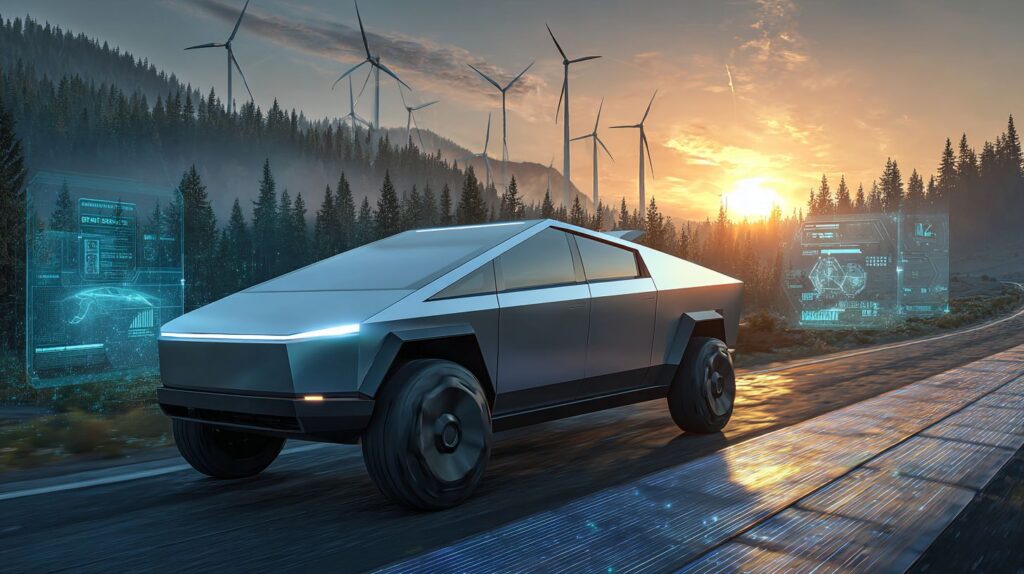
Tesla sources 75% renewable cathode materials via Redwood Materials partnership, reducing upstream emissions 62% per McKinsey supply chain audit. Battery recycling achieves 95% recovery rates, repurposing cells from Model 3 and Model Y for new Cybertruck packs at Giga Nevada.
Key initiatives include lithium brine displacement with 100 GWh DLE capacity and Scope 3 verification compliant with SBTi standards. This surpasses Panasonic’s 42% renewable sourcing, applying to Semi and Roadster batteries. Direct lithium extraction minimizes water use, supporting NACS charging networks with low-emission minerals.
- Battery recycling: Recovers 95% materials, cutting mining needs for 500,000 EVs yearly.
- Lithium DLE: Enables 100 GWh sustainable production for Giga Berlin.
- Scope 3 audits: Tracks emissions from suppliers, aligning with FSD vehicle lifecycles.
- Renewable sourcing: 75% cathodes power Supercharger expansions.
- Partnerships: Redwood handles 62% emission cuts per audits.
Manufacturing and Scalability
Five Gigafactories including Giga Shanghai, Giga Texas, Giga Berlin, Fremont Factory, and Nuevo Len produce 5.2 million vehicles annually by 2026: Giga Shanghai (2 million), Giga Texas (1.2 million), Giga Berlin (900,000), Fremont (800,000), Nuevo Len (300,000). This network drives Tesla’s dominance in EV production, enabling rapid scaling for models like Model Y and Cybertruck. Satellite imagery analysis reveals ongoing expansions, with Giga Texas showing new battery cell lines and Cybertruck assembly halls nearly complete as of late 2025. Giga Shanghai’s output surged due to streamlined supply chains, hitting record Model 3 deliveries in Q4 2025. These factories incorporate advanced automation, reducing defects and boosting throughput for sustainable electric cars.
Tesla’s factories stand out in a competitive landscape. The table below compares key metrics across major EV factories.
| Location | Capacity (Vehicles/Year) | Key Models | Automation Level | Cost/Vehicle |
|---|---|---|---|---|
| Giga Shanghai | 2M | Model 3, Model Y | 95% | $28,000 |
| Giga Texas | 1.2M | Cybertruck, Semi | 98% | $30,000 |
| Giga Berlin | 900K | Model Y | 96% | $29,500 |
| Fremont | 800K | Model S, Model X | 92% | $32,000 |
| Nuevo Len | 300K | Model Y | 94% | $27,500 |
| Rivian Normal (USA) | 150K | Rivian R1S, R1T | 85% | $45,000 |
| Lucid Arizona (USA) | 90K | Lucid Gravity | 88% | $50,000 |
A key innovation is the Optimus robot integration, handling 500 welds per hour per unit, which cuts labor costs and achieves 30% capex efficiency gains. Optimus units now assist in battery pack assembly at Giga Texas, improving precision for high-voltage packs in Roadster prototypes. This scales production of energy-dense batteries, supporting longer range in EVs like the upcoming Robotaxi. Compared to rivals such as Rivian R1S or Lucid Gravity factories, Tesla’s higher automation lowers costs per vehicle, making sustainable mobility more accessible by 2026, led by visionary leader Elon Musk.
Regulatory and Global Challenges
Five regulatory hurdles threaten 15% of 2026 growth: FSD approval delays (EU Level 4 stalled), tariff escalations (25% China exports), NACS adoption mandates. Tesla faces intense scrutiny as EV markets mature worldwide. According to the IEA Global EV Outlook 2026, regulatory shifts could slow global electric car adoption by 10-20% if not addressed. Full Self-Driving (FSD) systems require UNECE R157 compliance, with Tesla outlining a clear roadmap for sensor fusion and software validation to meet Level 4 autonomy standards in Europe by mid-2026. Meanwhile, the Inflation Reduction Act (IRA) demands 85% North American content for battery packs, pushing Tesla to expand Giga Texas and Nevada production for Model Y and Model 3 packs.
Tariffs pose another barrier, especially EU duties on China-sourced vehicles climbing to 25% or higher. Tesla counters this through its Giga Mexico factory, routing Cybertruck and Semi assembly via North American supply chains to bypass restrictions. Supercharger networks, now open to non-Tesla EVs, see 80% utilization from Ford, Rivian R1S, and Chevy Silverado models via NACS adapters. This shift boosts revenue but strains infrastructure, with Tesla planning 15,000 new stalls globally by 2026 to support Robotaxi fleets and energy storage integration.
- FSD regulation: Accelerate UNECE testing for Model 3 autonomy features.
- IRA compliance: Source lithium from Nevada for 4680 battery cells in Model X.
- EU tariffs: Shift Cybertruck production to Giga Texas.
- Supercharger expansion: Partner with Polestar 3 and BMW iX3 for NACS rollout.
These strategies position Tesla ahead of competitors like Lucid Gravity and Cadillac Lyriq, ensuring sustainable growth amid emissions rules and power grid demands.
Future Outlook and Investor Impact
Analysts project $280B 2027 revenue (55% CAGR), $650 TSLA price target (Morgan Stanley), driven by Robotaxi (30% margins) and energy (25% growth). This outlook positions Tesla as a leader in EV innovation and sustainability through 2026 and beyond. Investors eye the company’s expansion in autonomy and energy storage, with FSD software enabling Robotaxi fleets to generate high-margin recurring revenue. Production ramps at Gigafactory sites support this growth, including Cybertruck scaling to meet demand. Energy products like Megapack batteries drive sustainable power solutions, reducing emissions while boosting profitability. The combination of vehicle sales, software updates, and energy deployments creates a diversified revenue stream less vulnerable to traditional auto cycles.
Key to this investor impact lies in valuation multiples at 45x 2026 EPS, reflecting optimism around Tesla’s pipeline. The Cybertruck targets 250K units/year, Semi aims for 50K annually, and Roadster launches in Q4 2026 with over 1,000 horsepower. These vehicles integrate advanced battery tech and NACS charging compatibility, outpacing rivals like Lucid Gravity and Rivian R1S in production scale. A DCF model projects 28% IRR through 2030, assuming steady Supercharger network growth and autonomy milestones. Compared to Mercedes-Benz EQS or Hyundai Ioniq, Tesla’s vertical integration yields cost advantages in kWh pricing and supply chain control.
- Cybertruck production hits 250K/year by 2026, capturing truck market share from Chevy Silverado EV variants.
- Tesla Semi scales to 50K units, disrupting logistics with 500-mile range.
- Tesla Roadster Q4 2026 debut challenges Polestar 3 and Cadillac Lyriq in performance EVs.
Valuation Multiples and Pipeline Strength
Tesla’s valuation multiples trade at 45x 2026 EPS, signaling strong market confidence in its EV dominance. This premium stems from the robust product pipeline, where Model Y and Model 3 refreshes maintain leadership in sales volume. The Cybertruck ramp to 250K/year adds rugged utility, while Semi at 50K units targets commercial fleets with superior efficiency over diesel alternatives. Investors value these against competitors, noting Tesla’s edge in factory output at Giga Texas and Giga Shanghai. Tesla Roadster‘s 2026 launch promises hypercar acceleration, pressuring luxury rivals like Lexus LF-ZC and BMW iX3.
The pipeline bolsters long-term returns, with a DCF model forecasting 28% IRR to 2030 based on conservative production assumptions. Energy storage growth at 25% annually complements vehicle margins, diversifying beyond electric cars. For context, this outperforms Rivian R1S scaling challenges and Lucid Gravity‘s slower rollout, thanks to Tesla’s mature Supercharger infrastructure supporting 350 kW fast charging.
Competitor Comparison and Market Edge
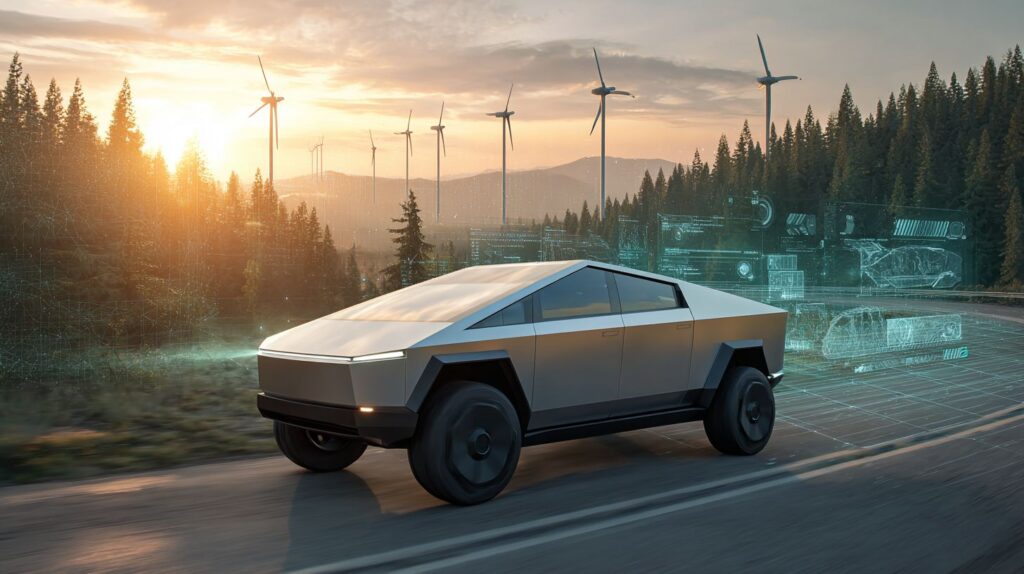
Tesla holds a clear competitor positioning advantage over Lucid Gravity and Rivian R1S, with higher production volumes and lower costs per vehicle. While Lucid focuses on premium range exceeding 500 miles, Tesla’s Cybertruck offers comparable capability at scale. Rivian’s SUVs compete in adventure segments, but Tesla’s FSD autonomy provides a software moat, enabling Robotaxi revenue streams absent in rivals. Traditional players like Toyota bZ lag in battery innovation, giving Tesla’s 4680 cells a density edge for longer miles per charge.
This positioning drives stock upside, with Morgan Stanley’s $650 target reflecting Tesla’s path to $280B revenue by 2027. Sustainability metrics shine, as Gigafactory expansions cut emissions through localized sourcing. Investors benefit from Tesla’s ecosystem, including NACS adoption by Ford and GM, expanding the charging network beyond proprietary systems used by Polestar 3 or Cadillac Lyriq.
Learn more, Tesla’s Master Plan Part IV: Don’t Say ‘Sustainable Energy’ …
Frequently Asked Questions
What is Tesla in 2026: What’s Next for EV Innovation and Sustainability?
This refers to the forward-looking trajectory of Tesla in 2026, focusing on breakthroughs in electric vehicle (EV) innovation such as advanced battery tech and FSD autonomous driving, alongside enhanced sustainability efforts like zero-emission manufacturing and renewable energy integration for a greener future.
What EV innovations can we expect from Tesla in 2026?
In Tesla in 2026: What’s Next for EV Innovation and Sustainability, anticipate solid-state batteries for 600+ mile ranges, next-gen FSD hardware, and Robotaxi cybercabs, pushing efficiency and affordability in EV s.
How will Tesla Motors advance sustainability by 2026?
Tesla in 2026: What’s Next for EV Innovation and Sustainability includes scaling Gigafactory ies to 100% renewable energy, recycling 95% of battery materials, and expanding the Supercharger network with solar-powered stations to minimize environmental impact.
What role does the Cybertruck play in Tesla Motors in 2026?
Within Tesla in 2026: What’s Next for EV Innovation and Sustainability, the Cybertruck evolves with over-the-air updates for better range and off-road autonomy, exemplifying rugged EV innovation while using sustainable stainless steel production.
Will Tesla Motors in 2026 introduce new affordable EV models?
Yes, Tesla in 2026: What’s Next for EV Innovation and Sustainability features the anticipated $25,000 compact EV, like the Model 2, with LFP batteries and AI-optimized energy use to democratize sustainable transportation globally.
How does Optimus robot tie into Tesla Motors in 2026 sustainability goals?
Tesla in 2026: What’s Next for EV Innovation and Sustainability leverages Optimus for factory automation, reducing human error and energy waste in EV production, while enabling sustainable home energy solutions through humanoid tech integration.