Server tech is evolving fast to handle the massive AI workloads hitting data centers today. In this look at 2026, you’ll see how energy efficiency and advanced cooling solutions like liquid systems are making massive scale possible without the huge power bills. It’s practical stuff for anyone planning ahead.
Table of Contents
Key Takeaways:
- AI workloads propel server evolution with specialized accelerators and hybrid CPU-GPU-NPU architectures, optimizing performance for massive data processing by 2026.
- Energy efficiency surges via sub-1nm nodes and advanced power management, slashing consumption amid rising AI demands in hyperscale data centers.
- Hyperscale trends favor liquid cooling, modular racks, and CXL 3.0 memory pooling, enabling sustainable, scalable server ecosystems for future growth.
AI Workloads Driving Server Evolution
AI workloads are reshaping data center servers with demands for unprecedented compute power and specialized processing. Training and inference tasks require parallel processing and high throughput to handle massive datasets efficiently. This shift pushes server designs toward hardware optimized for matrix operations and low-latency responses.
Hyperscalers lead this evolution by adopting GPU-heavy architectures in their facilities. Companies like Google and Microsoft integrate thousands of GPUs per rack to support AI-driven growth. These setups address the rising power demand from AI training while aiming for better energy efficiency.
Server evolution now focuses on scalability and sustainability amid infrastructure constraints. Operators face challenges like electrical grid limits and thermal management in high-density environments. Innovations in modular designs help balance compute needs with environmental impact.
Looking to 2026, expect continued emphasis on energy-efficient servers that reduce carbon emissions. Trends point to hybrid systems combining traditional components with AI accelerators for versatile AI-driven workloads. This prepares data centers for the next wave of inference and training demands.
Specialized AI Accelerators
Dedicated AI accelerators like NVIDIA GPUs and Google TPUs deliver massive parallel processing tailored for deep learning models. These chips excel in matrix multiplication workloads critical for neural networks. Hyperscalers deploy them at scale to accelerate training times and training speeds.
GPUs offer flexible programming via CUDA for diverse AI tasks. TPUs provide custom silicon optimized for TensorFlow, reducing latency in large-scale models. IPUs from Graphcore emphasize graph-based processing for efficient data flow in complex computations.
| Feature | NVIDIA H100 | NVIDIA A100 |
|---|---|---|
| Memory Capacity | Higher bandwidth HBM3 | HBM2e |
| Training Throughput | Improved for large models | Solid baseline performance |
| Power Efficiency | Advances in FP8 precision | Strong in FP16 tasks |
| Interconnect Speed | NVLink 4.0 faster | NVLink 3.0 capable |
- Plan for high-density racks with adequate cooling like liquid systems to manage heat.
- Ensure robust power infrastructure supports peak electricity demands.
- Test integration with existing data center networks for low-latency scaling.
- Monitor PUE to align with sustainability goals in deployments.
Hybrid CPU-GPU-NPU Architectures
Modern servers combine CPUs, GPUs, and Neural Processing Units (NPUs) to optimize diverse AI workloads from training to edge inference. This hybrid approach balances general compute with specialized acceleration. Examples include AMD Instinct MI300 series for high-memory bandwidth and Intel Gaudi for cost-effective scaling.
Hybrid designs improve resource utilization across AI-driven tasks. CPUs handle orchestration, GPUs tackle heavy training, and NPUs speed up inference at the edge. This setup reduces bottlenecks in mixed workloads common in hyperscaler facilities.
To integrate effectively for deployment, follow these steps:
- Assess workload patterns to allocate CPU for preprocessing and GPU for core compute.
- Select compatible hardware like AMD EPYC CPUs paired with MI300 GPUs.
- Configure software stacks such as ROCm for unified management.
- Validate with benchmarks targeting performance and power draw.
Common pitfalls include thermal throttling in high-density setups. Mitigate by deploying liquid cooling and heat recovery systems. Optimize firmware for balanced loads to avoid energy waste and support renewable grid integration.
Energy Efficiency Breakthroughs
Data centers face skyrocketing power demand, making energy efficiency breakthroughs essential for sustainable AI infrastructure scaling. AI growth drives massive electricity consumption, pushing operators to address grid constraints and environmental impact. Hyperscalers now prioritize innovations that cut power use without sacrificing performance.
Process node advancements like sub-1nm fabrication lower energy per computation. These shifts improve Power Usage Effectiveness (PUE) by reducing waste heat and enabling denser racks. Industry leaders target PUE below 1.1 through such tech.
Power management innovations complement hardware gains with software controls. Trends include liquid cooling integration and AI-driven optimization for training and inference workloads. This supports scalable, high-density facilities amid rising power demand.
Operators invest in renewable energy and heat recovery to shrink carbon footprints. Modular designs at the edge further boost efficiency. These steps ensure sustainability as AI compute needs expand.
Sub-1nm Process Nodes
TSMC’s 2nm and Intel’s Angstrom-era processes enable chips with lower power consumption at same performance levels. Moving from 7nm to 5nm, then 3nm and 2nm, shrinks transistors for better efficiency in AI accelerators. Transistor density rises, packing more compute into less space.
These nodes cut power draw for GPUs handling heavy workloads. For example, inference tasks run cooler with finer nodes, easing thermal management. High-density racks benefit from reduced electricity needs per operation.
Roadmaps point to sub-1nm deployment around 2026 and beyond. Real semiconductor plans from TSMC and Intel outline this path for data center chips. Experts recommend early adoption to meet AI growth pressures.
Facilities gain from scalability in edge and core infrastructure. Pairing with liquid cooling handles heat from dense deployments. This drives sustainability in power-hungry environments.
Advanced Power Management
Dynamic voltage frequency scaling and chiplet-based power domains reduce idle power consumption by optimizing server utilization. These techniques adjust voltage and clock speeds based on real-time demands. AI workloads see direct gains in efficiency.
Key methods include fine-grained power gating, which shuts off unused sections, and workload-aware power capping to prevent overloads. Tools like Intel RAPL and NVIDIA DCGM monitor usage precisely. Operators use them for granular control in hyperscale facilities.
Implement power management policies with these steps:
- Assess current PUE and baseline power draw across servers.
- Deploy monitoring tools like RAPL for CPU and DCGM for GPUs.
- Set policies for DVFS and gating tied to AI training or inference loads.
- Test under peak conditions, then scale to full data center operations.
This approach minimizes emissions and supports renewable integration. Practical for modular data centers edge setups, it addresses bottlenecks in electrical infrastructure. Sustainability improves as facilities handle growing compute demands.
Hyperscale Infrastructure Trends
Hyperscalers are deploying next-generation infrastructure to handle AI’s extreme density and scalability requirements. These setups target 100kW+ racks driven by GPU-heavy training and inference workloads. Cooling innovations and modular designs now address power demand and thermal constraints in data centers.
Liquid cooling leads the shift from traditional air systems, enabling higher rack densities without grid bottlenecks. Modular deployment trends allow rapid scaling for fluctuating AI compute needs. Operators focus on sustainability through heat recovery and renewable energy integration.
Hyperscale facilities emphasize energy efficiency and reduced emissions. Pre-fabricated units support edge data centers AI expansion, cutting deployment timelines from years to months. This evolution meets growing resource demands while managing environmental impact.
Trends highlight investments in high-density infrastructure for AI-driven growth. Facilities now prioritize PUE improvements and water usage optimization. These changes position hyperscalers for scalable, efficient operations in 2026.
Liquid Cooling Dominance
Liquid cooling systems now handle 100kW+ rack densities that air cooling cannot support, becoming standard for AI data centers. Air cooling struggles with high thermal loads from GPUs, leading to hotspots and inefficiency. Direct-to-chip and immersion methods transfer heat more effectively, supporting dense compute environments.
| Cooling Type | Description | PUE Impact |
|---|---|---|
| Air Cooling | Traditional fans and CRAC units | Higher PUE due to fan energy |
| Direct-to-Chip | Coolant targets CPU/GPU | Lower PUE, precise cooling |
| Immersion | Server submersion in dielectric fluid | Lowest PUE, max density |
Microsoft and Google lead hyperscaler adoption of liquid cooling for AI workloads. Vendors like PowerOne(tm) and AIRSYS provide retrofit solutions. Deployment follows a 6-12 month timeline: assess racks, install manifolds, test loops, then scale.
Maintenance best practices include regular fluid checks, leak detection sensors, and filter replacements. Heat recovery systems repurpose waste energy for facility heating, boosting sustainability. Experts recommend phased retrofits to minimize downtime in live facilities.
Modular Rack Designs
Pre-fabricated modular racks enable rapid deployment of AI compute capacity in weeks rather than years. These units arrive factory-assembled with integrated power, cooling, and networking for hyperscale expansion. They suit edge AI where traditional builds face delays.
Hyperscalers use modular data centers for quick scaling, such as Google’s portable units for remote AI-driven inference. Advantages include plug-and-play installation and easy upgrades for fluctuating workloads. Scalability supports bursty AI training demands without overprovisioning.
Procurement checklist:
- Verify rack power rating for 100kW+ GPUs
- Confirm liquid cooling compatibility
- Assess transport and site prep needs
- Review vendor support for integration
Integration guide: Align with existing facilities by matching electrical feeds and network fabrics, then test under load. Modular designs reduce carbon footprint through efficient resource use. They address electrical constraints and promote renewable grid ties for long-term growth.
Memory and Storage Revolution
AI models with trillions of parameters demand memory architectures that break traditional server limitations. Large language models face severe memory bottlenecks during training and inference, as standard DRAM capacities fall short for handling massive datasets in data centers.
Disaggregated memory solutions address this by enabling efficient resource sharing across AI workloads. Servers can pool memory from multiple nodes, enabling efficient resource sharing and supporting scalable AI training clusters.
This shift improves energy efficiency and lowers the environmental impact of high-density compute. Hyperscalers deploy these systems to manage growing power demand while optimizing infrastructure for GPU-heavy tasks.
Storage innovations complement memory pooling, integrating fast NVMe fabrics for seamless data access. Operators gain flexibility to handle diverse workloads, from inference at the edge to large-scale training.
CXL 3.0 Memory Pooling
Compute Express Link 3.0 enables memory pooling across servers, providing terabytes of shared capacity for AI training clusters. Operating at 64GT/s, it delivers twice the bandwidth of prior versions, crucial for disaggregated architectures in modern data centers.
The architecture connects CPUs, GPUs, and memory devices over a single fabric. A typical setup includes a central pool where idle DRAM from one server supports compute-intensive nodes, minimizing bottlenecks in high-density environments.
- Intel Sapphire Rapids processors support full CXL 3.0 caching and switching protocols (Supercomputing Center).
- AMD Genoa CPUs integrate CXL for memory expansion in EPYC-based systems.
- Early adopters pair these with NVIDIA GPUs for unified memory access in AI workloads.
Real-world deployments show reduced latency in multi-node training, with performance gains in memory-bound tasks. Experts recommend starting with modular racks for gradual rollout, ensuring compatibility with existing cooling infrastructure and GPU power management.
Sustainable Server Ecosystems
Data center operators integrate renewable energy, heat recovery, and circular design principles to minimize environmental impact. These efforts address the growing power demand from AI workloads. Operators focus on reducing emissions while maintaining high performance.
Hyperscalers lead with real initiatives like Google’s DeepMind AI for cooling optimization and Microsoft’s underwater data centers. These projects recover waste heat for district heating. They also invest in liquid cooling to handle high-density GPU racks.
PUE optimization tools help track energy use effectiveness in real time. Facilities adopt modular designs for easier upgrades. This supports scalability amid rising AI training and inference needs.
Right-to-repair policies encourage circular economy practices in server hardware. Carbon accounting tracks the full lifecycle footprint. These steps build resilient infrastructure against resource constraints.
Renewable Integration Strategies
Hyperscalers secure renewable energy through long-term power purchase agreements with solar and wind farms. This matches the intermittent nature of renewables with data center power demand. Backup systems ensure reliability during grid fluctuations.
AI-driven forecasting tools predict energy needs for training workloads. Operators shift non-urgent tasks to off-peak renewable hours. Edge facilities tap local solar arrays to cut transmission losses.
Hybrid setups combine on-site batteries with grid ties. This stabilizes supply for high-density compute. Investments grow as electricity costs rise with AI expansion.
Waste Heat Recovery Systems
Heat recovery systems capture server exhaust for heating nearby buildings or greenhouses. Hyperscalers like Amazon deploy these in cold climates. This turns waste into a resource, reducing thermal pollution.
Liquid cooling enables efficient heat extraction from GPUs. Immersion systems transfer warmth directly to external loops. Operators pipe recovered heat to industrial processes.
Modular recovery units scale with facility growth. They lower overall energy consumption by reusing what was once lost. This innovation addresses cooling bottlenecks in dense racks.
Right-to-Repair Policies and Circular Design
Right-to-repair policies allow easy access to server components for upgrades. This extends hardware life and cuts e-waste. Manufacturers design modular servers with standardized parts.
Circular principles promote reuse of GPU clusters and chassis. Refurbished gear meets edge deployment needs. Operators partner with recyclers for responsible end-of-life management.
These practices reduce raw material demands. They support sustainability amid rapid AI infrastructure growth. Facilities track GPU component lifecycles for better planning.
Carbon Accounting and PUE Optimization
Carbon accounting measures emissions across the supply chain, from chip production to operations. Tools provide dashboards for real-time insights. This guides decisions on greener vendors.
PUE optimization uses sensors and AI-driven analytics to fine-tune cooling efficiency. Hyperscalers reference benchmarks from Open Compute Project. Adjustments target water and electricity savings.
Regular audits ensure progress toward net-zero goals. Integrated software manages environmental impact data. This prepares facilities for regulatory demands (International Energy Agency).
Step-by-Step Sustainability Roadmap for AI Facilities
- Assess baseline: Audit current PUE, water use, and carbon footprint. Identify high-impact areas like GPU cooling.
- Integrate renewables: Secure PPAs and install on-site solar. Add batteries for grid independence.
- Deploy heat recovery: Retrofit racks with liquid cooling and piping for external use. Test with pilot zones.
- Adopt circular practices: Implement right-to-repair and modular designs. Partner for hardware recycling.
- Optimize and monitor: Roll out PUE tools and carbon tracking. Review quarterly for improvements.
- Scale sustainably: Expand with pre-vetted green suppliers. Train staff on best practices.
This roadmap builds scalable sustainability into AI facilities. It balances growth with efficiency. Operators achieve lower costs and compliance over time.
Frequently Asked Questions
What is “The Future of Server Technology in 2026: AI Workloads, Energy Efficiency & Scale” about?
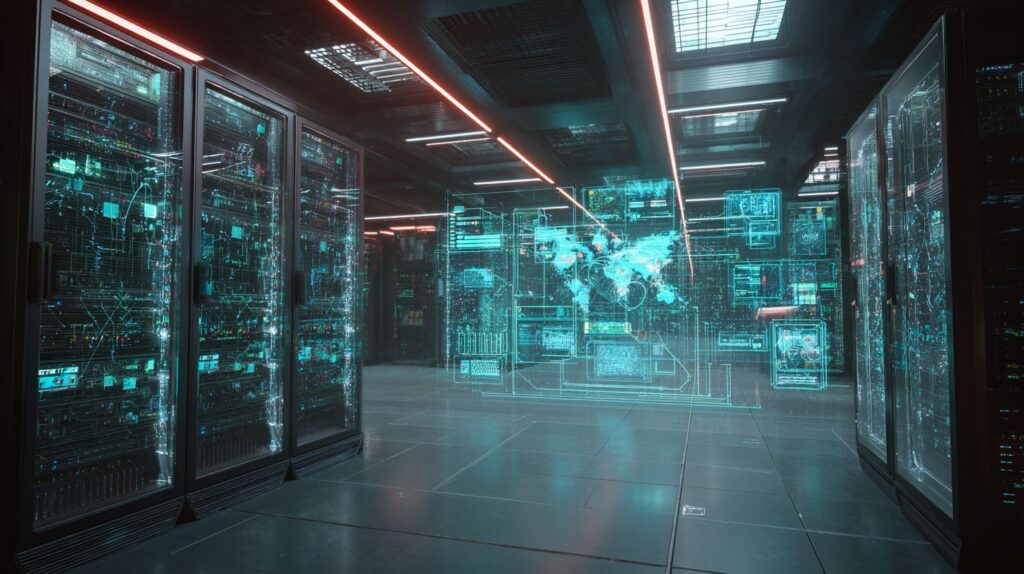
It refers to the anticipated advancements in server hardware and infrastructure by 2026, focusing on optimizing for massive AI workloads, improving energy efficiency to reduce PUE and power consumption, and enabling massive scale for data centers handling exabyte-level data processing (Deloitte, Goldman Sachs).
How will AI workloads shape the future of server technology in 2026?
In “The Future of Server Technology in 2026: AI Workloads, Energy Efficiency & Scale”, AI workloads will drive servers with specialized GPUs, TPUs, and neuromorphic chips, supporting trillion-parameter models and real-time inference at unprecedented speeds for applications like autonomous systems and generative AI (Morgan Stanley, MIT Lincoln Laboratory, Vijay Gadepally).
What innovations in energy efficiency are expected in server technology by 2026? (MarketsandMarkets, McKinsey & Company)
“The Future of Server Technology in 2026: AI Workloads, Energy Efficiency & Scale” highlights liquid cooling, photonic interconnects, and advanced GPU-based power management chips that could cut data center energy use by 40-50% and improve PUE, with servers achieving over 50% efficiency gains through carbon-neutral designs and waste heat recovery.
How will server scale evolve to meet demands in 2026? Insights from MIT Lincoln Laboratory and Vijay Gadepally
Regarding “The Future of Server Technology in 2026: AI Workloads, Energy Efficiency & Scale”, scale will expand via hyperscale architectures with millions of interconnected nodes powered by high-performance GPUs, disaggregated memory pools, and edge-to-cloud continuum, enabling seamless handling of petascale AI-driven training clusters.
What role does sustainability play in the future of server technology in 2026? According to the International Energy Agency and Supercomputing Center
In “The Future of Server Technology in 2026: AI Workloads, Energy Efficiency & Scale”, sustainability is central, with servers incorporating recyclable materials, PowerOne(tm) and AIRSYS cooling solutions, AI-optimized power capping, and renewable energy integration to minimize the environmental footprint of ballooning AI compute demands.
Which companies are leading “The Future of Server Technology in 2026: AI Workloads, Energy Efficiency & Scale”?
Key players driving “The Future of Server Technology in 2026: AI Workloads, Energy Efficiency & Scale”, as forecasted by MarketsandMarkets, McKinsey & Company, Deloitte, Goldman Sachs, and Morgan Stanley, include NVIDIA with AI accelerators, AMD for energy-efficient CPUs, Intel’s Gaudi chips, and hyperscalers like Google and AWS pioneering custom silicon for balanced workloads, efficiency, and massive scale.