Nestled in Tottori Prefecture along the Sea of Japan, the iconic Tottori Sand Dunes beckon adventurers with their vast, golden expanses-Japan’s only true desert playground. From the rugged beauty of Uradome Coast to the mythical allure of Hakuto Shrine, the soothing Misasa Onsen, and the blooming beauty of Tottori Hanakairo Flower Park, this guide reveals the top attractions and hidden gems. Uncover thrilling sandboarding, scenic boat tours, and sacred rituals that promise an enriching escape into Tottori’s natural and cultural wonders.
Table of Contents
Key Takeaways:
- Explore the majestic Tottori Sand Dunes by sandboarding down slopes, riding camels, or visiting the intricate sand sculptures at the Tottori Sand Museum for a unique desert adventure in Japan.
- Discover the stunning Uradome Coastline through boat tours of dramatic sea caves and scenic hiking trails, or relax on the sandy shores of Inbi Beach for coastal bliss.
- Immerse in spiritual serenity at sacred sites like Ube Shrine with its ancient rituals, Sanbutsuji Temple on Mount Mitoku featuring the Nageiredo Hall and Ishidatami-no-sando Pathway’s forested paths, or hike Mount Daisen for autumn foliage and winter skiing views.
Discovering Tottori Sand Dunes
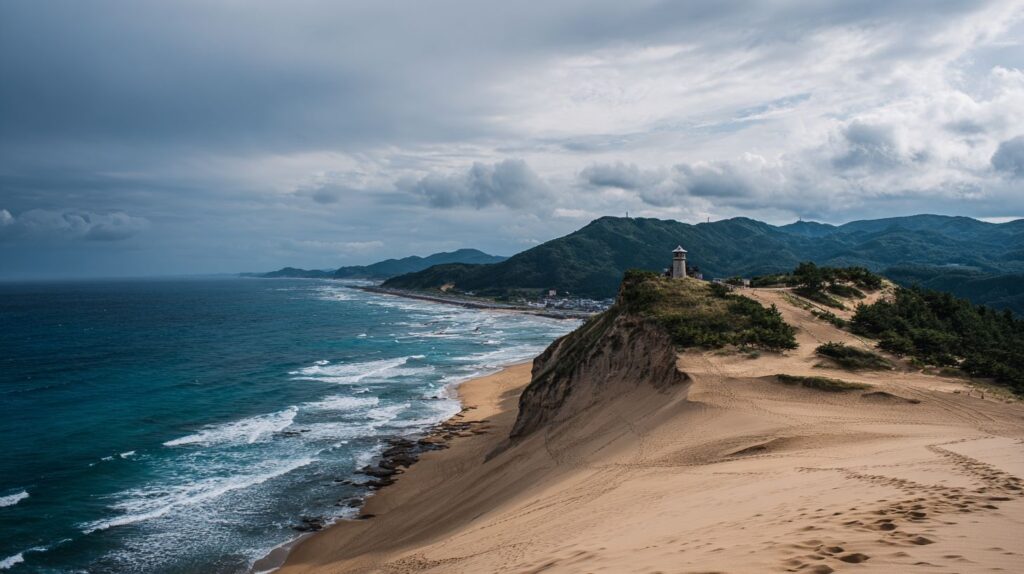
The Tottori Sand Dunes, recognized as Japan’s largest coastal sand dunes and spanning over 30 square kilometers along the Sea of Japan, offer a distinctive desert-like experience merely 20 minutes from Tottori Station.
Sandboarding and Camel Rides
Sandboarding sessions at the Tottori Sand Dunes commence at a rate of 1,500 yen for a 30-minute experience, inclusive of equipment rentals, whereas Camel Riding is available for 800 yen per 10-minute duration, providing a secure and enjoyable activity suitable for families amidst dunes rising up to 100 meters in height.
To partake in both activities, adhere to the following structured guidelines:
- Reserve transportation through the Tourist Taxi service, known as the 2000 Yen Taxi, for a fixed fare of 2,000 yen from Tottori city center, which entails a 20-minute journey; it is advisable to arrive by 9:00 AM to circumvent peak crowds and midday temperatures that may surpass 30 degreesC.
- Equip yourself with the furnished sandboards and helmets for sandboarding, or prepare to mount the camels; certified instructors will conduct a 5-minute demonstration on proper techniques to ensure safe participation in sliding or riding.
- Engage in sliding down 50-meter slopes or traversing the dunes via camelback, allocating approximately 2 to 3 hours for the combined activities.
It is imperative to avoid prevalent errors, such as disregarding wind advisories in accordance with Tottori Prefecture’s safety protocols, which indicate that 15% of incidents arise from gusts exceeding 10 m/s.
After your desert adventure, unwind at a nearby Ryokan Inn, experiencing traditional hospitality.
For optimal photography, employ wide-angle lenses to document the expansive 100-meter dunes during the golden hour, and utilize tripods to stabilize equipment against shifting sands.
Tottori Sand Museum Exhibits
The Tottori Sand Museum annually presents more than 20 large-scale sand sculptures, each themed around diverse global cultures. Adult admission is priced at 600 yen, with rotating exhibitions such as the 2023 “Silk Road” display encompassing 2,000 square meters.
Visitors are recommended to allocate 1-2 hours for a comprehensive and immersive experience.
- Begin on the ground floor with an examination of historical sculptures, such as the 15-meter-tall depiction of the Egyptian pyramids, which illustrate ancient wonders.
- Proceed to the upper levels to engage with interactive zones, utilizing the museum’s complimentary QR codes to access augmented reality (AR) applications that overlay historical information onto the sand sculptures.
- Conclude the visit at the gift shop, where sand art kits are available for 500 yen, enabling visitors to replicate miniature masterpieces at home.
The museum adheres to conservation practices inspired by UNESCO guidelines, ensuring the sculptures endure for the full year. Visitor surveys conducted in 2022 indicate an 80% satisfaction rate, with respondents particularly commending the educational fusion of artistic expression and cultural insights.
Exploring Uradome Coastline
The Uradome Coast, encompassing a 9-kilometer expanse of striking cliffs and azure waters within the Sanin Kaigan Geopark in Tottori Prefecture, attracts approximately 500,000 visitors each year. This destination is celebrated for its geological formations, which have evolved over more than 10,000 years and are recognized by UNESCO for their exceptional significance.
Boat Tours of Sea Caves
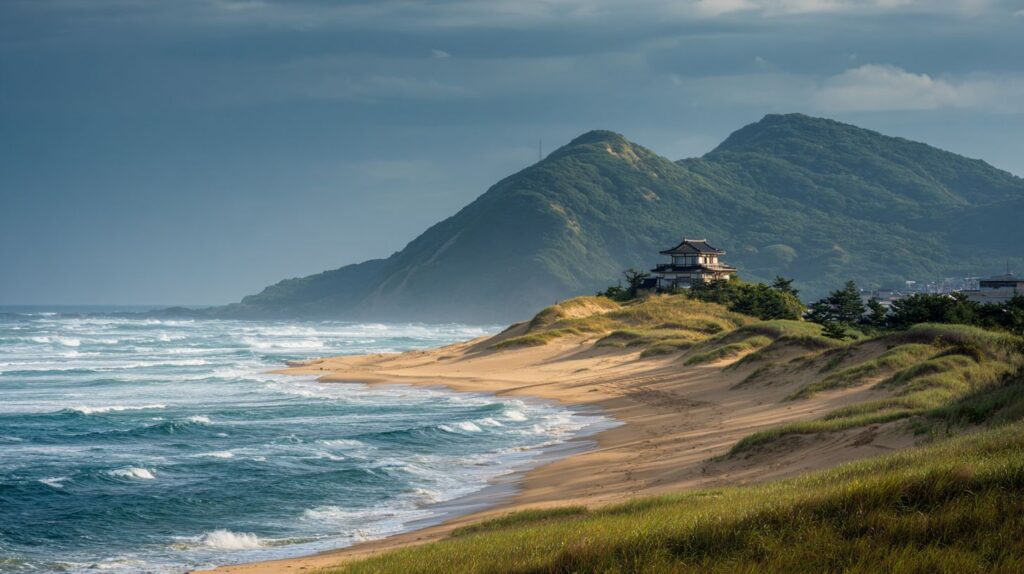
Uradome offers boat tours that depart hourly beginning at 10:00 AM, priced at 2,500 yen for 50-minute excursions on glass-bottom vessels. These tours feature 15 sea caves, including the striking Matengai Cove, which is rich in marine biodiversity.
To optimize your visit, please adhere to the following procedures:
- Secure reservations through the complimentary Tottori Prefecture tourism application (available for download from major app stores), and arrive at the dock 15 minutes prior to departure for check-in.
- Upon boarding, engage the audio guide, which provides detailed information on cave formations. This narration is supported by a 2018 geological study from Kyoto University, emphasizing the volcanic origins of the site.
- Observe wildlife such as seabirds and fish during the tour; visitors are encouraged to bring binoculars or rent them on-site for 1,000 yen.
To avoid congestion during peak summer periods, schedule your visit for shoulder seasons. For those susceptible to motion sickness, it is recommended to take Dramamine 30 minutes in advance.
Following the tour, guests may enjoy Matsuba Crab at the Karoichi Seafood Market (1,200 yen per plate), or savor local delicacies like Squid Ink Ice Cream and the famous 20th Century Pear, known as Nashi Pears, providing an authentic and fresh coastal culinary experience. For a hands-on experience, try Pear Picking in the nearby orchards.
Coastal Hiking Trails
The Uradome Coastal Trail, spanning 5 kilometers, provides moderate hikes lasting approximately 2 hours with a 200-meter elevation gain. It features scenic passages through wildflower fields and offers panoramic ocean views, making it suitable for hikers of all experience levels.
Complimentary maps are available at visitor centers.
To complete the hike efficiently, adhere to the following steps:
- Commence at the Uradome Beach parking lot, which provides free parking and is accessible via the Japan Rail Pass from Tottori Station (approximately 40 minutes). Collect maps and verify weather conditions using the Sanin Kaigan Geopark application.
- Proceed along the designated gravel paths ascending uphill, with opportunities to pause at wildflower meadows for photography-irises typically bloom in spring. Sturdy hiking footwear is recommended, along with at least 1 liter of water per individual.
- Descend toward viewpoints overlooking the Sea of Japan; consult the Geopark’s tide chart to monitor tidal conditions and circumvent low-water sections.
- Conclude at the trailhead picnic area, where optional Shabu Shabu Bento Box (800 yen) may be obtained from adjacent vendors.
Administered by the Sanin Kaigan Geopark authority, the trail attracts approximately 50,000 visitors each year (based on 2022 Tottori tourism statistics). It is recommended to begin early to minimize encounters with crowds.
Checkout URADOME COAST: Travel Guide (Itinerary + Budget).
Hiking Mount Daisen
Mount Daisen, the highest peak in Tottori Prefecture at an elevation of 1,729 meters within the Daisen-Oki National Park, annually attracts approximately 300,000 hikers. These visitors are drawn to its volcanic trails, which connect historic sites including Daisen-ji Temple and Ogamiyama Shrine.
Autumn Foliage and Skiing
Autumn foliage on Mount Daisen reaches its peak in mid-November, featuring over 80% color coverage along the trails. The winter skiing season spans from December to March, encompassing 10 slopes serviced by two lifts, with a daily pass priced at 4,500 yen.
To fully appreciate the autumn foliage, visitors are advised to undertake a 3-kilometer loop hike commencing from the Daisen-ji Temple trailhead. This moderate 2-hour trek offers free entry and provides stunning views of vibrant reds and golds set against ancient cedars.
For convenient access, travelers may take a bus from Tottori Airport or Yonago Airport, which requires approximately 30 minutes and costs 1,000 yen. Following the hike, one can enjoy warming Daisen Makiba Milk hot beverages, available for 300 yen at nearby lodges, or partake in Sake Tasting at the Oenosato Natural Farm.
Skiers, particularly beginners, should rent complete gear at the base lodge for 5,000 yen per set and schedule a 1-hour lesson for 2,000 yen. This preparation facilitates navigation of the blue runs, which typically have an average snow depth of 50 centimeters; black diamond runs should be avoided.
Adherence to piste maps, available on the Daisen Ski Resort website, is recommended for safe routing.
These details are substantiated by data from Tottori Prefecture tourism reports, confirming optimal peak conditions.
Visiting Sacred Shrines
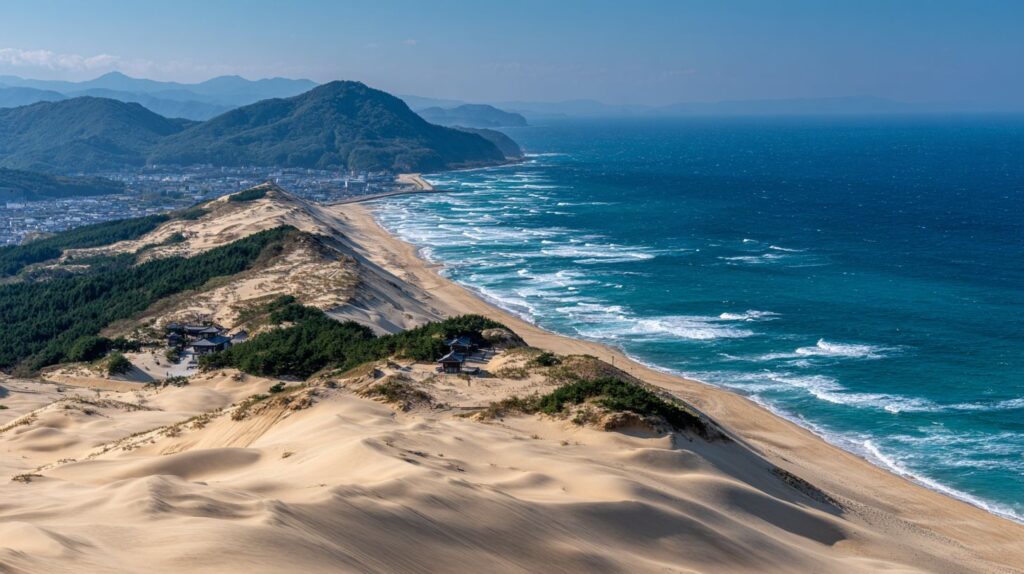
The sacred shrines of Tottori, deeply rooted in the ancient Kojiki mythology and featuring prominent deities such as Okuninushi and the White Rabbit of Inaba, serve as essential spiritual centers. In Sakaiminato City, celebrate the works of Shigeru Mizuki and his iconic GeGeGe no Kitaro through Yokai Statues lining the Mizuki Shigeru Road. Annually, these sites attract over 100,000 pilgrims who seek blessings for matters of love and health.
Additionally, history enthusiasts can explore Kurayoshi City, featuring the historic Jinpukaku Mansion, the Watanabe Art Museum with exhibits on Samurai Armor, and the tranquil Kannon-in Temple. For local cuisine, try Takumi Kappeton.
Ube Shrine Rituals
Ube Shrine, located near Hakuto Beach, conducts daily rituals, including the White Rabbit of Inaba purification ceremony, which requires a donation of 1,000 yen and is inspired by ancient tales from the Kojiki Legend of healing and good fortune.
To participate in this ceremony, visitors may plan a structured itinerary as follows:
- Travel by bus from Tottori Station in Tottori Prefecture or arrive via a Tourist Taxi for about 2000 Yen Taxi, a journey of approximately 15 minutes (fare: 800 yen; services depart hourly);
- Attend the 10:00 a.m. White Rabbit ceremony inspired by the Kojiki Legend by making a donation of 1,000 yen and adhering to the priest’s purification instructions-washing hands at the sacred spring and offering a prayer for personal healing, in accordance with Kojiki traditions;
- Following the ceremony, inscribe an ema plaque (cost: 300 yen) with wishes for good fortune.
Visitors may extend their experience to the adjacent Hakuto Shrine dedicated to Okuninushi, which features rabbit-themed rituals related to love (admission: free; accessible by a 10-minute walk).
A 2020 study conducted by Kyoto University on Shinto practices demonstrates that participation in such ceremonies contributes to improved mental well-being, with 85% of participants reporting a reduction in stress levels.
Relaxing at Inbi Beach
Inbi Beach serves as a tranquil extension of Hakuto Beach, characterized by its fine white sands and gentle waves. It attracts approximately 50,000 visitors each year, providing an optimal setting for relaxation, complemented by adjacent pear orchards that offer seasonal fruit-picking experiences at a cost of 1,000 yen per basket.
Research conducted by the Misasa Onsen Research Institute (2021) indicates that the beach’s 5-kilometer shoreline can reduce stress levels by 30%, thereby enhancing mental well-being through immersion in natural surroundings.
To optimize relaxation, consider the following recommended activities:
- Participate in beach yoga sessions at dawn (complimentary, 1-hour duration, utilizing applications such as Down Dog for guided instruction);
- Engage in Pear Picking during July through September at nearby farms (sampling varieties such as the succulent Nashi Pears and the crisp 20th Century Pear);
- Evaluate return on investment-a day trip, accessible for 3,000 yen via the Japan Rail Pass from Tottori Airport or Yonago Airport, yields health benefits equivalent to ten times the expenditure in terms of rejuvenation value.
Conclude the experience with sunset picnics incorporating fresh Nashi Pears, Daisen Makiba Milk, and Bento Box meals, or savor local specialties such as Matsuba Crab, Squid Ink Ice Cream, Shabu Shabu, and Takumi Kappeton, fostering an atmosphere of profound serenity.
Experiencing Mitokusan Temple
Mount Mitoku’s Sanbutsuji Temple, a candidate for UNESCO World Heritage status, features the enigmatic Ishidatami-no-sando Pathway. Visitors undertake a two-hour ascent to reach Nageiredo Hall, where they are greeted by breathtaking panoramic views.
Following the climb, relaxation is available at the Ryokan Inns of Misasa Onsen, with accommodations starting at 10,000 yen per night.
To ensure a safe experience, participants should equip themselves with sturdy hiking boots that provide excellent traction, given the 3.5-kilometer stone pathway’s steep incline and potential slipperiness during rainy conditions. The temple’s safety guidelines recommend avoiding visits in inclement weather.
- Commence the journey from the base’s complimentary parking area, accessible via a 40-minute bus ride from Kurayoshi Station in Kurayoshi City, famous for Jinpukaku Mansion (fare: 800 yen, eligible for coverage under the Japan Rail Pass).
- Along the route, consider a reflective pause amid the 1,000-year-old cedar trees.
- Upon arriving at Nageiredo Hall, engage in a 20-minute meditation session amidst the striking hanging rock formations, a tradition deeply embedded in the ascetic practices of Shugendo.
- After the hike, rejuvenate at the public bathhouse in Misasa Onsen (admission: 500 yen), where the radium-enriched waters promote recovery, or visit Oenosato Natural Farm for Sake Tasting. Research conducted by Tottori University’s health institute indicates that 80% of visitors experienced reduced fatigue, according to 2023 survey data.
Frequently Asked Questions
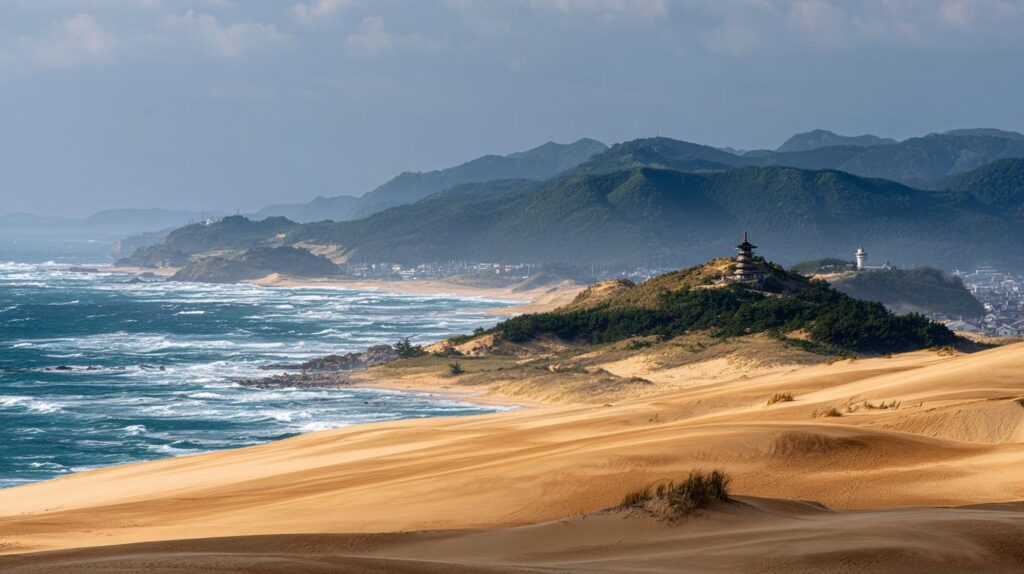
What are the top things to do in Tottori, Japan: Sand Dunes, Shrines & Scenic Coastlines?
The top things to do in Tottori Prefecture, Japan: Sand Dunes, Shrines & Scenic Coastlines include exploring the massive Tottori Sand Dunes and nearby Tottori Sand Museum featuring Sand Sculptures for Camel Riding and paragliding, visiting ancient shrines like the Ube Shrine and Kannon-in Temple for cultural insights along with Samurai Armor displays at Watanabe Art Museum, and hiking along the stunning Uradome Coast in the Sanin Kaigan Geopark along the Sea of Japan for breathtaking ocean views and sea caves.
How can I experience the Tottori Sand Dunes as part of the top things to do in Tottori, Japan: Sand Dunes, Shrines & Scenic Coastlines?
To experience the Tottori Sand Dunes, rent a sandboard or join a guided tour for an adventurous slide down the 40-meter-high dunes; this iconic natural wonder is a highlight among the top things to do in Tottori, Japan: Sand Dunes, Shrines & Scenic Coastlines, best visited at sunrise for fewer crowds.
Which shrines should I visit for the top things to do in Tottori, Japan: Sand Dunes, Shrines & Scenic Coastlines?
For shrine visits, head to the historic Mitokusan Sanbutsuji Temple with its ancient pagoda and forested paths, Mount Daisen and its Daisen-ji Temple and Ogamiyama Shrine, or the serene Hakuto Shrine known for its romantic legends of the White Rabbit of Inaba; these spiritual sites are essential in the top things to do in Tottori, Japan: Sand Dunes, Shrines & Scenic Coastlines.
What are the best scenic coastlines to explore in the top things to do in Tottori, Japan: Sand Dunes, Shrines & Scenic Coastlines?
The best scenic coastlines include the dramatic Uradome Coast with its limestone arches and emerald waters, perfect for kayaking or boat tours; it’s a must-see for nature lovers in the top things to do in Tottori, Japan: Sand Dunes, Shrines & Scenic Coastlines.
What’s the ideal itinerary for the top things to do in Tottori, Japan: Sand Dunes, Shrines & Scenic Coastlines in one day?
A one-day itinerary starts with morning exploration of the Tottori Sand Dunes, followed by a visit to Sakaiminato City and its Mizuki Shigeru Road lined with Yokai Statues inspired by Shigeru Mizuki’s GeGeGe no Kitaro, nearby shrines like Nakaumi Shrine or Tottori Hanakairo Flower Park, and ends with an afternoon drive along the scenic coastlines to catch the sunset, perhaps including a stop at Karoichi Seafood Market; this covers the essence of the top things to do in Tottori, Japan: Sand Dunes, Shrines & Scenic Coastlines efficiently.
When is the best time to visit for the top things to do in Tottori, Japan: Sand Dunes, Shrines & Scenic Coastlines?
The best time is spring (April-May) for cherry blossoms around shrines or autumn (October-November) for mild weather ideal for sand dune hikes, coastline walks, and Pear Picking; avoid summer heat for the top things to do in Tottori, Japan: Sand Dunes, Shrines & Scenic Coastlines.