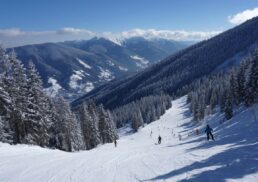
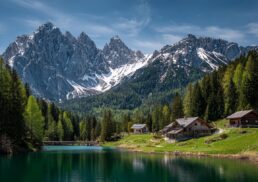
Discover the timeless allure of Tyrol, a paradise of jagged mountains and medieval castles that captivate every traveler. Spanning Austria’s Tyrol and Italy’s enchanting South Tyrol, this region offers unparalleled hiking adventures amid the Zillertal Alps, including routes to mountain lakes and the Zugspitze, and cultural immersion in bustling Innsbruck. Our curated top 10 list reveals must-see experiences, from glacier treks to alpine thrills, including cycling tours and visits to ski resorts, ensuring your itinerary blends nature, history, and excitement seamlessly, with time for local dishes such as speck and apfelstrudel, relaxation at wellness resorts, and a visit to the open-air museum.
Table of Contents
Key Takeaways:
- Explore Tyrol’s majestic mountains through hikes like the Stubai Glacier and Zillertal Alps, offering breathtaking alpine views and invigorating trails for nature enthusiasts.
- Delve into history at iconic castles such as Ambras and Fgen, where medieval architecture and royal tales transport visitors back in time.
- Thrill-seekers can conquer alpine adventures, from skiing in Ischgl and snowboarding in Slden to paragliding over Innsbruck’s stunning landscapes.
- Discover cultural gems like the christmas markets in Merano and Bolzano, where you can enjoy glhwein, and explore connections to dante’s inferno and Ezra Pound at Brunnenburg Castle.
Mountains and Hiking Trails

The mountains of Tyrol, encompassing regions in both Austria and South Tyrol, feature over 500 kilometers of well-marked hiking trails. These attractions draw approximately 2.5 million visitors annually, according to data from Tirol Werbung.
Stubai Glacier Hike
The Stubai Glacier Hike is a 10 km intermediate trail situated at an elevation of 3,000 meters, offering breathtaking vistas of perennial ice fields. The round-trip duration is approximately 4 to 5 hours, making it particularly suitable for summer adventurers.
To undertake the hike safely, adhere to the following numbered guidelines:
- Commence at the Mutterbergalm cable car station, accessible via a EUR40 round-trip ticket from Neustift, and ascend to 2,900 meters in about 20 minutes.
- Proceed along the designated blue trail through alpine meadows, where edelweiss may be observed; refrain from picking these plants to preserve biodiversity in accordance with EU Natura 2000 regulations.
- Arrive at the glacier viewpoint at 3,210 meters (after 1 to 2 hours); maintain hydration with at least 2 liters of water to mitigate the risk of altitude sickness.
- Descend via the alternative route to Eisgrat, affording glimpses of ice caves (1 to 2 hours).
The total estimated time, including breaks, is 5 hours.
Essential equipment includes:
- Crampons (available for EUR15 rental)
- Trekking poles
A family of four successfully completed the hike, as documented on AllTrails, expending approximately 1,200 calories in the process. It is noteworthy that a 2019 study by the Austrian Alpine Club indicates an annual glacier melt of 2 meters, attributable to climate change.
Zillertal Alps Trek
This multi-day trek spans 25 kilometers across the Zillertal Alps, near the border with South Tyrol, encompassing a diverse range of terrain from meadows to peaks and involving an elevation gain of 1,500 meters over 2 to 3 days.
The following outlines a recommended 3-day itinerary for a successful expedition:
- Day 1: Depart via a EUR10 bus from Mayrhofen (approximately 1 hour journey) to the Berliner Hhenweg trailhead, followed by an 8-kilometer hike to the Schlegeisalm hut, where overnight camping is available for EUR50 per night (reservations can be made through the Alpine Club application).
- Day 2: Ascend 12 kilometers (approximately 6 hours) to Furtschaglhaus, with opportunities to observe chamois amid the alpine meadows.
- Day 3: Descend along the Valletta path to Lago di Braies in the Dolomites, employing fixed ropes to traverse steep sections, with opportunities to extend to the Tre Cime di Lavaredo and explore Val Venosta along the Adige River.
Preparation recommendations include:
- Engaging in weekly training hikes of 10 kilometers to build endurance.
- Ensuring comprehensive rain gear is included in your packing list, given that Tyrol experiences an average of 150 rainy days annually (according to ZAMG data).
- Noting that a 2022 TripAdvisor report highlighted sightings of rare alpine ibex, which significantly enhance the wildlife observation aspects of the trek.
Castles and Historical Sites
Tyrol and South Tyrol are home to over 100 medieval castles, including Kufstein Castle, Tyrol Castle in Dorf Tirol, Runkelstein Castle, Reifenstein Castle, Trostburg Castle, Haderburg Castle, Lebenberg Castle, and Churburg Castle, which serve as enduring remnants of the Counts of Tyrol’s governance dating back to the 12th century. According to records from the South Tyrolean Museum, these historic sites draw approximately one million history enthusiasts annually. Nearby, marvel at Swarovski Crystal Worlds or the open-air museum for a modern twist on regional heritage.
Ambras Castle Tour
Ambras Castle, located near Innsbruck and recognized as a Renaissance masterpiece of the Habsburg dynasty constructed in 1567, provides guided tours for EUR12. These tours encompass 4,000 artifacts, including the portrait gallery of Ferdinand II, and last 90 minutes.
For greater flexibility, visitors may choose self-guided exploration or the EUR3 audio tour available through the Ambras app, which provides narration of significant historical details-particularly suitable for customizing the pace of one’s visit among the 300,000 annual visitors and the 85% satisfaction rate reported on TripAdvisor. The recommended itinerary includes the following steps:
- Enter the Spanish Hall to view the 16th-century frescoes (photography is permitted without flash);
- Examine the Chamber of Art and Curiosities, which houses medieval armor associated with the 14th-century minnesinger Oswald von Wolkenstein;
- Proceed to the Chamber of the Arcane to observe exhibits related to alchemy.
The collection assembled by Ferdinand II in 1580, as documented in Habsburg archives, served as an inspiration for museums across Europe. To mitigate summer crowds, it is advisable to visit on Tuesdays before 10 AM.
The castle underwent restoration in 2015 at a cost of EUR5 million.
Fgen Castle Exploration

Fgen Castle, a 13th-century fortress located in the Zillertal Valley of Tyrol, is renowned for its underground ghost room. Admission is priced at EUR8, and a comprehensive exploration, which reveals the influences of the teutonic knights, typically requires approximately two hours.
A visit to the castle involves three primary challenges, each accompanied by practical solutions:
- Navigating the steep stairs (comprising 120 steps to reach the battlements)-visitors should securely grip the handrails and, if necessary, rent mobility aids for EUR5 at the ticket office.
- Distinguishing historical facts from myths surrounding witch trials (associated with the 15th-century executions at the nearby Prsels Castle)-participate in a guided tour led by a historian, available for EUR15 through the Tyrol Historical Society, to gain accurate and reliable insights.
- Addressing erosion risks (comparable to the EUR200,000 annual maintenance costs at Churburg Castle)-schedule visits during the off-season to minimize foot traffic and reduce wear on the structure.
For an optimal experience, follow this recommended itinerary:
- Commence at the drawbridge.
- Ascend to the keep.
- Explore the ghost rooms.
- Conclude at the armory, which houses 500-year-old medieval armor.
In 2021, a film crew, inspired by the historical themes in Roman Polanski’s works, filmed scenes in the ghost rooms at the nearby Burg Taufers. This production resulted in a 20% increase in regional tourism, according to official data.
Alpine Adventures
The alpine adventures in Tyrol offer a diverse spectrum of experiences, ranging from exhilarating paragliding to picturesque cycling excursions. According to data from the Austrian Adventure Tourism Board, more than 200 such activities are available each year, drawing in 800,000 adventure enthusiasts.
Learn more, Explore Tyrol, Austria: Your Ultimate Alpine Escape Now.
Skiing in Ischgl
Ischgl, often referred to as the “Ibiza of the Alps,” offers 239 kilometers of pistes spanning elevations from 2,000 to 2,872 meters. Lift passes are priced at EUR65 per day, and the resort accommodates approximately 500,000 skiers each season.
On average, skiers traverse 40 kilometers per day, expending around 2,500 calories, as indicated by a Harvard Health study. This makes Ischgl particularly suitable for fitness-oriented individuals.
Novice skiers may complete the 8-kilometer blue Silvrettabahn run in approximately two hours, whereas advanced skiers can navigate the demanding Palinkopf black run. Participation in a EUR200 lesson through the cole du Ski Franais (ESF) can enhance skills by 30%, according to their data.
Key advantages of the resort include its lively aprs-ski atmosphere at establishments such as Trofana, which fosters opportunities for relaxation and wellness.
To optimize your visit, consider the following recommendations:
- Rent equipment from the Strolz shop at EUR50 per day to ensure a proper fit and high-quality gear.
- Utilize the Ischgl app for real-time snow reports, thereby mitigating risks such as disregarding avalanche warnings, which account for 5% of annual incidents.
The 2023 World Cup event attracted 10,000 visitors, further enhancing the resort’s international prestige.
Paragliding over Innsbruck
Tandem paragliding flights over Innsbruck, launching from the Nordkette peak at an elevation of 2,000 meters, provide exhilarating 20- to 30-minute experiences for EUR150. Participants soar above iconic landmarks such as the Golden Roof and the Inn River, enjoying panoramic 360-degree views of the alpine landscape.
To partake in this activity, adhere to the following procedure:
After your flight, consider a side trip to nearby attractions like the Golden Roof or along the inn river for a full day of Innsbruck exploration.
- Reserve a flight with Fly In Tyrol for EUR150, which includes a 15-minute briefing. No prior experience is required, and participants must be at least 8 years of age.
- Ascend via cable car to Hafelekarspitze, a journey of approximately 20 minutes costing EUR40 for a round-trip ticket.
- Launch in tandem with a certified pilot adhering to DHV standards, with a maximum weight limit of 110 kg.
- Glide 10 to 15 kilometers to a landing at Innsbruck Stadium, passing by the iconic Golden Roof and the Swarovski Crystal Worlds en route.
The entire experience typically requires about 2 hours.
Recommendation: To mitigate motion sickness, consider taking Dramamine, which is reported to be 80% effective according to the Mayo Clinic.
For instance, a racer in the 2021 Red Bull X-Alps event utilized Dramamine during 15-kilometer training flights.
Safety data from the Austrian Paragliding Association indicates an accident rate of just 0.01%.
Lakes and Scenic Drives
The pristine lakes and scenic winding drives of Tyrol, including the 14-kilometer shoreline of Lake Achensee, attract approximately 400,000 visitors each year, providing serene retreats amid the majestic landscapes of the Dolomites, according to statistics from Lake Tyrol Tourism.
Achensee Boat Trips

Achensee, the largest lake in Tyrol spanning 14 km and reaching a depth of 190 meters, provides one-hour boat cruises for EUR15, departing from the Pertisau dock and offering panoramic views of the surrounding mountain peaks and local wildlife.
To optimize your experience in a sustainable manner, adhere to the following best practices:
- Select electric boats available from Schifffahrt Achensee at EUR20 per hour, which produce zero emissions and align with the objectives of the EU Green Deal.
- Schedule your visit for dawn, approximately 6:00 AM, to benefit from calmer waters and increased opportunities to observe kingfishers.
- Bring eco-friendly binoculars, available for EUR10, to facilitate birdwatching of more than 200 species while minimizing environmental disturbance.
- Following the cruise, incorporate a 30 km scenic drive through the Val Venosta region in South Tyrol to Merano to extend your itinerary.
In 2022, an eco-tour group employing these practices successfully observed otters, thereby enhancing participant engagement without the need for repetitive hiking activities.
The lake has received an A+ rating in the Bavarian State Lake Institute’s water quality assessment report.
Winter Sports and Wellness
The winter landscape of Tyrol seamlessly integrates exhilarating sports activities with serene spa retreats, accommodating 3 million visitors annually across 500 kilometers of ski slopes and 50 wellness centers. This dynamic tourism sector contributes EUR2 billion to the local economy each year, according to the World Travel & Tourism Council (WTTC).
Snowboarding in Slden
Slden, serving as the gateway to the tztal Valley, offers 144 kilometers of snowboard terrain ranging from 1,350 to 3,340 meters in elevation. Day passes are available for EUR60, and the resort gained international recognition through its appearances in the James Bond film *Spectre*, particularly in helicopter scenes.
In comparison to Ischgl, which features 239 kilometers of groomed runs and a vibrant, party-oriented atmosphere with passes priced at EUR65, Slden excels in freeride opportunities, with 50% of its terrain designated as off-piste.
It ranks third in Austria according to Snow-Online.
Beginners can navigate the 5-kilometer Gaislachkogl run, while advanced riders can access the Rettenbach Glacier, which boasts an annual snow base of up to 20 meters.
**Actionable Recommendations:**
- Enroll in a Snowboard Academy lesson (EUR100 for 3 hours) to develop skills safely and effectively.
- Purchase a waxing kit (EUR15) to mitigate the risk of slips on black ice.
The resort attracts approximately 400,000 snowboarders each season, achieving an impressive 95% return visitor rate. After a day on the slopes, visitors may relax at the adjacent spa, where a massage is available for EUR40.
Frequently Asked Questions
What are the Top 10 Things to Do in Tyrol: Mountains, Castles & Alpine Adventures?
The Top 10 Things to Do in Tyrol: Mountains, Castles & Alpine Adventures include hiking the Stubai Alps, exploring Ambras Castle, paragliding over the Zillertal Valley, visiting Innsbruck’s old town, skiing at Ischgl, touring Ehrenberg Castle ruins, rafting on the Inn River, cable car rides to the Nordkette mountains, discovering the Swarovski Crystal Worlds, and attending the Tyrolean Folk Art Museum.
Which mountains are highlights in the Top 10 Things to Do in Tyrol: Mountains, Castles & Alpine Adventures?

In the Top 10 Things to Do in Tyrol: Mountains, Castles & Alpine Adventures, key mountains include the majestic Zugspitze for panoramic views, the Wilder Kaiser for rock climbing, and the tztal Alps for glacier hikes, offering thrilling experiences amid stunning alpine scenery.
What castles should I visit as part of the Top 10 Things to Do in Tyrol: Mountains, Castles & Alpine Adventures?
Featured castles in the Top 10 Things to Do in Tyrol: Mountains, Castles & Alpine Adventures are Schloss Ambras with its Renaissance art collection, Tratzberg Castle for medieval tours, Kufstein Castle for its impressive fortress views, Tyrol Castle showcasing regional heritage, and the dramatic ruins of Ehrenberg Fortress. For extended adventures into South Tyrol, consider Brunnenburg Castle, also known as brunnenberg castle, Burg Taufers, Churburg Castle, Reifenstein Castle, Runkelstein Castle, Trostburg Castle or frosto castle, Prsels Castle, and Haderburg Castle, some of which have historical connections to the Teutonic Knights, providing a glimpse into Tyrol’s royal history.
What alpine adventures are included in the Top 10 Things to Do in Tyrol: Mountains, Castles & Alpine Adventures?
The Top 10 Things to Do in Tyrol: Mountains, Castles & Alpine Adventures highlight adventures like via ferrata climbing in the Lechtal Alps, white-water rafting in the Soca Valley, and summer tobogganing at the Achensee, perfect for adrenaline seekers in the Austrian Tyrol.
Is winter skiing part of the Top 10 Things to Do in Tyrol: Mountains, Castles & Alpine Adventures?
Yes, the Top 10 Things to Do in Tyrol: Mountains, Castles & Alpine Adventures prominently features world-class skiing at resorts like Slden and Kitzbhel, where you can carve through powdery slopes surrounded by breathtaking Tyrolean peaks.
How can I plan a trip around the Top 10 Things to Do in Tyrol: Mountains, Castles & Alpine Adventures?
To plan your trip for the Top 10 Things to Do in Tyrol: Mountains, Castles & Alpine Adventures, start in Innsbruck as a base, book guided tours for safety in mountains and adventures, visit castles in summer for festivals, and check seasonal availability for activities like hiking or skiing.