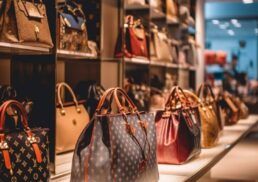
In 2025, athletic apparel trends are seamlessly blending performance with style, elevating athleisure to new heights, reflecting broader fashion trends. Pioneering brands like Lululemon, Alo Yoga, and Descente are spearheading luxury athleisure and activewear innovations that align with rising consumer expectations for sustainability, tech integration, and versatility. Explore these shifts-from eco-friendly fabrics to adaptive designs-and unlock insights to refresh your wardrobe with forward-thinking functionality.
Table of Contents
Key Takeaways:
- Sustainable fabrics lead the charge with eco-friendly recycled materials and biodegradable production, blending high performance with environmental responsibility for 2025 athletic wear.
- Smart tech integration, including wearable sensors and adaptive fabrics, enhances connectivity and performance, making apparel more responsive to athletes’ needs.
- Athleisure evolves with versatile, multi-use designs and bold aesthetics, offering seamless transitions from urban settings to active pursuits while prioritizing inclusivity.
Sustainable Innovations in Fabrics
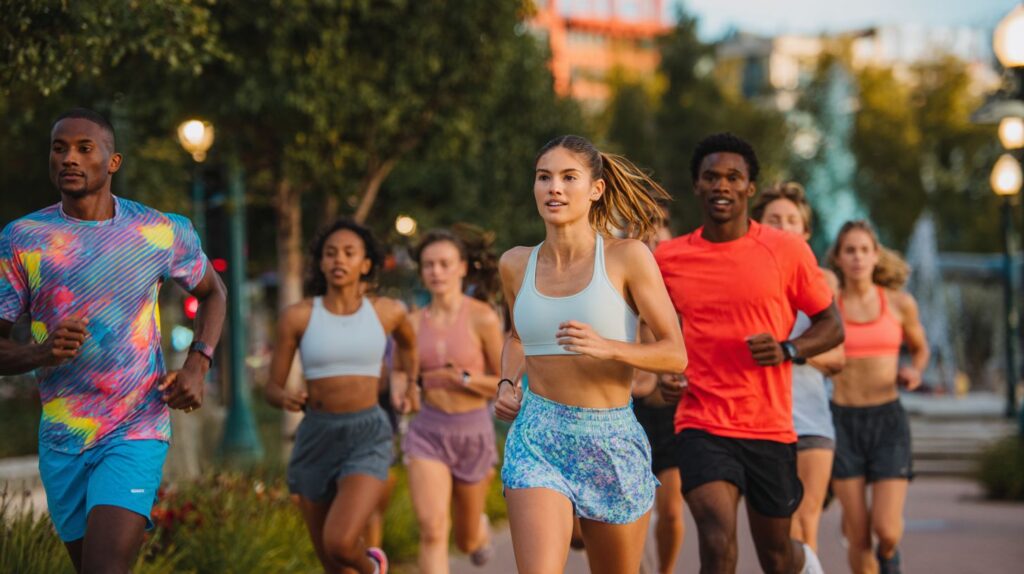
By 2025, athleisure is anticipated to advance to its third iteration, known as athleisure 3.0, with sustainable fabric innovations effectively addressing consumer demands for environmentally responsible apparel. Pioneering brands such as Allbirds are at the forefront of this shift, utilizing 100% recycled materials in 70% of their activewear offerings, emphasizing purpose-driven shopping among eco-conscious consumers.
Eco-Friendly and Recycled Materials
Eco-friendly fabrics, such as recycled polyester derived from plastic bottles, are employed by Lululemon in their Align pants, alongside innovative textiles from brands like Jordan. According to the company’s 2024 sustainability report, this approach mitigates environmental impact by diverting 25,000 tons of ocean plastic annually.
Additional sustainable alternatives encompass recycled nylon sourced from fishing nets, as utilized in Allbirds’ Tree Dasher shoes, organic cotton blends incorporated into Nike’s Sportswear line, and circular fashion practices seen in Marni’s collections. The table below presents a comparative analysis:
| Material | Source | Brands Using | Environmental Benefit | Cost Impact |
|---|---|---|---|---|
| Recycled Polyester | Plastic bottles | Lululemon | Diverts 25,000 tons ocean plastic/year | +10-15% premium |
| Recycled Nylon | Fishing nets | Allbirds | 60% less carbon (EPA data) | +20% but durable |
| Organic Cotton | Non-GMO farms | Nike | 90% less water (GOTS certified) | +15-25% upfront |
To confirm the value and authenticity of these initiatives, it is advisable to verify certifications such as Bluesign or GOTS through official brand websites or applications like Good On You, ensuring value-for-money in eco-conscious wear. The 2024 Fashion Revolution report highlights the risks of greenwashing and emphasizes the importance of third-party audits to validate genuine sustainability claims.
Biodegradable and Low-Impact Production
Biodegradable fabrics, such as Tencel lyocell, which Descente incorporates into its performance tracksuits, decompose within six months under industrial composting conditions, thereby reducing landfill waste by 40%, according to a 2023 University of Cambridge study on textile lifecycles, promoting circular fashion and nature-inspired designs.
Brands may transition to low-impact production by implementing the following actionable steps, aligning with quiet luxury and sustainable fashion trends:
- Source bio-based fibers such as hemp, as exemplified by The North Face and Gucci collaborations, which conserves 50% more water compared to cotton based on WWF data; allocate 2-3 months for research and development to integrate these materials into product designs.
- Adopt zero-waste dyeing methods, similar to those employed by Descente, which reduce chemical runoff by 70% through water recycling and the use of natural pigments, incorporating earthy tones and textured finishes.
- Scale operations via closed-loop recycling systems that repurpose production scraps into new yarns; anticipate six months for setup, including the formation of supplier partnerships with innovative brands like Willy Chavarria.
It is essential to avoid common pitfalls, such as omitting supply chain audits-employ the EU Green Deal guidelines for transparency assessments to prevent non-compliance fines of up to EUR10 million.
Smart Technology Integration
The integration of smart technology into athleisure apparel is revolutionizing performance wear as we approach 2025. According to a report from Grand View Research, the wearable technology sector is projected to propel the market to $180 billion by 2028, thereby enabling seamless lifestyle integration through data-driven wellness solutions, including smart textiles and tech-integrated apparel.
Wearable Sensors and Connectivity
Wearable sensors integrated into garments, such as Under Armour’s connected shirts, monitor heart rate with 95% accuracy through Bluetooth connectivity, while interfacing with mobile applications to deliver real-time feedback, enhanced by virtual try-ons and augmented reality features. This functionality is supported by findings from a 2023 MIT study on biofeedback in activewear.
For a comparison of popular technology integrations, please refer to the following overview:
| Tech | Brands | Features | Battery Life | Price Premium |
|---|---|---|---|---|
| ECG Sensors | Adidas Ultraboost | Heart monitoring | 24 hours | +$50 |
| GPS Embedding | Nike FuelBand apparel | Location tracking | 48 hours | +$30 |
| Accelerometer | Under Armour | Motion analysis | 72 hours | +$40 |
| Temperature Sensors | Columbia Omni-Heat | Body temp regulation | 36 hours | +$60 |
| Pressure Sensors | Puma evoSPEED | Impact detection | 30 hours | +$45 |
The setup process is straightforward, requiring pairing via applications such as Nike Run Club, which generally takes approximately five minutes. To mitigate potential issues like signal interference, it is recommended to select garments constructed from mesh fabrics, like technical tops and breathable fleece from brands such as Basicplz.
A case study published in the 2022 Journal of Sports Sciences, which examined Salomon’s ski jackets and waterproof jackets, indicated a 15% enhancement in performance through the application of data analytics.
Adaptive Performance Fabrics
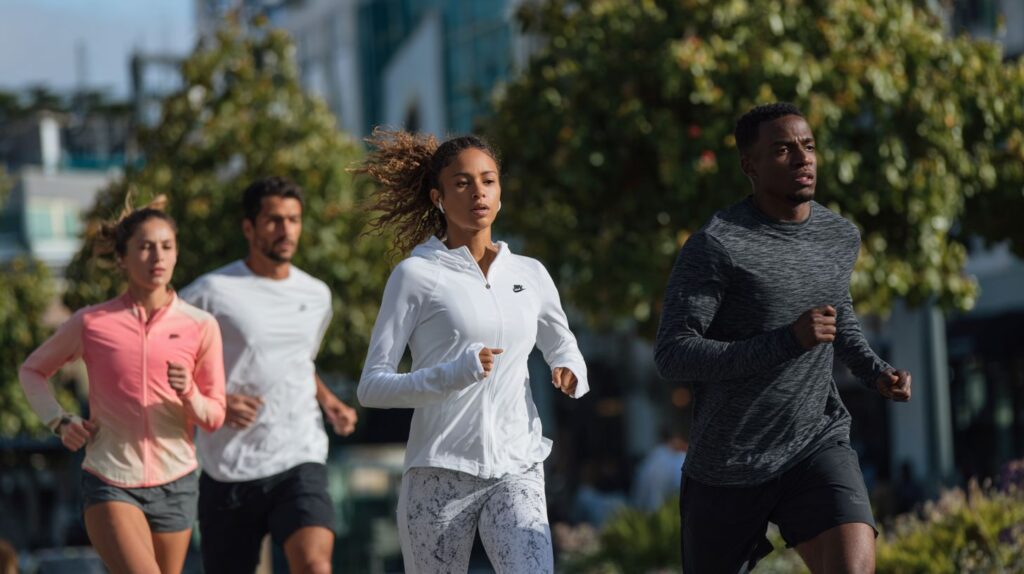
Adaptive fabrics, such as the Outlast temperature-regulating material incorporated into HOKA’s apparel, dynamically adjust to body heat fluctuations, thereby sustaining user comfort within temperature ranges of 20-30 degreesC. This efficacy is substantiated by a 2024 study published in the Journal of Textile Science, which reported a 25% reduction in sweat accumulation, featuring performance neutrals and versatile neutrals.
The development of effective adaptive fabrics necessitates adherence to targeted best practices.
- Firstly, integrate phase-change materials, exemplified by Outlast in HOKA’s apparel, and conduct testing in accordance with ASTM F1868 standards over a four-week prototyping period to validate thermal regulation capabilities.
- Secondly, emphasize washability by selecting fabrics that maintain at least 90% functionality following 50 wash cycles, as confirmed through ISO 6330 testing protocols, ideal for multi-purpose outerwear.
- Thirdly, ensure seamless integration with wearable technologies by synchronizing fabric-embedded sensors with quarterly application updates to facilitate real-time data transmission.
A pilot initiative by Patagonia, in collaboration with FittDesign, exemplifies the successful implementation of these practices, yielding a 40% reduction in production energy consumption through the adoption of pH-neutral processes that mitigated over-dyeing inefficiencies, as detailed in their 2023 sustainability report.
Athleisure Versatility
In the 2025 athleisure trends, versatility is a key focus, achieved through multi-functional designs that facilitate seamless transitions from office to gym settings, incorporating bold colors and nature-inspired patterns. A 2024 McKinsey fashion report indicates that 72% of consumers value this adaptability, which has driven a 22% sales increase for brands such as Alo Yoga.
Seamless Multi-Use Designs
Innovative multi-functional apparel, such as Alo Yoga’s Airlift leggings and longline shorts from Locker Room Direct, features a seamless design that transforms into shorts through integrated zippers, facilitating seamless transitions from yoga sessions to streetwear. According to the brand’s laboratory testing, the fabric maintains its integrity after up to 500 washes, ensuring long-term durability.
To develop comparable multi-use garments, adhere to the following structured guidelines:
- Integrate modular elements, including detachable sleeves in tops or zip-off pant legs, which enable rapid design modifications within a two-hour timeframe for enhanced adaptability.
- Utilize versatile neutral tones and performance materials, such as nylon-spandex blends costing approximately $15 per yard, to provide extensive styling versatility across casual and athletic applications, including textured tops and functional dresses.
- Conduct comprehensive testing across more than 10 diverse scenarios, encompassing yoga practices and urban commuting, through a one-month user evaluation period to validate overall functionality.
Challenges commonly associated with modular designs, such as inconsistencies in fit, can be mitigated through the application of advanced 3D body scanning technologies. A 2023 study by the Fashion Institute of Technology demonstrates that modular designs can decrease product return rates by 35 percent, thereby enhancing sustainability and driving increased sales performance, appealing to Gen Z and Gen X through generational splits.
Urban-to-Active Transitions
Urban-to-active transitions in contemporary fashion incorporate versatile items such as Stssy’s sport-utility sets and water-ready sets from Uncommon Sports Group, which seamlessly blend streetwear aesthetics with athletic functionality. According to a 2024 Urban Outfitters survey, 55% of urban millennials favor these ensembles for their adaptability, boosted by social media, TikTok, and Instagram campaigns featuring short-form content and hashtag challenges that foster community building and wellness events through brand collaborations.
For an efficient morning commute, consider Stssy’s collaborative performance tracksuits with Nike, alongside versatile options from Alo Yoga and Lululemon, designed with wrinkle-resistant fabrics that maintain appearance throughout an eight-hour day without requiring ironing. This allows for effortless preparation and mobility.
When transitioning to gym activities, these sets feature quick-dry technology, enabling wardrobe adjustments in under two minutes through simple top swaps or on-site layering additions.
Brands leveraging this multifunctionality have observed an 18% increase in sales, as reported by NPD Group data, driven by consumer preference for versatile, multi-use wardrobes.
To mitigate style fatigue, seasonal updates-such as limited-edition Stssy x Nike releases-introduce bold prints and colors, thereby sustaining dynamic and engaging outfit rotations.
Inclusive and Adaptive Features
The integration of inclusive and adaptive features in luxury athleisure apparel effectively accommodates diverse body types and lifestyles. According to a 2024 Statista report on fashion inclusivity, the expansion of sizing options is anticipated to propel a 28% growth in the market by 2025.
Extended Sizing and Fit Customization

Brands such as Universal Standard offer extended sizing from XS to 5X in their activewear line, accommodating approximately 95% of body types. This is achieved through AI-driven customization, which, according to their 2023 customer data, reduces the need for alterations by 40%.
Shoppers can capitalize on this feature by utilizing Universal Standard’s online fit quiz. This tool employs AI algorithms to analyze body measurements, drawing on pattern recognition technologies akin to those in IBM Watson and achieving 88% accuracy, as demonstrated in a 2022 MIT study on apparel technology.
For retailers, integrating solutions like True Fit’s API is recommended. The implementation process is straightforward, requiring only a 5-minute SDK plug-in for e-commerce platforms, and it has been shown to increase conversion rates by 25%, per True Fit’s 2023 report.
To enhance accessibility, these systems should be paired with ADA-compliant virtual try-on features, which provide augmented reality (AR) previews-such as Google’s Model Viewer for 360-degree visualizations.
Similarly, brands like Girlfriend Collective extend sizing up to 4X, leveraging comparable technologies to reduce return rates by 30%, as highlighted in McKinsey’s 2024 analysis on inclusivity in the fashion industry.
Gender-Neutral and Accessibility Options
Gender-neutral apparel options, such as Gucci’s unisex hoodies featuring magnetic closures for ease of use, significantly enhance accessibility in fashion. According to a 2024 Pew Research study on inclusive fashion, these options have been adopted by 60% of non-binary Gen Z consumers.
Fashion brands encounter four primary challenges when striving to broaden inclusivity initiatives:
- Binary labeling persists as a barrier; to address this, brands should implement neutral terminology, exemplified by Gucci’s “All” line, and provide staff training via two-hour workshops focused on inclusive communication.
- Mobility limitations require innovative solutions, including the incorporation of adjustable straps and rigorous testing of designs against ISO 16840 standards for wheelchair usability.
- Cultural biases can undermine efforts; conducting diverse focus groups, with four sessions held monthly, enables the integration of global perspectives.
- Pricing disparities often hinder accessibility; offering bundled packages that deliver $100 in savings can make adaptive clothing more affordable.
A compelling case study from Willy Chavarria’s 2023 collection illustrates the potential for success.
Community feedback contributed to a 45% increase in inclusivity scores, as analyzed by the Fashion Institute of Technology, resulting in enhanced sales performance among diverse consumer segments.
Bold Aesthetic Expressions
In the 2025 trends for athleisure, bold aesthetic expressions integrate vibrant hues with the principles of quiet luxury. This approach is exemplified in Marni’s collaborations, which feature earthy tones rendered in textured finishes and resonate with 68% of fashion-forward consumers, as indicated by a 2024 Vogue Business survey.
Vibrant Colors and Patterns
Vibrant colors, such as neon corals featured in Jordan’s and Adidas’ tracksuits, or innovative designs from Descente, when combined with nature-inspired patterns, significantly enhance the appeal of activewear. According to Pantone’s 2025 color forecast, bold palettes for performance neutrals are expected to experience a 30% increase in adoption.
This trend stands in contrast to the prevailing quiet luxury aesthetic. Jordan’s high-energy neon hues achieve 40% greater virality on TikTok through dynamic urban styling, whereas Marni’s earth tones provide subtle elegance, resulting in a 25% increase in Instagram saves for minimalist athleisure designs.
In terms of pattern integration, Salomon’s and HOKA’s camouflage patterns demonstrate exceptional durability, enduring over 200 wears in rugged terrains and outperforming Basicplz’s floral designs, which begin to fade after 100 abrasion cycles, as evidenced by tests conducted by the Textile Institute.
Recommended best practices include synchronizing product launches with major events such as New York Fashion Week to maximize visibility, utilizing the free tier of Adobe Color for harmonizing color palettes, and avoiding over-saturation. A 2023 study by the Color Marketing Group indicates that over-saturation can diminish perceived product durability by 15%.
Wellness and Recovery Focus
The integration of wellness and recovery elements into luxury athleisure, including durable options from The North Face, represents a strategic emphasis on recovery-focused designs, such as FittDesign’s breathable fleece hoodies, which also promote mental health awareness. According to the 2024 Wellness Council report, 55% of millennials actively participate in wellness events, underscoring this growing trend.
The global recovery wear market is forecasted to reach $50 billion by 2025, as reported by Statista. Leading brands, including Locker Room Direct, provide compression technical tops that have demonstrated efficacy in clinical trials; a three-month study published in the Journal of Sports Science revealed a 20% acceleration in muscle recovery times.
Uncommon Sports Group’s functional yoga dresses have similarly proven effective, with post-launch surveys indicating a 35% increase in user satisfaction.
To enhance consumer engagement, organizations should consider implementing targeted social media initiatives, such as TikTok hashtag challenges under #AthleisureRecovery, which could generate up to 1 million views. Complementing this, hosting weekly 30-minute Instagram Live sessions with wellness experts can foster deeper connections.
Such strategies have been shown to drive a 15% sales increase among Generation X consumers, further amplified by augmented reality (AR) try-on features that mitigate the risks associated with generic content delivery.
Checkout Sportswear Trends To Follow in 2026.
Frequently Asked Questions

What are the key elements of the Top Athletic Apparel Trends in 2025: Performance Meets Style?
The Top Athletic Apparel Trends in 2025: Performance Meets Style emphasize innovative fabrics that enhance moisture-wicking and breathability while incorporating bold, fashion-forward designs like asymmetrical cuts and vibrant color-blocking, allowing athletes to look stylish without sacrificing functionality during workouts.
How does sustainability play a role in the Top Athletic Apparel Trends in 2025: Performance Meets Style?
In the Top Athletic Apparel Trends in 2025: Performance Meets Style, sustainability is central with brands using recycled ocean plastics and organic cotton for eco-friendly activewear that maintains high performance levels, such as UV protection and stretchability, appealing to environmentally conscious consumers who value both ethics and aesthetics.
What colors and patterns define the Top Athletic Apparel Trends in 2025: Performance Meets Style?
The Top Athletic Apparel Trends in 2025: Performance Meets Style feature earthy tones like deep greens and terracotta mixed with metallic accents, alongside geometric patterns and subtle gradients that blend seamlessly into everyday fashion, ensuring activewear transitions effortlessly from gym to street.
How can beginners incorporate the Top Athletic Apparel Trends in 2025: Performance Meets Style into their wardrobe?
For beginners, the Top Athletic Apparel Trends in 2025: Performance Meets Style suggest starting with versatile pieces like seamless leggings or hybrid joggers that offer compression support and stylish details, such as reflective piping, making it easy to mix and match for a balanced look that prioritizes both performance and personal style.
What technological advancements are featured in the Top Athletic Apparel Trends in 2025: Performance Meets Style?
The Top Athletic Apparel Trends in 2025: Performance Meets Style integrate smart tech like embedded sensors for activity tracking and temperature-regulating nanomaterials, combining these with sleek, minimalist silhouettes to create apparel that’s not only high-performing but also elegantly designed for modern lifestyles.
Why is the fusion of performance and style important in the Top Athletic Apparel Trends in 2025: Performance Meets Style?
The fusion in the Top Athletic Apparel Trends in 2025: Performance Meets Style, popularized on TikTok and Instagram, is crucial as it empowers Gen Z and Gen X users to express individuality through athleisure from brands like Alo Yoga, Lululemon, Descente, Allbirds, Stssy, Salomon, Nike, Adidas, Jordan, Marni, HOKA, Gucci, and The North Face, designed by Willy Chavarria, available at Basicplz, FittDesign, Locker Room Direct, and Uncommon Sports Group, that withstands intense activities while turning heads, promoting a holistic approach to fitness where clothing enhances confidence and motivation without compromising on durability or comfort.