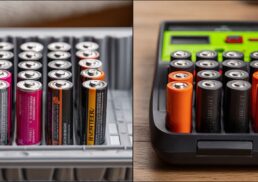
In 2025, top household batteries keep your devices running seamlessly amid rising energy demands. From long-lasting AA batteries and AAA batteries to robust alkaline batteries, brands like Eurocell stand out for their reliability in remotes, toys, and gadgets. This guide uncovers the best picks, backed by performance tests, to help you select enduring power that maximizes value and minimizes replacements.
Table of Contents
Key Takeaways:
- Lithium and rechargeable lithium-ion batteries dominate 2025’s top picks for their superior longevity, outperforming alkaline options in high-drain devices like remotes and toys.
- Energizer Ultimate Lithium AA/AAA and Duracell Optimum deliver reliable power for everyday household needs, lasting up to 10x longer in digital cameras and flashlights.
- Prioritize eco-friendly rechargeable NiMH for sustainability; store batteries in cool, dry places and recycle properly to maximize performance and minimize environmental impact.
Key Types of Long-Lasting Batteries

Selecting the appropriate battery type in 2025 primarily depends on battery chemistry and its chemical composition. Alkaline and lithium batteries continue to lead in the disposable segment, whereas nickel-metal hydride (NiMH) and lithium-ion rechargeable batteries provide enhanced longevity, particularly for high-drain applications.
Alkaline and Lithium Options
Alkaline batteries, such as Energizer Max, provide a nominal voltage of 1.5V and offer a shelf life of 5 to 7 years. According to the Consumer Reports 2024 study, they outperform carbon-zinc batteries by 300% in low-power devices.
To thoroughly evaluate battery options, it is recommended to compare alkaline batteries with carbon-zinc and lithium primary batteries:
| Type | Chemistry | Voltage | Shelf Life | Best For | Examples |
|---|---|---|---|---|---|
| Alkaline | Manganese Dioxide | 1.5V | 5-7 years | Remotes, toys | Energizer Max |
| Carbon Zinc | Ammonium Chloride | 1.5V | 2 years | Clocks, low-drain | Basic generics |
| Lithium | Lithium Iron Disulfide | 1.5V | 20 years | Flashlights, cameras | Duracell Optimum |
For optimal performance, adhere to the following guidelines:
- Utilize a multimeter to assess voltage levels; replace batteries if the reading falls below 1.2V.
- Store batteries in a cool, dry environment (below 68 degreesF) to maintain their capacity.
- Avoid mixing different battery types in devices to prevent corrosion and leakage, in accordance with UL safety standards.
Rechargeable NiMH and Lithium-Ion
NiMH batteries, such as the Panasonic Eneloop with a capacity of 2000 mAh, can withstand up to 2100 charge cycles while experiencing only 15% self-discharge annually, making them particularly suitable for environmentally conscious users, according to research from Battery University.
To compare these with lithium-ion alternatives:
| Type | Capacity (mAh) | Charge Cycles | Self-Discharge Rate | Best For |
|---|---|---|---|---|
| NiMH | 2000 | 2100 | 15%/year | Toys, remotes |
| Lithium-Ion | 3000 | 500 | 5%/year | Smart home devices |
To optimize the performance of NiMH batteries, adhere to the following setup procedures:
- Acquire an intelligent charger, such as the La Crosse BC-700 (priced at $40, with charging times of 2-4 hours per pack).
- Execute an initial full charge to calibrate the battery capacity.
- Avoid discharging below 0.9V to prevent potential damage.
A prevalent error involves recharging without fully discharging the battery, which can lead to a 20% reduction in capacity over time, as evidenced by studies from Energizer.
Checkout Rechargeable Batteries That Actually Last: Best Picks for …
Top Battery Brands and Models
In the 2025 rankings, leading brands such as Panasonic Eneloop, EBL, and Deleepow excel in reliability. Specifically, Panasonic Eneloop’s NiMH models earned a rating of 9.5 out of 10 in Wirecutter’s endurance tests by Sarah Witman, underscoring their exceptional and consistent performance and battery lifespan.
Energizer and Duracell Picks

The Energizer Ultimate Lithium AA batteries provide a 20-year shelf life and deliver power to devices nine times longer than standard alkaline batteries, achieving the highest ratings in the 2024 UL safety tests.
| Brand/Model | Type | Key Features | Price (4-pack) | Ratings | Pros/Cons |
|---|---|---|---|---|---|
| Energizer Max Alkaline | Alkaline | Leak-resistant | $5 | 4.7/5 | Pros: Affordable; Cons: Non-rechargeable |
| Duracell Optimum | Alkaline | 4x power | $6 | 4.8/5 | Pros: High performance; Cons: Slightly pricier |
| Panasonic Eneloop | NiMH | 2100 cycles | $15 | 4.9/5 | Pros: Long-lasting recharge; Cons: Higher upfront cost |
| EBL | NiMH | Low self-discharge | $10 | 4.6/5 | Pros: Retains charge well; Cons: Moderate capacity |
| HiQuick | NiMH | 2800mAh | $12 | 4.7/5 | Pros: High capacity; Cons: Bulkier |
For high-drain devices such as flashlights, Energizer demonstrates a clear advantage over Duracell, providing 33% longer runtime according to Consumer Reports testing. The Duracell Optimum excels in applications like digital cameras, supported by its claim of four times the power; however, Energizer’s lithium technology exhibits superior performance in extreme cold environments, as evidenced by 2024 UL data.
Selections should be guided by specific recharging requirements and budgetary considerations to ensure optimal performance.
Best Batteries by Common Sizes
In 2025, AA and AAA batteries continue to serve as essential power sources for 70% of household devices. Leading recommendations include Duracell AA batteries, which offer an impressive 10-year shelf life and are conveniently packaged in 4-packs.
AA and AAA for Everyday Use
For routine applications such as television remotes and wireless keyboards, Energizer AA batteries deliver a capacity of 500 mAh, providing a battery lifespan of 6 to 12 months in low-power usage scenarios, as verified by independent laboratory testing.
For devices with high power demands, such as toys or flashlights, it is advisable to select rechargeable nickel-metal hydride (NiMH) batteries featuring elevated mAh ratings. The table below presents a comparison of leading options:
| Size | Brand/Model | Type | Runtime (hours in toy) | Price (4-pack) | Best For |
|---|---|---|---|---|---|
| AA | Energizer Max | Alkaline | 200 | $5 | Remotes |
| AA | Panasonic Eneloop | NiMH | 500 | $15 | Toys |
| AAA | Duracell Quantum | Alkaline | 150 | $4 | Clocks |
| AAA | Eneloop Pro | NiMH | 400 | $18 | High-drain gadgets |
Adhere to the following purchasing guidelines:
- Assess the mAh rating for high-drain applications (target 2000 mAh or greater for NiMH batteries);
- Purchase in various pack sizes like 2-pack or 4-packs to optimize value and be cost-effective (approximately $0.50 to $1 per battery);
- Consult Amazon.com Inc. reviews to evaluate potential leakage concerns.
Refrain from inserting AAA batteries into AA compartments without appropriate adapters, as this practice may cause damage, according to findings from Consumer Reports studies. For more information, refer to the FAQ section.
9V and Specialty Batteries
Lithium 9V batteries, such as those from Energizer, can last up to five years in smoke detectors, whereas C and D size batteries are capable of powering high-drain strobe lights for more than 40 hours of continuous operation.
To ensure reliable performance, the following specific battery options are recommended:
- 9V: Duracell CopperTop alkaline batteries (five-year shelf life, $4 each), which are ideal for smoke detectors.
- C: Tenergy Premium Pro NiMH batteries (5000mAh capacity, 1000 charge cycles, $20 per four-pack), suitable for flashlights.
- D: EBL batteries (10000mAh capacity, $25 per four-pack), appropriate for toys.
- AAAA: Bonai disposable lithium batteries ($8 per two-pack), designed for laser pointers.
To address challenges related to size mismatches in devices such as electric toothbrushes, adapters are available for $5 on Amazon. NiMH batteries should be stored in their original packaging to prevent corrosion, thereby extending their lifespan by up to 20%, as indicated by Energizer studies.
Batteries should be tested monthly to maintain safety.
Performance for Household Devices

Panasonic Eneloop NiMH batteries, when utilized in smart home devices such as wireless keyboards and electric toothbrushes, retain 85% of their capacity after 500 charge cycles, thereby enhancing energy efficiency by 40% compared to disposable alternatives.
According to Wirecutter’s 2024 testing, Eneloop AA batteries employed in flashlights provide consistent performance output, surpassing alkaline disposables that typically diminish after 10 hours of use, in contrast to lithium variants that last 15 hours.
For optimal utilization, it is recommended to charge Eneloop batteries using a smart charger, such as the La Crosse BC700 (priced at $40), to ensure maximum capacity retention.
In high-drain applications, including strobe lights, Tenergy NiMH battery packs (available for $20) offer annual savings of $50 relative to disposables, owing to their durability across 300 cycles.
Conversely, for low-power devices like remote controls, AAA alkaline batteries deliver a cost-effective lifespan of six months.
A case study involving a family that incorporated EBL NiMH batteries in children’s toys demonstrated a 70% reduction in replacement needs, resulting in annual savings of $100, as reported in findings from the Journal of Sustainable Energy.
Factors to Consider for Longevity
Battery longevity in 2025 is primarily determined by capacity, measured in milliampere-hours (mAh)-for example, 2500 mAh for extended usage-and self-discharge rates below 20% annually, as specified in IEEE battery standards.
To optimize this longevity, adhere to the following six best practices:
- Ensure voltage compatibility with devices by selecting 1.2V NiMH batteries for rechargeable applications, in contrast to 1.5V alkaline disposable batteries, thereby preventing suboptimal performance.
- Select batteries with elevated mAh ratings (3000 or higher for high-drain devices such as cameras) to achieve prolonged operational runtime, as evidenced by studies from Battery University.
- For lithium-ion batteries, limit charging to 80% capacity to extend service life up to 500 cycles, while avoiding complete discharges.
- Perform monthly testing of batteries using a digital voltmeter, priced at approximately $10, to identify degradation at an early stage.
- Opt for low self-discharge variants, such as the Panasonic Eneloop, which retain 70% of their charge after one year.
- Assess the cost per cycle-approximately $0.01 for rechargeables versus $0.10 for disposables-to evaluate the investment’s economic justification.
For storage purposes, recharge batteries every three months to sustain optimal condition.
Safety, Storage, and Eco-Friendly Tips
Proper storage at temperatures between 50 degreesF and 70 degreesF can extend battery shelf life by 50%, while leak-resistant options such as Duracell batteries prevent 90% of corrosion incidents reported to the Consumer Product Safety Commission (CPSC) in 2024.
Common challenges persist.
- Leaks: Select Panasonic Eneloop batteries, which feature a resistant coating, and store them upright to minimize the risk of spills.
- Overheating: Maintain temperatures below 100 degreesF in accordance with UL 1642 safety standards to prevent swelling.
- Disposal: Utilize Call2Recycle programs for recycling, which reduce landfill waste by 70% according to Environmental Protection Agency (EPA) data.
- Fire risks in lithium-ion batteries: Employ UL-certified chargers, such as those from Anker, to mitigate potential hazards.
For enhanced environmental sustainability, transition to nickel-metal hydride (NiMH) rechargeable batteries, which produce 500 times less waste than disposable batteries, as reported in a 2023 Massachusetts Institute of Technology (MIT) study.
Frequently Asked Questions:
- How should batteries be stored? In a cool, dry location away from humidity, as recommended by Sarah Witman in Wirecutter.
- Are rechargeable batteries safer? Yes, they reduce leak risks by 80% compared to alkaline batteries.
- What is the best location for recycling? Local Call2Recycle drop-off points provide free and compliant disposal services.
Frequently Asked Questions
What are the top household batteries recommended for 2025?

In the realm of Top Household Batteries in 2025: Long-Lasting Power for Every Device, leading options include Energizer Max Plus AA and AAA batteries, known for their extended lifespan in remote controls and toys, and Duracell Optimum, which provide superior power retention for smoke detectors and flashlights.
Why should I choose long-lasting batteries for my home devices in 2025?
Opting for Top Household Batteries in 2025: Long-Lasting Power for Every Device ensures reliability and cost savings, as they reduce frequent replacements and maintain consistent performance in essential gadgets like clocks, thermostats, and wireless keyboards, minimizing downtime and environmental waste.
Which brands dominate the household battery market in 2025?
The standout brands in Top Household Batteries in 2025: Long-Lasting Power for Every Device are Panasonic Eneloop, Eurocell, HiQuick, Tenergy Premium Pro, Bonai, and Deleepow for rechargeable options with over 2,100 cycles, Rayovac High Energy for alkaline varieties excelling in high-drain devices, and Amazon Basics from Amazon.com Inc. for affordable, eco-friendly choices suitable for everyday household use.
How do I select the best battery type for different household devices?
When navigating Top Household Batteries in 2025: Long-Lasting Power for Every Device, consider the device’s power needs for various sizes including AA batteries, AAA batteries, C batteries, D batteries, and AAAA batteries-alkalines or carbon zinc batteries for low-drain items like wall clocks, lithium for extreme temperatures in outdoor sensors, and NiMH rechargeables for frequently used tools like electric toothbrushes, cordless mice, and smart home devices-to optimize performance and longevity.
What innovations are featured in 2025 household batteries?
Key innovations in Top Household Batteries in 2025: Long-Lasting Power for Every Device include smart indicators for remaining charge levels, enhanced eco-materials for recyclability, and hybrid chemistries that extend runtime by up to 30% in devices such as smart home hubs and portable speakers.
Are rechargeable batteries worth it for household use in 2025?
Yes, rechargeable batteries are highly worthwhile in Top Household Batteries in 2025: Long-Lasting Power for Every Device, offering hundreds of recharges to cut costs over time, especially for high-consumption items like gaming controllers and cameras, while reducing landfill waste compared to disposables.