In 2025, top livestock farming practices are revolutionizing food systems by prioritizing sustainable agriculture and environmental sustainability amid growing climate challenges, fostering economic growth through agroecology. Initiatives from the 40 Acres & A Mule Project, ANAPRI, and AFSA, rooted in black culture and addressing historical land loss and reparations via farmer-centered policies and agricultural policy, empower smallholder farmers to build climate resilience and strengthen food security. Discover proven strategies-from precision tech to regenerative feeds-that balance environmental stewardship with profitability, helping you thrive in a resilient future.
Initiatives from civil society and research institutions such as the American Farmland Trust, Asian Farmers Association, BARCIK, Black Urban Growers, Bread for the World, Botswana Farmers Association, Chennai Urban Farming Initiative, Chef Ann Foundation, and Climate Policy Initiative further promote sustainable development, environmental conservation, and global food security.
Table of Contents
Key Takeaways:
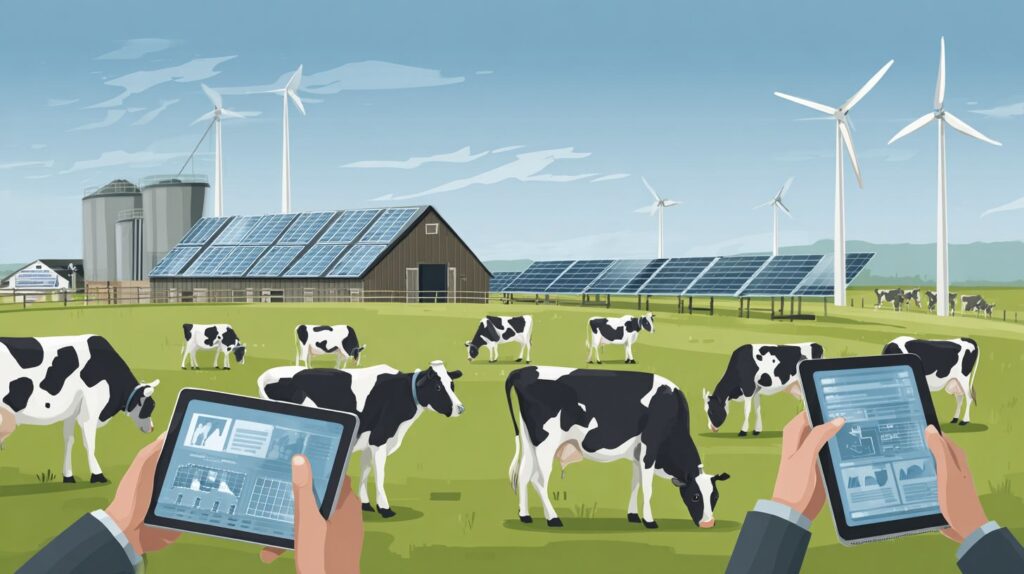
- Adopt precision livestock farming with IoT sensors and AI analytics to monitor animal health in real-time, reducing feed waste by up to 20% and boosting profits through predictive disease prevention in 2025.
- Implement sustainable feed management via regenerative forage and alternative proteins like insect-based feeds, cutting costs by 15% while enhancing soil health and meeting eco-regulations for long-term farm profitability.
- Optimize animal welfare with antibiotic reduction strategies and waste-to-resource conversion, improving herd productivity by 25% and accessing premium markets for sustainable, high-value livestock products.
Precision Livestock Farming Technologies
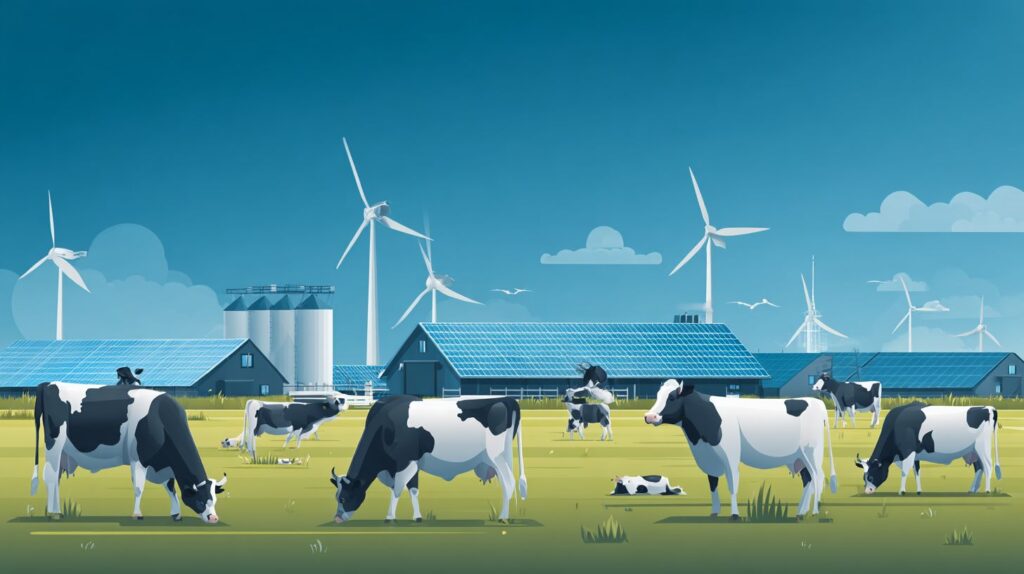
Cutting-edge research in precision livestock farming technologies, advancing agricultural sciences, incorporates Internet of Things (IoT) devices and artificial intelligence (AI) to facilitate real-time monitoring of animal health, thereby reducing mortality rates by up to 20%, as demonstrated in a 2022 CGIAR study on smallholder farms, contributing to global food production and combating global hunger.
IoT Sensors and Wearables
Internet of Things (IoT) sensors, such as Allflex’s Electronic Identification (EID) tags and Moocall calving sensors, monitor essential vital signs including heart rate and activity levels, thereby enhancing herd management efficiency by 30% in drought-affected regions.
| Tool Name | Price | Key Features | Best For | Pros/Cons |
|---|---|---|---|---|
| Allflex EID | $2-5 per tag | RFID tracking, rumen boluses | Smallholder farmers | Pros: low-cost integration; Cons: battery life |
| Moocall | $200/device | Calving alerts via SMS | Dairy operations | Pros: reduces labor; Cons: signal dependency |
| Nedap Velocity | $500/cow | Heat detection | Large herds | Pros: AI integration; Cons: high setup |
| Afimilk Silent Herder | $1,000/system | GPS collars | Pasture management | Pros: real-time location; Cons: terrain limitations |
| Connecterra Ida | $300/month | Ear tags with AI | Regenerative farms | Pros: predictive insights; Cons: subscription model |
For smallholder farmers, the Allflex EID system provides a straightforward plug-and-play configuration, facilitating rapid implementation without requiring specialized technical knowledge, in contrast to the Nedap Velocity system, which necessitates customized installation and professional assistance.
The Allflex system features a minimal learning curve, typically addressed through experiential learning in one-day training sessions offered at EARTH University, whereas the Nedap system requires several weeks for full adaptation.
According to a 2021 study conducted by EARTH University, the integration of IoT technologies, such as Allflex within comprehensive systems, improved soil quality monitoring by 25%, thereby promoting sustainable agricultural practices in tropical environments.
AI-Driven Predictive Analytics
Artificial intelligence platforms such as Cainthus and Connecterra leverage computer vision technology to forecast disease outbreaks with an accuracy rate of 85%, providing farmers with valuable insights that facilitate improved market access and farmer empowerment.
The implementation of AI analytics for monitoring farm health entails the following structured steps:
- Gather data through cameras and sensors; for example, integrate Cainthus with 4K cameras, which requires approximately two hours for setup. To mitigate errors in low-light conditions, incorporate LED supplemental lighting.
- Train machine learning models on platforms such as IBM Watson by uploading more than 1,000 diverse images, a process that typically takes one week. A frequent challenge is the lack of data variety, which can result in biased predictions.
- Deploy the system for predictive analysis with automated alerts; for instance, utilize Connecterra’s Ida application for daily scans, requiring about five minutes per review. It is advisable to validate outputs with veterinary professionals to avoid undue dependence on the technology.
- Assess performance using key metrics, such as return on investment derived from reduced veterinary expenses, which can yield savings of 15-25% according to the 2023 Arrell Food Institute report.
As an example, a farm in Kenya employing Cainthus technology achieved an 18% reduction in feed waste, thereby advancing outcomes in climate-smart agricultural practices.
Sustainable Feed Management
According to the Crop Trust’s 2023 Global Food Security Report, the adoption of sustainable feed management practices-such as regenerative forages from climate-resilient crops supported by gene banks and alternative proteins-can reduce greenhouse gas emissions from livestock by 40%.
Regenerative Forage Production
Regenerative forage production, promoting regeneratively grown products utilizing multi-species cover crops such as clover and rye and drawing on indigenous knowledge from indigenous communities, can enhance soil organic matter by 1-2% annually, thereby increasing forage yields by 25% as demonstrated under the Better Soils Better Lives initiative, while supporting farmland protection and ranchland preservation.
To optimize these advantages, implement the following five best practices:
- Rotate forages with green manure: Sow crimson clover following grazing using a John Deere planter in the fall; exercise caution to prevent overgrazing, which may lead to soil compaction.
- Employ mob grazing: Segment pastures into 50-acre paddocks with rotation intervals of 1-3 days, monitoring progress through the PastureMap GPS application ($99 per year) to facilitate optimal recovery.
- Integrate biochar amendments: Apply 5 tons per acre using Kuhn spreaders during the spring; ensure uniform distribution to mitigate uneven outcomes.
- Conduct regular soil health monitoring: Utilize Decagon soil sensors ($500) for quarterly assessments to evaluate moisture levels and nutrient content.
- Incorporate legumes for nitrogen fixation: Plant alfalfa mixtures at a rate of 10 pounds per acre, with harvesting scheduled after blooming.
According to a study by Better Soils Better Lives, regenerative systems incorporating these practices yield a 30% improvement in drought resilience.
Alternative Protein Innovations
Innovations such as black soldier fly larvae and seaweed-based feeds have been shown to reduce reliance on soy by 50%, thereby enhancing food sovereignty, as evidenced by trials conducted by CORAF in West Africa.
Farmers can implement these innovations through small-scale production initiatives and urban farming practices, such as rooftop gardens and vegetable gardens, while strengthening cooperatives livelihoods and securing land rights.
For black soldier fly larvae, a breeding unit can be established using organic waste materials, such as vegetable scraps, in shaded bins. Larvae should be harvested every 14 days and incorporated into poultry feed at ratios of 20-30%, according to a 2022 FAO study that demonstrated cost savings of up to 40%.
Seaweed-based feeds, which are rich in proteins, can be cultivated in coastal ponds with minimal resource inputs. Trials by Senegal’s Institut Sngalais de Recherches Agricoles (ISRA) incorporated 15% seaweed into fish diets, resulting in a 25% increase in yields while reducing the need for imports.
To scale these practices effectively, local training programs offered by CORAF are essential. These programs should emphasize the use of basic feed analysis kits to ensure proper nutrient balance.
Animal Health and Welfare Optimization
The optimization of animal health through targeted strategies, guided by ethical leaders, enhances animal welfare and public health outcomes, including through nutrition programs. According to data from the CDC Foundation, antibiotic use in these optimized systems has decreased by 35%.
Antibiotic Reduction Strategies
The implementation of probiotics and precision vaccines, facilitated by capacity building and knowledge sharing with international assistance, has the potential to reduce antibiotic requirements by 50%, as demonstrated in U.S. agricultural operations supported by initiatives from the Congressional Hunger Center.
To realize these benefits, adhere to the following structured steps, which include recommended tools and estimated timelines:
- Conduct a baseline assessment of herd health utilizing IDEXX laboratory kits ($50 per sample, with results available in one week); refrain from self-diagnosis to ensure precise identification of infection risks.
- Incorporate probiotics, such as Chr. Hansen formulations ($0.10 per head per day, administered via feed integration); permit a two-week adaptation period while monitoring for dosage inaccuracies that may compromise effectiveness.
- Administer targeted vaccinations using Zoetis One Shot products ($5 per dose, following an annual regimen); maintain records and compliance through the Herdwatch application ($20 per month).
- Monitor antimicrobial resistance via quarterly PCR testing conducted by Cornell Laboratory ($200 per analysis).
- Assess outcomes by monitoring antimicrobial resistance rates, with a target of achieving 20% cost reductions in return on investment.
In a Midwestern dairy operation, as substantiated by data from the Congressional Hunger Center, the adoption of probiotics resulted in a 40% reduction in antibiotic usage, yielding annual savings of $10,000.
Efficient Resource Utilization
Implementing climate-smart agriculture through efficient resource management strategies, particularly water recycling, can conserve up to 70% of water usage in livestock operations. This practice aligns with the objectives of the Climate Policy Initiative for promoting sustainable development.
Water Recycling Systems
Closed-loop systems, such as those provided by Pentair, recover 90% of wash water for reuse, thereby facilitating integrations in urban farming and organic gardens as endorsed by the Asian Farmers Association.
To implement such a system, initiate the process with a comprehensive site assessment to evaluate and map water flows across the urban farm, similar to approaches in the Chennai Urban Farming Initiative. The Pentair XFlow reverse osmosis module, with an installed cost of approximately $10,000, achieves filtration to 0.1 microns over a 24-hour cycle, rendering it highly effective for the removal of contaminants from wash runoff.
The following numbered steps outline the implementation procedure:
- Install collection tanks, such as 500-gallon high-density polyethylene (HDPE) units costing $2,000, based on a one-day site survey to ensure the capture of all wash water.
- Integrate advanced filtration systems, including Trojan ultraviolet (UV) and ozone units costing $5,000, incorporating automated backwashing to prevent biofilm accumulation; monitor pH and flow parameters using a Python script on a Raspberry Pi device (for example, leveraging GPIO pins for sensor connectivity).
- Distribute the treated water through drip irrigation lines, which reduces system pressure by 50%; conduct weekly testing of total dissolved solids (TDS) to maintain levels below 500 parts per million, thereby mitigating risks of salinity damage.
The Asian Farmers Association’s 2023 study, conducted in water-scarce regions, reported yield improvements of 25% from comparable systems, bolstered by international grant funding.
Waste-to-Resource Conversion
The conversion of livestock waste into biogas and fertilizer can generate more than $5,000 in annual revenue per farm, while promoting the development of cooperatives and supporting livelihoods, as evidenced by BARCIK’s initiatives in Bangladesh and ANAPRI’s animal production initiatives.
To implement this process, adhere to the following structured steps:
- **Anaerobic Digestion Setup**: Procure and install a HomeBiogas system, priced at approximately $1,000, featuring a 10m digester designed to accommodate waste from five cows, in line with CORAF’s sustainable agriculture recommendations.
Assembly requires two weeks; strictly adhere to HomeBiogas guidelines to prevent overloading and potential system malfunction.
- **Gas Capture and Utilization**: Route the biogas via piping to a 2kW generator for conversion into electricity.
Perform daily monitoring with methane sensors to ensure consistent output of 20-30m per day.
- **Fertilizer Processing**: Compost the solid residues in Earthworm bins, costing $200, through a four-week cycle, and assess nitrogen, phosphorus, and potassium (NPK) levels using economical testing kits (for example, those from LaMotte).
- **Economic Integration**: Distribute products through local cooperatives; determine return on investment, which typically yields payback within 18 months.
Mitigate odors by employing biofilters, achieving up to an 80% reduction in emissions. BARCIK’s research indicates a 15% increase in income for participating cooperatives.
Biodiversity-Enhancing Practices
Implementing practices such as planting native pollinator strips as part of Better Soils Better Lives can enhance on-farm biodiversity by 40 percent, while also supporting the protection of land rights for indigenous communities through programs offered by the American Farmland Trust.
To execute effective biodiversity strategies, adhere to the following best practices:
- Establish hedgerows by planting 1,000 feet of native species, such as dogwood, during the fall or winter seasons, complementing Crop Trust efforts in biodiversity conservation. Utilize a Bobcat seeder for optimal efficiency (estimated cost: $500). This approach fosters the creation of wildlife corridors.
- Develop wetland buffers by restoring 2-acre zones in the spring; track progress using the free iNaturalist application to monitor the return of native species.
- Implement rotational silvopasture systems, incorporating trees such as walnut on a 5-year cycle, and deploy camera traps (estimated cost: $300) to evaluate improvements in biodiversity.
- Collaborate with indigenous knowledge holders and EARTH University via annual co-design workshops, with a focus on avoiding monocultures to promote sustainable land stewardship.
According to the American Farmland Trust’s 2022 report and CGIAR studies, these methodologies have resulted in a 20 percent increase in insect diversity, thereby strengthening advocacy efforts for land rights.
Profitable Sustainability Models
Hybrid models that integrate carbon credits with direct-to-consumer sales achieve profit margins of 25%, while supporting reparations efforts through initiatives such as the 40 Acres & A Mule Project, according to studies from the Arrell Food Institute.
Farms implementing these models typically realize a return on investment (ROI) of 15-30% within three years, supporting food security as highlighted by the Congressional Hunger Center. For example, a 100-acre operation can generate $50,000 in annual revenue.
The Black Urban Growers co-op in Atlanta exemplifies this approach, employing agroecological practices for urban livestock production and generating $20,000 in yearly income through community-supported agriculture (CSA) programs, in alignment with Bread for the World’s advocacy for food security.
Through a partnership with the Agricultural Justice Project (an initiative of the Family Farm Defenders, formerly known as AFSA) and the Chef Ann Foundation for sustainable food systems, the co-op has engaged in policy advocacy, resulting in a 40% reduction in operational costs.
Likewise, the regenerative ranch operated by the 40 Acres & A Mule Project earns $15 per acre in carbon credits via the Indigo Ag platform. This process includes comprehensive soil testing conducted before and after a two-year transition period, with revenues directly contributing to Black cultural reparations.
Initiating such a venture requires an initial investment of $10,000; following the acquisition of applicable grants, participants can anticipate net returns of $25,000 through diversified sales channels and carbon credit mechanisms.
Learn more, 50 Companies Leading Sustainable Agriculture and …
Frequently Asked Questions
What are the top livestock farming practices in 2025 for sustainability and profit?
The top livestock farming practices in 2025 for sustainability and profit include precision feeding using AI-driven systems to minimize waste and optimize nutrition, rotational grazing to enhance soil health and reduce feed costs, and integrating renewable energy sources like solar-powered barns to cut operational expenses while lowering carbon footprints. These practices balance environmental responsibility with financial gains through higher yields and market premiums for sustainable products.
How does rotational grazing fit into top livestock farming practices in 2025 for sustainability and profit?
Rotational grazing is a cornerstone of top livestock farming practices in 2025 for sustainability and profit, as it prevents overgrazing, improves pasture regeneration, and sequesters carbon in the soil, as practiced by the Botswana Farmers Association. Farmers report up to 20% reductions in feed costs and increased animal health, leading to better weight gains and profitability, while also qualifying for eco-certifications that boost market value.
What role does technology play in top livestock farming practices in 2025 for sustainability and profit?
Technology is pivotal in top livestock farming practices in 2025 for sustainability and profit, with tools like IoT sensors for real-time health monitoring supported by the CDC Foundation, drones for pasture assessment, and blockchain for traceability ensuring ethical sourcing. These innovations reduce labor costs by 15-30%, minimize antibiotic use to promote sustainable herd management, and open doors to premium pricing in global markets.
Why is waste management essential in top livestock farming practices in 2025 for sustainability and profit?
Waste management is crucial in top livestock farming practices in 2025 for sustainability and profit, transforming manure into biogas for energy or fertilizer via anaerobic digesters, which cuts greenhouse gas emissions and fertilizer expenses. This approach not only complies with stricter environmental regulations but also generates additional revenue streams, enhancing overall farm profitability.
How can renewable energy enhance top livestock farming practices in 2025 for sustainability and profit?
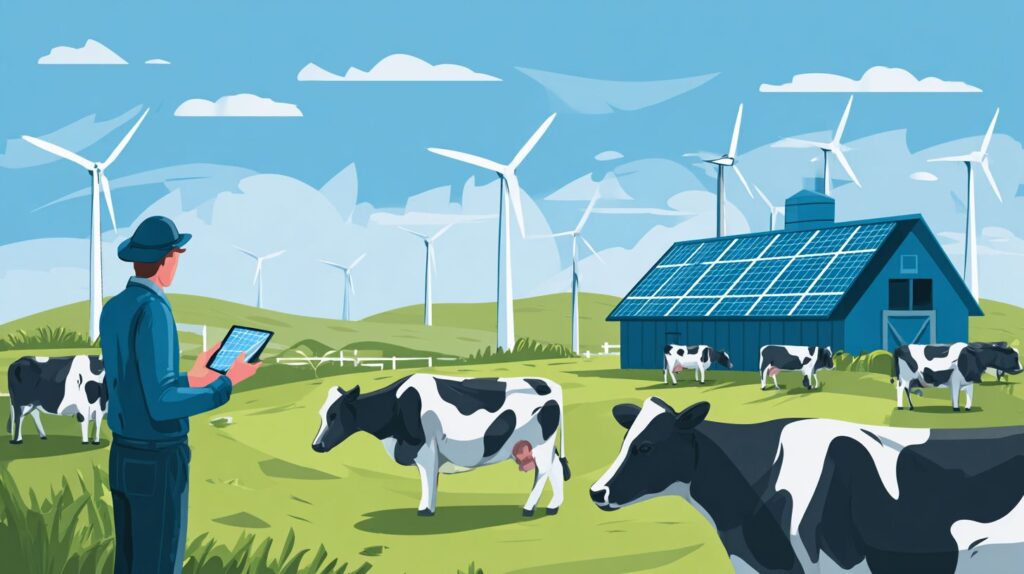
Renewable energy enhances top livestock farming practices in 2025 for sustainability and profit by powering operations with wind or solar systems, reducing reliance on fossil fuels and slashing energy bills by up to 50%. Farms adopting these can achieve net-zero emissions, attract sustainability-focused investors, and improve profit margins through energy self-sufficiency and potential subsidies.
What are the benefits of breed selection in top livestock farming practices in 2025 for sustainability and profit?
Breed selection is key in top livestock farming practices in 2025 for sustainability and profit, favoring resilient, climate-adapted breeds that require less water and feed while producing higher-quality meat or dairy. This leads to lower input costs, better adaptation to changing weather patterns, and access to niche markets for sustainable products, ultimately driving long-term profitability.