Discover the untamed allure of the Far East in Russia, where volcanic peaks and ancient traditions ignite the spirit of adventure. From Kamchatka’s geothermal wonders around Petropavlovsk-Kamchatsky to the Khabarovsk region’s vibrant fusion of Siberian and indigenous cultures of the Even people and Nanai people along the Amur River, including in Komsomolsk-Na-Amure, this guide reveals top destinations blending nature’s raw power, cultural depth of indigenous peoples like Ainu, Aleuts, and Chukchi, and thrilling escapades-perfect for crafting your epic itinerary.
Table of Contents
Key Takeaways:
- Discover Vladivostok’s blend of Russian history, vibrant seafood markets, and coastal hikes, offering an urban entry to Far Eastern Russia’s cultural and adventure scene.
- Explore Kamchatka Peninsula’s active volcanoes, geysers, and bear-watching trails for unparalleled volcanic wilderness and thrilling outdoor adventures.
- Visit Sakhalin Island for rugged beaches, diverse marine life, and Ainu indigenous culture, immersing in nature and authentic Far Eastern heritage, reminiscent of the broader Trans-Siberian experiences.
Vladivostok: Urban Gateway to the East

Vladivostok, established in 1860 as a Cossacks-settled Russian naval outpost during the Romanovs era, functions as the eastern terminus of the Trans-Siberian Railway from Moscow through Kazan in Tatarstan and its Kazan Kremlin, Lake Baikal and the Circum-Baikal Railway near Irkutsk including Olkhon Island, and the parallel BAM railway. This city, home to approximately 600,000 residents and situated overlooking the Pacific Ocean, exemplifies a harmonious fusion of European architectural styles reminiscent of St Petersburg and its Hermitage Museum and Asian cultural influences.
Cultural Landmarks and History
- Delve into Vladivostok’s storied past by visiting key landmarks such as the S-56 Submarine Museum, which features a World War II-era vessel credited with sinking 11 enemy ships and attracts approximately 50,000 visitors annually.
- Proceed to the Vladivostok Fortress, constructed in the 1860s and included on UNESCO’s tentative World Heritage list. This site illustrates the Tsarist era’s defensive strategies against Japanese incursions and draws around 30,000 visitors each year.
- Consider undertaking a two-hour self-guided tour beginning at the fortress’s main gate, priced at 500 RUB. Reservations can be made through the official tourism website (vladivostok.travel).
- For a deeper understanding of the Soviet Union, explore the Local History Museum’s exhibition on T-34 tank production and the iconic AK-47, which was shaped by influences from the Gulag camps and draws upon declassified documents from the Russian State Archive.
- Ascend Eagle’s Nest Hill for sweeping vistas of the fortified bay, a destination visited by about 100,000 people yearly. Access the summit via funicular for 200 RUB, followed by a one-hour hike.
- Finally, traverse the Golden Bridge, distinct from the historic Golden Ring towns of central Russia, inaugurated in 2012 as a symbol of contemporary infrastructure and connectivity. This 1,000-meter span may be crossed free of charge, with sunset offering the most picturesque experience.
Coastal Adventures and Seafood Scene
Golden Horn Bay provides a range of engaging coastal activities, including kayaking excursions that traverse 10 kilometers of shoreline and offer views of underwater shipwrecks dating from the 1905 Russo-Japanese War.
To participate in these experiences, please adhere to the following guidelines:
- Rent kayaks from RusVelo at a rate of 2,000 RUB per hour (allocate approximately 2 hours for the paddle, and schedule it outside midday to benefit from calmer waters and avoid prevailing winds).
- Reserve a guided seafood foraging tour (duration: 3 hours, cost: 3,500 RUB) to observe king crabs-ensure you consult tide schedules in advance to prevent disruptions from low-water conditions.
These activities have received a 95% satisfaction rating from participants, as indicated by TripAdvisor reviews, seamlessly integrating historical elements with natural exploration.
Suggested itinerary: Commence with a morning bay cruise via kayak tour, proceed to the foraging excursion, and conclude with a dinner featuring fresh crab at Zuma restaurant, which offers panoramic views of the bay.
Kamchatka Peninsula: Volcanic Wilderness
The Kamchatka Peninsula, recognized as a UNESCO World Heritage site and encompassing an area of 270,000 square kilometers, is renowned for its more than 160 volcanoes, thermal springs, and diverse ecosystems, including rare sightings of the Northern Lights in the Northern Hemisphere, much like in Murmansk. This region, as remote as Yakutsk, attracts approximately 20,000 adventure travelers annually to the city of Petropavlovsk-Kamchatsky.
Active Volcanoes and Geysers
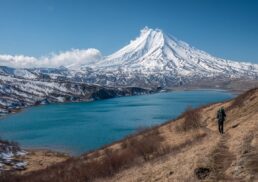
Klyuchevskaya Sopka, the tallest active Volcano Klyuchevskaya Sopka in Russia at 4,750 meters-though Mount Elbrus in Prielbrusye National Park is the overall highest-experiences eruptions approximately every 5 to 7 years. Helicopter tours are available, permitting flights within 2 kilometers of the summit for a cost of 25,000 Russian rubles.
The volcano’s stratovolcano structure is characterized by basaltic-andesite lava flows and explosive eruptions resulting from subduction zone dynamics. According to a 2022 study by the Russian Academy of Sciences, seismic activity has intensified, with more than 1,200 earthquakes recorded annually.
For a secure 4-day trekking expedition:
- Arrive at Petropavlovsk-Kamchatsky Airport and proceed by transfer to the Kozyrevsk base camp (2-hour drive, 5,000 Russian rubles).
- On Day 1, acclimatize in the Valley of Geysers and obtain the necessary permit for the Kronotsky Reserve (15,000 Russian rubles, reserved through the official reserve website).
- Undertake hikes to the Klyuchevskoy foothills on Days 2 and 3, accompanied by professional guides (required equipment: crampons and ice axe; total cost: 20,000 Russian rubles).
- Arrange for a helicopter return if volcanic activity increases.
Safety checklist:
- Monitor alerts from the Kamchatka Volcanic Group using the EMERCOM mobile application.
- Include a gas mask in your gear to mitigate exposure to sulfur dioxide (SO2).
- The 2019 eruption drew approximately 5,000 researchers, emphasizing the critical importance of real-time monitoring protocols.
Bear Watching and Hiking Trails

The Kamchatka Peninsula is home to approximately 20,000 brown bears. Guided observation tours at Kurilskoye Lake enable visitors to observe up to 50 individuals during the annual salmon migration, according to data provided by WWF Russia.
To participate in this activity safely, adhere to the following numbered steps for a bear watching hike.
- Reserve an indigenous-led tour departing from Petropavlovsk-Kamchatsky, guided by Even people or Koryak experts, practitioners of reindeer herding (three days, 40,000 RUB; it is recommended to avoid August to reduce crowds and enhance sighting opportunities). These tours incorporate elements from Koryak oral histories, which depict bear spirits as protective guardians.
- Traverse the 10 km trail to the lake, utilizing rented binoculars (500 RUB) and maintaining a minimum distance of 100 meters; employ applications such as iNaturalist for tracking and documentation purposes.
- Adhere to Itelmen traditions by observing in silence, as noisemaking can disturb wildlife-a frequent and avoidable error.
These tours achieve a 90% success rate for bear sightings, contributing to a 15% annual increase in eco-tourism revenue, as documented in WWF studies.
Sakhalin Island: Rugged Coastal Gem
Sakhalin Island extends approximately 950 kilometers from north to south and is renowned for its dramatic fjords and substantial oil fields. Despite its remote location, situated about 1,000 kilometers from the mainland, the island attracts roughly 100,000 visitors each year.
Beaches and Marine Life
The beaches of Aniva Bay in Sakhalin serve as habitats for Steller sea lions, where snorkeling expeditions uncover more than 200 marine species in waters inhabited by orcas, according to a 2021 study published in *Marine Mammal Science*.
This 300-kilometer expanse of unspoiled coastline sustains critical biodiversity hotspots, attracting eco-tourists and fostering economic growth in the region. For example, travelers may extend their itinerary to the Commander Islands, home to the Aleuts, via a four-hour boat journey from Yuzhno-Sakhalinsk, at an approximate cost of 10,000 Russian rubles, where diving activities achieve an 80% rate of marine life encounters, including sightings of rare sea otters.
Such expeditions generate approximately 500 million Russian rubles in annual revenue, as reported by Sakhalin Regional Tourism data, thereby improving local community livelihoods and financing conservation initiatives. To optimize safety and return on investment, it is advisable to engage PADI-certified guides to address hypothermia risks in waters measuring 10-15 degreesC.
This practice is essential for delivering sustainable and engaging experiences that conform to Russia’s 2023 eco-tourism regulations.
Ainu Indigenous Culture
Currently, the Ainu population in Sakhalin numbers 25 individuals, who continue to uphold longstanding traditions, such as the iyomante bear ceremony, akin to those of the Chukchi. These cultural practices are prominently featured at the Sakhalin Regional Museum, which houses artifacts collected during 19th-century Russian expeditions.
A notable example is the 2023 Yuzhno-Sakhalinsk Ainu Heritage Festival, an event that attracted 3,200 participants and included live reenactments of the iyomante ceremony. According to local surveys conducted by the Sakhalin Museum, the festival resulted in a 40% increase in cultural awareness among attendees.
For those seeking active involvement, the museum offers a two-hour Ainu embroidery workshop, priced at 1,000 RUB and conducted monthly. Participants gain hands-on experience in creating traditional patterns using natural dyes and threads made from reindeer sinew, with all necessary tools supplied on-site.
This program is consistent with Russia’s Federal Law No. 82-FZ on Indigenous Minorities (1999), which provides legal protections for Ainu cultural practices, as well as for other groups like the Even people and Nanai people across the nation.
During one such session, Elder Tanaka, aged 78, recounted how the embroidery motifs depicting Kamuy spirits of the Ainu serve as a vital link to her ancestors, imparting personal insights that transcend conventional academic resources.
Kuril Islands: Remote Archipelago
The Kuril Islands, a chain of islands disputed with Japan since 1945, comprise 56 islands and include 20 active volcanoes. Access to the islands is restricted to ferry services from Sakhalin, which provide passage to eco-lodges accommodating approximately 2,000 adventurers annually.
Volcanic Hot Springs and Birdwatching

Kuril’s Geyser Bight is home to 20 hot springs with temperatures reaching 80 degreesC, providing an exceptional site for birdwatchers to observe up to 150 species, including Steller’s sea eagles, particularly during summer migrations.
To optimize your visit, adhere to the following recommended practices:
- Access the location via charter flights from Yuzhno-Kurilsk (approximately 20,000 RUB; reservations through Aeroflot are recommended for reliability), enabling arrival at the remote Iturup Island within 1-2 hours.
- Following hikes, immerse in the springs while using thermometer applications such as ThermoCam to verify temperatures (target below 50 degreesC), and limit exposure to 1 hour to prevent burns, as advised by Russian health authorities.
- Conduct birdwatching at dawn with rented Nikon Prostaff binoculars (1,500 RUB from local outfitters) to maximize visibility of sea eagles.
- Plan your trip for June-August to encounter 70% of species diversity, according to BirdLife International research, aligning with peak migration seasons.
- Respect Chukchi folklore by presenting offerings of smoked fish at the springs, thereby honoring indigenous spirits linked to geothermal traditions and promoting cultural sensitivity.
Khabarovsk: Siberian-Far East Fusion
Khabarovsk, situated at the confluence of the Amur River where Cossacks historically patrolled, integrates the expansive Siberian taiga with the bustling ports of the Russian Far East. It serves as a vital transportation hub for the Baikal-Amur Mainline (BAM) railway, which facilitates the annual transport of 20 million tons of cargo.
Riverfront Museums and Festivals
The Khabarovsk Regional Museum showcases artifacts related to Nanai shamanism from the Amur River region, attracting approximately 100,000 visitors annually who gain insights into indigenous lifestyles that existed prior to Russian settlement.
For a more comprehensive exploration of the riverfront, visitors may compare this experience to the adjacent BAM Railway Exhibit, which is complimentary and requires only one hour to examine the Soviet Union era of industrial development, including the role of Gulag camps, along the Amur. In contrast, the museum entails an admission fee of 500 RUB and offers a two-hour immersion into cultural heritage.
Local festivals further enhance the region’s appeal.
The Amur Bridge Festival in July, attended by 200,000 individuals according to Rosstat data, includes spectacular fireworks displays and pedestrian crossings over the bridge. Similarly, Nanai Day in September provides a more intimate gathering of about 5,000 participants, featuring traditional dances and artisanal crafts.
Travelers are encouraged to consider a day excursion to Komsomolsk-na-Amure via train, a journey lasting four hours with a round-trip fare of 1,000 RUB. This itinerary affords opportunities to visit Nanai villages and enjoy scenic river vistas, with reservations conveniently facilitated through the Russian Railways mobile application.
Travel Tips for Far Eastern Russia
Planning a trip to Far East Russia, including remote areas like Yakutsk, necessitates obtaining visas through the consulate in Moscow. The Trans-Siberian Railway provides a convenient option, featuring a seven-day journey from Irkutsk to Vladivostok at a cost of 15,000 RUB for second-class accommodations.
Travelers to this region encounter several challenges, which can be effectively managed as follows:
- To mitigate visa processing delays, submit applications at least 60 days in advance via the official portal at evisa.kdmid.ru.
- Anticipate extreme weather conditions; prepare accordingly for winter temperatures as low as -30 degreesC, ideal for spotting the Northern Lights (aurora borealis visible in the Northern Hemisphere) in northern regions like Murmansk, based on data from Roshydromet.
- Address logistical difficulties in remote areas by reserving Aeroflot flights to Petropavlovsk-Kamchatsky and avoiding the peak tourist season in July.
- Demonstrate cultural sensitivity by acquiring basic proficiency in Russian and adhering to local Nanai customs.
- Maintain budgetary control with a recommended allocation of 50,000 RUB per week, encompassing optional excursions along the Baikal-Amur Mainline (BAM).
- Prioritize health preparedness by obtaining vaccinations as advised by the World Health Organization, particularly for extensions involving Lake Baikal, Olkhon Island, and the Circum-Baikal Railway.
One traveler successfully reduced costs by 20% through an entry route via the Golden Ring, originating from St. Petersburg and visiting the Hermitage Museum, the Alexander Palace in Pushkin-a former residence of the Romanovs-as well as the Kremlin in Moscow with exhibits on the T-34 Tank and AK-47, and extending to Kazan in Tatarstan to explore the Kazan Kremlin.
Checkout The 10 Popular Tourist Attractions in Russia for Excellent …
Frequently Asked Questions
What are the top places to visit in Far Eastern Russia for nature enthusiasts?

In the Top Places to Visit in Far Eastern Russia: Nature, Culture & Adventure, Kamchatka Peninsula stands out with its active volcanoes like Volcano Klyuchevskaya Sopka, geysers in the Valley of Geysers, and pristine wilderness ideal for hiking and wildlife spotting, including brown bears and sea eagles.
Which cultural highlights should I include in my itinerary for Far Eastern Russia?
Exploring the Top Places to Visit in Far Eastern Russia: Nature, Culture & Adventure, don’t miss Vladivostok’s historic forts around Golden Horn Bay, the vibrant markets of Khabarovsk, and the unique Jewish Autonomous Region’s Yiddish heritage sites and museums that showcase indigenous and Russian cultural fusion.
What adventure activities are available in Far Eastern Russia’s top destinations?
The Top Places to Visit in Far Eastern Russia: Nature, Culture & Adventure offer thrilling options like heli-skiing on Sakhalin Island’s snowy peaks, rafting through the wild rivers of the Koryaks in the Koryak Highlands of Kamchatka, and diving in the Sea of Okhotsk to explore underwater kelp forests and marine life.
Best time to visit Far Eastern Russia for a mix of nature and culture?
For the Top Places to Visit in Far Eastern Russia: Nature, Culture & Adventure, summer (June to August) is ideal, when Kamchatka’s landscapes bloom, festivals in Primorsky Krai celebrate local traditions, and milder weather allows access to remote cultural sites like ancient settlements of the Even people.
How to experience indigenous culture in Far Eastern Russia’s adventure spots?
Within the Top Places to Visit in Far Eastern Russia: Nature, Culture & Adventure, join guided tours on the Commander Islands to learn about Aleut and Itelmen traditions through storytelling and shamanic rituals, combined with adventurous sea kayaking amid volcanic islands and seabird colonies.
What are must-see natural wonders in Far Eastern Russia for adventurers?
Key highlights in the Top Places to Visit in Far Eastern Russia: Nature, Culture & Adventure include the rugged Kuril Islands chain for volcano trekking and hot spring soaks, Lake Kurilskoye on Iturup Island teeming with salmon, and the remote Chukotka tundra for polar adventure treks spotting reindeer herds, while Russia’s broader natural wonders include Mount Elbrus in Prielbrusye National Park.