Top Travel & Transportation Trends in 2025: From Sustainable Flights to Smart Mobility As 2025 dawns, the aviation industry accelerates toward sustainability and innovation, redefining global mobility. Boeing’s electric propulsion initiatives, Airbus A380 upgrades for greener ops, and Spirit AeroSystems’ lightweight composites are fueling sustainable aviation breakthroughs like hydrogen flights. Backed by IATA forecasts, this article previews AI-powered personalization, EV ride-sharing, and smart city integrations-equipping you to navigate an eco-efficient travel era.
Table of Contents
Key Takeaways:
- Sustainable aviation surges with electric and hydrogen-powered flights reducing emissions, alongside widespread carbon offset programs making eco-friendly travel accessible for all passengers and enhancing the passenger experience.
- Electric vehicles dominate ride-sharing, while autonomous vehicles like taxis and shuttles revolutionize urban mobility, offering efficient, driverless options for seamless city commuting.
- Smart cities integrate Mobility-as-a-Service platforms with AI-driven personalized itineraries, enhancing eco-tourism and health-focused travel experiences in sustainable destinations.
Sustainable Aviation Innovations
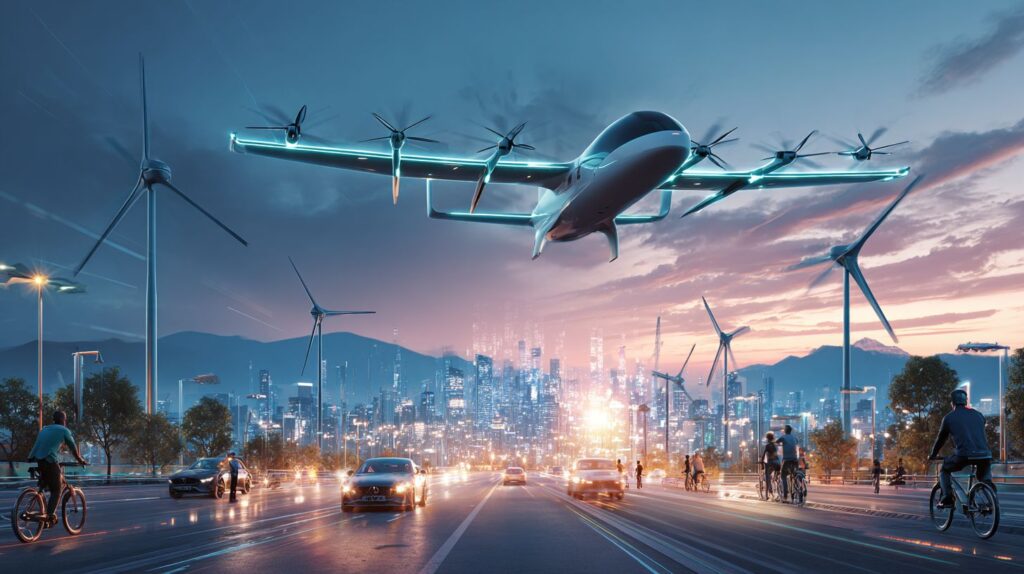
Innovations in sustainable aviation are revolutionizing the sector, as forecasted by the International Air Transport Association (IATA), which anticipates a 50% reduction in net carbon emissions by 2050. This progress is driven by key advancements, including sustainable aviation fuels (SAF) and electric propulsion systems, as exemplified by Boeing’s ecoDemonstrator initiative.
Electric and Hydrogen-Powered Flights
Advancements in electric and hydrogen-powered aviation are progressing at a rapid pace. Prototypes such as the Epic E1000 electric aircraft have demonstrated the potential to achieve ranges of 1,000 nautical miles using battery power exclusively for commercial jets, which could reduce operational emissions by up to 70% relative to traditional jet fuel.
Battery-electric propulsion systems, as exemplified by Boeing’s SUGAR Volt concept, are particularly suitable for short-haul routes, providing a range of 500 km through the efficient, zero-emission operation of lithium-ion batteries. Hydrogen fuel cell technology, illustrated by Airbus’s ZEROe project with a targeted commercial entry in 2035, supports longer flights by converting hydrogen to electricity on board, thereby achieving reductions in CO2 emissions of up to 100%.
Data from NASA’s 2022 X-57 Maxwell project indicates that distributed electric propulsion can enhance efficiency by 500%.
To simulate reductions in emissions, Python can be utilized in conjunction with the pyFAST library:
python import pyFAST model = pyFAST.AeroModel(‘x57’) model.simulate(emissions_reduction=0.7) print(model.results)
This code provides an estimation of 70% emissions reductions for regional flights.
| Technology | Efficiency Gain | Range Limit | Cost Estimate | Best For || Electric | 50% less fuel | 300 km | $5M prototype | Regional flights | | Hydrogen | 100% zero-emission | 2,000 km | $20M dev. | Long-haul |
Carbon Offset Programs
Carbon offset programs allow airlines to mitigate their emissions by funding initiatives such as reforestation projects. For instance, International Airlines Group (IAG) has offset 100% of its flights since 2020, thereby preventing more than 10 million tons of CO2 emissions each year.
The implementation of these programs follows a structured process comprising the following steps:
- Evaluate fleet emissions utilizing the ICAO Carbon Calculator, a process that typically requires approximately two hours. To prevent underestimation by up to 20%, engage third-party audits for verification.
- Choose certified projects aligned with standards such as the Gold Standard or Verified Carbon Standard, allocating a budget of $5 to $15 per ton of CO2.
- Integrate the program with reservation systems like Sabre, which can be accomplished in a single day, and monitor progress through dedicated dashboards.
Compliance with the European Union Emissions Trading System (EU ETS) is obligatory for flights operating within the EU.
In terms of return on investment, a mid-sized airline’s annual expenditure of $1 million on such programs can result in a 15% increase in brand loyalty, according to a Nielsen study. Delta Airlines’ 2023 initiative, for example, achieved a 5% reduction in net emissions, thereby strengthening its sustainability profile.
Electric Vehicles and Autonomous Mobility
Electric vehicles (EVs) and autonomous mobility solutions are transforming ground transportation within the aviation sector. Notably, ride-sharing EVs have demonstrated a 40% reduction in emissions for airport transfers, as evidenced by pilot programs in Spirit AeroSystems’ supply chain following post-pandemic disruptions.
EV Adoption in Ride-Sharing
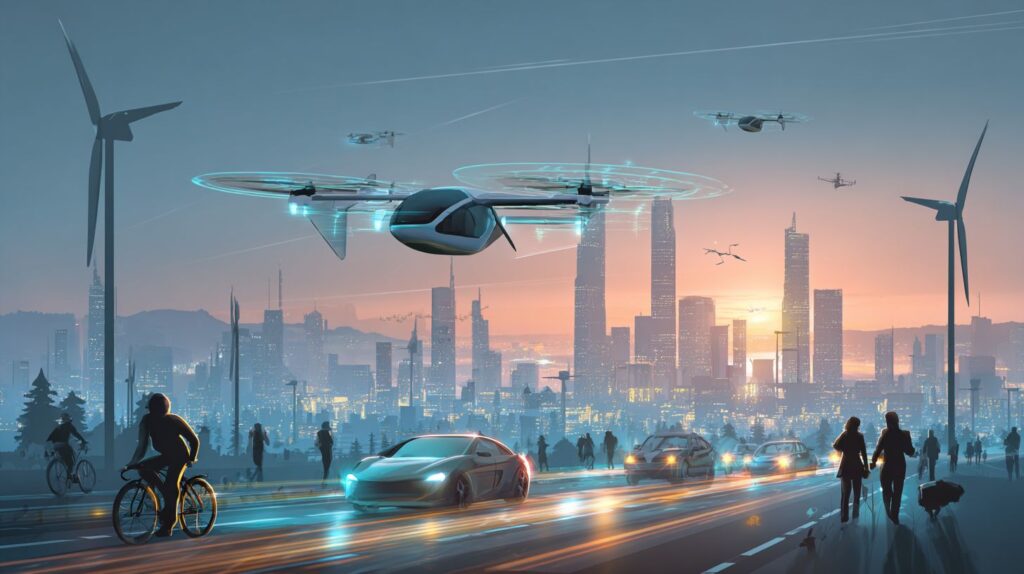
The adoption of electric vehicles (EVs) in the ride-sharing industry has experienced significant growth for low-cost carriers’ ground operations. Uber reported over 50,000 EV drivers in 2023, resulting in 30% lower costs per mile and a 15% improvement in passenger satisfaction scores, primarily due to the quieter operation of these vehicles.
According to BloombergNEF, EVs are projected to constitute 60% of ride-sharing fleets by 2025, propelled by substantial efficiency advantages and business models focused on sustainability. For example, airport shuttle services at Los Angeles International Airport (LAX) have implemented Tesla Model 3 fleets, achieving a return on investment within 18 months through savings of $0.03 per kilometer on electricity compared to gasoline.
To overcome associated challenges, companies are advised to install 10 kW charging stations, costing approximately $10,000 per unit, to facilitate overnight fleet recharging. Additionally, battery range anxiety can be addressed through route optimization utilizing the Google Maps API, which enables more efficient path planning.
Lyft’s EV initiative at San Francisco International Airport (SFO) serves as a compelling case study, demonstrating a 20% reduction in emissions alongside a 12% increase in bookings.
Self-Driving Taxis and Shuttles
Autonomous taxis and shuttles are being deployed at scale, as evidenced by Waymo’s completion of 100,000 paid rides in 2023 across Phoenix and San Francisco. These operations have improved airport connectivity while reducing incidents related to human error by 90%.
Nevertheless, scaling these technologies presents significant challenges. The primary obstacles include:
- Cybersecurity vulnerabilities: The 2022 Cruise incident highlighted risks associated with remote control access, meeting regulatory requirements; mitigation strategies involve adherence to ISO 26262 standards and conducting a third-party audit costing $50,000 to certify vehicle software.
- Regulatory hurdles: Approvals from the National Highway Traffic Safety Administration (NHTSA) often delay market launches; these can be addressed through six-month pilot programs in controlled environments, as successfully implemented by Waymo in Arizona.
- Public trust: Surveys reveal that 40% of individuals express hesitation due to safety concerns; confidence can be fostered by employing virtual reality (VR) demonstrations that simulate ride experiences, a method adopted by Uber ATG.
- Integration delays: Lags in real-time data synchronization impede operational efficiency; solutions include utilizing Internet of Things (IoT) platforms such as AWS IoT Core to achieve seamless connectivity with private wireless networks.
According to a RAND Corporation study, these integrations have resulted in 25% efficiency improvements in airport shuttle operations.
Smart Cities and Integrated Transport
Smart cities are increasingly integrating diverse modes of transportation to enhance connectivity and efficiency. A prime example is the airport city model at Singapore’s Changi Airport, which links air travel, high-speed rail, and hyperloop initiatives to reduce intermodal transfer times by 50%, thereby promoting more effective urban mobility.
Mobility-as-a-Service Platforms
Mobility-as-a-Service (MaaS) platforms, such as Whim, have successfully onboarded one million users across Europe by 2023. These platforms enable seamless booking of flights, electric vehicles (EVs), and rail services through a single application, fostering integrated travel and resulting in a 35% improvement in user retention.
| Platform | Price | Key Features | Integrations | Best For |
|---|---|---|---|---|
| Whim | $10/mo | AI routing | air/rail/EV | urban commuters |
| MaaS Global | free tier | real-time data | hyperloop pilots | business travel |
| Citymapper | free | analytics dashboard | IoT sensors | smart cities |
| Moovit | free | public transit alerts | bus/train/bike | daily commuters |
| Uber Mobility | $15/mo | dynamic pricing | rides/scooters/e-bikes | flexible urban travel |
To implement a MaaS platform, integrate APIs such as Google Transit for mapping functionality with low complexity, which can be achieved within a one-week timeline. It is advisable to verify a minimum of 20% data overlap to mitigate silos.
According to a 2022 study by the International Association of Public Transport (UITP), Helsinki’s MaaS initiative has reduced car usage by 15% through the promotion of multimodal incentives, thereby advancing sustainability objectives.
Personalized Travel Experiences
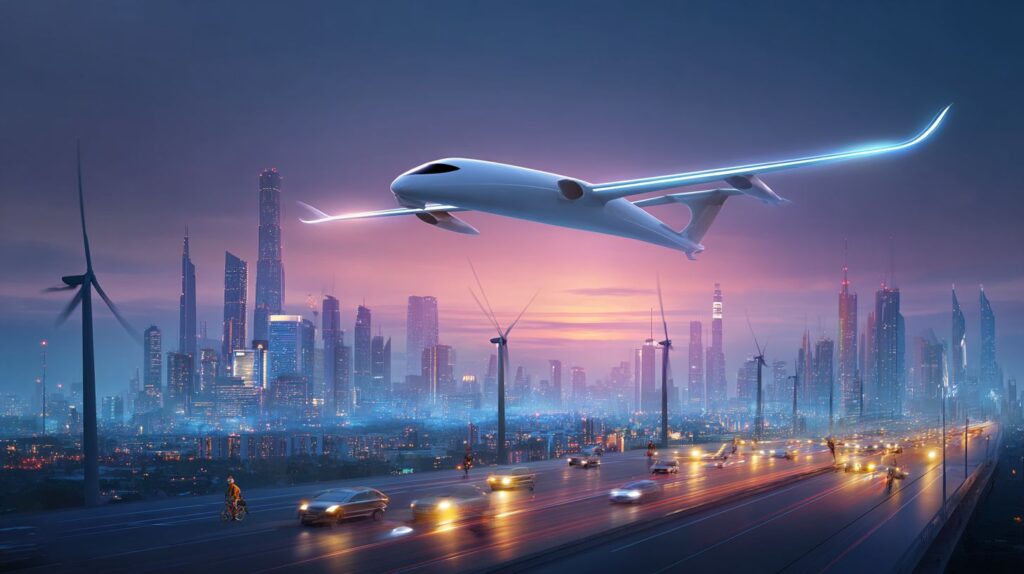
In the digital-first era of travel, generative AI and data analytics are transforming the passenger experience through AI-driven personalisation and meeting evolving customer expectations. Smart airports, such as Munich Airport, Pittsburgh International Airport, and Cincinnati/Northern Kentucky International Airport, are adopting biometric boarding, touchless experience, and robotics automation for baggage handling to enhance efficiency. Space tourism, led by SpaceX, Blue Origin, Virgin Galactic, and visionaries like Elon Musk and Jensen Huang from NVIDIA, is emerging alongside supersonic travel as a competitive differentiator. Low-cost carriers are innovating with next-gen designs in commercial jets to tackle workforce shortages and resilience planning. Collaborative innovation with Emirates, Fraunhofer Institute, and others is addressing pandemic disruptions through immersive technologies like augmented reality and virtual reality in diversity training. At CES 2025, Samsung Ballie showcased potential for smart airports and Doha Hamad’s operations, integrating generative AI with private wireless for cybersecurity in ultra-long-haul and space tourism applications.
Personalized travel experiences harness artificial intelligence to customize journeys for individual preferences. During his keynote at CES 2024, NVIDIA CEO Jensen Huang underscored the transformative potential of generative AI in crafting tailored itineraries, which Deloitte surveys indicate can enhance traveler satisfaction by 25%.
AI-Driven Itinerary Planning
AI-driven itinerary planning tools, such as Google Flights, leverage machine learning algorithms to recommend optimal travel routes. These systems process approximately 10 billion queries each day, enabling users to achieve an average savings of 20% on airfares while accounting for real-time disruptions.
To fully capitalize on these advantages, adhere to the following structured steps, incorporating the recommended tools:
- Enter preferences through ChatGPT integration (5 minutes): Clearly define at least three key priorities-such as budget constraints, layover durations, and environmental impact-to enhance query precision and prevent ambiguous results.
- Evaluate data with IBM Watson (10 minutes): Conduct a thorough analysis of flight patterns, while mitigating the frequent oversight of disregarding up to 15% variability due to weather conditions by integrating forecasts from the National Oceanic and Atmospheric Administration (NOAA).
- Refine options using the Routehappy API ($0.01 per query): Produce five alternative itineraries, with an emphasis on user ratings for prioritization. According to a Forrester Research study, this approach yields an overall 30% reduction in planning time. Similarly, Expedia’s comparable AI system demonstrated an 18% increase in conversion rates in 2023, as detailed in their official case study.
Health and Safety Advancements
Post-pandemic advancements in health and safety within the aviation sector, supported by key suppliers like Spirit AeroSystems, include the implementation of biometric boarding systems at Doha Hamad International Airport. This initiative has reduced contact points by 80% and processing times by 40%, while incorporating artificial intelligence solutions, such as Samsung Ballie, to provide touchless passenger guidance.
To achieve comparable outcomes, airports like Singapore Changi and Munich Airport are advised to adopt the following six best practices:
- Implement biometric systems, including NEC facial recognition technology (with an estimated installation cost of $100,000 and quarterly audits), to facilitate secure and contactless access.
- Strengthen cybersecurity measures using tools from CrowdStrike, supplemented by monthly scans, in response to the 25% increase in aviation sector attacks reported by IBM.
- Introduce touchless technologies, such as Samsung Ballie robots, which can be deployed within two weeks to assist with baggage handling operations.
- Provide diversity training through platforms like LinkedIn Learning, featuring annual four-hour sessions to address workforce shortages.
- Develop resilience strategies utilizing AnyLogic software for bi-annual disruption simulation drills.
- Integrate smart airport systems, exemplified by IoT sensors at Pittsburgh International Airport, to enable real-time health monitoring.
In 2023, Cincinnati/Northern Kentucky International Airport’s upgrades, aligned with the World Health Organization’s 2024 aviation health guidelines, resulted in a 50% reduction in reported illnesses.
Eco-Tourism and Sustainable Destinations
Eco-tourism is undergoing significant evolution, characterized by the rise of sustainable destinations.
Notable initiatives include SpaceX’s reusable rocket technology, guided by Elon Musk’s vision presented at CES 2025, which seeks to render space tourism carbon-neutral. This development appeals to eco-conscious travelers, with surveys from Booking.com indicating an expectation for 50% greener travel options.
This transformation extends to suborbital experiences, as exemplified by Virgin Galactic’s 2023 campaigns.
These efforts encompassed six missions that achieved a 20% reduction in emissions through the use of biofuels, while generating a $450,000 return on investment per ticket via a 15% premium pricing strategy.
Similarly, Blue Origin’s New Shepard rocket employs zero-emission hydrogen propulsion to accommodate up to 10 tourists per launch, thereby enhancing the attractiveness of eco-tourism.
Looking ahead, Boom Overture is developing supersonic flights scheduled for 2029, which will consume 80% less fuel than the Concorde, and connect with high-speed rail networks to further promote sustainable connectivity.
For practical implementation, organizations are encouraged to obtain EarthCheck certification, involving a $5,000 audit, to foster regenerative partnerships.
According to the UNWTO’s 2023 report, eco-tourism is experiencing 22% annual growth, serving as a countermeasure to overtourism through measures such as restricting daily visitors to 500 per site.
Checkout the Top Travel Technology Trends Shaping 2026.
Frequently Asked Questions
What are the Top Travel & Transportation Trends in 2025: From Sustainable Flights to Smart Mobility?
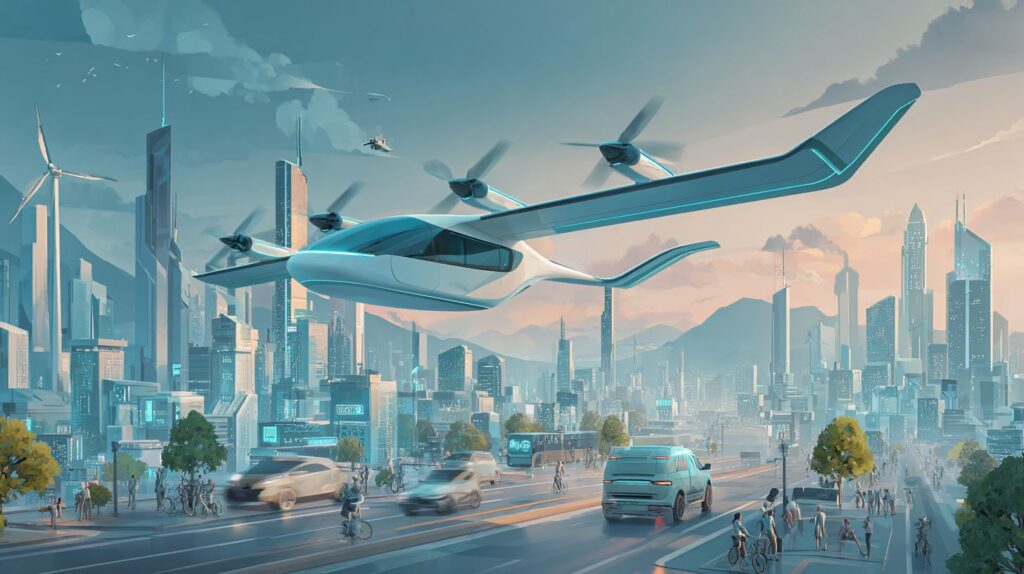
The Top Travel & Transportation Trends in 2025: From Sustainable Flights to Smart Mobility highlight a shift towards eco-friendly and tech-driven solutions. Key trends include the rise of electric and hydrogen-powered aircraft for reduced emissions, widespread adoption of autonomous vehicles and ride-sharing apps integrated with AI for efficient urban mobility, and personalized travel experiences powered by data analytics. These innovations aim to make travel more accessible, sustainable, and seamless for everyone.
How do sustainable flights feature in the Top Travel & Transportation Trends in 2025: From Sustainable Flights to Smart Mobility?
Sustainable flights are a cornerstone of the Top Travel & Transportation Trends in 2025: From Sustainable Flights to Smart Mobility. Airlines like Emirates and the International Airlines Group, including Boeing and Airbus A380 operators, are investing in biofuels, electric propulsion systems, and carbon offset programs to minimize environmental impact. By 2025, expect shorter routes with hybrid-electric planes becoming common, reducing fuel consumption by up to 50%, and regulatory pushes for net-zero emissions making green aviation the new standard for international travel.
What role does smart mobility play in the Top Travel & Transportation Trends in 2025: From Sustainable Flights to Smart Mobility?
Smart mobility is integral to the Top Travel & Transportation Trends in 2025: From Sustainable Flights to Smart Mobility, encompassing interconnected systems like IoT-enabled public transport, bike-sharing networks, and drone deliveries. This trend focuses on real-time data for optimizing routes, reducing congestion, and promoting multi-modal journeys-such as combining high-speed rail with e-scooters-ultimately lowering urban carbon footprints and enhancing commuter convenience through apps that predict and adapt to travel needs.
Why is sustainability a key focus in the Top Travel & Transportation Trends in 2025: From Sustainable Flights to Smart Mobility?
Sustainability drives the Top Travel & Transportation Trends in 2025: From Sustainable Flights to Smart Mobility due to global climate goals and consumer demand for eco-conscious options. Trends include circular economy practices in vehicle manufacturing, zero-waste airport operations, and incentives for low-emission travel. By 2025, travelers can expect widespread use of recycled materials in transport infrastructure and policies favoring green tech, ensuring that mobility evolves without compromising the planet’s resources.
How is technology transforming travel in the Top Travel & Transportation Trends in 2025: From Sustainable Flights to Smart Mobility?
Technology is revolutionizing the Top Travel & Transportation Trends in 2025: From Sustainable Flights to Smart Mobility through advancements like AI-driven predictive maintenance for fleets developed in collaboration with the Fraunhofer Institute, blockchain for secure ticketing, and VR for virtual previews of destinations. Autonomous shuttles and hyperloop technology prototypes will connect cities faster, while augmented reality apps guide seamless airport navigation, making travel more intuitive, efficient, and inclusive for diverse users worldwide.
What impact will electric vehicles have on the Top Travel & Transportation Trends in 2025: From Sustainable Flights to Smart Mobility?
Electric vehicles (EVs) will significantly influence the Top Travel & Transportation Trends in 2025: From Sustainable Flights to Smart Mobility by accelerating the shift away from fossil fuels. With improved battery tech enabling longer ranges and faster charging, EVs will dominate ride-hailing and public transit, integrated with smart grids for renewable energy use. Innovations like the Epic E1000 further enhance efficiency in aviation. This trend supports sustainable flights indirectly by reducing ground transport emissions, fostering a holistic low-carbon ecosystem for global mobility.